

Integrating World Natural Heritage Conservation into the General Planning of China’s Scenic and Historic Areas
|
CHENG Anqi is a Ph.D. candidate in the College of Architecture and Urban Planning, Tongji University. Her research focuses on scenic and historic area planning, and cultural landscape heritage conservation |
Received date: 2025-07-05
Revised date: 2026-02-11
Online published: 2026-04-22
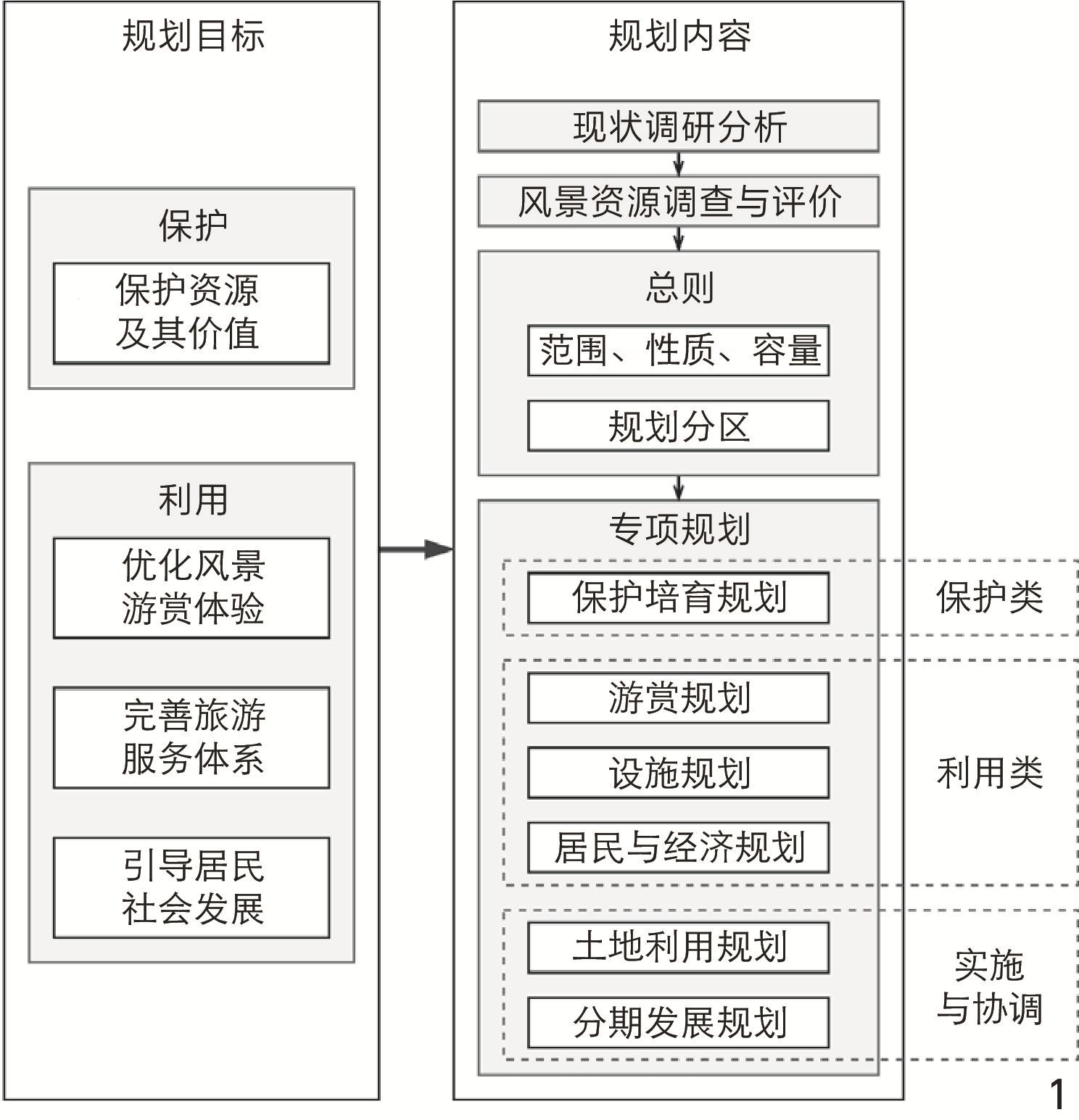
The on-site conservation of World Natural Heritage (WNH) properties depends on the legal and institutional frameworks of their host countries. In China, Scenic and Historic Areas (SHAs) are central to the statutory protected area system and serve as the primary institution for nominating and managing WNH and Mixed Heritage. However, a significant gap persists: while WNH conservation prioritizes natural outstanding universal value (OUV), SHAs are traditionally rooted in a dual natural-cultural philosophy that emphasizes aesthetic experiences and the holistic value of cultural landscapes. Consequently, the general planning of SHAs often fails to align with WNH conservation and management requirements. Therefore, this study aims to bridge the methodological gap between SHA general planning and WNH management to provide a robust technical pathway for the effective conservation and governance of WNH in China.
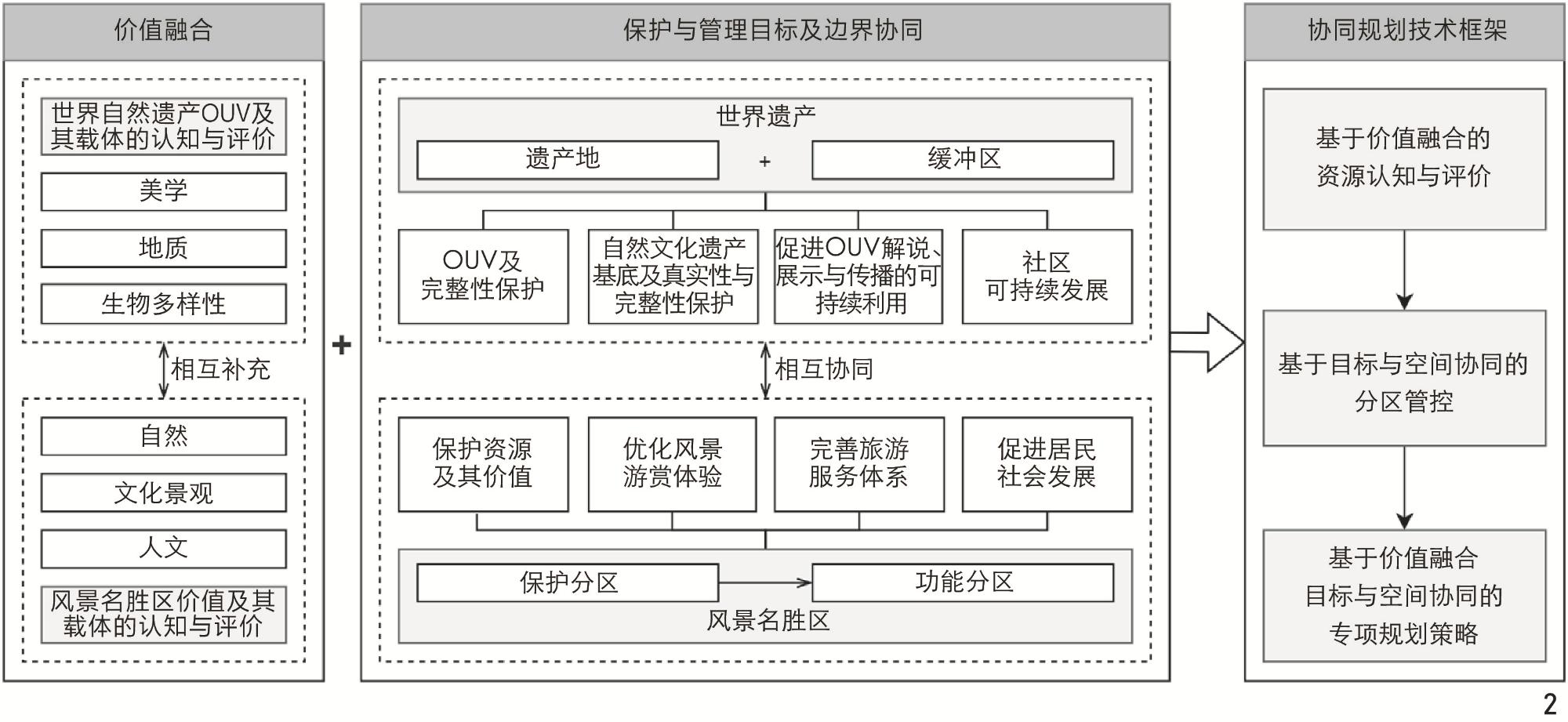
The research adopts a multi-stage analytical approach. First, it systematically interprets international standards and best practices for WNH conservation. Key requirements are examined, including the identification and protection of OUV and its integrity, the adoption of zoning for differentiated conservation, and the involvement of local communities in participatory governance. Second, these requirements are then compared with current SHA general planning practices in China. The analysis identifies several disconnects: 1) a lack of systematic recognition of OUV and its attributes in resource inventory and evaluation; 2) the zoning approach that prioritizes visual aesthetics and tourism facilities over ecological and geological integrity; 3) the marginalization of local communities through restrictive management policies. Based on this diagnosis, a coordination framework is proposed centered on value systems, management objectives, spatial boundaries and management strategies. Finally, the framework is tested through an application to the Wulingyuan SHA, inscribed as a World Heritage Site in 1992 for its unique quartz sandstone landform.
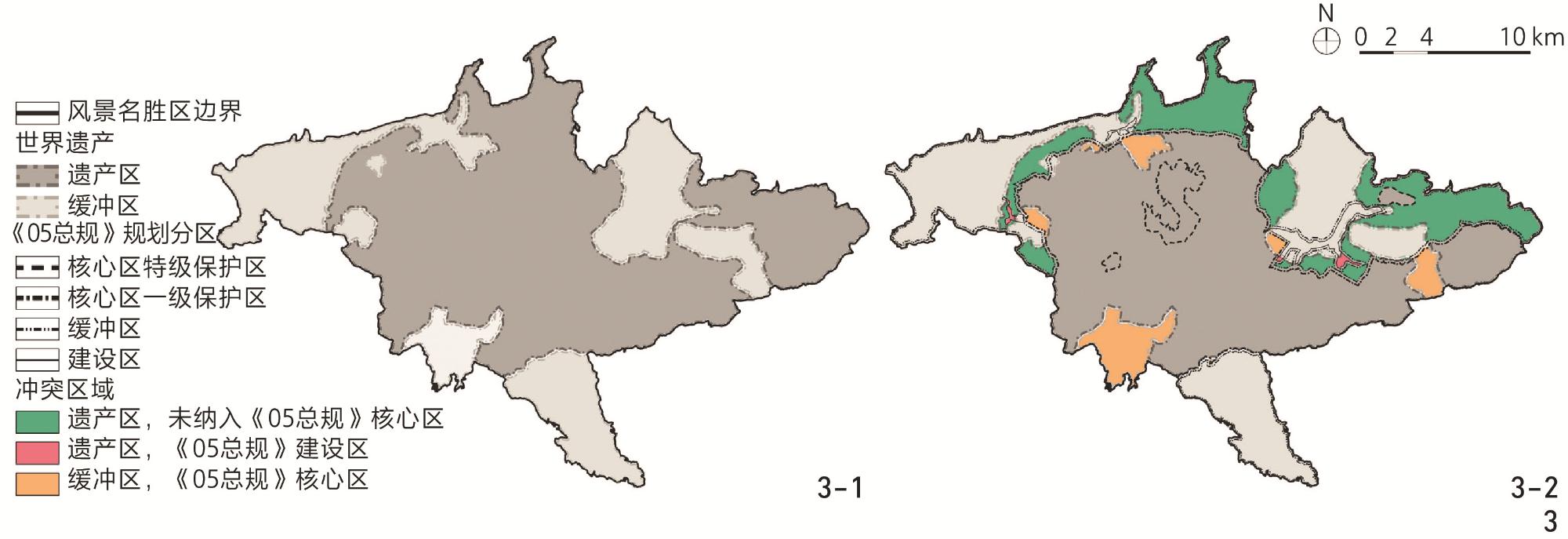
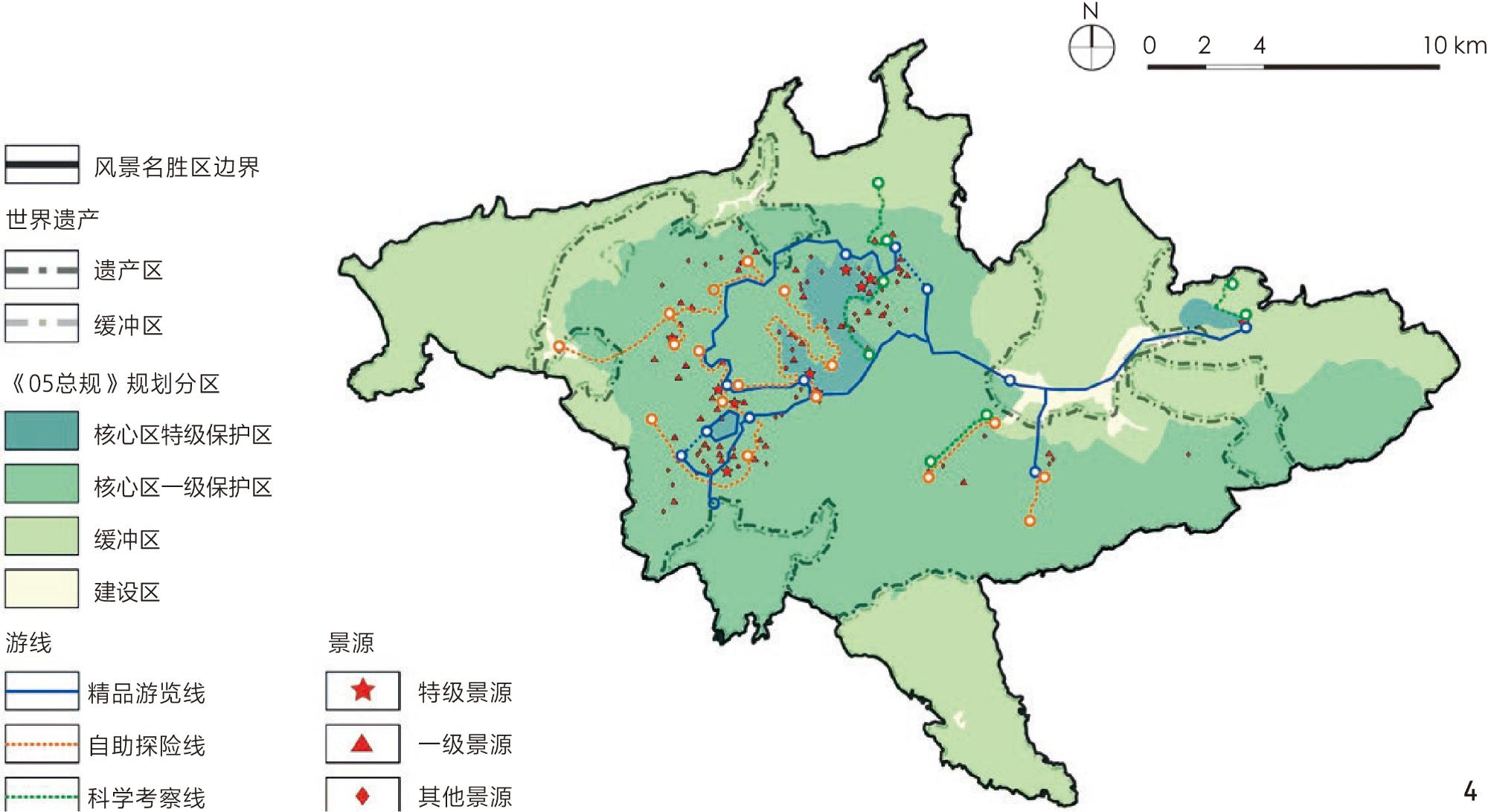
The proposed coordination framework comprises three interrelated components designed to strengthen the alignment between SHA general planning and WNH conservation. First, a multi-level resource and value system is established. The framework systematically incorporates OUV and its attributes into the broader natural and cultural landscape structure of the SHA. Through comprehensive resource inventory and evaluation, geological, ecological, and associated cultural attributes are hierarchically classified according to their relationship to OUV. This approach clarifies the spatial distribution of core OUV attributes and ensures that they receive the highest level of protection within the planning system. Second, a coordinated zoning system is developed to align general planning zones with the official boundaries and management objectives of WNHs and their buffer zones. This ensures the protection of core OUV attributes while providing space for sustainable tourism and community development. Third, special planning strategies are formulated to support heritage interpretation and community development. In Wulingyuan, the application of this framework demonstrates its practical effectiveness. In terms of resource evaluation, OUV attributes were systematically reassessed and incorporated into an expanded resource inventory. Heritage resources were identified across geological, ecological, and cultural dimensions. Core quartz sandstone peak-forest landforms and key ecological attributes directly associated with OUV were assigned the highest protection level, establishing a clearer hierarchy of conservation priorities. Regarding spatial coordination, inconsistencies between previous general planning zones and WNH boundaries were addressed through boundaries alignment and differentiated zoning regulations. Core heritage areas were placed under strict protection, while compatible areas were reorganized to support ecological buffering and controlled development. This restructuring reduced spatial conflicts and clarified the relationship between conservation and development. Furthermore, with respect to utilization and community livelihoods, thematic interpretation routes were organized around geological and ecological values, strengthening the interpretation of OUV within tourism activities. Management zones such as Traditional Ecological Agriculture Heritage Zones were introduced to integrate conservation objectives with local livelihood strategies. Community roles were redefined from passive regulatory subjects to active participants in heritage management, contributing to a more balanced relationship among conservation, tourism, and community development. Overall, the Wulingyuan case indicates that embedding WNH management principles into SHA general planning enhances the statutory planning’s capacity to protect and interpretation of OUV and its integrity.
This study identifies the structural misalignment between SHA general planning and WNH conservation, rooted in inconsistent value hierarchies, zoning logics, and management priorities. The absence of an explicit mechanism for incorporating OUV into statutory planning has limited the effectiveness of in situ heritage protection and weakened the coherence of spatial governance within WNH in China. By proposing a coordination framework centered on value hierarchy, management objectives, and spatial boundary alignment, the research demonstrates that international conservation requirements can be translated into operative domestic planning instruments. Theoretically, this study moves beyond traditional aesthetic-oriented planning by advancing a value-based coordination model that connects international conservation frameworks with Chinese landscape tradition. Practically, the findings serve as an empirical reference for improving “multi-plan coordination” (多规合一) within the context of China’s ongoing protected area reform and territorial spatial planning system. More broadly, as China continues to promote ecological civilization, the Wulingyuan case demonstrates the sustainable governance of landscapes with both national and global significance.
HAN Feng , CHENG Anqi . Integrating World Natural Heritage Conservation into the General Planning of China’s Scenic and Historic Areas[J]. Landscape Architecture, 2026 , 33(4) : 62 -71 . DOI: 10.3724/j.fjyl.LA20250405
表1 世界自然遗产OUV标准及其完整性条件Tab. 1 Criteria for OUV of WNH and its integrity conditions |
| 世界自然遗产OUV标准 | 完整性条件 |
|---|---|
| vii 绝妙的自然现象或具有罕见自然美和美学价值的地区 | 具备突出的普遍价值,包括保持遗产美景所必需的关键地区 |
| viii 是地球演化史中重要阶段的突出例证,包括生命记载和地貌演变中的重要地质过程或显著的地质或地貌特征 | 包括其自然关系中所有或大部分重要的相互联系、相互依存的因素 |
| ix 突出代表了陆地、淡水、海岸和海洋生态系统及动植物群落演变、发展的生态和生理过程 | 具有足够的规模,且包含能够展示长期保护其内部生态系统和生物多样性的重要过程的必要因素 |
| x 是生物多样性原址保护的最重要的自然栖息地,包括从科学和保护角度看,具有突出的普遍价值的濒危物种栖息地 | 包括某生物区或生态系统内最具多样性的动植物特征的栖息地 |
表2 《05总规》资源评价对象与评价过程Tab. 2 Resource evaluation objects and process in the “05 General Planning” |
| 评价对象 | 评价过程 | |
|---|---|---|
| 大类 | 小类 | |
| 石英砂岩峰林地貌 | 峰林 | 通过峰林分布密集程度划分保护等级 |
| 水文 | 溪河 | 通过溪河水文分析确定流域单元 |
| 地带性植被 | 珍稀植物、原始次生林 | 对列入国家保护名录的珍贵物种(23种)的分布点和原始次生林进行重点保护 |
| 动物栖息地 | 大鲵等6种动物 | 对哺乳类、雉鸡和两栖类代表性动物猕猴、红腹角雉和大鲵建立活动模型,识别安全格局;对3种鸟类和猕猴栖息地斑块进行识别 |
| 地方传统农业 | 农业空间 | 通过阻力模型识别传统农业空间扩展规律与适宜性区域 |
| 视觉与审美体验 | 峰林 | 针对不同游览线路进行峰林可视度分析 |
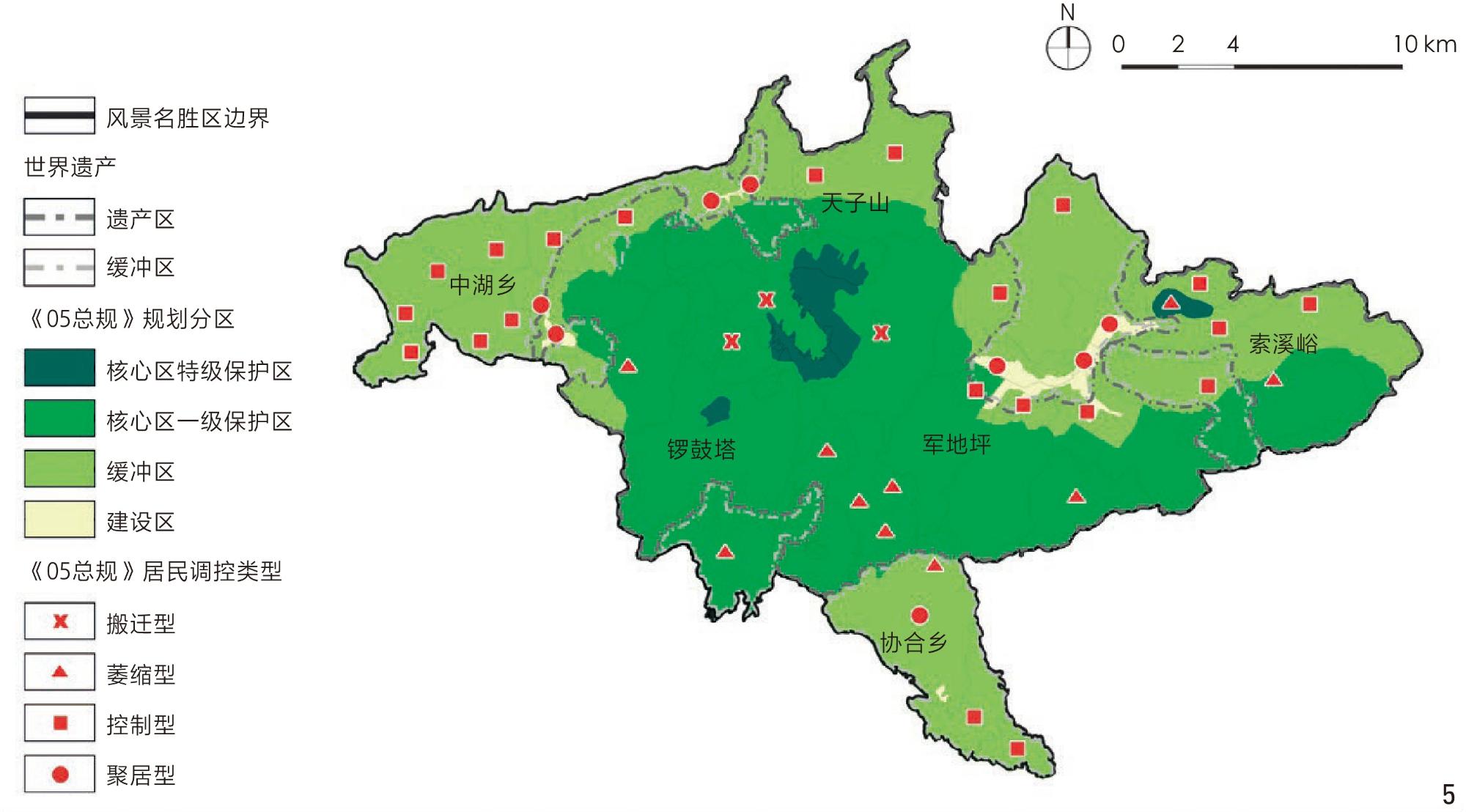
表3 《05总规》分区与主要管控措施Tab. 3 Zoning and regulations in the “05 General Planning” |
| 分区 | 面积/km2(占比/%) | 描述 | 主要管控措施 |
|---|---|---|---|
| 核心区特级保护区 | 9.8(2.47) | 峰林景观最集中、岩溶景观分布或具有重要的生物多样性保护意义的区域,存在少量农业活动 | 禁止人为活动(科研除外),资源绝对保育区 |
| 核心区一级保护区 | 207.4(52.18) | 严格保护,自然游览可控开展,所有居民逐步搬迁 | |
| 缓冲区 | 174.0(13.80) | 核心区外围,承接保护压力 | 禁建过夜设施,作为绿色农业基地 |
| 建设区 | 6.3(1.58) | 不影响遗产价值的区域,适宜开发 | 可建旅游设施,控制规模与风貌 |
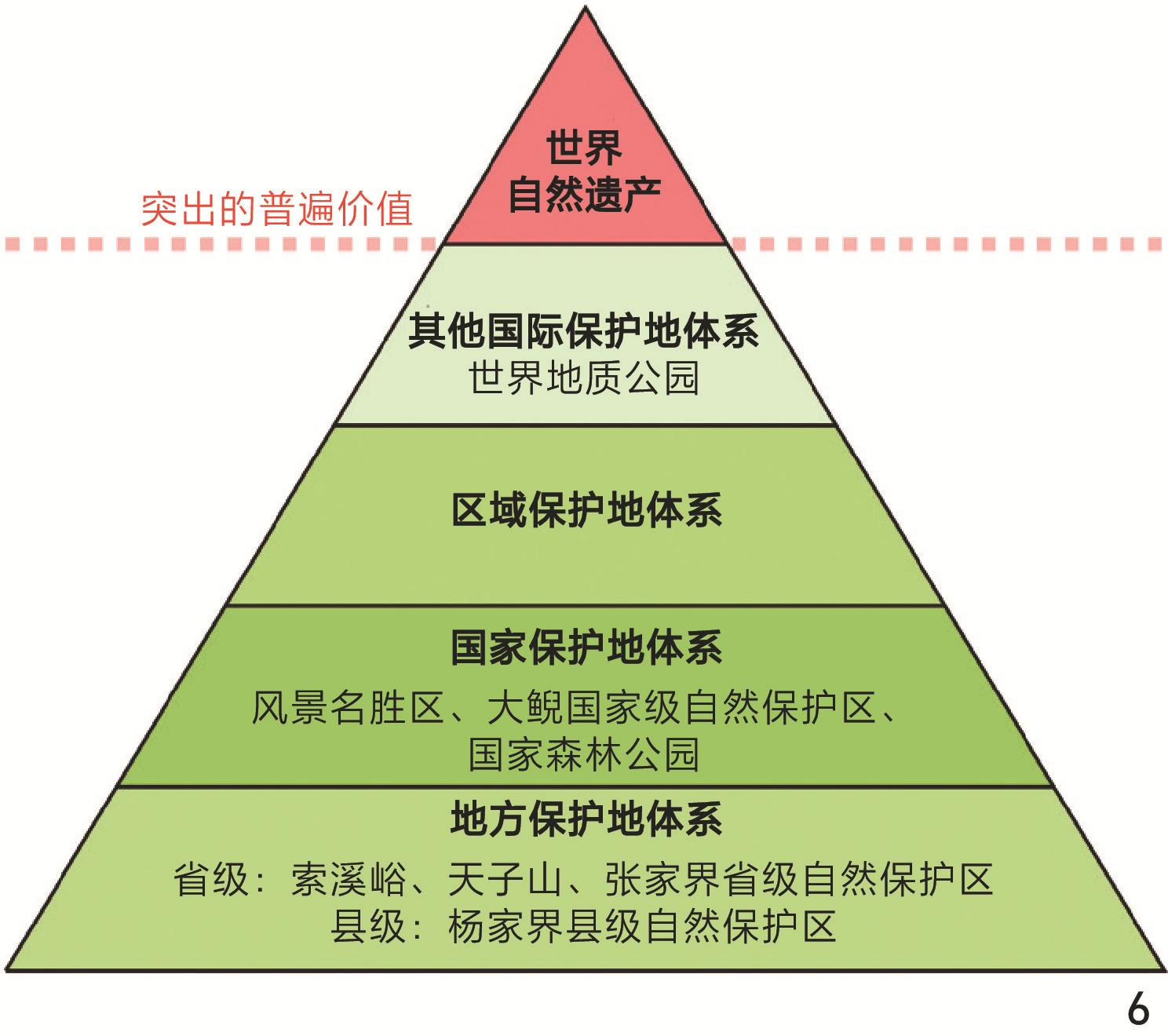
图6 武陵源风景名胜区融合OUV的多层次资源与价值体系Fig. 6 Multi-level resource and value system integrating OUV of Wulingyuan SHA |
表4 武陵源风景名胜区世界自然遗产OUV载体及其数量Tab. 4 Amount of attributes of WNH OUV in Wulingyuan SHA |
| 分类 | 总数 | 备注 | ||
|---|---|---|---|---|
| 地质 景观 | 地层遗迹 | — | 区域性分布,无法统计数量 | |
| 古生物遗迹 | 2处 | 大量分布,目前发现并现地保留共2处 | ||
| 地貌 景观 | 侵蚀、剥蚀构造地貌 | — | 区域性分布,无法统计数量 | |
| 石英砂岩峰林地貌 | 平台、方山 | — | 区域性分布,无法统计数量 | |
| 峰 林、 峰丛、峰墙 | 3 103处 | |||
| 天生桥 | 2处 | |||
| 石门 | 3处 | |||
| 峡谷、峰谷 | 10处 | 主要沟谷 | ||
| 岩溶地貌 | 漏斗和洼地 | — | 未统计数量 | |
| 溶丘、石芽和石林 | 1处(石林) | 溶丘、石芽未统计数量 | ||
| 溶洞 | 40余处 | 其中12处有命名 | ||
| 河谷侵蚀堆积地貌 | — | 区域性分布,无法统计数量 | ||
| 水文地质景观 | 河、溪流 | 37条 | ||
| 湖、潭 | 17处 | |||
| 泉 | 4处 | |||
| 叠水瀑布 | 7处 | |||
| 暗河、暗瀑 | 2处 | 数量众多,已知共2处 | ||
| 生物 多样性 | 珍稀植物 | 保护与濒危植物 | 《中国重点野生保护植物名录》23种,《中国珍稀濒危植物名录》18种,《濒危野生动植物种国际贸易公约》附录中30种 | |
| 古树名木 | 约1 365株 | |||
| 特有植物 | 中国特有科1个、准特有科2个,中国特有属30个,华中种子植物特有种81个 | |||
| 石英砂岩峰林植物 | 石生黄堇、巴山松等6种 | |||
| 珍稀动物 | 重点保护动物 | 国家重点保护野生动物36种,IUCN红色名录物种26种 | ||
| 特有动物 | 中国特有种脊椎动物30种 | |||
| 复杂生态系统 | — | 区域性分布,无法统计数量 | ||
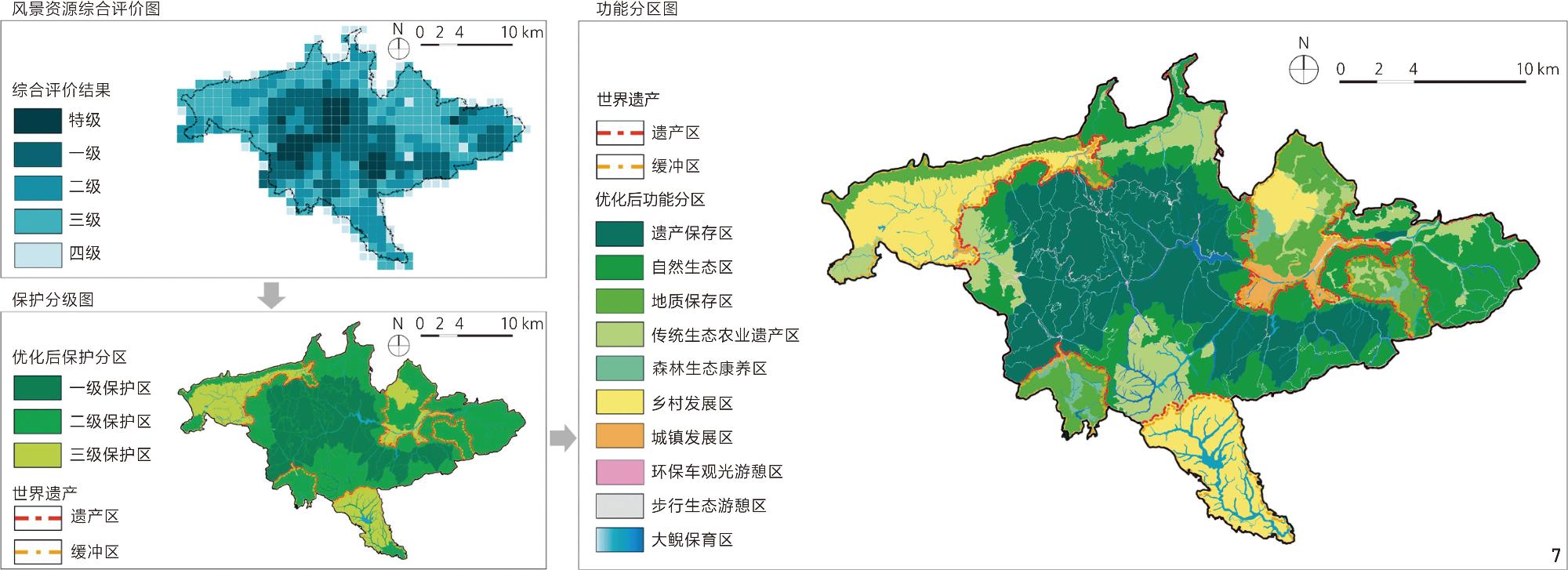
表5 衔接世界遗产保护目标的武陵源风景名胜区分区管控体系与政策Tab. 5 Zoning and regulations of Wulingyuan SHA aligned with WNH conservation objectives |
| 资源评价等级 | 保护 分区 | 功能分区 | 功能分区政策 | 与世界遗产对应关系 | 与《标准》中功能分区对应关系 | |||
|---|---|---|---|---|---|---|---|---|
| 游客活动 | 科研管理活动 | 居民调控 | 设施建设b) | |||||
| 注:a)该乡村发展区被划分为二级保护区,是为落实对红色文化资源的高等级保护,但整体区域采用一般乡村发展区同等的管控策略。 b)除监测、防护、防灾及其他和保护无关设施外。 | ||||||||
| 特级、 一级 | 一级 保护区 | 遗产保存区 | 禁止 | 审批后允许 | 疏解型 | 禁止 | 遗产区 | 特别保存区 |
| 大鲵保育核心区 | 禁止 | 审批后允许 | 禁止 | 遗产区 | ||||
| 二级、 三级 | 二级 保护区 | 自然生态区 | 禁止 | 允许 | 控制型 | 控制 | 遗产区 | 风景恢复区 |
| 大鲵保育缓冲区 | 禁止 | 允许 | 禁止 | 遗产区 | ||||
| 步行生态游憩区 | 控制 | 允许 | 控制 | 遗产区 | 风景游览区 | |||
| 环保车观光游憩区 | 控制 | 允许 | 控制 | 遗产区 | ||||
| 传统生态农业遗产区 | 控制 | 允许 | 控制型 | 控制 | 遗产区与缓冲区 | 发展控制区 | ||
| 地质保存区 | 控制 | 允许 | 控制型 | 禁止 | 缓冲区 | 风景恢复区 | ||
| 大鲵保育实验区 | 控制 | 允许 | 禁止 | 缓冲区 | ||||
| 森林生态康养区 | 控制 | 允许 | 控制型 | 控制 | 缓冲区 | 发展控制区 | ||
| 乡村发展区(某红色文化村)a) | 允许 | 允许 | 发展型 | 允许 | 遗产区 | 旅游服务区 | ||
| 四级 | 三级 保护区 | 乡村发展区 | 允许 | 允许 | 发展型 | 允许 | 遗产区 | |
| 城镇发展区 | 允许 | 允许 | 发展型 | 允许 | 遗产区 | |||
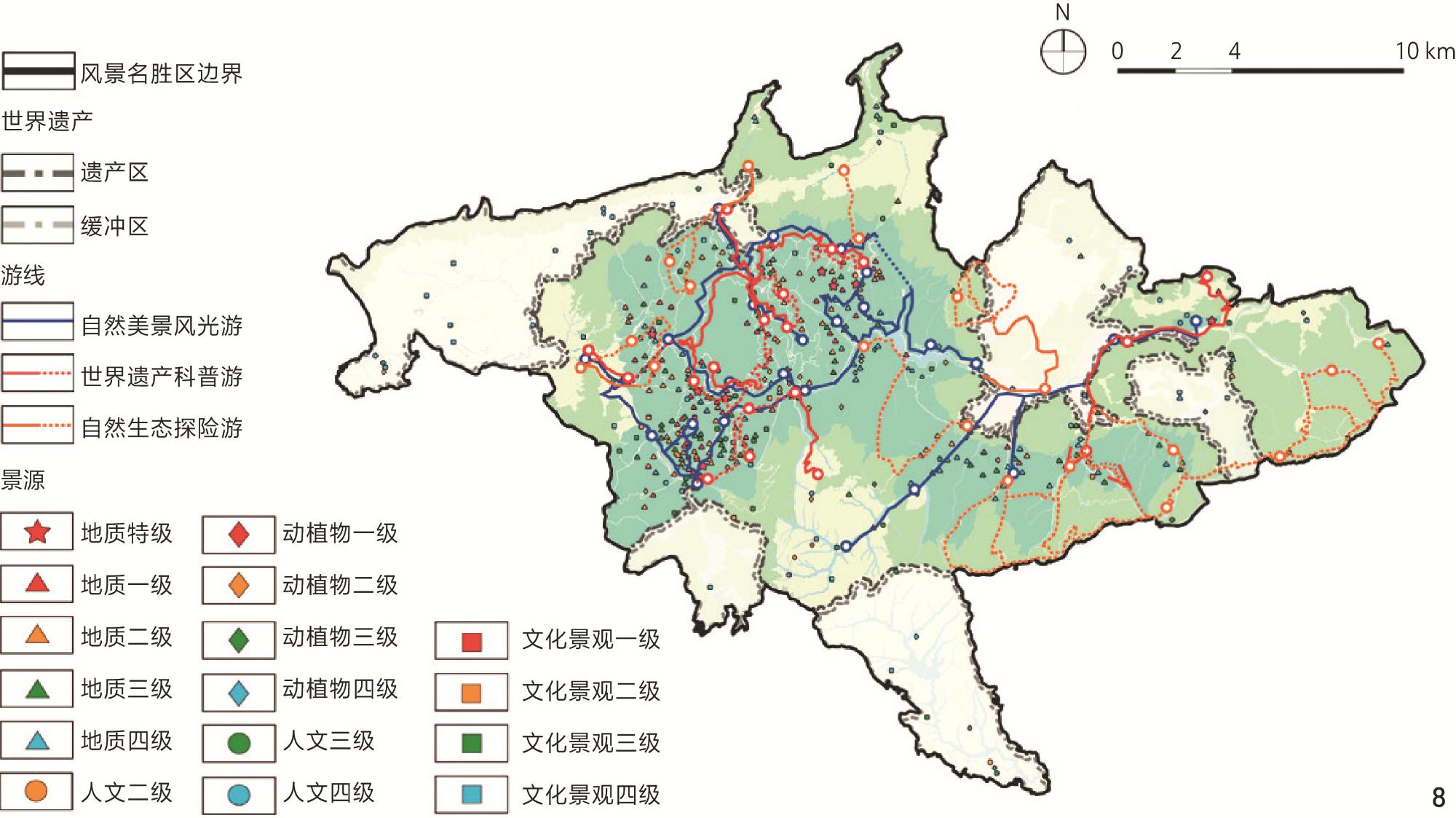
表6 武陵源风景名胜区围绕OUV 的游赏利用系统Tab. 6 Recreation systems based on OUV in Wulingyuan SHA |
| 价值主题 | 游赏主题 | 价值解说重点 | 游憩利用机会 | ||
|---|---|---|---|---|---|
| 交通方式 | 游赏服务设施 | 游客聚集程度 | |||
| 地质地貌景观与生物多样性 | 自然美景风光游 | 地貌景观与动植物构成的自然美 | 车行为主,交通设施便捷 | 相对较多 | 较高 |
| 世界遗产科普游 | 地质演化与生物、生态系统的科学价值 | 以步行为主,游步道经过建设 | 较少 | 中等 | |
| 自然生态探险游 | 以科学价值为主 | 以步行为主,游步道未经建设,保留原始风貌 | 只有基础设施 | 低 | |
1、创新性地将世界自然遗产保护与管理要求融入风景名胜区总体规划,构建“价值融合—目标与空间管控衔接—专项优化”的规划技术框架。
2、在武陵源案例中,构建了融合突出的普遍价值的资源与价值体系、分区边界对接机制与专项利用策略,并验证了该框架在强化遗产全要素保护与解说、优化游憩体验和促进社区发展方面的有效性。
3、回应了国土空间规划改革下全要素保护、“多规合一”和精细化治理的政策导向,为中国自然保护地体制下世界自然遗产的在地保护提供规划技术支撑与实践示范。
| [1] |
UNESCO. Convention Concerning the Protection of the World Cultural and Natural Heritage[EB/OL]. (1972-11-16)[2025-07-04]. https://whc.unesco.org/en/conventiontext/.
|
| [2] |
UNESCO. Managing Natural World Heritage[M]. Paris: UNESCO, 2012.
|
| [3] |
石春晖, 代莹, 宋峰. 世界遗产保护制度与中国本土化保护体系关系: 基于风景名胜区制度的探讨[J]. 中国园林, 2016, 32(3): 75-79.
SHI C H, DAI Y, SONG F. The Relationship Between World Heritage Conservation System and China’s Localized Conservation System: Based on the Research of Famous Scenic Site System[J]. Chinese Landscape Architecture, 2016, 32(3): 75-79.
|
| [4] |
彭琳.风景名胜区整体价值识别与保护[M].北京: 中国建筑工业出版社, 2021.
PENG L. Identification and Protection of the Holistic Value of National Scenic and Historic Areas[M]. Beijing: China Architecture & Building Press, 2021.
|
| [5] |
韩锋. 世界遗产“文化自然之旅”与中国文化景观之贡献[J]. 中国园林, 2019, 35(4): 47-51.
HAN F. The World Heritage “Culture Nature Journey” and the Contribution of Chinese Cultural Landscapes[J]. Chinese Landscape Architecture, 2019, 35(4): 47-51.
|
| [6] |
庄优波. 我国世界自然遗产地保护管理规划实践概述[J]. 中国园林, 2013, 29(9): 6-10.
ZHUANG Y B. Overview of Management Planning Practice for Chinese World Natural Heritage Sites[J]. Chinese Landscape Architecture, 2013, 29(9): 6-10.
|
| [7] |
贾丽奇, 郭华敏. 《实施世界遗产公约的操作指南》中关于“缓冲区”条款的修订解读[J]. 规划师, 2015,31(S2): 42-45,49.
JIA L Q, GUO H M. Analysis of the Revision About the Buffer Zone of the “Operational Guidelines for the Implemention of the World Heritage Convention”[J]. Planners, 2015,31(S2): 42-45,49.
|
| [8] |
李如生. 中国世界遗产保护的现状、问题与对策[J]. 城市规划, 2011, 35(5): 38-44.
LI R S. Current State, Problems and Countermeasures of the World Heritage Protection in China[J]. City Planning Review, 2011, 35(5): 38-44.
|
| [9] |
杨锐, 王应临, 庄优波. 中国的世界自然与混合遗产保护管理之回顾和展望[J]. 中国园林, 2012, 28(8): 55-62.
YANG R, WANG Y L, ZHUANG Y B. Retrospect and Prospect: Protection and Management of World Natural and Mixed Heritage in China[J]. Chinese Landscape Architecture, 2012, 28(8): 55-62.
|
| [10] |
MERODE E D, SMEETS R, WESTRIK C. Linking Universal and Local Values: Managing A Sustainable Future for World Heritage[EB/OL]. [2024-09-19]. https://unesdoc.unesco.org/ark:/48223/pf0000137777.
|
| [11] |
UNESCO World Heritage Centre. World Heritage and Buffer Zones[M/OL]. France: UNESCO - World Heritage Centre, 2009[2022-09-19]. https://whc.unesco.org/en/series/25/.
|
| [12] |
IUCN. Management Planning for Natural World Heritage Properties: A Resource Manual for Practitioners[M/OL]. Switzerland: IUCN, 2008[2025-07-04]. https://portals.iucn.org/library/efiles/documents/2008-077.pdf.
|
| [13] |
UNESCO. Operational Guidelines for the Implementation of the World Heritage Convention[EB/OL]. [2025-07-04]. https://whc.unesco.org/en/guidelines5.
|
| [14] |
MAGIN C, CHAPE S. Review of the World Heritage Network: Biogeography, Habitats and Biodiversity: Final Draft[EB/OL]. [2021-11-29]. https://portals.iucn.org/library/node/12800.
|
| [15] |
GATW. Report to APEC on the International Workshop: Advancing Sustainable Tourism at Cultural and Natural Heritage Sites[R/OL]. [2025-07-04]. https://www.apec.org/docs/default-source/Publications/2010/12/Advancing-Sustainable-Tourism-at-Cultural-and-Natural-Heritage-Sites-Mogao-Caves-World-Heritage-Site/210_twg_AdvancingSustainableTourism.pdf.
|
| [16] |
UNESCO. UNESCO World Heritage and Sustainable Tourism Programme[EB/OL]. [2025-07-04]. https://whc.unesco.org/uploads/activities/documents/activity-669-7.pdf.
|
| [17] |
SHEPPARD D. The New Paradigm for Protected Areas: Implications for Managing Visitors in Protected Areas[C]//SIEGRIST D, CLIVAZ C, HUNZIKER M, et al. Proceedings of the Third International Conference on Monitoring and Management of Visitor Flows in Recreational and Protected Areas. Rapperswil: University of Applied Sciences Rapperswil, 2006: 33-45.
|
| [18] |
MALLARACH J M, VERSCHUUREN B. Changing Concepts and Values in Natural Heritage Conservation: A View Through Iucn and Unesco Policies[M]//AVRAMI E, MASON R, MACDONALD S, et al. Values in Heritage Management: Emerging Approaches and Research Directions. Los Angeles: Getty Conservation Institute, 2019: 141-157.
|
| [19] |
贾建中. 我国风景名胜区发展和规划特性[J]. 中国园林, 2012, 28(11): 11-15.
JIA J Z. Development and Planning Characteristics of Scenic Areas of China[J]. Chinese Landscape Architecture, 2012, 28(11): 11-15.
|
| [20] |
邓武功, 贾建中, 束晨阳, 等. 从历史中走来的风景名胜区: 自然保护地体系构建下的风景名胜区定位研究[J]. 中国园林, 2019, 35(3): 9-15.
DENG W G, JIA J Z, SHU C Y, et al. Scenic and Historic Area out of History: Study on the Positioning of Scenic and Historic Area Based on the Nature Reserve Area System[J]. Chinese Landscape Architecture, 2019, 35(3): 9-15.
|
| [21] |
刘秀晨. 风景名胜区是中国自然保护地体系的独立类型[J]. 中国园林, 2019, 35(3): 1.
LIU X C. Scenic and Historic Areas Are the Independent Type of China’s Nature Reserve System[J]. Chinese Landscape Architecture, 2019, 35(3): 1.
|
| [22] |
李晓黎, 韩锋. 中国风景名胜之潜在世界遗产文化景观价值贡献[J]. 城市发展研究, 2015, 22(8): 118-124.
LI X L, HAN F. Potential Cultural Landscape Heritage Values in China’s Scenic and Historic Interest Areas[J]. Urban Development Studies, 2015, 22(8): 118-124.
|
| [23] |
唐军.风景名胜区总体规划[M].南京: 东南大学出版社, 2024.
TANG J. General Planning of Scenic and Historic Interest Areas[M]. Nanjing: Southeast University Press, 2024.
|
| [24] |
徐青.风景名胜区文化景观价值体系研究: 以庐山为例[M].北京: 中国建筑工业出版社, 2019.
XU Q. Study on the Cultural Landscape Value System of Scenic and Historic Interest Areas[M]. Beijing: China Architecture & Building Press, 2019.
|
| [25] |
韩锋, 郭晓彤, 杨晨. 中国世界自然遗产地乡村景观保护与发展协同: 以武陵源中湖乡为例[J]. 风景园林, 2022, 29(10): 89-94.
HAN F, GUO X T, YANG C. Collaboration Between the Protection and Development of Rural Landscape in China’s World Natural Heritage Sites: A Case Study of Zhonghu Township, Wulingyuan[J]. Landscape Architecture, 2022, 29(10): 89-94.
|
| [26] |
World Heritage Center. Wulingyuan Scenic and Historic Interest Area[EB/OL]. [2025-05-08]. https://whc.unesco.org/en/list/640.
|
| [27] |
韩锋.世界遗产武陵源风景名胜区[M].上海: 同济大学出版社, 2020.
HAN F. World Heritage: Wulingyuan Scenic and Historic Interest Area[M]. Shanghai: Tongji University Press, 2020.
|
| [28] |
IUCN. IUCN World Heritage Outlook 2014: A Conservation Assessment of all Natural World Heritage Sites[M]. Gland: IUCN, 2014.
|
| [29] |
IUCN. IUCN World Heritage Outlook 2017: A Conservation Assessment of all Natural World Heritage[M]. Gland: IUCN, 2017.
|
| [30] |
ICOMOS. ICOMOS-IFLA Principles Concerning Rural Landscapes as Heritage[EB/OL]. (2017-12-17)[2025-06-05]. https://www.icomos.org/images/DOCUMENTS/Charters/GA2017_6-3-1_RuralLandscapesPrinciples_EN_adopted-15122017.pdf.
|
/
| 〈 |
|
〉 |