

Exploration of the Holistic Protection Plan of Cultural and Natural Heritage at the Provincial Level: A Case Study of Hunan Province
|
HU Lijun, Master, is chief engineer of Heritage Conservation and Cultural Revitalization Institute, Shanghai Tongji Urban Planning & Design Institute Co., Ltd. His research focuses on heritage conservation and cultural inheritance |
|
SHAO Yong, Ph.D., is a professor in the College of Architecture and Urban Planning, Tongji University, director of the World Heritage Institute of Training and Research for the Asia and Pacific Region (Shanghai), and dean of Heritage Conservation and Cultural Revitalization Institute, Shanghai Tongji Urban Planning & Design Institute Co., Ltd. Her research focuses on the history of urban and rural development, heritage conservation, and urban regeneration |
|
CHEN Huan is director of the First Division, Heritage Conservation and Cultural Revitalization Institute, Shanghai Tongji Urban Planning & Design Institute Co., Ltd. Her research focuses on heritage conservation and cultural inheritance |
Received date: 2026-01-13
Revised date: 2026-03-22
Online published: 2026-04-22
In recent years, China has systematically strengthened its top-level strategic planning for the conservation of both cultural and natural heritage. In the domain of cultural heritage, a comprehensive preservation framework has been established to safeguard historical and cultural assets across urban and rural contexts, while actively identifying and documenting emerging heritage categories—including modern heritage and agricultural heritage. In parallel, China has instituted a national park−centered protected areas system to enhance the conservation and sustainable management of natural heritage. Against the backdrop of ongoing institutional strengthening for both cultural and natural heritage protection, the holistic protection of cultural and natural heritage has attracted growing attention. However, three interrelated challenges currently impede its effective implementation across China: first, limited recognition of the holistic value and intrinsic significance of heritage assets; second, imprecise delineation of spatial conservation boundaries; and third, fragmented regulatory mechanisms that hinder coordinated protection and sustainable development. To address these gaps, this study draws on planning practice and empirical experience from Hunan Province to propose a provincial-level technical framework for holistic protection planning. The framework aims to advance methodological rigor in regional-scale spatial governance, strengthen the operational linkage between planning formulation and on-the-ground implementation, and support the practical realization of holistic protection objectives.
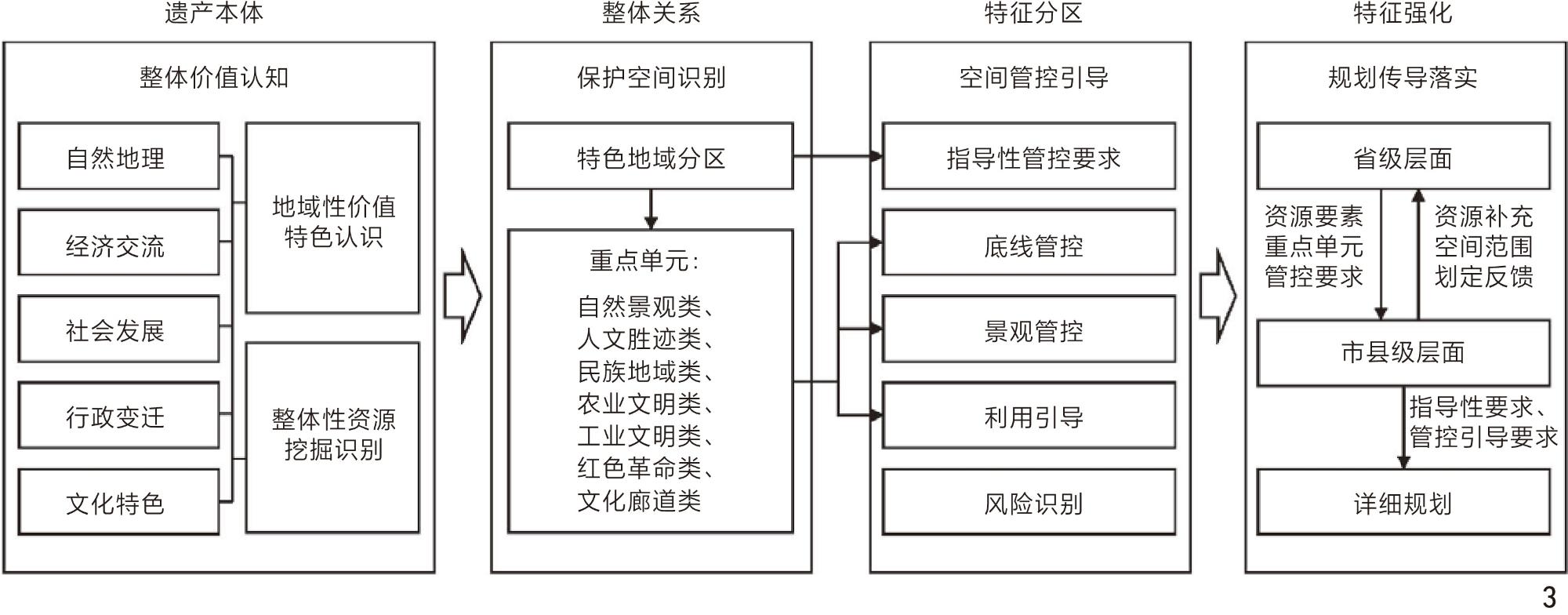
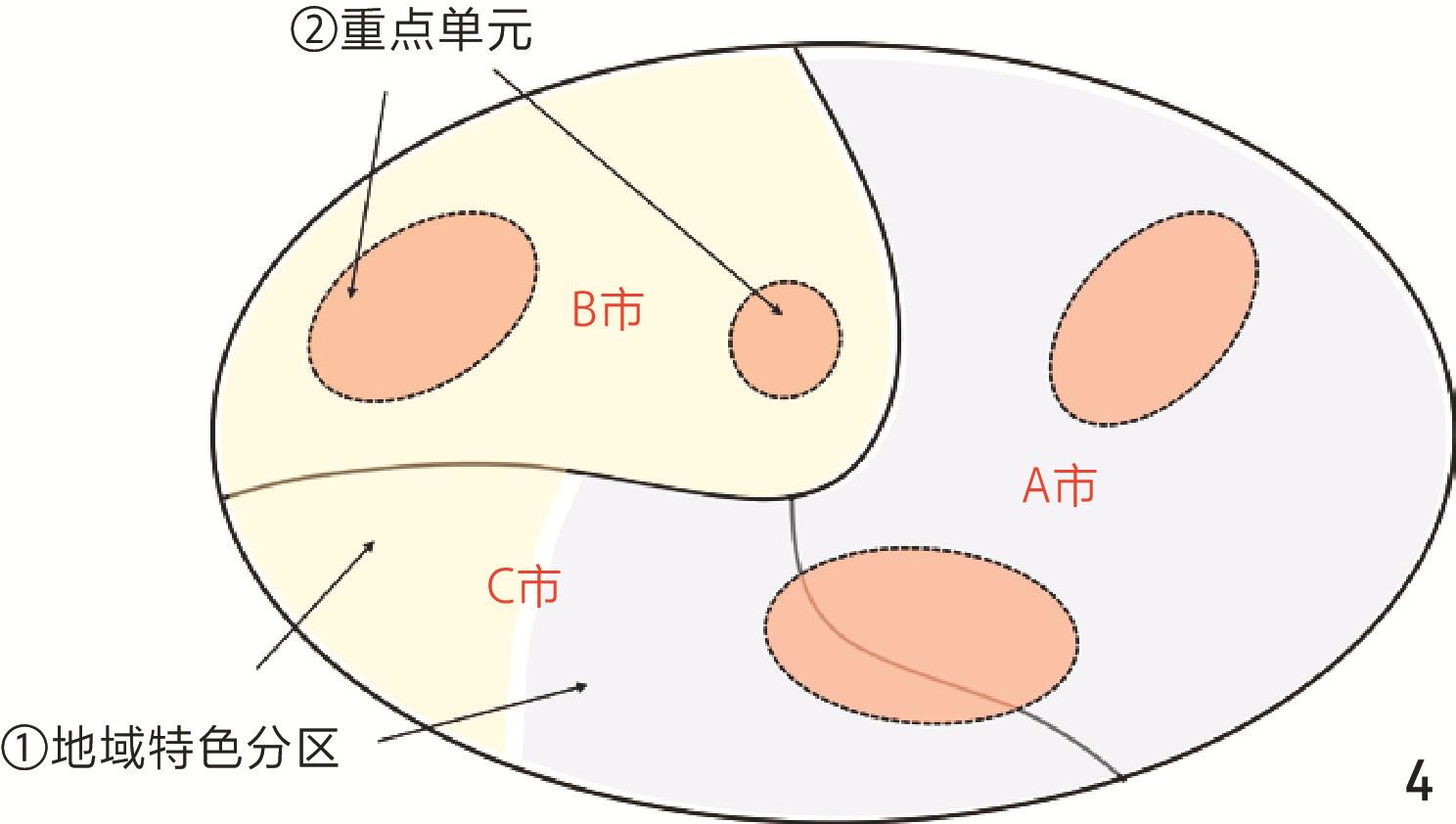
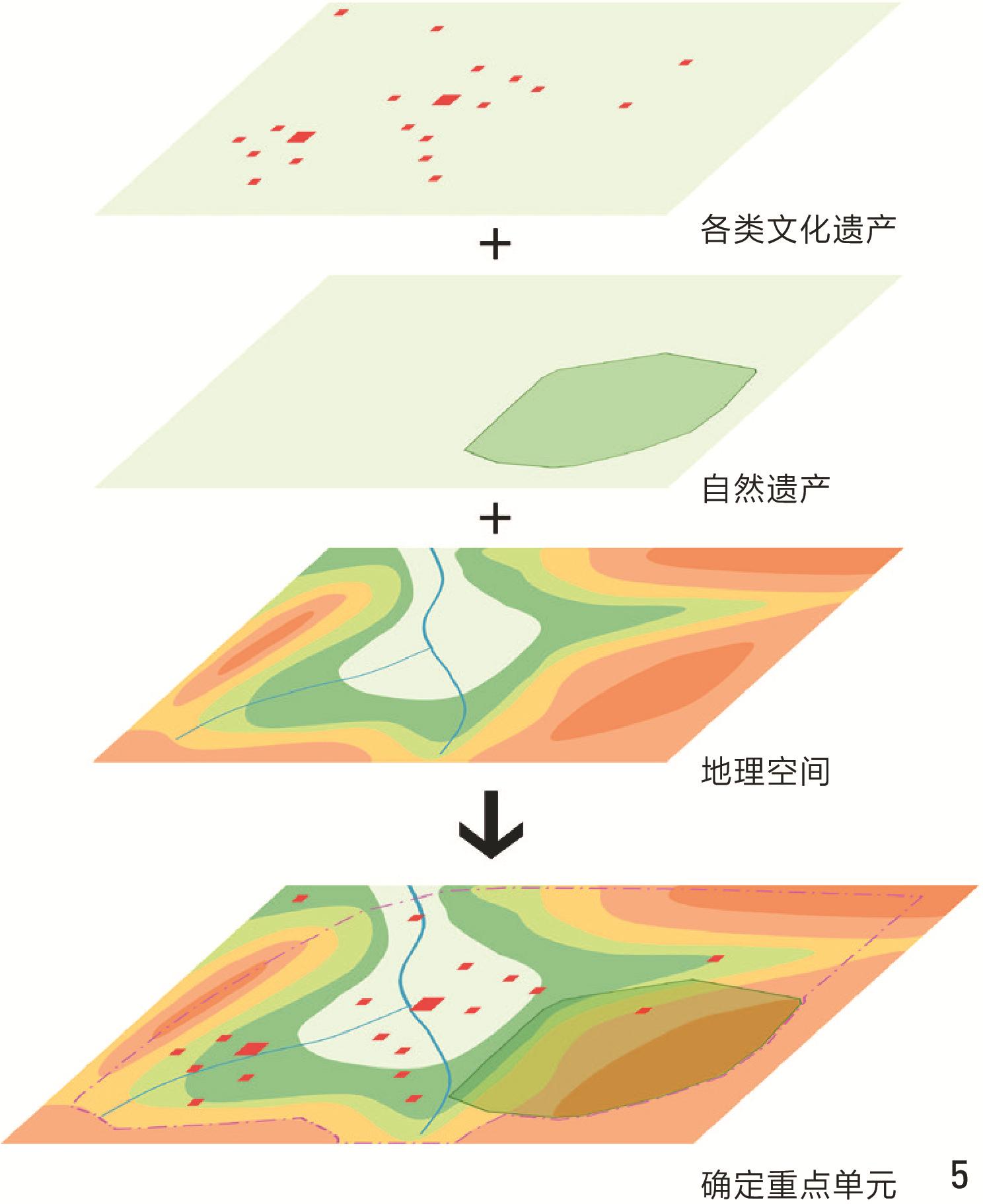
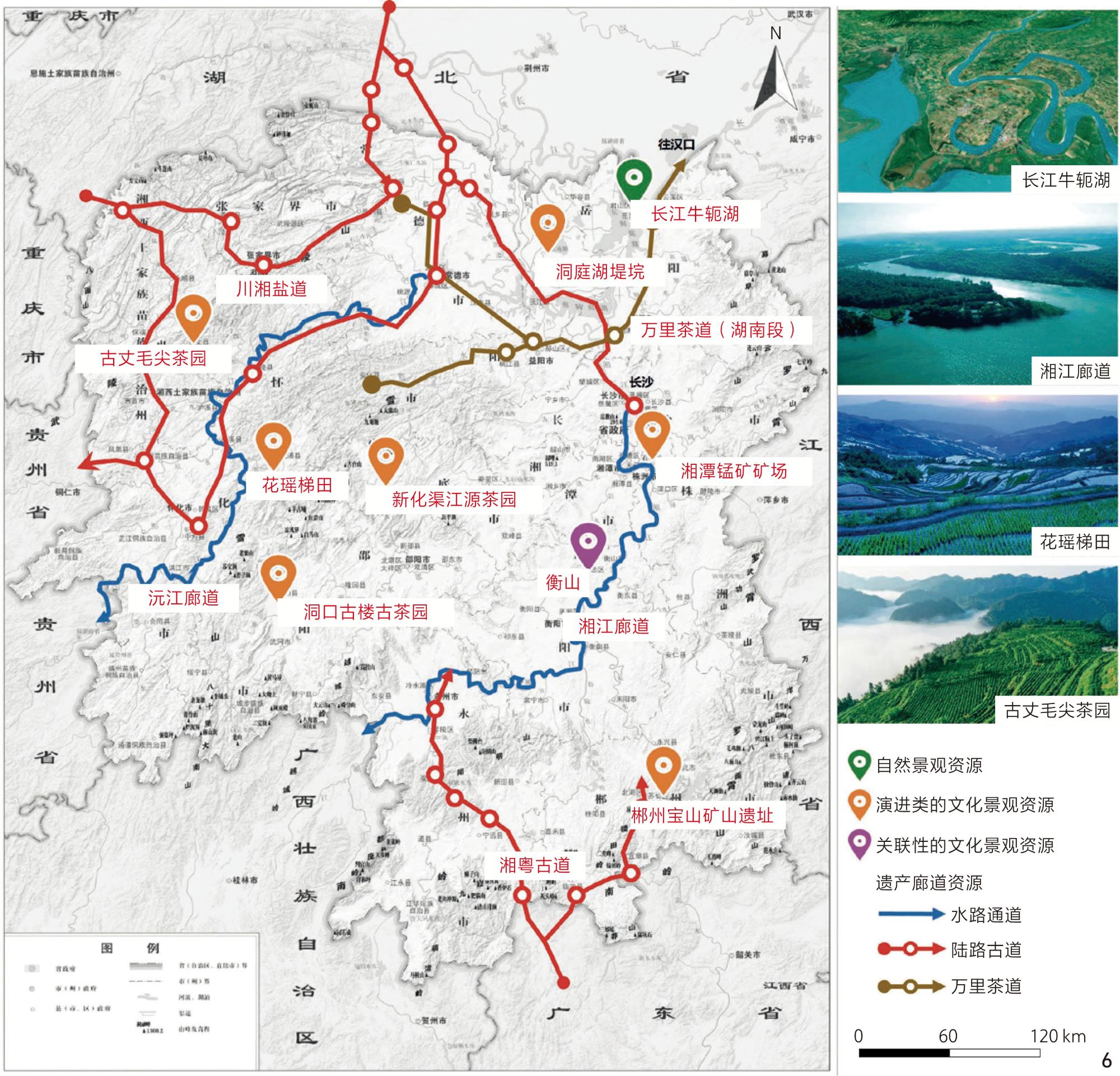
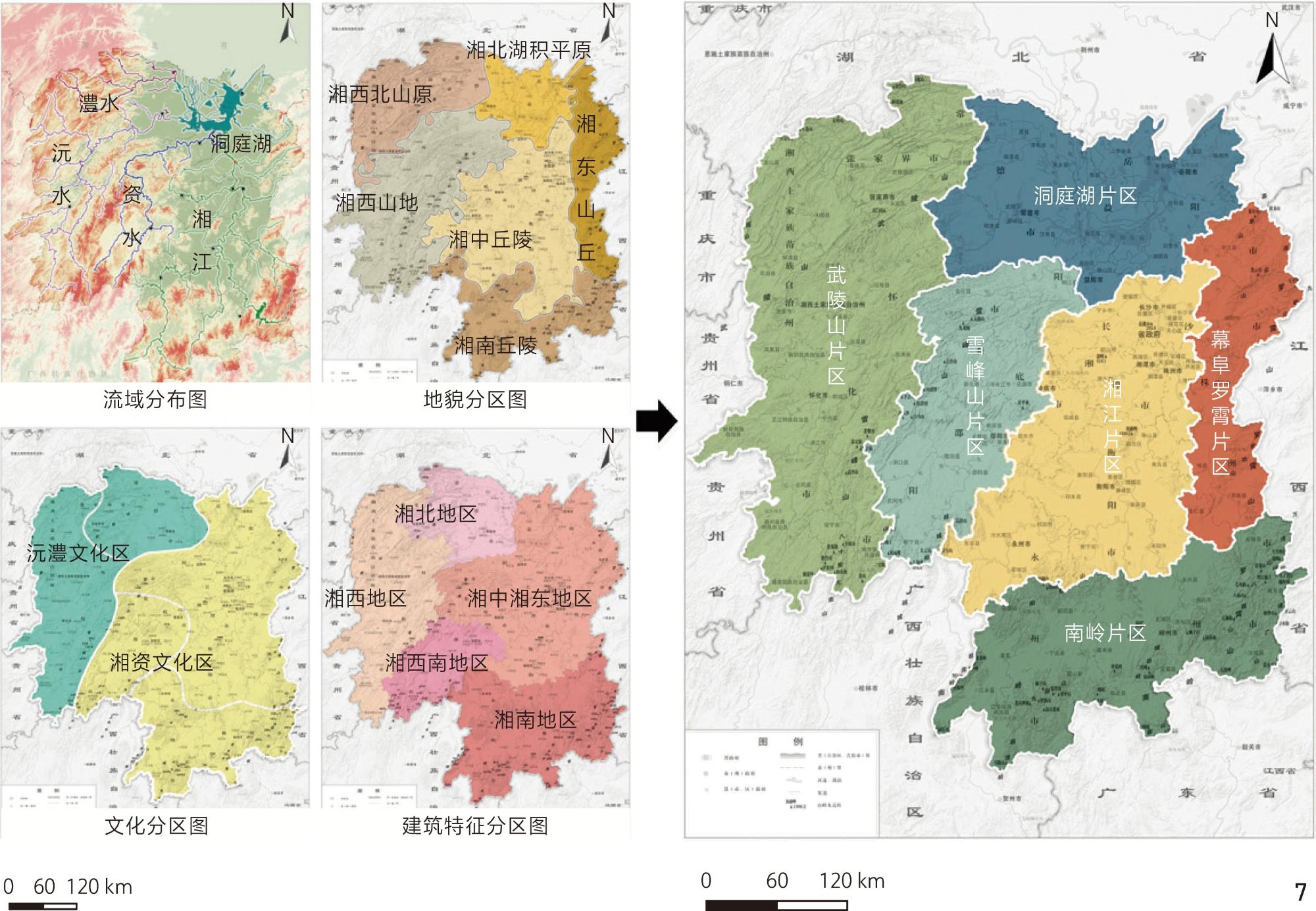
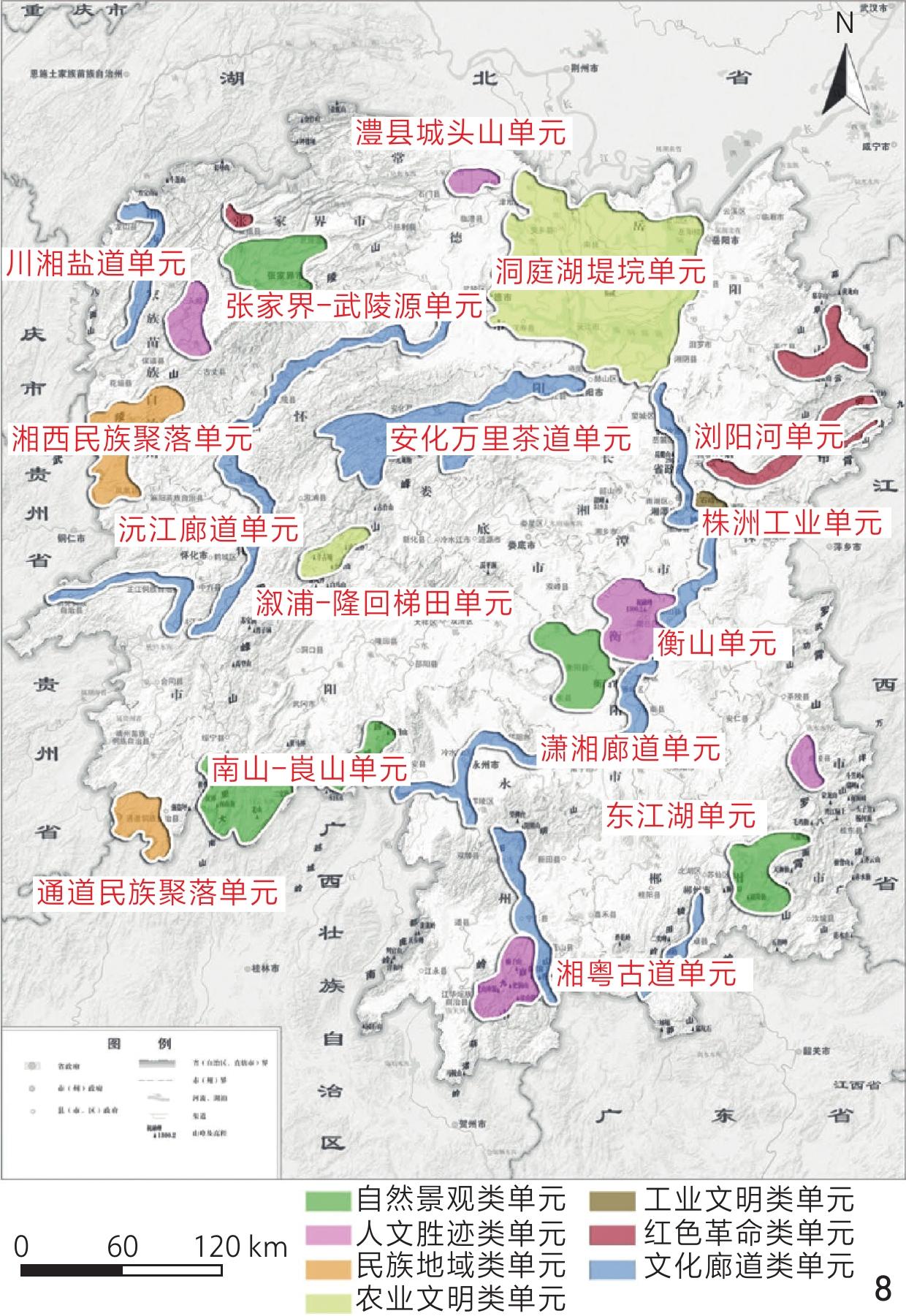
Holistic protection planning for cultural and natural heritage constitutes a specialized sectoral plan of the territorial spatial planning system, designed specifically to overcome the limitations arising from fragmented, sector-specific protection approaches. At the provincial level, such holistic protection planning is grounded in two defining characteristics of heritage resources—regional and interdependence features. It advances a coherent technical pathway comprising four sequential yet iterative phases: 1) overall value recognition, 2) spatial recognition of conservation areas, 3) tiered spatial regulatory guidance, and 4) implementation-oriented planning transmission. First, it is essential to advance the overall value recognition of heritage. This requires a systematic identification and documentation of resources that embody landscape evolution, human−environment interactions, and regional interconnections—while also demonstrating distinctive regional and landscape significance. Priority should be given to four resource categories: natural landscapes, evolutionary cultural landscapes, associative cultural landscapes, and heritage corridors. These categories are intended to address critical gaps in the current heritage protection framework. Second, protection spaces must be delineated through a relational, integrative approach—structured across two complementary tiers: regional characteristic zones and key units. At the provincial scale, regional characteristic zones should be defined holistically, integrating natural geography, built environment attributes (e.g., architectural typologies and material traditions), and socio-cultural continuities. The objective is to safeguard and reinforce local spatial identity over time. Subsequently, key units are to be identified based on heritage value significance, spatial connectivity, and resource concentration—explicitly transcending administrative boundaries. Such units must constitute coherent landscape entities with functional and perceptual integrity, and simultaneously serve as operational management units for implementing targeted conservation controls. Third, spatial governance and guidance must be calibrated to the functional logic of characteristic zoning. Within regional characteristic zones, management requirements are primarily strategic and facilitative—designed to preserve historical continuity and amplify regional distinctiveness. Control measures for key units are articulated across two complementary dimensions: 1) adhere to the bottom line of protection—ensuring the authenticity and integrity of heritage resources through baseline restrictions on land use, development intensity, and visual intrusion in sensitive areas; 2) landscape enhancement—establishing principled guidelines for compatible land use, spatial transitions, and contextual integration of heritage assets with their surrounding environments. Furthermore, a major project risk assessment mechanism is instituted to support preliminary review of proposed developments with potential heritage impacts. Fourth, planning transmission and implementation must be effective to support characteristic enhancement. A hierarchical implementation framework is to be established—linking provincial-level sectoral plans with municipal/county-level sectoral plans through clearly defined technical alignment. Transmission encompasses three dimensions: 1) heritage resource elements, 2) designated protection spaces, and 3) project-related risk considerations, involving spatial positioning, boundary delineation, refinement of control criteria, inter-municipal coordination mechanisms, and integration of major project risk assessments into early-stage planning review processes.
Drawing on experience from Hunan Province, this study validates the operational feasibility of a technical framework for provincial-level holistic protection planning of cultural and natural heritage. Through systematic analysis of natural geography, built-environment characteristics, and socio-cultural continuities, the research identified heritage resources aligned with a holistic protection rationale. This enabled the delineation of Hunan Province into six regional characteristic zones and the subsequent identification of seven categories of key units. Using the Dongting Lake polder embankment unit as a representative case, the paper articulates a four-pillar control strategy—comprising baseline safeguards, construction regulation, landscape design guidance, activation and utilization—within provincial sectoral planning. Moreover, it demonstrates how provincial-level planning mandates are operationally refined and implemented at the municipal/county levels, thereby confirming the functional efficacy and institutional enforceability of the planning transmission mechanism.
The essence of holistic protection for cultural and natural heritage lies in safeguarding the dynamic, co-evolutionary relationships between human societies and natural systems. A holistic protection plan serves as an integrative governance instrument that addresses the fragmentation inherent in current sectoral management regimes. Specifically, it advances a unified understanding of heritage significance, enables the strategic integration of high-value resources into designated protection and management spaces, and strengthens the implementation of planning objectives through regulatory tools, including land-use controls, planning conditions, permitting procedures, and vertically coordinated transmission of planning mandates. Currently, holistic protection remains in an experimental phase; its methodological foundations require further refinement through cross-regional comparative research, while its conceptual and operational frameworks must be iteratively enhanced through evidence-based learning from pilot implementations.
HU Lijun , SHAO Yong , CHEN Huan . Exploration of the Holistic Protection Plan of Cultural and Natural Heritage at the Provincial Level: A Case Study of Hunan Province[J]. Landscape Architecture, 2026 , 33(4) : 29 -38 . DOI: 10.3724/j.fjyl.LA20260027
表1 整体保护规划的规划协调与传导指标Tab. 1 Planning coordination and transmission indicators for the holistic protection plan |
| 分项 | 省级规划传导指标 | 市县级规划衔接细化 | 与其他规划对接协调 |
|---|---|---|---|
| 资源体系构建 | 文化、自然遗产类型与名录(国省级) | 增补市县级资源类型和名录 | 落实到详细规划、村庄规划 |
| 潜在资源典型类型与认定标准 | 在省级初步识别的点位、线路、集中区开展市县级资源挖掘工作 | ||
| 增补资源潜在分布区 | |||
| 核心增补资源名录 | 核实省级资源名录;增补一般的或新发现的整体保护资源对象 | 与保护专项规划对接保护对象; 落实到详细规划、村庄规划 | |
| 重点单元管控 | 单元类型与边界(初步划定) | 划定重点单元空间边界,明确规模,明确重点单元涉及区县(乡镇)名录 | 省级层面与省级传承体系规划中的重要节点、廊道相协调 |
| 单元范围划定方法 | |||
| 核心价值 | 深入研究,指导资源挖掘与传承利用 | ||
| 单元内资源类型与名录 | 增补市县级资源与新挖掘资源名录 | ||
| 落实历史文化保护线、自然资源保护线 | 市县级层面与专项规划等对接保护区划; 落实到详细规划、村庄规划 | ||
| 需要保护的空间 | 明确遗产与环境的关系特征、农田肌理特征、村落布局特征等 | 落实到详细规划、村庄规划 | |
| 需要保护的景观 | 明确重要标志物,景观视廊、界面与天际线 | 落实到详细规划、村庄规划 | |
| 划定必要的景观协调区范围线 | |||
| 建设行为类型负面清单 | 落实负面清单涉及区域及具体措施 | 传导管控与引导要求落实到详细规划、村庄规划 | |
| 用途管制负面清单 | 落实负面清单涉及主要区域 | ||
| 活化利用引导建议 | 内容落实到具体区县 | ||
| 协同发展区县名录 | 核实细化至乡镇 | ||
| 协同建设内容 | 落实需要衔接、共享、差异化建设的交通、文旅、公服内容 | 落实到详细规划、村庄规划 | |
| 风险识别 | 风险识别类型 | 进一步识别可能存在的风险项目 | 与其他专项规划协调 |
| 重大风险项目清单 | 核查项目,判定风险等级,提出解决策略,如需省级层面解决,及时向上反馈 |
表2 洞庭湖堤垸单元规划传导内容示意(节选)Tab. 2 Planning transmission for the Dongting Lake unit |
| 分类 | 省级规划内容 | 市县级规划内容 |
|---|---|---|
| 价值特征 | 环湖堤垸是当地农业生产、水利调控、聚落建设与自然环境高度适应性的独特见证 | 堤垸由堤防-渠网-垸田-聚落构成、以主堤限定边界。根据洞庭湖区微观地形地貌的差异,堤垸景观主要有冲积平原型、丘陵河网型、丘陵湖汊型3类 |
| 冲积平原型堤垸形成方格网形式的渠网与农田肌理,聚落基本为平原型,沿堤防或水渠分布 | ||
| 丘陵河网型堤垸形成以水面为中心的放射网格状肌理,聚落以孤丘型为主,沿水渠分布或沿地形散布 | ||
| 丘陵湖汊型堤垸整体肌理顺应地势而呈现不规则交织状,垸田沿等高线开垦,聚落多为孤丘型与山岭型 | ||
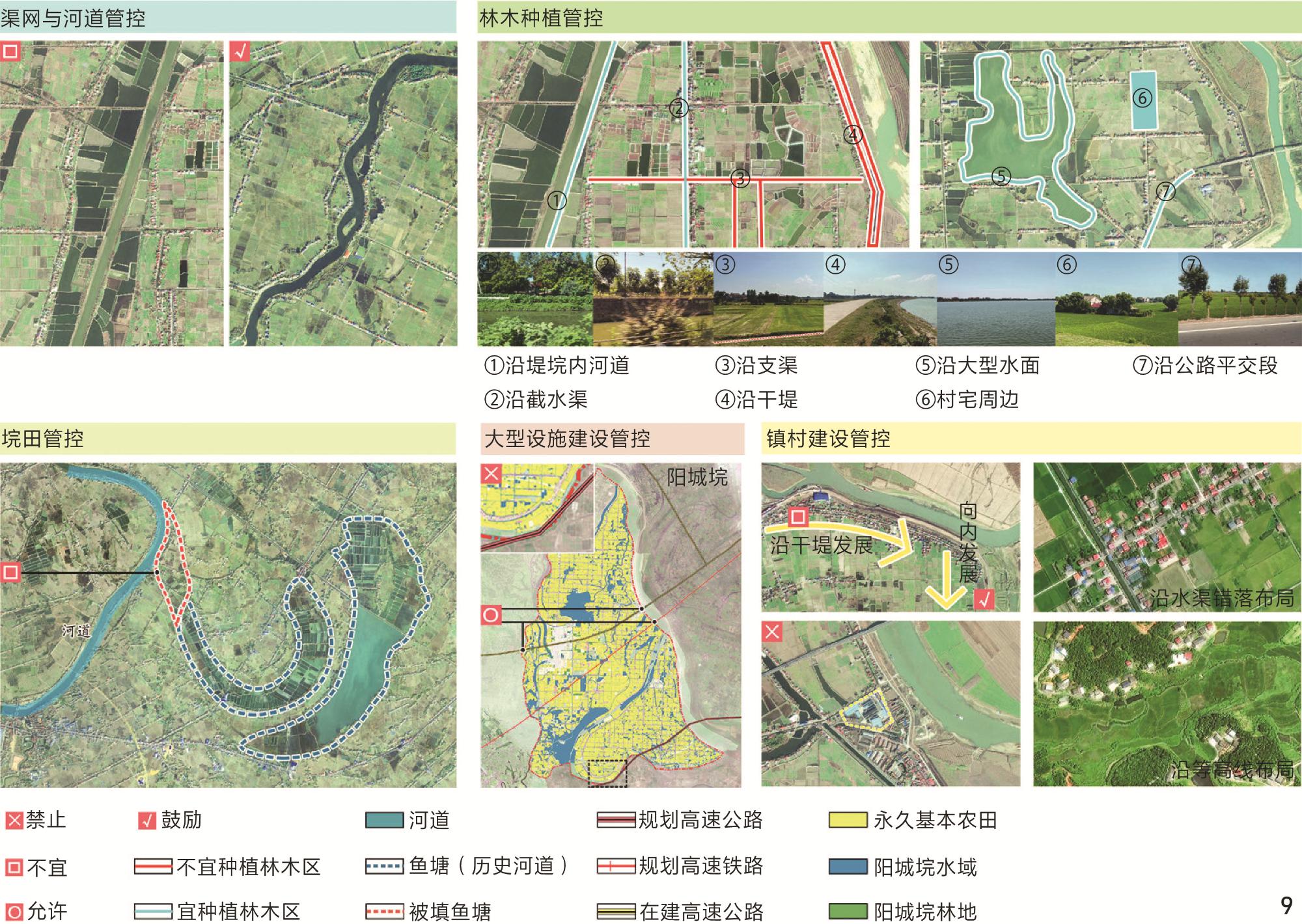
| 建设管控 | 限制单元内的各类规模建设活动 | 控制集镇规模,不宜沿圩堤进行各类规模建设活动。延续村落布局特征,严格控制村落合并 |
| 控制乡道路幅,不宜超过双车道。新增道路走向应与现状肌理相符 | ||
| 大型过境交通设施走向与圩堤防平行时,应保持500 m最小间距,交会时平面线形应垂直交叉 | ||
| 对单元进行全面的地质灾害风险评估,明确潜在的洪水、堤坝溃决等高风险区域 | ||
| 景观营造 | 保护堤垸堤防、渠网、垸田、聚落、湿地整体空间特征, 针对性塑造堤垸景观 | 垸田管控:在满足基本农田要求的条件下,不宜填埋反映历史水位信息的鱼塘为旱田 |
| 林木种植管控:宜沿堤垸内河道、大型水塘、垸田截水渠、村宅周边、公路平交段种植林木,塑造景观。禁止沿干堤、垸田间斗渠等种植林木 | ||
| 渠网与河道管控:根据堤垸所处微观地形地貌的特征,维持堤垸渠网形态的多元性。保持堤垸内河道的自然走向,不宜过度截弯取直 | ||
| 活化利用 | 利用堤垸景观资源,拓展教育、观光等产业 | 鼓励大通湖垸、沅澧垸、湘滨南湖垸合理建设栈道、骑行道、观鸟平台等基础设施,组织垸堤骑行线路 |
1、构建了省级尺度文化和自然遗产整体保护的规划技术路径,突破了文化遗产与自然遗产分别保护的局限。通过识别“地域特色分区”与“重点单元”2个层次的空间载体,在省级层面实现了对遗产资源区域性、关联性特征的系统回应,为国土空间规划体系中专项规划的技术方法提供了创新探索。
2、通过湖南洞庭湖堤垸单元规划的管控要求传导示例,明确了从省级专项规划到市县级规划的传导路径,显示了规划的可操作性。
| [1] |
UNESCO. Recommendation Concerning the Protection, at National Level, of the Cultural and Natural Heritage[R/OL]. (1972-11-23)[2025-10-08]. https://www.unesco.org/en/legal-affairs/recommendation-concerning-protection-national-level-cultural-and-natural-heritage.
|
| [2] |
中国古迹遗址保护协会.ICOMOS与IUCN关于“自然-文化之旅”行动的两份文件[EB/OL].(2018-01-03)[2025-10-08]. http://www.icomoschina.org.cn/content/details94_2648.html.
ICOMOS China. Two Documents Regarding the “Nature-Culture Journey” Initiative by ICOMOS and IUCN[EB/OL]. (2018-01-03)[2025-10-08]. http://www.icomoschina.org.cn/content/details94_2648.html.
|
| [3] |
中国古迹遗址保护协会.联合实践: 关于“自然-文化”关键词的阐释性文件(中文版)[EB/OL].(2023-07-18)[2026-03-20]. http://www.icomoschina.org.cn/content/details51_17436.html
ICOMOS CHINA. Connecting Practice: A Commentary on Nature-Culture Keywords (Chinese Version)[EB/OL]. (2018-01-03)[2026-03-20]. http://www.icomoschina.org.cn/content/details94_2648.html.
|
| [4] |
福州宣言[N].福州日报, 2021-08-01(004).
Fuzhou Declaration[N]. Fuzhou Daily, 2021-08-01(004).
|
| [5] |
张兵, 罗彦, 白杨. 整体创造更具自然与文化价值的国土空间[J]. 中国园林, 2023, 39(8): 6-14.
ZHANG B, LUO Y, BAI Y. Creating Territorial Space with more Natural and Cultural Values: A Holistic Approach[J]. Chinese Landscape Architecture, 2023, 39(8): 6-14.
|
| [6] |
历史文化名城保护规划规范: GB/T 50357—2005[S].北京: 中国建筑工业出版社, 2005.
Code of Conservation Planning for Historic Cities: GB/T 50357−2005[S]. Beijing: China Architecture & Building Press, 2005.
|
| [7] |
住房和城乡建设部.历史文化名城保护规划标准: GB/T 50357—2018[S].北京: 中国建筑工业出版社, 2018.
Ministry of Housing and Urban-Rural Development of the People’s Republic of China. Standard of Conservation Planning for Historic City: GB/T 50357−2018[S]. Beijing: China Architecture & Building Press, 2018.
|
| [8] |
张春龙, 陆益平.南山国家公园候选区书写人与自然和谐共生的故事: 交出“十四五”生态守护圆满答卷[N].湖南日报, 2025-11-25(09).
ZHANG C L, LU Y P. Nanshan National Park Candidate Area Writes a Story of Harmonious Coexistence Between Humans and Nature: Submitting a Satisfactory Answer Sheet for Ecological Protection in the 14th Five-Year Plan[N]. Hunan Daily, 2025-11-25(09).
|
| [9] |
中华人民共和国自然资源部.国土空间历史文化遗产保护规划编制指南: TD/T 1090—2023[S].[出版地不详: 出版者不详], 2023.
Guidelines for the Preparation of National Land Space Historical and Cultural Heritage Protection Plans: TD/T 1090−2023[S]. [S.l.: s.n.], 2023.
|
| [10] |
赵露.我们不愿成为下一个潦洲岛[N].株洲晚报, 2017-09-07(A12-13).
ZHAO L. We Don’t Want to Become the Next Liaozhou Island[N]. Zhuzhou Evening News, 2017-09-07(A12-13).
|
| [11] |
邵甬, 关星. 再探区域性历史文化空间价值特征: 以丹沁古灌区为例[J]. 城市规划, 2023, 47(10): 30-42.
SHAO Y, GUAN X. Re-exploration of the Value Characteristics of Regional Historic and Cultural Space: The Case of Ancient Irrigation Area of Danhe and Qinhe Rivers[J]. City Planning Review, 2023, 47(10): 30-42.
|
| [12] |
张广汉, 鞠德东, 汤芳菲, 等. 名城保护理念与方法的演进和展望: 从历史文化名城到城乡历史文化保护传承体系[J]. 城市规划, 2024, 48(S1): 94-100.
ZHANG G H, JU D D, TANG F F, et al. Evolution and Prospect for the Protection System of Historic and Cultural City: From Historic and Cultural City to the Protection and Inheritance System of Urban-Rural History and Culture[J]. City Planning Review, 2024, 48(S1): 94-100.
|
| [13] |
陈同滨, 王琳峰. 传承历史文脉讲述中国故事: “城乡建设与历史文化保护传承体系(古代部分)” 构建回顾[J]. 中国勘察设计, 2021(11):28-33.
CHEN T B, WANG L F. Inheriting Historical Context and Telling Chinese Stories: A Review on the Construction of Urban-Rural Construction and Historical & Cultural Protection and Inheritance System (Ancient Part)[J]. China Exploration & Design, 2021(11):28-33.
|
| [14] |
李小龙, 刘丫丫, 王树声, 等. 省级城乡历史文化价值体系规划框架与建构方法[J]. 规划师, 2024, 40(4): 16-23.
LI X L, LIU Y Y, WANG S S, et al. Planning Framework and Construction Method of Provincial Urban-Rural Historical and Cultural Value System[J]. Planners, 2024, 40(4): 16-23.
|
| [15] |
白晶, 许闻博, 孙昊, 等. 国土空间规划中的自然与文化遗产保护利用规划探索[J]. 城市规划学刊, 2022(S1): 219-224.
BAI J, XU W B, SUN H, et al. Natural and Cultural Heritage Conservation and Utilization Planning in Territorial Spatial Planning[J]. Urban Planning Forum, 2022(S1): 219-224.
|
| [16] |
张伟然.湖南历史文化地理研究[M].修订本.杭州: 浙江古籍出版社, 2021.
ZHANG W R. A Study on the Historical and Cultural Geography of Hunan[M]. Revised ed. Hangzhou: Zhejiang Ancient Books Publishing House, 2021.
|
/
| 〈 |
|
〉 |