

Nonlinear Influence Mechanism of Built Environment and Socio-Demographic Factors on Non-motorized Travel Willingness in the “Last Mile” Context
|
FANG Sitao is an undergraduate student in the Institute of Smart City and Intelligent Transportation, Southwest Jiaotong University. His research focuses on environmental design and travel behavior |
|
WU Ran, Ph.D., is an associate professor in the School of Architecture, Southwest Jiaotong University, a young committee member of China Landscape Architecture Society’s Land and Landscape Specialized Committee, and a committee member of China Forestry Society’s Committee on Landscape Architecture. His research focuses on landscape planning and design, rural landscape, amd landscape cityscape creation |
|
LUO Shixian, Ph.D., is an assistant professor in the School of Architecture, Southwest Jiaotong University. His research focuses on landscape planning and design, and environmental psychology and behavior |
Received date: 2025-07-24
Revised date: 2026-03-09
Online published: 2026-04-22
This study comprehensively explores the nonlinear influence mechanism of built environmental and demographic factors on metro and non-motorized transport willingness to interchange from a human-centric perspective, aiming to provide detailed design recommendations for optimizing the non-motorized transport environment and fostering the sustainable development of rail transit within transit-oriented development (TOD) projects. As urbanization accelerates at an unprecedented rate, the surge in vehicle ownership has exacerbated traffic congestion and air pollution, making the integration of "rail-bus-slow travel" networks a strategic imperative for sustainable urban mobility. However, rail transit systems often struggle to deliver seamless travel experiences due to their station layout characteristics, particularly in addressing the "last mile" connectivity challenge, which hinders the overall efficiency and attractiveness of public transport. By constructing a micro-circulation connection system that combines rail transit with non-motorized transport, this research seeks to enhance the service coverage of rail stations, promote multimodal transport integration, and optimize the overall efficiency of urban transportation systems. Notably, existing studies predominantly focus on the interplay between socio-economic attributes and built environment factors on individual route and destination choices, yet there remains a significant gap in understanding the spatial interventions of non-motorized transport behaviors from an environmental perception, particularly in the context of rail transit connections. This study addresses this gap by adopting a human-oriented approach to unravel the complex interactions between demographic factors, built environment features, and travel behavior.
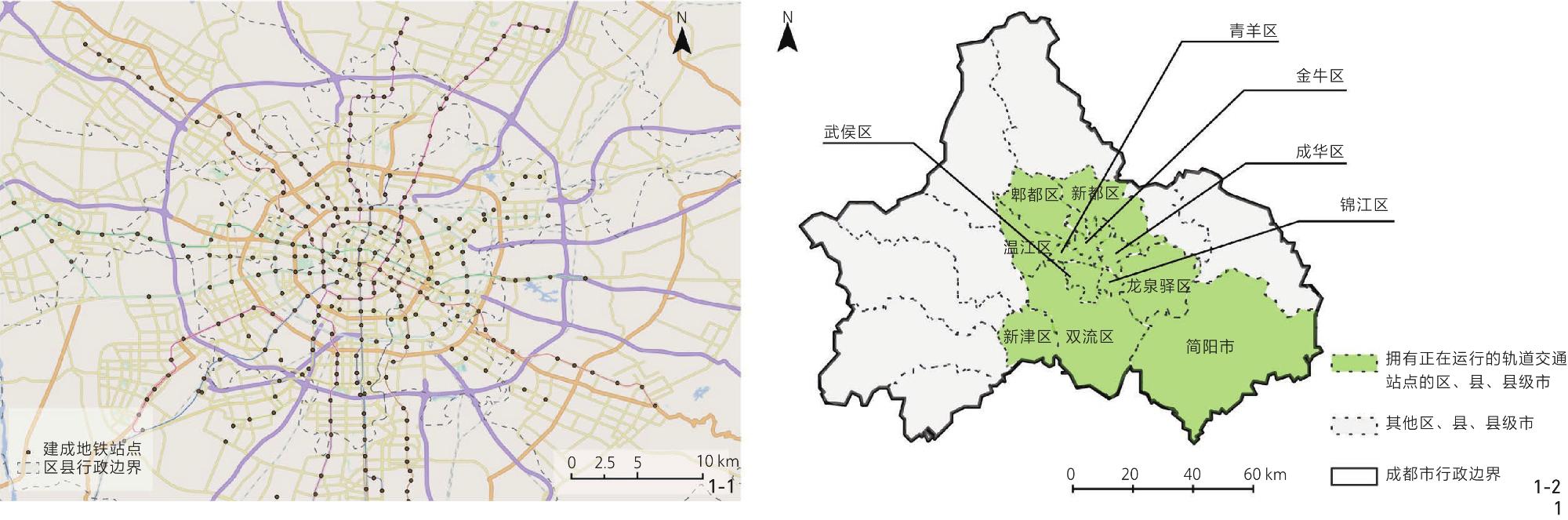
Conducted in Chengdu, a pioneering city in TOD development with 423 metro stations across 16 lines, this study employs a multi-methodological approach to ensure the robustness and reliability of findings. A questionnaire, grounded in the Stated Preference method, was meticulously designed to capture both demographic factors and built environment features, encompassing variables such as gender, age, income, education level, environmental awareness, destination distance, bicycle accessibility, road speed limit, road continuity, and land use composition. To ensure data quality and representativeness, the D-optimal design methodology was utilized to generate 20 factorial combinations for scenario-based questioning, effectively capturing the complexity of real-world travel decisions. Data collection was facilitated through the Credamo online survey platform, with stringent filters applied to respondents’ geographic location, daily travel patterns, and historical questionnaire response rates, yielding 863 valid responses that reflect the diversity of Chengdu’s urban population. Data analysis was rigorous and multifaceted, employing Excel 2022 and SPSS 25.0 for descriptive statistical analysis to provide an overview of the dataset. Least absolute shrinkage and selection operator regression, a powerful machine learning technique, was leveraged to extract the weights of perception factors, enabling the construction of weighted perception indices that account for the relative importance of different environmental attributes. The study further explored the nonlinear characteristics of built environment variables by creating interaction terms between socio-economic and built environment variables, thereby capturing the complex interplay between individual characteristics and the built environment. Based on the parametric scale transformation principle, a linear equivalence method was employed to convert the 7-point scale to a 5-point scale for neural network model training, thereby enhancing overall model training accuracy.
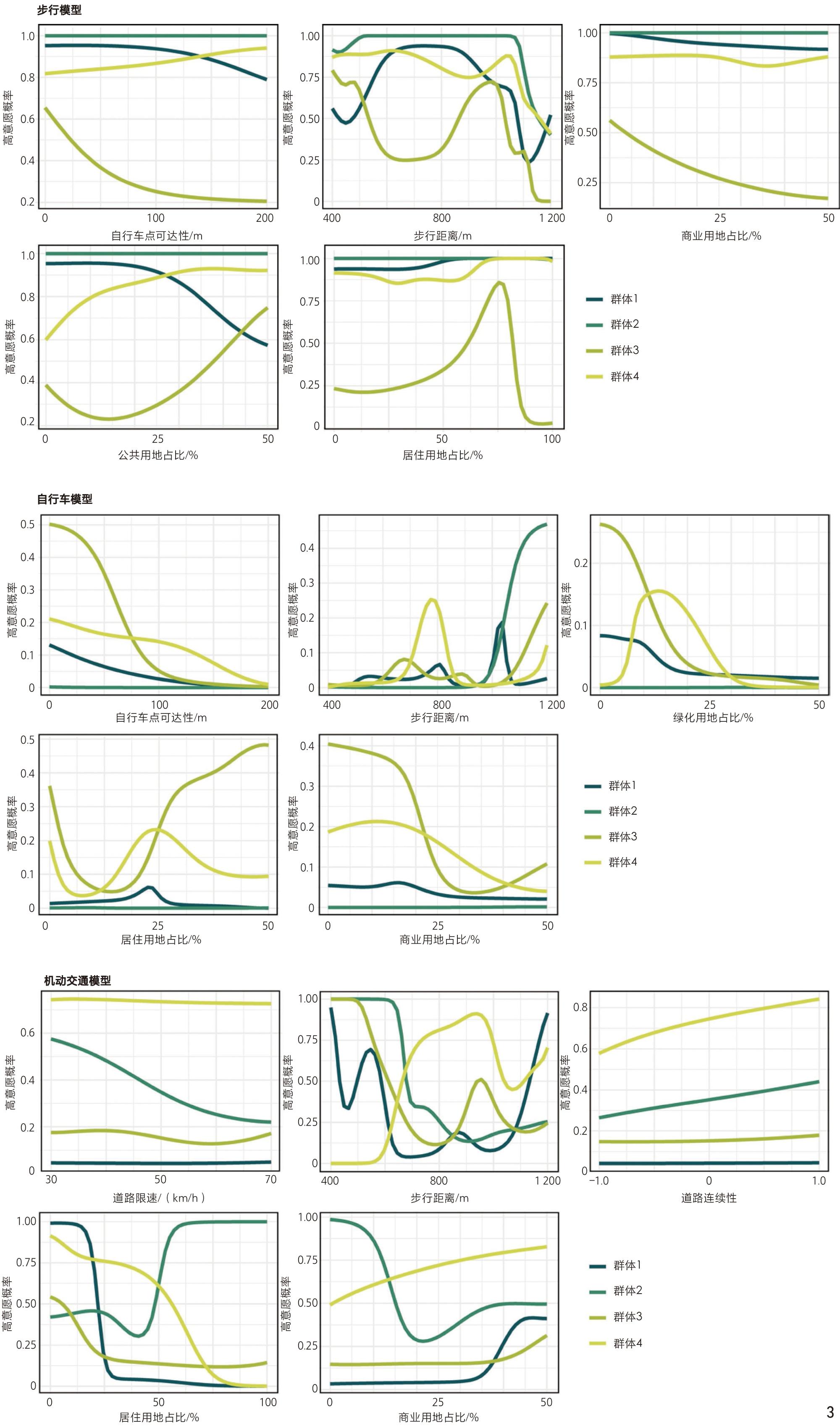
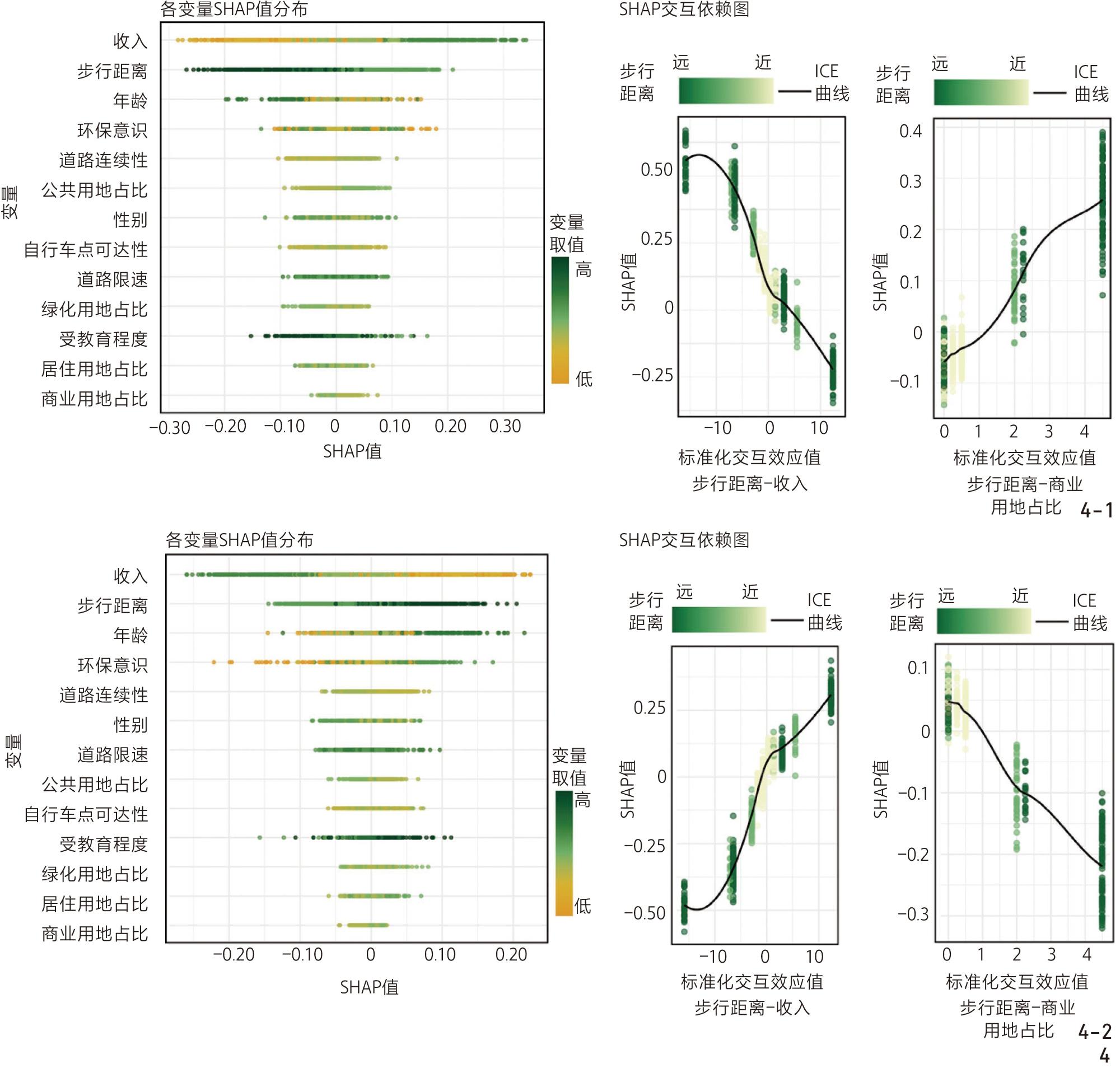
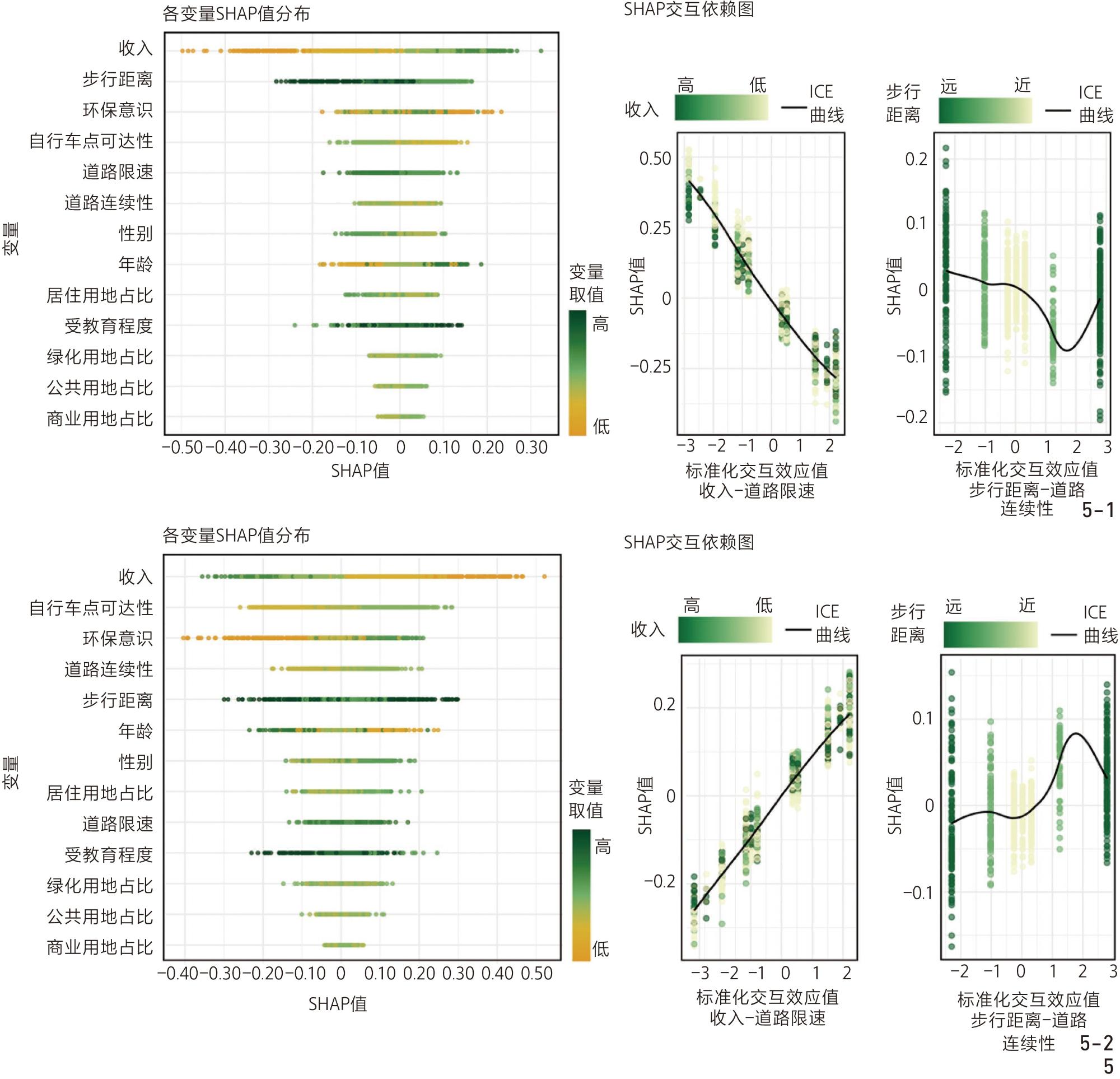
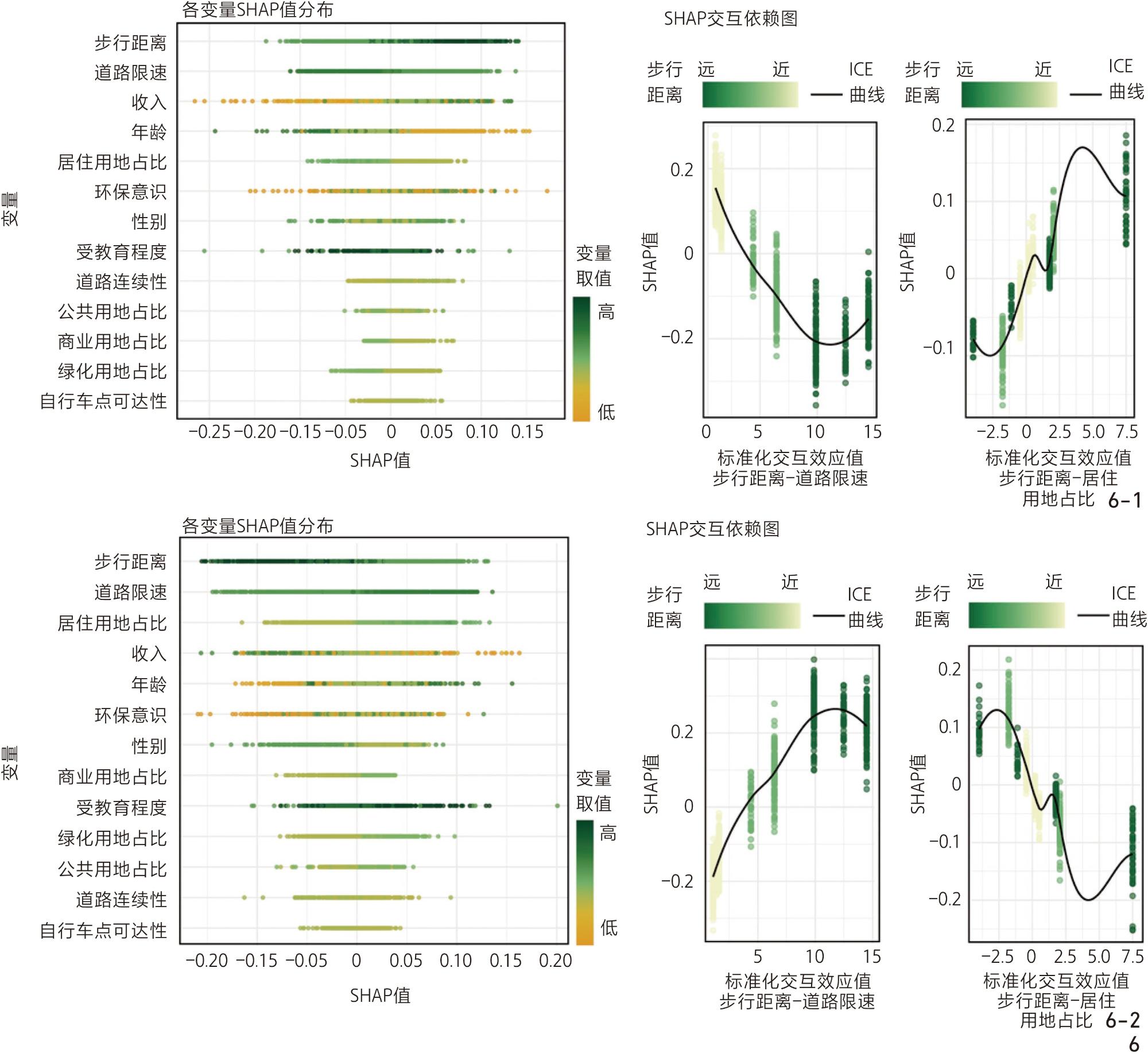
The findings reveal a pronounced preference for walking as the primary mode of continuous transport, followed by bicycling, with motorized transport exhibiting the lowest willingness to choose, highlighting the potential for promoting active transportation modes in urban areas. Notably, female respondents demonstrated a stronger inclination towards non-motorized transportation modes, suggesting the importance of gender-sensitive design in urban planning. Income and walking distance have emerged as the primary determinants influencing the willingness to choose non-motorized modes of transportation. Analysis of interaction dependence plots in the SHAP (SHapley Additive exPlanations) analysis reveals that individuals with higher incomes are more inclined to opt for non-motorized travel under scenarios involving longer distances or higher speed limits. Furthermore, varying land use mixes can either enhance the propensity to choose walking or reduce the likelihood of selecting motorized transportation. Complex nonlinear relationships were observed between walking distances and different demographic groups, with varying sensitivities to built environment factors across socio-demographic factors, underscoring the need for context-specific interventions. Furthermore, a notable exclusivity was identified between non-motorized and motorized transportation modes, as well as between walking and bicycling, particularly pronounced among female respondents, highlighting the importance of integrated transport planning that considers mode competition and complementarity.
This research contributes to the literature by elucidating the nonlinear influence mechanism of built environment and socio-demographic factors on non-motorized transportation mode preferences from a human-oriented lens, thereby advancing theoretical frameworks for understanding travel behavior. Practically, the study proposes human-centric hierarchical optimization strategies, offering a scientific foundation for the refined design of non-motorized transportation systems in TOD projects, which can enhance the overall efficiency and attractiveness of public transport. These insights are instrumental in promoting the seamless integration of "rail-slow" networks, a critical step towards achieving urban transportation carbon neutrality and building sustainable, livable cities. However, the study acknowledges limitations, particularly regarding model explanatory power constrained by variable selection, suggesting future research could incorporate additional variables, such as individual attitudes towards sustainability and technological acceptance, to enhance predictive accuracy. Furthermore, the underrepresentation of low-income and low-education groups in the sample highlights the need for future studies to adopt a more dynamic approach, encompassing diverse social demographics across varying temporal and spatial contexts, to ensure the equity and inclusivity of transport planning.
FANG Sitao , WU Ran , LUO Shixian . Nonlinear Influence Mechanism of Built Environment and Socio-Demographic Factors on Non-motorized Travel Willingness in the “Last Mile” Context[J]. Landscape Architecture, 2026 , 33(4) : 102 -112 . DOI: 10.3724/j.fjyl.LA20250445
表1 情景题因子组合情况Tab. 1 Factor combinations of the scenario question |
| 序号 | 道路限速/ (km/h) | 步行距离/步行 时间/(m/min) | 自行车停放点可达 距离/m | 道路连续性 | 绿化用地 占比/% | 公共用地 占比/% | 商业用地 占比/% | 居住用地 占比/% |
|---|---|---|---|---|---|---|---|---|
| 注:对于道路连续性,1表示道路基本不存在不连续点,0表示道路存在部分不连续点,−1表示道路存在较多不连续点。 | ||||||||
| S1 | 70 | 1 200/15 | 200 | −1 | 50 | 50 | 0 | 0 |
| S2 | 30 | 1 200/15 | 0 | −1 | 0 | 50 | 25 | 25 |
| S3 | 50 | 400/5 | 0 | 1 | 0 | 0 | 50 | 50 |
| S4 | 30 | 1 200/15 | 200 | 1 | 50 | 0 | 0 | 50 |
| S5 | 70 | 400/5 | 100 | −1 | 0 | 50 | 0 | 50 |
| S6 | 30 | 400/5 | 0 | 1 | 25 | 50 | 25 | 0 |
| S7 | 70 | 400/5 | 100 | −1 | 50 | 0 | 50 | 0 |
| S8 | 30 | 400/5 | 0 | 1 | 50 | 0 | 0 | 50 |
| S9 | 70 | 400/5 | 100 | 1 | 0 | 50 | 50 | 0 |
| S10 | 70 | 400/5 | 100 | −1 | 50 | 0 | 50 | 0 |
| S11 | 30 | 400/5 | 200 | 1 | 0 | 0 | 25 | 75 |
| S12 | 70 | 800/10 | 0 | 1 | 50 | 0 | 50 | 0 |
| S13 | 30 | 400/5 | 200 | 0 | 0 | 50 | 50 | 0 |
| S14 | 70 | 1 200/15 | 0 | −1 | 0 | 0 | 50 | 50 |
| S15 | 30 | 1 200/15 | 100 | −1 | 0 | 0 | 50 | 50 |
| S16 | 70 | 800/10 | 200 | 1 | 0 | 25 | 0 | 75 |
| S17 | 70 | 1 200/15 | 0 | 1 | 0 | 50 | 0 | 50 |
| S18 | 30 | 400/5 | 200 | 0 | 0 | 50 | 50 | 0 |
| S19 | 30 | 800/10 | 0 | −1 | 25 | 0 | 0 | 75 |
| S20 | 50 | 1 200/15 | 200 | −1 | 0 | 0 | 0 | 100 |
表2 样本描述性统计情况Tab. 2 Descriptive statistics of the sample |
| 变量维度 | 变量 | 样本频数(占比/%) |
|---|---|---|
| 性别 | 男性 女性 | 303(35.1) 560(64.9) |
| 年龄/岁 | ≤24 25~35 ≥36 | 281(32.6) 137(15.9) 445(51.5) |
| 月收入/元 | ≤2 000 >2 000~6 000 >6 000~12 000 >12 000 | 108(12.5) 247(28.6) 316(36.6) 192(22.3) |
| 受教育程度 | 高中及以下 专科或本科 硕士研究生及以上 | 30(3.5) 668(77.4) 165(19.1) |
| 环保意识 | 较弱 一般 较强 | 137(15.8) 424(49.1) 302(35.1) |
表3 不同交通方式出行意愿的描述性分析Tab. 3 Descriptive analysis of travel intentions across different modes of transportation |
| 变量维度 | 变量 | 平均值(标准差) | ||
|---|---|---|---|---|
| 步行 | 自行车 | 机动交通 | ||
| 性别 | 男性 女性 | 4.25(0.98) 4.37(1.08) | 4.00(1.09) 4.01(1.10) | 2.70(1.27) 2.68(1.21) |
| 年龄/岁 | ≤24 25~35 ≥36 | 4.34(1.01) 4.31(1.03) 4.37(0.96) | 3.94(1.13) 4.05(1.06) 3.99(1.10) | 2.61(1.27) 2.72(1.24) 2.75(1.26) |
| 月收入/元 | ≤2 000 >2 000~6 000 >6 000~12 000 >12 000 | 4.38(1.14) 4.30(1.09) 4.33(1.10) 4.36(1.04) | 3.93(1.02) 3.95(1.02) 4.00(1.02) 4.12(0.98) | 2.65(1.29) 2.71(1.23) 2.69(1.28) 2.69(1.22) |
| 受教育程度 | 高中及以下 专科或本科 硕士研究生及以上 | 3.70(1.31) 4.35(1.00) 4.36(0.97) | 3.74(1.24) 4.02(1.08) 4.01(1.10) | 2.90(1.29) 2.68(1.25) 2.69(1.26) |
| 环保意识 | 较弱 一般 较强 | 4.20(1.12) 4.39(0.95) 4.42(1.04) | 3.76(1.18) 3.97(1.09) 4.17(1.02) | 2.66(1.23) 2.69(1.25) 2.70(1.26) |
| 整体平均值 | 4.33 | 4.00 | 2.69 | |
表4 交通方式选择意愿的相关性分析Tab. 4 Correlation analysis of selection willingness for transportation modes |
| 样本分组 | 慢行交通-机动交通相关性结果 |
|---|---|
| 注:*表示显著性水平为p<0.05。 | |
| 女性 | -0.209* |
| 男性 | -0.133* |
| 整体 | -0.180* |
表5 典型受访者社会人口属性Tab. 5 Typical interviewees profile |
| 受访者群体 | 性别 | 年龄/岁 | 月收入/元 | 受教育程度 | 环保意识 | 典型群体 |
|---|---|---|---|---|---|---|
| 1 | 女性 | 25~35 | >6 000~12 000 | 硕士研究生及以上 | 较强 | 高级白领 |
| 2 | 女性 | 18~25 | ≤2 000 | 专科或本科 | 一般 | 青年学生 |
| 3 | 女性 | 25~35 | >2 000~6 000 | 专科或本科 | 一般 | 普通白领 |
| 4 | 男性 | 25~35 | >6 000~12 000 | 专科或本科 | 一般 | 普通白领 |
1、运用人工神经网络模型与可解释性机器学习方法,揭示了社会属性与建成环境对慢行交通换乘意愿的非线性影响机制,弥补了传统线性模型的不足。
2、提出了基于人本视角的分层优化策略,为慢行交通环境优化提供科学依据,拓展了“最后一公里”场景下慢行出行行为的研究框架。
3、结合成都地铁建设背景,基于大样本问卷调查和严谨数据分析,为城市交通碳中和目标下的“轨道-慢行”网络融合提供参考,具有重要的实践意义。
| [1] |
刘清春, 赵培雄, 袁玉娟, 等. 碳中和目标下城市绿色交通体系构建研究: 以济南市为例[J]. 环境保护, 2021, 49(17): 33-39.
LIU Q C, ZHAO P X, YUAN Y J, et al. Research on the Establishment of a Green Transportation System Under the Goal of Carbon Neutrality: The Case of Jinan[J]. Environmental Protection, 2021, 49(17): 33-39.
|
| [2] |
中华人民共和国交通运输部.交通运输部关于印发《绿色交通“十四五”发展规划》的通知[EB/OL].(2021-10-29)[2025-04-01]. https://xxgk.mot.gov.cn/2020/jigou/zhghs/202201/t20220121_3637584.html.
The Ministry of Transport of the People’s Republic of China. Notice of the Ministry of Transport on Issuing the 14th Five-Year Plan for Green Transportation Development [EB/OL]. (2021-10-29) [2025-04-01]. https://xxgk.mot.gov.cn/2020/jigou/zhghs/202201/t20220121_3637584.html.
|
| [3] |
颜建新, 王涛, 吴璐帆, 等. “轨道-公交-慢行”三网融合评估体系及改善对策研究[J]. 都市快轨交通, 2025, 38(1): 53-62.
YAN J X, WANG T, WU L F, et al. Research on the Evaluation System and Resource Allocation Method of “Rail−Bus−Slow Travel” Triple Network Integration[J]. Urban Rapid Rail Transit, 2025, 38(1): 53-62.
|
| [4] |
楼佳妮. 基于需求分析的城市道路慢行交通设计研究[J]. 交通世界, 2024(36):105-107.
LOU J N. Research on Urban Road Slow Traffic Design Based on Demand Analysis[J]. TranspoWorld, 2024(36):105-107.
|
| [5] |
周志邦, 杨永昌. 城市道路慢行交通系统空间设计[J]. 工程技术研究, 2023, 8(20): 189-191.
ZHOU Z B, YANG Y C. The Space Design of Urban Road Slow Traffic System[J]. Engineering and Technological Research, 2023, 8(20): 189-191.
|
| [6] |
李艳伟, 陈默. 旅客中长途城际出行选择行为研究[J]. 综合运输, 2025, 47(2): 16-21.
LI Y W, CHEN M. Research on Passengers’ Choice Behaviour in Medium- and Long- Distance Intercity Trips[J]. China Transportation Review, 2025, 47(2): 16-21.
|
| [7] |
李昌铃, 李磊. 基于目的地选择的跨城出行分布预测模型[J]. 交通与运输, 2024, 40(S1): 22-26.
LI C L, LI L. Prediction Model of Intercity Travel Distribution Based on Destination Selection[J]. Traffic & Transportation, 2024, 40(S1): 22-26.
|
| [8] |
林杉.轨道交通站点与慢行系统接驳分析[C]//中国城市规划学会.人民城市, 规划赋能: 2023中国城市规划年会论文集(06城市交通规划).北京: 中国建筑工业出版社, 2023: 409-415.
LIN S. Analysis of the Connection Between Rail Transit Stations and Non-motorized Systems[C]//China Urban Planning Society. People’s City, Planning Empowerment: Proceedings of the 2023 China Urban Planning Annual Conference (06 Urban Transportation Planning). Beijing: China Architecture & Building Press, 2023: 409-415.
|
| [9] |
李定洲. 慢行交通系统空间优化设计: 以成都为例[J]. 交通科技与管理, 2025, 6(5): 40-42.
LI D Z. Spatial Optimization Design of Slow Traffic System: Taking Chengdu as an Example[J]. Transportation Technology and Management, 2025, 6(5): 40-42.
|
| [10] |
王灿, 王德, 朱玮, 等. 离散选择模型研究进展[J]. 地理科学进展, 2015, 34(10): 1275-1287.
WANG C, WANG D, ZHU W, et al. Research Progress of Discrete Choice Models[J]. Progress in Geography, 2015, 34(10): 1275-1287.
|
| [11] |
KARLAFTIS M G, VLAHOGIANNI E I. Statistical Methods versus Neural Networks in Transportation Research: Differences, Similarities and some Insights[J]. Transportation Research Part C: Emerging Technologies, 2011, 19(3): 387-399.
|
| [12] |
WANG S H, MO B C, ZHENG Y H, et al. Comparing Hundreds of Machine Learning and Discrete Choice Models for Travel Demand Modeling: An Empirical Benchmark[J]. Transportation Research Part B: Methodological, 2024, 190: 103061.
|
| [13] |
LINDNER A, PITOMBO C S, CUNHA A L. Estimating Motorized Travel Mode Choice Using Classifiers: An Application for High-Dimensional Multicollinear Data[J]. Travel Behaviour and Society, 2017, 6, 100-109.
|
| [14] |
王媛媛.城市轨道交通“最后一公里”出行方式选择行为研究[D].天津: 河北工业大学, 2020.
WANG Y Y. Study on the Choice Behavior of “Last Mile” Travel Mode of Urban Rail Transit[D]. Tianjin: Hebei University of Technology, 2020.
|
| [15] |
陈琦, 闫一博, 陈坚, 等. 地铁出行决策的非线性与主客观交互影响研究[J]. 铁道科学与工程学报, 2025, 22(8): 3702-3714.
CHEN Q, YAN Y B, CHEN J, et al. Nonlinearity and Interaction of Subjective and Objective Factors in Subway Travel Decision-Making[J]. Journal of Railway Science and Engineering, 2025, 22(8): 3702-3714.
|
| [16] |
ZHOU X G, YANG C Y, YANG L C, et al. Nonlinear Effects of the Built Environment on Metro-Integrated Bikesharing and Ridesourcing Usage[J]. Transportation Research Part D: Transport and Environment, 2025, 146: 104898.
|
| [17] |
ZHENG Y H, WANG S H, ZHAO J H. Equality of Opportunity in Travel Behavior Prediction with Deep Neural Networks and Discrete Choice Models[J]. Transportation Research Part C: Emerging Technologies, 2021, 132: 103410.
|
| [18] |
LIANG L L, XU M, GRANT-MULLER S, et al. Household Travel Mode Choice Estimation with Large-Scale Data: An Empirical Analysis Based on Mobility Data in Milan[J]. International Journal of Sustainable Transportation, 2021, 15(1): 70-85.
|
| [19] |
WANG S H, WANG Q Y, ZHAO J H. Deep Neural Networks for Choice Analysis: Extracting Complete Economic Information for Interpretation[J]. Transportation Research Part C: Emerging Technologies, 2020, 118: 102701.
|
| [20] |
GOLSHANI N, SHABANPOUR R, MAHMOUDIFARD S M, et al. Modeling Travel Mode and Timing Decisions: Comparison of Artificial Neural Networks and Copula-Based Joint Model[J]. Travel Behaviour and Society, 2018, 10, 21-32.
|
| [21] |
XIA Y T, CHEN H F, ZIMMERMANN R. A Random Effect Bayesian Neural Network (RE-BNN) for Travel Mode Choice Analysis Across Multiple Regions[J]. Travel Behaviour and Society, 2023, 30, 118-134.
|
| [22] |
LIU Y, TONG L C, ZHU X, et al. Dynamic Activity Chain Pattern Estimation Under Mobility Demand Changes During COVID-19[J]. Transportation Research Part C, Emerging Technologies, 2021, 131: 103361.
|
| [23] |
TANG J J, LIANG J, YU T J, et al. Trip Destination Prediction Based on a Deep Integration Network by Fusing Multiple Features from Taxi Trajectories[J]. IET Intelligent Transport Systems, 2021, 15(9): 1131-1141.
|
| [24] |
汪雨菲, 杨皓森, 喻冰洁, 等. 站域建成环境与地铁客流量的非线性关系和协同效应: 可解释机器学习分析[J]. 都市快轨交通, 2024, 37(2): 1-7.
WANG Y F, YANG H S, YU B J, et al. Nonlinear and Synergistic Effects of Station-Area Built Environments on Metro Ridership: A Shapley Additive Explanations (SHAP) Analysis[J]. Urban Rapid Rail Transit, 2024, 37(2): 1-7.
|
| [25] |
LOUVIERE J J, HENSHER D A, SWAIT J D. Stated Choice Methods[M]. Cambridge: Cambridge University Press, 2000.
|
| [26] |
中华人民共和国住房和城乡建设部.城市步行和自行车交通系统规划标准: GB/T 51439—2021[S].北京: 中国建筑工业出版社, 2021: 1-25.
Ministry of Housing and Urban-Rural Development of the People’s Republic of China. Standard for Urban Pedestrian and Bicycle Transport System Planning: GB/T 51439–2021[S]. Beijing: China Architecture & Building Press, 2021: 1-25.
|
| [27] |
CHE M, WONG Y D, LUM K M, et al. Interaction Behaviour of Active Mobility Users in Shared Space[J]. Transportation Research Part A: Policy and Practice, 2021, 153, 52-65.
|
| [28] |
BOX G E P. Some Theorems on Quadratic Forms Applied in the Study of Analysis of Variance Problems, I. Effect of Inequality of Variance in the One-Way Classification[J]. The Annals of Mathematical Statistics, 1954, 25(2): 290-302.
|
| [29] |
LEUNG S O. A Comparison of Psychometric Properties and Normality in 4-, 5-, 6-, and 11- Point Likert Scales[J]. Journal of Social Service Research, 2011, 37(4): 412-421.
|
| [30] |
吴元晶, 游永熠, 周卫, 等. 老年人绿地感知与活动特征的非线性关系[J]. 风景园林, 2025, 32(5): 96-104.
WU Y J, YOU Y Y, ZHOU W, et al. Nonlinear Relationship Between the Elderly’s Perception of Green Spaces and Their Activity Characteristics[J]. Landscape Architecture, 2025, 32(5): 96-104.
|
| [31] |
RITH M, FILLONE A, BIONA J B M. The Impact of Socioeconomic Characteristics and Land Use Patterns on Household Vehicle Ownership and Energy Consumption in an Urban Area with Insufficient Public Transport Service: A Case Study of Metro Manila[J]. Journal of Transport Geography, 2019,79(C): 102484.
|
| [32] |
薛伟贤, 董维维. 我国数字鸿沟的社会效应分析[J]. 情报科学, 2008, 26(10): 1464-1470.
XUE W X, DONG W W. Analysis on the Social Effects of Digital Divide in China[J]. Information Science, 2008, 26(10): 1464-1470.
|
| [33] |
何明卫, 肖明阳, 何民, 等. 考虑空间异质性的短距离出行方式选择研究[J]. 重庆交通大学学报(自然科学版), 2023, 42(3): 112-118,127.
HE M W, XIAO M Y, HE M, et al. Short-Distance Travel Mode Choice Considering Spatial Heterogeneity[J]. Journal of Chongqing Jiaotong University (Natural Science), 2023, 42(3): 112-118,127.
|
| [34] |
佟新, 王雅静. 城市居民出行方式的性别比较研究[J]. 山西师大学报(社会科学版), 2018, 45(3): 64-69.
TONG X, WANG Y J. A Comparative Study of Urban Residents’ Travel Modes in the Perspective of Gender[J]. Journal of Shanxi Normal University (Social Science Edition), 2018, 45(3): 64-69.
|
| [35] |
MCCRIGHT A M, DUNLAP R E. Cool Dudes: The Denial of Climate Change Among Conservative White Males in the United States[J]. Global Environmental Change, 2011, 21(4): 1163-1172.
|
| [36] |
高一鸣.大城市中低收入群体出行行为研究[D].北京: 北京交通大学, 2022.
GAO Y M. Research on Travel Behavior of Middle and Low-Income Groups in Big Cities[D]. Beijing: Beijing Jiaotong University, 2022.
|
| [37] |
王宏宇, 马亮, 黄言, 等. 城市积极交通出行对居民心理健康与福祉的影响: 效应、路径和启示[J]. 地理科学进展, 2024, 43(12): 2365-2381.
WANG H Y, MA L, HUANG Y, et al. The Impact of Active Travel on Residents’ Psychological Health and Well-Being: Effects, Pathways, and Policy Implications[J]. Progress in Geography, 2024, 43(12): 2365-2381.
|
| [38] |
MENDIATE C J, NKURUNZIZA A, MACHANGUANA C A, et al. Pedestrian Travel Behaviour and Urban Form: Comparing Two Small Mozambican Cities[J]. Journal of Transport Geography, 2022, 98(C): 103245.
|
| [39] |
ZHANG Y, TIŇO P, LEONARDIS A, et al. A Survey on Neural Network Interpretability[J]. IEEE Transactions on Emerging Topics in Computational Intelligence, 2021, 5(5): 726-742.
|
/
| 〈 |
|
〉 |