

Diversity Pattern and Scale Adaptation Application Strategies of Urban Spontaneous Vegetation in Jilin Province Under Multiple Scales
|
ZHAO Congcong is a Ph.D. candidate in the School of Landscape Architecture, Northeast Forestry University. Her research focuses on landscape architecture planning and design, as well as urban biodiversity |
|
HU Yuandong (Tujia), Ph.D., is an associate professor and doctoral supervisor in the College of Landscape Architecture, Northeast Forestry University, and serves as the associate director of the XAUAT-UWA International Joint Lab on Urban Biodiversity and Design. His research focuses on regional landscape planning and ecological restoration, urban biodiversity and urban ecosystem services |
Received date: 2025-12-06
Revised date: 2026-01-27
Online published: 2026-03-13
[Objective] Against the backdrop of accelerating global urbanization, the conservation and restoration of urban biodiversity have become critical interdisciplinary issues in landscape architecture, ecology, and urban and rural planning. Spontaneous vegetation, as a key component of urban flora, has garnered increasing attention due to its adaptability to urban environments, low maintenance requirements, and potential in preserving regional biodiversity. However, the distribution and functional realization of urban vegetation, especially spontaneous vegetation, are shaped by the combined effects of macro-climatic conditions, meso-scale urban environments, and micro-scale habitat characteristics. Existing research often suffers from scale fragmentation, wherein macro-scale studies focus on regional climatic gradients but seldom integrate urban design needs, meso-scale analyses address urban structural impacts but fail to link regional ecological contexts with site-specific designs, and micro-scale investigations reveal how microhabitat conditions influence species establishment but rarely attribute these effects to broader climatic or urban-scale drivers. This lack of multi-scale linkage hampers a systematic understanding of the mechanisms underlying urban spontaneous vegetation diversity and the development of scale-adapted application strategies. To address this gap, this study aims to investigate the driving mechanisms by which climatic differences affect the distribution patterns of urban spontaneous vegetation diversity across multiple scales, and establish a corresponding near-natural ecological restoration technical system, thereby addressing the prevalent scale mismatch issue in current urban biodiversity restoration practices.
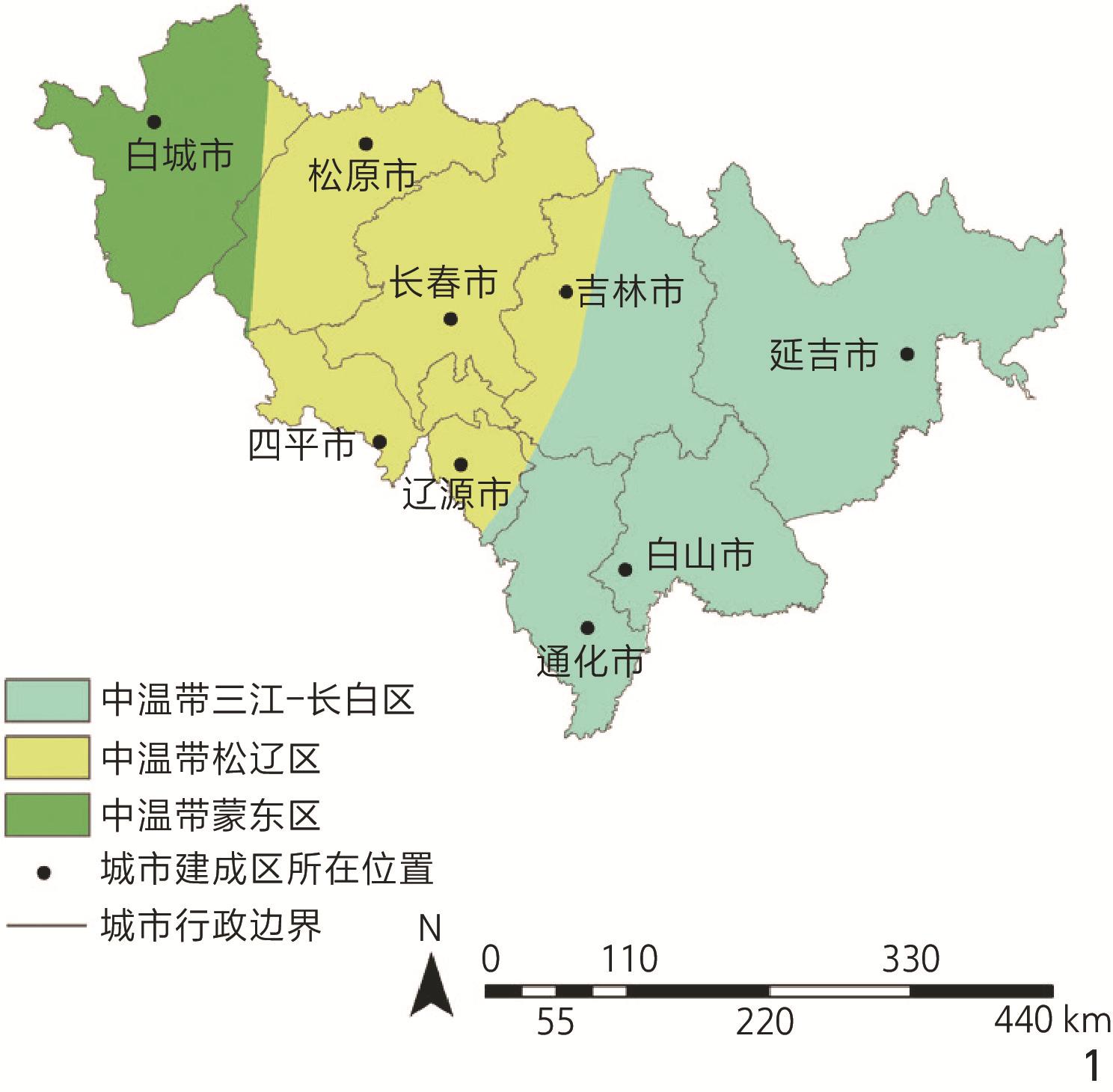
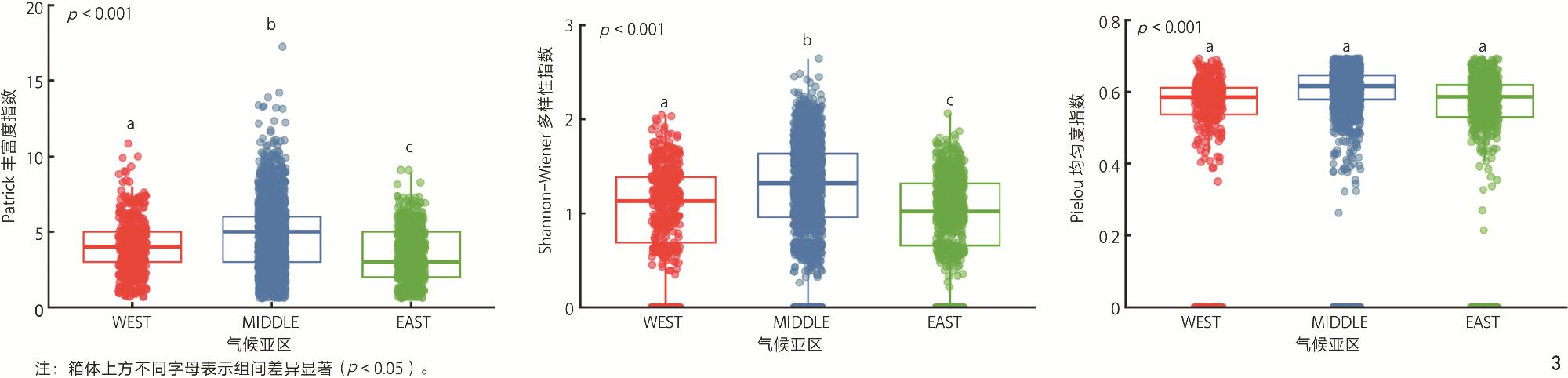
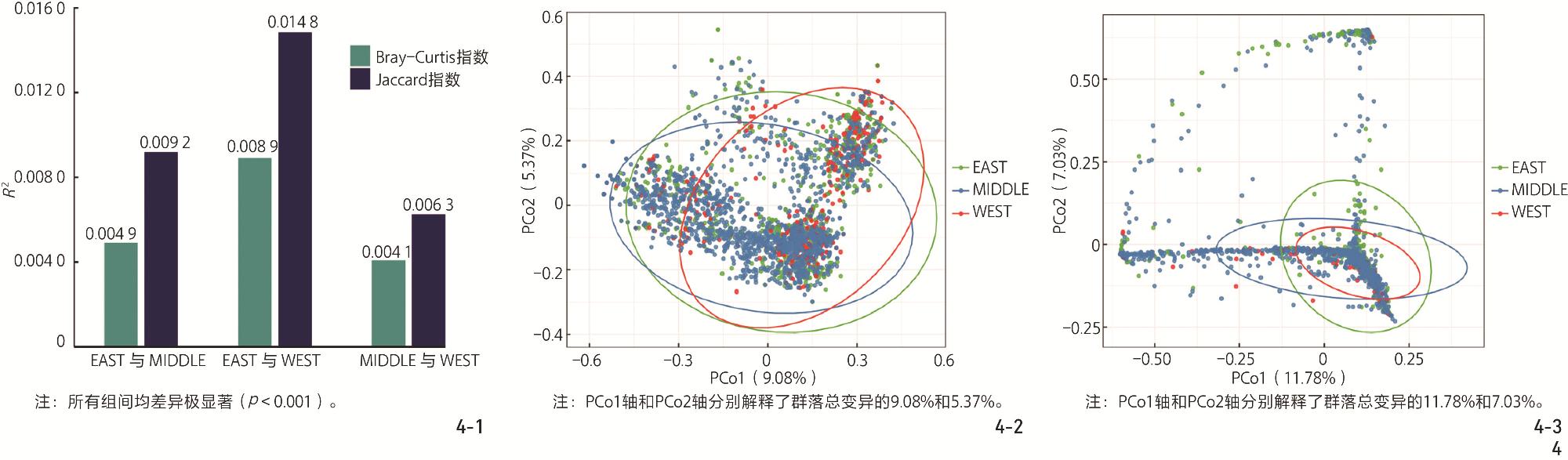
[Methods] This study was conducted in Jilin Province, which exhibits a distinct humid−semi-humid−semi-arid macro-climatic gradient from southeast to northwest. The research framework encompasses three macro-scale climatic subregions, nine meso-scale prefecture-level cities, and five micro-scale habitat types within urban built-up areas. A total of 3,267 sample plots were surveyed using the Braun-Blanquet phytosociological approach during the complete growing season (May to September 2024). All spontaneously occurring vascular plant species (including naturally colonized herbs, escaped cultivated individuals, and regenerated seedlings of woody plants) within each 1 m×1 m quadrat were recorded, with their height and coverage measured. Data analyses focused on both alpha diversity (Patrick richness index, Shannon-Wiener diversity index, and Pielou evenness index) and beta diversity (based on Jaccard and Bray−Curtis distance matrices). Statistical comparisons were performed using Kruskal−Wallis tests with post-hoc Dunn tests for alpha diversity, and PERMANOVA with principal coordinate analysis (PCoA) visualization for beta diversity. All analyses were conducted in R 4.5.1, with a significance threshold of p<0.05.
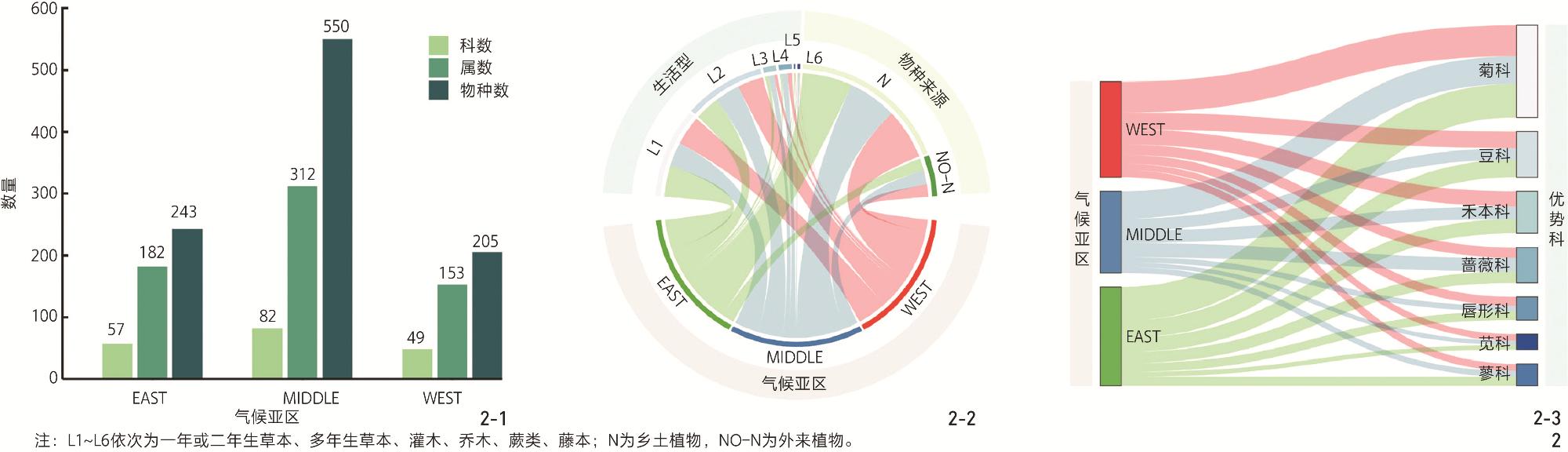
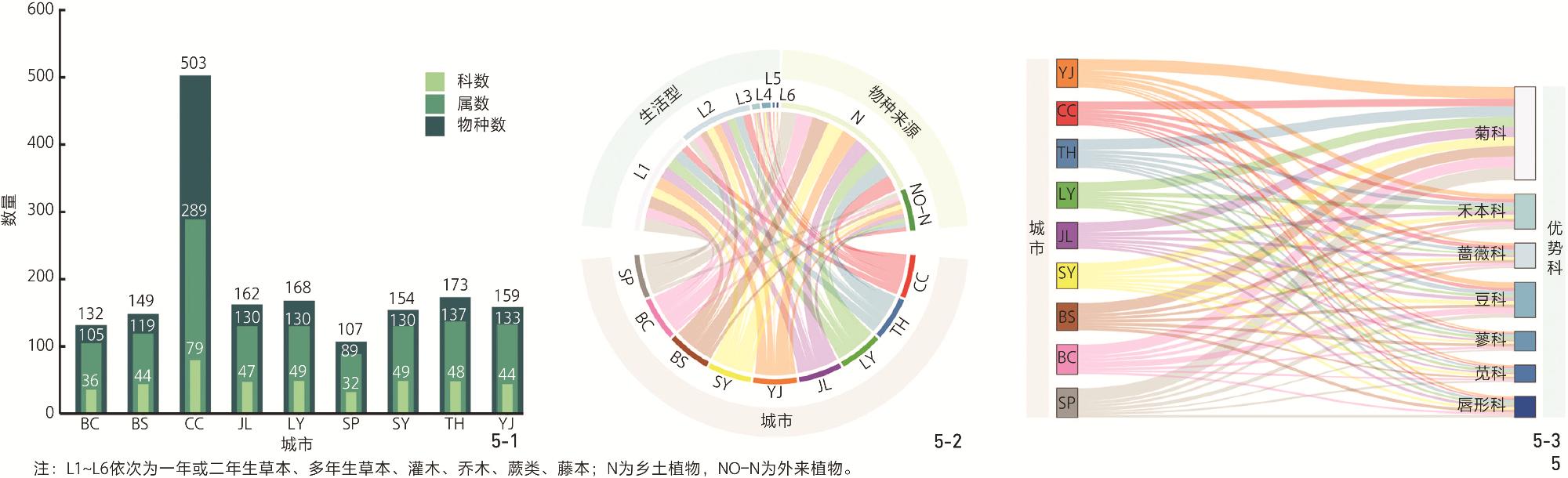
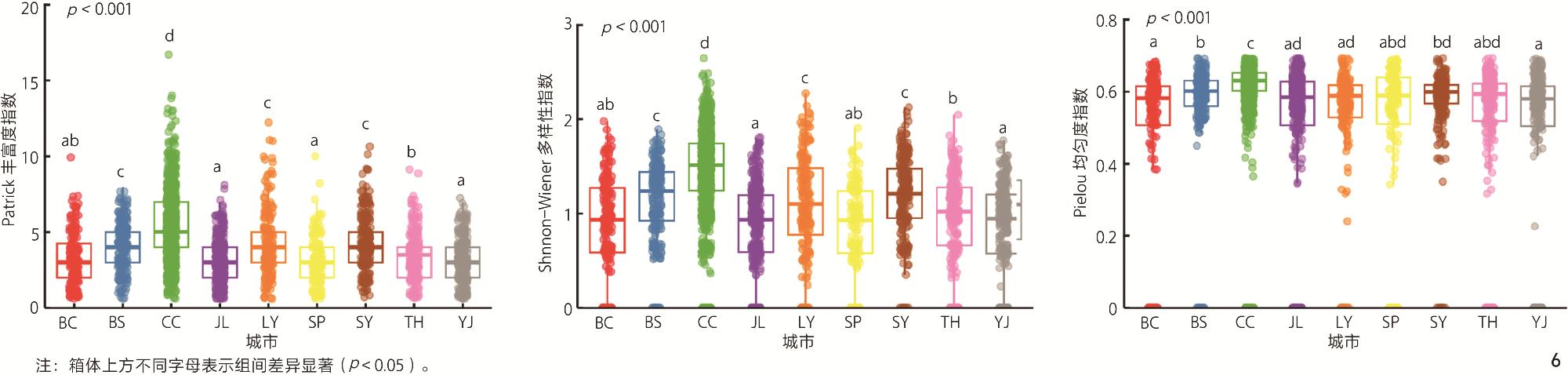
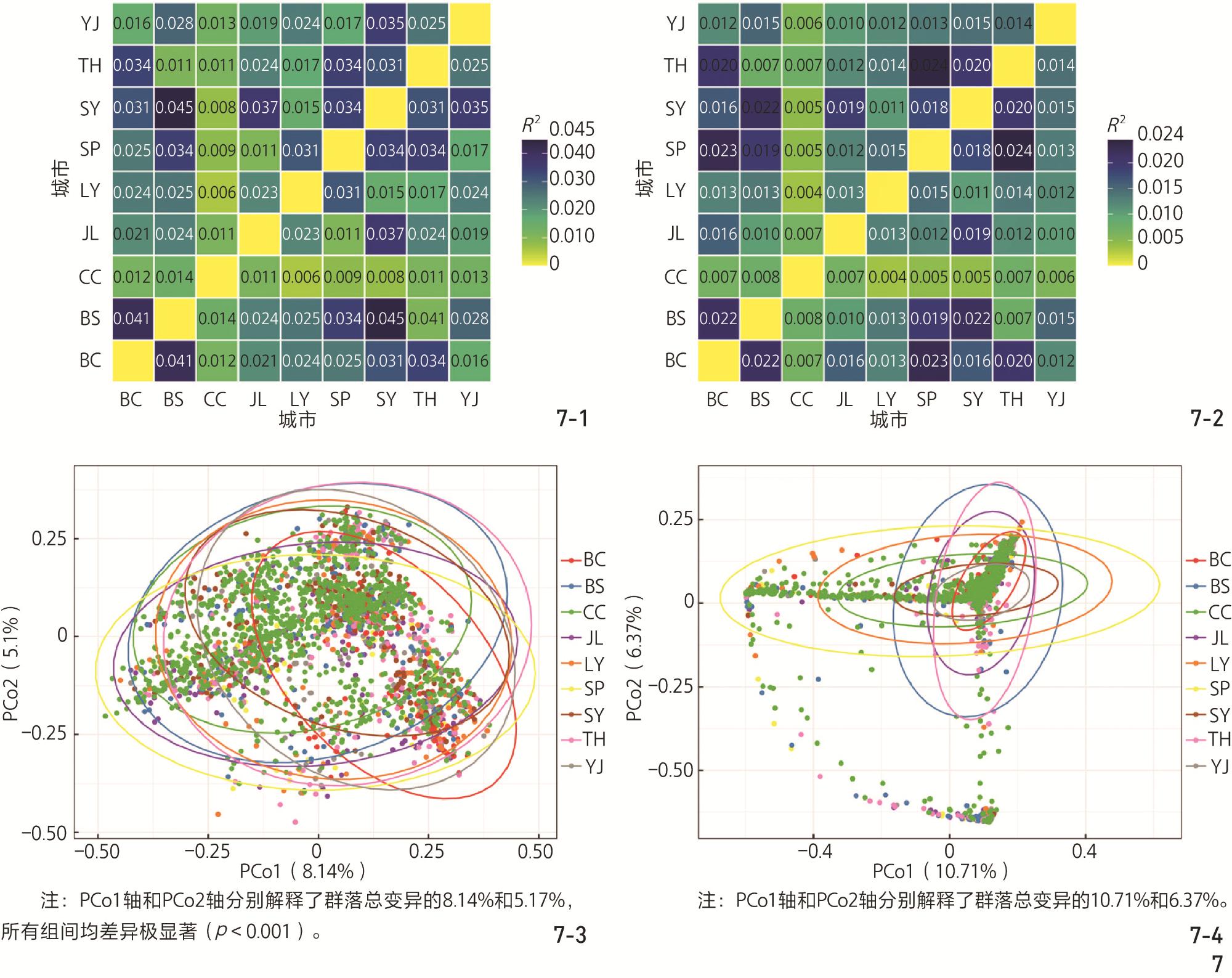
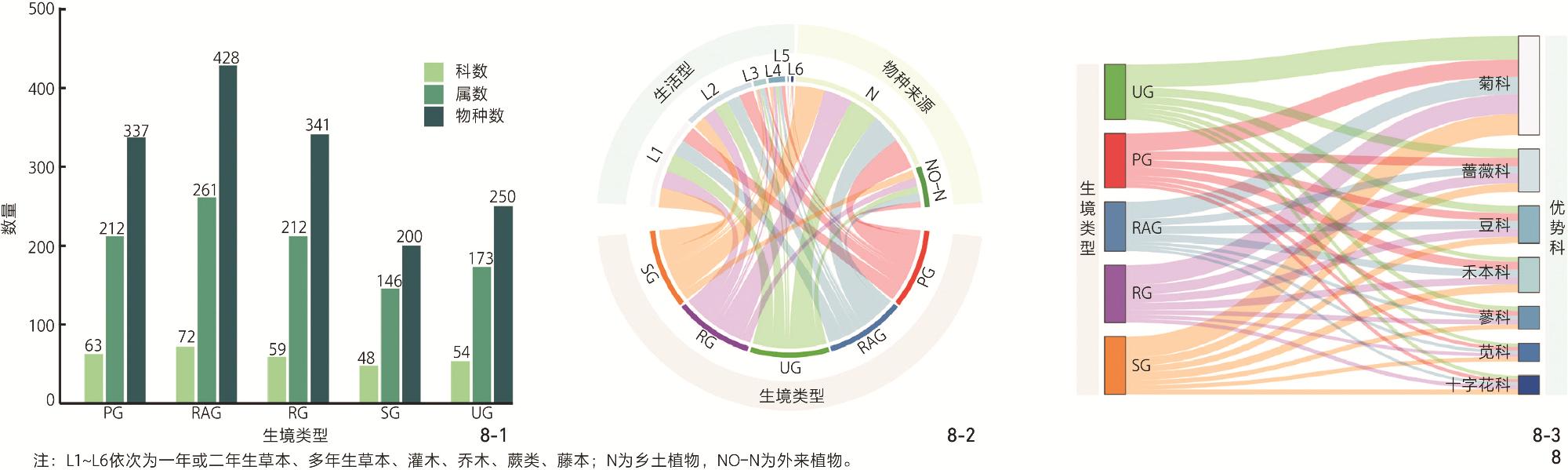
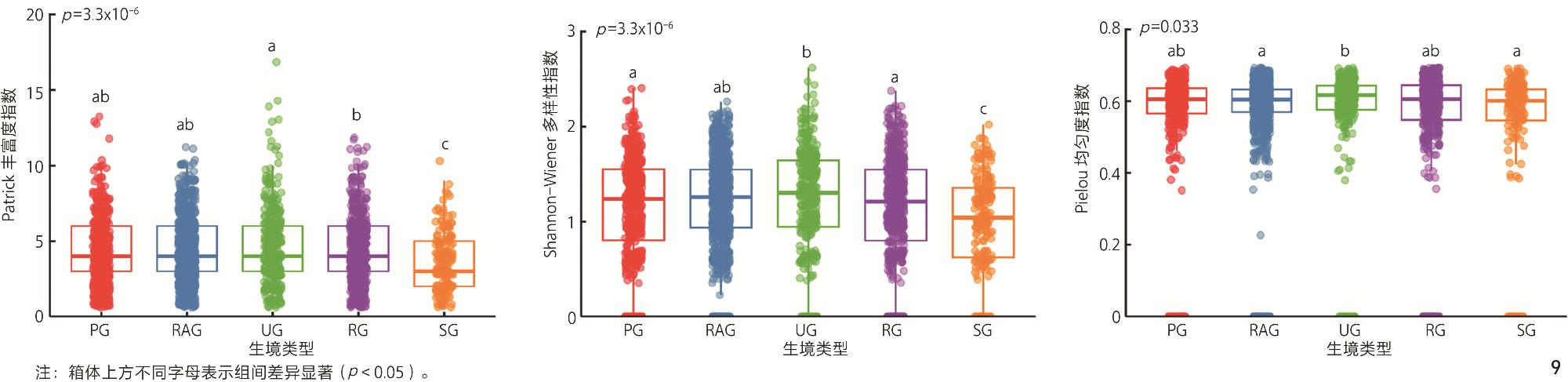
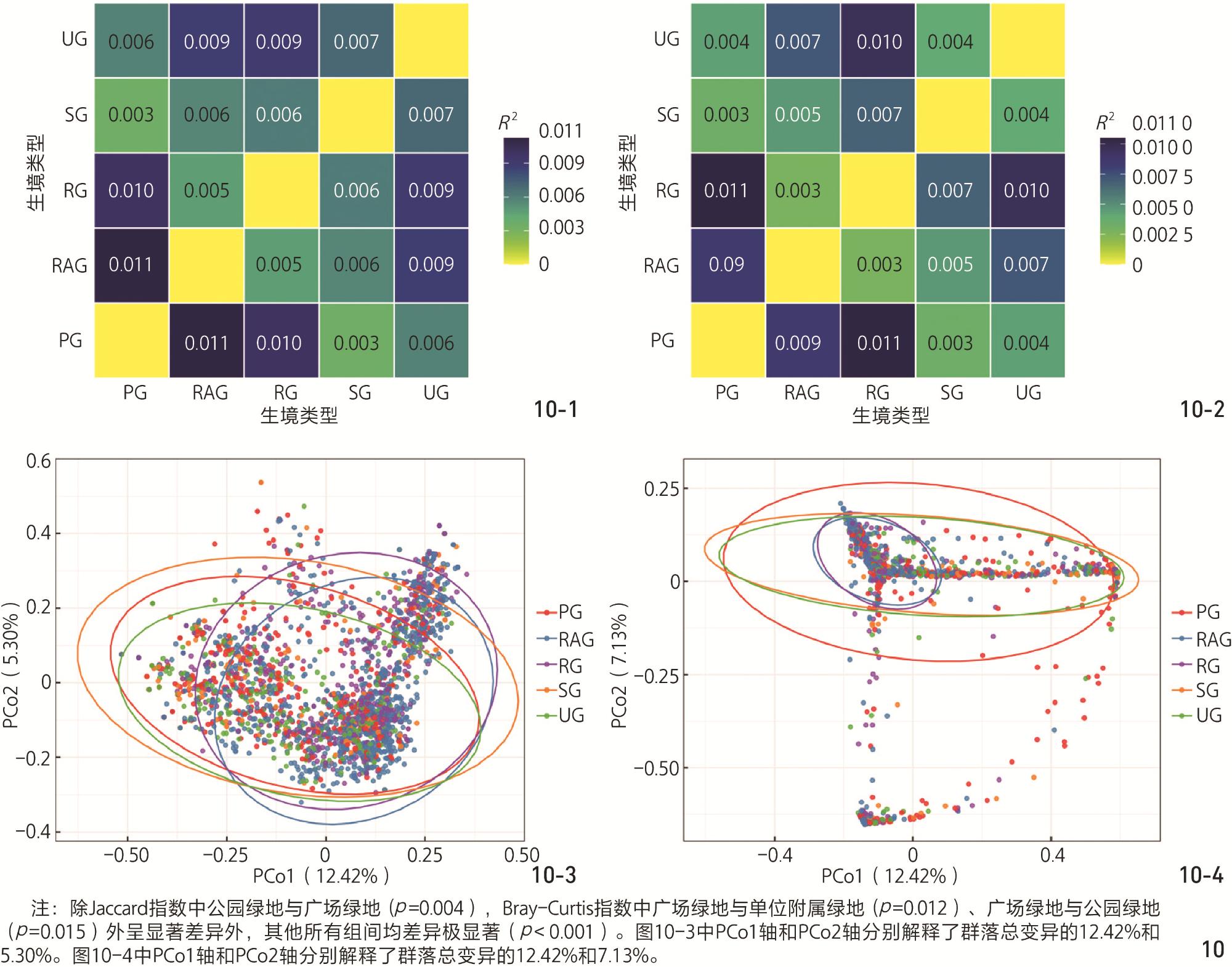
[Results] 1) A total of 605 spontaneous plant species belonging to 85 families and 342 genera were recorded across the nine cities. Asteraceae, Fabaceae, Rosaceae, and Poaceae were identified as the dominant families. Perennial herbs constituted the most abundant life form (41.8%), and native species accounted for 78.2% of all recorded species. 2) At the macro scale, alpha diversity showed a pattern of MIDDLE > WEST > EAST. Beta diversity analysis revealed highly significant differences among the three climatic subregions (p<0.001), although the explanatory power of inter-group variation was low (R 2<1.5%). PCoA ordination based on Jaccard and Bray−Curtis distances indicated that community differentiation followed different ecological gradients: species presence−absence patterns varied mainly along PC1 for the MIDDLE and EAST, while the WEST varied along PC2. 3) At the meso-scale, Changchun exhibited significantly higher alpha diversity than all other cities. Beta diversity patterns differed between species presence−absence and abundance-based dimensions: based on Jaccard distance, Baishan and Tonghua showed high heterogeneity in species composition, whereas Bray−Curtis-based PCoA revealed two nearly orthogonal nested gradients, indicating that community abundance structures varied along two relatively independent ecological dimensions. 4) At the micro-scale, UG had the highest Shannon-Wiener diversity and Pielou evenness indices, while SG had the lowest values. RG and RAG exhibited highly similar species diversity composition and community structure. Beta diversity analysis further confirmed significant differences among most habitat types (p<0.001), though habitat type explained only a small fraction of total variation (R 2<1.13%). Notably, RG and RAG showed extensive overlap in PCoA ordination, suggesting that intensive and homogeneous management may override microclimatic filtering, leading to community convergence.
[Conclusion] The diversity patterns of urban spontaneous vegetation in Jilin Province are driven by a cascade of multi-scale climatic and anthropogenic factors. At the macro scale, climatic gradients shape regional species pools and broad life-form distributions, though their direct explanatory power for inter-regional variation is limited. At the meso-scale, urban functional characteristics and localized climate modifications (e.g., heat island effects) interact to reshape diversity patterns, sometimes decoupling them from macro-climatic expectations. At the micro-scale, habitat-specific microclimates and management intensities act as strong filters, with high-intensity management leading to functional homogenization across otherwise distinct habitats. Based on these findings, a scale-adapted near-natural restoration strategy system is proposed. At the macro-scale, implementing differentiated plant selection and community design according to climatic subregion characteristics. At the meso-scale, tailoring restoration approaches to urban functional types and local climate adaptations, and at the micro-scale, applying precise regulatory measures based on habitat-specific conditions and functional needs. This integrated multi-scale framework provides a scientific basis and practical guidance for biodiversity conservation and climate resilient ecological restoration in cold-temperate cities. Future research should incorporate multi-season dynamic monitoring to further elucidate the temporal dynamics and long-term sustainability of spontaneous vegetation communities in urban ecosystems.
ZHAO Congcong , HU Yuandong . Diversity Pattern and Scale Adaptation Application Strategies of Urban Spontaneous Vegetation in Jilin Province Under Multiple Scales[J]. Landscape Architecture, 2026 , 33(3) : 62 -72 . DOI: 10.3724/j.fjyl.LA20250757
表1 空间尺度划分及其环境特征描述Tab. 1 Spatial scale division and description of environmental characteristics |
| 空间尺度 | 分类单元 | 分析单元 | 分析单元代码 | 关键环境特征描述 |
| 注:1)区域名称代码命名规则:宏观尺度根据各气候亚区在吉林省所处的西、中、东地理方位的英文命名;中观尺度根据各城市名称拼音首字母命名;微观尺度根据各绿地类型英文首字母命名。2)气候数据来源于“中国科学院资源环境科学与数据中心”各临近站点1960—2024年平均值。3)绿地类型判定标准参考CJJ/T 85—2017《城市绿地分类标准》,根据研究区域实际情况,单位附属绿地包括公共管理与公共服务设施用地附属绿地和共用设施用地附属绿地。 | ||||
| 宏观 | 气候亚区 | 中温带蒙东区 | WEST | 中温带半干旱大陆性季风气候,年均温6.5℃,年降水量563.8 mm,极端低温频发,大陆性气候显著 |
| 中温带松辽区 | MIDDLE | 中温带半湿润大陆性季风气候,年均温6.9 ℃,年降水量799.9 mm,极端气候事件较少 | ||
| 中温带三江-长白区 | EAST | 中温带湿润大陆性季风气候,年均温6.1 ℃,年降水量871.8 mm,受山地与森林影响,气候湿润 | ||
| 中观 | 城市 | 长春市 | CC | 年均温7.0 ℃,年降水量710.3 mm,热岛效应明显,干岛强度中等 |
| 松原市 | SY | 年均温6.5 ℃,年降水量588.4 mm,热岛强度中等,干岛强度明显 | ||
| 辽源市 | LY | 年均温6.3 ℃,年降水量915.9 mm,热岛强度较弱,干岛强度中等 | ||
| 通化市 | TH | 年均温6.5 ℃,年降水量 | ||
| 白山市 | BS | 年均温5.2 ℃,年降水量991.4 mm,热岛强度弱,湿度高 | ||
| 白城市 | BC | 年均温6.6 ℃,年降水量539.3 mm,干岛强度强,热岛强度弱 | ||
| 延吉市 | YJ | 年均温6.9 ℃,年降水量607.9 mm,热岛强度中等,湿度高,受地形影响显著 | ||
| 四平市 | SP | 年均温7.4 ℃,年降水量749.2 mm,热岛强度中等,干岛强度显著 | ||
| 吉林市 | JL | 年均温6.9 ℃,年降水量824.1 mm,热岛强度中等,湿度较高 | ||
| 微观 | 城市内部 生境类型 | 公园绿地 | PG | 植被覆盖率最高,水体常见。降温增湿效应较强,日均温变幅较小,相对湿度较高,形成明显的“冷湿岛” |
| 居住区绿地 | RAG | 植被覆盖率较高,但绿地空间被建筑分割。具有较强的降温增湿效应,但通风条件受建筑布局影响大,气候舒适度较高 | ||
| 单位附属绿地 | UG | 植被覆盖与硬化地面并存,绿地规模与管理强度差异大。降温增湿效应中等,小气候特征差异大 | ||
| 道路绿地 | RG | 呈线性分布,受交通尾气、路面辐射影响大。具有遮阴降温效果,但相对湿度较低,污染物浓度可能较高,形成通风廊道或污染带 | ||
| 广场绿地 | SG | 以硬化下垫面为主,绿地斑块小而分散。降温增湿效应弱,太阳辐射反射强,日均温变幅大,易形成“干热岛” | ||
表2 吉林省城市自生植物的组成特征Tab. 2 Composition characteristic of urban spontaneous vegetation in Jilin province |
| 组成特征 | 名称 | 比例/% |
| 优势科 | 菊科 | 16.5 |
| 豆科 | 7.8 | |
| 蔷薇科 | 7.8 | |
| 禾本科 | 7.6 | |
| 唇形科 | 4.3 | |
| 蓼科 | 3.8 | |
| 伞形科 | 3.1 | |
| 生活型 | 一年或二年生草本 | 37.7 |
| 多年生草本 | 41.8 | |
| 灌木(幼苗) | 8.8 | |
| 乔木(幼苗) | 9.1 | |
| 蕨类 | 0.5 | |
| 藤本 | 2.1 | |
| 物种来源 | 乡土植物 | 78.2 |
| 外来植物 | 21.8 |
所有图表均由作者绘制。其中
1、初步明确了吉林省9个地级城市的自生植物多样性组成特征以及不同城市间物种组成差异,为后续城市生物多样性的保育和管理提供了数据储备及科学依据。
2、突破了单一尺度研究的局限,从不同尺度阐释了气候差异如何影响城市自生植物多样性分布格局,对深入理解城市植物多样性格局和机制以及进行植物多样性保护有重要意义。
3、基于系统化思维,提出了“宏观分区恢复—中观城市适配—微观生境精准”多尺度协同的近自然恢复框架,旨在为城市生物多样性恢复与治理提供新的科学思路。
| [1] |
HU S W, JIN C, HUANG L, et al. Characterizing Composition Profile and Diversity Patterns of Spontaneous Urban Plants Across China’s Major Cities[J]. Journal of Environmental Management, 2022, 317:115445.
|
| [2] |
HUANG L, QIAN S H, LI T, et al. Masonry Walls as Sieve of Urban Plant Assemblages and Refugia of Native Species in Chongqing, China[J]. Landscape and Urban Planning, 2019, 191:103620.
|
| [3] |
CHANG M Y, LUO X Y, ZHANG Y R, et al. Land-Use Diversity Can Better Predict Urban Spontaneous Plant Richness than Impervious Surface Coverage at Finer Spatial Scales[J]. Journal of Environmental Management, 2022, 323:116205.
|
| [4] |
李东咛, 李文, 董荣荣, 等. 哈尔滨城市工业废弃地自生植物多样性与分布特征[J]. 风景园林, 2024, 31(1): 112-120.
LI D N, LI W, DONG R R, et al. Diversity and Distribution Characteristics of Spontaneous Plants in Urban Industrial Wasteland in Harbin[J]. Landscape Architecture, 2024, 31(1): 112-120.
|
| [5] |
包钰婷, 李晓鹏, 黄瑞. 成都四环路内工业废弃地自生植物生境及物种多样性[J]. 风景园林, 2024, 31(1): 103-111.
BAO Y T, LI X P, HUANG R. The Habitat and Diversity of Spontaneous Plants in Industrial Wasteland in the Fourth Ring Road of Chengdu[J]. Landscape Architecture, 2024, 31(1): 103-111.
|
| [6] |
MURATET A, MACHON N, JIGUET F, et al. The Role of Urban Structures in the Distribution of Wasteland Flora in the Greater Paris Area, France[J]. Ecosystems, 2007, 10(4): 661-671.
|
| [7] |
申沛鑫, 任术, 梁新悦, 等. 哈尔滨城市河流廊道草本层自生植物多样性及分布特征[J]. 风景园林, 2024, 31(6): 28-36.
SHEN P X, REN S, LIANG X Y, et al. Diversity and Distribution Characteristics of Spontaneous Vegetation in Herbaceous Layer of Urban River Corridors in Harbin[J]. Landscape Architecture, 2024, 31(6): 28-36.
|
| [8] |
张梦园, 李坤, 邢小艺, 等. 北京温榆河-北运河生态廊道自生植物多样性对城市化的响应[J]. 生态学报, 2022, 42(7): 2582-2592.
ZHANG M Y, LI K, XING X Y, et al. Responses of Spontaneous Plant Diversity to Urbanization in Wenyu River-North Canal Ecological Corridor, Beijing[J]. Acta Ecologica Sinica, 2022, 42(7): 2582-2592.
|
| [9] |
金亚璐, 楼晋盼, 姚兴达, 等. 京杭大运河(杭州主城区段)河岸带不同生境自生植物物种组成与多样性特征[J]. 中国园林, 2022, 38(10): 110-115.
JIN Y L, LOU J P, YAO X D, et al. Species Composition and Diversity Characteristics of Spontaneous Vegetation in Different Habitats in the Riparian Zone of Urban Channelized Rivers: A Case Study of the Beijing-Hangzhou Grand Canal in the Main Section of Hangzhou[J]. Chinese Landscape Architecture, 2022, 38(10): 110-115.
|
| [10] |
胡远东, 王永芳, 赵聪聪, 等. 哈尔滨城市道路绿地草本层自生植物多样性分布特征及影响因素[J]. 园林, 2025, 42(11): 4-13.
HU Y D, WANG Y F, ZHAO C C, et al. Distribution Characteristics and Influencing Factors of Spontaneous Vegetation Diversity in the Herbaceous Layer of Urban Road Green Spaces in Harbin[J]. Landscape Architecture Academic Journal, 2025, 42(11): 4-13.
|
| [11] |
赵聪聪, 徐小钰, 胡远东. 城市公园自生植物多样性及其在异质生境中的分布特征[J]. 中国城市林业, 2024, 22(5): 66-74.
ZHAO C C, XU X Y, HU Y D. Diversity of Spontaneous Vegetation and Its Distribution Pattern in Heterogeneous Habitat of Urban Park[J]. Journal of Chinese Urban Forestry, 2024, 22(5): 66-74.
|
| [12] |
李晓鹏, 董丽. 北京不同公园自生植物物种组成特征及群落类型[J]. 风景园林, 2020, 27(4): 42-49.
LI X P, DONG L. Species Composition and Community Types of Spontaneous Plants in Various Parks of Beijing[J]. Landscape Architecture, 2020, 27(4): 42-49.
|
| [13] |
GAO Z W, PAN Y J, VAN BODEGOM P M, et al. Beta Diversity of Urban Spontaneous Plants and Its Drivers in 9 Major Cities of Yunnan Province, China[J]. Landscape and Urban Planning, 2023, 234:104741.
|
| [14] |
GAO Z W, PAN Y J, SONG K, et al. Response and Sensitivity of Urban Plants with Different Seed Dispersal Modes[J]. Nature Cities, 2025, 2(1): 28-37.
|
| [15] |
LI F N, ZHAO C C, ZHU H Y, et al. Diversity Patterns of Spontaneous Plants and Their Multi-scale Driving Mechanisms in Cold Regions: A Case of 14 Cities in Heilongjiang Province, China[J]. Plants, 2025, 14(20): 3145.
|
| [16] |
ZHU H Y, ZHAO C C, LI F N, et al. Distribution Patterns of Urban Spontaneous Vegetation Diversity and Their Response to Habitat Heterogeneity: A Case Study of Five Cities in Heilongjiang Province, China[J]. Plants, 2024, 13(21): 2982.
|
| [17] |
LI X P, FAN S X, KÜHN N, et al. Residents’ Ecological and Aesthetical Perceptions Toward Spontaneous Vegetation in Urban Parks in China[J]. Urban Forestry & Urban Greening, 2019, 44:126397.
|
| [18] |
DE LA FUENTE DE VAL G. The Effect of Spontaneous Wild Vegetation on Landscape Preferences in Urban Green Spaces[J]. Urban Forestry & Urban Greening, 2023, 81:127863.
|
| [19] |
SU W X, ZHAI Z Q, ZHANG W H, et al. Multi-layer Landscape Design of Urban Spontaneous Plant Community: A Case Study in Zhengzhou, China[J]. Urban Forestry & Urban Greening, 2025, 107:128805.
|
| [20] |
陈春谛. 被遗忘的城市“生境”: 重庆市墙体自生植物调查分析[J]. 生态学报, 2020, 40(2): 473-483.
CHEN C D. Forgotten Urban Habitats: Analysis of Spontaneous Vegetation on the Urban Walls of Chongqing City[J]. Acta Ecologica Sinica, 2020, 40(2): 473-483.
|
| [21] |
PRACH K, BARTHA S, JOYCE C B, et al. The Role of Spontaneous Vegetation Succession in Ecosystem Restoration: A Perspective[J]. Applied Vegetation Science, 2001, 4(1): 111-114.
|
| [22] |
张新时, 杨奠安, 倪文革. 植被的PE(可能蒸散)指标与植被-气候分类((三)几种主要方法与PEP程序介绍[J]. 植物生态学与地植物学学报, 1993(2): 3-15, 99-100.
ZHANG X S, YANG D A, NI W G. PE (Potential Evapotranspiration) Index of Vegetation and Vegetation Climate Classification (III) Introduction to Several Main Methods and PEP Programs [J]. Journal of Plant Ecology and Geobotany, 1993(2): 3-15, 99-100.
|
| [23] |
ZHAO S Q, LIU S G, ZHOU D C. Prevalent Vegetation Growth Enhancement in Urban Environment[J]. Proceedings of the National Academy of Sciences of the United States of America, 2016, 113(22): 6313-6318.
|
| [24] |
高志文.云南省9个城市的自生植物多样性格局及其影响因子[D].上海: 华东师范大学, 2021.
GAO Z W. Diversity Pattern of Autophytes and Its Influencing Factors in 9 Cities of Yunnan Province[D]. Shanghai: East China Normal University, 2021.
|
| [25] |
张金屯.数量生态学[M].北京: 科学出版社, 2004.
ZHANG J T. Quantitative Ecology[M]. Beijing: Science Press, 2004.
|
| [26] |
GAO Z W, SONG K, PAN Y J, et al. Drivers of Spontaneous Plant Richness Patterns in Urban Green Space Within a Biodiversity Hotspot[J]. Urban Forestry & Urban Greening, 2021, 61:127098.
|
| [27] |
中国科学院《中国自然地理》委员会. 中国自然地理: 植物地理(上册)[M]. 北京: 科学出版社, 1983.
Committee of Physical Geography of China. Chinese Academy of Sciences Natural Geography of China: Plant Geography (Volume 1)[M]. Beijing: Science Press, 1983.
|
| [28] |
ARONSON M F J, PATEL M V, O’NEILL K M, et al. Urban Riparian Systems Function as Corridors for Both Native and Invasive Plant Species[J]. Biological Invasions, 2017, 19(12): 3645-3657.
|
| [29] |
KUGLEROVÁ L, KIELSTRA B W, MOORE R D, et al. Importance of Scale, Land-Use, and Stream Network Properties for Riparian Plant Communities Along an Urban Gradient[J]. Freshwater Biology, 2019, 64(3): 587-600.
|
| [30] |
STEWART K, IGNATIEVA M. Recognising the Fourth Nature: A Case Study of Spontaneous Urban Vegetation in Southwest Australian Cities[J]. Land, 2025, 14(3): 467.
|
| [31] |
鲍林林, 李叙勇, 智仕杰, 等. 张家口市河流筑坝与硬化的生态系统健康影响研究[J]. 水生态学杂志, 2021, 42(1): 1-9.
BAO L L, LI X Y, ZHI S J, et al. Effects of Damming and Channel Hardening on River Ecosystem Health in Zhangjiakou City[J]. Journal of Hydroecology, 2021, 42(1): 1-9.
|
| [32] |
陈天一, 管梦琦, 达良俊. 西安市居住小区绿地自生植物多样性与分布特征[J]. 园林, 2025, 42(11): 14-21.
CHEN T Y, GUAN M Q, DA L J. Diversity and Distribution Characteristics of Spontaneous Plants in Residential Green Spaces in Xi’an City[J]. Landscape Architecture Academic Journal, 2025, 42(11): 14-21.
|
| [33] |
达良俊. 基于本土生物多样性恢复的近自然城市生命地标构建理念及其在上海的实践[J]. 中国园林, 2021, 37(5): 20-24.
DA L J. Urban Near-to-Nature Biocoenose Landmark Construction for the Restoration of Native Biodiversity: Concepts and Practices in Shanghai[J]. Chinese Landscape Architecture, 2021, 37(5): 20-24.
|
| [34] |
唐志尧, 方精云. 植物物种多样性的垂直分布格局[J]. 生物多样性, 2004, 12(1): 20-28.
TANG Z Y, FANG J Y. A Review on the Elevational Patterns of Plant Species Diversity[J]. Biodiversity Science, 2004, 12(1): 20-28.
|
| [35] |
陈天一, 赵聪聪, 文素洁, 等. 城市生境单元制图研究进展及其在生物多样性保护中的应用[J]. 风景园林, 2022, 29(1): 12-17.
CHEN T Y, ZHAO C C, WEN S J, et al. Research Progress in Urban Biotope Mapping and Its Application in Biodiversity Conservation[J]. Landscape Architecture, 2022, 29(1): 12-17.
|
| [36] |
吴晓晴, 张美惠, 葛苏婷, 等. 上海近自然林重建过程中木本植物物种多样性与地上生物量的时空动态: 以闵行区生态岛为例[J]. 生物多样性, 2025, 33(5): 34-43.
WU X Q, ZHANG M H, GE S T, et al. Spatiotemporal Dynamics of Woody Plant Species Diversity and Aboveground Biomass During Near-Nature Forest Reconstruction in Shanghai: A Case Study from the Eco-Island in Minhang District[J]. Biodiversity Science, 2025, 33(5): 34-43.
|
/
| 〈 |
|
〉 |