

Geometric-Mechanism Based Impact of Visual Blind Zones on Western Formal Gardens
|
ZHUO Diya is a Ph.D. candidate in the School of Landscape Architecture, Beijing Forestry University. Her research focuses on history and theory of landscape architecture, landscape planning and design |
|
ZHU Jianning, Ph.D., is a professor and doctoral supervisor in the School of Landscape Architecture, Beijing Forestry University, the chief landscape architect of Beijing Beilin Horizon Landscape Planning & Design Institute, and an editorial board member of this journal. His research focuses on history and theory of landscape architecture, landscape planning and design |
Received date: 2025-02-22
Revised date: 2025-11-17
Online published: 2026-03-12
Copyright
Based on the visual cone model, the field of view is a conical range formed by the convergence of countless lines of sight. Therefore, there is always a portion of the proximal spatial depth near the viewpoint that lies outside the field of view and cannot be visually captured, resulting in “proximal engulfment”. Proximal engulfment, an unavoidable visual phenomenon, relates to how landscape elements near the observer appear. Its impact on spatial arrangement design in Western formal gardens remains underexplored.
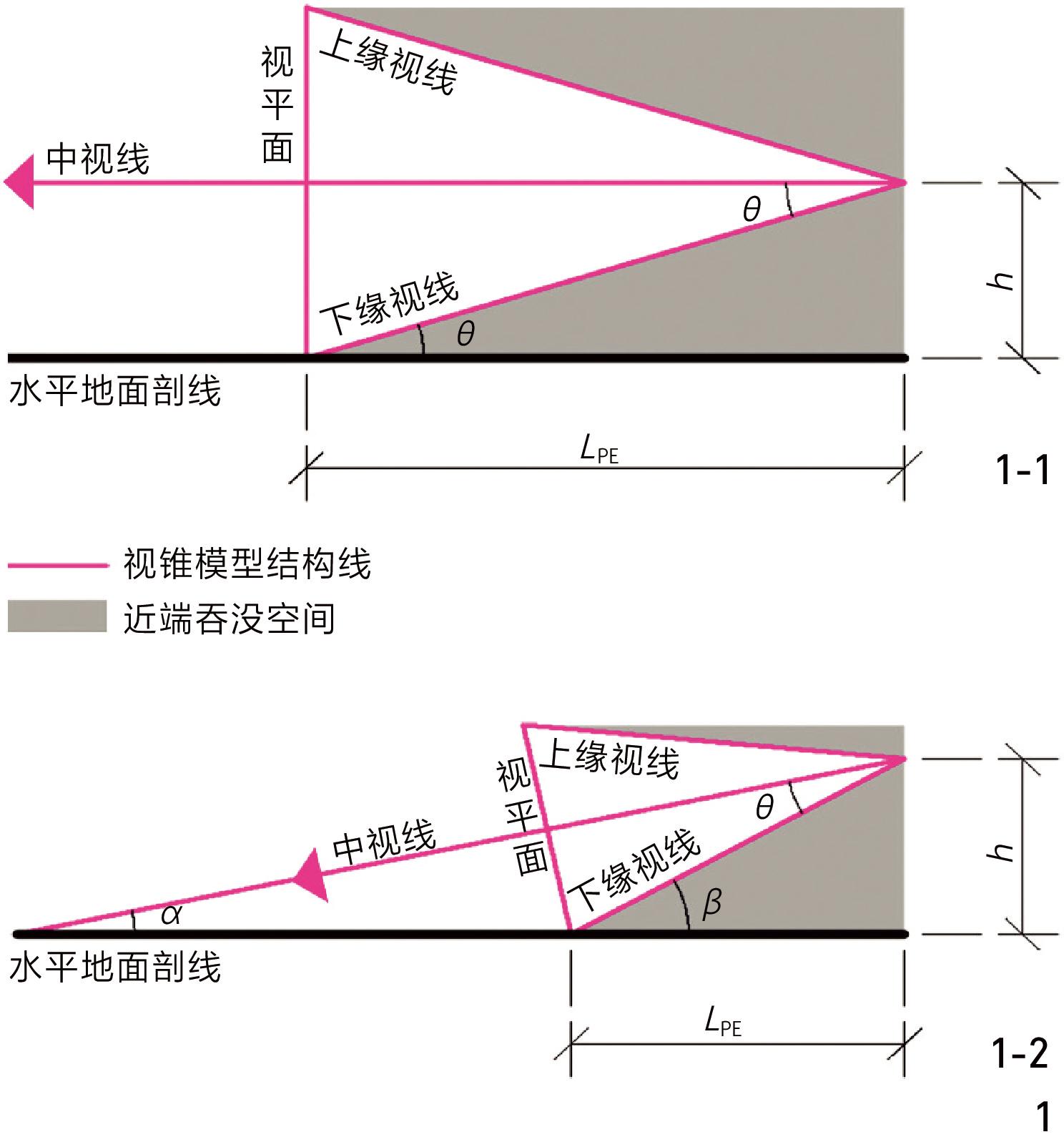
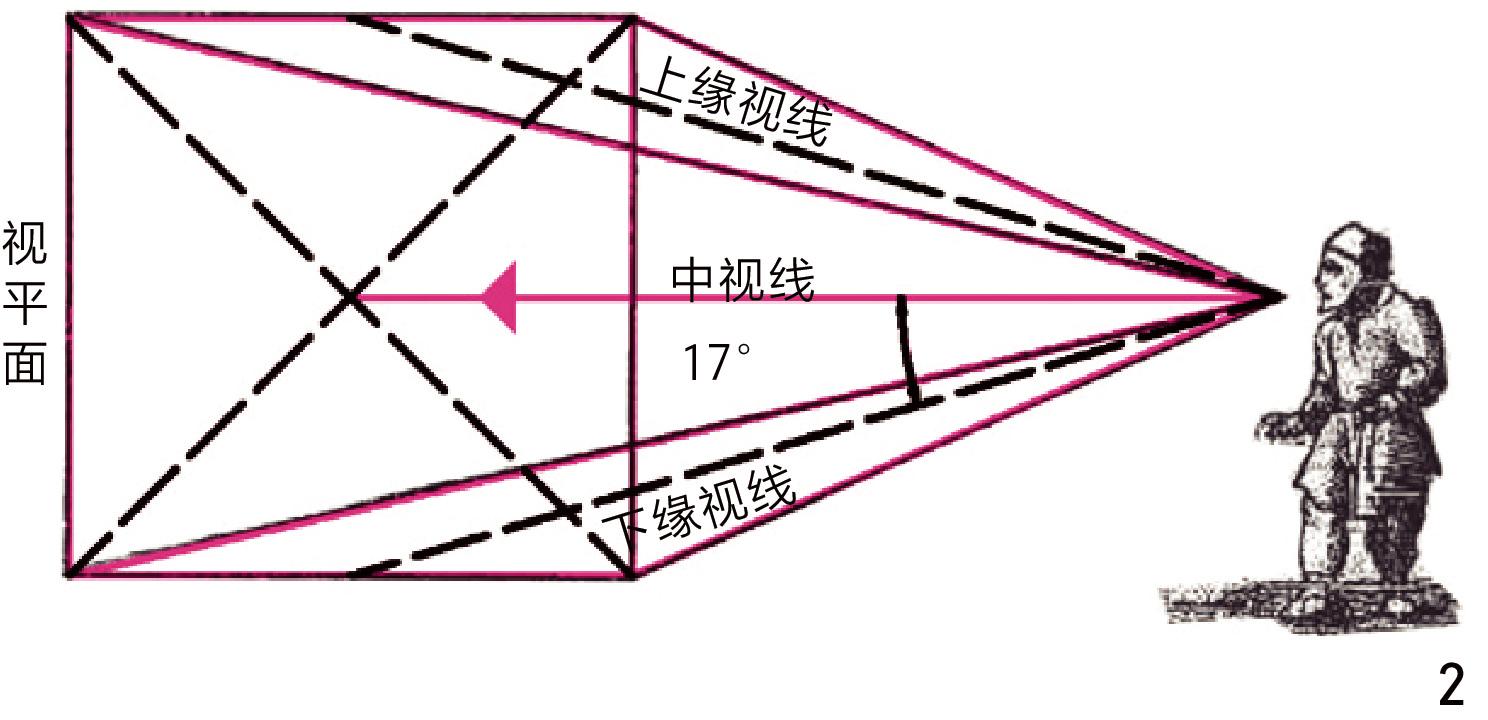
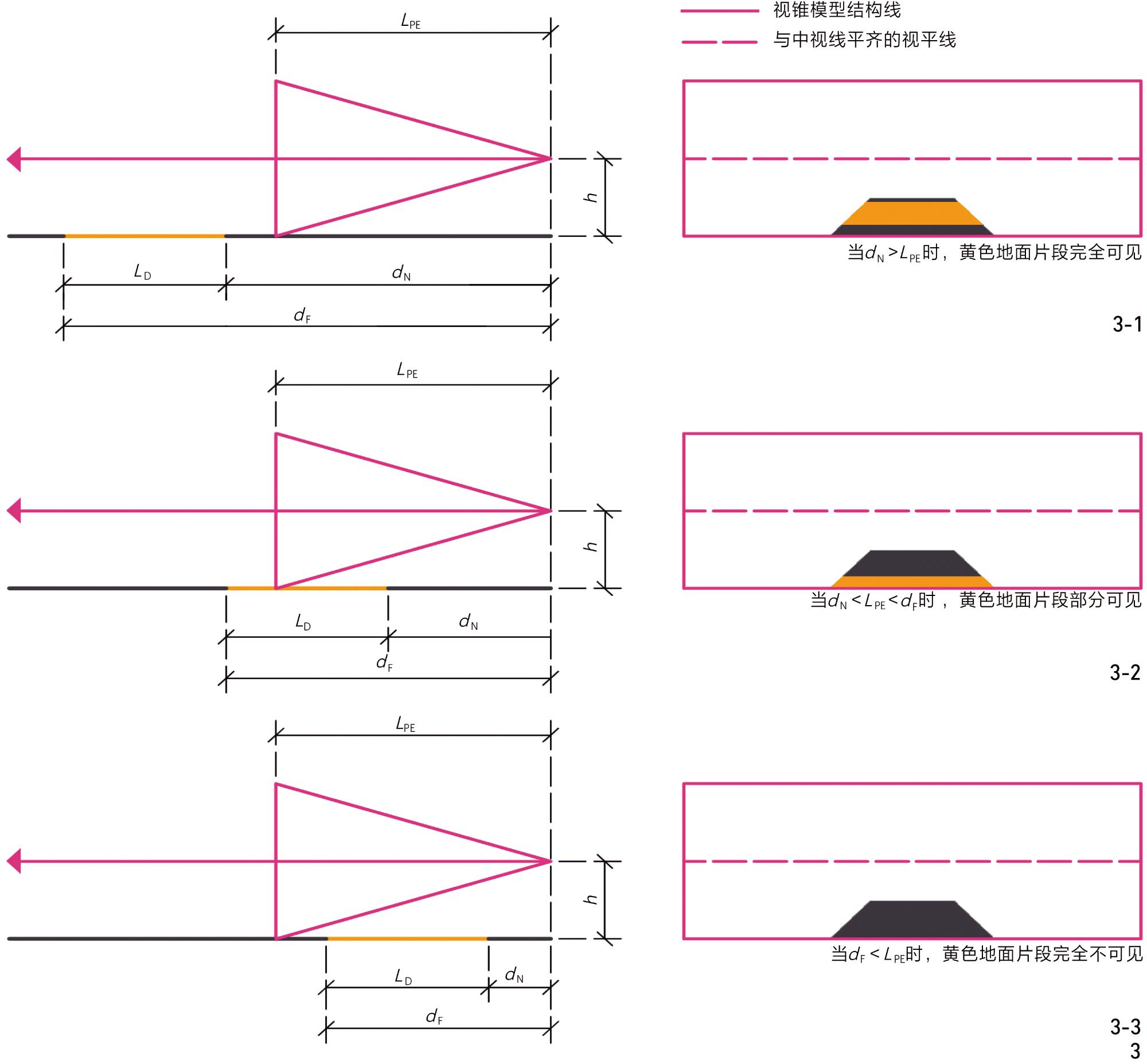
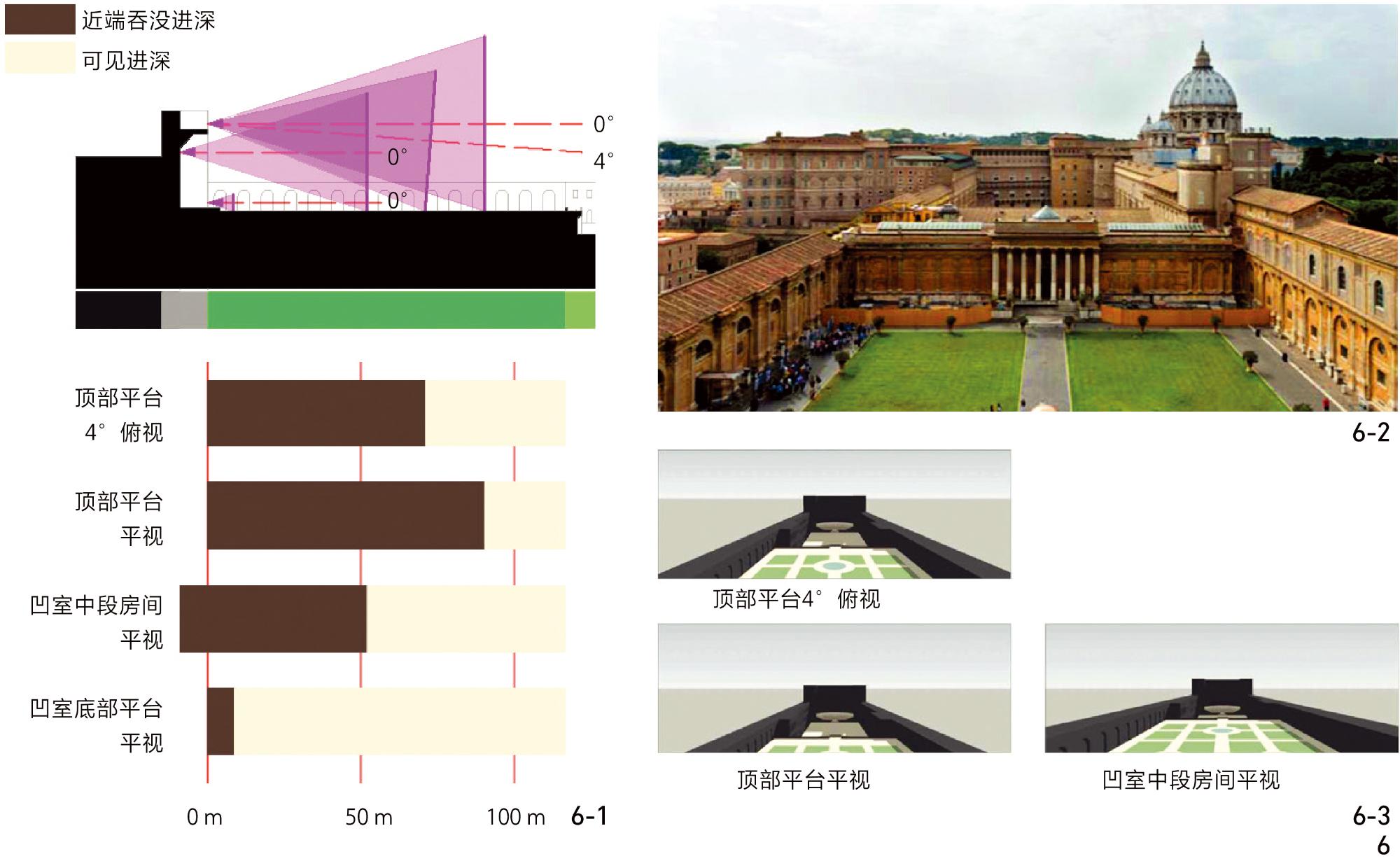
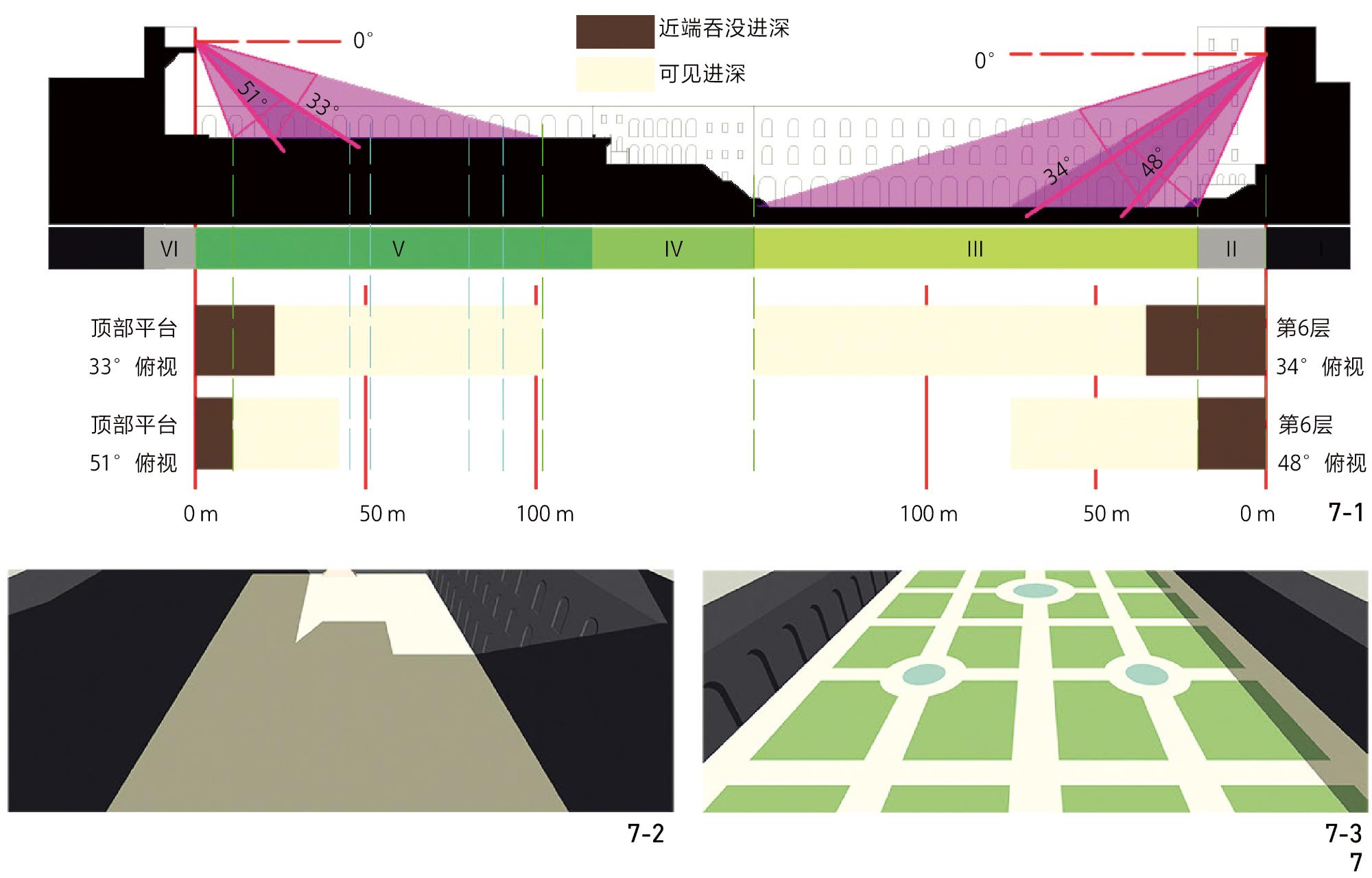
Building on the well-established understanding of perspective through the visual cone among Western craftsmen by the end of the 15th century, this research employs the visual cone to establish the core geometric mechanism of proximal engulfment phenomenon under horizontal viewing conditions, proposing LPE (the horizontal ground depth length in front of the viewpoint that is proximally engulfed) as a measurement parameter. Through combined spatial structure analysis and scene presentation simulation within case studies, design responses to proximal engulfment in spatial construction can be extracted. The geometric relationship between proximal engulfment and the visual cone reveals LPE’s dependence on h (viewpoint height above ground) and θ (sight-line depression angle), with LPE=h·cot(θ). Considering that the vertical natural field of vision of the human eye is around 35 degrees, the value of θ can be 17.5 degrees, which means the value of LPE is approximately 3.17h. Thus, with the known viewpoint height above the ground (h), it is possible to calculate the horizontal proximal engulfment depth LPE corresponding to the viewpoint. By comparing dN (the distance from the viewpoint to the near endpoint of the spatial unit) and dF (distance from the viewpoint to the far endpoint of the spatial unit) with this parameter, the visibility of the corresponding spatial unit in the horizontal view from the viewpoint can be determined: If dN>LPE, the spatial unit is fully visible; if dN<LPE<dF, the spatial unit is partly visible; if dF<LPE, the spatial unit is totally invisible. The Cortile del Belvedere, dating to the early 16th century, is widely recognized in the field of garden history as an important prototype of formal gardens. It is probable that the perceptual impact and design strategies observed in this case reflect similarities to those found in Western formal garden design practices during the 16th and 17th centuries, based on the designer’s understanding of proximal engulfment. Thus, by using LPE as a parameter in visual coverage analysis and scene presentation simulation in this case, and the comparative analysis combining the examples of Villa Farnese and Tuileries Garden, manifestations of proximal engulfment in Western formal garden spatial perception and arrangement can be clearly identified.
LPE can quantitatively describe the extent of the proximal engulfment that occurs on the ground of the observed spatial unit under the condition of horizontal viewing from the corresponding viewpoint. Based on this parameter, case analysis have clarified that when there is a height difference between the viewpoint and the ground of the frontal spatial sequence, it is difficult to avoid three perceptual effects caused by proximal engulfment: compression of scene depth perception, visual truncation of unit landscape, and visual separation of near and far spaces. The degree of these impacts is proportional to the height of the viewpoint above the ground. Based on the geometric mechanisms of proximal engulfment, garden designers can regulate the degree of perceptual impacts caused by proximal engulfment in spatial construction by coordinating the planar position, height difference, and depth of the viewing space units in relation to the viewpoint. As design strategies, concealing functional spaces, highlighting distinctive scenic elements, and enhancing the viewing hierarchy correspond respectively to these three impacts. Additionally, the bidirectional analytical framework established based on the LPE enables forward prediction of “spatial data−visual presentation” and reverse derivation of “historical imagery−viewpoint parameters”, offering a novel approach for digital research on historic gardens.
This study clarifies the geometric mechanism of proximal engulfment, analyzes its impact on the spatial perception of Western formal gardens through case studies, and elaborates on the design strategies in spatial construction in response to these impacts. The study proposes a quantitative method for evaluating the horizontal visibility of spatial units using the horizontal proximal engulfment depth LPE. By comparing the height of the viewpoint above the ground with the viewing distances of the near and far endpoints of the spatial unit, this method allows for precise determination of the visibility and manner of appearance of the spatial unit from the viewpoint. The analytical methods and the corresponding relationships between impacts and strategies proposed in this study can be used to analyze the spatial construction characteristics of other Western formal gardens. By comparing the similarities and differences in techniques across different cases, this approach not only deepens the understanding of the design principles of Western formal gardens but also provides historical references for the rational construction of contemporary landscape spaces based on visual principles.
ZHUO Diya , ZHU Jianning . Geometric-Mechanism Based Impact of Visual Blind Zones on Western Formal Gardens[J]. Landscape Architecture, 2026 , 33(1) : 117 -123 . DOI: 10.3724/j.fjyl.LA20250105
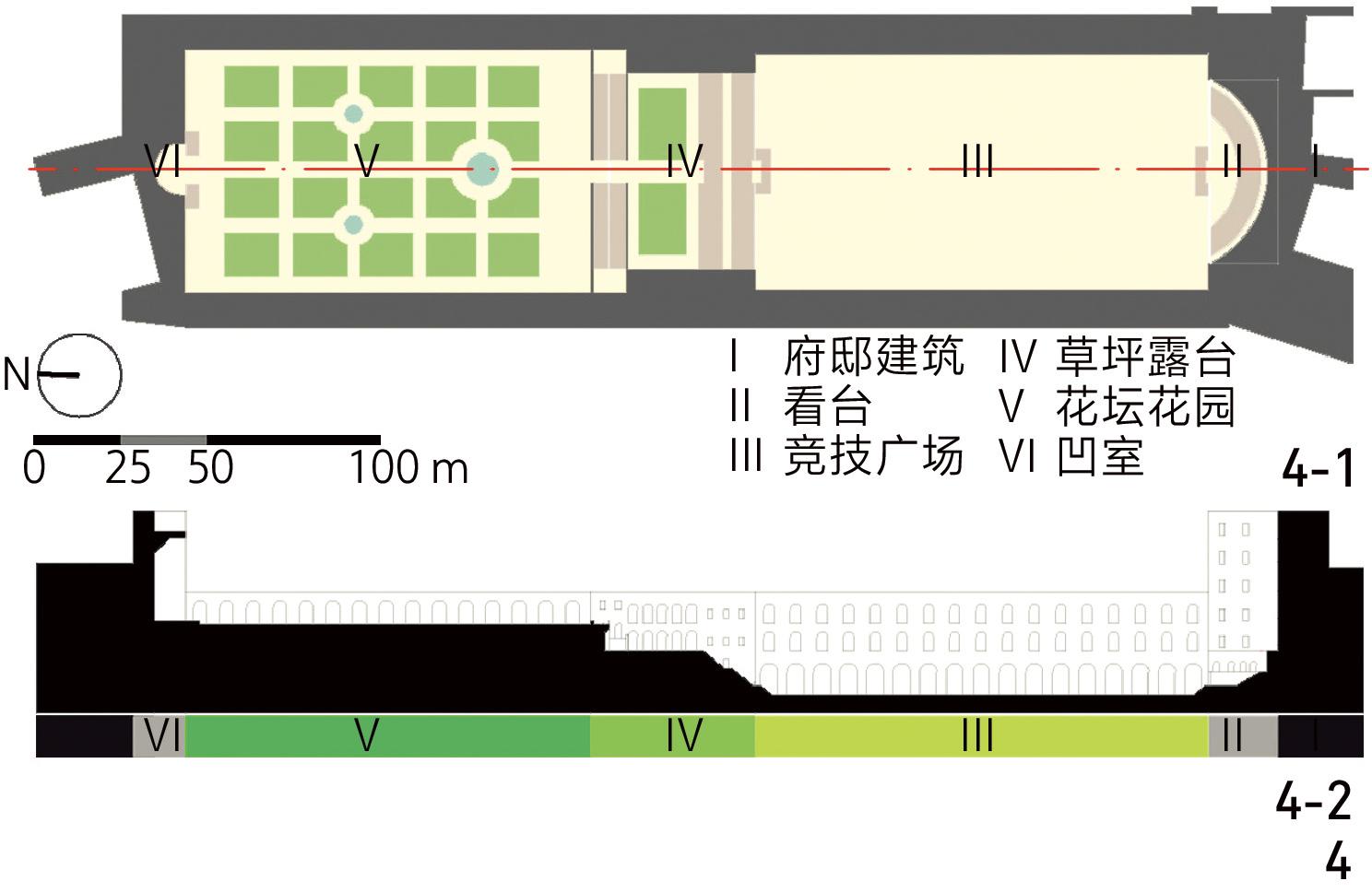
图4 望景楼花园的总平面(4-1)与纵剖面(4-2)Fig. 4 Master plan (4-1) and longitudinal section (4-2) of the Cortile del Belvedere |
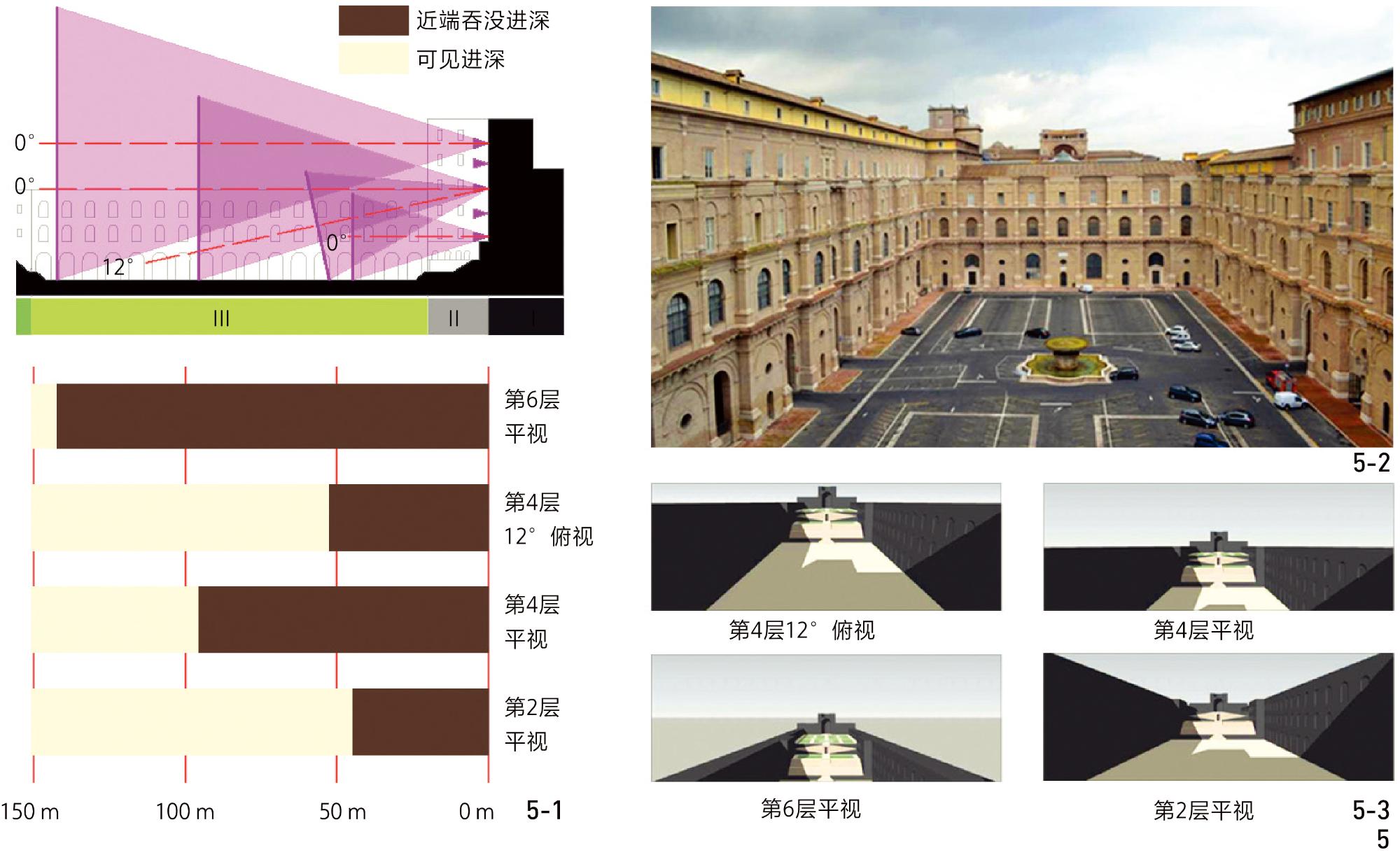
图5 从望景楼花园府邸建筑向北看去的近端吞没进深分析(5-1)、现今实景(5-2)和景象模拟(5-3)Fig. 5 Proximal engulfment depth analysis (5-1), present day photo (5-2) and scene simulation (5-3) of the northward view from the mansion of the Cortile del Belvedere |
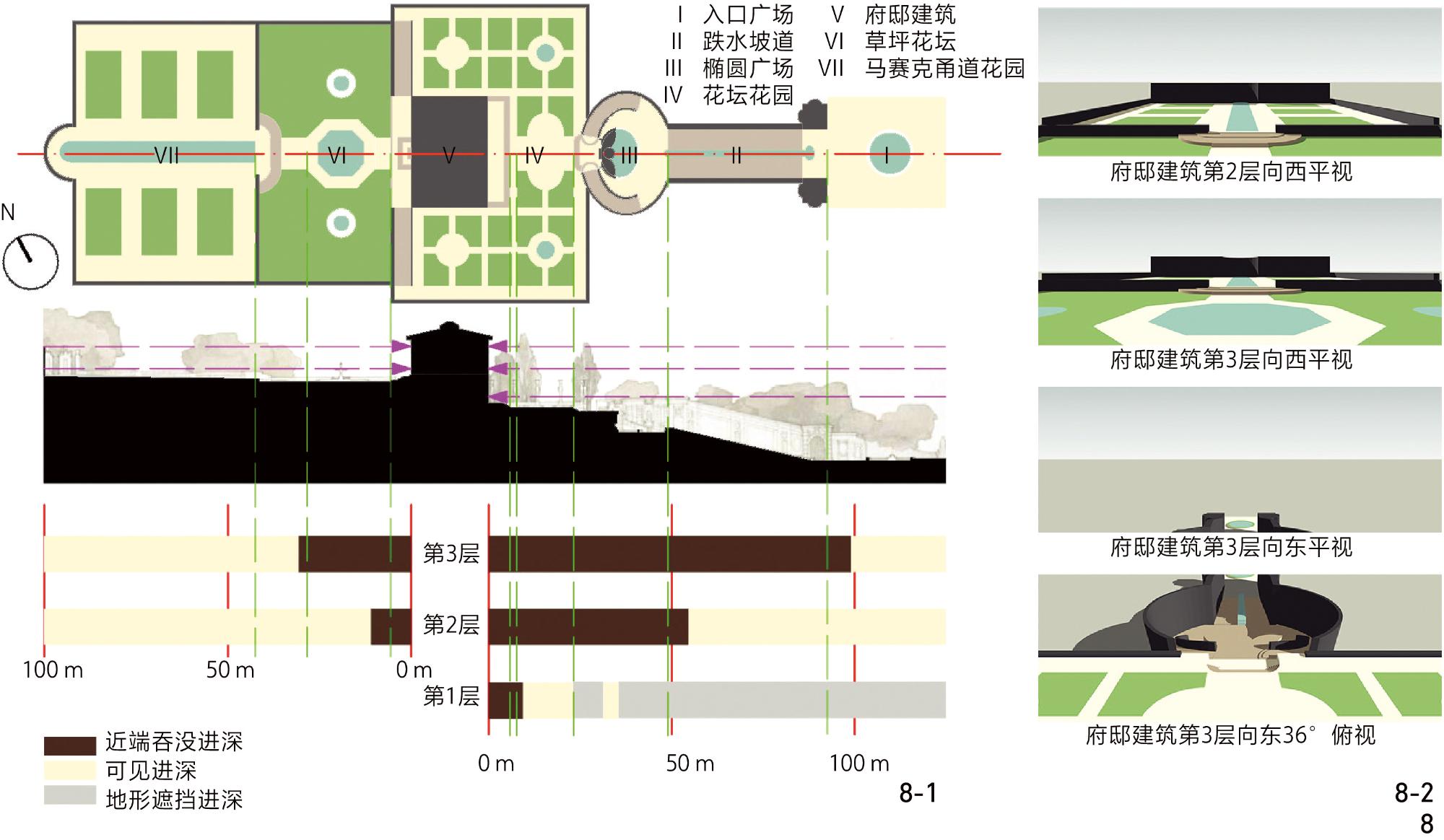
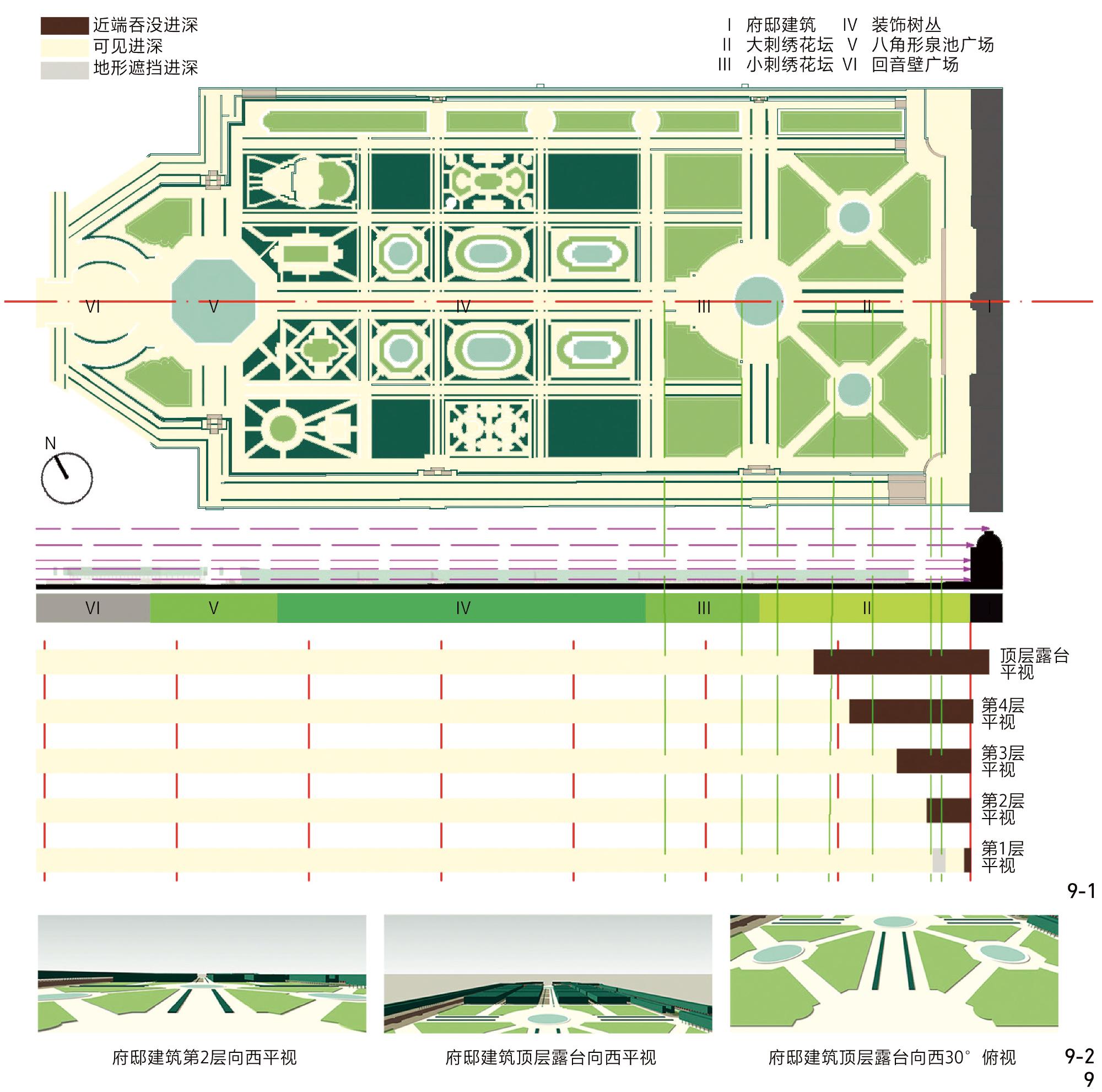
图8 从法尔奈斯庄园府邸建筑向外的近端吞没进深分析(8-1)与景象模拟(8-2)Fig. 8 Proximal engulfment depth analysis (8-1) and scene simulation (8-2) from the outward view of the mansion of the Villa Farnese |
1、基于视锥模型提出平视近端吞没进深参数,量化描述受限于视野的视点近前侧不可见空间范围。通过望景楼花园、法尔纳斯庄园和丢勒里花园3处名园实例的实景-模拟双重验证分析,建立视野盲区与园林空间视觉呈现的定量关联机制。
2、揭示视野盲区导致的三重景象感知影响(景象进深认知压缩、单元景致视觉截断、近远空间视觉分离),并提炼对应的西方规则式园林营建设计策略。
3、构建近端吞没进深参数双向分析框架,实现“空间数据—视觉呈现”的正向预测和“历史图像—视点参数”的逆向解析,为历史园林的数字化研究提供新方法。
| [1] |
刘滨谊. 走向景观感应: 景观感知及视觉评价的传承发展[J]. 风景园林, 2022, 29(9): 12-17.
LIU B Y. Towards Landscape Interaction: Inheritance and Development of Landscape Perception and Visual Evaluation[J]. Landscape Architecture, 2022, 29(9): 12-17.
|
| [2] |
BELL S. Elements of Visual Design in the Landscape (3rd Edition)[M]. London: Routledge, 2019.
|
| [3] |
王哲然. 透视法的起源[M]. 北京: 商务印书馆, 2019.
WANG Z R. The Origin of Perspective[M]. Beijing: The Commercial Press, 2019.
|
| [4] |
李圣传. 美的本质问题在欧洲的起源、发展与启示[J]. 学术月刊, 2022, 54(11): 169-180.
LI S C. The Origin, Development and Enlightenment of the Essence of Beauty in Europe[J]. Academic Monthly, 2022, 54(11): 169-180.
|
| [5] |
TURNER T. 欧洲园林: 历史、哲学与设计[M]. 北京: 电子工业出版社, 2015.
TURNER T. European Gardens[M]. Beijing: Publishing House of Electronics Industry, 2015.
|
| [6] |
朱蔚云, 金云峰. 15—18世纪欧洲传统园林轴线空间演变解析[J]. 西部人居环境学刊, 2017, 32(3): 96-102.
ZHU W Y, JIN Y F. Study on Transmutation of European Traditional Gardens Axis Space from 15th to 18th Century[J]. Journal of Human Settlements in West China, 2017, 32(3): 96-102.
|
| [7] |
WELLINGTON R. Lines of Sight: Israël Silvestre and the Axial Symbolism of Louis XIV’s Gardens at Versailles[J]. Studies in the History of Gardens & Designed Landscapes, 2017, 37(2): 120-133.
|
| [8] |
HYDE E. Time and Distance in the Bourbon Landscape: The Strategic Illogicality of the Gardens of Versailles[J]. Studies in the History of Gardens & Designed Landscapes, 2021, 41(1): 3-21.
|
| [9] |
GRBIĆ M, ČUČAKOVIĆ A, JOVIĆ B, et al. Garden Cultural Heritage Spatial Functionalities: The Case of Anamorphosis Abscondita at Vaux-le-Vicomte[J]. Journal of Cultural Heritage, 2016, 18: 366-369.
|
| [10] |
ALBERTI L B. On Painting[M]. London: Penguin Classics, 1991.
|
| [11] |
朱建宁, 赵晶. 西方园林史: 19世纪之前[M]. 3版. 北京: 中国林业出版社, 2019.
ZHU J N, ZHAO J. History of Western Gardens: Before the 19th Century[M]. 3rd ed. Beijing: China Forestry Publishing House, 2019.
|
| [12] |
BURATTI G, MELE G, ROSSI M. The Masterly Perspective and Design of Bramante’s “Mirabile Artificio” in Milan[J]. Nexus Network Journal, 2022, 24(3): 545-565.
|
| [13] |
ROMOR J. Interpretative Models Between Theory and Perception: The Case of the Two Rules of Practical Perspective by Jacopo Barozzi Da Vignola[J]. Proceedings, 2017, 1(9): 946.
|
| [14] |
殷曼楟. 视觉研究中知觉心理学间接知觉论的贡献[J]. 社会科学辑刊, 2021(2): 49-59.
YIN M T. The Contribution of Indirect Perception Theory of Perceptual Psychology in Visual Research[J]. Social Science Journal, 2021(2): 49-59.
|
/
| 〈 |
|
〉 |