

Analysis of the Cooperation Networks of Market Entities’ Participation in Urban Regeneration: A Case Study of Beijing
|
TANG Yan is a tenured professor and doctoral supervisor in the School of Architecture, Tsinghua University. Her research focuses on urban design, urban regeneration, planning and design, and urban and rural governance |
|
YIN Xiaoyong is a research assistant in the School of Architecture, Tsinghua University. His research focuses on urban regeneration and planning governance |
Received date: 2025-11-04
Online published: 2026-03-12
Copyright
Against the backdrop of a global economic slowdown and the profound transformation of China’s urban-rural development model, the implementation of the national strategy of “urban regeneration action” is widely confronted with persistent challenges, including insufficient funding sources, a lack of diversity among implementing actors, and institutional and policy constraints. The current government-dominated approach to urban regeneration is facing structural bottlenecks, characterized by heavy fiscal burdens and limited flexibility in mobilizing non-governmental resources. Consequently, attracting market entities—such as enterprises engaged in investment, construction, and operation—has thus become an urgent and critical pathway for advancing urban regeneration. This study aims to address several pressing questions in current urban regeneration practices: with whom market entities cooperate, why such cooperation emerges, and what outcomes it generates. By clarifying the cooperative logic and operational conditions of urban regeneration projects, this research seeks to improve the institutional guarantees for project implementation, enhance the incentives for market entities’ participation, and ultimately promote the sustainable and normalized implementation of China’s urban regeneration action in the long run.
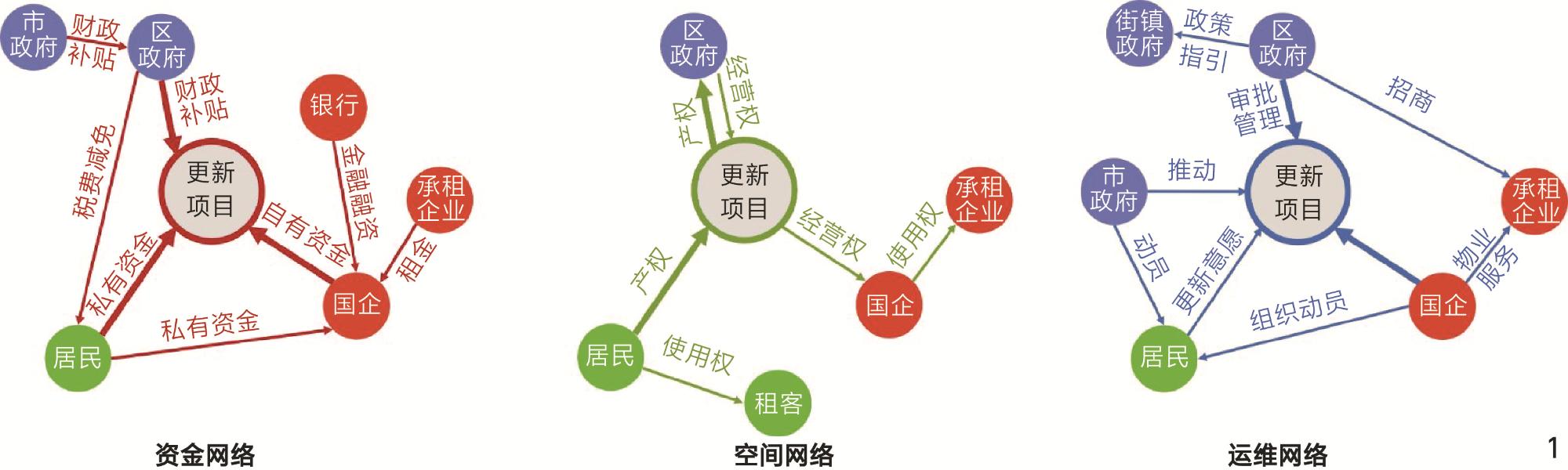
This study introduces social network analysis (SNA) into the examination of cooperation in urban regeneration, and constructs a cooperation network prototype composed of nodes representing the “government−market−society” triad and individual regeneration projects, and edges representing interactions in terms of “capital source−physical space−operation service.” Specifically, three interrelated sub-networks are identified. The capital source network depicts the allocation of costs and benefits among multiple actors, such as fiscal funds, enterprise investment, and residents’ contributions during the regeneration process. The physical space network reflects the transformation and reconfiguration of property rights, including ownership, use rights, and income rights among multiple stakeholders. The operation service network captures the coordinated actions of diverse actors under institutional arrangements, approval procedures, contractual agreements, and governance rules throughout project implementation. Based on this network framework, the study combines semi-structured interviews with systematic text coding. From the perspectives of overall network structure, node characteristic, and cooperative alliances, a quantitative indicator system comprising 6 specific metrics is constructed. This integrated approach enables a systematic depiction of the topological structure and an analysis of the underlying mechanisms of cooperation networks among diverse actors, including state-owned enterprises, private firms, governments, and residents.
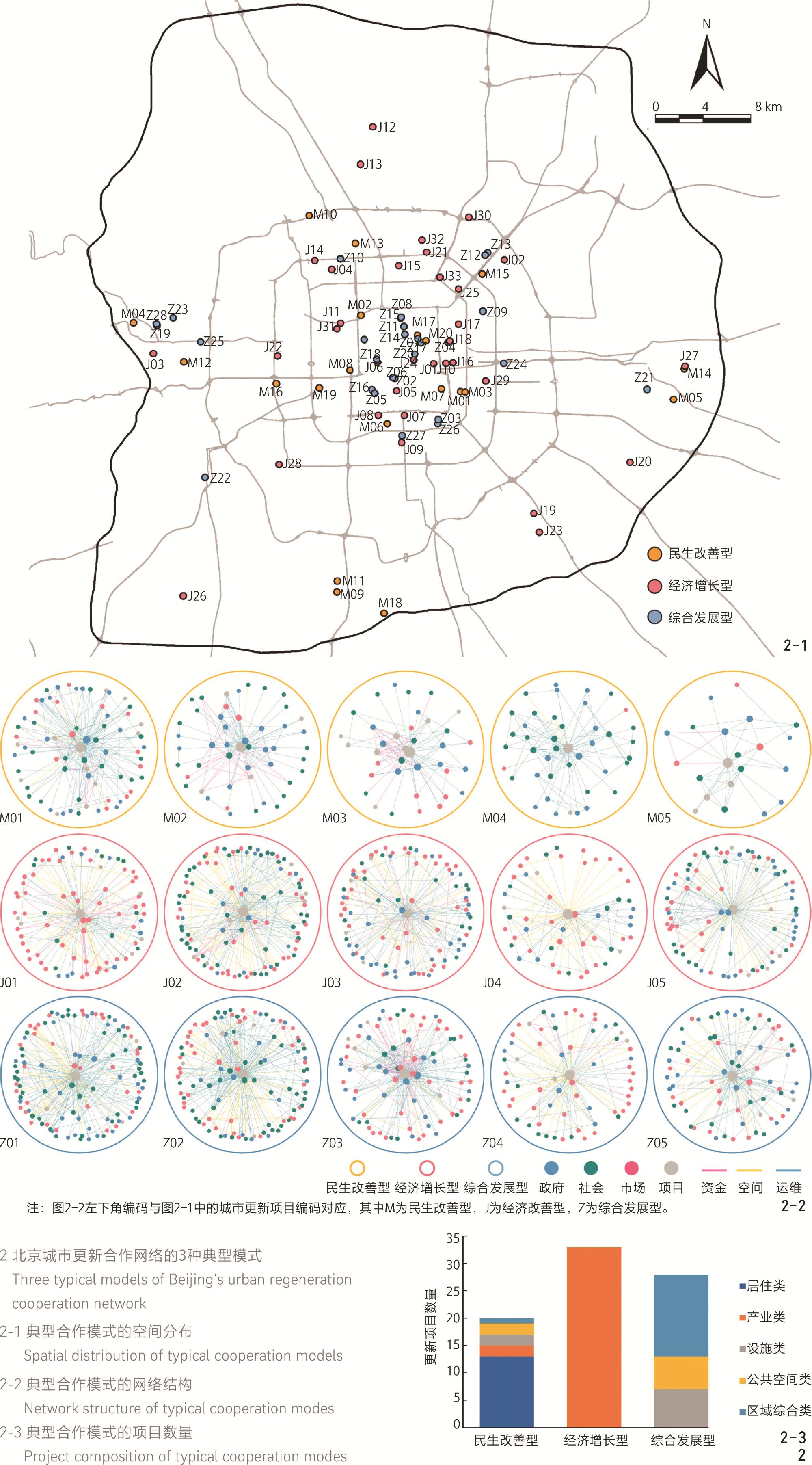
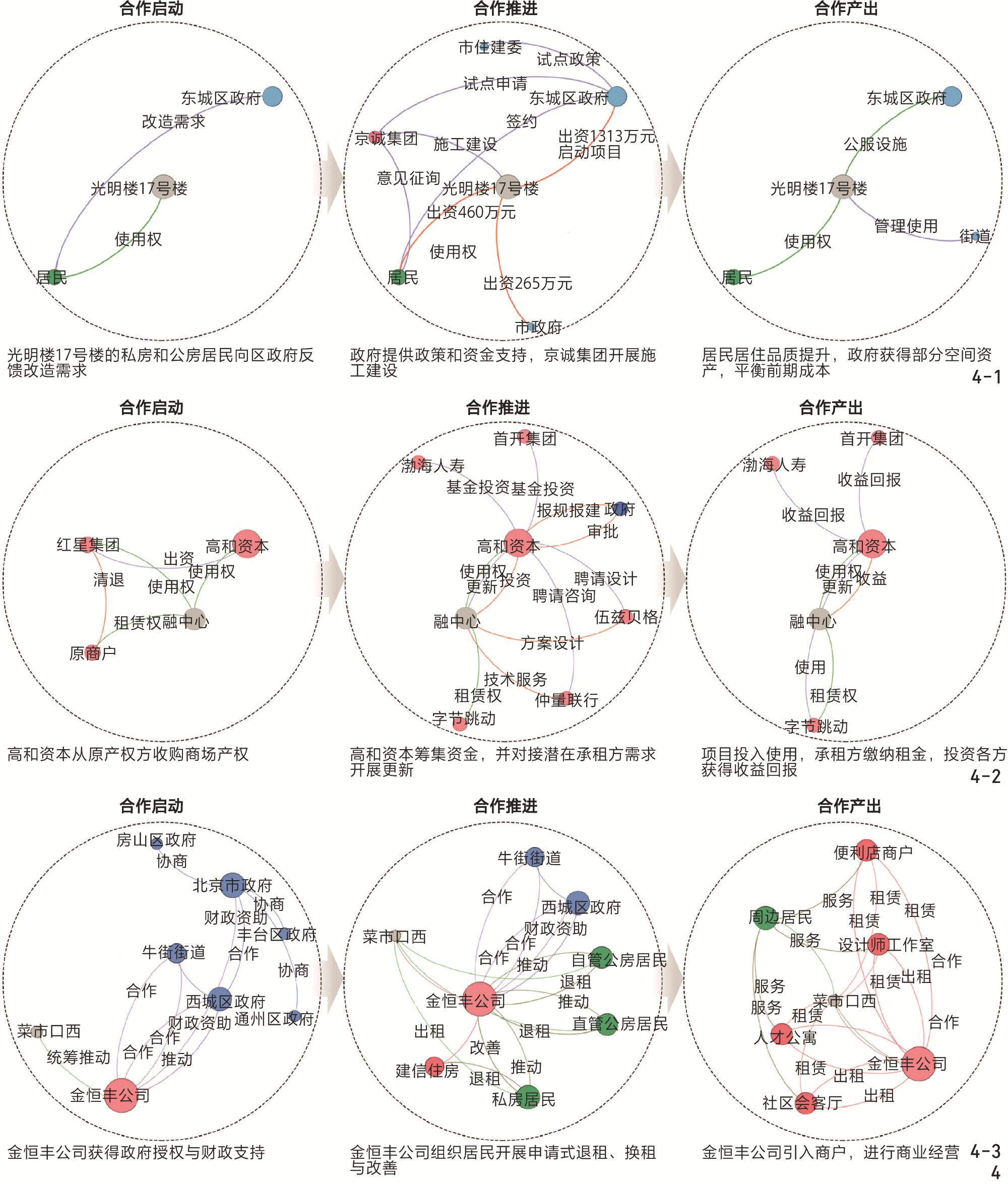
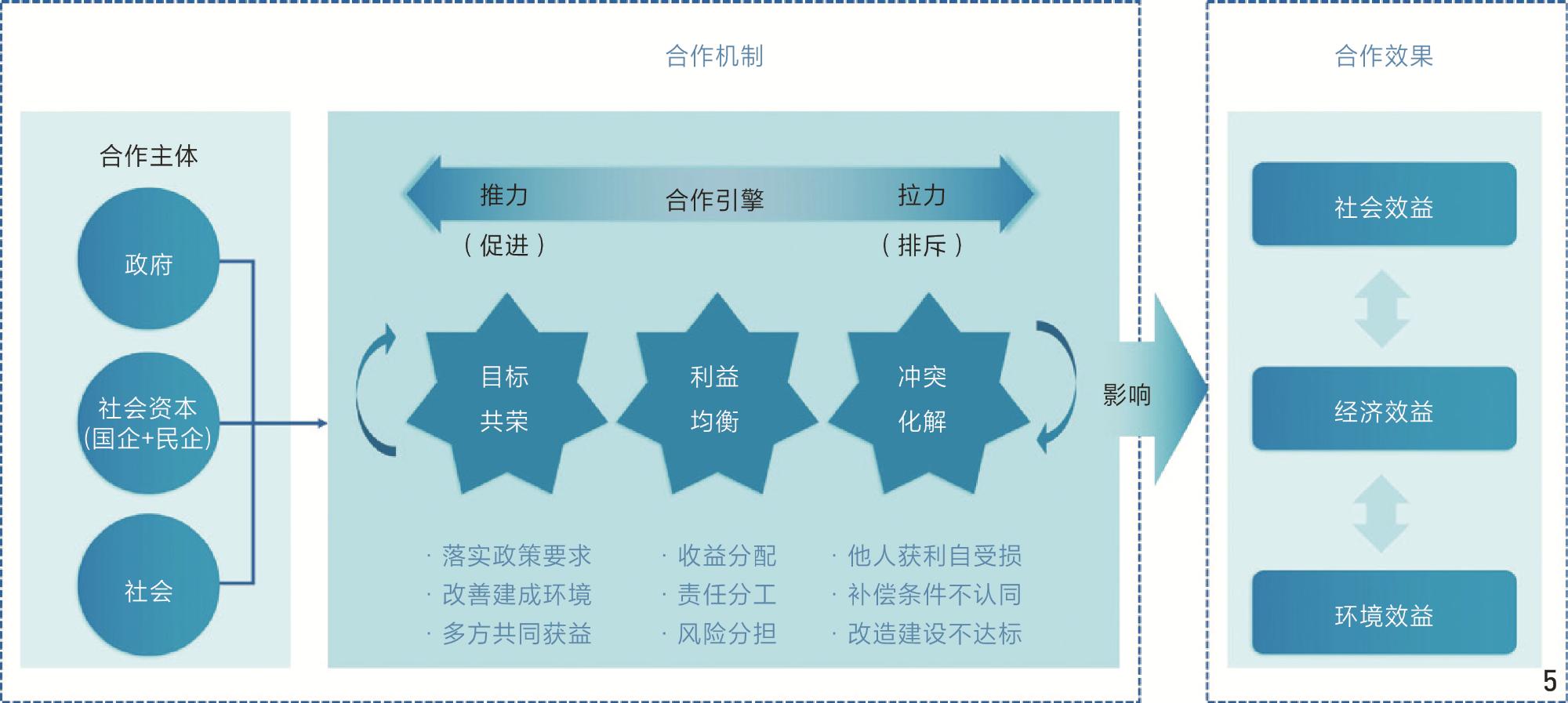
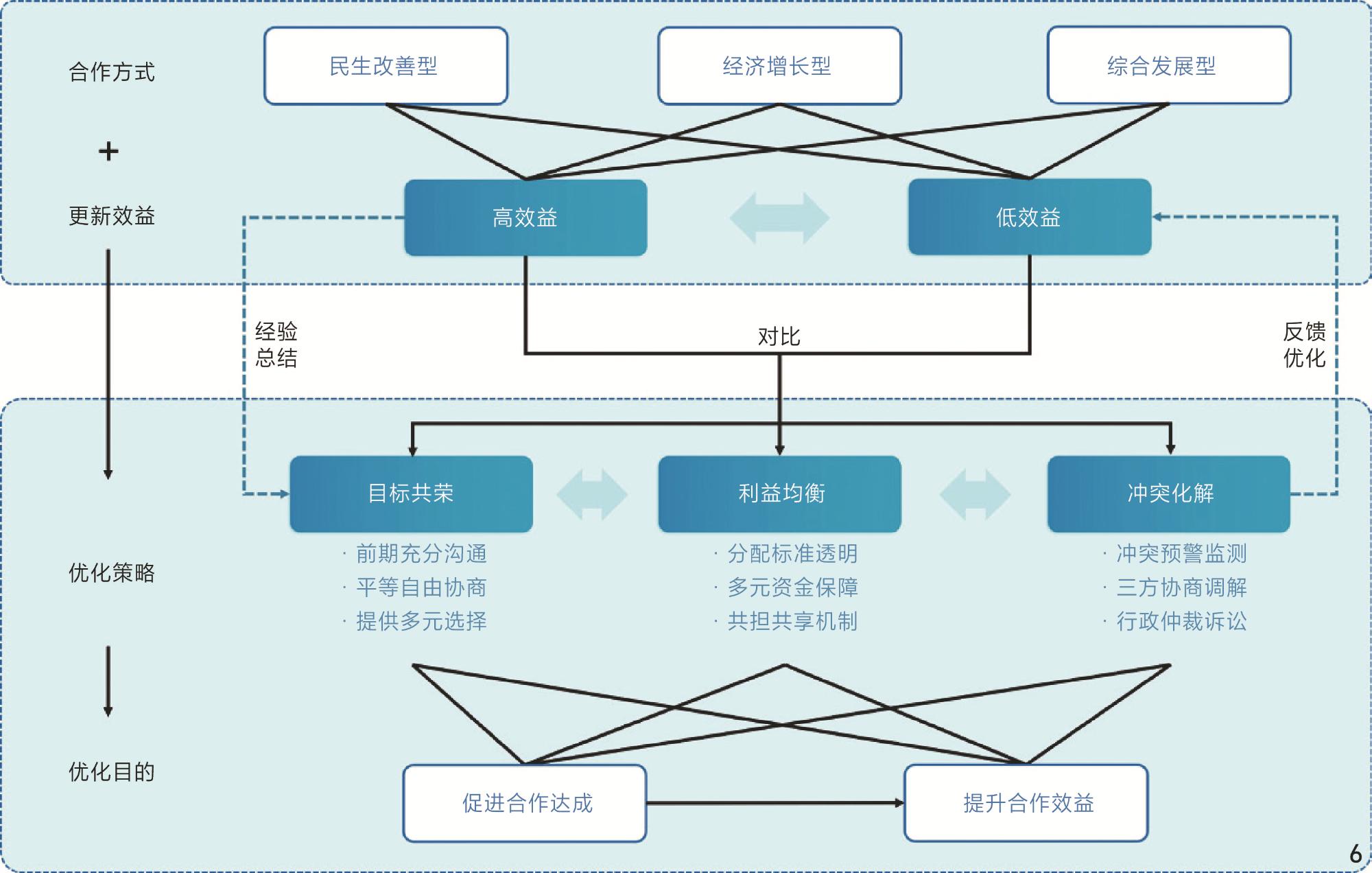
Using typical projects in Beijing’s central urban area as empirical samples, the study first conducts a macro-level analysis of 81 urban regeneration cases. A comprehensive textual database is established by integrating news and reports, government and enterprise promotional materials, and fieldwork interview records. Based on this database, cooperation networks for urban regeneration projects are constructed, network indicators are calculated, and cluster analysis is performed. The results identify three differentiated types of cooperation networks in Beijing’s urban regeneration—“welfare protection”, “economic growth” and “comprehensive development” —each exhibiting distinct project characteristics, network structures, key nodes, and cooperative alliances. Welfare protection-oriented networks mainly involve residential regeneration projects—such as old neighborhood and dilapidated building—as well as facility-oriented and public space projects. These networks exhibit relatively simple structures and a strong government-dominant pattern. Economic-growth-oriented networks are primarily associated with industrial regeneration projects, including old factories and commercial or office buildings. Such networks are more complex, with the highest level of participation and the greatest centrality of market entities. Comprehensive-development-oriented networks focus on area-based regeneration projects, such as historic district and functional area, and also include certain facility and public space projects with spillover effects. These networks display the highest structural complexity and a more balanced involvement of governmental, market, and social actors. Based on this, the study selects 3 representative cases—Guangming Building No. 17 in Chaoyang District, Rong Center in Chaoyang District, and the Caishikou West Area in Xicheng District—for in-depth analysis. By examining the stages of cooperation initiation, cooperation advancement, and cooperation outcomes, the study reveals the evolving participation modes and driving mechanisms of different actors. The findings show that the role of market entities in Beijing’s urban regeneration is shifting from “growth coalition” to “equitable governance”, while various state-owned enterprises, characterized by their “semi-governmental and semi-market” identity, undertake differentiated functions in financing, implementation, and operation. Through both horizontal comparisons across different regeneration types and longitudinal comparisons across project stages, the study further demonstrates that the achievement of cooperation in urban regeneration depends on a triple mechanism of “goal alignment−interest balance−conflict resolution”, in which shared goals serve as the premise, interest distribution as the focal point, and conflict resolution as the challenge. By comparing China’s experience with international cases such as business improvement districts (BID) and the Urban Regimes in western capitalist countries, the study highlights the contrast between Western regeneration systems centered on private interests and China’s public interest oriented institutional framework. In response to the practical difficulties faced by social capital participation, 15 specific policy instruments are proposed.
By incorporating SNA into the study of urban regeneration cooperation, this research develops a cooperation network prototype and quantitative indicator system from the perspective of market-entities participation. The proposed framework enables the identification and comparison of different cooperation patterns and, through in-depth case analysis, establishes a mechanism-based analytical framework for understanding cooperative outcomes. These methodological contributions provide a methodological reference for comparative studies on urban regeneration operations in other cities in China.
TANG Yan , YIN Xiaoyong . Analysis of the Cooperation Networks of Market Entities’ Participation in Urban Regeneration: A Case Study of Beijing[J]. Landscape Architecture, 2026 , 33(2) : 29 -39 . DOI: 10.3724/j.fjyl.LA20250694
表1 社会网络分析方法在城市更新合作中的主要应用[29, 32, 34, 38, 40-41]Tab. 1 Main applications of social network methods in urban regeneration cooperation analysis[29, 32, 34, 38, 40-41] |
| 尺度 | 研究主题 | 方法/指标 | 主要结论 | 文献来源 |
|---|---|---|---|---|
| 微观项目尺度 | 意大利佛罗伦萨自然历史博物馆 | 中心度 | 博物馆位于合作网络中心 | [32] |
| 上海田子坊 | 网络密度、距离、中心度 | 街道办事处、地方居民是关键利益相关者 | [29] | |
| 北京钟鼓楼 | 网络结构、对称性、强度 | 专家和记者掌握着大量的网络化权力,政府在实际决策中拥有最终权力 | [34] | |
| 宏观城市尺度 | 西澳大利亚帕斯道路绿化项目 | 中心度、紧密度、聚类系数 | 地方和州政府以及行业协会是合作网络中的主要提供者、接收者和中介 | [38] |
| 重庆北碚区社区更新 | 网络密度、中心度、紧密度 | 利益相关者结构高度复杂、基层政府角色尴尬、公众发声不足且存在认知偏差 | [40] | |
| 纽约曼哈顿商业改善区(business improvement district, BID) | 中心度、节点和边的比例 | 公共和私人均衡合作、合作中的反对态度、适当降低合作的复杂度能提高资产价值 | [41] |
表2 城市更新运作中“资金-空间-运维”合作网络原型描述Tab. 2 Prototype description of “capital source-physical space-operation service” cooperation network in urban regeneration operations |
| 参与主体(节点) | 资金(边) | 空间(边) | 运维(边) |
|---|---|---|---|
| 政府:市政府(部门)、区政府(部门)、街镇政府等 | 财政补贴、税费减免、更新基金等 | 使用权、经营权、收益权、所有权等 | 制度规章、审批管理、证照办理等 |
| 企业:央企、市属国企、区属国企、民企等 | 企业自有资金、金融融资等 | 使用权、经营权、收益权、所有权等 | 技术服务、沟通协商等 |
| 社会:物业权利人、相邻权利人、责任规划师、居(村)委会等 | 私有资金、公共维修基金、物业缴费(公用)等 | 使用权、居住权等 | 沟通协商、监督、建议等 |
表3 社会资本参与城市更新的网络特征计算指标[56]Tab. 3 Network characteristic calculation indicators for market entity participation in urban regeneration[56] |
| 维度 | 指标名称 | 指标解释 |
|---|---|---|
| 网络结构 | 网络规模 | 节点个数,值越大网络规模越大 |
| 网络密度 | 网络中已有的边占可能存在的边的总数的比例,表示网络的紧密程度 | |
| 节点特征 | 节点频次占比 | 网络中某一节点出现的频次占所有节点总频次的比例,值越大表示主体的积极性越高 |
| 紧密度 | 节点到其他节点最短距离的平均值,值越大表示节点与其他所有节点联系越紧密,即越位于网络的中心,节点的重要性越高 | |
| 中心度 | 与节点直接相连的周围节点的个数或者节点周围边的数量,值越大表示节点与周边节点的联系程度越高,在合作网络中表示与其他主体的合作越广泛 | |
| 合作联盟 | 模块数 | 通过多次迭代计算模块数增量直至增量为0,此时的模块数即为网络中的合作联盟数量 |
表4 社会资本参与北京典型城市更新项目的合作网络对比Tab. 4 Cooperation network analysis and calculation of market entities’ participation in typical urban regeneration projects in Beijing |
| 对比维度 | 民生改善型 | 经济增长型 | 综合发展型 |
|---|---|---|---|
| 代表案例 | 朝阳区光明楼17号楼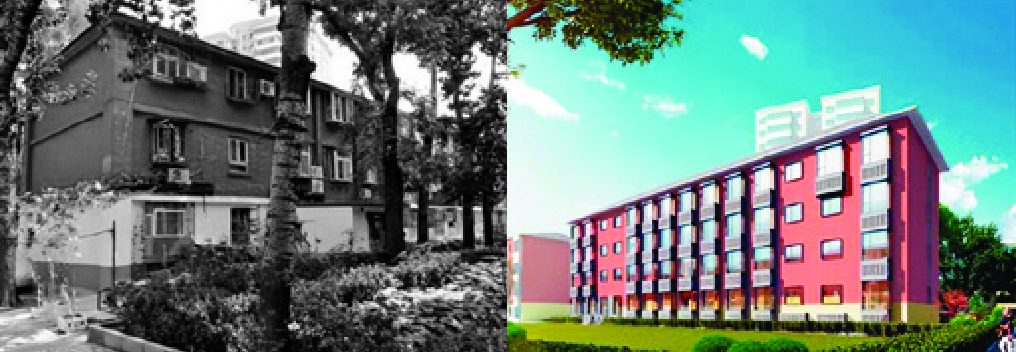 | 朝阳区融中心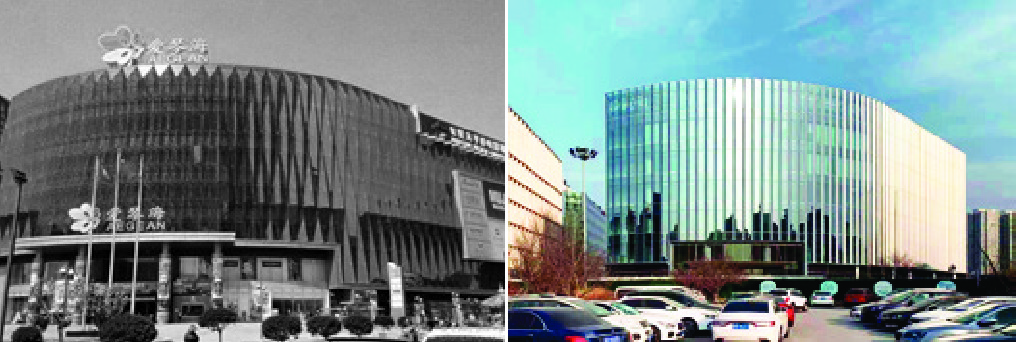 | 西城区菜市口西片区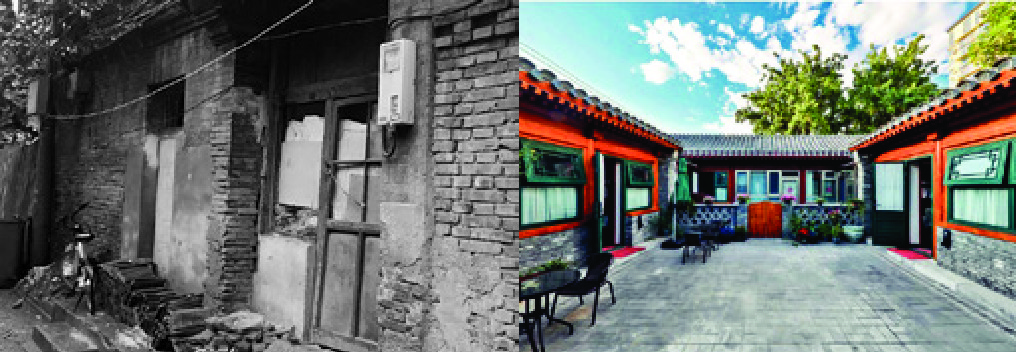 |
| 合作网络 | 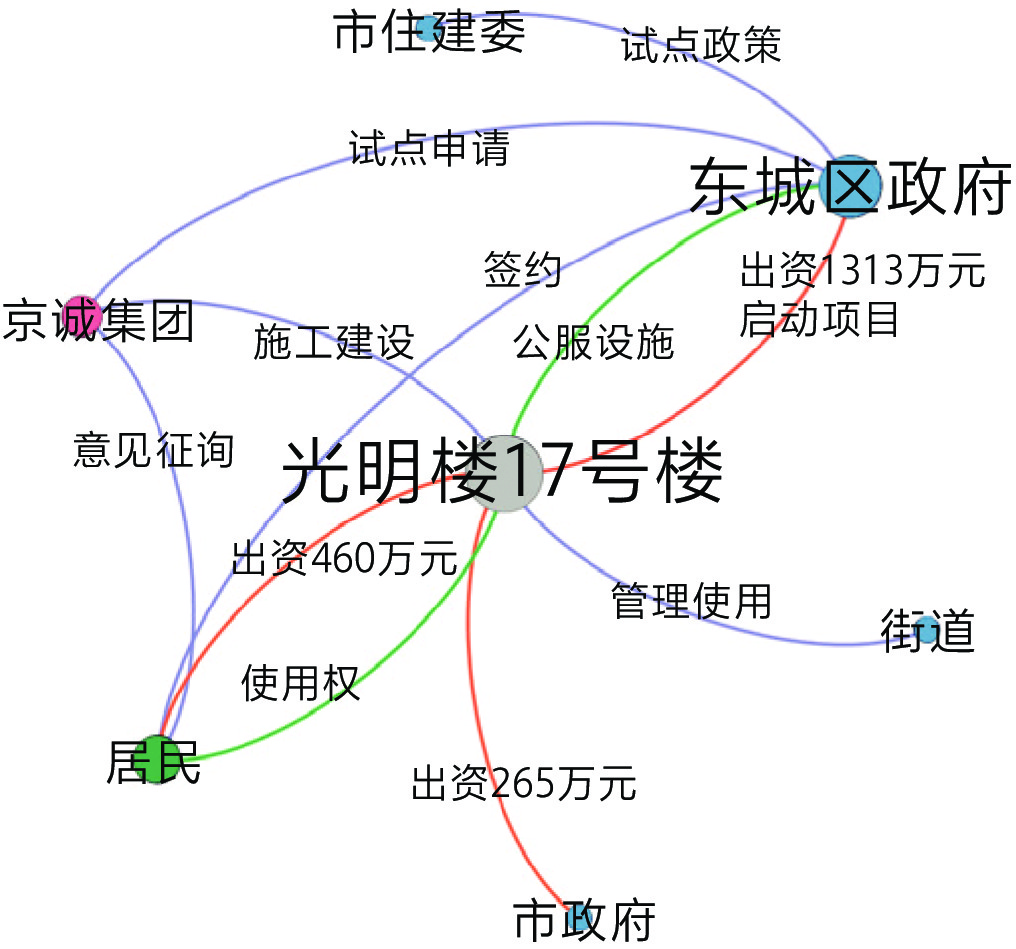 | 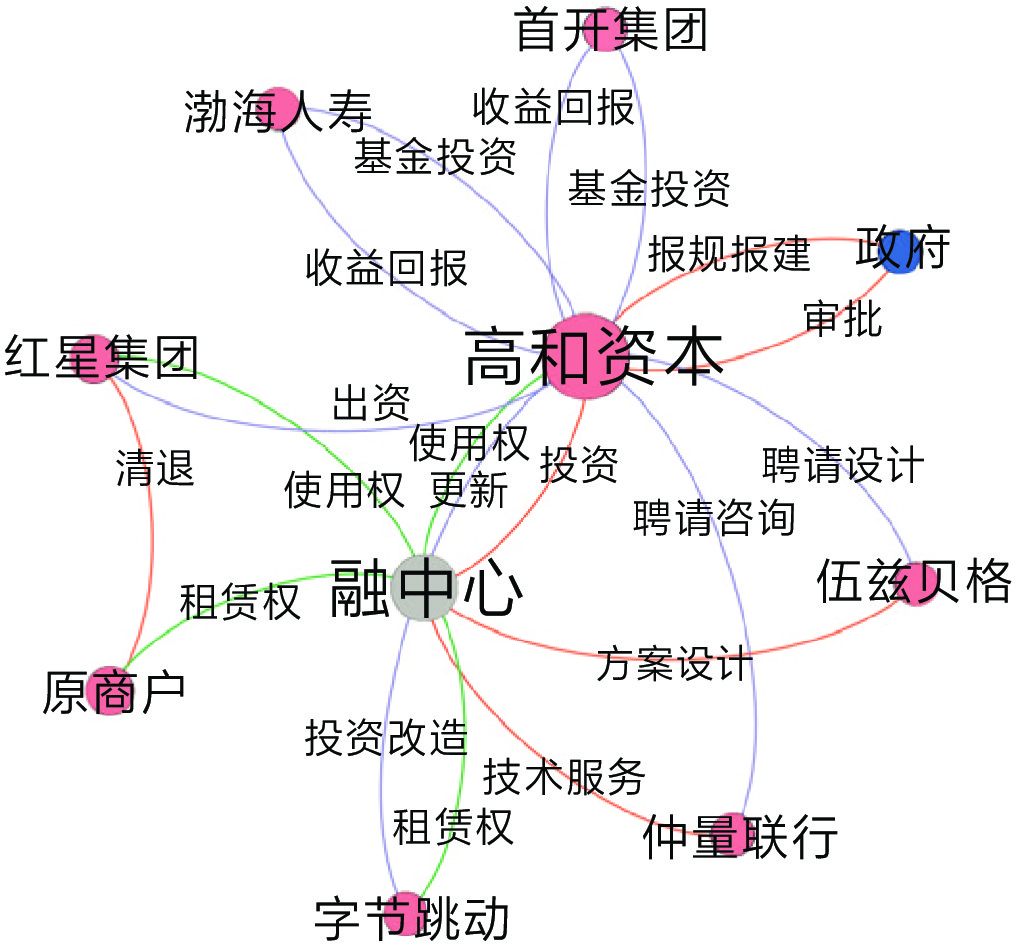 | 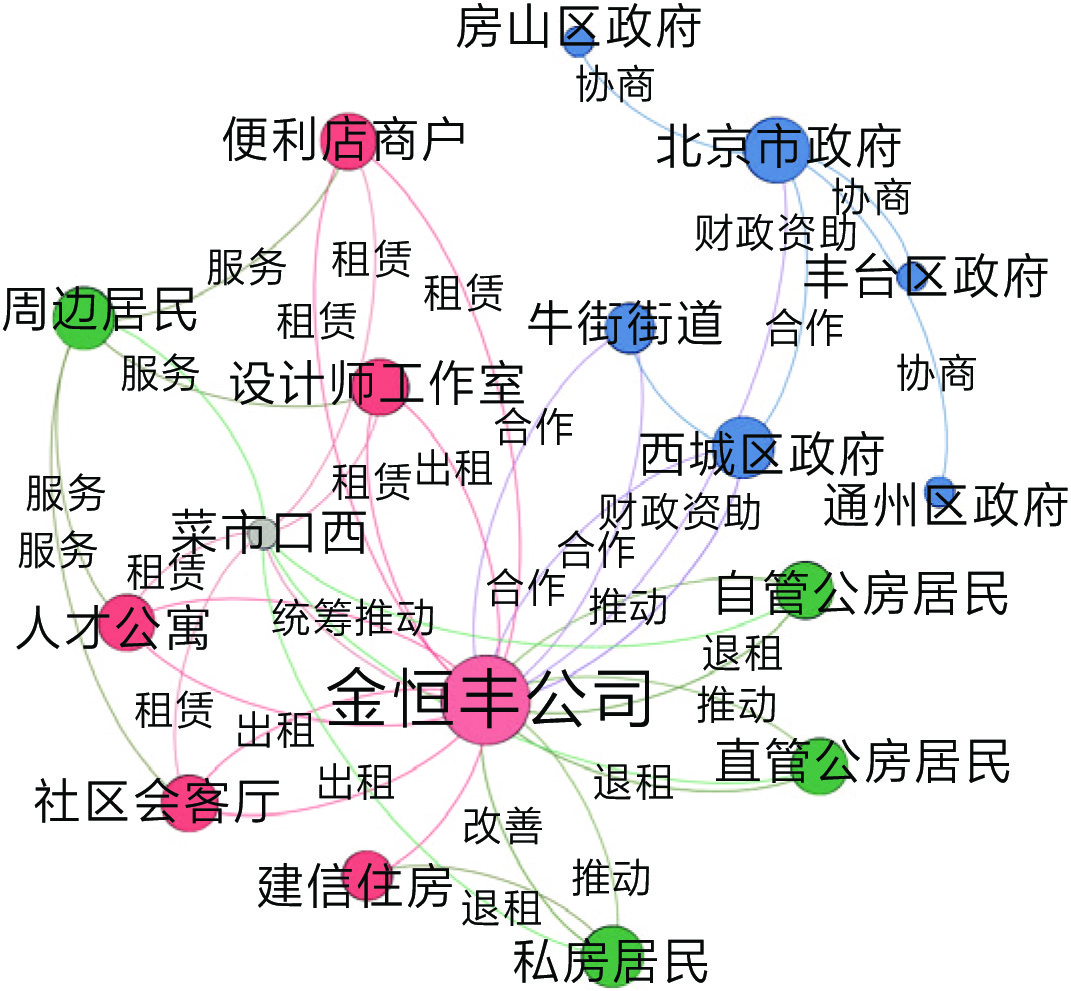 |
| 网络结构 | 网络规模7;网络密度0.3 | 网络规模10;网络密度0.2 | 网络规模17;网络密度0.162 |
| 节点特征及最大值 节点(数值) | 中心度:光明楼(8) | 中心度:高和资本(12) | 中心度:金恒丰公司(26) |
| 紧密度:京诚集团(1) | 紧密度:高和资本(0.82) | 紧密度:菜市口西(1) | |
| 合作方式(联盟数量) | 多方参与主体紧密合作推进项目(1) | 社会资本、政府、投资方合作推进项目, 与原业主与原商户联系较低(2) | 统筹主体、合作企业及居民的合作主导推进项目, 与政府、商户的联系较低(3) |
| 社会资本合作关系 | 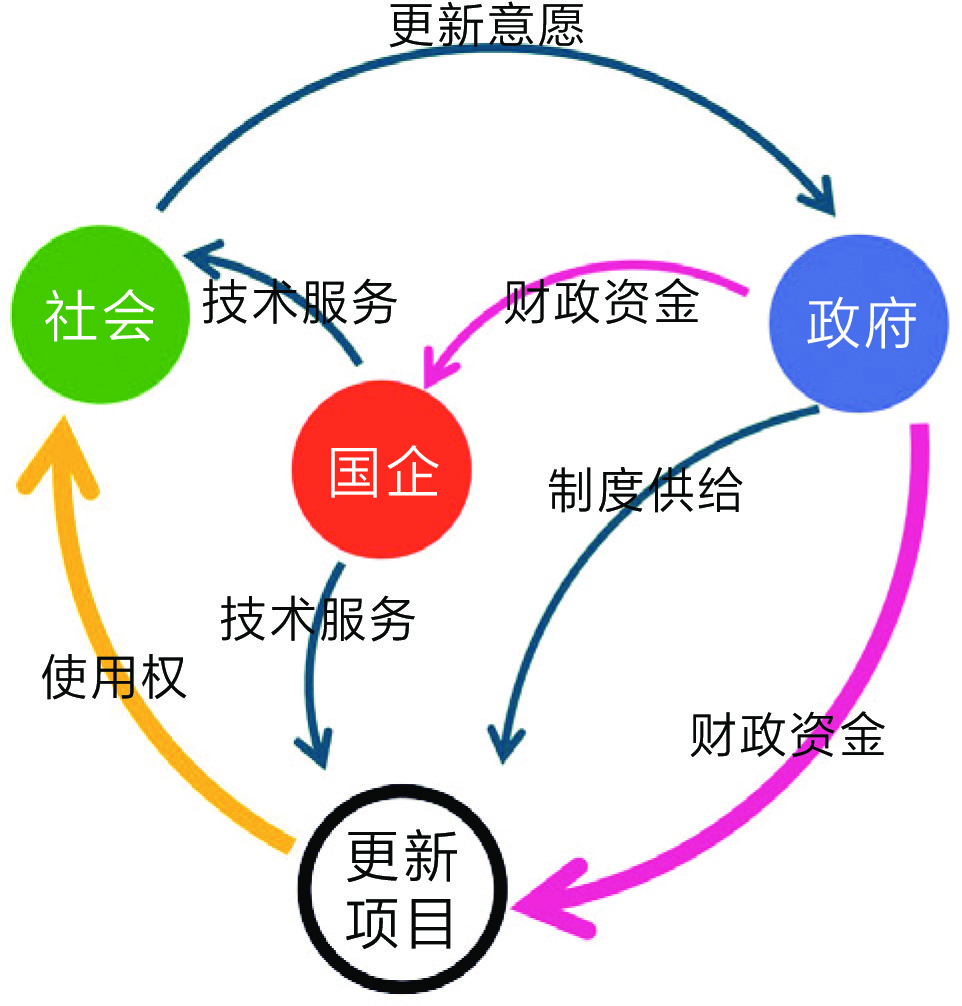 | 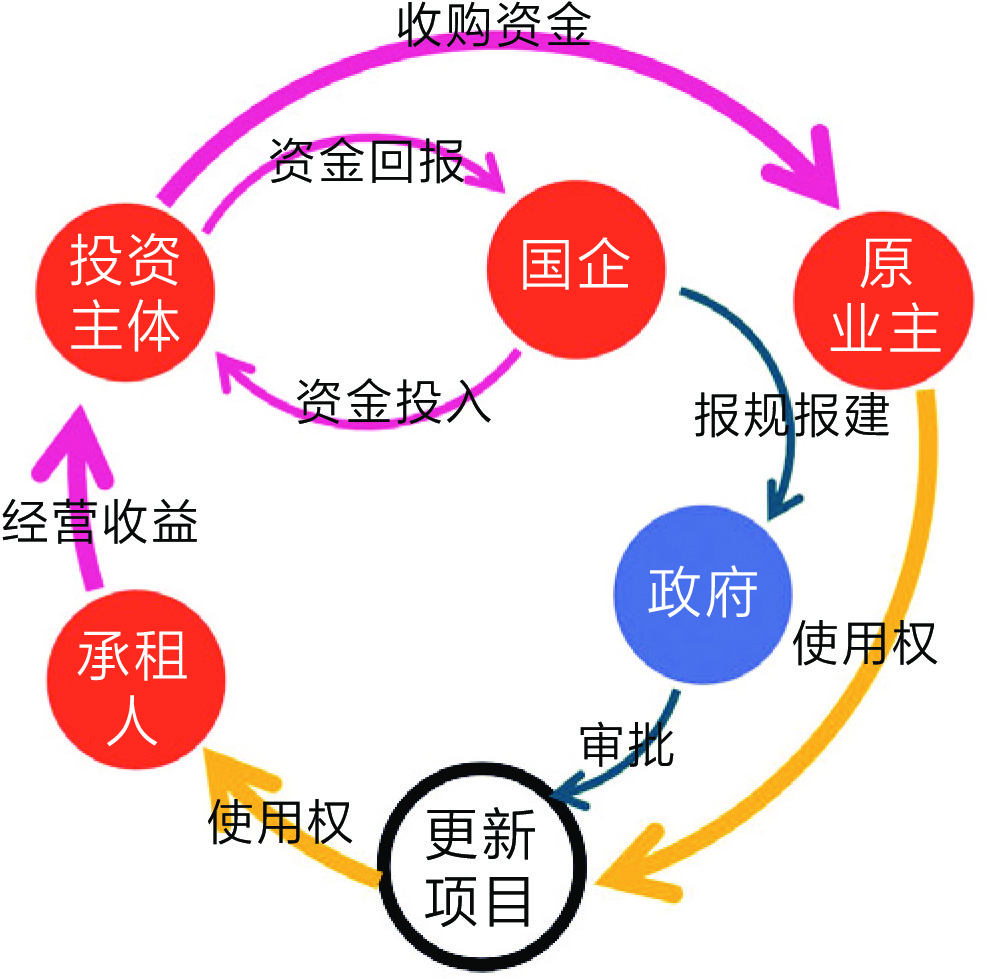 | 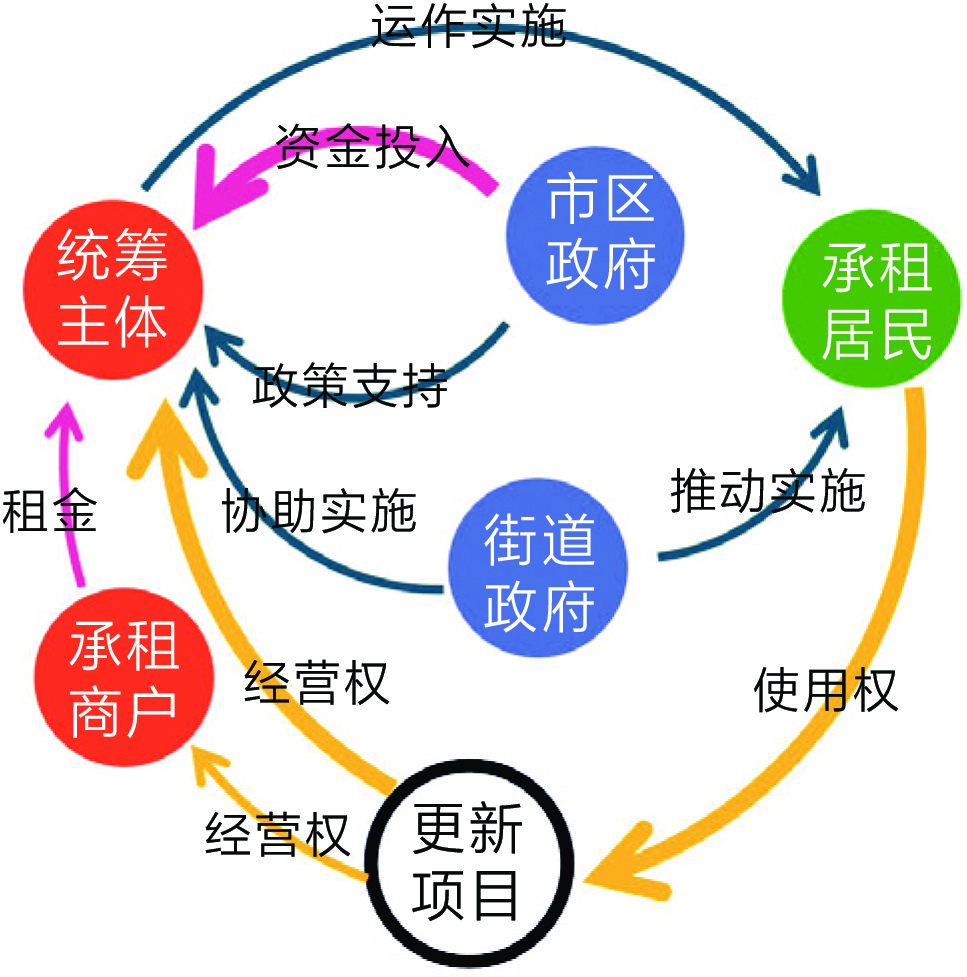 |
图5 社会资本参与城市更新的主体间合作动因与机制分析Fig. 5 Analysis of the motivations and mechanisms for market entities’ participation in urban regeneration |
表5 典型项目中社会资本与其他主体开展合作的机制分析Tab. 5 Analysis of the mechanisms for cooperation between market entities and other entities in typical projects |
| 比较维度 | 民生改善型 | 经济增长型 | 综合发展型 | |
|---|---|---|---|---|
| 代表案例 | 朝阳区光明楼17号楼 | 朝阳区融中心 | 西城区菜市口西片区 | |
| 整体特征 | 政府引导,国企运作 | 民企主导,国企参与 | 国企主导,多元协同 | |
| 合作机制 | 目标共荣 | 政府-国企-居民:简易楼居住环境改善 | 民企-国企-政府:老旧楼宇产业转型,落实减量发展要求 | 国企-政府-居民:历史文化资源保护与利用,居住条件改善 |
| 利益均衡 | 政府-国企:市区两级政府出资,向京诚集团购买房屋改建服务; 政府-居民:居民以成本价回购新建房屋,平衡部分政府成本 | 民企-民企:高和资本出资购买楼宇产权,红星集团获得经济收益; 民企-国企:高和资本统筹运作,首开集团出资参与 | 政府-国企:政府授权国企经营平房院落; 政府-居民:政府提供公有产权方或者公租房,改善居民居住条件 | |
| 冲突化解 | 国企-居民:国企进行政策宣讲与方案沟通,促进达成一致意愿; 政府-居民:项目红线范围微调、容量增加 | 政府-民企:严格管控房地产市场投资,导致项目融资困难; 民企-社会:推迟超市腾退,服务周边居民 | 政府-居民:明确标准,提供多元选择方案; 国企-居民:留住居民可通过平移置换、自主出资等方式改善环境 | |
图6 社会资本参与城市更新合作的优化策略Fig. 6 Optimization strategies for market entities’ participation in urban regeneration cooperation |
表6 优化社会资本参与城市更新合作的政策工具包Tab. 6 Policy toolkit for optimizing market entities participation in urban regeneration cooperation |
| 维度 | 政策导向 | 政策工具 |
|---|---|---|
| 目标共荣 | 前期充分沟通 | 1)在改造前期充分征集物业权利人、相邻物业权利人以及其他利益相关者的更新改造意愿与诉求 |
| 平等自由协商 | 2)搭建线上、线下等多种形式的公众议事平台,及时公布更新流程、标准和成果,确保更新全过程的公开透明 | |
| 3)综合方案征集、比选等方式,提高各类社会组织、居民、业主等主体参与协商的积极性 | ||
| 提供多元选择 | 4)为参与主体提供多种空间腾退、搬迁安置、利益返还等方式,提高更新选择的多元性 | |
| 利益均衡 | 分配标准透明 | 5) 明确多方主体的责任分工、参与角色、参与方式 |
| 6)细化更新项目公益、经济等多元增值价值收益的计量和分配标准 | ||
| 多元资金保障 | 7)创新不动产投资信托基金(类REITs)、资产证券化(asset-backed securitization, ABS)等金融产品,拓展保险、基金等资金进入城市更新 领域渠道 | |
| 8)拓展积分兑换、志愿服务等非货币化参与方式 | ||
| 共担共享机制 | 9)建立使用者付费机制,拓展更新项目中多方主体的成本共担、收益共享的资金保障渠道 | |
| 10)探索增值收益回收机制,捕获更新项目外溢的经济收益,用于反哺改造成本投入 | ||
| 11)拓展BOT(build−operate−transfer,即建设-经营-转让)、PPP,以及项目组合、片区统筹等更新方式,协调短期利益与长期利益、经济 利益与社会效益的整体平衡 | ||
| 冲突化解 | 冲突预警监测 | 12)基于居民反馈、媒体报道等多源信息,建立城市更新项目的冲突、矛盾、纠纷预警系统,构建更新项目实施成效与影响评估的全生命周 期动态监测机制 |
| 三方协商调解 | 13)责任规划师、专业咨询机构等专业第三方全流程参与,吸纳社区组织、志愿者等共同参与调解 | |
| 14)按需设立多种形式的城市更新统筹主体,全流程协调、统筹多方利益诉求 | ||
| 行政仲裁诉讼 | 15)明确行政仲裁、司法诉讼等正式矛盾解决路径 |
1、将社会网络分析方法应用于城市更新合作研究,构建了以“政府-市场-社会”与“项目”为节点、以“资金-空间-运维”为边的合作网络原型,并提出网络结构、节点特征、合作联盟3方面的计量指标。
2、基于81个案例的整体分析和3个案例的深入剖析,识别出北京城市更新中“民生改善”“经济增长”“综合发展”3种典型的合作网络模式。
3、揭示了城市更新合作达成的“目标共荣—利益均衡—冲突化解”三重机制,并提出了15条政策工具。
| [1] |
唐燕. 我国城市更新制度建设的关键维度与策略解析[J]. 国际城市规划, 2022, 37 (1): 1-8.
TANG Y. Analysis on the Key Fields and Strategies of the Institutional Innovation of Urban Regeneration in China[J]. Urban Planning International, 2022, 37 (1): 1-8.
|
| [2] |
吴良镛.人居环境科学导论[M].北京: 中国建筑工业出版社, 2001.
WU L Y. Introduction to Sciences of Human Settlements[M]. Beijing: China Architecture & Building Press, 2001.
|
| [3] |
阳建强. 新发展阶段城市更新的基本特征与规划建议[J]. 国家治理, 2021 (47): 17-22.
YANG J Q. Basic Characteristics and Planning Recommendations for Urban Regeneration in the New Development Stage[J]. Governance, 2021 (47): 17-22.
|
| [4] |
伍江. 城市有机更新的三个维度[J]. 中国科学: 技术科学, 2023, 53 (5): 713-720.
WU J. Three Dimensions in Alive Regeneration[J]. Scientia Sinica (Technologica), 2023, 53 (5): 713-720.
|
| [5] |
方可. 西方城市更新的发展历程及其启示[J]. 城市规划汇刊, 1998 (1): 59-61.
FANG K. Developing Processes of Western Urban Renewal and Its Enlightenment[J]. Urban Planning Review, 1998 (1): 59-61.
|
| [6] |
DAHL R A. Democracy in the United States[M]. Boston: Houghton Mifflin Co., 1981.
|
| [7] |
STONE C N. Regime Politics: Governing Atlanta, 1946−1988[M]. Lawrence: University Press of Kansas,1989.
|
| [8] |
CLARK J. Six Urban Regime Types: The Effects of State Laws and Citizen Participation on the Development of Alternative Regimes[J]. Public Administration Quarterly, 2001, 25 (1): 3-48.
|
| [9] |
MOLOTCH H. The City as a Growth Machine: Toward a Political Economy of Place[J]. American Journal of Sociology, 1976, 82 (2): 309-332.
|
| [10] |
SCHMITTER P C. Still the Century of Corporatism?[J]. The Review of Politics, 1974, 36 (1): 85-131.
|
| [11] |
LEFEBVRE H. La Production de L’espace[J]. L Homme et La Société, 1974, 31 (1): 15-32.
|
| [12] |
OSTROM E. Governing the Commons: The Evolution of Institutions for Collective Action[M]. Cambridge: Cambridge University Press, 1990.
|
| [13] |
HARVEY D. The Limits to Capital[M]. Chicago: University of Chicago Press, 1982.
|
| [14] |
张京祥, 胡毅, 孙东琪. 空间生产视角下的城中村物质空间与社会变迁: 南京市江东村的实证研究[J]. 人文地理, 2014, 29 (2): 1-6.
ZHANG J X, HU Y, SUN D Q. The Physical Space Change and Social Variation in Urbanthe Urban Village from the Perspective of Space Production: Village Production: A Case Study of Jiangdong Village in Nanjing[J]. Human Geography, 2014, 29 (2): 1-6.
|
| [15] |
谢涤湘, 李华聪. 我国城市更新中的权益博弈研究述评[J]. 热带地理, 2013, 33 (2): 231-236.
XIE D X, LEE H. Review on the Game of Rights and Interests in China’s Urban Renewal[J]. Tropical Geography, 2013, 33 (2): 231-236.
|
| [16] |
任绍斌. 城市更新中的利益冲突与规划协调[J]. 现代城市研究, 2011, 26 (1): 12-16.
REN S B. The Conflicts of Interests and Plan Coordination in Urban Renewal[J]. Modern Urban Research, 2011, 26 (1): 12-16.
|
| [17] |
唐燕, 殷小勇, 刘思璐. 我国城市更新制度供给与动力再造[J]. 城市与区域规划研究, 2022, 14 (1): 1-19.
TANG Y, YIN X Y, LIU S L. The Institutional Supply and Motivation Mechanism of Urban Regeneration in China[J]. Journal of Urban and Regional Planning, 2022, 14 (1): 1-19.
|
| [18] |
姜文锦, 陈可石, 马学广. 我国旧城改造的空间生产研究: 以上海新天地为例[J]. 城市发展研究, 2011, 18 (10): 84-89.
JIANG W J, CHEN K S, MA X G. Study on the Spatial Production of Urban Renewal in China: A Case of Shanghai Xintiandi Square[J]. Urban Studies, 2011, 18 (10): 84-89.
|
| [19] |
刘彬, 陈忠暖. 权力、资本与空间: 历史街区改造背景下的城市消费空间生产: 以成都远洋太古里为例[J]. 国际城市规划, 2018, 33 (1): 75-80.
LIU B, CHEN Z N. Power, Capital and Space: Production of Urban Consumption Space Based on the Transformation of Historical Street Area: A Case Study of Sino-Ocean Taikoo Li in Chengdu[J]. Urban Planning International, 2018, 33 (1): 75-80.
|
| [20] |
王嘉, 杨瑞, 谭琛, 等. 空间生产视角下的沙井古墟有机更新机制探索: 基于“权力—资本—社会”辩证分析框架[J]. 西部人居环境学刊, 2022, 37 (2): 23-30.
WANG J, YANG R, TAN C, et al. The Organic Renewal Mechanism of Shajing Ancient Fair from the Perspective of Space Production: Based on a Dialectical Analysis Framework of Power-Capital-Society[J]. Journal of Human Settlements in West China, 2022, 37 (2): 23-30.
|
| [21] |
朱晨光. 城市更新政策变化对城中村改造的影响: 基于新制度经济学视角[J]. 城市发展研究, 2020, 27 (2): 69-75.
ZHU C G. The Impact of Urban Renewal Policy Change on the Redevelopment of Urban Village: Based on the New Institutional Economics[J]. Urban Development Studies, 2020, 27 (2): 69-75.
|
| [22] |
ADAMIC L A, GLANCE N. The Political Blogosphere and the 2004 U.S. Election: Divided They Blog[C]//ADIBI J, GROBELNIK M, MLADENIC D, et al. Proceedings of the 3rd International Workshop on Link Discovery. New York: Association for Computing Machinery, 2005: 36-43.
|
| [23] |
NEWMAN M E J. Scientific Collaboration Networks. I. Network Construction and Fundamental Results[J]. Physical Review E, 2001, 64: 016131
|
| [24] |
CENTOLA D. The Spread of Behavior in an Online Social Network Experiment[J]. Science, 2010, 329 (5996): 1194-1197.
|
| [25] |
WATTS D J, STROGATZ S H. Collective Dynamics of ‘Small-World’ Networks[J]. Nature, 1998, 393 (6684): 440-442.
|
| [26] |
BARABASI A, ALBERT R. Emergence of Scaling in Random Networks[J]. Science, 1999, 286 (5439): 509-512.
|
| [27] |
GHAFFARZADEGAN N, LYNEIS J, RICHARDSON G P. How Small System Dynamics Models Can Help the Public Policy Process[J]. System Dynamics Review, 2011, 27 (1): 22-44.
|
| [28] |
BIANCHI C, BERECIARTUA P, VIGNIERI V, et al. Enhancing Urban Brownfield Regeneration to Pursue Sustainable Community Outcomes Through Dynamic Performance Governance[J]. International Journal of Public Administration, 2021, 44 (2): 100-114.
|
| [29] |
WANG Y S, YAO Y, ZHANG Y B, et al. A Framework of Stakeholder Relationship Analysis for an Urban Regeneration Project Based on Social Network Analysis: A Dynamic Perspective[J]. Journal of Urban Planning and Development, 2022, 148 (4): 04022035
|
| [30] |
ZHANG W, ZHANG X X, WU G D. The Network Governance of Urban Renewal: A Comparative Analysis of Two Cities in China[J]. Land Use Policy, 2021, 106: 105448
|
| [31] |
ATKINSON R, TALLON A, WILLIAMS D. Governing Urban Regeneration in the UK: A Case of ‘Variegated Neoliberalism’ in Action?[J]. European Planning Studies, 2019, 27 (6): 1083-1106.
|
| [32] |
LAZZERETTI L, CAPONE F. Museums as Societal Engines for Urban Renewal. The Event Strategy of the Museum of Natural History in Florence[J]. European Planning Studies, 2015, 23 (8): 1548-1567.
|
| [33] |
WANG H, CAI Y, GAO R. A Study on Stakeholder Relationship in Urban Renewal Projects: Case of Tianzifang in Shanghai[C]//WANG Y W, AL-HUSSEIN M, SHEN G Q P. ICCREM 2019: Innovative Construction Project Management and Construction Industrialization. Reston: American Society of Civil Engineers, 2019.
|
| [34] |
HE J Y, LIN Y L, HOOIMEIJER P, et al. Measuring Social Network Influence on Power Relations in Collaborative Planning: A Case Study of Beijing City, China[J]. Cities, 2024, 148: 104866
|
| [35] |
REEVES-LATOUR M, MORSELLI C. Bid-Rigging Networks and State-Corporate Crime in the Construction Industry[J]. Social Networks, 2017, 51: 158-170.
|
| [36] |
RĂDULESCU C, ŞTEFAN O, RĂDULESCU G, et al. Management of Stakeholders in Urban Regeneration Projects. Case Study: Baia-Mare, Transylvania[J]. Sustainability, 2016, 8 (3): 238
|
| [37] |
DÍEZ-ECHAVARRÍA L, VILLEGAS-PALACIO C, ARANGO-ARAMBURO S, et al. Decoupling in Governance: The Land Governance Network in a Region of the Colombian Andes[J]. Land Use Policy, 2023, 133: 106880
|
| [38] |
LIGTERMOET E, PAULI N, MARTINUS K, et al. Stakeholder Networks Underpinning the Transformative Practice of Urban Roadside Verge Greening[J]. Landscape and Urban Planning, 2025, 259: 105342
|
| [39] |
김어진,구자훈.NetMiner를 활용한 도시재생사업 참여주체의 시기별 소셜 네트워크 변화 특성 분석:순천시 원도심 도시재생선도지역을 중심으로[J]. 한국IT서비스학회지, 2020, 19(1): 1-16.
GIM E J, KOO J-H. Analysis of Social Network Change Characteristics of Participants in Urban Regeneration Project Using NetMiner [J]. Journal of Information Technology Services, 2020,19(1): 1-16.
|
| [40] |
WU H J, WANG Y, ZHUANG T Z, et al. What Makes Co-production Work in Sustainable Neighborhood Rehabilitation in China? A Stakeholder Structure Perspective[J]. Cities, 2024, 150: 105068
|
| [41] |
YIN X Y, GUAN C H, TANG Y. How Does the Public-Private Cooperation Network Affect Property Value? Analyzing Manhattan’s Business Improvement Districts[J]. Cities, 2026, 168: 106471
|
| [42] |
方可.探索北京旧城居住区有机更新的适宜途径[D].北京: 清华大学, 2000.
FANG K. An Appropriate Approach to Organic Renewal in the Residential Areas of Old Beijing[D]. Beijing: Tsinghua University, 2000.
|
| [43] |
姚治国, 赵黎明, 王满银, 等. 白塔寺保护区综合整治与更新研究[J]. 城市发展研究, 2012, 19 (9): 22-26.
YAO Z G, ZHAO L M, WANG M Y, et al. The Comprehensive Improvement and Renewal of BaiTaSi Reservation District[J]. Urban Development Studies, 2012, 19 (9): 22-26.
|
| [44] |
宁泽群, 金珊. 798艺术区作为北京文化旅游吸引物的考察: 一个市场自发形成的视角[J]. 旅游学刊, 2008, 23 (3): 57-62.
NING Z Q, JIN S. An Inspection of 798 Artistic Zone: A Cultural Tourist Attraction in Beijing[J]. Tourism Tribune, 2008, 23 (3): 57-62.
|
| [45] |
马晓龙, 吴必虎. 历史街区持续发展的旅游业协同: 以北京大栅栏为例[J]. 城市规划, 2005, 29 (9): 49-54.
MA X L, WU B H. Cooperation of Protection, Renovation of Historic Streets and Sustainable Development of Tourism: A Case Study of Dashila Area in Beijing[J]. City Planning Review, 2005, 29 (9): 49-54.
|
| [46] |
周尚意, 杨鸿雁, 孔翔. 地方性形成机制的结构主义与人文主义分析: 以798和M50两个艺术区在城市地方性塑造中的作用为例[J]. 地理研究, 2011, 30 (9): 1566-1576.
ZHOU S Y, YANG H Y, KONG X. The Structuralistic and Humanistic Mechanism of Placeness: A Case Study of 798 and M50 Art Districts[J]. Geographical Research, 2011, 30 (9): 1566-1576.
|
| [47] |
STONE C N. Regime Politics: Governing Atlanta, 1946-1988[M]. Lawrence: University Press of Kansas, 1989.
|
| [48] |
张纯, 吕斌, 郑童. 转型期内城传统街坊社区的城市形态演变: 基于北京市内城三个社区的案例研究[J]. 城市规划, 2015, 39 (10): 24-30.
ZHANG C, LÜ B, ZHENG T. Urban Form Evolvement of the Inner City Neighborhood During Transitional Period: A Case Study of Three Neighborhoods in Beijing[J]. City Planning Review, 2015, 39 (10): 24-30.
|
| [49] |
王萌, 李燕, 张文新, 等. 基于DEA方法的城市更新绩效评价: 以北京市原西城区为例[J]. 城市发展研究, 2011, 18 (10): 90-96.
WANG M, LI Y, ZHANG W X, et al. The Performance Evaluation of Urban Renewal Based on DEA Method: Example in Xicheng District, Beijing[J]. Urban Studies, 2011, 18 (10): 90-96.
|
| [50] |
李岚清, 刘泓显, 唐燕.北京市城市更新项目参与主体的产权结构分析: 基于“北京城市更新最佳实践”评选活动的项目申报数据[C]//中国城市规划学会.美丽中国, 共建共治共享: 2024中国城市规划年会论文集(03城市更新).北京: 建筑工业出版社, 2024: 1295-1305.
LI L, LIU H, TANG Y. Analysis of the Property Rights Structure of Participating Entities in Urban Regeneration Projects in Beijing: Based on Project Application Data from the "Best Practices in Beijing Urban Regeneraration" Selection Activity[C]//China Urban Planning Society. Beautiful China, Co-construction, Co-governance and Sharing: Proceedings of the 2024 China Urban Planning Annual Conference (03 Urban Renewal). Beijing: China Architecture & Building Press, 2024: 1295-1305.
|
| [51] |
葛天任, 李强. 从“增长联盟”到“公平治理”: 城市空间治理转型的国家视角[J]. 城市规划学刊, 2022 (1): 81-88.
GE T R, LI Q. From Growth Coalition to Equity Governance: A Political Logic of Spatial Governance in Urban China[J]. Urban Planning Forum, 2022 (1): 81-88.
|
| [52] |
唐燕, 张璐, 殷小勇.城市更新制度与北京探索: 主体-资金-空间-运维[M].北京: 中国城市出版社, 2023.
TANG Y, ZHANG L, YIN X Y. Urban Regeneration Institution and Beijing’s Exploration: Multiple Stakeholders−Capital Source−Physical Space−Operation Service[M]. Beijing: China City Press, 2023.
|
| [53] |
田莉. 摇摆之间: 三旧改造中个体、集体与公众利益平衡[J]. 城市规划, 2018, 42 (2): 78-84.
TIAN L. Exploring the Path of Balancing Individual Benefits, Collective Benefits, and Public Interests in the Three Olds Renewal[J]. City Planning Review, 2018, 42 (2): 78-84.
|
| [54] |
FENG Y, WU F L, ZHANG F Z. Changing Roles of the State in the Financialization of Urban Development Through Chengtou in China[J]. Regional Studies, 2022, 56 (8): 1259-1270.
|
| [55] |
张理政, 王洁晶. 委托-代理关系视角下的香港城市更新治理结构研究[J]. 国际城市规划, 2024, 39 (4): 100-107.
ZHANG L Z, WANG J J. Study on the Governance Structure of Urban Redevelopment in Hong Kong Under the Perspective of Principal-Agent Relationship[J]. Urban Planning International, 2024, 39 (4): 100-107.
|
| [56] |
BOCCALETTI S, LATORA V, MORENO Y, et al. Complex Networks: Structure and Dynamics[J]. Physics Reports, 2006, 424 4/5 175-308.
|
| [57] |
YIN X Y, TANG Y. Research on Governance Structure and Benefit Balance Concerning Urban Regeneration in Beijing, China: Analysis of the Best Practical Cases[J]. Journal of Chinese Architecture and Urbanism, 2024: 885.
|
/
| 〈 |
|
〉 |