

Analysis of Principles and Contents of Guidelines for Constructing Bird-Friendly Urban Green Spaces
|
YANG Jun, Ph.D., is a tenured professor in the Department of Earth System Science, Tsinghua University, a member of Ministry of Education Ecological Field Station for East Asian Migratory Birds, a member of Institute for Global Change Studies, Tsinghua University, and an editorial board member of this journal. His research focuses on urban ecology, and urban biodiversity |
|
ZHOU Xuanhong is a Ph.D. candidate in the Department of Earth System Science, Tsinghua University, a member of Ministry of Education Ecological Field Station for East Asian Migratory Birds, and a member of Institute for Global Change Studies, Tsinghua University. His research focuses on the application AI in urban biodiversity |
|
YANG Xudong is a Ph.D. candidate in the Department of Earth System Science, Tsinghua University, a member of Ministry of Education Ecological Field Station for East Asian Migratory Birds, and a member of Institute for Global Change Studies, Tsinghua University. His research focuses on urban biodiversity |
Received date: 2025-11-22
Online published: 2026-03-12
Copyright
Creating bird-friendly urban green spaces is a tangible step toward fulfilling the national biodiversity conservation strategy and has gained attention in urban greening efforts. Developing standardized principles and core guidelines for these spaces can help guide construction of green spaces across different areas. Nonetheless, there is limited research on what should be incorporated into guidelines for building bird-friendly green spaces.
Focusing on the principles and content of the guidelines for building bird-friendly green spaces, this study used a literature review to summarize patterns of avian diversity in urban green spaces and their influencing factors. It then examined the resources birds need for survival and the risks they face in these environments. Based on the analysis, essential principles and a content checklist for guideline development have been proposed. The checklist was used to analyze the contents of relevant standards, technical guides, and guidelines to identify their strengths and weaknesses. Additionally, aspects requiring attention in future efforts to develop guidelines were suggested.
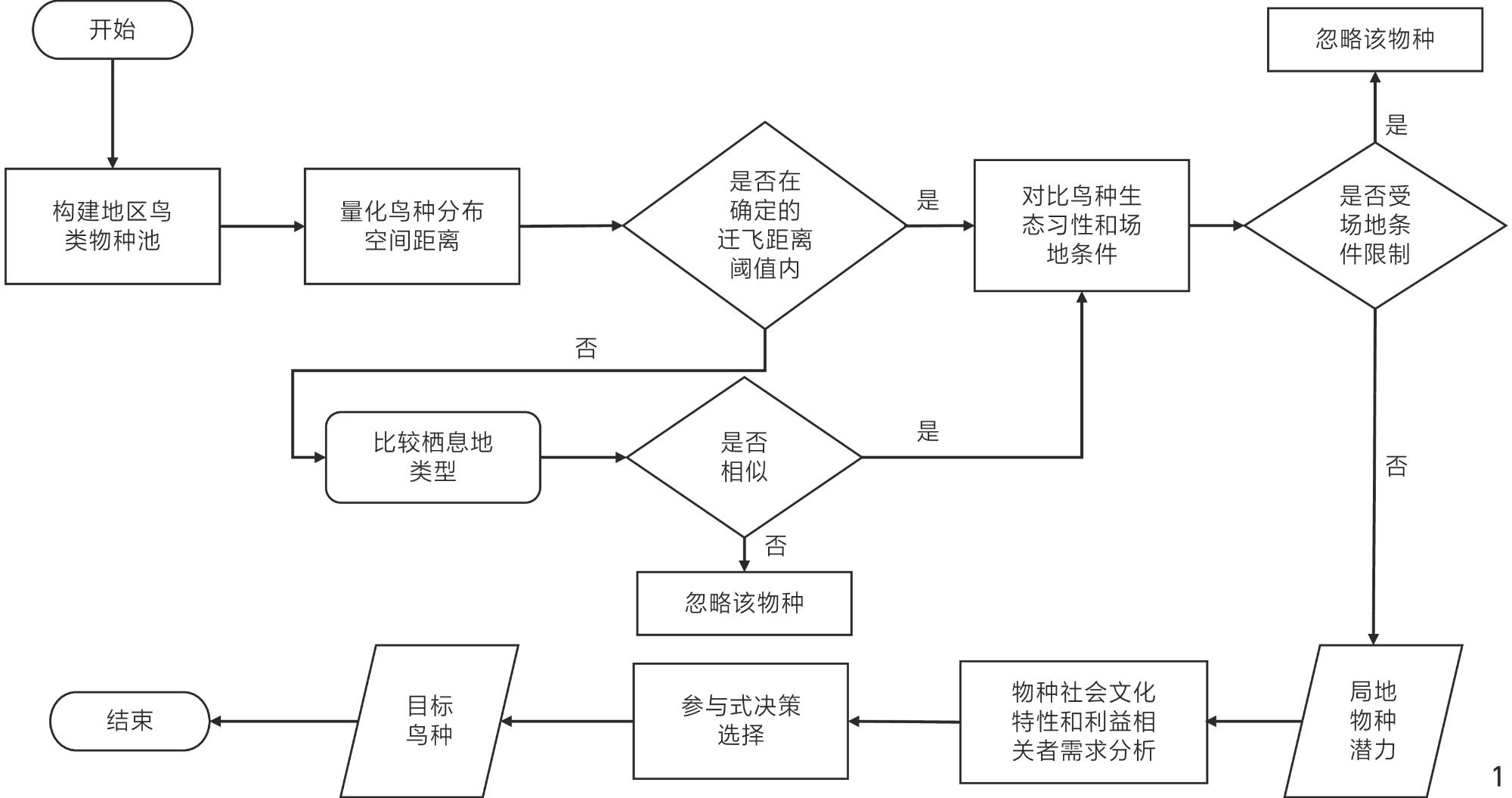
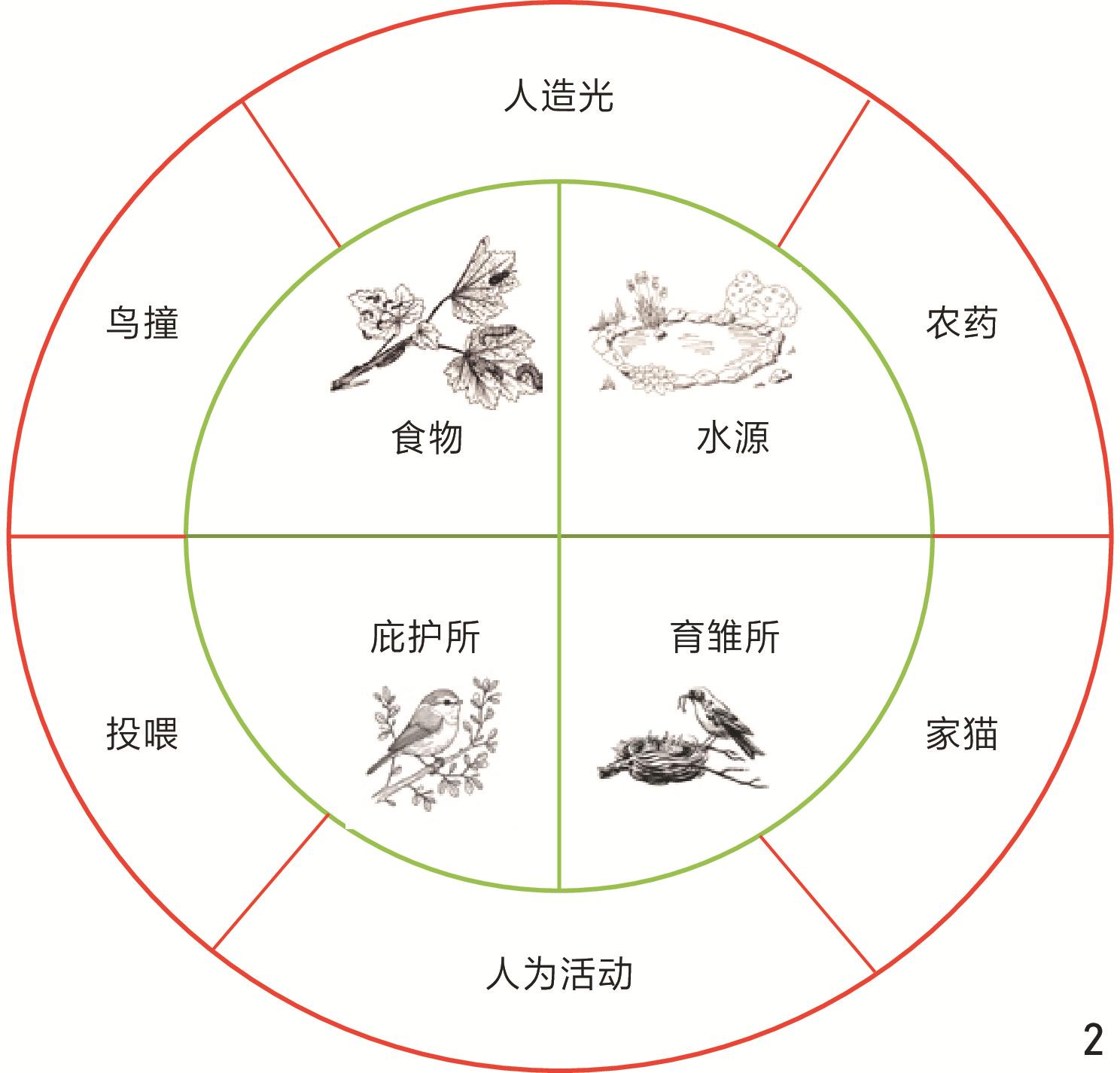
Urbanization has altered bird diversity in cities both spatially and temporally, shaping overall patterns such as distribution along urban-rural gradients, species composition, and abundance of urban birds. These patterns are mainly driven by environmental filtering and human activities. Habitat changes and pollution—air, light, water, noise—filter urban birds, while human persecution and the introduction of new species select for those adapted to city life. Because bird diversity in urban green spaces is influenced by various factors across different scales, scale-based planning and management are crucial for creating effective bird habitats in green spaces. A truly bird-friendly urban green space must provide essential resources like food, water, shelter, and nesting sites, while reducing risks from light and noise pollution, domestic cats, and human disturbance. Guidelines should be based on core principles that provide overall direction, evaluate reasonableness, and adapt to unforeseen circumstances. Recognizing that making urban green spaces bird-friendly is a multidisciplinary conservation effort, five principles are proposed. 1) Multi-scale planning and design. 2) Prioritizing protection over new construction. 3) Considering species-specific traits. 4) balancing resource provision and risk management. 5) Offering multiple ecosystem services. Building on these principles, a checklist with 28 items covering city, district, and site scales is presented to guide the development and assessment of green spaces. Comparing existing guidelines to the checklist shows that all include site-scale construction techniques, indicating a focus on detailed project guidance. Several guidelines also address district-scale measures, with some extending to city-scale considerations, reflecting a move towards systematic, multi-scale planning to enhance urban bird diversity. All guidelines mention the design and post-implementation phases, but few detail the implementation process itself. Explicit impact mitigation during construction remains underdeveloped. At the city scale, existing guidelines focus on urban planning, goal setting, zoning, and artificial facilities but lack comprehensive surveys and community participation. High technical and resource demands limit city-wide bird surveys, resulting in little data on urban bird diversity, no quantitative indicators or timeframes in overall goals. Guidelines rarely promote community involvement, viewing bird-friendly green spaces more as landscape projects than as conservation efforts. At the district scale, focus is on hubs, corridors, and stepping stones, but few address matrix planning, which is vital as ecological corridors depend on surrounding land, especially since birds move through the matrix daily. Planting trees and creating green spaces can improve permeability and reduce population isolation in the matrix. At the site scale, guidelines clearly cover site selection, surveys, habitat design, and monitoring, but are less specific on threat analysis, risk management, and post-implementation actions. Few address surrounding buildings, lighting, or construction management, which are crucial because they influence bird behavior and safety. Emphasizing habitat resources while neglecting artificial factors may increase collision risks as habitat quality improves. Variations also exist in detailed methods, such as target species identification—ranging from vague survey-based identification to detailed taxonomic analysis—affecting conservation efforts and evaluations. Most guidelines focus on bird conservation; only one also considers ecological and visual value and human –bird interactions, which could foster local support and sustainability. Based on the above analysis, future efforts in developing new guidelines or revising existing ones should focus on: 1) Risk management—reducing bird collisions, controlling stray cats, regulating lighting and feeding behaviors to prevent ecological traps; 2) minimizing construction impacts on native species; 3) engaging communities throughout all phases—from species selection and design to monitoring and enforcement—to ensure long-term conservation involvement.
The fundamental principles and content checklist outlined in this research are derived from a synthesis of existing knowledge, primarily intended to serve as a reference for developing guidelines related to bird-friendly green spaces. They provide a structured framework to support the development of guidelines for bird-friendly urban green space, thereby advancing the field. Future research may include monitoring and evaluation data from post-implementation assessments of bird-friendly green spaces across different regions to continually update and refine the principles and checklist presented in this study.
YANG Jun , ZHOU Xuanhong , YANG Xudong . Analysis of Principles and Contents of Guidelines for Constructing Bird-Friendly Urban Green Spaces[J]. Landscape Architecture, 2026 , 33(2) : 89 -99 . DOI: 10.3724/j.fjyl.LA20250728
表1 鸟类友好城市绿地建设指南内容清单Tab. 1 Content checklist for the construction of bird-friendly urban green spaces |
| 空间尺度 | 指南条目 | 建议条目内容 |
|---|---|---|
| 城市(市、 区/县)尺度 | 1.综合调查 | 明确现有绿地分布格局、自然区域或迁飞路线的连接情况、鸟类多样性热点地区的调查方法 |
| 2.与城市规划融合 | 提出通过保护现有城市生态网络和新建绿地来建立全市绿地网络的目标和方法 | |
| 3.目标设置 | 设置具体、可量化、有时间限制的鸟类多样性保护或提升等目标 | |
| 4.空间区划 | 确定城市鸟类保护区域,包括敏感区域和关键廊道,在其他区域可实施功能区与保护区叠加区划等措施 | |
| 5.人工设施管理 | 颁布建筑物防鸟撞、减少人造光污染等鸟类友好的标准、规定等 | |
| 6.社区参与 | 确定社区参与的方式和鼓励措施等 | |
| 片区(或街道、 镇)尺度 | 1.枢纽识别 | 确定维持鸟类多样性的枢纽区域,如源、汇区等的识别 |
| 2.生态廊道规划 | 识别生态廊道的位置、优先保护区、瓶颈和障碍等 | |
| 3.生态廊道设计 | 确定焦点物种(包括目标鸟种在内的动植物物种)、廊道的宽度、廊道的内部结构和外形等 | |
| 4.踏脚石规划 | 确定踏脚石的位置和大小、踏脚石生境的规划和设计方案等 | |
| 5.基质规划 | 提出基质(非源、汇区和廊道区域的城市建成区)中的废弃地利用、绿色街道建设等措施,增加基质中的植被覆盖等 | |
| 场地尺度 | 1.绿地选址 | 明确绿地选址方法 |
| 2.鸟类基线调查 | 确定开展场地上鸟类多样性(包括丰富度和丰度等)调查的方法 | |
| 3.现有植被调查 | 确定现有植被的结构、种类组成和连通性等的调查方法 | |
| 4.威胁因素分析 | 确定鸟撞风险,人造光污染、噪声污染,人为活动和家猫捕猎等威胁因素的分析方法 | |
| 5.目标鸟种确定 | 确定场地要保护或恢复的目标鸟种及其栖息地要求 | |
| 6.栖息地空间规划 | 确定核心区域、缓冲区域和边缘区域的设计指标和方法 | |
| 7.植被设计 | 确定植被设计的范围、层次结构、种类组成和种植方式的指标和方法 | |
| 8.水源设计 | 确定鸟类饮水和洗浴等区域的指标和设计方法 | |
| 9.水鸟栖息地 | 确定水鸟栖息地的水文规划、水质管理、水深多样性设计、岸线设计、水生植被设计、人工巢地和栖息地设计等的指标和方法 | |
| 10.栖息地附属结构 | 确定栖息地中枯立木、停歇地、巢箱等附属设施的设计方法 | |
| 11.与建筑结合的绿地设计 | 确定绿地周边建筑绿色屋顶类型、绿墙的类型和植物类型 | |
| 12.鸟类安全建筑物 | 确定绿地周边建筑防鸟撞玻璃使用或改造、外部建筑结构改造等设计方法 | |
| 13.鸟类友好照明 | 提出绿地中鸟类友好照明设施设计、控制方式和暗夜项目等管理方法 | |
| 14.鸟类监测体系 | 明确监测指标、确定监测点分布及监测仪器安装要求 | |
| 15.其他相关风险 | 提出散养家猫和流浪猫管理、农药使用管理、鸟类投喂方式管理、人为活动管理等规定 | |
| 16.实施过程管理 | 明确规定场地整理、建设和设施安装以及降低施工对鸟类影响等方法 | |
| 17.实施后管理 | 明确景观维护措施(如修剪)、入侵物种管理措施、鸟类监测和适应性管理措施、社区参与方式和绿地长期维护措施的规定 |
表2 已有鸟类友好型城市绿地建设指南、规范、技术规程、指引和导则与清单对比Tab. 2 Comparative results of existing guides, standards, technical regulations, directives, and guidelines for bird-friendly urban green space construction against the checklist |
| 名称 | 性质 | 颁布年份 | 空间尺度 | 时间尺度 | 覆盖清单条目情况 |
|---|---|---|---|---|---|
| 注:上述内容基于Gemini 2.5 Pro和GPT-5模型对指南文本提取后再进行人工合并,最后与清单进行比较。 | |||||
| 《城市绿地鸟类栖息地营造及恢复技术规范》 (DB11/T 1513—2018) | 北京市地方标准 | 2018 | 场地 | 设计、实施后阶段 | 涉及场地尺度条目中的13条 |
| 《鸟类生态廊道设计与建设规范》 (DB11/T 1878—2021) | 北京市地方标准 | 2021 | 片区、场地 | 设计、实施后阶段 | 涉及片区尺度条目中的5条,场地尺度条目中的10条 |
| 《城市河流生态廊道鸟类栖息地植物景观规划设计导则征求意见稿》 | 中国风景园林学会团体标准 | 2023 | 城市、片区、场地 | 设计、实施后阶段 | 涉及城市尺度条目中的5条,片区尺度条目中的4条,场地尺度条目中的13条 |
| 《城市湿地公园鸟类多样性恢复技术规程》 (DB4401/T 290—2024) | 广州市地方标准 | 2024 | 片区、场地 | 设计、实施、实施后阶段 | 涉及片区尺度条目中的1条,场地尺度条目中的13条 |
| 《城市绿地鸟类多样性生态恢复技术导则》 (T/CHSLA 10011—2023) | 中国风景园林学会团体标准 | 2024 | 场地 | 设计、实施、实施后阶段 | 涉及场地尺度条目中的15条 |
| 《公园城市滨水绿地鸟类栖息地植物景观营建指南》 (DB5101/T 213—2025) | 成都市地方标准 | 2025 | 场地 | 设计、实施后阶段 | 涉及场地尺度条目中的8条 |
| 《鸟类友好城市规划与设计指引》 (DB4403/T 616—2025) | 深圳市地方标准 | 2025 | 城市、片区、场地 | 设计、实施、实施后阶段 | 涉及城市尺度条目中的4条,片区尺度条目中的3条,场地尺度条目中的10条 |
1、明确鸟类友好型城市绿地的规划设计需在多个时空尺度上进行,提供鸟类生存所需资源并降低城市环境带来的风险。
2、提出了制定鸟类友好型城市绿地指南时需考虑的5项原则和28条内容的清单,可供未来制定或修订指南时参考。
| [1] |
PEJCHAR L, REGA-BRODSKY C C, VÁZQUEZ L B, et al. Bird-Mediated Ecosystem Services and Disservices in Cities and Towns[J]. Frontiers in Ecology and the Environment, 2025, 23 (5): e2835
|
| [2] |
KURUCZ K, PURGER J J, BATÁRY P. Urbanization Shapes Bird Communities and Nest Survival, but not Their Food Quantity[J]. Global Ecology and Conservation, 2021, 26: e01475
|
| [3] |
刘双祺, 华方圆, 夏舫, 等. 城市绿地作为迁徙陆鸟中途停歇地的栖息地质量及其受留野措施的影响[J]. 生物多样性, 2024, 32 (8): 103-112.
LIU S Q, HUA F Y, XIA F, et al. Stopover Habitat Quality of Urban Green Space for Migratory Landbirds and the Impact of Urban Wilding Measures[J]. Biodiversity Science, 2024, 32 (8): 103-112.
|
| [4] |
CROOKS V. 25 Years of Bird Friendly[EB/OL]. (2025-08-26) [2025-12-05]. https://stri.si.edu/story/25-years-of-bird-friendly.
|
| [5] |
BEATLEY T. The Bird-Friendly City: Creating Safe Urban Habitats[M]. Washington, DC: Island Press, 2020.
|
| [6] |
Bird-Friendly Building Design[EB/OL]. (2019-04-01) [2025-12-06]. https://abcbirds.org/wp-content/uploads/2019/04/Bird-Friendly-Building-Design_Updated-April-2019.pdf
|
| [7] |
How to Make Your Yard Bird-Friendly[EB/OL]. (2016-04-08)[2025-12-04]. https://www.audubon.org/news/how-make-your-yard-bird-friendly-0.
|
| [8] |
臧明月, 刘立, 马月, 等. 《昆明-蒙特利尔全球生物多样性框架》下的中国城市生物多样性保护[J]. 生物多样性, 2025, 33 (5): 144-153.
ZANG M Y, LIU L, MA Y, et al. China’s Urban Biodiversity Conservation Under the Kunming-Montreal Global Biodiversity Framework[J]. Biodiversity Science, 2025, 33 (5): 144-153.
|
| [9] |
PRIHANDI D R, NURVIANTO S. The Role of Urban Green Space Design to Support Bird Community in the Urban Ecosystem[J]. Biodiversitas Journal of Biological Diversity, 2022, 23 (4): 2137-2145.
|
| [10] |
ZHANG Y Q, ZHU X, GUO Z. How Do Urban Green Space Designs Shape Avian Communities: Optimizing Distribution, Size and Shape[J]. Journal of Environmental Management, 2025, 389: 126131
|
| [11] |
周雯, 陈拓舟, 饶显龙, 等. 基于引鸟和护鸟的城市绿地植物景观营造[J]. 中国城市林业, 2018, 16 (1): 25-29.
ZHOU W, CHEN T Z, RAO X L, et al. Plant Landscape Planning of Urban Green Spaces for Birds Attraction and Protection[J]. Journal of Chinese Urban Forestry, 2018, 16 (1): 25-29.
|
| [12] |
罗彬文, 况锡建. 鸟类友好生态景观规划: 以梅子垭水库为例[J]. 景观设计, 2025 (4): 26-29.
LUO B W, KUANG X J. Bird-Friendly Ecological Landscape Planning: Taking Meiziya Reservoir as an Example[J]. Landscape Design, 2025 (4): 26-29.
|
| [13] |
Bird-Friendly Development Guidelines[EB/OL]. (2007-03-01) [2025-12-04]. https://www.rasc.ca/sites/default/files/Bird%20Friendly%20Development%20Guidelines.pdf.
|
| [14] |
Bird Friendly Building Design and Construction Requirements Guidance Document[EB/OL]. (2020-11-01) [2025-12-04]. https://www.nyc.gov/assets/buildings/bldgs_bulletins/bird_friendly_guidance_document.pdf.
|
| [15] |
Habitat Essentials Checklist Worksheet[EB/OL]. (1973-01-01) [2025-12-04]. https://nwf.org/-/media/PDFs/Garden-for-Wildlife/Certified-Wildlife-Habitat/NWF_Garden-Certification-Checklist.pdf.
|
| [16] |
Design a Wildlife Garden[EB/OL]. [2025-12-04]. https://web-cdn.rspb.org.uk/helping-nature/what-you-can-do/activities/planting-plan-for-wildlife-gardens.
|
| [17] |
HUMPHREY J E, HASLEM A, BENNETT A F. Avoid, Adapt or Exploit: Re-visiting Bird Responses to Urbanization Using a Novel Landscape Approach[J]. Global Ecology and Conservation, 2023, 48: e02735
|
| [18] |
MCKINNEY M L. Urbanization as a Major Cause of Biotic Homogenization[J]. Biological Conservation, 2006, 127 (3): 247-260.
|
| [19] |
ISAKSSON C. Impact of Urbanization on Birds[M]//TIETZE D T. Bird Species. Cham: Springer International Publishing, 2018: 235-257.
|
| [20] |
MCKINNEY M L. Effects of Urbanization on Species Richness: A Review of Plants and Animals[J]. Urban Ecosystems, 2008, 11 (2): 161-176.
|
| [21] |
王雪, 吴伟赜, 刘玉虹, 等. 季节性变化和蓝绿空间微生境镶嵌: 探索城乡梯度上鸟类群落的时空分布模式[J]. 内蒙古大学学报(自然科学版), 2025, 56 (4): 435-448.
WANG X, WU W Z, LIU Y H, et al. Seasonal Variations and Microhabitat Mosaics in Blue-Green Spaces: Evaluating Spatial and Temporal Distribution of Bird Communities Along Urban-Rural Gradients[J]. Journal of Inner Mongolia University (Natural Science Edition), 2025, 56 (4): 435-448.
|
| [22] |
PENG L Q, LIU Q, WANG Q W, et al. Effects of Urbanization and Vegetation on Bird Diversity in a Megacity of Central China[J]. Biological Conservation, 2024, 297: 110718
|
| [23] |
ALBA R, MARCOLIN F, ASSANDRI G, et al. Different Traits Shape Winners and Losers in Urban Bird Assemblages Across Seasons[J]. Scientific Reports, 2025, 15: 16181
|
| [24] |
LA SORTE F A, LEPCZYK C A, ARONSON M F J, et al. The Phylogenetic and Functional Diversity of Regional Breeding Bird Assemblages Is Reduced and Constricted Through Urbanization[J]. Diversity and Distributions, 2018, 24 (7): 928-938.
|
| [25] |
ARONSON M F J, NILON C H, LEPCZYK C A, et al. Hierarchical Filters Determine Community Assembly of Urban Species Pools[J]. Ecology, 2016, 97 (11): 2952-2963.
|
| [26] |
MENNILL D, GAMBOA S, BOLGER E, et al. Avian Biodiversity in the Urban Green Spaces of Paris: Higher Bird Species Richness in Larger Parks and Park Centers[J]. Avian Conservation and Ecology, 2025, 20 (2): art1
|
| [27] |
OROPEZA-SÁNCHEZ M T, SOLANO-ZAVALETA I, CUANDÓN-HERNÁNDEZ W L, et al. Urban Green Spaces with High Connectivity and Complex Vegetation Promote Occupancy and Richness of Birds in a Tropical Megacity[J]. Urban Ecosystems, 2024, 28 (1): 50
|
| [28] |
ATIKAH S N, YAHYA M S, ONG K W, et al. Continuous Forests and Non-IBA Forest Patches Provide a Safe Haven for the Tropical Bird Community in Highly Fragmented Urban Landscapes[J]. Biodiversity and Conservation, 2025, 34 (3): 971-986.
|
| [29] |
CAI Z Z, LA SORTE F A, CHEN Y, et al. The Surface Urban Heat Island Effect Decreases Bird Diversity in Chinese Cities[J]. Science of the Total Environment, 2023, 902: 166200
|
| [30] |
LA SORTE F A, ARONSON M F J, LEPCZYK C A, et al. Area Is the Primary Correlate of Annual and Seasonal Patterns of Avian Species Richness in Urban Green Spaces[J]. Landscape and Urban Planning, 2020, 203: 103892
|
| [31] |
MASEKO M S T, ZUNGU M M, EHLERS SMITH D A, et al. Effects of Habitat-Patch Size and Patch Isolation on the Diversity of Forest Birds in the Urban-Forest Mosaic of Durban, South Africa[J]. Urban Ecosystems, 2020, 23 (3): 533-542.
|
| [32] |
SOCKHILL N J, BACKSTROM L J, FULLER R A. Level-Up Urban Conservation by Increasing Vegetation Complexity[J]. Urban Forestry & Urban Greening, 2025, 112: 128949
|
| [33] |
CHOI D H, DARLING L, HA J, et al. Understanding the Effects of Spatial Scaling on the Relationship Between Urban Structure and Biodiversity[J]. International Journal of Applied Earth Observation and Geoinformation, 2025, 138: 104441
|
| [34] |
滕雨欣, 张梦园, 李德政, 等. 山东省烟台市东岛咀滨海绿地鸟类多样性及栖息地适宜性评价[J]. 风景园林, 2023, 30 (5): 36-43.
TENG Y X, ZHANG M Y, LI D Z, et al. Evaluation of Bird Diversity and Habitat Suitability in Coastal Green Space of Dongdao Tsui, Yantai City, Shandong Province[J]. Landscape Architecture, 2023, 30 (5): 36-43.
|
| [35] |
干靓, 郭光普. 基于生态位需求的高密度城区鸟类微生境选择研究: 以上海市浦东新区世纪大道地区为例[J]. 风景园林, 2017, 24 (11): 86-92.
GAN J, GUO G P. Microhabitat Selection for Wild Birds in High-Density Urban Areas Based on Niche Demand: Case Study in Century Avenue Area, Pudong New District, Shanghai[J]. Landscape Architecture, 2017, 24 (11): 86-92.
|
| [36] |
RE A J, ROGERS A M, POSSINGHAM H P, et al. Bird Utilisation of Vertical Space in Urban Environments[J]. Diversity, 2025, 17 (1): 16
|
| [37] |
CROOKS K R, SOULÉ M E. Mesopredator Release and Avifaunal Extinctions in a Fragmented System[J]. Nature, 1999, 400 (6744): 563-566.
|
| [38] |
SCHILLÉ L, PAQUETTE A, MARCOTTE G, et al. Urban Tree Diversity Fosters Bird Insectivory Despite a Loss in Bird Diversity with Urbanization[J]. Landscape and Urban Planning, 2025, 256: 105274.
|
| [39] |
Urbanization Drives Cross-Taxon Declines in Abundance and Diversity at Multiple Spatial Scales[J]. Global Change Biology, 2020, 26(3): 1196-1211.
|
| [40] |
EVANS B A, GAWLIK D E. Urban Food Subsidies Reduce Natural Food Limitations and Reproductive Costs for a Wetland Bird[J]. Scientific Reports, 2020, 10: 14021
|
| [41] |
ZUÑIGA-PALACIOS J, ZURIA I, CASTELLANOS I, et al. What Do We Know (and Need to Know) About the Role of Urban Habitats as Ecological Traps? Systematic Review and Meta-analysis[J]. Science of the Total Environment, 2021, 780: 146559
|
| [42] |
MELLES S, GLENN S M, MARTIN K. Urban Bird Diversity and Landscape Complexity: Species-Environment Associations Along a Multiscale Habitat Gradient[J]. Conservation Ecology, 2003, 7: art5
|
| [43] |
CALLAGHAN C T, MAJOR R E, LYONS M B, et al. The Effects of Local and Landscape Habitat Attributes on Bird Diversity in Urban Greenspaces[J]. Ecosphere, 2018, 9 (7): e02347
|
| [44] |
郭诗怡, 斋藤馨, 夏原由博, 等. 城市建成环境对鸟类多样性的影响机制研究评述及展望[J]. 中国园林, 2022, 38 (2): 71-76.
GUO S Y, KAORU S, YOSHIHIRO N, et al. The Mechanism of Urban Built Environment Impact on Avian Diversity: A Systematic Review[J]. Chinese Landscape Architecture, 2022, 38 (2): 71-76.
|
| [45] |
SKJELVIK C E, DALE S. Bird Population Changes in Urban Green Spaces Explained by Regional Population Trends[J]. Urban Ecosystems, 2024, 27 (4): 1339-1347.
|
| [46] |
李旭, 田永莲, 贺禹文, 等. 我国城市鸟类多样性特征及鸟类保护导向的城市绿地营建[J]. 生态学报, 2024, 44 (22): 10234-10246.
LI X, TIAN Y L, HE Y W, et al. Characteristics of Urban Avian Diversity in China and the Construction of Urban Green Space Guided by Bird Protection[J]. Acta Ecologica Sinica, 2024, 44 (22): 10234-10246.
|
| [47] |
YU J Q, MA X Y, FENG L. Urban Bird Diversity Conservation Plan Based on the Systematic Conservation Planning Approach: A Case Study of Beijing Ecological Cultivation Area[J]. Ecological Indicators, 2023, 156: 111082
|
| [48] |
HESS G R, MOORMAN C E, THOMPSON J, et al. Integrating Wildlife Conservation into Urban Planning[M]//MCCLEERY R A, MOORMAN C E, PETERSON M N, et al. Urban Wildlife. Boston: Springer, 2014: 239-278.
|
| [49] |
刘海龙, 王茜, 宋洋, 等. 北京第二绿化隔离地区以鸟类为主的城市生物多样性保护规划途径[J]. 中国园林, 2022, 38 (10): 6-13.
LIU H L, WANG Q, SONG Y, et al. The Planning Approach for Bird-Based Urban Biodiversity Conservation in the Second Green Belt of Beijing[J]. Chinese Landscape Architecture, 2022, 38 (10): 6-13.
|
| [50] |
Bird-Friendly Building Legislation: A Policy Toolkit[EB/OL]. (2025-02-13) [2025-11-18]. https://abcbirds.org/wp-content/uploads/2025/02/ABC-Bird-Friendly-Building-Policy-Toolkit.pdf.
|
| [51] |
HAMID A R, TAN P Y. Urban Ecological Networks for Biodiversity Conservation in Cities[M]//TAN P Y, JIM C Y. Greening Cities. Singapore: Springer, 2017: 251-277.
|
| [52] |
孙喆, 陆诗韵. 北京市郊铁路对乡村地区鸟类栖息地连通性的影响及优化[J]. 风景园林, 2023, 30 (4): 50-57.
SUN Z, LU S Y. Influence of Beijing Suburban Railway on Bird Habitat Connectivity in Rural Areas and Optimization Thereof[J]. Landscape Architecture, 2023, 30 (4): 50-57.
|
| [53] |
YANG H H, XU W Z, CHEN Z Y, et al. Ecological Network Construction for Bird Communities in High-Density Urban Areas: A Perspective of Integrated Approaches[J]. Ecological Indicators, 2024, 158: 111592
|
| [54] |
GAN J. Urban Biodiversity and Built Environment: Case Study of Shanghai[M]. Singapore: Springer, 2021.
|
| [55] |
CHAN M, TSANG T P N, DINGLE C, et al. Microhabitat Coverage Influences Avian Species Composition More than Habitat Heterogeneity in Hong Kong Urban Parks[J]. Urban Forestry & Urban Greening, 2024, 101: 128519
|
| [56] |
杨云峰, 蔡瑾, 熊瑶. 南京市鸟类生境识别与网络构建[J]. 风景园林, 2024, 31 (12): 87-95.
YANG Y F, CAI J, XIONG Y. Avian Habitat Identification and Network Construction in Nanjing[J]. Landscape Architecture, 2024, 31 (12): 87-95.
|
| [57] |
APFELBECK B, JAKOBY C, HANUSCH M, et al. A Conceptual Framework for Choosing Target Species for Wildlife-Inclusive Urban Design[J]. Sustainability, 2019, 11 (24): 6972
|
| [58] |
APFELBECK B, SNEP R P H, HAUCK T E, et al. Designing Wildlife-Inclusive Cities that Support Human-Animal Co-existence[J]. Landscape and Urban Planning, 2020, 200: 103817
|
| [59] |
PARSONS H. Best Practice Guidelines for Enhancing Urban Bird Habitat: Scientific Report[R]. Sydney: Birds in Backyards, 2009.
|
| [60] |
MA Z J, CAI Y T, LI B, et al. Managing Wetland Habitats for Waterbirds: An International Perspective[J]. Wetlands, 2010, 30 (1): 15-27.
|
| [61] |
刘芝若, 王子涵, 程秋爽, 等. 生物多样性背景下城市动物生境营建的策略与方法[J]. 风景园林, 2023, 30 (9): 96-104.
LIU Z R, WANG Z H, CHENG Q S, et al. Strategies and Methods for Animal Habitat Construction in the Context of Urban Biodiversity[J]. Landscape Architecture, 2023, 30 (9): 96-104.
|
| [62] |
WANG D, XU P Y, AN B W, et al. Urban Green Infrastructure: Bridging Biodiversity Conservation and Sustainable Urban Development Through Adaptive Management Approach[J]. Frontiers in Ecology and Evolution, 2024, 12: 1440477
|
| [63] |
SNEP R P, KOOIJMANS J L, KWAK R G, et al. Urban Bird Conservation: Presenting Stakeholder-Specific Arguments for the Development of Bird-Friendly Cities[J]. Urban Ecosystems, 2016, 19 (4): 1535-1550.
|
| [64] |
REALE J A, BLAIR R B. Nesting Success and Life History Attributes of Bird Communities Along an Urbanization Gradient[J]. Urban Habitats, 2005, 3 (1): 1-24.
|
| [65] |
YADAV V, NANGIA P, HAMEED N. Methods for the Estimation of Bird Diversity in Urban Areas[J]. Uttar Pradesh Journal of Zoology, 2025, 46 (7): 181-193.
|
| [66] |
BERTHON K, THOMAS F, BEKESSY S. The Role of “Nativeness” in Urban Greening to Support Animal Biodiversity[J]. Landscape and Urban Planning, 2021, 205: 103959
|
| [67] |
SERESS G, SÁNDOR K, EVANS K L, et al. Food Availability Limits Avian Reproduction in the City: An Experimental Study on Great Tits Parus Major[J]. Journal of Animal Ecology, 2020, 89 (7): 1570-1580.
|
| [68] |
SMALLWOOD N L, WOOD E M. The Ecological Role of Native-Plant Landscaping in Residential Yards to Birds During the Nonbreeding Period[J]. Ecosphere, 2023, 14 (1): e4360
|
| [69] |
KRESS S W. Twelve Ways to Design a Bird-Friendly Garden[EB/OL]. (1998-09-01)[2025-11-18]. https://www.bbg.org/article/a_bird-friendly_garden.
|
| [70] |
Designing a Habitat Garden[EB/OL]. [2025-11-18]. https://gardeningsolutions.ifas.ufl.edu/design/gardening-with-wildlife/designing-a-habitat-garden/.
|
| [71] |
张颖, 黄婷婷, 胡骞, 等. 基于鸟类多样性提升的社区公园生境营造策略探析[J]. 中国园林, 2022, 38 (3): 106-111.
ZHANG Y, HUANG T T, HU Q, et al. Analysis on the Habitat Design Strategy of Community Park Based on the Improvement of Bird Diversity[J]. Chinese Landscape Architecture, 2022, 38 (3): 106-111.
|
| [72] |
JAMES REYNOLDS S, IBÁÑEZ-ÁLAMO J D, SUMASGUTNER P, et al. Urbanisation and Nest Building in Birds: A Review of Threats and Opportunities[J]. Journal of Ornithology, 2019, 160 (3): 841-860.
|
| [73] |
马云晖.不同植被、水体条件下小水池对鸟类的招引效果研究[D].杨凌: 西北农林科技大学, 2025.
MA Y H. The Attractive Effect of Water Collection Pool on Birds Under Different Vegetation and Water Conditions[D]. Yangling: Northwest A & F University, 2025.
|
| [74] |
Attract Birds with Birdbaths[EB/OL]. [2025-11-18]. https://www.allaboutbirds.org/news/attract-birds-with-birdbaths/.
|
| [75] |
NELMS K D, BALLINGER B, BOYLES A. Wetland Management for Waterfowl Handbook[R/OL]. [2025-11-18]. https://www.nrcs.usda.gov/sites/default/files/2023-08/NRCS-Wetland-Management-for-Waterfowl-Handbook.pdf.
|
| [76] |
缪琳, 钱逸尘, 魏璐华. 西溪湿地莲花滩水鸟栖息地保护与生态修复策略[J]. 中国园林, 2024, 40 (S2): 20-23.
MIAO L, QIAN Y C, WEI L H. Habitat Protection and Ecological Restoration Strategies for Waterbirds at Lianhuatan in Xixi National Wetland Park[J]. Chinese Landscape Architecture, 2024, 40 (S2): 20-23.
|
| [77] |
Wildlife Management: Brush Piles[EB/OL]. (2021-03-17) [2025-11-18]. https://extension.umd.edu/resource/wildlife-management-brush-piles.
|
| [78] |
American Bird Conservancy. Snags, Bark Beetles, and Cavity-Nesting Birds: Conservation and Management in Ponderosa Pine Forests of the Pacific Northwest[R/OL]. [2025-11-18]. https://abcbirds.org/wp-content/uploads/2015/05/Cavity-nester-booklet.pdf.
|
| [79] |
Avian Architects: Encouraging Natural Nesting and Perching Behaviors[EB/OL]. [2025-11-18]. https://mikabirdsfarm.com/avian-architects-encouraging-natural-nesting-and-perching-behaviors/.
|
| [80] |
Nest Box Placement[EB/OL]. [2025-11-18]. https://nestwatch.org/learn/all-about-birdhouses/nest-box-placement/.
|
| [81] |
Nesting Structures[EB/OL]. [2025-11-18]. https://fw.ky.gov/Wildlife/Documents/nestingstructures.pdf.
|
| [82] |
ITAY M, HAIM A. Artificial Light at Night Increases Growth and Impairs Reproductive Success in Budgerigars (Melopsittacus Undulatus) in a Duration Dose-Dependent Manner[J]. Birds, 2024, 5 (3): 352-362.
|
| [83] |
VAN DOREN B M, WILLARD D E, HENNEN M, et al. Drivers of Fatal Bird Collisions in an Urban Center[J]. Proceedings of the National Academy of Sciences of the United States of America, 2021, 118 (24): e2101666118
|
| [84] |
Night Sky Friendly Lighting[EB/OL]. [2025-11-18]. https://hillcountryalliance.org/our-work/night-skies/night-sky-friendly-lighting/.
|
| [85] |
SHENG G Q, INGABO S N, CHAN Y C. Evaluating the Impact of Bird Collision Prevention Glazing Patterns on Window Views[J]. Building and Environment, 2024, 259: 111657
|
| [86] |
LI Y H, WAN Y, SHEN H, et al. Estimates of Wildlife Killed by Free-Ranging Cats in China[J]. Biological Conservation, 2021, 253: 108929
|
| [87] |
MIZEJEWSKI D. Keeping Birds Safe from Outdoor Cats[EB/OL]. (2020-06-10) [2025-11-18]. https://blog.nwf.org/2017/09/keeping-birds-safe-from-outdoor-cats/.
|
| [88] |
HU X L, LIMA M F. The Association Between Maintenance and Biodiversity in Urban Green Spaces: A Review[J]. Landscape and Urban Planning, 2024, 251: 105153
|
| [89] |
To Feed, or not to Feed[EB/OL]. (2015-04-24) [2025-11-18]. https://www.audubon.org/news/to-feed-or-not-feed.
|
| [90] |
BURT S A, VOS C J, BUIJS J A, et al. Nutritional Implications of Feeding Free-Living Birds in Public Urban Areas[J]. Journal of Animal Physiology and Animal Nutrition, 2021, 105 (2): 385-393.
|
| [91] |
ROBB G N, MCDONALD R A, CHAMBERLAIN D E, et al. Food for Thought: Supplementary Feeding as a Driver of Ecological Change in Avian Populations[J]. Frontiers in Ecology and the Environment, 2008, 6 (9): 476-484.
|
| [92] |
NEPALI A, KATUWAL H B, KC S, et al. Flight Initiation Distance and Bird Tolerance to Humans in Rural and Urban Habitats[J]. Royal Society Open Science, 2024, 11 (10): 240332
|
| [93] |
HAO Z Z, ZHANG C Y, LI L, et al. Anthropogenic Noise and Habitat Structure Shaping Dominant Frequency of Bird Sounds Along Urban Gradients[J]. iScience, 2024, 27 (2): 109056
|
| [94] |
柴恩平, 葛苏婷, 王锡茂, 等. 基于高频监测研究人为干扰对城市夜鹭巢址分布动态及繁殖成功的影响[J]. 生物多样性, 2025, 33 (9): 113-123.
CHAI E P, GE S T, WANG X M, et al. Effects of Human Disturbance on Nest-Site Dynamics and Breeding Success of Urban Nycticorax nycticorax: Insights from High-Frequency Monitoring[J]. Biodiversity Science, 2025, 33 (9): 113-123.
|
| [95] |
ARONSON M F, LEPCZYK C A, EVANS K L, et al. Biodiversity in the City: Key Challenges for Urban Green Space Management[J]. Frontiers in Ecology and the Environment, 2017, 15 (4): 189-196.
|
| [96] |
LIU X X, ZHAO Y H, ZENG D, et al. Characterizing Bird Species for Achieving the Win-Wins of Conserving Biodiversity and Enhancing Regulating Ecosystem Services in Urban Green Spaces[J]. Urban Forestry & Urban Greening, 2023, 87: 128064
|
| [97] |
伍叶丹, 袁嘉, 唐婷, 等. 面向水鸟多样性保育的城市湖泊岛屿生境优化设计与效益评估[J]. 风景园林, 2025, 32 (8): 49-57.
WU Y D, YUAN J, TANG T, et al. Habitat Optimization Design and Effectiveness Assessment of Urban Lake Islands for Waterbird Diversity Conservation[J]. Landscape Architecture, 2025, 32 (8): 49-57.
|
/
| 〈 |
|
〉 |