

Synergistic Evolution Mechanism for Campus Landscapes in Japanese Universities: Form and Publicness Reconstruction in the Context of Demographic Change
|
MENG Yujing is a full-time teacher in the YAHA School of Design & Engineering, Haikou University of Economics, and chief designer of YAHA Design Center. Her research focuses on landscape planning and design |
|
CAI Jiaxiu (Korean), Ph.D., is an assistant professor and doctoral supervisor in the School of Architecture, Chinese University of Hong Kong, and founder of Liquid Territories Urban Research Laboratory. Her research focuses on urban design theories, methodologies and tools, urban morphology, pattern language, and design thinking and processes |
|
YIN Lu (Korean), Ph.D., is a senior lecturer and a core member of the research group focusing on “Intelligent and Interactive Built Environments” in the School of Architecture, Future Technology Institute, Harbin Institute of Technology, Shenzhen. Her research focuses on building industrialization, aging-friendly interior systems, health monitoring and intelligent sensing, and spatial layout optimization algorithms |
Received date: 2025-07-24
Revised date: 2025-11-07
Online published: 2025-12-26
Copyright
[Objective] In the context of profound demographic change and rapid urban restructuring, the spatial role of university campuses in Japan has undergone a fundamental transformation. Once conceived as inward-looking and self-sufficient “ivory tower” enclaves located on the urban periphery, campuses are increasingly being reconfigured as open and integrated nodes embedded within the metropolitan fabric. This paradigm shift is closely tied to Japan’s declining youth population, intensifying competition among universities, and evolving policy frameworks that regulate land use and higher education. Campus landscapes, in this process, are not merely ornamental green spaces but active agents of transformation that mediate the campus-city relations. The objective of this research is therefore to investigate how campus landscapes, as a spatial and social interface, respond to demographic pressures, policy incentives, and urban redevelopment agendas. By examining the synergistic evolution of universities and their host cities, the research aims to provide insights into the mechanisms that underpin this transformation and to extract lessons relevant to the forthcoming landscape transitions in Chinese higher education institutions.
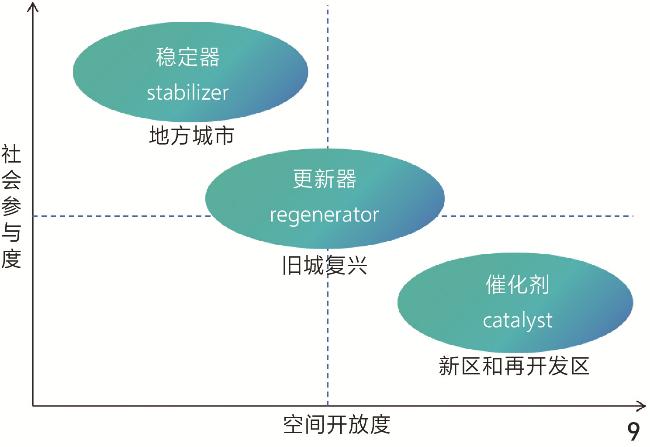
[Methods] The research adopts a multi-scalar approach that combines historical trajectory analysis, case-based comparative study, and theoretical synthesis. First, the historical evolution of Japanese university campuses from 1945 to the present is traced and periodized into three major phases: the expansion phase (1945–1980s), when demographic booms and policy restrictions encouraged suburban relocation and the creation of enclosed, inward-looking campuses; the peak phase (1980s–2000s), marked by intensifying competition, partial return to urban centers, and the emergence of vertical and compact campus typologies; and the contraction phase (2000s to present), characterized by severe demographic decline, urban concentration, and increasing demands for publicness and integration. Second, representative case studies are selected from metropolitan Tokyo, regional cities, and newly developed urban districts. These are analyzed through spatial observation, planning documents, and secondary literature to identify common strategies and contextual variations. Third, the research synthesizes empirical findings into a typological framework of three strategic modes — “catalyst”, “regenerator”, and “stabilizer” — and further generalizes these into a theoretical three-pillar model composed of demographic dynamics, policy instruments, and spatial strategies. This model is used to explain the synergistic evolution mechanism of campus landscapes and urban environments.
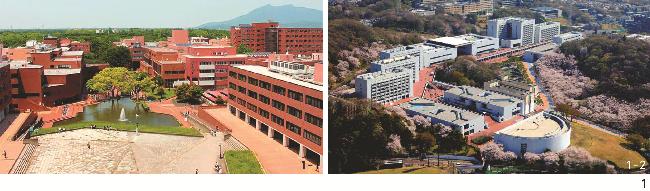
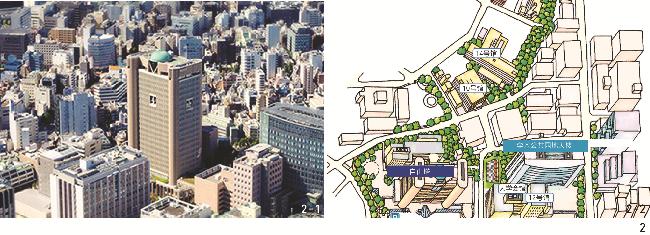
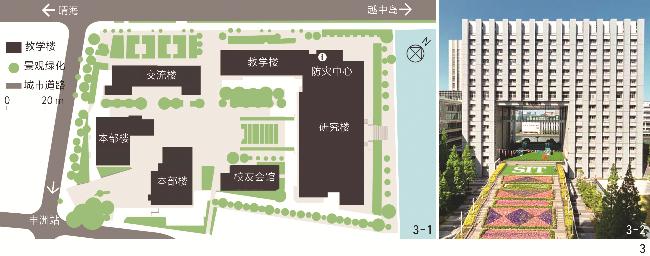
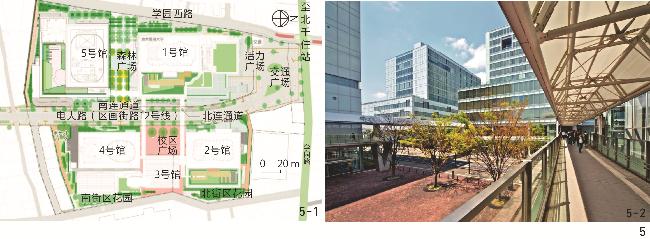
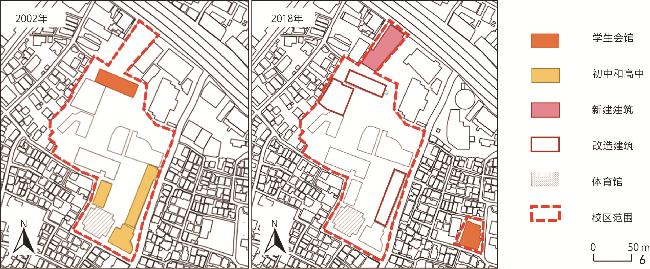
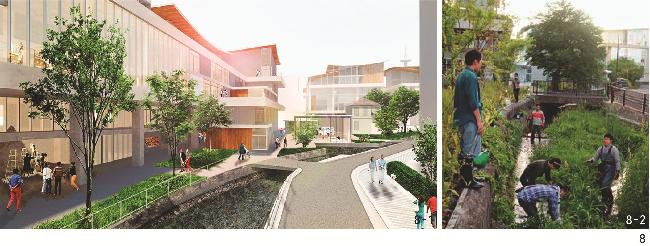
[Results] The analysis shows that campus landscape transformation in Japan is not an isolated architectural endeavor but a systemic process shaped by demographic, institutional, and spatial forces. In newly developed urban areas and large-scale redevelopment zones, universities frequently operate as catalysts, strategically positioned to anchor emerging districts. Here, landscape strategies emphasize publicness, multi-functionality, and accessibility. For instance, the Toyosu Campus of Shibaura Institute of Technology integrates open terraces, green staircases, and community-oriented plazas that attract both students and local residents, thereby stimulating district-level vitality. In historic city centers and post-industrial neighborhoods, universities act as regenerators, using landscape interventions to repair urban fabric and reinvigorate cultural identity. Examples include the Kitasenju Campus of Tokyo Denki University, which deploys pedestrian linkages and unified pavement to soften campus — city boundaries, and Kyoto City University of Arts, which integrates riverside ecological restoration with cultural events to generate a “memory landscape”. In smaller regional cities, universities often serve as stabilizers, embedding themselves in local social and demographic structures through service-oriented landscapes and shared facilities. Fukuchiyama Public University, for example, co-locates community dining halls and elderly care facilities within its campus landscape, while university consortia in Kyoto pool resources to create a multi-institutional network of open sports fields, libraries, and cultural spaces accessible to local communities. The proposed three-pillar model explains the underlying mechanism of these transformations. Demographic decline provides the fundamental pressure, reducing the student-age population from over two million in the early 1990s to just above one million in the 2020s, with further decline projected. Policy instruments translate these demographic pressures into spatial outcomes, with such instruments ranging from restrictive measures such as the 1959 Factory Location Law to liberalizing interventions like the 1991 revision of university establishment standards, and most recently, the 2017 enrollment cap in central Tokyo. Spatial strategies, materialized through landscape design, serve as the ultimate vehicles through which demographic and policy drivers are enacted: Open courtyards, pedestrian corridors, cultural event spaces, and service-based green infrastructures become concrete manifestations of institutional adaptation. The interplay of these three pillars — demographics, policies, and spatial strategies — constitutes the synergistic evolution dynamic of campus landscapes and cities.
[Conclusion] Japanese experience shows campus landscapes have moved beyond their traditional role as green buffers to become strategic nodes of governance, cultural renewal, and social inclusion. By adopting roles of catalyst, regenerator, and stabilizer, campuses now shape urban growth, support community services, and sustain regional resilience. The proposed three-pillar model provides a structural lens for interpreting such changes. For China, where higher education faces slowed growth and demographic transition, these findings are highly relevant. Suburban university towns face the risk of under-use, while urban campuses must balance scarcity with public engagement. Japanese precedents suggest strategies of vertical compaction, boundary softening, and service-oriented integration can enhance publicness and urban alignment. Policymakers, meanwhile, should design flexible regulations balancing equity and autonomy. Future research should incorporate quantitative tools such as GIS metrics, user surveys, and cross-national comparison to further validate the three-pillar model and refine its applicability. Ultimately, campus landscapes must be understood not as passive backdrops but as active instruments in reshaping campus – city relations in an era of demographic and urban transformation.
MENG Yujing , CAI Jiaxiu , YIN Lu . Synergistic Evolution Mechanism for Campus Landscapes in Japanese Universities: Form and Publicness Reconstruction in the Context of Demographic Change[J]. Landscape Architecture, 2025 , 32(12) : 86 -95 . DOI: 10.3724/j.fjyl.LA20250356
表1 日本高校校园建设相关的法律制度和社会情况概要[18, 25]Tab. 1 An overview of the legal systems and social conditions related to Japanese university campus construction[18, 25] |
| 阶段 | 年份 | 相关政策或社会情况 |
|---|---|---|
| 第一阶段 扩张期 | 1945 | 第二次世界大战结束 |
| 1947—1949 | 第一次婴儿潮(导致1966年高校入学需求激增) | |
| 1949 | 《私立学校法》制定(私立学校开始建立发展) | |
| 1959 | 《工厂等制限法》实行(限制东京、大阪利用既有工业区建设校园) | |
| 1971—1974 | 第二次婴儿潮(导致1992年18岁人口数量高峰) | |
| 1975 | 《私立学校振兴补助法》制定(开始高校建设潮) | |
| 第二阶段 峰值期 | 1986—1991 | 泡沫经济时期 |
| 1991 | 《大学设置标准》改正(解绑学校组织架构,调整自主权) | |
| 1993 | 18岁人口数量开始减少 | |
| 第三阶段 收缩期 | 2002 | 《工厂等制限法》废止(校园建设开始回归城市核心区) |
| 2004 | 国立大学法人化(招生更自由、运营更自主、财务重效益) | |
| 2017 | 文部科学省原则上禁止东京23区内高校新增及扩招 | |
| 2023 | “大学全入时代”到来(招生总人数大于报考总人数) |
表2 日本人口变化驱动下的高校校园演进3个阶段对比Tab. 2 A comparative overview of the three stages of university campus evolution driven by Japan’s demographic changes |
| 维度 | 演进阶段 | ||
|---|---|---|---|
| 扩张期 | 峰值期 | 收缩期 | |
| 人口结构 | 婴儿潮 | 18岁人口达峰值后下滑 | 少子化加速 |
| 政策导向 | 高校位置限都心、促郊外 | 办学标准松动,高校自主分化发展 | 放宽限制,鼓励高校回归 |
| 空间形态 | 大尺度封闭校园 | 都市型高层校园,部分开放 | 立体集约型校园或生态减量型校园,全面开放 |
| 校城关系 | 物理隔离,边界硬化 | 试点共享,边界松动 | 融合共创,边界消融 |
表3 中日高校空间发展背景对比及借鉴原则Tab. 3 A comparison of the contexts for university spatial development in China and Japan, and principles for reference |
| 对比维度 | 日本经验特征 | 中国现实国情 | 原则和具体设计手段 |
|---|---|---|---|
| 土地属性与制度 | 高校资产处置灵活,土地可复合开发 | 土地为国有划拨,用途管制严格,开发受限 | 以功能复合提升空间效益:探索图书馆、体育馆等设施的分时共享与协同管理机制 |
| 决策与治理模式 | 校城合作多为“自下而上”的自主协商 | 大学城等规划多为“自上而下”的政府主导 | 融入议程,建立机制:建立常态化的校城沟通协调机制 |
| 社会与文化背景 | 社会对校园开放接受度高,校园开放是高校的共识性策略 | 对安全管理等问题顾虑较多,开放阻力较大 | 选择性开放,柔性边界:从开放公共性强的区域和改造“软”边界入手 |
| 空间策略驱动力 | 主要由少子化带来的内生性需求“生存竞争”驱动 | 多由政府扩招、城市开发等“外部指令”驱动 | 从空间管理到场所营造:聚焦于创造高品质、有活力的校园“场所” |
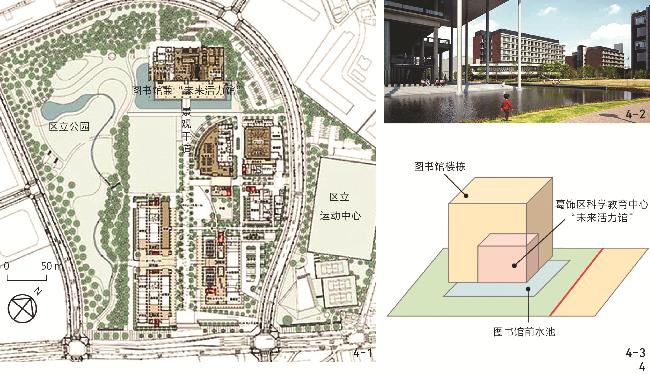
图1-1源自参考文献[19],图1-2源自参考文献[20];图2翻译自参考文献[23];图3-1源自参考文献[29],图3-2源自参考文献[30];图4-1、4-2翻译自参考文献[34],图4-3翻译自参考文献[35];图5-1翻译自参考文献[37],图5-2源自参考文献[38];图6翻译自参考文献[39];图7源自参考文献[41];图8-1源自参考文献[42],图8-2源自参考文献[43];表1根据参考文献[18][25]整理;其余图表由作者绘制。
1、提出日本高校景观与城市协同演化的“三支柱模型”,从空间、社会、制度3个层面揭示了日本高校在少子化背景下的系统性转型机制。
2、构建催化剂、更新器、稳定器3类校园景观策略模式,首次从景观视角阐释高校空间的分层响应逻辑。
3、提出从“校园规划”到“校城规划”的新范式,为中国高校应对人口收缩与区域差异提供了具有可操作性的景观规划策略。
| [1] |
文部科学省高等教育局.18歳人口(男女別)の将来推計[EB/OL].(2024-05-31)[2025-05-10]. https://www.mext.go.jp/content/20240531-koutou02-000036245_8.pdf.
Higher Education Bureau, Ministry of Education, Culture, Sports, Science and Technology. Future Projections of the 18-Year-Old Population by Sex[EB/OL]. (2024-05-31) [2025-05-10]. https://www.mext.go.jp/content/20240531-koutou02-000036245_8.pdf.
|
| [2] |
日本私立学校振兴·共済事业团.令和6(2024)年度私立大学·短期大学等入学志願動向[EB/OL].[2025-05-10]. https://www.shigaku.go.jp/files/shigandoukouR6.pdf.
Japan Private School Promotion & Mutual Aid Corporation. Trends in Applications for Admission to Private Universities and Junior Colleges, Academic Year 2024 (Reiwa 6)[EB/OL]. [2025-05-10]. https://www.shigaku.go.jp/files/shigandoukouR6.pdf.
|
| [3] |
PERRY D C. The University as Urban Developer: Case Studies and Analysis[M]. London: Routledge, 2015.
|
| [4] |
KENNEY D R, DUMONT R, KENNEY G. Mission and Place: Strengthening Learning and Community Through Campus Design[M]. Westport: Praeger, 2005.
|
| [5] |
饗庭伸.都市をたたむ: 人口減少時代をデザインする都市計画[M].東京: 花伝社, 2015.
AIBA S. Folding the City: Urban Planning to Design the Era of Depopulation[M]. Tokyo: Kadensha, 2015.
|
| [6] |
HATTORI K, KAIDO K, MATSUYUKI M The Development of Urban Shrinkage Discourse and Policy Response in Japan[J]. Cities, 2017, 69: 124.-132.
|
| [7] |
日本建築学会.まちのようにキャンパスをつくり、キャンパスのようにまちをつかう[M].東京: 丸善出版株式会社, 2020.
Architectural Institute of Japan. Building Campuses Like Cities, Using Cities Like Campuses[M]. Tokyo: Maruzen Publishing Co., Ltd., 2020.
|
| [8] |
水源, 何志琴 海绵城市理论下高校景观设计中低影响开发的设计向度: 以合肥学院海绵校园建设要求为视角[J]. 赤峰学院学报(自然科学版), 2019, 35 (8): 84.-86.
SHUI Y, HE Z Q Design Dimension of Low Impact Development in College Landscape Design Based on Sponge City Theory: From the Perspective of Sponge Campus Construction Requirements of Hefei University[J]. Journal of Chifeng University (Natural Science Edition), 2019, 35 (8): 84.-86.
|
| [9] |
赵文嘉, 赵和生 基于海绵城市理论的大学校园更新策略研究: 以南京工业大学江浦校区为例[J]. 江苏建筑, 2019 (1): 24.-27.
ZHAO W J, ZHAO H S Study on Campus Renewal Strategy Based on Sponge City Theory: Taking the Jiangpu Campus of Nanjing Tech University as an Example[J]. Jiangsu Construction, 2019 (1): 24.-27.
|
| [10] |
王旭明 基于海绵城市理念的高校校园景观改造策略研究[J]. 山西建筑, 2017, 43 12 207.-208.
WANG X M Study on University Campus Landscape Transformation Strategies on the Basis of Sponge City Concept[J]. Shanxi Architecture, 2017, 43 12 207.-208.
|
| [11] |
於海华, 何镜堂, 孔婉茹 全域旅游视角下“校·城·景共融”的高校规划实践: 以海南大学海甸校区规划为例[J]. 华中建筑, 2018, 36 11 33.-37.
YU H H, HE J T, KONG W R University Planning Practice of “Campus, City, Scenic Spot Communion” from the Perspective of Whole Domain Tourism: Taking Hainan University Campus Planning as an Example[J]. Huazhong Architecture, 2018, 36 11 33.-37.
|
| [12] |
余洋, 唐晓婷, 陆诗亮 大学校园的健康服务功能及要素构成: 以北京为例[J]. 风景园林, 2018, 25 (3): 38.-45.
YU Y, TANG X T, LU S L Healthy Service Functions and Elements of Universities: Taking Beijing as an Example[J]. Landscape Architecture, 2018, 25 (3): 38.-45.
|
| [13] |
CASTELLS M. The Rise of the Network Society: The Information Age: Economy, Society, and Culture Volume I[M]. Boston: Wiley-Blackwell, 2009.
|
| [14] |
PRATT G, SOJA E W Thirdspace: Journeys to Los Angeles and Other Real-and-Imagined Places[J]. Economic Geography, 1998, 74 (2): 192.
|
| [15] |
藤山正彦.2010入試情報室より日本の大学のこれから[EB/OL]. (2022-12-26) [2025-05-10]. https://freestep-walker.com/blog/cat1/post_334.html.
FUJIYAMA M. The Future of Japanese Universities, from the 2010 Entrance Examination Information Room[EB/OL]. (2022-12-26) [2025-05-10]. https://freestep-walker.com/blog/cat1/post_334.html.
|
| [16] |
経済産業省.工場立地法関係制度について[EB/OL].[2025-05-10]. https://www.meti.go.jp/policy/local_economy/industrial_location/03koujyou.pdf.
Ministry of Economy, Trade and Industry. Overview of the Factory Location Act and Related Regulations[EB/OL]. [2025-05-10]. https://www.meti.go.jp/policy/local_economy/industrial_location/03koujyou.pdf.
|
| [17] |
私立学校振興助成法(昭和五十年法律第六十一号)[EB/OL].(2025-04-01)[2025-05-10]. https://laws.e-gov.go.jp/law/350AC1000000061.
Private School Subsidy Act (Act No. 61 of 1975)[EB/OL]. (2025-04-01)[2025-05-10]. https://laws.e-gov.go.jp/law/350AC1000000061.
|
| [18] |
高田聖, 斎尾直子.大学キャンパス移転·存続の変遷からみる自治体と大学との連携実態と課題[C]//日本建築学会, 日本建築学会大会学術講演梗概集(近畿).東京: 日本建築学会, 2023: 433-436.
TAKADA K, SAIO N. Actual Conditions and Challenges of Collaboration Between Municipalities and Universities Seen from the Evolution of Campus Relocation and Continuity[C]//Architectural Institute of Japan. Summaries of Technical Papers of Annual Meeting, Architectural Institute of Japan (Kinki). Tokyo: Architectural Institute of Japan, 2023: 433-436.
|
| [19] |
筑波大学.大学案内[EB/OL].(2024-05-01)[2025-05-10]. https://www.tsukuba.ac.jp/about/.
University of Tsukuba. University Guide[EB/OL].(2024-05-01)[2025-05-10]. https://www.tsukuba.ac.jp/about/.
|
| [20] |
中央大学.中央大学のあゆみ[EB/OL].[2025-05-10]. https://www.chuo-u.ac.jp/aboutus/history/history_01/.
Chuo University. History of Chuo University[EB/OL]. [2025-05-10]. https://www.chuo-u.ac.jp/aboutus/history/history_01/
|
| [21] |
小田晋 筑波学園都市の精神保健: いわゆる「筑波症候群」の歴史[J]. 筑波フォーラム, 1991, 30: 26.-35.
ODA S Mental Health in Tsukuba Science City: The History of So-called “Tsukuba Syndrome”[J]. Tsukuba Forum, 1991, 30: 26.-35.
|
| [22] |
細井克彦 「大学設置基準」改訂の意味[J]. 人文研究, 1991, 43 (1): 1.-23.
HOSOI K The Implications of the Revision of the “University Establishment Standards”[J]. Humanities Research, 1991, 43 (1): 1.-23.
|
| [23] |
明治大学.ALL ABOUT MEJI·データで見る明治大学[EB/OL].[2025-05-10]. https://www.meiji.ac.jp/cip/english/allaboutmeiji/jp/.
Meiji University. ALL ABOUT MEIJI: Meiji University in Figures[EB/OL]. [2025-05-10]. https://www.meiji.ac.jp/cip/english/allaboutmeiji/jp/.
|
| [24] |
玉崎栄次.「大学全入時代」到来[EB/OL].(2023-01-09)[2025-05-10]. https://www.sankei.com/article/20230109-CQOEMTK7YZNKXHXBL67MWX3XP4/.
TAMAZAKI E. The Advent of the “University Enrollment for Everyone Era”[EB/OL]. (2023-01-09) [2025-05-10]. https://www.sankei.com/article/20230109-CQOEMTK7YZNKXHXBL67MWX3XP4/.
|
| [25] |
斎尾直子, 真藤翔.首都圏における大学キャンパスの新設·撤退と拡大·縮小の動[C]//日本建築学会.日本建築学会大会学術講演梗概集(北海道).東京: 日本建築学会, 2013: 607-610.
SAIO N, SHINTO S. Trends in the Construction, Withdrawal, Expansion, and Reduction of University Campuses in the Greater Tokyo Area[C]//Architectural Institute of Japan. Summaries of Technical Papers of Annual Meeting, Architectural Institute of Japan (Hokkaido). Tokyo: Architectural Institute of Japan, 2013: 607-610.
|
| [26] |
角田将吾, 斎尾直子.首都圏における私立大学キャンパスの都心回帰による過密化の実態[C]//日本建築学会.日本建築学会大会学術講演梗概集(東北).東京: 日本建築学会, 2018: 685-688.
TSUNODA S, SAIO N. The Reality of Overcrowding due to Urban Campus Relocation of Private Universities in the Tokyo Metropolitan Area[C]//Architectural Institute of Japan. Summaries of Technical Papers of Annual Meeting, Architectural Institute of Japan (Tohoku). Tokyo: Architectural Institute of Japan, 2018: 685-688.
|
| [27] |
文教科学委員会調査室.東京23区における私立大学等の定員抑制[EB/OL].[2025-05-10]. https://www.sangiin.go.jp/japanese/annai/chousa/rippou_chousa/backnumber/2017pdf/20171201099.pdf.
Research Office of the Education, Culture, and Science Committee. Enrollment Restriction of Private Universities in Tokyo’s 23 Wards[EB/OL]. [2025-05-10]. https://www.sangiin.go.jp/japanese/annai/chousa/rippou_chousa/backnumber/2017pdf/20171201099.pdf.
|
| [28] |
芝浦工業大学.豊洲キャンパス交通案内[EB/OL].[2025-05-10]. https://www.shibaura-it.ac.jp/access/toyosu.html.
Shibaura Institute of Technology. Toyosu Campus Access Guide[EB/OL]. [2025-05-10]. https://www.shibaura-it.ac.jp/access/toyosu.html.
|
| [29] |
芝浦工業大学.学校法人芝浦工業大学概要2024[EB/OL].(2024-05-01)[2025-05-10]. https://www.shibaura-it.ac.jp/assets/Shibaura_Institute_of_Technology_2024.pdf.
Shibaura Institute of Technology. Outline of Shibaura Institute of Technology Corporation 2024[EB/OL]. (2024-05-01) [2025-05-10]. https://www.shibaura-it.ac.jp/assets/Shibaura_Institute_of_Technology_2024.pdf.
|
| [30] |
浅海宏匡, 志村秀明.都心部における開放型キャンパスの中庭利用の実態に関する研究: 芝浦工業大学豊洲キャンパスを事例として[C]//日本建築学会, 日本建築学会大会建築デザイン発表梗概集(中国).東京: 日本建築学会, 2008: 225-228.
ASAMI H, SHIMURA H. Study on Courtyard Utilization in Open Campuses in Urban Areas: Case Study of Shibaura Institute of Technology Toyosu Campus[C]//Architectural Institute of Japan. Summaries of Design Presentations at Annual Meeting, Architectural Institute of Japan (China). Tokyo: Architectural Institute of Japan, 2008: 225-228.
|
| [31] |
日本建築学会.いまからのキャンパスづくり: 大学の将来戦略のためのキャンパス計画とマネジメント[M].東京: 丸善出版株式会社, 2011: 152-156.
Architectural Institute of Japan. Campus Planning for the Future: Campus Design and Management Strategies for Universities[M]. Tokyo: Maruzen Publishing Co., Ltd., 2011: 152-156.
|
| [32] |
亀井忠夫 都市を織りなす大学の建築[J]. GA JAPAN, 2017, 146: 94.-97.
KAMEI T University Architecture that Weaves the City[J]. GA JAPAN, 2017, 146: 94.-97.
|
| [33] |
佐藤諒太, 郷田桃代, 櫻井雄大, 等.大学キャンパスの外部空間における利用者の滞留行動に関する研究[C]//日本建築学会.日本建築学会大会学術講演梗概集(関東).東京: 日本建築学会, 2020: 1067-1068.
SATO R, NATTA M, SAKURAI N, et al. Study on User Stay Behaviors in External Spaces of University Campuses[C]//Architectural Institute of Japan. Summaries of Technical Papers of Annual Meeting, Architectural Institute of Japan (Kanto). Tokyo: Architectural Institute of Japan, 2020: 1067-1068.
|
| [34] |
日建設計.東京理科大学葛飾キャンパス[EB/OL].[2025-05-10]. https://www.nikken.co.jp/ja/projects/education/tokyo_university_of_science.html.
Nikken Sekkei. Tokyo University of Science, Katsushika Campus[EB/OL]. [2025-05-10]. https://www.nikken.co.jp/ja/projects/education/tokyo_university_of_science.html.
|
| [35] |
岩崎克也, 塚田幹夫, 渡部裕樹.公園や文化施設と融合した東京理科大学葛飾キャンパスのデザインプロセス[C]//日本建築学会.日本建築学会大会建築技術報告集.東京: 日本建築学会, 2022: 1396-1401.
IWASAKI K, TSUKADA M, WATANABE Y. Design Process of Tokyo University of Science Katsushika Campus Integrated with Parks and Cultural Facilities[C]//Architectural Institute of Japan. Summaries of Architectural Technology Reports, Architectural Institute of Japan. Tokyo: Architectural Institute of Japan, 2022: 1396-1401.
|
| [36] |
福永知義, 鹿島大睦 都市をつくる大学[J]. GA JAPAN, 2017, 146: 104.-109.
FUKUNAGA T, KASHIMA H Universities that Build Cities[J]. GA JAPAN, 2017, 146: 104.-109.
|
| [37] |
東京電機大学東京千住キャンパスと区画街路12号線位置図[EB/OL].(2025-04-25)[2025-05-10]. https://www.city.adachi.tokyo.jp/machizukuri/machi/machizukuri/kitasenju.html.
Location Map of Tokyo Denki University Kitasenju Campus and District Road No. 12[EB/OL]. (2025-04-25) [2025-05-10]. https://www.city.adachi.tokyo.jp/machizukuri/machi/machizukuri/kitasenju.html.
|
| [38] |
槇総合計画事務所.東京電機大学東京千住キャンパス[EB/OL].[2025-05-10]. https://www.maki-and-associates.co.jp/projects/27.
Maki and Associates. Tokyo Denki University Kitasenju Campus[EB/OL]. [2025-05-10]. https://www.maki-and-associates.co.jp/projects/27.
|
| [39] |
角田将吾, 斎尾直子.首都圏私立大学キャンパスの都心回帰動向の実態: 移転先及び移転元·撤退跡地の空間変容分析[C]//日本建築学会.日本建築学会大会学術講演梗概集(関東).東京: 日本建築学会, 2020: 215-218.
TSUNODA S, SAIO N. Actual Trends in Urban Relocation of Private University Campuses in the Tokyo Metropolitan Area: Analysis of Spatial Transformation at Relocation Sites and Vacated Land[C]//Architectural Institute of Japan. Summaries of Technical Papers of Annual Meeting, Architectural Institute of Japan (Kanto). Tokyo: Architectural Institute of Japan, 2020: 215-218.
|
| [40] |
武田史朗, 大橋幸雄, 及川清昭, 等.立命館大学大阪いばらきキャンパスというランドスケープ[C]//日本建築学会.日本建築学会大会建築デザイン発表梗概集(関東).東京: 日本建築学会, 2015: 280-281.
TAKEDA S, YUKIO O, AKIRA K, et al. The Landscape of Ritsumeikan University Osaka Ibaraki Campus[C]//Architectural Institute of Japan. Summaries of Design Presentations at Annual Meeting, Architectural Institute of Japan (Kanto). Tokyo: Architectural Institute of Japan, 2015: 280-281.
|
| [41] |
東京芸術大学.藝大ヘッジ-4·植樹ワークショップを実施しました[EB/OL].(2018-12-17)[2025-05-10]. https://www.geidai.ac.jp/news/2018121773167.html.
Tokyo University of the Arts. Geidai Hedge: Implementation of Tree-planting Workshop[EB/OL]. (2018-12-17) [2025-05-10]. https://www.geidai.ac.jp/news/2018121773167.html.
|
| [42] |
京都市立芸術大学及び京都市立銅駝美術工芸高等学校移転整備事業に係る実施設計について[EB/OL].[2025-05-10]. https://www.city.kyoto.lg.jp/bunshi/page/0000266650.html.
On the Design and Design of the Transfer Project of Kyoto City University of Arts and Kyoto City Hokudai Art and Craft High School[EB/OL]. [2025-05-10]. https://www.city.kyoto.lg.jp/bunshi/page/0000266650.html.
|
| [43] |
井上真央.京都市立芸術大学生ら、高瀬川清掃から「創造」も: 新キャンパス移転で保勝会結成、拾った陶磁器片で作品に[EB/OL].(2024-05-30)[2025-05-10]. https://www.kyoto-np.co.jp/articles/-/1262513.
INOUE M. Kyoto City University of Arts Students “Create” from Takase River Cleaning: Formation of Conservation Group After Campus Relocation, Artworks Made with Collected Ceramic Fragments[EB/OL]. (2024-05-30) [2025-05-10]. https://www.kyoto-np.co.jp/articles/-/1262513.
|
| [44] |
みはまデイズ×日本福祉大学[EB/OL].[2025-05-10]. https://sdgs.n-fukushi.ac.jp/wp/wp-content/uploads/2021/05/famikichi.pdf.
Mihama Days×Nihon Fukushi University[EB/OL]. [2025-05-10]. https://sdgs.n-fukushi.ac.jp/wp/wp-content/uploads/2021/05/famikichi.pdf.
|
| [45] |
藤永弘.「福知山公立大学」における地域経営学部の設置経緯と今後の課題[EB/OL]. [2025-05-10]. https://chiikikeiei.jp/wp/wp/wp-content/uploads/2022/10/file54.pdf.
FUJINAGA H. Establishment Process and Future Challenges of the Regional Management Faculty at Fukuchiyama Public University[EB/OL]. [2025-05-10]. https://chiikikeiei.jp/wp/wp/wp-content/uploads/2022/10/file54.pdf.
|
| [46] |
一般財団法人地域活性化センター.平成26年度地域活性化ガイドブック[EB/OL]. [2025-05-10]. https://www.jcrd.jp/publications/H27_higher_education.pdf.
Japan Regional Revitalization Center. Regional Revitalization Guidebook 2014 (Heisei 26)[EB/OL]. [2025-05-10]. https://www.jcrd.jp/publications/H27_higher_education.pdf.
|
| [47] |
一般財団法人大学コンソーシアム京都.大学コンソーシアム京都[EB/OL].[2025-05-10]. https://www.consortium.or.jp/wp-content/uploads/page/29/info2024web1.pdf.
University Consortium Kyoto. University Consortium Kyoto[EB/OL]. [2025-05-10]. https://www.consortium.or.jp/wp-content/uploads/page/29/info2024web1.pdf.
|
| [48] |
秋間勝仁.八王子市学園都市推進会議のあゆみ[EB/OL].[2025-05-10]. https://suishinkaigi.com/dantai_gaiyou.
AKIMA K. History of the Hachioji Academic City Promotion Council[EB/OL].[2025-05-10]. https://suishinkaigi.com/dantai_gaiyou.
|
| [49] |
槇文彦, 真壁智治.アナザーユートピア: 「オープンスペース」から都市を考える[M].東京: NTT出版株式会社, 2019.
MAKI F, MAKABE T. Another Utopia: Rethinking Cities from “Open Space”[M]. Tokyo: NTT Publishing Co., Ltd., 2019.
|
/
| 〈 |
|
〉 |