

Science and Poetics of Playscape: Exploration of Design Pathways for Campus Landscapes of Primary and Secondary Schools in High-Density Cities
|
LIN Xiaoyu, Ph.D., is an associate professor in the School of Architecture, Harbin Institute of Technology, Shenzhen. Her research focuses on landscape architecture, campus landscape, and urban-rural regeneration |
|
YU Gang, Ph.D., is a professor in the School of Architecture, Harbin Institute of Technology, Shenzhen. His research focuses on architecture design and theory |
Received date: 2025-07-21
Revised date: 2025-11-03
Online published: 2025-12-26
Copyright
[Objective] This research aims to explore the theory and practice of landscape design for campuses of primary and secondary schools in the context of contemporary high-density Chinese cities. The objective is to establish a comprehensive design framework based on the concept of “playscape” to transform school campuses from single-functional, enclosed educational facilities into vibrant, creative urban spaces that serve as nodes within the public realm. Confronted with challenges such as limited space, a rigid focus on academic performance, and physical and psychological segregation from surrounding communities, traditional campus design has proven inadequate. This research seeks to address these shortcomings by proposing a design philosophy that not only promotes the holistic development of children but also enhances the campus’s role as an open, inclusive, and vital community hub. The research intends to provide inspiring theoretical perspectives and practical pathways for the future innovation of campus landscape design and overall spatial design, grounded in asynthesis of the scientific principles of child development and the poetics of place-making.
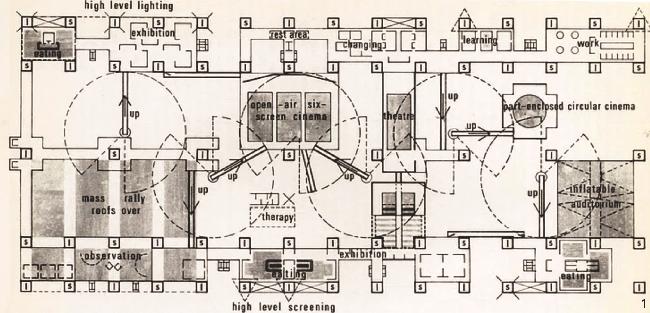
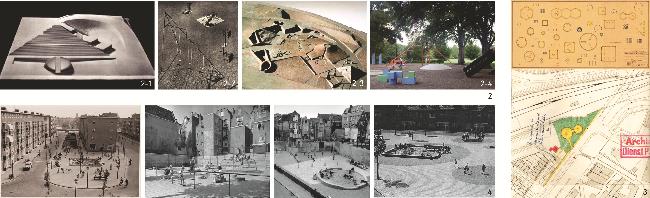
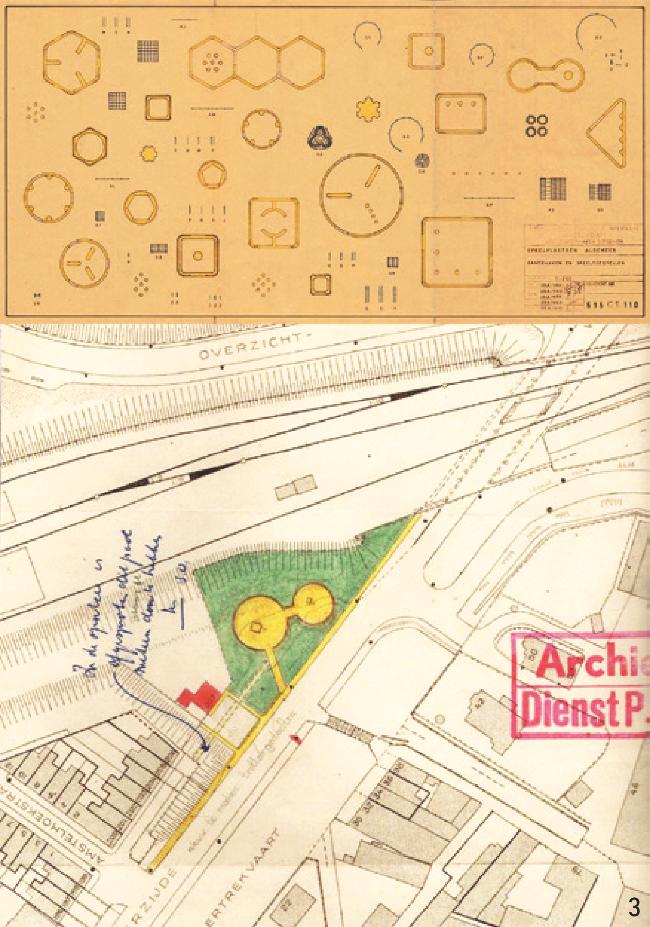
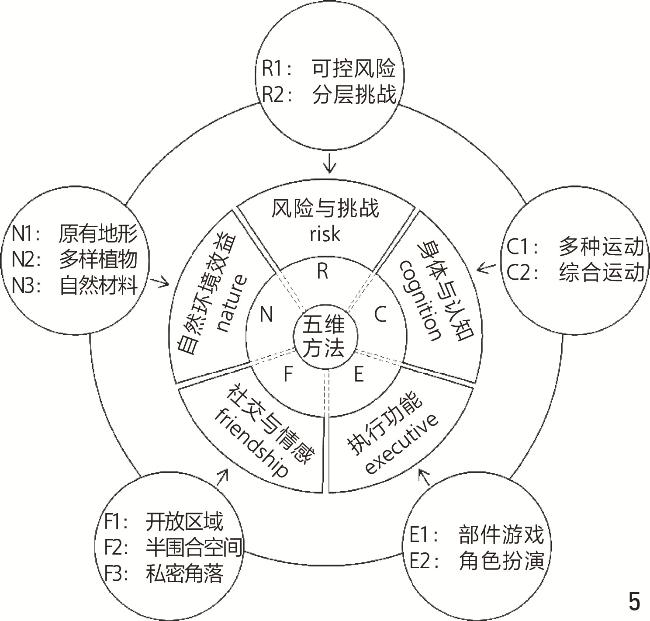
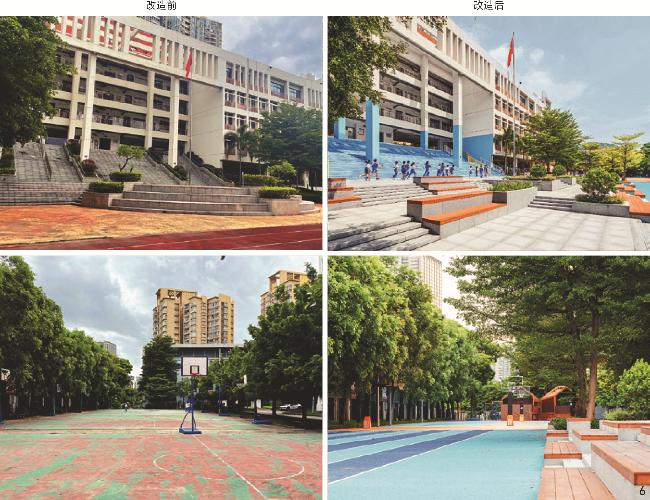
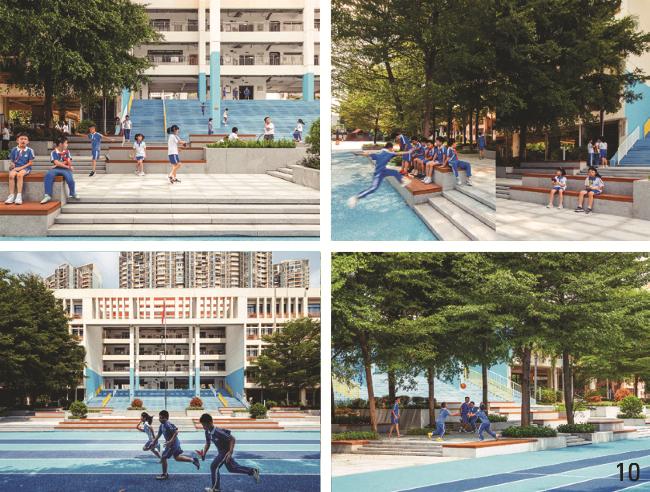
[Methods] To achieve this objective, the research employs a multi-faceted methodological approach. First, it conducts a systematic historical review of the concepts of “play” and “playfulness” within the evolution of contemporary cultural, artistic, urban and architectural theories. This review traces the intellectual lineage from Schiller’s and Huizinga’s cultural theories to the critical practices of the Situationist International and Cedric Price, establishing “play” as a profound cultural phenomenon and a powerful tool for critiquing functionalist urbanism. Second, the research constructs an integrative design framework by synthesizing the “science” of child development with the “poetics” of playscape design. It systematically incorporates a five-dimensional design method, largely informed by the scientific findings in child psychology, behavioral science, and neuroscience, covering aspects such as risk assessment, embodied cognition, executive functions, social-emotional support, and benefits of the natural environment. This scientific dimension is interwoven with the poetic dimension, which draws inspiration from the pioneering works of artists and designers like Isamu Noguchi and Aldo van Eyck, focusing on place-making, aesthetic experience, and community engagement. Third, the research empirically illustrates and validates this framework through an in-depth case study of the landscape regeneration project at the Harbin Institute of Technology, Shenzhen Experimental School. This case study analyzes the specific strategies and methods applied to translate the playscape philosophy into a tangible design, particularly examining its adaptability within the constraints of a rapid, low-cost campus regeneration project.
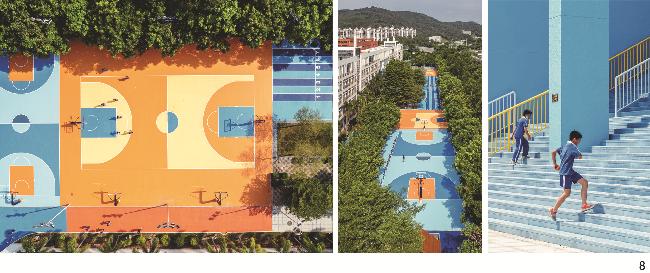
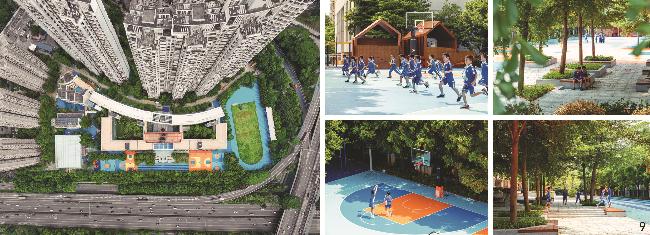
[Results] The research yields several significant findings. The historical review confirms that “play” and “playfulness” have consistently served as a critical counter-narrative to rigid, functionalist approaches to urban design, acting as a vital source of urban vitality and community cohesion. The proposed “science-poetics” integrative framework proves to be a robust and effective tool for addressing the multifaceted challenges of campuses in high-density cities. The scientific dimension provides a clear, evidence-based rationale for design decisions, moving beyond intuition to create environments that precisely support children’s holistic development. The poetic dimension elevates the campus landscape from a mere functional backdrop to a meaningful “playable work of art” that fosters a sense of place and belonging. The case study of Harbin Institute of Technology, Shenzhen Experimental School demonstrates the framework’s practical applicability and adaptability. The findings show that even under significant constraints of time, budget, and space, the core values of the playscape can be effectively realized through “low-intervention, high-perception” strategies. The project successfully transforms a monotonous, single-functional sports ground into a dynamic, interactive playscape. Key results from the case study are summarized as follows. 1) The paradigm shift from a “functionalist” to a “developmentalist” landscape is achieved by creating a flowing topography and integrating natural elements. 2) “Spatial acupuncture”, a strategy of activating interstitial spaces, proves highly effective in maximizing the use of limited land resources. 3) The integration of “color therapy” with micro-topography shaping serves as a low-cost, high-impact method for enhancing spatial perception, guiding activities, and creating a positive emotional atmosphere. 4) The design successfully blurs the physical and psychological boundaries between the campus and the community, enhancing the school’s identity as a public node through strategies like the design of the “Sixth Facade” system. These results collectively demonstrate that the playscape philosophy, when adapted through context-specific, innovative strategies, offers a powerful pathway to overcoming the prevalent challenges in contemporary Chinese campus regeneration.
[Conclusion] This research concludes that “playscape” is an integrative design philosophy that masterfully combines scientific rationality with poetic and humanistic concerns, offering a systematic solution for the design of campuses of primary and secondary schools in high-density cities. The research establishes that a playscape-based approach can fundamentally reshape the campus, facilitating a paradigm shift from a passive, function-oriented environment to an active, educational space that scientifically empowers children’s growth. Furthermore, it serves as a critical catalyst for linking the campus to the city, transforming it from an isolated “island” into an open, creative, and inclusive hub that energizes the community. The “low-intervention, high-perception” strategies explored in this research offer a tangible and adaptable pathway for realizing innovative playscape designs within the common constraints of campus regeneration projects in China. Looking forward, the systematic application of the playscape philosophy to campus design is not merely an effective strategy for tackling current challenges, but also a vital step towards reimagining the school as a place full of creativity, inclusivity, and community vitality, which holds profound significance for nurturing future citizens and building harmonious, livable cities.
LIN Xiaoyu , YU Gang . Science and Poetics of Playscape: Exploration of Design Pathways for Campus Landscapes of Primary and Secondary Schools in High-Density Cities[J]. Landscape Architecture, 2025 , 32(12) : 76 -85 . DOI: 10.3724/j.fjyl.LA20250438
表1 游乐场与游戏地景的概念差异辨析Tab. 1 Differentiation between the concepts of playground and playscape |
| 设计维度 | 游乐场 | 游戏地景 |
|---|---|---|
| 空间形态 | 孤立、边界清晰 | 网络化、场地一体化 |
| 设计元素 | 标准化设备 | 地形、自然元素、抽象雕塑 |
| 功能目标 | 进行体育或娱乐活动 | 促进儿童全面发展 |
| 儿童行为支持 | 预设性、被动 | 探索性、创造性、主动 |
| 教育目标 | 体育锻炼 | 综合身心发展的整体教育 |
表2 游戏地景的“科学-诗学”的融合性设计框架Tab. 2 A “science – poetics” integrative framework of playscape |
| 维度 | 设计原则 | 具体策略 |
|---|---|---|
| 儿童发展的科学赋能 | 风险与挑战体验 | 1)能容纳一定的可控风险; 2)设置有层次的挑战 |
| 身体与认知发展 | 1)提供多样化、非结构化的运动机会; 2)鼓励全身性的、综合性的身体活动 | |
| 锻炼执行功能 | 1)包含需要合作、规划、遵守规则的游戏元素; 2)提供角色扮演空间,让儿童自己规划并进行搭建活动 | |
| 社交与情感支持 | 多样化的社交空间:大规模开放区域、小组合作的半围合空间、私密交谈的角落等 | |
| 自然环境效益提升 | 1)保留或创造地形起伏; 2)种植多样的植物; 3)设置沙坑和水渠; 4)使用天然材料 | |
| 场所精神的诗意营造 | 高效复合的空间叙事 | 1)间隙空间的网络化利用; 2)激发想象力的空间叙事 |
| 沉浸式的场所体验 | 1)流动地形的塑造; 2)光影及色彩的运用; 3)路径及空间序列的设计 | |
| 日常化的美学浸润 | 1)可玩的雕塑:具有雕塑感的艺术化互动节点; 2)大地艺术 | |
| 作为社会触媒的社区融合 | 1)物理与心理围墙突破; 2)社区共享:在课余和周末转变为开放的社区公园; 3)校园地标:树立社区文化中心形象 | |
| 在地性的文化诠释 | 1)尊重并回应场地的文脉,包括自然特征和社区文化; 2)场地记忆的保留 |
1、系统性回溯游戏地景在城市与建筑理论中的脉络,确立游戏地景作为激发城市活力、促进社会交往的批判性城市设计工具的理论地位。
2、创新性构建“科学-诗学”融合性设计框架,为校园设计提供了兼具儿童发展科学依据与场所人文关怀的系统性方法论。
3、通过实证案例,提出以“轻介入、高感知”为特征的在地化策略,为中国高密度城市中校园的更新设计提供了快速、低成本的有效路径。
| [1] |
冯江, 陈婕, 徐好好 珠江三角洲校园设计探索10年之观察[J]. 世界建筑, 2022 (3): 10.-17.
FENG J, CHEN J, XU H H Observation of Last Decade’s Experiments on Campus Design in the Pearl River Delta[J]. World Architecture, 2022 (3): 10.-17.
|
| [2] |
王晓东, 李舒扬 综述: 破题与承题: “高密度城市条件下的深圳新校园行动计划”论坛[J]. 建筑学报, 2021 (3): 42.-45.
WANG X D, LI S Y Interpreting the Theme and Undertaking the Theme: A Review of the Forum on Shenzhen’s New School Initiative Under Urban Circumstances of High Density[J]. Architectural Journal, 2021 (3): 42.-45.
|
| [3] |
周红玫 从策动到行动: “福田新校园行动计划”机制创新的回溯与反思[J]. 建筑学报, 2021 (3): 1.-9.
ZHOU H M From Programming to Actions Mechanical Innovation and Reflections of the “Futian New School Initiative”[J]. Architectural Journal, 2021 (3): 1.-9.
|
| [4] |
CARE L, EVANS H, HOLDER A, et al. Building Schools: Key Issues for Contemporary Design[M]. Basel: Birkhauser, 2015.
|
| [5] |
ROLFES R Playscapes by Isamu Noguchi[J]. Design for Arts in Education, 1982, 83 (3): 38.-39.
|
| [6] |
LARRIVEE D. Playscapes: Isamu Noguchi’s Designs for Play[J]. Public Art Dialogue, 2011,1(1): 53-80.
|
| [7] |
席勒.审美教育书简[M].张玉能, 译.南京: 译林出版社, 2009.
SCHILLER F. Letters for Aesthetic Education[M]. ZHANG Y N translated. Nanjing: Yilin Press, 2009
|
| [8] |
GROOS K. The Play of Animals[M]. New York: D. Appleton, 1898.
|
| [9] |
弗洛伊德.诙谐及其与无意识的关系[M]. 常宏, 徐伟译.北京: 国际文化出版公司, 2001
FREUD S. The Jokes and Their Relations to the Unconscious[M]. CHANG H, XU W translated. Beijing: International Cultural Publishing Company, 2001
|
| [10] |
FREUD S. I. Creative Writers and Daydreaming[M]. Literature and psychoanalysis. New York: Columbia University Press, 1983. 19-28.
|
| [11] |
JEAN P. Play, Dreams and Imitation in Childhood[M]. London: Routledge, 1951.
|
| [12] |
赫伊津哈.游戏的人: 文化的游戏要素研究[M].傅存良, 译.北京: 北京大学出版社, 2014.
HUIZINGA J. Homo Ludens: A Study of the Play-Element in Culture[M]. FU C L, translated. Beijing: Peking University Press, 2014.
|
| [13] |
LEFAIVRE L. Ground-Up City: Play as a Design Tool[M]. Rotterdam: 010 Publishers, 2007.
|
| [14] |
WIGLEY M. Constant’s New Babylon: The Hyper-Architecture of Desire[M]. Rotterdam: 010 Publishers, 1998.
|
| [15] |
University Of Brighton. Exemplary Project (2014): Cedric Price’s “Fun Palace”[EB/OL].(2016-08-05)[2025-07-18]. https://folio.brighton.ac.uk/user/km226/exemplary-project-cedric-price.
|
| [16] |
SCHAMA S. The Embarrassment of Riches: An Interpretation of Dutch Culture in the Golden Age[M]. Berkeley: University of California Press, 1988.
|
| [17] |
LYNCH K. Growing Up in Cities: Study of the Spatial Environment of Adolescence in Cracow, Melbourne, Mexico City, Salta and Warszawa[M]. Cambridge: The MIT Press, 1977.
|
| [18] |
雅各布斯.美国大城市的死与生[M].金衡山, 译.2版.南京: 译林出版社, 2006.
JACOBS J. The Death and Life of Great American Cities[M]. JIN H S, translated. 2nd ed. Nanjing: Yilin Press, 2006.
|
| [19] |
LEFAIVRE L, ROODE I. Aldo van Eyck: The Playgrounds and the City[M]. Rotterdam: Stedelijk Museum Amsterdam NAI Publisher, 2002.
|
| [20] |
FABRIZI M. Human Structures and Architectural Archetypes: Aldo van Eyck’s Playgrounds (1947−1978)[EB/OL].(2018-02-11)[2025-07-18]. https://socks-studio.com/2018/02/11/human-structures-and-architectural-archetypes-aldo-van-eycks-playgrounds-1947-1978/.
|
| [21] |
朱渊, 孙磊磊 游戏的人: 从游戏广场到“新巴比伦”[J]. 建筑师, 2020 (1): 40.-46.
ZHU Y, SUN L L Homo Ludens: Analysis on Playground and New Babylon[J]. The Architect, 2020 (1): 40.-46.
|
| [22] |
HUGHES F P. Children, Play, and Development[M]. Thousand Oaks: Sage, 2010.
|
| [23] |
KILVINGTO J, WOOD A. Reflective Playwork[M]. London: Continuum International, 2010.
|
| [24] |
SOLOMON S G. The Science of Play[M]. Hanover: University Press of New England, 2014.
|
| [25] |
LITTLE H, EAGER D Risk, Challenge and Safety: Implications for Play Quality and Playground Design[J]. European Early Childhood Education Research Journal, 2010, 18 (4): 497.-513.
|
| [26] |
叶浩生 具身认知: 认知心理学的新取向[J]. 心理科学进展, 2010, 18 (5): 705.-710.
YE H S Embodied Cognition: A New Approach in Cognitive Psychology[J]. Advances in Psychological Science, 2010, 18 (5): 705.-710.
|
| [27] |
BEST J R Effects of Physical Activity on Children’s Executive Function: Contributions of Experimental Research on Aerobic Exercise[J]. Developmental Review, 2010, 30 (4): 331.-351.
|
| [28] |
李莉, 朱湘茹, 李永鑫 执行功能的理论研究综述[J]. 心理研究, 2012, 5 (2): 50.-53.
LI L, ZHU X R, LI Y X A Review of the Executive Function Theories[J]. Psychological Research, 2012, 5 (2): 50.-53.
|
| [29] |
刘焱.儿童游戏通论[M].北京: 北京师范大学出版社, 2004.
LIU Y. General Theory of Children’s Games[M]. Beijing: Beijing Normal University Press, 2004.
|
| [30] |
高杰 日本儿童室外游戏空间研究及实践[J]. 风景园林, 2012, 19 (5): 99.-104.
GAO J Research and Practices on Children Ourdoor Playground in Japan[J]. Landscape Architecture, 2012, 19 (5): 99.-104.
|
| [31] |
白晓霞 面向健康促进的中小学建筑亲生物设计发展研究[J]. 南方建筑, 2021 (1): 21.-27.
BAI X X Research on the Development of the Biophilic Design in Primary and Middle School Buildings for Health Promotion[J]. South Architecture, 2021 (1): 21.-27.
|
| [32] |
LOUV R. Last Child in the Woods: Saving Our Children from Nature-Deficit Disorder[M]. London: Atlantic Books, 2009.
|
| [33] |
林晓钰, 虞刚 色彩都市主义理念下的中小学校园运动空间景观改造研究[J]. 世界建筑, 2023 12 61.-69.
LIN X Y, YU G Research on the Renovation of Sports Space Landscape in Primary and Secondary Schools Based on the Concept of Urbanism of Colour[J]. World Architecture, 2023 12 61.-69.
|
/
| 〈 |
|
〉 |