

Inheritance and Development of Traditional “Shanshui” Construction in Contemporary Jiangnan Private Gardens
|
GU Kai, Ph.D., is an associate professor in the School of Architecture, Southeast University. His research focuses on history, theory and heritage conservation of landscape architecture |
Received date: 2024-01-12
Revised date: 2024-06-17
Online published: 2025-12-17
Copyright
Contemporary private gardens in Jiangnan region are in continuing prosperity. They have cognitive value as their inheritance and development of traditional construction techniques are effectively integrated with the reality of life. It is necessary to explore their construction status, appearance characteristics, method orientation, etc., and to change the situation that there is still a lack of systematic academic research.
Combining multiple sources of materials such as literature, field visits, and interviews, this research tentatively discusses the inheritance and development of traditional “ shanshui” (mountain and river) construction in contemporary Jiangnan private gardens from three levels: Theory, current status, and construction.
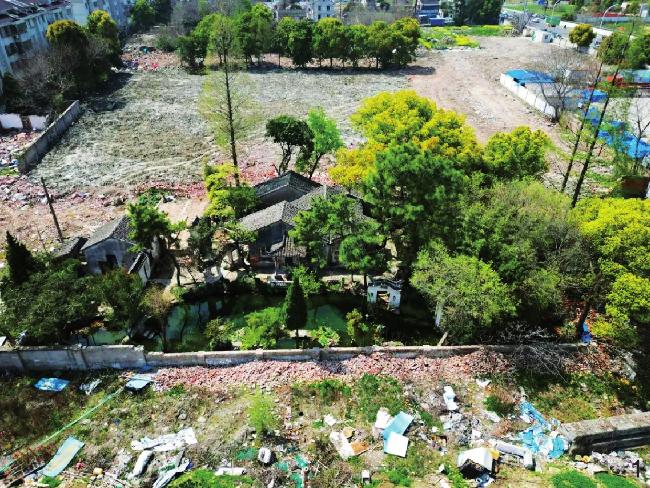
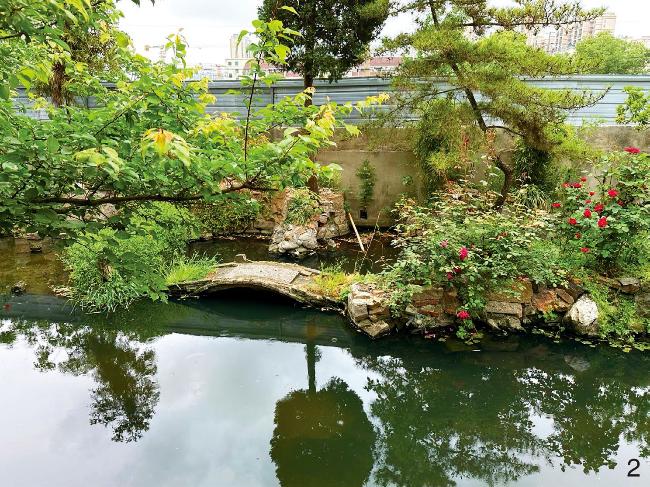
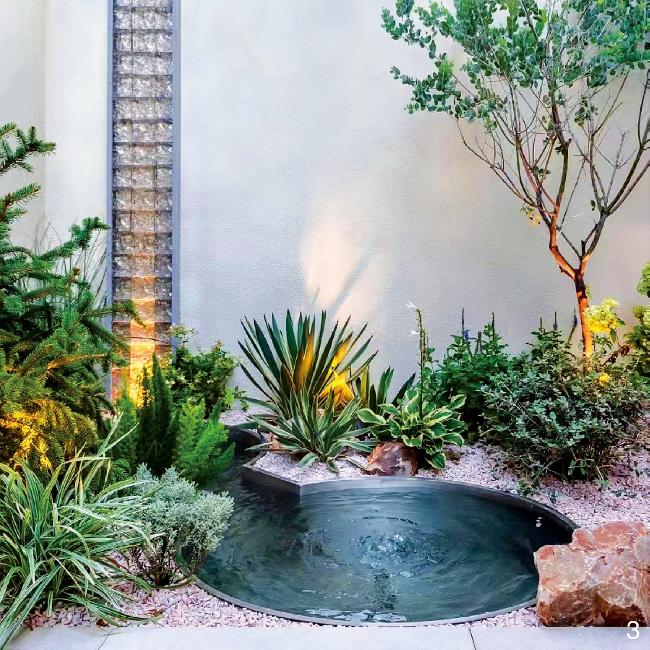
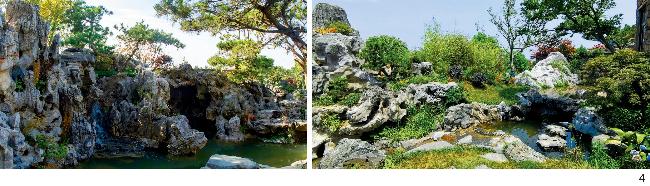
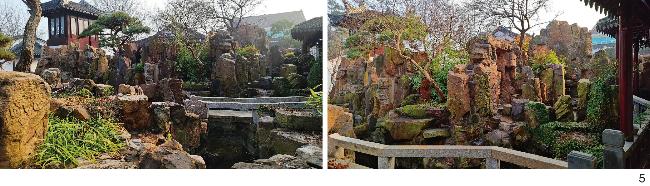
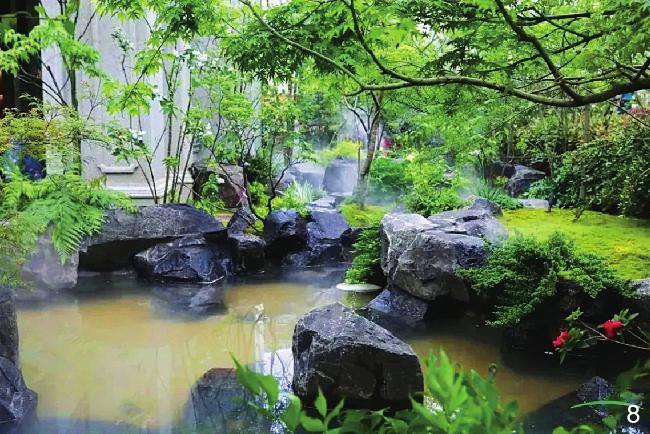
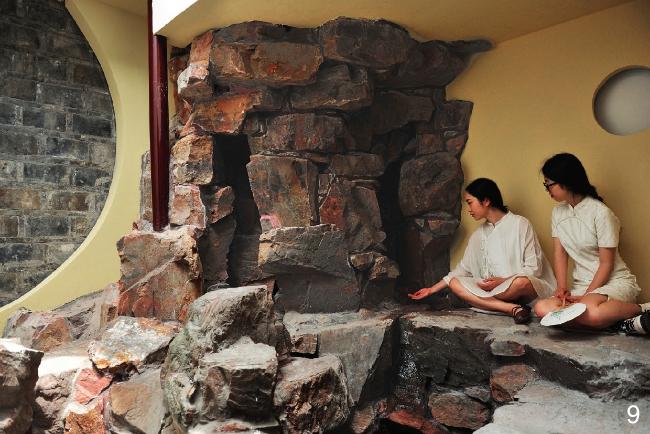
Firstly, in terms of theory, as to “private gardens”, the tradition of folk garden making since Ming and Qing dynasties has been popularized among the general public, far from being exclusive to literati. We should broaden our perspective to incorporate an incalculable number of folk gardens; meanwhile, a large number of relatively small “courtyard gardens” exist, which have inherent deep vitality thanks to their close relationship with people’s daily life, and this is also the most common situation of contemporary folk garden making. The recognition of folk garden making traditions should also pay attention to the inherent aesthetic and formal characteristics of “shanshui” construction. The first thing deserving attention is “shanshui” construction featuring stone arrangement and rockery making. Under the guidance of literati garden creation, the connotation of “shanshui” widely spreads among the general public, laying a solid foundation for traditional garden making. Rockery making or even simple stone arrangement in gardens is the most obvious sign of the continuation of the folk garden making tradition. Secondly, in terms of the current development status, traditional private garden construction has gradually increased since the period of reform and opening up, and has become a thriving trend to this day. Particularly, “shanshui” construction characterized by stone arrangement and rockery making is still the core concern. The folk gardening in Jiangnan has continued uninterruptedly, even during difficult periods such as the Cultural Revolution period. Since the reform and opening up, private garden construction in Jiangnan region has gone from almost extinction to gradual recovery and prosperity, and this upward trend is still continuing. Inheriting historical tradition, the private garden construction in Jiangnan region is increasingly becoming an “art for all”. In terms of specific construction, there are generally fewer large gardens and more small courtyard gardens; in terms of form and style, with “mountains and rivers” as the characteristic, traditional garden making can be clearly distinguished: large and medium-sized traditional gardens can have typical stacked mountains and water arrangements; while in small gardens, it is reflected in relatively simple rockery, and even simple peaks and stones and earth slopes with stones can symbolically express the meaning of “ mountain”, rather than garden construction with clear traditional style. Although more and more gardens without clear traditional style have appeared in recent years, a large part of them still have stone arrangements, typically simple arrangemnets though. This phenomenon can be understood as a deep continuation of traditional culture and a reflection of the adaptability to reality. Thirdly, in terms of specific construction characteristics, “shanshui” construction, as the core feature of traditional gardens, has also produced some outstanding works in the construction of contemporary Jiangnan private gardens. These works not only continue the core landscape connotation of tradition, but also adapt to the actual contemporary living conditions. Some works focus on the inherent adaptability of traditional methods themselves, while others emphasize external new ideas introduced from other fields. From several “ shanshui” construction cases completed in recent years, we can see that some cases more emphasize inheritance and inherit the traditional rockery making techniques in a relatively intact manner under diverse conditions in the contemporary era, reflecting continuous internal vitality; others more emphasize development, indicating that the rockery making techniques that embody the spiritual connotation of “shanshui” culture have undergone changes under new conditions and shown vitality in the innovation of methods and forms.
Chinese garden culture had penetrated into the widespread private garden construction during Ming and Qing dynasties, which is significantly reflected by “shanshui” construction in small courtyard gardens. This tradition has continued to this day despite its ups and downs, with traditional garden construction techniques being increasingly applied in contemporary Jiangnan private courtyard gardens. The enthusiasm of folk garden construction, once suppressed among the people in Jiangnan region, has regained its remarkable vitality under new social conditions. As the significant characteristic of folk garden construction, landscape construction is also prominently presented, with both relatively clear inheritance and new development, reflecting the inherent vitality and broad prospects of excellent traditions. The understanding of the inheritance and development of traditional “ shanshui” construction in contemporary Jiangnan private gardens can not only provide a deep understanding of reality, but also provide a highly dynamic source for a wider range of contemporary landscape architecture practices.
Kai GU . Inheritance and Development of Traditional “Shanshui” Construction in Contemporary Jiangnan Private Gardens[J]. Landscape Architecture, 2024 , 31(8) : 47 -54 . DOI: 10.3724/j.fjyl.202401120026
| [1] |
影园的背影: 关于一座当代园林的抢救性研究与思考[EB/OL]. (2023-05-09)[2024-01-10].https://mp.weixin.qq.com/s/tEV_z1ulvaSoRuJ_ZHRf_w.
The Back Shadow of Ying Garden: A Rescue Study and Reflection on a Contemporary Garden[EB/OL]. (2023-05-09)[2024-01-10].https://mp.weixin.qq.com/s/tEV_z1ulvaSoRuJ_ZHRf_w.
|
| [2] |
诸曼华. 苏州新私家造园研究[D]. 苏州: 苏州大学, 2012.
ZHU M H. Research on New Private Gardens in Suzhou [D]. Suzhou: Suzhou University, 2012.
|
| [3] |
鞠培泉. 旧城中的扬州当代私家园林[J]. 风景园林, 2016, 23(10): 49-56.
JU P Q. Yangzhou Contemporary Private Garden in the Old City[J]. Landscape Architecture, 2016, 23(10): 49-56.
|
| [4] |
高西美. 江南私家园林文化的传承与创新: 常州当代私家园林研究[J]. 艺术工作, 2017(2): 87-89.
GAO X M. The Inheritance and Innovation of Jiangnan Private Garden Culture: Research on Contemporary Private Gardens in Changzhou[J]. Art Work, 2017(2): 87-89.
|
| [5] |
田朝阳. 中国古典园林与现代转译十五讲[M]. 北京: 中国建筑工业出版社, 2018.
TIAN Z Y. Fifteen Lectures on Chinese Classical Gardens and Modern Translation[M]. Beijing: China Architecture & Building Press, 2018.
|
| [6] |
付彦荣. 新中式园林的探索和讨论[C]//林芳友.中国公园协会2010年论文集.北京: 《中国公园》编辑部, 2010.
FU Y R. Exploration and Discussion of New Chinese Gardens[C]//LIN F Y. Proceedings of the China Park Association 2010. Beijing: Editorial Department ofChina Parks, 2010.
|
| [7] |
赵丽红.“新中式”园林形成与发展前景研究[D]. 哈尔滨: 东北林业大学, 2013.
ZHAO L H. Study on the Formation and Development Prospects of “New Chinese Style” Gardens[D]. Harbin: Northeast Forestry University, 2013.
|
| [8] |
金秋野, 常涛. 中国当代园林建筑学发展述要[J]. 当代建筑, 2022(9): 39-42.
JIN Q Y, CHANG T. A Brief Account of the Development of Contemporary Chinese Garden Architecture[J]. Contemporary Architecture, 2022(9): 39-42.
|
| [9] |
陈金根. 静思园[M]. 上海: 上海三联书店, 2007.
CHEN J G. Jingsi Garden: Largest Private Garden in Jiangnan[M]. Shanghai: Shanghai Joint Publishing Company, 2007
|
| [10] |
周维权. 中国古典园林史[M].3版.北京: 清华大学出版社, 2008: 20.
ZHOU W Q. History of Chinese Classical Garden[M]. 3rd ed. Beijing: Tsinghua University Press, 2008: 20.
|
| [11] |
刘晓明. 中国古代园林史[M]. 北京: 中国林业出版社, 2017: 3.
LIU X M. History of Ancient Chinese Gardens[M]. Beijing: China Forestry Press, 2017: 3.
|
| [12] |
陈薇. 中国私家园林的流变[M]//陈薇. 当代中国建筑史家十书: 陈薇建筑史论选集. 沈阳: 辽宁美术出版社, 2015: 178-193.
CHEN W. Evolution of Chinese Private Gardens[M]//CHEN W. Ten Books by Contemporary Chinese Architectural Historians: Selected Works of Chen Wei’s Architectural History and Theory. Shenyang: Liaoning Fine Arts Press, 2015: 178-193.
|
| [13] |
邱冰, 张帆. 略评中国当代园林设计中的“失语”现象[J]. 建筑学报, 2010(6): 18-22.
QIU B, ZHANG F. A Brief Comment on the Phenomenon of “Aphasia” in Contemporary Chinese Garden Design[J]. Architectural Journal, 2010(6): 18-22.
|
| [14] |
潘谷西. 中国古代建筑史: 元、明建筑(第4卷)[M]. 北京: 中国建筑工业出版社, 2001: 390-391.
PAN G X. History of Ancient Chinese Architecture: Yuan and Ming Dynasty Architecture (Vol 4)[M]. Beijing: China Architecture & Building Press, 2001: 390-391.
|
| [15] |
何安安, 葛格.曹汛: 中国造园艺术实际上是全民艺术[EB/OL]. (2019-11-31)[2024-01-10].https://mp.weixin.qq.com/s/S1saiKYPabzmKC-ucVqDaA.
HE A A, GE G. Cao Xun: Chinese Garden Art is Actually a National Art[EB/OL]. (2019-11-31)[2024-01-10].https://mp.weixin.qq.com/s/S1saiKYPabzmKC-ucVqDaA.
|
| [16] |
陈从周. 中国园林鉴赏辞典[M]. 上海: 华东师范大学出版社, 2000.
CHEN C Z. Dictionary of Chinese Garden Appreciation[M]. Shanghai: East China Normal University Press, 2000.
|
| [17] |
魏嘉瓒. 苏州古典园林史[M]. 上海: 上海三联书店, 2005: 308.
WEI J Z. History of Suzhou Classical Gardens[M]. Shanghai: Shanghai Joint Publishing Company, 2005: 308.
|
| [18] |
张家骥. 中国造园论[M]. 太原: 山西人民出版社, 1991: 28-34.
ZHANG J J. On Chinese Garden Making[M]. Taiyuan: Shanxi People’s Publishing House, 1991: 28-34.
|
| [19] |
潘谷西. 江南理景艺术[M]. 南京: 东南大学出版社, 2001: 1.
PAN G X. Jiangnan Landscape Art[M]. Nanjing: Southeast University Press, 2001: 1.
|
| [20] |
陈植, 张公弛. 中国历代名园记选注[M]. 合肥: 安徽科学技术出版社, 1983.
CHEN Z, ZHANG G C. Selected Notes on Famous Gardens in Chinese History[M]. Hefei: Anhui Science and Technology Press, 1983.
|
| [21] |
潘谷西. 中国建筑史[M]. 7版.北京: 中国建筑工业出版社, 2015: 193.
PAN G X. History of Chinese Architecture[M]. 7th ed. Beijing: China Architecture & Building Press, 2015: 193.
|
| [22] |
李泽厚. 华夏美学·美学四讲[M]. 增订本.北京: 生活·读书·新知三联书店, 2008: 197.
LI Z H. Chinese Aesthetics & Four Lectures on Aesthetics[M]. revised ed. Beijing: SDX Joint Publishing Company, 2008: 197.
|
| [23] |
赵汀阳. 历史·山水·渔樵[M]. 北京: 生活·读书·新知三联书店, 2019: 61-70.
ZHAO T Y. History, Landscape, Fishermen and Woodcutters[M]. Beijing: SDX Joint Publishing Company, 2019: 61-70.
|
| [24] |
葛明. 庭园建筑学的方法: 溪山庭实践研讨会[J]. 建筑学报, 2023(6): 72-78.
GE M. Methods of Garden Architecture: Xishan Garden Practice Seminar[J]. Architectural Journal, 2023(6): 72-78.
|
| [25] |
潘运告. 宋人画论[M]. 长沙: 湖南美术出版社, 2000: 22.
PAN Y G. Theory of Painting of Song Dynasty[M]. Changsha: Hunan Fine Arts Publishing House, 2000: 22.
|
| [26] |
顾凯. 中国传统园林中“亭踞山巅”的再认识: 作用、文化与观念变迁[J]. 中国园林. 2016, 32(7): 78-83.
GU K. Re-understanding of “Pavilions on Mountain Tops” in Traditional Chinese Gardens: Functions, Culture and Concept Changes[J]. Chinese Landscape Architecture, 2016, 32(7): 78-83.
|
| [27] |
孟兆祯. 假山浅识[M]// 《建筑史专辑》编辑委员会.科技史文集(二): 建筑史专辑. 上海: 上海科学技术出版社, 1979: 120.
MENG Z Z. A Brief Introduction to Rockeries[M]//Editorial Board ofHistory of Architecture. Collection of Essays on History of Science and Technology (II): Special Issue on History of Architecture. Shanghai: Shanghai Science and Technology Press, 1979: 120.
|
| [28] |
彭一刚. 中国古典园林分析[M]. 北京: 中国建筑工业出版社, 1986: 41.
PENG Y G. Analysis of Chinese Classical Gardens[M]. Beijing: China Architecture & Building Press, 1986: 41.
|
| [29] |
陈植. 长物志校注[M]. 南京: 江苏科学技术出版社, 1984: 102.
CHEN Z. Annotations to Zhangwuzhi[M]. Nanjing: Jiangsu Science and Technology Press, 1984: 102.
|
| [30] |
扬州市庭院艺术研究会. 诗意栖居: 扬州百家新园林[M]. 扬州: 广陵书社, 2019.
Yangzhou Courtyard Art Research Association. Poetic Dwelling: Hundreds of New Gardens in Yangzhou[M]. Yangzhou: Guangling Publishing House, 2019.
|
| [31] |
方惠. 叠石造山[M]. 北京: 中国建筑工业出版社, 1994.
FANG H. Artificial Mountain Making with Rocks[M]. Beijing: China Architecture & Building Press, 1994.
|
| [32] |
新华日报.《苏州园林名录》已收录园林108座 其中私园20所[EB/OL].(2019-06-04)[2024-01-10].http://culture.people.com.cn/n1/2019/0604/c1013-31119361.html
Xinhua Daily.List of Suzhou Gardens Has Included 108 Gardens, Including 20 Private Gardens[EB/OL]. (2019-06-04)[2024-01-10].http://culture.people.com.cn/n1/2019/0604/c1013-31119361.html.
|
| [33] |
王庆燕. 苏州传统造园手法在当代仿古园林中的传承应用与优化设计研究[D].苏州: 苏州大学, 2021.
WANG Q Y. Research on Inheritance, Application and Optimization Design of Suzhou’s Traditional Gardening Techniques in Contemporary Antique Gardens[D]. Suzhou: Suzhou University, 2021.
|
| [34] |
扬州发布.扬州喜获联合国大奖![EB/OL].(2023-12-25)[2024-01-10].https://mp.weixin.qq.com/s/Wv0RiLZoEC22p-MwwMFghg.
Yangzhou Fabu. Yangzhou Wins UN Award[EB/OL]. (2023-12-25)[2024-01-10].https://mp.weixin.qq.com/s/Wv0RiLZoEC22p-MwwMFghg.
|
| [35] |
张清帆. 访南石皮记, 观今日造园[J]. 现代装饰, 2017(7): 24-26.
ZHANG Q F. Visiting Nanshipi and Observing Today’s Gardening[J]. Modern Decoration, 2017(7): 24-26.
|
| [36] |
方惠. 叠石造山的理论与技法[M]. 北京: 中国建筑工业出版社, 2005.
FANG H. Theory and Techniques of Artificial Mountain Making with Rocks[M]. Beijing: China Architecture & Building Press, 2005.
|
| [37] |
顾凯, 应天慧. 传承与发展: 昆山璞园山水营造[J]. 园林, 2022, 39(2): 19-26.
GU K, YING T H. Inheritance and Development: Mountain-and-River Making in Pu Garden in Kunshan[J]. Landscape Architecture Academic Journal, 2022, 39(2): 19-26.
|
| [38] |
孙俭争. 古建筑假山[M]. 北京: 中国建筑工业出版社, 2004.
SUN J Z. Rockery of Ancient Architecture[M]. Beijing: China Architecture & Building Press, 2004.
|
| [39] |
吴伟业. 吴梅村全集[M]. 上海: 上海古籍出版社, 1990: 1059-1061.
Wu W Y. The Complete Works of Wu Meicun[M]. Shanghai: Shanghai Classics Publishing House, 1990: 1059-1061.
|
| [40] |
陈从周. 说园[M]. 上海: 同济大学出版社, 1984: 56-57.
CHEN C Z. On Chinese Gardens[M]. Shanghai: Tongji University Press, 1984: 56-57.
|
| [41] |
金秋野, 王欣. 乌有园(第5辑): 技艺与记忆[M]. 上海: 同济大学出版社, 2023: 148.
JIN Q Y, WANG X. Wuyou Yuan (Vol 5): Skill and Memory[M]. Shanghai: Tongji University Press, 2023: 148.
|
| [42] |
蒋丽霞. 现代江南别墅庭院营建探索[D].杭州: 浙江农林大学, 2019: 45-46.
JIANG L X. Exploration on Construction of Modern Jiangnan Villa Courtyard[D]. Hangzhou: Zhejiang Agricultural and Forestry University, 2019: 45-46.
|
| [43] |
顾凯. 重新认识江南园林: 早期差异与晚明转折[J]. 建筑学报, 2009(S1): 106-110.
GU K. Re-understanding Jiangnan Gardens: Early Differences and Late Ming Transformation[J]. Architectural Journal, 2009(S1): 106-110.
|
/
| 〈 |
|
〉 |