

Healthy Blue Space Design: A Methodological Framework for Translating the Health Benefits of Blue Space Exposure and Perception into Design Practices
|
ZHANG Haoxiang is a Ph.D. candidate in the Faculty of Architecture and the Built Environment, Delft University of Technology. His research focuses on strategies for health-oriented urban landscape design and digital analytical methods for urban environments |
|
(NLD) Steffen Nijhuis, Ph.D., is a full professor in the Faculty of Architecture and the Built Environment, and leader of Landscape Architecture Section, Delft University of Technology. His research focuses on landscape-based urbanism, regional landscape design, sustainable urban development, design with natural processes, resilient coastal landscape, heritage landscape, digital landscape, and visual landscape |
|
(BEL) Caroline Newton, Ph.D., is an associate professor in the Faculty of Architecture and the Built Environment, and leader of Spatial Planning and Strategy Section, Delft University of Technology. Her research focuses on the socio spatial dimensions of design, the interrelationship between social processes and the built environment, and critical spatial practices in Europe and the Global South |
Received date: 2023-11-13
Revised date: 2024-05-24
Online published: 2025-12-17
Copyright
Water could be regarded as a vital element for human existence, which has shaped cities for centuries. Blue spaces, centred around water bodies, play a pivotal role in urban development by delivering various ecosystem services and influencing the design and planning of urban environments. In addition to the numerous benefits and services provided by water, recent research indicates that blue space exposure and perception could also enhance human health and well-being, especially in urban contexts. However, health benefits are often not or implicitly taken into account in design practices. While an increasing number of researchers acknowledge the importance of applying current health evidence to practice, there is currently a lack of specific methodological support to bridge the gap between evidence and actions. Furthermore, given the growing focus on healthy urban living, the demand for the development of healthy cities, and the requirements of Sustainable Development Goals (SDGs), addressing this gap is of utmost importance at present. Based on the analysis and synthesis of existing evidence, this research aims to propose a conceptual framework that links the health benefits derived from blue space exposure and perception with spatial design practices. The framework attempts to address the current gap and encourage ongoing exploration in future research and practice.
This research first searches relevant publications on blue space and human health included in the Web of Science Core Collection and Google Scholar during the past five years, and selects the representative ones for detailed analysis and summary. Based on the analysis results, the key pathways linking blue space exposure and perception with human health are identified. Next, a tailored methodological, conceptual framework linking health evidence and design practices is proposed according to the frameworks and evidence in existing studies. Meanwhile, the results of the literature analysis and several Rotterdam cases at different scales are used to demonstrate the application of the framework and illustrate its feasibility.
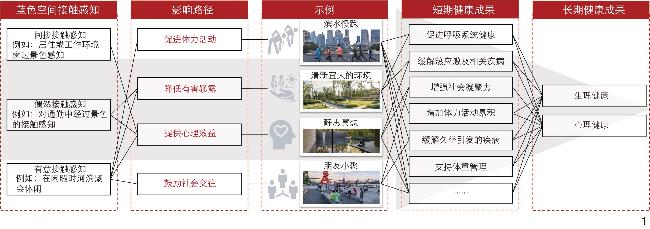
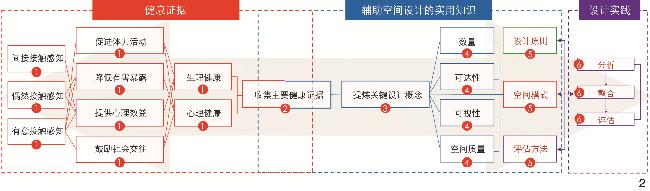
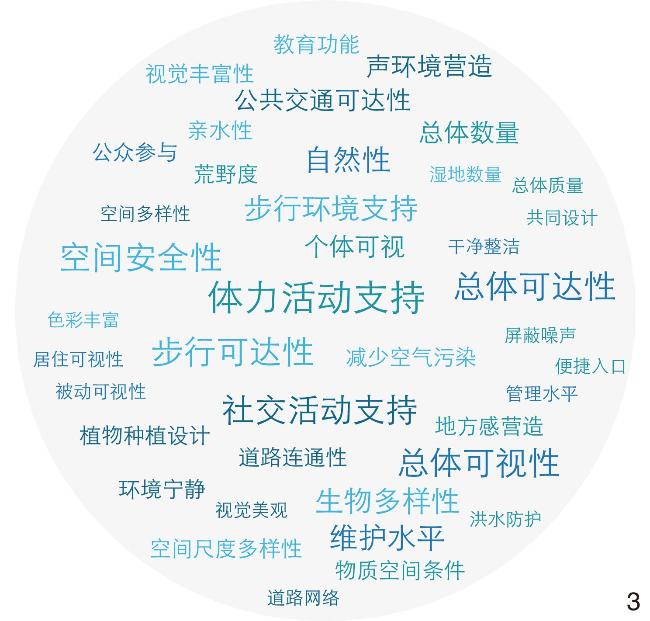
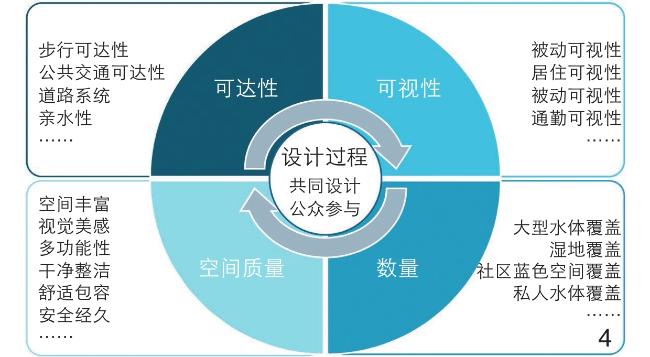
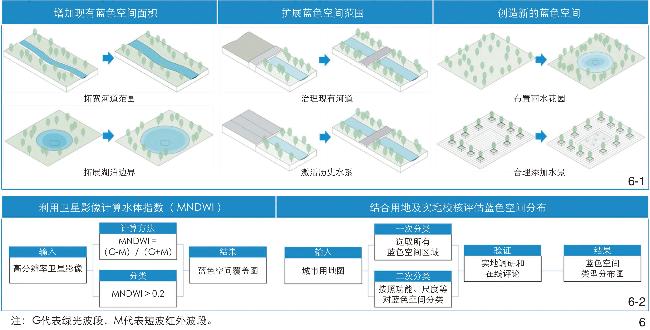
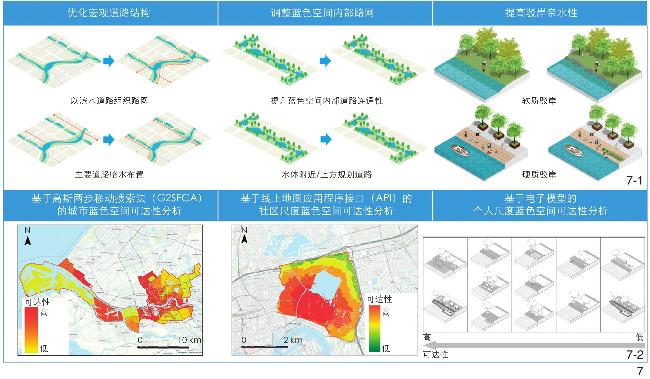
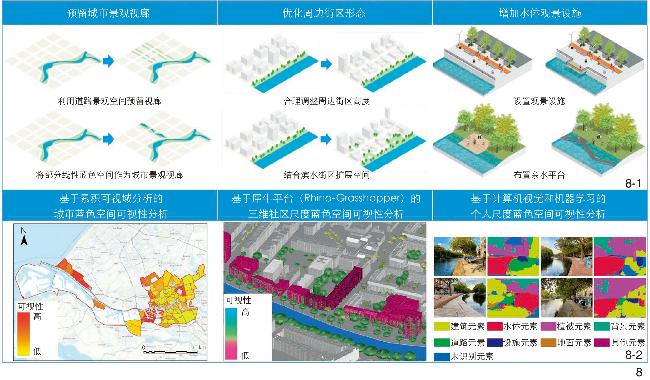
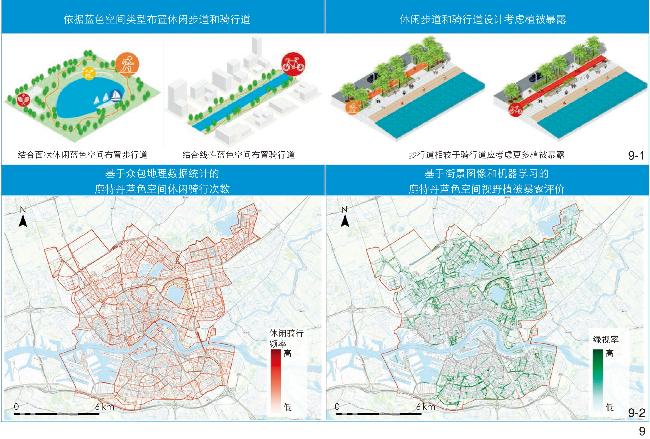
Based on the results of the literature analysis, three main blue space exposure and perception types are summarized, including indirect perception and exposure, accidental perception and exposure, and intentional perception and exposure. Next, four main pathways linking the exposure to or perception of blue space and human health are identified and briefly discussed, including enhancing physical activities, reducing harmful exposure, benefiting psychological outcomes, and promoting social interactions. Subsequently, a four-step conceptual framework that translates the health evidence into practical design knowledge is proposed. The steps comprise extracting critical health evidence, summarizing key design concepts, categorizing core design elements, and translating into design principles, spatial patterns, and evaluation methods. At first, the research extracts key evidence from 57 representative literature. And then, the research summarizes 42 key design concepts. Next, through an analysis of the similarities and differences between the design concepts, five core design elements are identified, including the quantity, accessibility, visibility, spatial quality, and design process of blue space. Each element contains several specific design concepts. Among them, the first four elements are closely related to the designer’s development of spatial interventions, so this research further translates the four elements into practical design knowledge and illustrates them with Rotterdam cases. Specifically, the quantity, accessibility, and visibility emphasize the objective description of the characteristics of blue space, while spatial quality focuses on people’s subjective perception and experience of blue space. First, the research introduces three design principles aimed at increasing the quantity of blue space and proposes two distinct spatial patterns for each principle. On this basis, two flowcharts of evaluation methods using different types of data are presented, aiming to assess the application effectiveness of principles and patterns. In line with comparable reasoning, three design principles and six spatial patterns are introduced to enhance the accessibility and visibility of blue space. These principles and patterns are formulated across the city, community and individual scales. Moreover, given the intricacy of the evaluation methods, the research directly demonstrates specific method applications at various scales by taking several Rotterdam cases as examples. Finally, two principles and their corresponding spatial patterns for enhancing blue space quality are delineated. Considering the locality of people’s perception of blue space quality, the formulation of principles and patterns on quality is based on a comprehensive analysis of crowdsourced data on physical activities and streetscape in Rotterdam. It is noted that the design principles, spatial patterns, and evaluation methods presented in the research are excerpts of findings drawn from available evidence. Their primary function is to enhance comprehension of the conceptual framework proposed in the research. They can be viewed as open-ended results that will be continually expanded and updated by researchers and practitioners as new evidence emerges and cities develop.
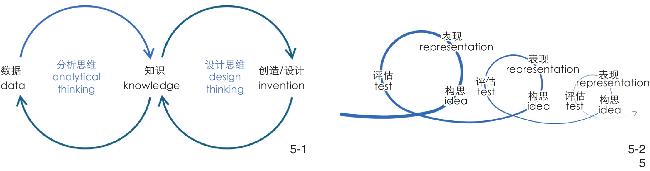
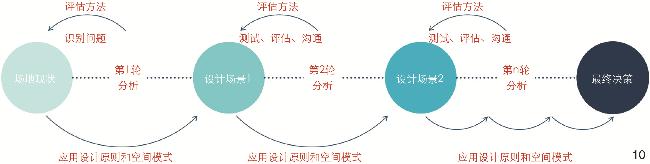
Based on the practical design knowledge translated from the aforementioned framework, including design principles, spatial patterns and evaluation methods, the research delves deeper into the exploration of their potential integration into practical design iterations. Combined with the “Analysis – Synthesis – Evaluation” (ASE) paradigm, the evaluation methods can be applied in both the analysis and evaluation phases, serving the purpose of identifying site problems, assessing the efficacy of potential spatial interventions, and aiding in deciding whether to optimize current interventions. In the synthesis phase, practitioners can utilize design principles and spatial patterns representing generic design knowledge to facilitate the creation of spatial interventions. These interventions, regarded as a form of specific design knowledge, take into account both current site conditions and additional design objectives simultaneously. Due to the complexity of design projects, the “ASE” process may be repeated several times until the final design decision is developed. Furthermore, the conceptual framework in this research has the advantage of being bi-directional, and the design practice may be a creative process of practitioners, which can provide valuable insights for the generation of novel principles and patterns.
Haoxiang ZHANG , Nijhuis (NLD) Steffen , (BEL) Caroline Newton . Healthy Blue Space Design: A Methodological Framework for Translating the Health Benefits of Blue Space Exposure and Perception into Design Practices[J]. Landscape Architecture, 2024 , 31(7) : 39 -47 . DOI: 10.3724/j.fjyl.202311130516
图9 提升蓝色空间质量的实用设计知识示例Fig. 9 Practical design knowledge for improving the quality of blue space |
表1 鹿特丹蓝色空间休闲运动行为和空间质量要素的回归分析Tab. 1 Regression analysis of recreational physical activities and spatial quality factors of blue spaces in Rotterdam |
| 空间质量要素 | 休闲跑步 | 休闲骑行 | |||
| 线性回归模型 (标准化系数) | 空间滞后模型 (标准化系数) | 线性回归模型 (标准化系数) | 空间滞后模型 (标准化系数) | ||
| 注:*代表p<0.05,**代表p<0.01。 | |||||
| 植被暴露 | 0.155** | 0.222** | 0.056* | 0.115** | |
| 线状一般蓝色空间 | 参考类别变量 | 参考类别变量 | 参考类别变量 | 参考类别变量 | |
| 面状休闲蓝色空间 | 0.080* | 0.179** | -0.658** | -0.410** | |
| [1] |
RYDIN Y, BLEAHU A, DAVIES M, et al. Shaping Cities for Health: Complexity and the Planning of Urban Environments in the 21st Century[J]. The Lancet, 2012, 379(9831): 2079-2108.
|
| [2] |
中华人民共和国中央人民政府.健康中国行动(2019—2030年)[R/OL].(2019-07-15) [2023-11-06]. http://www.gov.cn/xinwen/2019-07/15/content_5409694.htm.
Central People’s Government of the People’s Republic of China. Healthy China Actions (2019—2030) [R/OL]. (2019-07-15) [2023-11-06]. http://www.gov.cn/xinwen/2019-07/15/content_5409694.htm.
|
| [3] |
UN General Assembly. Transforming Our World: The 2030 Agenda for Sustainable Development[R/OL]. (2015)[2023-11-06]. https://sdgs.un.org/2030agenda.
|
| [4] |
HARTIG T, MITCHELL R, DE VRIES S, et al. Nature and Health[J]. Annual Review of Public Health, 2014, 35(1): 207-228.
|
| [5] |
HUNTER R F, NIEUWENHUIJSEN M, FABIAN C, et al. Advancing Urban Green and Blue Space Contributions to Public Health[J]. The Lancet Public Health, 2023, 8(9): e735-e742.
|
| [6] |
BRATMAN G N, ANDERSON C B, BERMAN M G, et al. Nature and Mental Health: An Ecosystem Service Perspective[J]. Science Advances, 2019, 5 (7): 0903.
|
| [7] |
姜斌. 城市自然景观与市民心理健康: 关键议题[J]. 风景园林, 2020, 27(9): 17-23.
JIANG B. Urban Natural Landscape and Citizens’ Mental Health: Key Issues[J]. Landscape Architecture, 2020, 27(9): 17-23.
|
| [8] |
GRELLIER J, WHITE M, ALBINET M, et al. BlueHealth: A Study Programme Protocol for Mapping and Quantifying the Potential Benefits to Public Health and Well-Being from Europe’s Blue Spaces[J]. BMJ Open, 2017, 7(6): 016188.
|
| [9] |
ZHANG H X, NIJHUIS S, NEWTON C. Freshwater Blue Space Design and Human Health: A Comprehensive Research Mapping Based on Scientometric Analysis[J]. Environmental Impact Assessment Review, 2022, 97: 106859.
|
| [10] |
SMITH N, GEORGIOU M, KING A C, et al. Urban Blue Spaces and Human Health: A Systematic Review and Meta-Analysis of Quantitative Studies[J]. Cities, 2021, 119: 103413.
|
| [11] |
GASCON M, ZIJLEMA W, VERT C, et al. Outdoor Blue Spaces, Human Health and Well-Being: A Systematic Review of Quantitative Studies[J]. International Journal of Hygiene and Environmental Health, 2017, 220(8): 1207-1221.
|
| [12] |
World Health Organisation. Green and Blue Spaces and Mental Health: New Evidence and Perspectives for Action[M]. Copenhagen: WHO Regional Office for Europe, 2021.
|
| [13] |
贝尔, 陈奕言, 陈筝. 公众健康和幸福感考量的城市蓝色空间: 城市景观研究新领域[J]. 风景园林, 2019, 26(9): 119-131.
BELL S, CHEN Y Y, CHEN Z. Health and Well-Being Aspects of Urban Blue Space: The New Urban Landscape Research Field[J]. Landscape Architecture, 2019, 26(9): 119-131.
|
| [14] |
WHITE M, ELLIOTT L, GASCON M, et al. Blue Space, Health and Well-Being: A Narrative Overview and Synthesis of Potential Benefits[J]. Environmental Research, 2020, 191(12): 110169.
|
| [15] |
MARKEVYCH I, SCHOIERER J, HARTIG T, et al. Exploring Pathways Linking Greenspace to Health: Theoretical and Methodological Guidance[J]. Environmental Research, 2017, 158(10): 301-317.
|
| [16] |
MITCHELL R. Is Physical Activity in Natural Environments Better for Mental Health than Physical Activity in Other Environments?[J]. Social Science & Medicine, 2013, 91(8): 130-134.
|
| [17] |
PASANEN T, WHITE M, WHEELER B, et al. Neighbourhood Blue Space, Health and Wellbeing: The Mediating Role of Different Types of Physical Activity[J]. Environment International, 2019, 131: 105016.
|
| [18] |
ELLIOTT L, WHITE M, GRELLIER J, et al. Recreational Visits to Marine and Coastal Environments in England: Where, What, Who, Why, and When?[J]. Marine Policy, 2018, 97(11): 305-314.
|
| [19] |
GUNAWARDENA K R, WELLS M J, KERSHAW T, et al. Utilising Green and Bluespace to Mitigate Urban Heat Island Intensity[J]. Science of the Total Environment, 2017, 584-585(4): 1040-1055.
|
| [20] |
VAN RENTERGHEM T, FORSSEN J, ATTENBOROUGH K, et al. Using Natural Means to Reduce Surface Transport Noise During Propagation Outdoors[J]. Applied Acoustics, 2015, 92(5): 86-101.
|
| [21] |
FRUMKIN H, BRATMAN G N, BRESLOW S J, et al. Nature Contact and Human Health: A Research Agenda[J]. Environmental Health Perspectives, 2017, 125(7):075001.
|
| [22] |
KAPLAN R, KAPLAN S. The Experience of Nature: A Psychological Perspective[M]. Cambridge: Cambridge University Press, 1989.
|
| [23] |
ULRICH R, SIMONS R F, LOSITO B D, et al. Stress Recovery During Exposure to Natural and Urban Environments[J]. Journal of Environmental Psychology, 1991, 11(3): 201-230.
|
| [24] |
DE VRIES S, NIEUWENHUIZEN W, FARJON H, et al. In Which Natural Environments Are People Happiest? Large-Scale Experience Sampling in the Netherlands[J]. Landscape and Urban Planning, 2021, 205(1): 103972.
|
| [25] |
HEDBLOM M, GUNNARSSON B, IRAVANI B, et al. Reduction of Physiological Stress by Urban Green Space in a Multisensory Virtual Experiment[J]. Scientific Reports, 2019, 9(1): 1-11.
|
| [26] |
VOLKER S, KISTEMANN T. “I’m Always Entirely Happy When I’m Here!” Urban Blue Enhancing Human Health and Well-Being in Cologne and Düsseldorf, Germany[J]. Social Science & Medicine, 2013, 78(1): 113-124.
|
| [27] |
VAN DEN BOGERD N, ELLIOTT L, WHITE M, et al. Urban Blue Space Renovation and Local Resident and Visitor Well-Being: A Case Study from Plymouth, UK[J]. Landscape and Urban Planning, 2021, 215: 104232.
|
| [28] |
MCDOUGALL C, QUILLIAM R, HANLEY N, et al. Freshwater Blue Space and Population Health: An Emerging Research Agenda[J]. Science of the Total Environment, 2020, 737: 140196.
|
| [29] |
CARMONA M, DE MAGALHAES C, HAMMOND L. Public Space: The Management Dimension[M]. Abingdon: Routledge, 2008.
|
| [30] |
CROSS N. Designerly Ways of Knowing[M]. London: Springer, 2006.
|
| [31] |
BOOTH N. Foundations of Landscape Architecture: Integrating Form and Space Using the Language of Site Design[M]. New York: John Wiley & Sons, 2011.
|
| [32] |
NIJHUIS S. GIS-Based Landscape Design Research Stourhead Landscape Garden as a Case Study[M]. Delft: Delft Open, 2015.
|
| [33] |
ZHANG H X, NIJHUIS S, NEWTON C. Advanced Digital Methods for Analysing and Optimising Accessibility and Visibility of Water for Designing Sustainable Healthy Urban Environments[J]. Sustainable Cities and Society, 2023, 98: 104804.
|
| [34] |
NIJHUIS S, DE VRIES J. Design as Research in Landscape Architecture[J]. Landscape Journal, 2019, 38(1-2): 87-103.
|
| [35] |
陈崇贤, 李海薇, 侯咏淇, 等. 计算机视觉技术在景观与健康关系研究中的应用进展[J]. 风景园林, 2023, 30(1): 30-37.
CHEN C X, LI H W, HOU Y Q, et al. Application Progress of Computer Vision in the Research on Relationship Between Landscape and Health[J]. Landscape Architecture, 2023, 30(1): 30-37.
|
| [36] |
ZHANG H X, NIJHUIS S, NEWTON C. Uncovering the Visibility of Blue Spaces: Design-Oriented Methods for Analysing Water Elements and Maximizing Their Potential[J]. Journal of Digital Landscape Architecture, 2023(8), 628-638.
|
| [37] |
BRAHA D, MAIMON O. The Design Process: Properties, Paradigms, and Structure[J]. IEEE Transactions on Systems, Man, and Cybernetics - Part A: Systems and Humans, 1997, 27(2): 146-166.
|
| [38] |
JONES J. Design Methods[M]. New York: John Wiley & Sons, 1992.
|
| [39] |
ZEISEL J. Inquiry by Design: Tools for Environment-Behaviour Research[M]. Cambridge: Cambridge University Press, 1981.
|
| [40] |
金伊婕, 匡晓明, 奚婷霞, 等. 健康行为决策促进的街道绿化精准改造[J]. 风景园林, 2023, 30(1): 45-53.
JIN Y J, KUANG X M, XI T X, et al. Accurate Transformation of Street Greening Promoted by Decision-Making on Health Behavior[J]. Landscape Architecture, 2023, 30(1): 45-53.
|
/
| 〈 |
|
〉 |