
Projects

Pier 26 at Hudson River Park: Immersion in Ecology

  • (USA) Lucinda R. Sanders ,
  • You WU
Expand

(USA) Lucinda R. Sanders, a Fellow of the American Society of Landscape Architects, is President and CEO of OLIN. She holds a Doctorate in Transformational Leadership and has a core belief that transforming thinking transforms place, an idea she is eager to bring to the design table wherever she works. She is responsible for continually shaping OLIN as a leader in contemporary design excellence

WU You is a Ph.D. candidate in the College of Architecture and Urban Planning (CAUP), Tongji University, and a visiting scholar enrolled in the co-cultivation program of Stewart Weitzman School of Design, University of Pennsylvania. He worked as a landscape architect at OLIN. His research focuses on regeneration of urban built environment, intergrated utilization of urban infrastructure, and landscape urbanism

Online published: 2025-12-17

Copyright

Copyright reserved © 2025.

Cite this article

(USA) Lucinda R. Sanders , You WU . Pier 26 at Hudson River Park: Immersion in Ecology[J]. Landscape Architecture, 2024 , 31(7) : 58 -64 . DOI: 10.3724/j.fjyl.202405230290

新近开放的哈德逊河公园26号码头尽显城市活力,项目位于纽约曼哈顿炮台公园城(Battery Park City)以北、翠贝卡区(Tribeca)以西,前者的氛围庄重,后者宜居且文化氛围浓厚。26号码头于2020年向公众开放,是占地约2.23 km2(550英亩)的哈德逊河公园中备受瞩目的区段之一。OLIN的客户哈德逊河公园信托基金(Hudson River Park Trust, HRPT)是一家公益机构,负责设计、建设、运营和维护曼哈顿长约4.83 km(3英里)的海岸线沿线的线性公园和河口保护区。

1 使命、愿景和记忆

2015年,OLIN受聘设计26号码头,旨在将其作为哈德逊河河口公众教育功能的载体,推动持久的环境管理。为达成这一雄心勃勃的愿景,同时也为周边社区打造一个期待已久的邻里公园,HRPT委托设计团队对这个曾经废弃的海运码头进行构思、设计并实施建造。经社区工作证实,公众渴望一个能够连通至哈德逊河且充满生机的生态环境,而这也正是被百余年来的工业发展所剥夺的。
事实上,公众这种对于生态环境的怀念有其渊源。早在半个世纪前,音乐家、民俗学家和环保主义者皮特·西格(Pete Seeger)已经开始拯救他心爱的哈德逊河,使河流在未来数十年免受工业污染的影响。西格曾将一艘名为“清水号”的单桅帆船长期停泊在26号码头,并邀请曼哈顿的学校组织与他的船员一起沿着哈德逊河航行,了解河口的情况,他们也积极承担着保护河口的“管理员” 角色。如今,当年那些“孩子”中的许多人仍然把码头所在区域当作自己的家,并怀念乘坐“清水号”穿越河口的旅程。

2 河口

哈德逊河河口北至纽约上州,顺流而下,南至河口南端的码头。河口是淡水河流与来自海洋的潮水的交汇之处,是自然界中生物多样性最丰富的环境之一。河口的植物和水文环境协同作用,支持着多种野生生物生存。对河口本土生态环境的进一步研究表明,在殖民者定居之前,曼哈顿岛沿岸的海岸线条件是独特而多样的:河床从低至高上升到沼泽和岩石潮池,再上升到灌木丛生的沙丘和覆满野草的堤坝,最后到达树木繁茂的林带。根据研究所揭示的生态构造,哈德逊河河口的前殖民地意象启发了OLIN 对码头进行与之生态结构相仿的空间组织。通过改造,OLIN将码头打造为实现项目生态愿景和达成公众教育使命的平台。

3 想象

然而,一味地模仿自然并不能解决该项目所面临的复杂问题。无论是客户HRPT,还是OLIN的设计团队,都不曾幻想在码头上创造出丰富的陆地和河流栖息地,也深知这种设计不会对哈德逊河河口的生态产生巨大影响。设计的重点在于这些栖息地必须是真实且可持续的,同时能够成为一个动态的教育环境。同样,自西格进行环保活动的20世纪60年代末以来,曼哈顿的人口激增且日益多样化,迫切需要更多的公园活动空间、进行游憩和社交活动的机会。唯有植根于科学的丰富想象力,并且充分利用科学与设计相结合所创造的可能性,才能在哈德逊河之上的有限空间中满足亟待解决的种种需求。
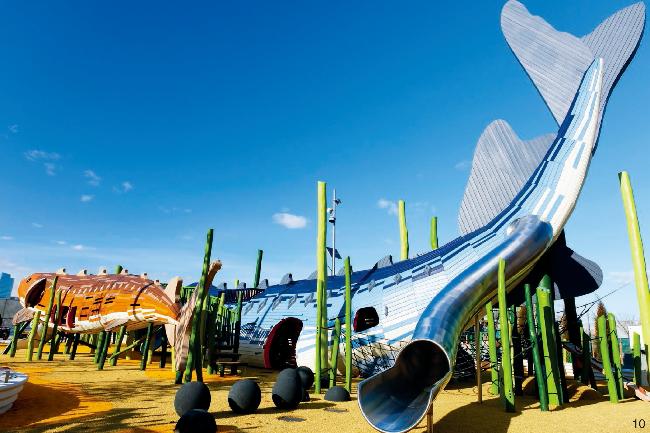
设计师力求打造出统一的标志性设计,为附近的居民创造一个充满活力且功能灵活的公园,同时确保对于河口及其生态使命的展现能够引起共鸣。作为串联起丰富功能的标志性装置,长约243.84 m(800英尺)的折叠起伏状的城市家具被植入码头的生态框架中,贯穿基于不同地形条件的生物群落。设计试图通过地形变化来强化感官体验,让使用者沉浸式地体验设计师对于本土生态环境的诠释。当人们随着地形起伏逐步接近高地树林的树冠,或者在沙沙作响的草地上的长凳上休息片刻,在灌木丛环绕的凉棚下荡秋千,在潮汐平台上踱步时,仿佛站在“清水号”的船头。抑或是,当儿童在两座巨型木质游乐设施中探索和玩耍时,他们都会有身临其境的体验。这些设施分别以河口的濒危物种大西洋鲟鱼和短吻鲟鱼为设计灵感,长度分别约24.38 m(80英尺)和15.24 m(50英尺)。通过深化富有想象力的设计,并将设计与生态横断面相结合,码头在给游客带来愉悦和灵感的同时,达成了公众教育的使命。

4 设置于生态横断面中的活动功能

也许,码头的成功之处在于实现了功能与繁茂葱郁的本土植被之间的平衡。在曼哈顿这样高密度的环境中,公共空间资源稀缺,设计方在面对组织严密的特殊利益集团的要求时,很容易屈服而忘却码头项目原本的使命。设计师与HRPT、社区通力协作,确保社区的需求得到满足,并且确保码头项目原本的使命得以达成。26号码头的社会和游憩功能与丰富的生态景观巧妙地交织在一起。
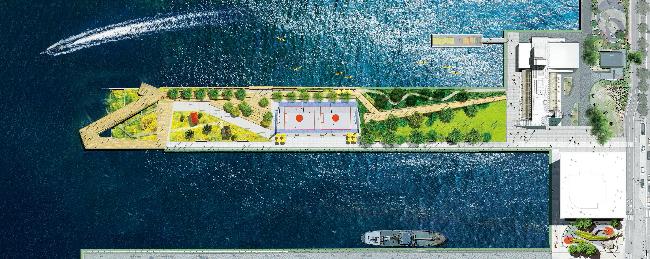
林地森林(Woodland Forest)是南向大草坪的背景,大草坪既可举办大型活动,也可进行休闲聚会。林地中密布着数十种本地乔木、灌木和地被植物,是授粉昆虫的理想栖息地。通向码头的3个通道中的2个位于该林地,游客可以沿着由分解花岗岩铺成的小径穿过丰富的林下空间,或者加入推着婴儿车的家庭、三五成群的朋友,以及慢跑者的行列,沿着林荫小道逐步登高至林地树冠的位置。
走出林地,一个大型多功能运动场映入眼帘,运动场位于码头中部,运动场的地面和周围的网布都是醒目的海蓝色。沿海草地区域与运动场相邻,草地上微风拂面,视野开阔,是公园中大部分社交活动的场所。在这里,加长的城市家具也被称为社交甲板(Social Deck),由可持续的特殊防腐木精心打造,发挥着多方面的妙用。社交甲板上有各种形状、大小不一的座椅和休息装置,从宽大座椅到吧台高凳,再到定制的躺椅,应有尽有。有些座椅的背面高高隆起,形成一个挡风板,可以抵御冬季寒冷的西北风,从而在天气转凉时延长人们使用的码头时间。有些座椅的背面则设有向北的窗口,使人们可以在窗口中眺望北面的哈德逊河和码头,并在炎热的夏日感受西南方向吹来的徐徐微风。
从社交甲板可以俯瞰海洋灌丛区,这是一片崎岖起伏的美丽景观,沙质土壤中生长着耐寒的针叶树、低矮的灌木和耐旱的多年生植物。其中一条沙土路给人以漫步沙滩的感觉,沙土路连接着2个轻盈的长方形凉棚,每个凉棚内各有一对朝向水面的宽敞且温馨的门廊秋千。人们置身凉棚下,被四围的灌木环绕,轻轻荡着秋千,是一种静谧和沉思的体验。
在码头的尽头,社交甲板向上抬升,形成一对倾斜的坡道,而后交汇到一起,形成了高出河面约3.96 m(13英尺)的观景台。观景台为游客提供了徜徉其中的机会,让每个人尽情享受这种独特而刺激的体验。人们可以从该制高点360° 饱览哈德逊河上下游全景,将曼哈顿下城和霍博肯市中心尽收眼底。观景台下方是观潮台和岩石潮间带。这块完全由人工建造的湿地距离海岸约243.84 m(800英尺),由1 300多块花岗岩巨石组成,有柳枝稷(Panicum virgatum)生长其中。当潮水退去时,巨石上开凿出的圆形凹槽能够汇集河水。公园的生态区很快就成了各种藻类、植物和动物的天堂,仅在竣工数日后,就有数量众多的物种被发现。

5 教育

从一开始,教育和研究的定位就决定了本项目的愿景。公园内的每个生态区都旨在为游客提供安全、近距离和身临其境的体验。遍布公园的定制标牌标明了各生态区的动植物群落,并阐释了公园作为生动的河口生态展厅的作用。还可将公园视为一个有生命的实验室,研究人员可以在这里研究哈德逊河河口通常不可见的动态变化、健康状况、生态效益和面临的挑战。
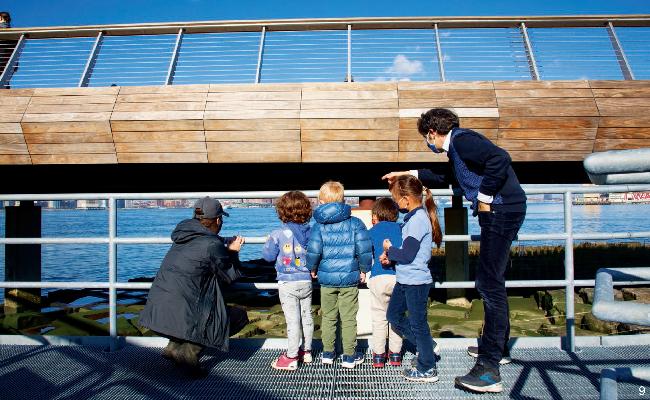
除了对河口的专业研究外,HRPT还提供服务于全年龄段的丰富多彩的教育活动。这些课程旨在培养下一代环境“管理员”。公园的研究人员提供潮汐平台步行道和岩石潮间带的免费导览服务。当地学校也经常到公园进行实地教育考察,专业人员会带领3~12年级的学生了解河口生态的重要性,并带领他们探索各类沿海栖息地。

6 影响

除了对科学和功能的敏感性,OLIN相信源于想象力的设计也必将是美的,也更能激发各年龄段用户的兴趣和想象力。由工艺、艺术性和诗意所造就的美使26号码头成为人们向往的场所。从各个方面来看,26号码头的美不但令人振奋,而且能激发人们的灵感。正如伊丽莎白·梅耶(Elizabeth Meyer)教授所言:“设计之所以重要,是因为它改变了这些空间使用者的精神面貌。”我们希望使用者受这些精心设计的生态化空间的影响,成为地球环境的“管理员”。
(编辑 / 刘昱霏)
项目名称:哈德逊河公园26号码头
项目类型:河滨公园
项目地点:美国纽约州纽约市
项目面积:10 522 m2
设计时间:2015年6月—2018年5月(公园);2021年10月—2022年10月(科学游乐园)
竣工时间:2020年10月(公园开放);2024年1月(科学游乐园开放)
设计公司:OLIN 景观事务所
首席设计师:露辛达·桑德斯
设计团队:露辛达·桑德斯、特雷弗·李、季米特里奥斯·斯托里诺斯、杰米·科明斯基、朱迪·韦 农斯基、罗亚丹
工程管理:吉尔班建筑公司(施工经理)
合作伙伴:
结构工程:西尔曼
海洋工程:MRCE
生态学顾问:Biohabitats
照明设计:蒂莱特照明设计事务所
MEP工程:韦斯勒-科恩
灌溉工程:北方设计公司
勘察测量:GSESP, Inc.
环境制图:Pentagram
游乐场设计:MONSTRUM
施工承包商:Trevcon 建筑公司、 史蒂文-达布纳景观设计、E-J 电气安装公司
图片来源:图134©OLIN,图25~8©Kristian Alveo,图9©哈德逊河公园Max Guiliani,图10©哈德逊河公园
图1 场地平面图。26号码头曾是美国著名民谣歌手皮特·西格的单桅帆船“清水号”的所在地,为保护哈德逊河和附近的湿地,该船曾作为宣传和促进环境教育的重要场所

Fig. 1 Site Plan. Once home to Pete Seeger’s sloop, Clearwater, Pier 26 was used to promote education and advocacy to protect the Hudson River and nearby wetlands

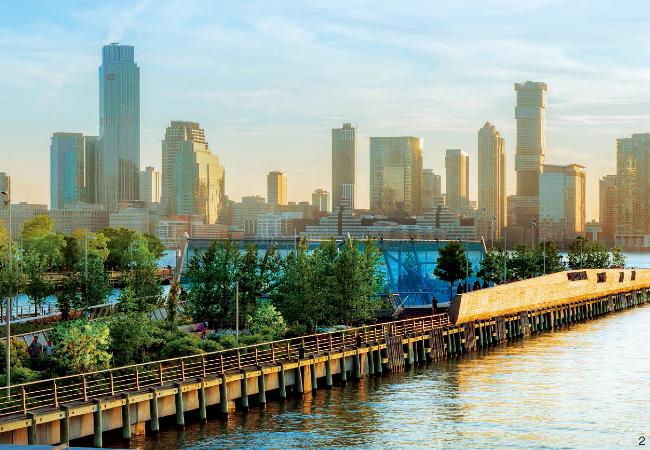
图2 将人们带到河口。码头距离海岸约260 m,经由生态规划的码头拥有灵活的游憩空间,包括运动场和一个可容纳900人的大草坪

Fig. 2 Bringing people to the estuary. Reaching 850 feet from shore, the ecologically programmed pier has flexible recreation spaces with a Sport Court and a 900-person capacity Great Lawn

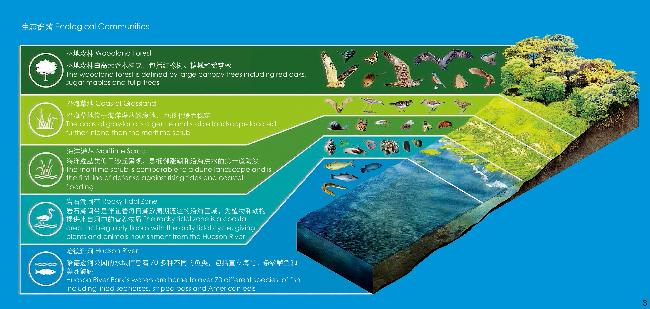
图3 生态群落

Fig. 3 Ecological communities

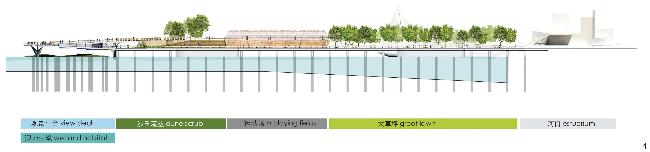
图4 公园横断面

Fig. 4 Park transect

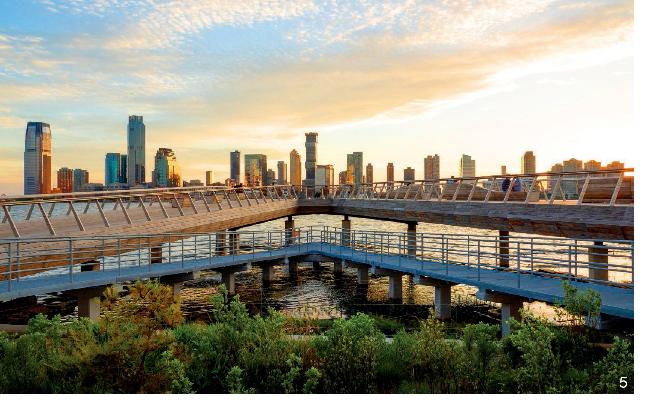
图5 通往水面的步道。在码头的末端,一个钢结构的步道架空于离岩石潮汐区仅2.5 m高之处,涨潮时,水波将会拍打道沿

Fig. 5 Walkway to the Water. At the end of the pier, a steel walkway structure hovers just eight feet above the rocky tidal zone; at high tide, water splashes over the edge.

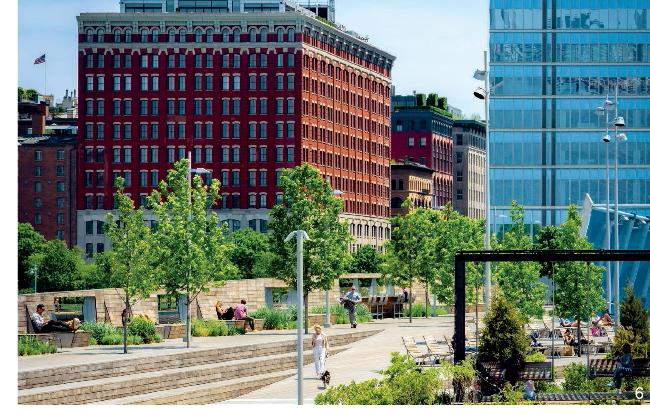
图6 城市观察。26号码头是进行全天候社交和观景的热点地区,码头内每个区域都有定制的城市家具,非常适合各种规模的聚会

Fig. 6 Watching the city. Pier 26 is a hotspot for all-day socializing and people-watching, with each section featuring custom furnishings perfect for gatherings of all sizes

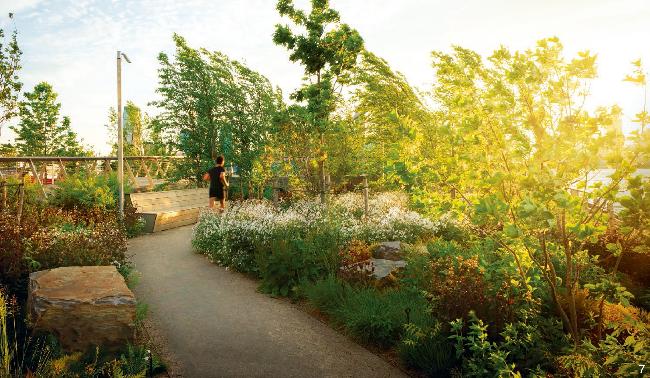
图7 穿越林地森林。该林地是到访者在码头上最先步入的生态栖息地之一,由此开启一段身临其境的生态体验之旅

Fig. 7 Through the forest. The Woodland Forest is one of the first habitat zones visitors encounter along the pier, starting an immersive journey through ecological experiences

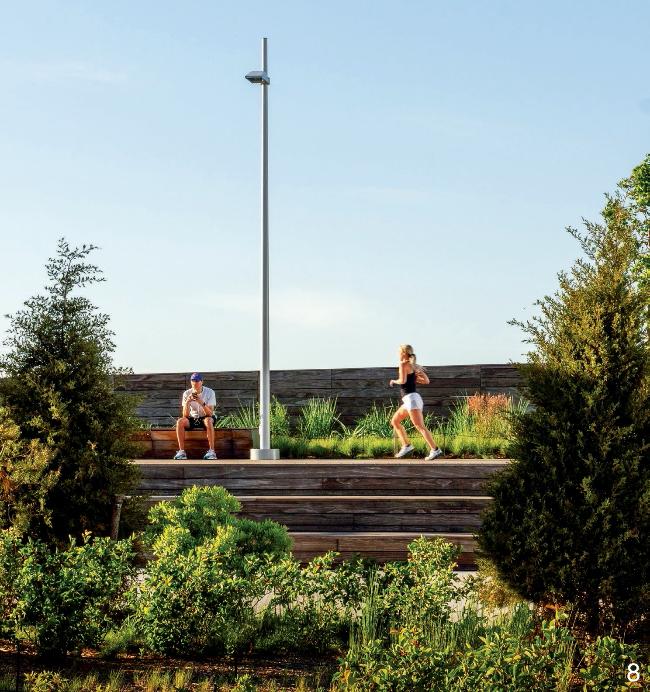
图8 奔向前方。慢跑者在社交甲板上跑步,这个由特殊防腐木制成的巨型结构横跨公园的每个生态区

Fig. 8 A run to the end. Joggers run along the Social Deck, a single massive Kebony wood structure that traverses every ecozone in the park

图9 拓展教育影响,培养环境意识。学校组织在公园专业人员的带领下参观码头的生态区,这些成长经历有助于培养年轻一代的环境意识

Fig. 9 Expanding education, cultivating stewardship. School groups guided by expert park staff tour the pier’s ecological zones; these formative experiences help inspire a new generation of stewards

图10 26 号码头上的以鲟鱼为灵感的儿童游乐设施

Fig. 10 The Sturgeons at Pier 26

Teeming with all forms of astonishing life, the recently opened two-acre Pier 26 lies immediately north of Manhattan’s staid Battery Park City and west of the family-friendly and culturally vibrant Tribeca. Opened to the public in 2020, the pier is one of the most revered segments of park within the 550-acre Hudson River Park. OLIN’s client, Hudson River Park Trust (HRPT), is a public benefit corporation and is entrusted to design, build, operate, and maintain this important linear park and estuarine sanctuary in and along the three miles of the Manhattan shoreline.

1 Mission, Vision, And Memory

Retained in 2015, OLIN’s directive was to design the pier with a mission-as a vehicle for education of the Hudson River estuary, promoting long term environmental stewardship. HRPT commissioned the design team to conceptualize, design, and implement this ambitious vision for the disused maritime pier, while also creating a much-needed neighborhood park for its surrounding communities. Community engagement work confirmed unequivocally that the public yearned for an ecologically vibrant environment reaching out into the river, the very phenomenon a century-plus of industry had stripped away.
This pining, however, was not a new phenomenon. Fifty years ago, Pete Seeger, the musician, folklorist, and environmentalist set out to rescue his beloved Hudson River from decades of industrial pollution. The pier was the mooring point for the sloop Clearwater on which Seeger invited Manhattan school groups to sail with his crew along the Hudson to learn about the estuary and become active stewards in its preservation. Today, many of those “ kids” still call this neighborhood home and carry the memory of the journey through the estuary aboard the Clearwater.

2 The Estuary

The Hudson River estuary reaches far into Upstate New York, eventually wending its way downriver toward the pier which anchors the southern terminus of the estuary. Estuaries are places where freshwater rivers meet and mix with tidal inflows from the sea and are one of the natural world’s most biologically rich environments. Vegetal and hydrologic cross sections of an estuary work in tandem with one another, supporting a diverse array of wildlife. Further research on the indigenous ecology of the estuary revealed distinct and diverse shoreline conditions which would have been found along Manhattan Island prior to colonial settlement: ascending from the riverbed to marshy and rocky tide pools, rising up to scrubby dunescapes and grassy embankments, and finally reaching the wooded treeline. Relying on the ecological construct uncovered through research, this pre-colonial imagery of the Hudson River estuary inspired OLIN to similarly organize the pier, shaping it into a platform where the ecological vision and didactic mission of the project could be realized.

3 Imagination

Slavish imitation of nature, however, was not the solution to this complex problem. The client and the design team were under no illusion that creating this rich terrestrial and riverine habitat on the pier would dramatically impact the ecology of the Hudson River estuary, but the habitats had to be authentic and viable, and they had to be a dynamic environment for education. Likewise, since the time of Seeger, the population in Manhattan had exploded and diversified, creating an acute need for more active park space, play opportunities, and social programming. In order to accommodate the pressing demands on this relatively small landscape suspended above the Hudson River, uninhibited imagination rooted in science was necessary to capitalize on the possibilities inherent in the intersection of science and design.
The designers sought to craft a unified, iconic design, creating an active, flexible park for the neighborhood while ensuring that the expression of the estuary and its ecological mission resonated strongly. An 800 feet long folded piece of furniture was inserted into the ecological framework, piercing through the topographically arrayed biomes. This furnishing is the iconic armature organizing the vast array of programs. The design seeks to heighten senses through the use of topographic movement enveloping users in the designer’s interpretation of indigenous ecology. Immersive experiences are created while rising up into the canopy of the upland woodland, pausing to rest on the elongated bench set in the rustling grassland, swinging under the sheds surrounded by the scrub shrub, hovering above the tide deck as if one were standing on the prow of the Clearwater, or exploring and playing in and among the massive wooden 80 and 50 feet long anatomically accurate Atlantic and Short Nosed Sturgeons, both endangered species of the estuary. Heightening the design of and imaginatively intersecting with the ecological cross section is intended to ground the pier in pleasure and inspiration while answering the didactic mission.

4 Programs Set Within the Vegetal Cross-Section

Perhaps the ultimate success of the pier is the balance that was realized between program and the dreamy lush native vegetation. Given the demands placed on scarce public space in dense environments such as Manhattan, it would have been all too easy to capitulate to demands of well organized special interest groups and overwhelm the mission of the pier. The designers worked with HRPT and the community to ensure that the needs of the community were met and the mission of the pier was preserved. The social and recreational programs of Pier 26 are carefully woven through these ecologically rich landscapes.
The Woodland Forest serves as the backdrop for the south facing Great Lawn which accommodates both large events and casual gatherings. The forest is densely populated with dozens of indigenous tree, shrub, and groundcover species and is a welcoming habitat for pollinators. It also serves as two of the three gateways into the pier − the visitor can choose to move through the rich understory along a crunchy path of decomposed granite or join the throngs of families pushing strollers and crowds of friends and joggers ascending into the forest canopy along the shaded walkway.
As one emerges from the forest, a large multi-use Sport Court bursts energetically into view near the midpoint of the pier, its surface and surrounding netting specified in eye-catching shades of marine blue. The Coastal Grassland slips alongside the Sport Court. The grassland is breezy and open, accommodating much of the park’s social programming. It is here the elongated furnishing crafted from sustainable Kebony wood and called the Social Deck, offers its multifaceted magic. Seating and lounging elements of all shapes and sizes can be found along the Social Deck, from deep benches to bar-height stools to custom chaise-style loungers. In places, the back of the furnishing rises high, producing a wind shadow offering protection from the cold winter northwesterly winds, extending the use of the pier as the weather cools. In other places, the back is selectively punctured with windows, allowing framed glimpses of the river and piers to the north and inviting cooling breezes to flow through on warm summer days.
The Social Deck overlooks the Maritime Scrub, a ruggedly beautiful landscape, its sandy soil mix populated with hardy, conifers, low shrubs, and drought tolerant perennials. An earthen-like path, reminiscent of strolls to a sandy beach, lead to two airy rectangular sheds each housing a pair of wide, welcoming porch swings oriented toward the water. The experience of being in the sheds, immersed in the scrub, swinging gently, is peaceful and meditative.
At the end of the pier, the Social Deck lifts upward into a pair of angled ramps which converge to form the Viewing Deck perched 13 feet above the river’s surface. The deck offers many opportunities to linger and enjoy this singular exhilarating experience. From this vantage point, visitors have a 360-degree panoramic view up and downriver, framed by Lower Manhattan and downtown Hoboken. Below the Viewing Deck lies the Tide Deck and the Rocky Tidal Zone. This entirely constructed wetland, built 800 feet from shore, features a field of more than 1,300 granite boulders interspersed with switchgrass. Circular depressions carved into the boulders catch water as the tide ebbs. This eco-zone has quickly become a haven for a variety of algae, plant, and animal life, with myriad species sighted just days after it was completed.

5 Education

Education and research shaped the project’s vision since its inception. Each eco-zone in the park is designed to offer visitors a safe, up-close, immersive experience of these ecologies. Bespoke signage throughout the park introduces the eco-zones, identifies resident plant and animal communities, and describes the park’s role as a working estuarium, a living laboratory where researchers can come to study the typically invisible dynamics of the Hudson River Estuary, its health, ecological successes, and challenges.
Beyond professional study of the estuary, HRPT hosts robust educational programs for all ages. The lessons are directed at fostering this next generation of environmental stewards. Guided tours of the Tide Deck walkway and the Rocky Tidal eco-zone are offered for free by park research staff. Local schools also frequent the park for educational field trips. Expert staff guide students from grades 3 − 12 to learn about the ecological significance of the estuary and explore the variety of coastal habitat zones.

6 Influence

Alongside science and a sensitivity toward the incorporation of program, OLIN believes that design arising from imagination must be beautiful to stimulate the interest and imagination of the users of all ages. Beauty, shaped by craft, artistry, and poetry, make this a place people want to be. By all measures, Pier 26 is beautiful which is uplifting and inspiring. Professor, Elizabeth Meyer, wrote, “Design matters because it alters the ethos of people who use the spaces.” This offers us hope that users of beautifully designed ecological spaces may, indeed, be influenced to become stewards of the earth.
(Editor / LIU Yufei)
Project Name: Pier 26 at Hudson River Park
Project Type: Riverfront Park
Project Location: New York City, New York, United States
Project Area: 10,522 m2
Design Time: June 2015−May 2018 (Park), October 2021−October 2022 (Science Play)
Completion Time: 2020 October (Park opened); 2024 January (Science Play opened)
Design Firm: OLIN
Lead Designer: Lucinda R. Sanders
Design Team: Lucinda R. Sanders, Trevor Lee, Demetrios Staurinos, Jamee Kominsky, Judy Venonsky,Yadan Luo
Construction Firm: Gilbane Building Company (Construction Manager)
Collaborating Partners:
Structural Engineer: Silman
Marine Engineer: MRCE
Ecologist: Biohabitats
Lighting Designer: Tillett Lighting Design Associates,
MEP Engineer: Wesler-Cohen
Irrigation: Northern Designs, Inc.
Surveyor: GSESP, Inc.
Environmental Graphics: Pentagram
Playground Design: MONSTRUM
Construction Contractor: Trevcon Construction, Steven Dubner Landscaping, and E-J Electric Installation Co.
Image Source: Fig. 1, 3, 4 © OLIN, Fig. 2, 5-8 © Kristian Alveo, Fig. 9 © Max Guiliani for Hudson River Park, Fig. 10 © Hudson River Park
Outlines

/