

Historical Mechanisms of Water Arrangement in Lingnan Gardens in Ming and Qing Dynasties from the Perspective of Agricultural Water Conservancy
|
PENG Changxin is dean of and a professor and Ph.D. supervisor in the School of Architecture, South China University of Technology, and a member of the State Key Laboratory of Subtropical Building and Urban Science. His research focuses on history of modern architecture in Lingnan, history of landscape architecture, and conservation of cultural heritage |
|
ZHANG Xin is a Ph.D. candidate in the School of Architecture, South China University of Technology. Her research focuses on history of gardens, and conservation of cultural heritage |
Received date: 2024-03-11
Revised date: 2024-10-16
Online published: 2025-12-16
Copyright
The formation of local characteristics in Lingnan garden landscapes is intricately linked to structural relationships with agricultural production, prominently demonstrated through garden water arrangement. Beginning in Song Dynasty and flourishing during Ming and Qing dynasties, the systematic reclamation and cultivation of land not only addressed agricultural demands but also catalyzed the development of highly integrated agricultural systems and the expansion of commercial agriculture in Lingnan. This process further facilitated early urbanization and external trade, thereby establishing the foundational framework for the emergence of Lingnan garden culture during Ming and Qing dynasties. Focusing on the interplay between water arrangement, agricultural practices, and garden aesthetics, this research examines how Lingnan gardens were shaped by these factors during Ming and Qing dynasties.
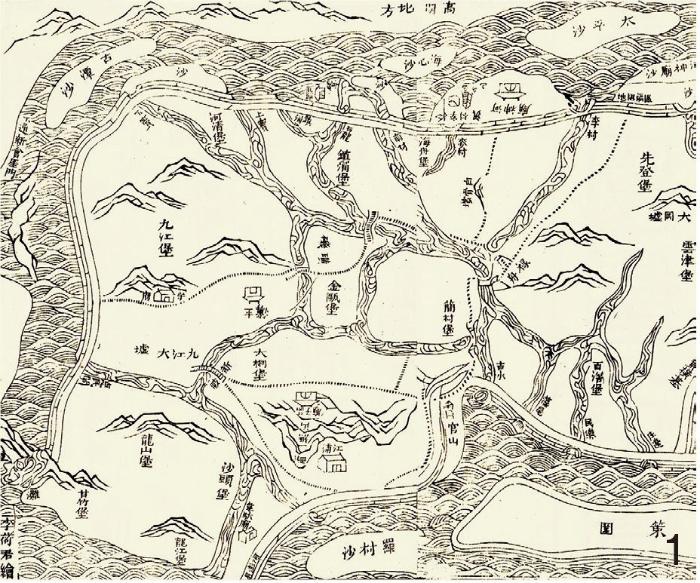
Through historical research and literature review in combination with textual analysis, images, and existing garden landscapes, this research analyzes the natural water network characteristics and land reclamation patterns in Lingnan water towns during Ming and Qing periods.
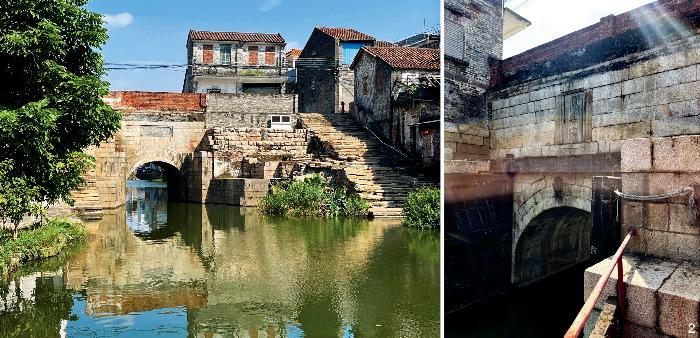
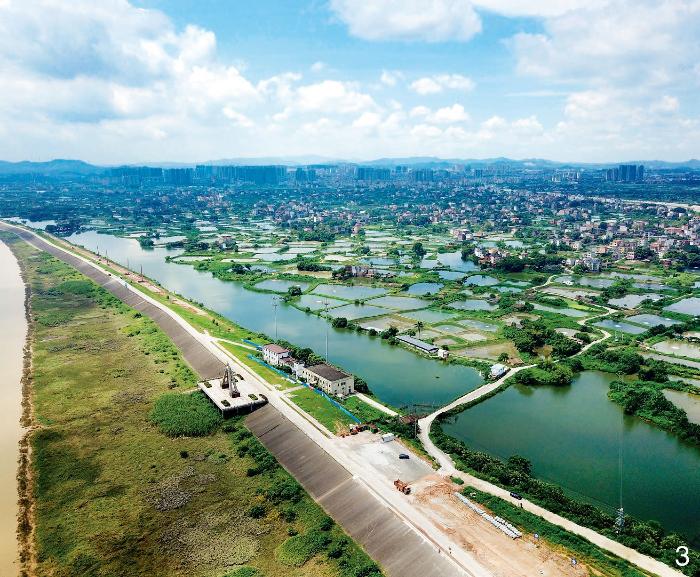
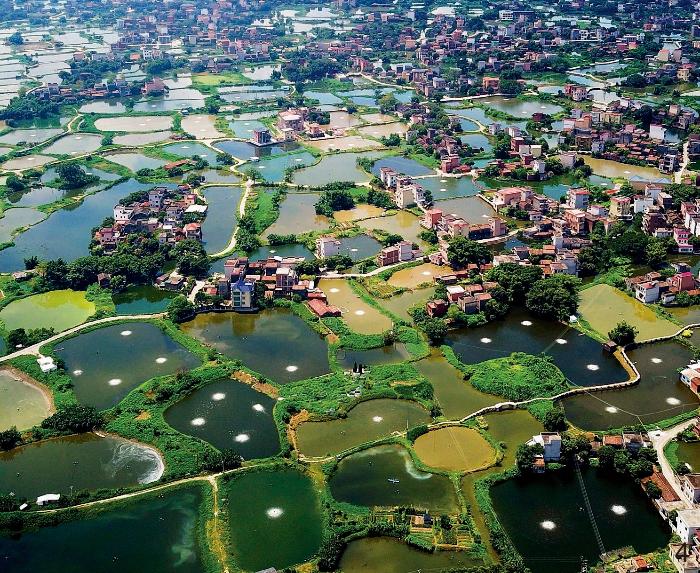
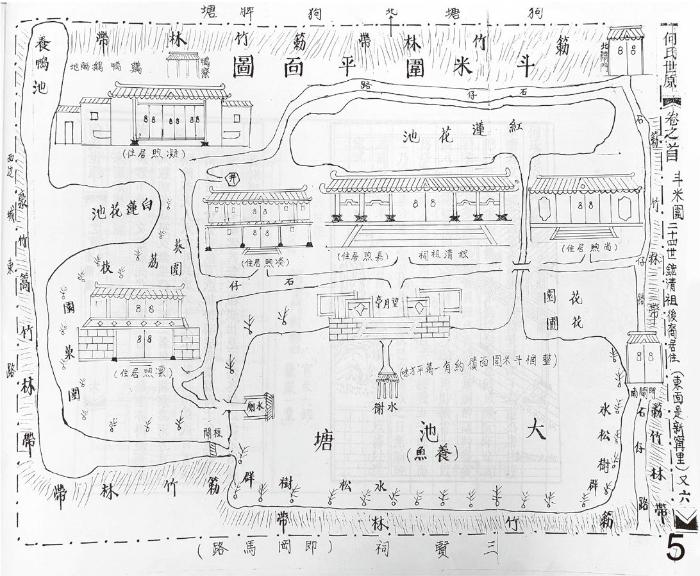
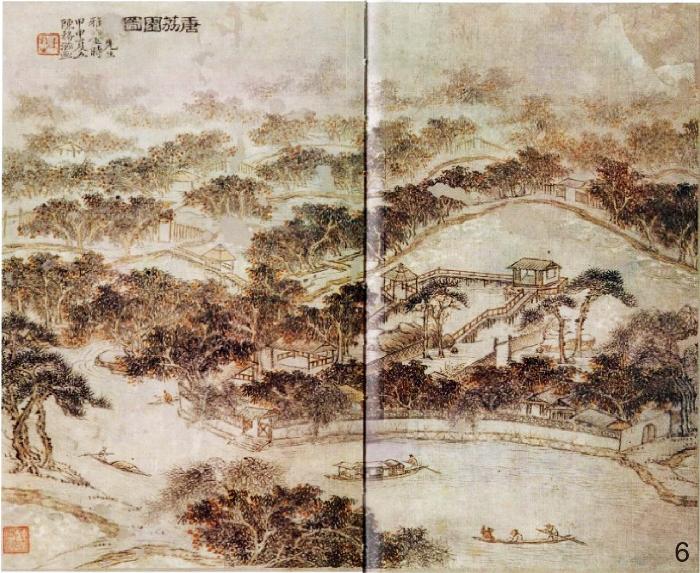
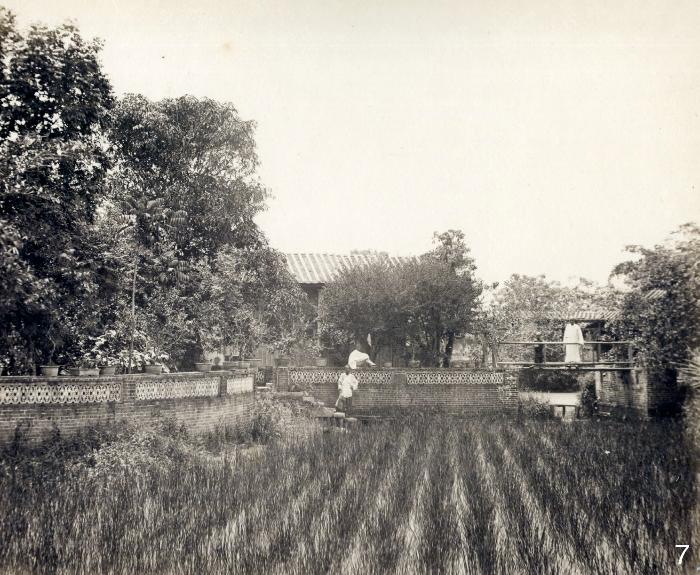
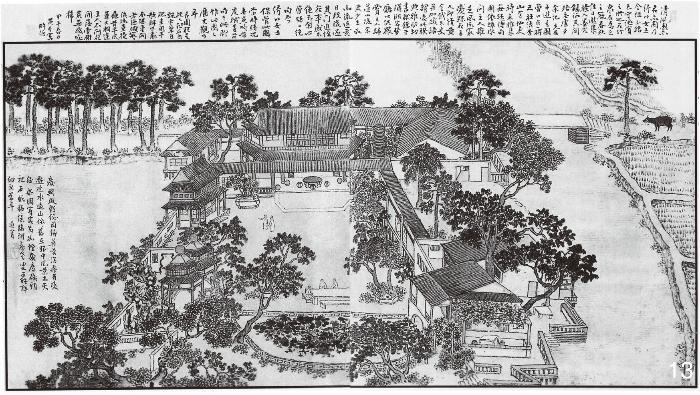
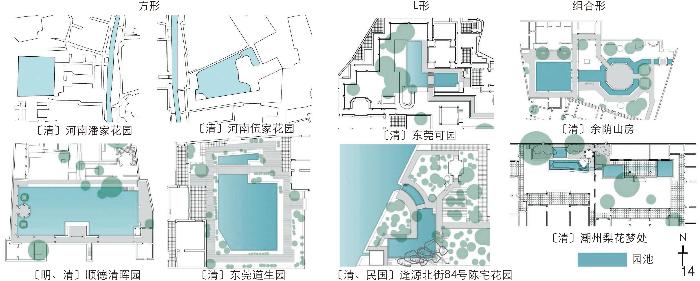
With the support of two key elements, namely manpower and technology, the Lingnan region developed effective water conservancy facilities to prevent and control flooding in the Pearl River Delta, such as earth and stone embankment techniques, as well as techniques to regulate water resources and prevent flooding in an integrated manner, including stone holes, stone dams and intermediate foundations. To comprehensively develop the large quantity of farmlands reclaimed, an agro-ecosystem modelled on the Kei Wai Fishpond was developed in Lingnan during Ming and Qing dynasties, and as a result, a unique landscape for agricultural production was created. Some of the reclaimed farmlands were utilized as various types of construction sites during the urbanization course during Ming and Qing dynasties, becoming natural substrates for garden construction. In the long-term development of Lingnan gardens, the construction techniques for water gardens have been formed by relying on natural water systems and combing them with water gardens through diversion and shaping. Among such techniques, garden pool dredging and water level control have drawn on the experience of water arrangement in dike areas. Facilities such as sluice gates, water gates and sinuses, as well as experience in water arrangement, are also used to finely manage the quality of water bodies in gardens. The embankment with the function of water shaping and enclosure undertook various functions such as traffic and decoration, which created the linear landscape characteristics of Lingnan gardens in the late Qing Dynasty. During Ming and Qing dynasties, the agricultural production landscape in Lingnan region clearly influenced the aesthetic concepts and technical models of water arrangement in Lingnan gardens, the most significant feature of which is the square pool wall bank. To a certain extent, the water arrangement of Lingnan gardens is a cultural legacy and a result of change, and in terms of construction, it is a miniaturized product of stone dykes and enclosures, involving the similarity of function and material, and the inheritance relationship between structure and form.
Various aspects of garden water arrangement in Lingnan region during Ming and Qing dynasties show close associations with contemporary agricultural reclamation endeavors. Agricultural expansions during this period propelled advancements in field water arrangement systems, facilitating the transition from natural farmlands to productive agricultural landscapes, in which the cultural influence of literati and scholars in Lingnan region during Ming and Qing dynasties, played a pivotal role by expressing empathy and poetic acclaim for agricultural production landscapes. Traditional Lingnan agricultural practices, such as mulberry-based fishponds and lotus-based fishponds, fostered technological progress and accumulated experience in the Pearl River Delta region, accelerating the formation and privatization of agricultural irrigation landscapes. This phenomenon sparked significant developments in garden water arrangement practices related to landscaping techniques such as stone arrangement and bridge construction. The historical mechanisms of agricultural expansion in Lingnan imply novel perspectives on traditional gardens. Diverging from mainstream Chinese classical gardens such as imperial or scholar gardens typically evolving from the top down under elite patronage or scholarly influence, the foundational logic behind Lingnan gardens during Ming and Qing dynasties stemmed from waves of migration since Tang and Song dynasties, as well as agricultural reclamation efforts, and capital accumulation driven by commercial agriculture. This underscores a bottom-up approach to garden development, presenting an alternative manifestation of Chinese classical gardens that embodies their richness and diversity.
PENG Changxin , ZHANG Xin . Historical Mechanisms of Water Arrangement in Lingnan Gardens in Ming and Qing Dynasties from the Perspective of Agricultural Water Conservancy[J]. Landscape Architecture, 2024 , 31(12) : 79 -86 . DOI: 10.3724/j.fjyl.202403110148
| [1] |
陆琦.广东民居[M].北京: 中国建筑工业出版社, 2008.
LU Q. Guangdong Residential Buildings[M]. Beijing: China Architecture & Building Press, 2008.
|
| [2] |
陆琦, 潘莹. 珠江三角洲水乡聚落形态[J]. 南方建筑, 2009 (6): 61-67
LU Q, PAN Y. The Waterfront Settlement Forms of Pearl River Delta Region[J]. South Architecture, 2009 (6): 61-67
|
| [3] |
冯江.祖先之翼: 明清广州府的开垦、聚族而居与宗族祠堂的衍变[M].北京: 中国建筑工业出版社, 2016
FENG J. Study on the Derivation of Reclamation, Cluster Residence and Clan Ancestral Halls in the Ming and Qing Dynasties Guangzhou Province[M]. Beijing: China Architecture & Building Press, 2008.
|
| [4] |
朱光文.珠江三角洲水乡[M].广州: 广东人民出版社, 2005.
ZHU G W. The Water Towns of the Pearl River Delta[M]. Guangzhou: Guangdong People’s Publishing House, 2005.
|
| [5] |
许自力. 珠江三角洲流域水系景观特征及结构性问题[J]. 中国园林, 2009, 25 (4): 54-58
XU Z L. The River System Landscape and Structural Problems of the Pearl River Delta[J]. Chinese Landscape Architecture, 2009, 25 (4): 54-58
|
| [6] |
陈亚利.珠江三角洲传统水乡聚落景观特征研究[D].广州: 华南理工大学, 2018.
CHEN Y L. Research on the Landscape of Traditional Waterside Villages in Pearl River Delta[D]. Guangzhou: South China University of Technology, 2018.
|
| [7] |
陈乐素. 珠玑巷史事[J]. 学术研究, 1982 (6): 71-77
CHEN L S. History of Zhuji Lane[J]. Academic Research, 1982 (6): 71-77.
|
| [8] |
龙廷槐.与明中丞言粤东沙田屯田利弊书[M]//龙廷槐.敬学轩文集.[出版地不详: 出版者不详], 1842.
LONG T H. Explaining the Advantages and Disadvantages of Cantonment of Shatian in Eastern Guangdong With the Middle Minister of Ming[M]//LONG T H. Jingxuexuan Collection. [S.l.: s.n.], 1842.
|
| [9] |
谭棣华.清代珠江三角洲的沙田[M].广州: 广东人民出版社, 1993.
TAN D H. Sha Tian in the Pearl River Delta in the Qing Dynasty[M]. Guangzhou: Guangdong People’s Publishing House, 1993.
|
| [10] |
明之纲.桑园围总志[M].[出版地不详: 出版者不详], 1870.
MING Z G. The Chorography of the Mulberry Garden Dike[M]. [S.l.: s.n.]. 1870.
|
| [11] |
颜泽贤, 黄世瑞. 岭南科学技术史[M].广州: 广东人民出版社, 2002.
YAN Z X, HUANG S R. History of Science and Technology in Lingnan[M]. Guangzhou: Guangdong People’s Publishing House, 2002.
|
| [12] |
叶显恩, 周兆晴. 宋代以降珠江三角洲冲积平原的开发[J]. 珠江经济, 2007 (6): 74-80
YE X E, ZHOU Z Q. Development of Alluvial Plain of Pearl River Delta Since Song Dynasty[J]. South China Review, 2007 (6): 74-80.
|
| [13] |
段公路.北户录[M].北京: 中华书局, 1985.
DUAN G L. Beihulu[M]. Beijing: Zhonghua Book Company, 1985.
|
| [14] |
钟功甫. 珠江三角洲的“桑基鱼塘”: 一个水陆相互作用的人工生态系统[J]. 地理学报, 1980, 35 (3): 200-209
ZHONG G F. Mulberrry − Dyke − Fish − Pond on the Zhujiang Delta: A Complete Artificial Ecosystem of Land − Water Interaction[J]. Acta Geographica Sinica, 1980, 35 (3): 200-209
|
| [15] |
屈大均.广东新语: 卷22[M].[出版地不详: 出版者不详], 1805.
QU D J. Guangdong New Language: Volume 22[M]. [S.l.: s.n.], 1805.
|
| [16] |
潘莹, 吴奇, 施瑛. 古劳水乡的传统聚落景观特征与价值研究[J]. 城市规划, 2022, 46 (7): 108-118
PAN Y, WU Q, SHI Y. Research on the Landscape Characteristics and Values of Traditional Settlements in Gulao Waterside Settlement[J]. City Planning Review, 2022, 46 (7): 108-118.
|
| [17] |
曾昭璇.广州历史地理[M].广州: 广东人民出版社, 1991.
ZENG Z X. Historical Geography of Guangzhou[M]. Guangzhou: Guangdong People’s Publishing House, 1991.
|
| [18] |
何能.庐江何氏世源新会族谱[M].[出版地不详: 出版者不详], 1870.
HE N. Shiyuan Xinhui Genealogy of the Lujiang He Clan[M]. [S.l.: s.n.], 1870.
|
| [19] |
黄佐.泰泉集[M]//陈建华.广州大典: 第424册.广州: 广州出版社, 2015.
HUANG Z. Taiquan Collection[M]//CHEN J H. Guangzhou Canon: Volume 424. Guangzhou: Guangzhou Press, 2015.
|
| [20] |
黄衷.矩洲诗集[M]//陈建华.广州大典: 第423册.广州: 广州出版社, 2015.
HUANG Z. Juzhou Poetry Collection[M]//CHEN J H. Guangzhou Canon: Volume 423. Guangzhou: Guangzhou Press, 2015.
|
| [21] |
彭长歆, 姜琦. 从果基鱼塘到岭南名园: 清末广州海山仙馆园林空间营造机理溯源[J]. 南方建筑, 2023 (3): 90-99
PENG C X, JIANG Q. From Fruit − Base − Pond to the Famous Lingnan Garden: Tracing the Origin of the Spatial Construction Mechanism of Pun Tin Qua’s Garden in Canton in the Late Qing Dynasty[J]. South Architecture, 2023 (3): 90-99
|
| [22] |
张维屏.长夏杂诗[M]//张维屏.张南山全集(一).广州: 广东高等教育出版社, 1995.
ZHANG W P. Long Summer Miscellaneous Poems[M]//ZHANG W P. Zhang Nanshan Collection (1). Guangzhou: Guangdong Higher Education Press, 1995.
|
| [23] |
彭长歆, 张欣. 从空间营造到文化生产: 清末广州花地馥荫园再考[J]. 风景园林, 2022, 29 (9): 128-134
PENG C X, ZHANG X. Research on Howqua’s Garden in the Late Qing Dynasty in Fa-ti, Canton from Spatial Construction to Cultural Production Thereof[J]. Landscape Architecture, 2022, 29 (9): 128-134.
|
| [24] |
魏成, 钟卓乾, 廖辉辉. 古劳水乡空间生成解析与传统村落文化生态特征[J]. 南方建筑, 2021 (4): 97-104
WEI C, ZHONG Z Q, LIAO H H. “The Last Waterfront in Pearl River Delta”: Space Generation and Cultural Ecological Characteristics of the Traditional Village in the Gulao Waterfrontl[J]. South Architecture, 2021 (4): 97-104
|
| [25] |
计成.园冶注释[M].陈植, 注释.北京: 中国建筑工业出版社, 1997.
JI C. The Annotation of Garden Forging[M]. CHEN Z, annotated. Beijing: China Architecture & Building Press, 1997.
|
| [26] |
金保权.学署喻学斋聊[M]// 金保权.粤东葺胜记: 卷7.[出版地不详: 出版者不详], 1899.
JIN B Q. XueshuYu Xuezhai Liao[M]//JIN B Q. Collection of Scenic Spots in Eastern Guangdong: Volume 7[M]. [S.l.: s.n.],1899.
|
| [27] |
徐琪.重浚药洲池筑补莲亭记[M]//金保权.粤东葺胜记: 卷5.[出版地不详: 出版者不详], 1899.
XU Q. Re-dredging the Yaozhou Pond and Building the Pillar of Lotus Pavilion[M]//JIN B Q. Collection of Scenic Spots in Eastern Guangdong: Volume 5. [S.l.: s.n.], 1899.
|
| [28] |
夏昌世, 莫伯治.岭南庭园[M].北京: 中国建筑工业出版社, 2008.
XIA C S, MO B Z. Lingnan Courtyards[M]. Beijing: China Architecture & Building Press, 2008.
|
| [29] |
高旭红.药洲石刻[M].广州: 广东人民出版社, 2016.
GAO X H. Yaozhou Stone Carvings[M]. Guangzhou: Guangdong People’s Publishing House, 2016.
|
| [30] |
胡李燕, 王艳婷, 彭长歆. 园楼之设: 清末岭南园林的垂直建构[J]. 园林, 2023, 40 (9): 89-98
HU L Y, WANG Y T, PENG C X. Approach to Garden Buildings: The Vertical Construction of Lingnan Gardens in Late Qing Dynasty[J]. Landscape Architecture Academic Journal, 2023, 40 (9): 89-98
|
| [31] |
黄任恒.番禺河南小志[M].广州: 广东人民出版社, 2012.
HUANG R H. Panyu Henan Xiaozhi[M]. Guangzhou: Guangdong People’s Publishing House, 2012.
|
| [32] |
顾凯. 中国古典园林史上的方池欣赏: 以明代江南园林为例[J]. 建筑师, 2010 (3): 44-51
GU K. Appreciation of Square Pools in the History of Chinese Classical Gardens: The Example of Jiangnan Gardens in the Ming Dynasty[J]. The Architect, 2010 (3): 44-51.
|
| [33] |
鲍沁星. 两宋园林中方池现象研究[J]. 中国园林, 2012, 28 (4): 73-76
BAO Q X. Study on Square Pools in Song Dynasty Gardens[J]. Chinese Landscape Architecture, 2012, 28 (4): 73-76
|
| [34] |
梁明捷.岭南古典园林风格研究[D].广州: 华南理工大学, 2012.
LIANG M J. The Study of Lingnan Classical Garden Styles[D]. Guangzhou: South China University of Technology, 2012.
|
| [35] |
潘建非, 邱丽. 岭南水乡景观空间形态的分析与营造[J]. 中国园林, 2011, 27 (5): 55-59
PAN J F, QIU L. The Analysis and Construction of Landscape Space in Lingnan Waterfront Settlement[J]. Chinese Landscape Architecture, 2011, 27 (5): 55-59
|
| [36] |
冯江, 李睿. 潮汐与广州园池[J]. 建筑史学刊, 2023, 4 (1): 147-161
FENG J, LI R. Tide and Canton Gardens[J]. Journal of Architectural History, 2023, 4 (1): 147-161
|
/
| 〈 |
|
〉 |