

Dynamic Perception of Landscape Along Beijing − Qinhuangdao Railway in the Central Urban Area of Beijing
|
MENG Xiaoying, Ph.D., is a professor in the School of Architecture and Design, Beijing Jiaotong University. Her research focuses on urban public space design, and transportation landscape |
|
ZHANG Zihan gained her master degree in the School of Architecture and Design, Beijing Jiaotong University. Her research focuses on urban public space design |
|
CHEN Yuqing is a master student in the School of Architecture and Design, Beijing Jiaotong University. Her research focuses on urban public space design |
Received date: 2024-02-29
Revised date: 2024-10-28
Online published: 2025-12-16
Copyright
Landscapes along the railway in urban center are important for measuring the perception of cityscape by passengers, which may provide an opportunity for passengers to get to know a city and its culture. Since 2021 in Beijing, the comprehensive improvement of landscape along the railway corridors featuring the integration of safe driving and environmental improvement has been carried out under the background of creating the “most beautiful first impression for people initially entering Beijing”. Despite the increased landscape governance along the railway in Beijing in recent years, the research on landscape along the railway lacks the perception of real scenes from the perspective of passengers.
This research applies ErgoLAB (Human – Machine – Environment Synchronization Cloud Platform) for data collection, stimulus presentation and data analysis. Passengers on moving train with regular speed are tested while they watch outside from window landscape along the Beijing – Qinhuangdao Railway in the central urban area of Beijing. Eye tracker and wearable ear clip sensors are used to obtain the physiological indicators of passengers taking the train. SPSS is adopted to correlate the aforesaid indicators in combination with ErgoLAB data, and landscape characters and types of landscape elements that affect passengers’ perceptual experience is explored.
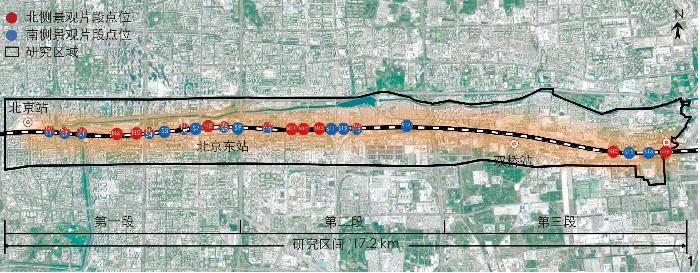
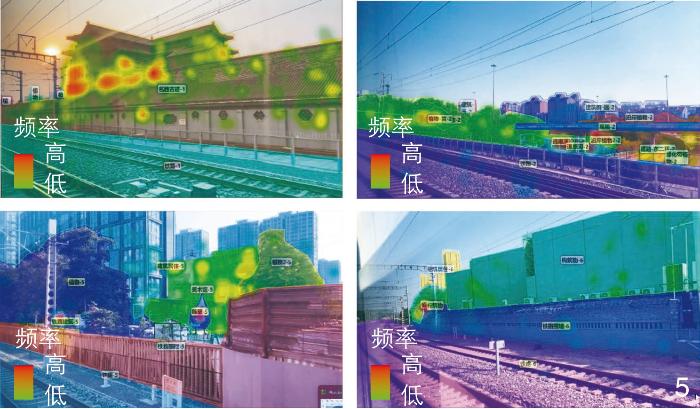
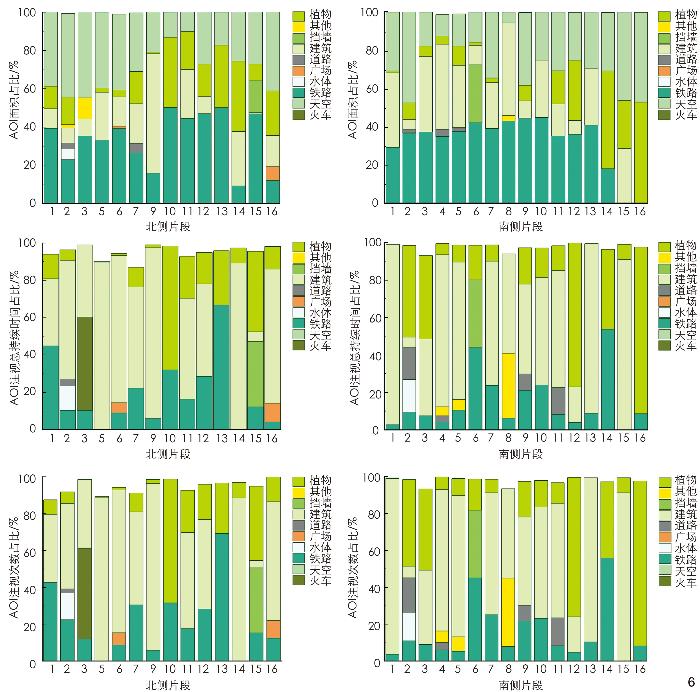
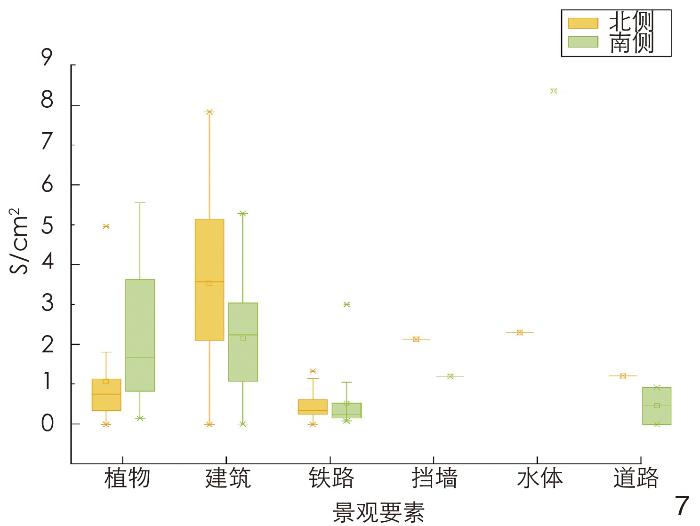
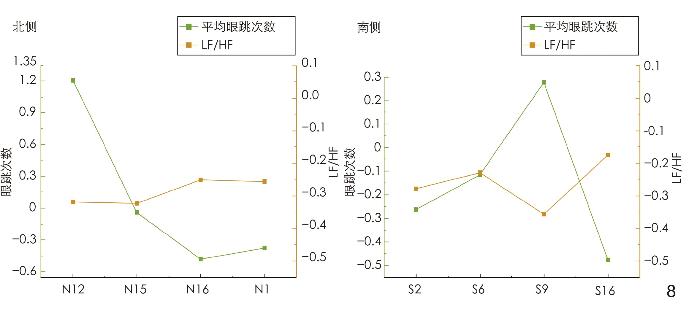
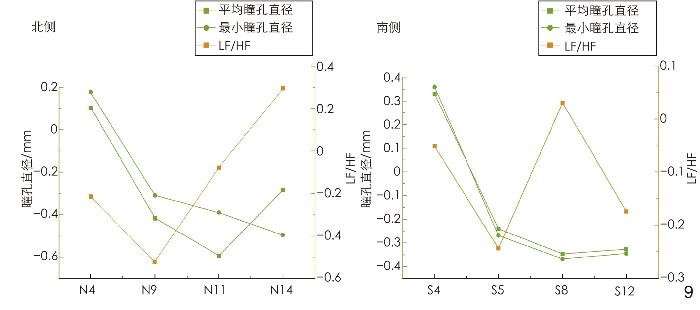
Through analyzing the correlation between landscape characters, eye movement indicator and heart rate indicator, the research mainly obtains the following findings. 1) Artificial elements are more attractive than natural ones. The sequence of fixation duration among all landscape elements is listed as follows: Building > plant > road > railway. In addition, the sequence of people’s attention to architecture from high to low is listed as follows: Public buildings along the water > public buildings with varied skylines > antique style buildings > campus buildings > railway buildings > residential buildings > bungalows. As for the indicators of the first fixation duration and average fixation duration, it looks significantly different (p<0.01) for the buildings, roads, railroads and plants located in the north side of the railroad. After testing, it is found that first fixation duration looks significantly different between buildings and railroads (p<0.01), and between buildings and plants (p<0.05) on the north side of the railroad, and average fixation duration looks significantly different between buildings and plants on the north side of the railroad (p<0.01); whereas it looks that there is no statistically significant difference between the buildings, roads, railroads and plant elements located in the south side of the railroad in terms of both first fixation duration and average fixation duration. Upon standardization of the fixation durations of various elements on the north and south sides, it is found that there exist significant differences in relative fixation duration between plants, buildings, railroads, and roads on the north and south sides (p<0.01). 2) Sky openness and skyline richness positively affect the physical activity level of the subjects. The frequency domain indicators LF/HF of heart rate data in spaces at both the north and south sides show a positive correlation with sky openness (north side: correlation value is 0.55, p<0.05; south side: correlation value is 0.54, p<0.05). 3) Scenes containing water and plant groups with rich layers, colors and varieties are more attractive to the eye. In general, water bodies may obtain the longest fixation duration, followed by buildings. With a shorter fixation duration overall, are less attractive to people. Compared with single plant, the fixation duration of group plants with rich vertical structures and colorful leaves is longer. 4) In terms of continuous landscape, passengers’ attention is more easily attracted by special landscape nodes. The preference degree on the north side is higher than that on the south side. Specifically, the segments with higher preference degrees within the research area include the train parking area, Qingfeng Park activity field, Beijing East Station, Gaobeidian ancient block, heritage park, and green park.
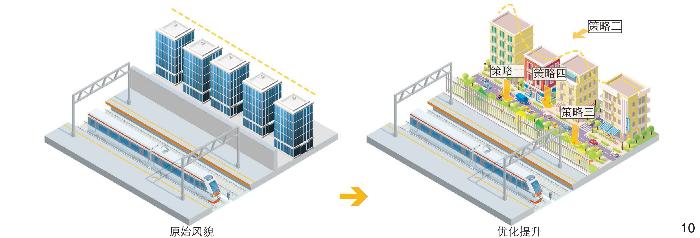
It is suggested to incorporate the landscape along the railway in the central urban area of Beijing into the governance of overlooking landscape. According to the findings, four options to better enhance passengers’ landscape perception are proposed as follows. 1) Enhance the visual appeal of buildings along the railway as key landscape elements, especially their form. 2) Consider the overall visual picture of the landscape along the railway to optimize the urban skyline in important sections along the railway. Continuously renew outdoor spaces along the railway corridor to create more open spaces, even including building contour. 3) Improve passengers’ visual perception with the vegetations planted in front of fence wall or huge structure to protect the railway from being damaged and help trains run safely without experiencing any accident. It is helpful to attract the attention of passengers by increasing the richness of plant interface. 4) Improve the visual quality of special nodes, such as railway stations and their surrounding areas, and extend the residence time of nodes in vision.
MENG Xiaoying , ZHANG Zihan , CHEN Yuqing . Dynamic Perception of Landscape Along Beijing − Qinhuangdao Railway in the Central Urban Area of Beijing[J]. Landscape Architecture, 2024 , 31(12) : 105 -112 . DOI: 10.3724/j.fjyl.202402290123
文中图片均由作者绘制或拍摄,其中
| [1] |
BAŞ BÜTÜNER F, ÇAVDAR SERT S, ALANYALI ARAL E. Decoding Infrastructural Terrain: The Landscape Fabric Along the Sincan-Kayaş Commuter Line in Ankara[J]. Landscape Research, 2020, 45 (6): 724-741
|
| [2] |
LIN G Y, XIANG L N, SANG K. Scenic Railway Mapping: An Analysis of Spatial Patterns in France Based on Historical GIS[J]. ISPRS International Journal of Geo-Information, 2022, 11 (2): 99.
|
| [3] |
MOROŃ D, SKÓRKA P, LENDA M, et al. Railway Lines Affect Spatial Turnover of Pollinator Communities in an Agricultural Landscape[J]. Diversity and Distributions, 2017, 23 (9): 1090-1097
|
| [4] |
周益. 基于生态经济需求综合视角的城市铁路景观设计策略研究[J]. 建筑与文化, 2024 (3): 245-247
ZHOU Y. Research on Urban Railway Landscape Design Strategy Based on the Comprehensive Perspective of Eco-economic Needs[J]. Architecture & Culture, 2024 (3): 245-247.
|
| [5] |
刘旭. 大尺度生态景观营造探索: 以京张高铁延庆段景观提升为例[J]. 现代园艺, 2021, 44 (12): 52-54
LIU X. Exploration of Large-scale Ecological Landscape Creation: Taking the Landscape Enhancement of Yanqing Section of Beijing-Zhangjiakou High-Speed Railway as an Example[J]. Contemporary Horticulture, 2021, 44 (12): 52-54.
|
| [6] |
SOMOGYI B, CSAPÓ J. The Role of Landscape Preferences in the Travel Decisions of Railway Passengers: Evidence from Hungary[J]. Moravian Geographical Reports, 2018, 26 (4): 298-309
|
| [7] |
张泉. 城市轨道交通沿线景观分析与评价: 以合肥轨道交通一号线为例[J]. 建筑与文化, 2015 (11): 138-139
ZHANG Q. Analysis and Evaluation of the Landscape Along the Route of Urban Rail Transit: Taking Hefei Rail Transit Line 1 as an Example[J]. Architecture & Culture, 2015 (11): 138-139
|
| [8] |
邓敬, 邱建, 殷荭. 基于Mapping方法的京沪高速铁路区域景观规划分析[J]. 中国园林, 2019, 35 (5): 96-101
DENG J, QIU J, YIN H. The Mapping-Based Analysis on Regional Landscape Planning of Beijing-Shanghai Highspeed Railway[J]. Chinese Landscape Architecture, 2019, 35 (5): 96-101.
|
| [9] |
陈茹, 姬琳, 夏鹏. 基于层次分析与GIS方法的汉冶萍铁路沿线景观评价[J]. 安全与环境工程, 2021, 28 (4): 213-222
CHEN R, JI L, XIA P. Landscape Evaluation Along Hanyeping Railway Based on AHP and GIS[J]. Safety and Environmental Engineering, 2021, 28 (4): 213-222.
|
| [10] |
HE H, LI J, LIN X, et al. Greenway Cyclists’ Visual Perception and Landscape Imagery Assessment[J]. Frontiers in Psychology, 2021, 12: 541469.
|
| [11] |
LEE C H. Comparing Subjective Landscape Perceptions Between the Native and Non-native Residents in Suburban Rural Area-Searching for a Landscape Management Based on the Characteristics of Urban to Rural Migrants[J]. Journal of Korean Society of Rural Planning, 2020, 26 (3): 13-24.
|
| [12] |
唐真, 刘滨谊. 视觉景观评估的研究进展[J]. 风景园林, 2015, 22 (9): 113-120
TANG Z, LIU B Y. Progress in Visual Landscape Evaluation[J]. Landscape Architecture, 2015, 22 (9): 113-120.
|
| [13] |
LEE C H, YUN S Y, SON Y H. Walking as Research Method for Revealing Subjective Perceptions on Landscape: Rural Village Sucheong-ri, Gwangju[J]. Journal of Korean Society of Rural Planning, 2016, 22 (2): 31-43.
|
| [14] |
翟宇佳, 吴承照. 城市公园总体满意度主要影响因素识别: 基于不同年龄组使用者的分析[J]. 风景园林, 2021, 28 (5): 57-62
ZHAI Y J, WU C Z. Identification of Main Influencing Factors on Urban Park Overall Satisfaction: Based on Analysis of Users of Different Age Groups[J]. Landscape Architecture, 2021, 28 (5): 57-62.
|
| [15] |
孙漪南, 赵芯, 王宇泓, 等. 基于VR全景图技术的乡村景观视觉评价偏好研究[J]. 北京林业大学学报, 2016, 38 (12): 104-112
SUN Y, ZHAO X, WANG Y H, et al. Study on the Visual Evaluation Preference of Rural Landscape Based on VR Panorama[J]. Journal of Beijing Forestry University, 2016, 38 (12): 104-112.
|
| [16] |
CHEN X Y, QIAO L F. Applicable Prospects of Eye Tracking Technology in the Research of Landscape Visual Perception[J]. International Journal of Multimedia and Ubiquitous Engineering, 2015, 10: 111-118
|
| [17] |
鲁苗. 基于眼动技术的景观视觉感知分析: 以清华大学校园景观为例[J]. 艺苑, 2019 (1): 98-101
LU M. Analysis of Landscape Visual Perception Based on Eye Movement Technology: Taking Tsinghua University Campus Landscape as an Example[J]. Forum of Arts, 2019 (1): 98-101.
|
| [18] |
陈筝, 刘颂. 基于可穿戴传感器的实时环境情绪感受评价[J]. 中国园林, 2018, 34 (3): 12-17
CHEN Z, LIU S. Real-Time Environmental Affective Experience Assessment Via Wearable Sensors[J]. Chinese Landscape Architecture, 2018, 34 (3): 12-17.
|
| [19] |
张若诗, 颜夏悦, 王晨, 等. 多模态数据驱动的人与建成环境情感交互研究: 以京张铁路遗址公园五道口段为例[J]. 城市发展研究, 2022, 29 (7): 55-66
ZHANG R S, YAN X Y, WANG C, et al. Research on Emotional Interaction Between People and Built Environment Driven by Multi-modal Data: Take Wudaokou Jingzhang Railway Park as an Example[J]. Urban Development Studies, 2022, 29 (7): 55-66.
|
| [20] |
FOULSHAM T, WALKER E, KINGSTONE A. The Where, What and When of Gaze Allocation in the Lab and the Natural Environment[J]. Vision Research, 2011, 51 (17): 1920-1931
|
| [21] |
熊广忠.论公路美学的研究与应用[J].中国公路学报, 1994, 7(1): 40-46.
XIONG G Z. On the Study and Application of Highway Aesthetics[J]. China Journal of Highway and Transport, 1994, 7(1): 40-46.
|
| [22] |
韩君伟, 董靓. 基于心理物理方法的街道景观视觉评价研究[J]. 中国园林, 2015, 31 (5): 116-119
HAN J W, DONG L. A Study of Visual Evaluation of Streetscape Based on the Psychophysical Method[J]. Chinese Landscape Architecture, 2015, 31 (5): 116-119.
|
| [23] |
胡一可, 张天霖, 王磊, 等. 景观服务视角下城市街区感知测度及空间分布特征[J]. 风景园林, 2022, 29 (10): 45-52
HU Y K, ZHANG T L, WANG L, et al. Measurement and Spatial Distribution of Perception in Urban Blocks from the Perspective of Landscape Service[J]. Landscape Architecture, 2022, 29 (10): 45-52.
|
| [24] |
季惠敏, 丁沃沃. 基于量化的城市街廓空间形态分类研究[J]. 新建筑, 2019 (6): 4-8
JI H M, DING W W. A Study on Classification of Urban Space in the Block Based on Quantification[J]. New Architecture, 2019 (6): 4-8.
|
| [25] |
VAN LIER H G, PIETERSE M E, GARDE A, et al. A Standardized Validity Assessment Protocol for Physiological Signals from Wearable Technology: Methodological Underpinnings and An Application to the E4 Biosensor[J]. Behavior Research Methods, 2020, 52: 607-629
|
/
| 〈 |
|
〉 |