

Research on Landscape Features and Design Techniques of Ouyuan Garden in Qingzhou City, Shandong Province
|
HUANG Kang is a Ph.D. candidate in the School of Architecture, Tsinghua University. His research focuses on history and theory of landscape architecture, and cultural heritage protection |
|
GUO Yong, Ph.D., is an associate professor in the School of Architecture, Tsinghua University. His research focuses on technical science and landscape information modeling (LIM) |
|
JIA Jun, Ph.D., is a professor in the School of Architecture, Tsinghua University. His research focuses on history and theory of landscape architecture, and cultural heritage protection |
Received date: 2024-03-30
Revised date: 2024-09-07
Online published: 2025-12-16
Copyright
Located in Qingzhou City, Shandong Province, Ouyuan Garden is a private urban garden constructed by Grand Secretary Feng Pu (1609−1692) during the reign of Emperor Kangxi in Qing Dynasty (1669−1670). The well-preserved southern section offers a valuable case for studying traditional Chinese gardens and designed landscapes. However, significant gaps still need to be bridged in understanding the cultural significance and heritage value of the garden. The recent application of digital mapping technologies provides new opportunities for precise analysis. In this context, this research aims to interpret the garden’s landscape features, analyze its design techniques, reevaluate its heritage value, and reflect on the use of digital surveying in garden heritage research.
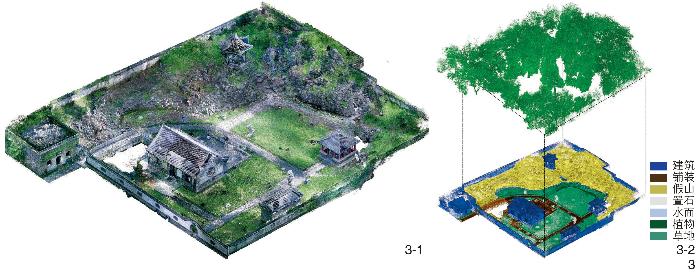
First, to comprehensively understand Ouyuan Garden’s physical characteristics, the research team conducted a 3D digital survey from May to June 2021, and created a complete digital archive using such technologies as 3D laser mapping and close-range photogrammetry. Second, based on the survey data and historical documents, the research employs such methods as mutual corroboration between literature and examples, landscape visual analysis, and text-image analysis to explore the garden’s landscape features and design techniques. Finally, the research assesses the garden’s heritage value and offers reflections on the use of digital surveying technology in garden heritage research.
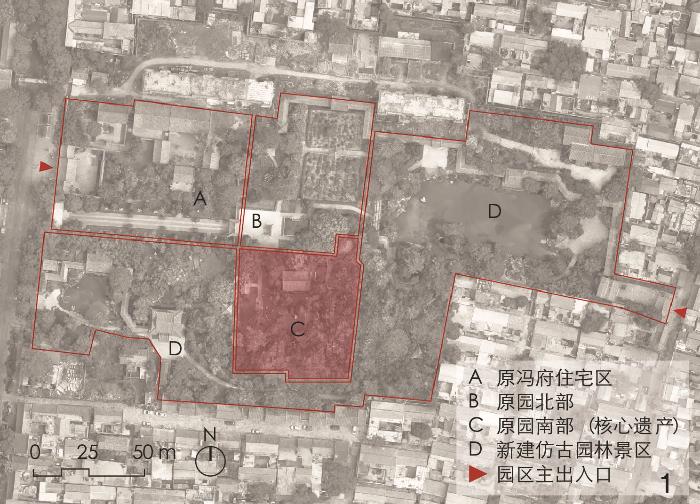
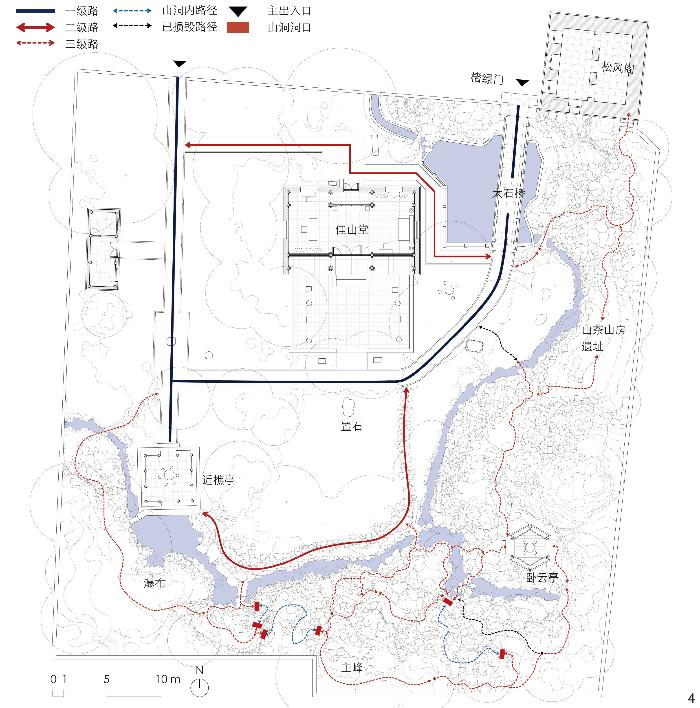
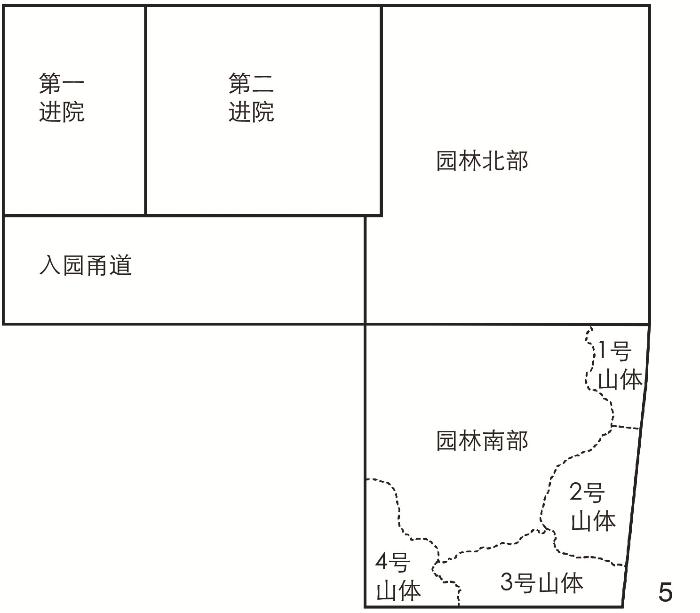
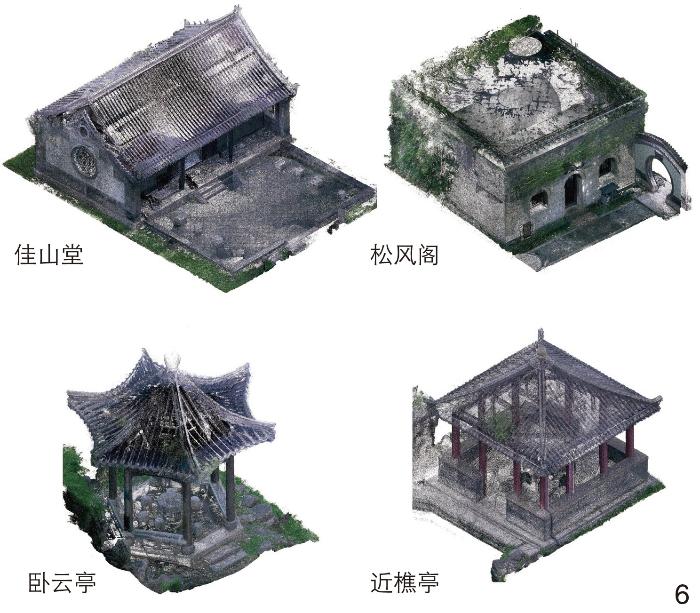
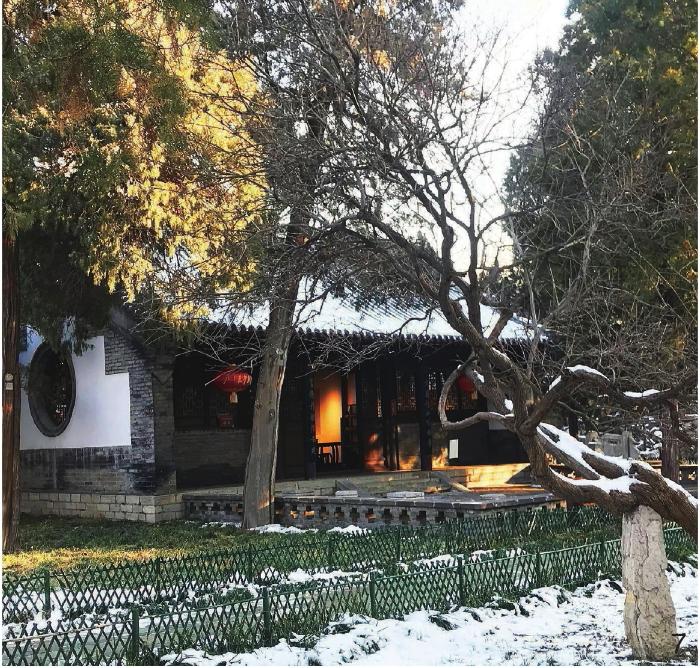
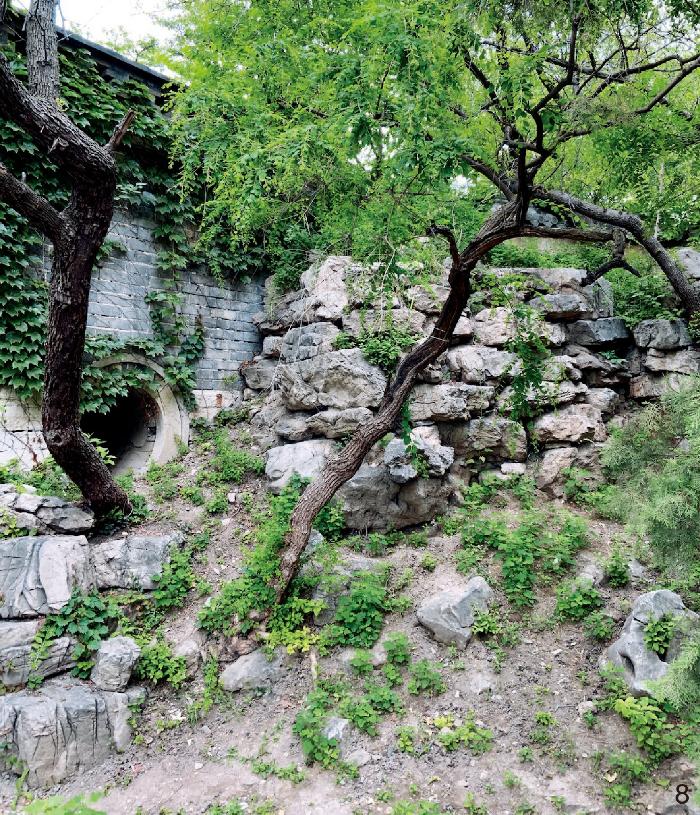
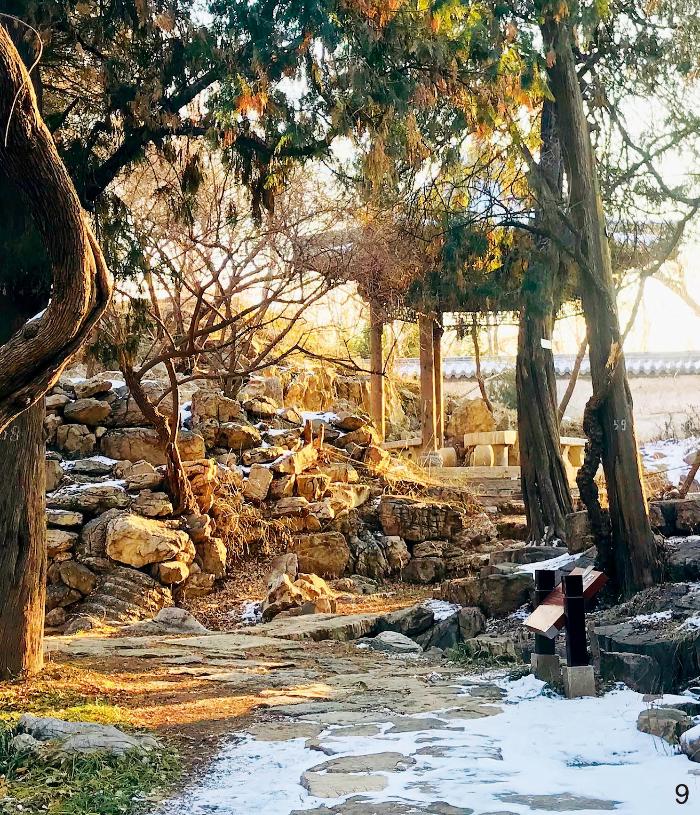
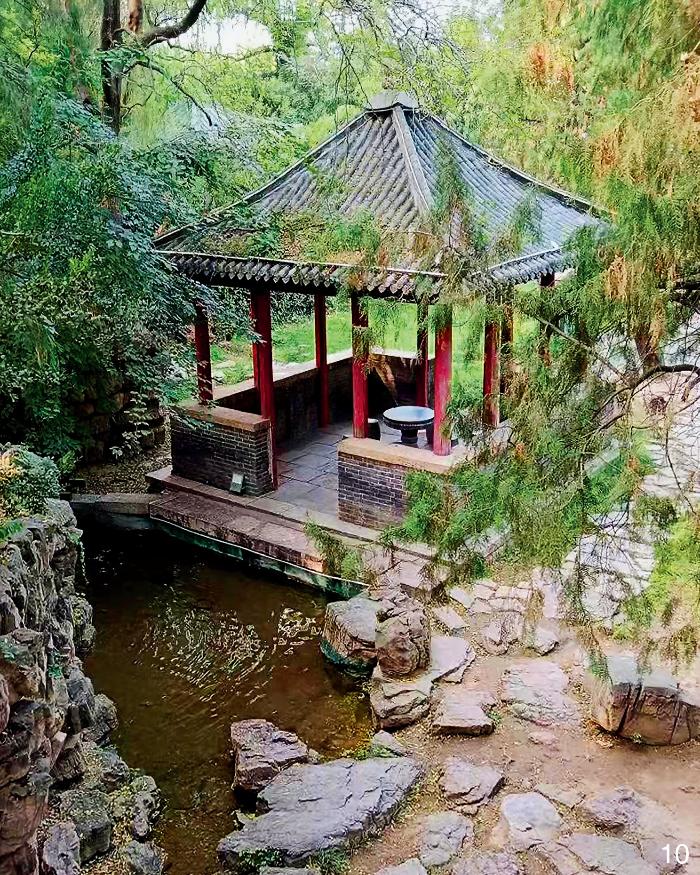
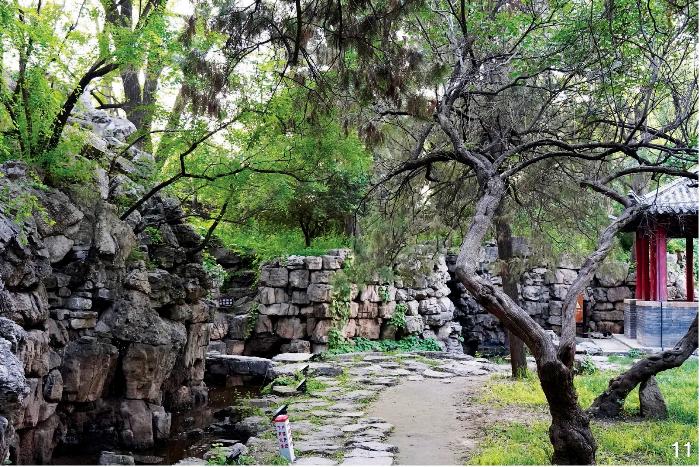
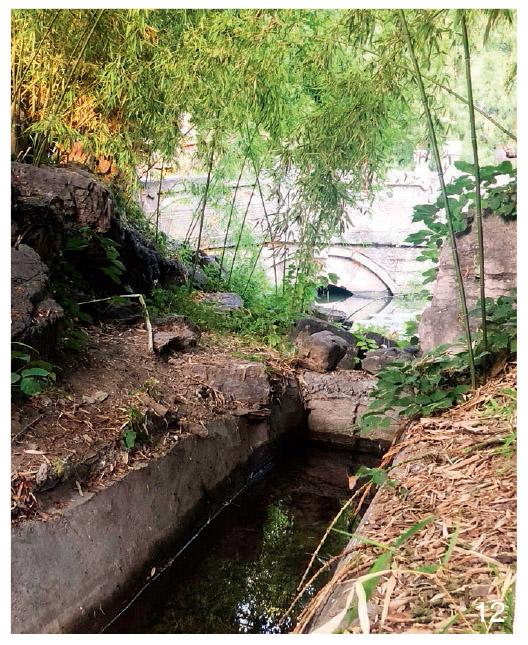
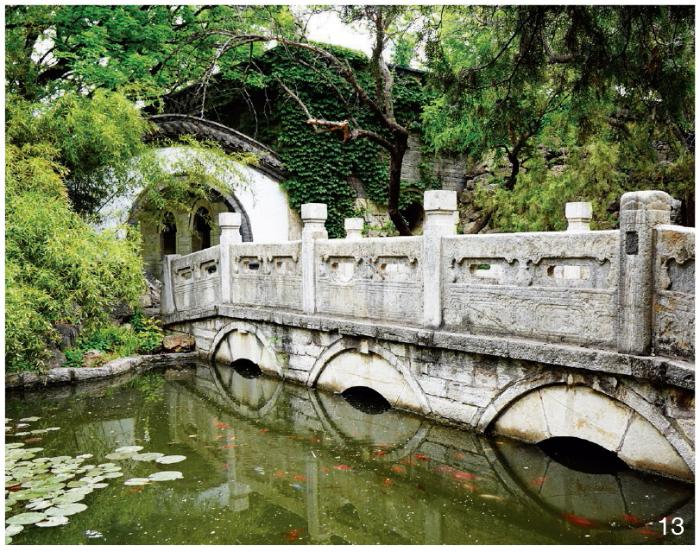
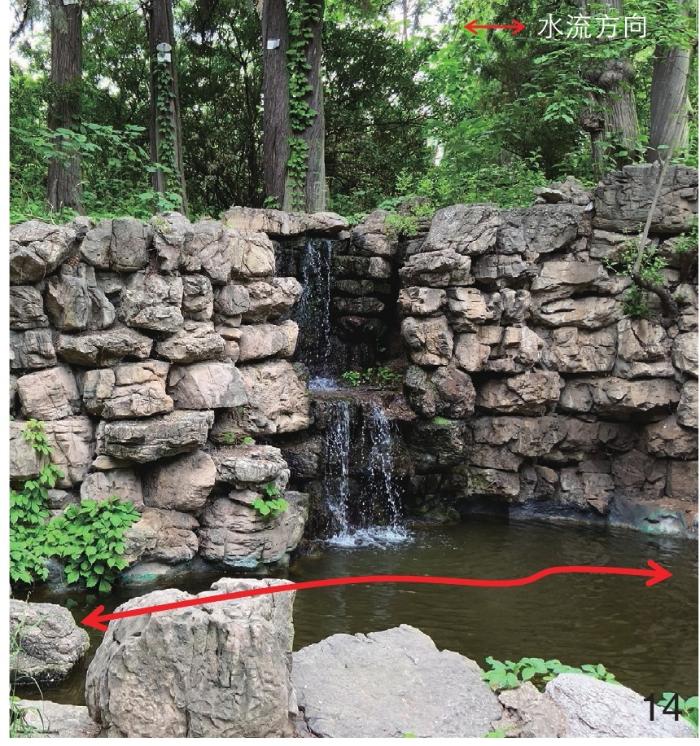
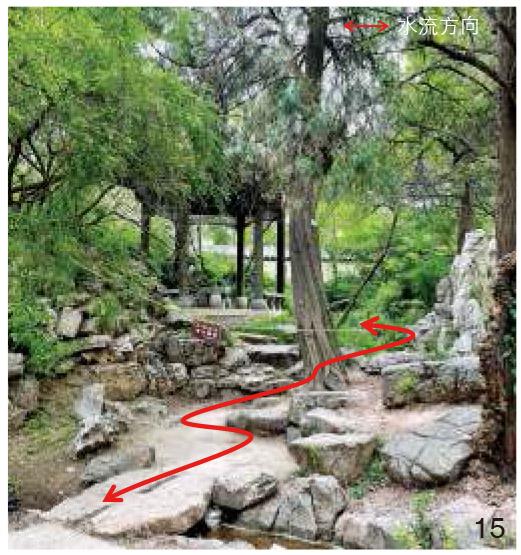
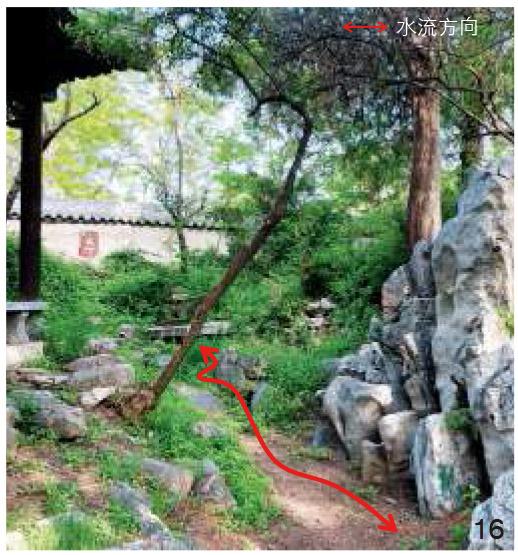
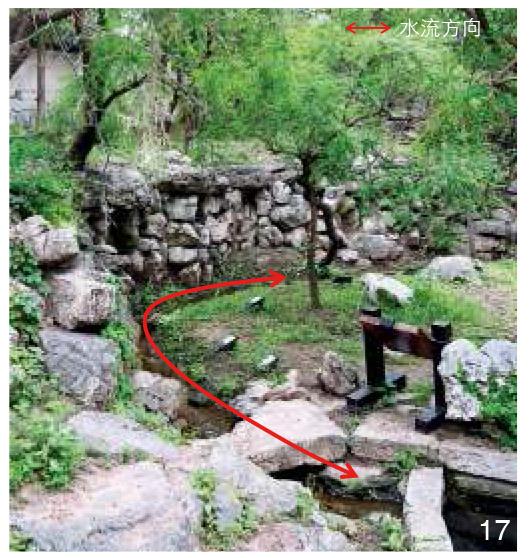
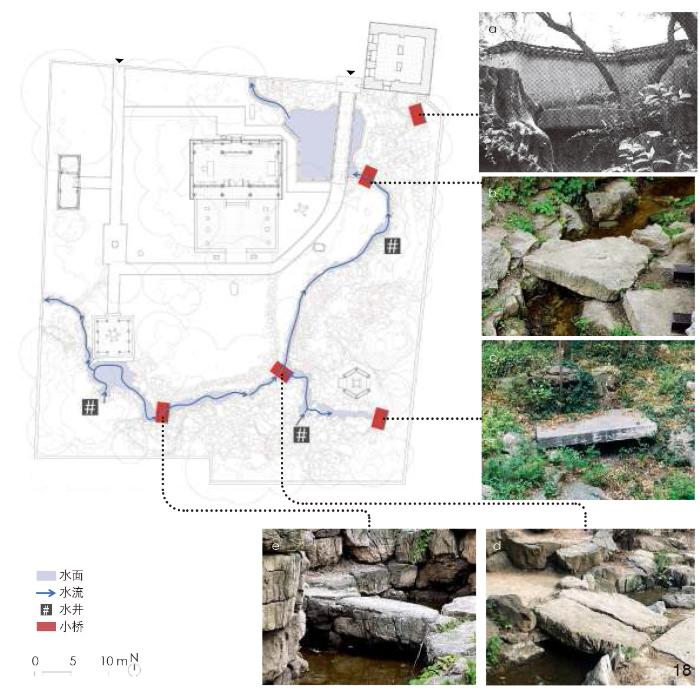
Ancient Chinese gardens are defined by five key elements: General layout, rockery, building, plant, and waterscape. Specifically, the layout shapes the spatial form and atmosphere of gardens, while the other four elements form the scenic composition. In view of the complex rockery in Ouyuan Garden, a separate research titled Artistic Mastery and Celestial Landscapes: An In-depth Examination of the Artificial Mountain in Ouyuan Garden is conducted for a detailed analysis of the garden’s rockery. As part of the broader research on Ouyuan Garden, this research aims to develop a comprehensive research framework with a focus on the remaining four elements. 1) General layout: Ouyuan Garden centers around the main hall, Jiashan Hall (“Jiashantang”), and a rockery along the wall, forming a cohesive spatial framework. Jiashan Hall, the main peak of the aforesaid rockery, and the courtyard stone align along the north-south axis, establishing the garden’s main structure. Surrounding vegetation, pavilions, ponds, and streams create a lush mountain setting. The rockery, stream, and paths are strategically arranged to offer expansive horizontal views, while tall pines and dense foliage enhance the vertical landscape. This design allows visitors to ommersively experience the garden’s depth and complexity from various perspectives. 2) Buildings: The southern section of Ouyuan Garden originally featured seven buildings, skillfully integrated with rockery to create a secluded, mountain-dwelling atmosphere. Jiashan Hall, the main hall, anchors the garden’s layout, with its surroundings designed to foster a calm study environment. Songfeng Pavilion (“Songfengge”), Jinqiao Pavilion (“Jinqiaoting”), Woyun Pavilion (“Woyunting”), and Camellia Mountain House (“Shanchashanfang”) blend seamlessly with rockery, forming distinct mountain forest landscape. In the northwest, Secluded Room (“Youshi”) and Yicao Pavilion (“Yicaoting”), together with the “Thirteen Sages Rocks” (“Shisanxianshi”), create a unique stone forest landscape. 3) Plant: Ouyuan Garden’s plants include pines, cypresses, bamboos, and various flowers and shrubs. Pines and cypresses are strategically placed, crowning the rockery for prominence, at the base to showcase rugged trunks, and around Jiashan Hall to define spatial order and highlight architecture. Bamboos divide spaces, adding tranquility and depth. During the Kangxi period, the bamboo grove in the north of Jiashan Hall split the garden into two sections. Today, in harmony with rocks and ponds, bamboos create a picturesque scene. The garden features ancient wintersweet and osmanthus trees, possibly dating back to Ming Dynasty, alongside plum blossoms, hibiscus, and peonies, adding vibrant seasonal color. 4) Waterscape: Waterscape is essential in shaping the tranquil and picturesque ambiance of Ouyuan Garden, whose key features include a square pond with a bridge in the northeast, a serene pool with a waterfall near Jinqiao Pavilion, a secluded stream flowing through the southeastern valley, and a foothill creek that ties water elements around the rockery. These features, enhanced by pavilions, ancient cypresses, and misty mountain views, provide visitors with a dynamic and immersive experience. Moreover, the use of water system design, bridge embellishment, and dry landscape techniques creates the illusion of continuous water flow, demonstrating a remarkable adaptation to the northern climate.
Ouyuan Garden holds significant heritage value for several reasons. First, it is a well-preserved and exemplary representation of traditional Chinese gardens from the early Qing Dynasty, retaining its original features in rockery, building, plant, waterscape, and general layout, reflecting a high degree of historical authenticity. Second, the garden is a valuable remnant of Shanzi Zhang’s garden style, with rockery, spatial arrangement, and landscape form of the garden reminiscent of those in Beijing’s private and imperial gardens, underscoring the garden’s connection to Zhang’s techniques. Third, the garden exhibits distinct regional characteristics, employs local materials and adapts to Shandong’s climate, creating a unique northern landscape. Lastly, the meticulous design of the garden’s elements and the overall ambiance highlight exceptional craftsmanship, making it a masterwork that encapsulates the garden design principles in the late Ming and early Qing dynasties. This research also advances methodological reflections on the use of digital surveying technology in garden heritage research. It argues that the increasing use of precise surveying tools signals a shift towards more refined and scientific data collection. However, the research proposes that only through the integrated application of “precise heritage surveying”, “meticulous interpretation of historical documents”. and “detailed landscape analysis” can genuine progress in garden heritage research be achieved.
HUANG Kang , GUO Yong , JIA Jun . Research on Landscape Features and Design Techniques of Ouyuan Garden in Qingzhou City, Shandong Province[J]. Landscape Architecture, 2024 , 31(11) : 130 -138 . DOI: 10.3724/j.fjyl.202403300186
图11 3号和4号山体区域的松林景象Fig. 11 Pine forest scenery in the areas of rockery subdivision 3 and 4 |
| [1] |
陈从周.鲁中记行[M]//陈从周.春苔集.广州: 花城出版社, 1985.
CHEN C Z. Luzhong Jixing[M]//CHEN C Z. Chuntai Ji. Guangzhou: Flower City Publishing House, 1985.
|
| [2] |
王建波, 阮仪三. 青州偶园小考及园林艺术初探[J]. 建筑师, 2009 (6): 83-90
WANG J B, RUAN Y S. Study on History and Artistry of Ouyuan Garden in Qingzhou[J]. The Architect, 2009 (6): 83-90.
|
| [3] |
贾珺, 黄晓. 清代青州偶园研究[J]. 中国建筑史论汇刊, 2017 (1): 305-320
JIA J, HUANG X. Ouyuan Garden of the Feng Family in Qing-Dynasty Qingzhou[J]. Journal of Chinese Architecture History, 2017 (1): 305-320.
|
| [4] |
黄康, 贾珺. 衡王奇松与相国佳山: 山东青州偶园早期历史考述[J]. 故宫博物院院刊, 2022, 247 (11): 30-45
HUANG K, JIA J. Prince Heng’s Wondrous Pines with Minister Feng’s Graceful Rockeries: The History Review Prior to Ouyuan Mansion in Qingzhou, Shandong Province[J]. Palace Museum Journal, 2022, 247 (11): 30-45.
|
| [5] |
黄康. 园名流变与遗产建构: 青州偶园历史演变研究[J]. 建筑遗产, 2023 (2): 25-33
HUANG K. The Changing Garden Names and Heritage Construction: Historical Evolution of Ouyuan Garden in Qingzhou, Shandong Province[J]. Heritage Architecture, 2023 (2): 25-33.
|
| [6] |
黄康, 郭湧, 贾珺. 夸娥手·琼岛踪: 青州偶园假山研究[J]. 建筑史学刊, 2024, 5 (1): 53-70
HUANG K, GUO Y, JIA J. Artistic Mastery and Celestial Landscapes: An In-depth Examination of the Artificial Mountain in Ouyuan Garden[J]. Journal of Architectural History, 2024, 5 (1): 53-70
|
| [7] |
冯时基.偶园记略[M]//张承爕, 法伟堂.中国地方志集成·山东府县志辑: 第33册.南京: 凤凰出版社, 2013.
FENG S J. Ouyuan Jilue[M]//ZHANG C X, FA W T. Zhongguo Difangzhi Jicheng, Shandong Fuxianzhi Ji: Volume 33. Nanjing: Phoenix Publishing House, 2013.
|
| [8] |
李廷枢.记游冯文毅公佳山园[M]//李廷枢.巨平文集.潍坊: [出版者不详], 2000.
LI T S. Jiyou Feng Wenyi Gong Jiashan Yuan[M]//LI T S. Juping Wenji. Weifang: [s.n.], 2000.
|
| [9] |
沈元禄.古猗园记[M]//陈从周.园综.上海: 同济大学出版社, 2011.
SHEN Y L. Guyiyuan Ji[M]//CHEN C Z. Yuan Zong. Shanghai: Tongji University Press, 2011.
|
| [10] |
计成.园冶注释[M].陈植, 注释.北京: 中国建筑工业出版社, 1988.
JI C. Yuanye Zhushi[M]. CHENG Z, annotated. Beijing: China Architecture & Building Press, 1988.
|
| [11] |
冯溥.佳山堂诗二集[M]//《清代诗文集汇编》编纂委员会.清代诗文集汇编: 29. 上海: 上海古籍出版社, 2010.
FENG P. Jiashan Tang Shi Erji[M]//Editorial Committee of the Compilation of Qingdai Shiwenji Huibian. Qingdai Shiwenji Huibian: Volume 29. Shanghai: Shanghai Chinese Classics Publishing House, 2010.
|
| [12] |
周德贵.青州纪游[M]//孙忠礼.青州文献·志乘汇编.青州: 青州史志办, 2010.
ZHOU D G. Qingzhou Jiyou[M]//SUN Z L. Qingzhou Wenxian: Zhicheng Huibian. Qingzhou: Qingzhou Shizhiban, 2010.
|
| [13] |
王嗣槐.桂山堂诗选[M]//《清代诗文集汇编》编纂委员会.清代诗文集汇编: 73.上海: 上海古籍出版社, 2010.
WANG S H. Guishantang Shiwen Xuan[M]//Editorial Committee of the Compilation of Qingdai Shiwenji Huibian. Qingdai Shiwenji Huibian: Volume 73. Shanghai: Shanghai Chinese Classics Publishing House, 2010.
|
| [14] |
李焕章.织斋文集[M]//《清代诗文集汇编》编纂委员会.清代诗文集汇编: 45.上海: 上海古籍出版社, 2010.
LI H Z. Zhizhai Wenji[M]//Editorial Committee of the Compilation of Qingdai Shiwenji Huibian. Qingdai Shiwenji Huibian: Volume 45. Shanghai: Shanghai Chinese Classics Publishing House, 2010.
|
| [15] |
潘耒.遂初堂诗集[M]//《清代诗文集汇编》编纂委员会.清代诗文集汇编: 170.上海: 上海古籍出版社, 2010.
PAN L. Suichutang Shiji[M]//Editorial Committee of the Compilation of Qingdai Shiwenji Huibian. Qingdai Shiwenji Huibian: Volume 170. Shanghai: Shanghai Chinese Classics Publishing House, 2010.
|
| [16] |
匑厂.佳山堂夜话[J].雅言(北京), 1941(2): 6-7.
GONG C. Jiashan Tang Yehua[J]. Yayan (Beijing), 1941(2): 6-7.
|
| [17] |
安致远.青社遗闻[M]//孙忠礼.青州文献·志乘汇编.青州: 青州史志办, 2010.
AN Z Y. Qingshe Yiwen[M]//SUN Z L. Qingzhoushi Zhengfu Shizhi Bangongshi. Qingzhou: Qingzhou Shizhiban, 2010.
|
| [18] |
戴名世.潜虚先生文集[M]//《清代诗文集汇编》编纂委员会.清代诗文集汇编: 185.上海: 上海古籍出版社, 2010
DAI M S. Qianxu Xiansheng Wenji[M]//Editorial Committee of the Compilation of Qingdai Shiwenji Huibian. Qingdai Shiwenji Huibian: Volume 185. Shanghai: Shanghai Chinese Classics Publishing House, 2010
|
| [19] |
赵尔巽.清史稿[M].北京: 中华书局, 1977.
ZHAO E X. Qing Shi Gao[M]. Beijing: Zhonghua Book Company, 1977.
|
| [20] |
曹汛.中国造园艺术[M].北京: 北京出版社, 2019.
CAO X. Zhongguo Zaoyuan Yishu[M]. Beijing: Beijing Publishing House, 2019.
|
/
| 〈 |
|
〉 |