

Systematic Review and Research Frontier Analysis of Urban Green Infrastructure Policy Tools
|
ZHU Xun is a professor in the School of Architecture and Design, Harbin Institute of Technology University, and a member of the Key Laboratory of Cold Region Urban and Rural Human Settlement Environment Science and Technology, Ministry of Industry and Information Technology. Her research focuses on urban landscape planning and design in cold region |
|
ZHANG Yaqian is a Ph.D. candidate in the School of Architecture and Design, Harbin Institute of Technology University, and a member of the Key Laboratory of Cold Region Urban and Rural Human Settlement Environment Science and Technology, Ministry of Industry and Information Technology. Her research focuses on urban landscape planning and design in cold region and urban biodiversity |
|
ZHU Huiming is a master student in the School of Architecture, Harbin Institute of Technology, and a member of the Key Laboratory of Cold Region Urban and Rural Human Settlement Environment Science and Technology, Ministry of Industry and Information Technology. Her research focuses on landscape architecture and green and low-carbon development |
|
ZHAO Wei, Ph.D., is an associate research fellow in the School of architecture and Design, Harbin Institute of Technology University, and a member of the Key Laboratory of Cold Region Urban and Rural Human Settlement Environment Science and Technology, Ministry of Industry and Information Technology. Her research focuses on urban soundscape |
Received date: 2024-02-02
Revised date: 2024-09-19
Online published: 2025-12-16
Copyright
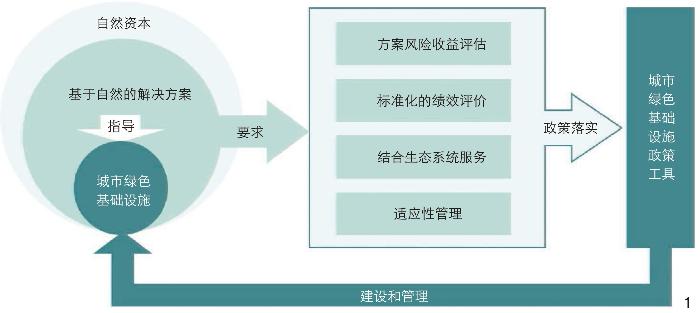
The construction of urban green infrastructure is one of the major scientific and technological tasks to cope with environmental risks such as global climate change and ecosystem imbalance. As a Nature-based Solution, urban green infrastructure (UGI) policy tools have become an important means led by the government to promote the construction of urban green infrastructure.
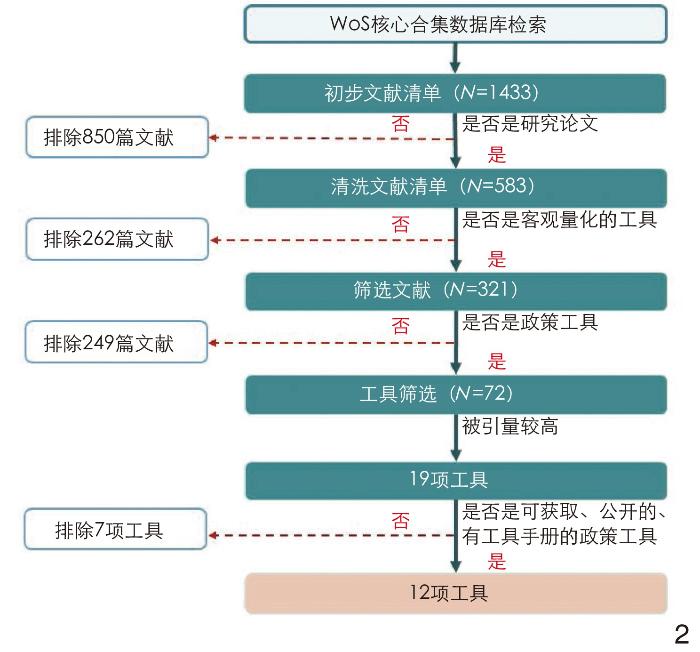
With UGI policy tools as the research object and text retrieval, econometric analysis and coding classification as research clues, this research, by virtue of Bibliometrix R Package software and CiteSpace software, conducts a visual analysis of the research status, hot trends and research directions in the field of UGI policy tools. Specifically, the research deeply analyzes the development history of 12 typical UGI policy tools, compares the strengths and weaknesses of their derivative background, implementation purpose, indicator system, performance assessment method, and policy regulation path, and analyzes the ways and means for organically combining UGI construction and management with ecosystem service objectives, aiming to provide policy guidance and technical support for the optimization and improvement of UGI.
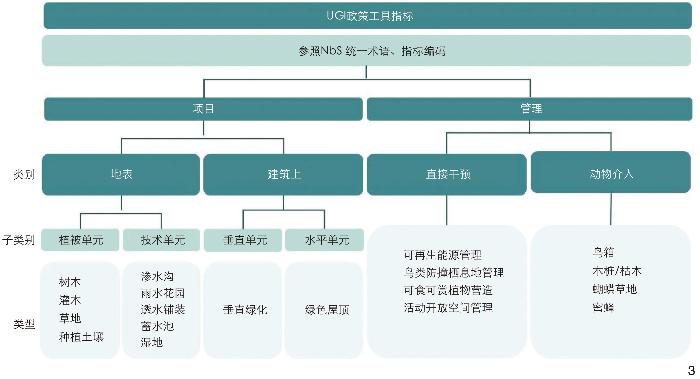
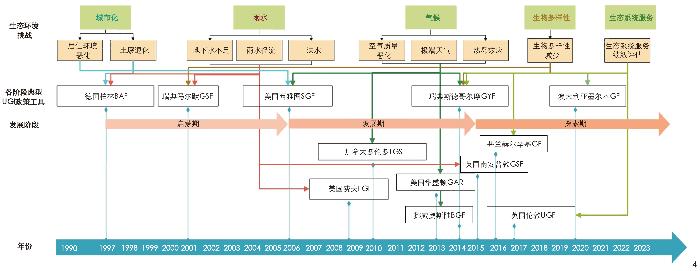
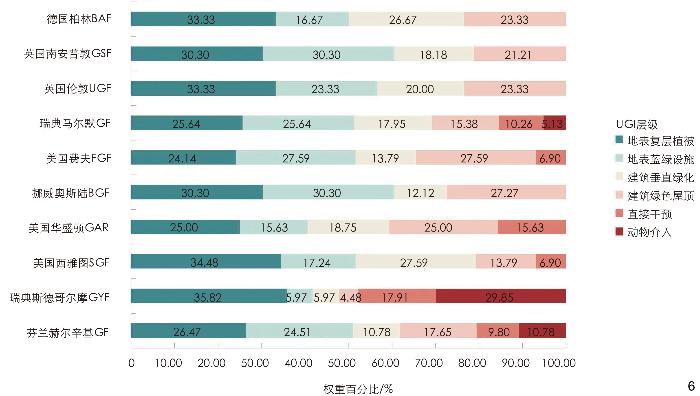
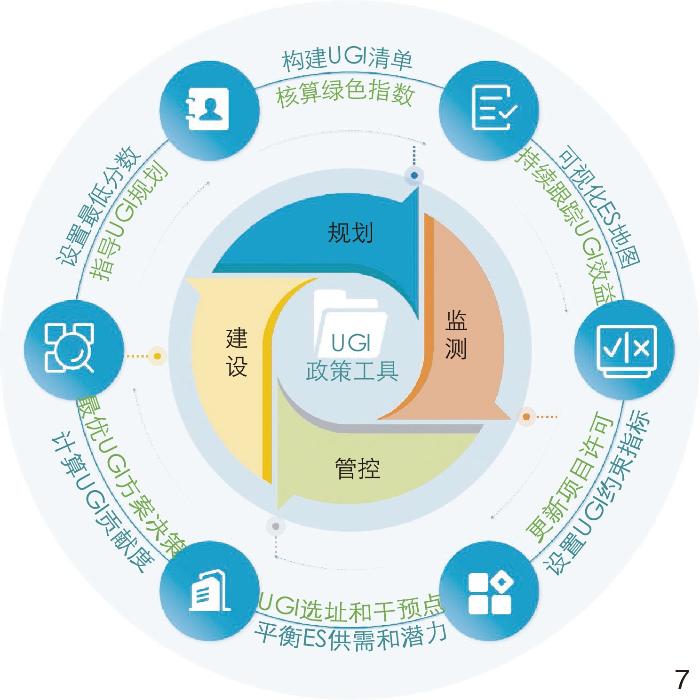
The core issues of green infrastructure evaluation tools include basic performance, benefit evaluation and index measurement methods. “Ecosystem services” and “green infrastructure assessment” are the driving themes, and evaluating green infrastructure in combination with ecosystem services has become an important trend. Based on the map of national scientific research output and the map of tool citations, 12 representative policy tools are selected. The development of such tools has gone through three stages: enlightenment, exploration and development. In the first stage, in response to the challenges of land management and stormwater environment issues caused by urbanization, Berlin and Malmo developed representative policy tools to creatively integrate landscape elements such as greening, water system and soil in urban planning and design, and effectively guide the quantity increase and quality optimization of urban landscape through evaluation indicators. In the second stage, different cities developed their distinctive solutions to urban rainwater, climate and environment problems. In the third stage of exploration, green infrastructure assessment tools mainly implemented in Stockholm in Sweden, Melbourne in Australia, etc., gradually focused on the assessment of ecosystem service performance.By combing and comparing 12 typical UGI policy tools, this research obtains the following findings. 1) UGI policy tools have gradually become a powerful means to deal with urban challenges, with their target orientation shifting from solving a single stormwater problem to assessing multiple benefits of ecosystem services. 2) The research unifies the indicator terms involved in UGI policy tools and encode and classify them with reference to the standard NbS terms and classification methods described in Nature4Cities (N4C) issued by the United Nations Environment Programme. Policy indicators range from the integration of greening, water system and soil elements to a hierarchical system that includes project elements such as surface cladding vegetation, surface blue and green facilities, vertical greening of buildings, and green roofs of buildings, as well as management elements of direct intervention and animal intervention. 3) The tools can be divided into the “confirmative” mode of mandatory land use restriction or the “performative” mode of indirect encouragement, combining the two complementary urban development project screening mechanisms of standard weight and performance threshold, covering the whole process from planning, construction to control and monitoring. 4) It has become an urgent need to calibrate the performance of UGI policy tools according to ecosystem service demand, and to develop tools to assess the effectiveness of regulatory services (carbon sequestration and climate regulation), provision services and cultural services of UGI. Therefore, in the future, synergies and trade-offs between ecosystem services can be incorporated into the weighted basis, and a UGI policy tool covering a multi-objective evaluation system may be developed to examine the potential ecological, social and economic benefits of different green infrastructure solutions.
The development of UGI policy tools will become a powerful weapon to deal with global issues and urban challenges. It is recommended to, in alignment with the international general classification standard for NbS, unify the UGI discourse system involving UGI type definition, dimension and scale to provide policy guidance and technical support for the optimization and improvement of UGI.
ZHU Xun , ZHANG Yaqian , ZHU Huiming , ZHAO Wei . Systematic Review and Research Frontier Analysis of Urban Green Infrastructure Policy Tools[J]. Landscape Architecture, 2024 , 31(11) : 86 -93 . DOI: 10.3724/j.fjyl.202402020082
表1 城市绿色基础设施政策工具系统性比较Tab. 1 Systematic comparison of UGI policy tools |
| 政策工具 | 计算 方式 | 评估目标 | 评估内容 | 高权重元素 | 加权标准 | 法律地位 | 最低分数差异依据 | |
| 共有 | 特色 | |||||||
| 注:“—”表示该项没有对应的解释。 | ||||||||
| 德国柏林 BAF | 二维 | 土地管理、雨水管理 | 乔木、灌 木、种植 土壤或基 质、草地、 绿色屋顶、 垂直绿化、 透水铺装、 雨水花园、 渗透设施 | — | 种植土壤 | — | 强制性或自愿性取决于规划区域 | 土地利用类型、土地占用指数、新建/现有开发项目扩展 |
| 瑞典马尔默 GSF | 二维 | 提高生物多样性、 雨水管理 | — | 绿色屋顶、乔木、 垂直绿化 | — | 强制性 | 土地占用指数 | |
| 美国西雅图 SGF | 三维 | 适应气候变化 | — | 绿色屋顶、乔木 | — | 强制性或自愿性取决于规划区域 | 新建项目/现有开发的项目扩展 | |
| 美国费夫 FGF | 三维 | 雨水管理 | 增加奖励元素:耐旱本土物 种、雨水灌溉、开放空间、 农作物景观 | 垂直绿化、生态滞留池、 绿色屋顶 | 处理雨水能力 | 强制性 | 新建项目/现有开发的项目扩展 | |
| 加拿大 多伦多TGS | 二维 | 减少碳排放 | 增设空气质量、能源与排放、水质和效率、生态和生物多样性、废物与循环经济五大模块 | — | — | 强制性 | 土地利用类型 | |
| 英国伦敦 UG | 二维 | 增加绿化规模 | — | 新增植被、湿地或开阔水域 | — | 鼓励性 | 土地利用类型 | |
| 美国华盛顿 GAR | 三维 | 宜居性、生态功能、绿地可达性、气候适应 | 增加奖励元素:本土植物、可食用植物和雨水灌溉 | 树木(以树冠大小衡量)、 绿色屋顶 | — | 强制性 | 土地占用指数、新建项目/现有开发项目扩展 | |
| 挪威奥斯陆 BGF | 三维 | 雨水管理、生物多样性、美好的城市生活 | 增加蓝色空间要素 | 蓄水池、种植土壤、 现有乔木 | — | 强制性 | 空间分异城市内/外 | |
| 瑞典斯德哥 尔摩GYF | 三维 | 社会健康福祉、生物多样性、减缓气候变化 | 评估支持、调节和文化生态系统服务效能 | 保存完好的种植土壤、 新增乔木 | 生态系统服务功能优先排序 | 强制性 | 土地占用指数 | |
| 英国南安普敦 GSF | 二维 | 提高生态系统服务 | — | 水域、深层土壤上的树木、绿色屋顶 | 雨水渗透率 | 鼓励性 | 土地利用类型 | |
| 芬兰赫尔辛基 GF | 三维 | 雨水管理、生 态系统服务 | 评估UGI生态、功能、景观和维护绩效 | 保存完好的种植土壤、 新增乔木 | 生态、功能、景观和维护的重要性 | 强制性或自愿性取决于规划区域 | 土地利用类型、土 地占用指数 | |
| 澳大利亚 墨尔本GF | 三维 | 可持续建筑性能、生物多样性、社会健康福祉 | 现有保留、新增种植 | 乔木 | 生态系统服务功能优先排序 | 强制性 | 土地利用类型 | |
文中图表均由作者绘制。
| [1] |
IUCN. Global Standard for Nature-based Solutions. A User-Friendly Framework for the Verification, Design and Scaling up of NbS[J]. Accessed, 2020, 15 (12): 1-21.
|
| [2] |
张翼飞, 李嘉蕙, 王艺蔚. 中国城市绿色基础设施绩效研究: 基于自然的解决方案[J]. 生态经济, 2022, 38 (11): 100-107
ZHANG Y F, LI J H, WANG Y W. Analysis on NbS Performance of Urban Green Infrastructure Practice in China[J]. Ecological Economy, 2022, 38 (11): 100-107.
|
| [3] |
ANGULURI R, NARAYANAN P. Role of Green Space in Urban Planning: Outlook Towards Smart Cities[J]. Urban Forestry & Urban Greening, 2017, 25: 58-65.
|
| [4] |
蒋理, 刘颂, 刘超. 蓝绿基础设施对城市气候韧性构建的作用: 基于共引文献网络的文献计量分析[J]. 景观设计学(中英文), 2021, 9 (6): 8-23
JIANG L, LIU S, LIU C. The Contributions of Blue-Green Infrastructure to Building Urban Climatic Resilience-Bibliometric Analysis Based on Co-citation Networks[J]. Landscape Architecture Frontiers, 2021, 9 (6): 8-23
|
| [5] |
张炜, 王凯. 基于绿色基础设施生态系统服务评估的政策工具, 绿色空间指数研究: 以柏林生境面积指数和西雅图绿色指数为例[J]. 中国园林, 2017, 33 (9): 78-82
ZHANG W, WANG K. The Green Space Factor as a Regulation Tool to Evaluate the Performance of Urban Green Infrastructure: A Case Study of Berlin Biotope Area Factor and Seattle Green Factor[J]. Chinese Landscape Architecture, 2017, 33 (9): 78-82.
|
| [6] |
PAULEIT S, AMBROSE-OJI B, ANDERSSON E, et al. Advancing Urban Green Infrastructure in Europe: Outcomes and Reflections from the GREEN SURGE Project[J]. Urban Forestry & Urban Greening, 2019, 40: 4-16.
|
| [7] |
BOULTON C, DEDEKORKUT-HOWES A, BYRNE J. Factors Shaping Urban Greenspace Provision: A Systematic Review of the Literature[J]. Landscape and Urban Planning, 2018, 178: 82-101
|
| [8] |
JIANG X, SUN Y T, QU Y P, et al. The Development and Future Frontiers of Global Ecological Restoration Projects in the Twenty-First Century: A Systematic Review Based on Scientometrics[J]. Environmental Science and Pollution Research International, 2023, 30 (12): 32230-32245
|
| [9] |
李昊, 潘宇光, 王磊. Bibliometrix: 一款新的基于R语言的文献计量软件介绍与评价[J]. 大学图书情报学刊, 2018, 36 (4): 93-104
LI H, PAN Y G, WANG L. Bibliometrix: A New Bibliometrics Analysis Software[J]. Journal of Academic Library and Information Science, 2018, 36 (4): 93-104
|
| [10] |
CASTELLAR J A C, POPARTAN L A, PUEYO-ROS J, et al. Nature-based Solutions in the Urban Context: Terminology, Classification and Scoring for Urban Challenges and Ecosystem Services[J]. Science of the Total Environment, 2021, 779: 146237.
|
| [11] |
Senatsverwaltung Klimaschutz und Umwelt. Senate Department for the Environment, Transport and Climate Protection Landscape Planning[EB/OL]. (2010)[2024-07-10]. http://www.berlin.de/senuvk/umwelt/landschaftsplanung/bff/index_en.shtml.
|
| [12] |
KRUUSE A. The Green Space Factor and the Green Points System[EB/OL]. (2011)[2024-07-09]. https://www.redfrogforum.org/wp-content/uploads/2020/04/125-GRaBS-Expert-Paper-6-the-green-space-factor-and-the-green-points-system.pdf.
|
| [13] |
Seattle Department of Planning and Development. Seattle Department of Construction & Inspections Seattle Green Factor[EB/OL]. (2006)[2024-07-10]. http://www.seattle.gov/dpd/codesrules/codes/greenfactor/default.htm.
|
| [14] |
STENNING E. An Assessment of the Seattle Green Factor: Increasing and Improving the Quality of Urban Green Infrastructure. University of Washington, Seattle, WA. [EB/OL]. (2024-09-04)[2024-09-11]. https://www.seattle.gov/sdci/codes/codes-we-enforce-(a-z)/seattle-green-factor.
|
| [15] |
Toronto Department of Planning and Development. Toronto Green Standard Overview[EB/OL]. (2019)[2024-03-09]. https://www.toronto.ca/city-government/planning-development/official-plan-guidelines/toronto-green-standard/toronto-green-standard-overview/.
|
| [16] |
Department of Energy & Environment. Green Area Ratio Overview[EB/OL]. (2013)[2024-07-10]. http://doee.dc.gov/GAR.
|
| [17] |
Plan-og Bygningsetaten. Blagronn Faktor Veileder Byggesak[EB/OL]. (2014-01-28)[2024-07-10]. https://www.regjeringen.no/globalassets/upload/subnettsteder/framtidens_byer/klimatilpasning/2014/bgf_veileder_byggesakhoveddelen2014.01.28.pdf.
|
| [18] |
Exploateringskontoret, Miljöförvaltningen och Stadsbyggnadskontoret på Stockholms stad. GYF-Grönytefaktor för Kvartersmark[EB/OL]. (2021-06-17)[2024-07-10]. https://tillstand.stockholm/globalassets/foretag-och-organisationer/tillstand-och-regler/tillstand-regler-och-tillsyn/lokal-och-fastigheter/handbocker-och-riktlinjer-vid-byggnation-i-stockholm/gyf-for-kvartersmark.pdf.
|
| [19] |
Southampton Department of Planning and Development. Southampton Green Space Factor Guidance.[EB/OL]. (2024)[2024-07-10]. https://www.southampton.gov.uk/media/kajkr23v/green-space-factor-guidance-2024.pdf.
|
| [20] |
Helsingin Kaupunkiympäristön Toimialan. City of Helsinki Developing a Green factor tool for City of Helsinki Climate-Proof City: The Planner’s Workbook[EB/OL]. (2016)[2024-07-11]. http://ilmastotyokalut.fi/developing-a-green-factor-tool-for-city-of-helsinki/.
|
| [21] |
Greater London Authority. Urban Greening Factor for London Research Report[EB/OL]. (2017-07-24)[2024-07-11]. https://www.london.gov.uk/sites/default/files/urban_greening_factor_for_london_final_report.pdf.
|
| [22] |
Melbourne Department of Building and development. Green Factor tool for Melbourne[EB/OL]. (2020-03-21)[2024-07-11]. https://www.melbourne.vic.gov.au/community/greening-the-city/green-infrastructure/Pages/green-factor-tool.aspx.
|
| [23] |
AUSTIN G. Case Study and Sustainability Assessment of Boo1, Malmö, Sweden[J]. Journal of Green Building: Summer, 2013, 8 (3): 34-50
|
| [24] |
RINNE J, PRIMMER E. A Case Study of Ecosystem Services in Urban Planning in Finland: Benefits, Rights and Responsibilities[J]. Journal of Environmental Policy & Planning, 2016, 18 (3): 286-305.
|
| [25] |
RING Z, DAMYANOVIC D, REINWALD F. Green and Open Space Factor Vienna: A Steering and Evaluation Tool for Urban Green Infrastructure[J]. Urban Forestry & Urban Greening, 2021, 62: 127131
|
| [26] |
侯锦雄. 应用生境面积因子在台湾云林县的永续农业景观规划[J]. 中国园林, 2011, 27 (12): 10-14
HOU J X. Sustainable Agriculture Landscape Planning of Yunlin County: Application of Biotope Area Factor[J]. Chinese Landscape Architecture, 2011, 27 (12): 10-14
|
| [27] |
CORTINOVIS C, GENELETTI D, HEDLUND K. Synthesizing Multiple Ecosystem Service Assessments for Urban Planning: A Review of Approaches, and Recommendations[J]. Landscape and Urban Planning, 2021, 213: 104129.
|
| [28] |
BUSH J, ASHLEY G, FOSTER B, HALL G. Integrating Green Infrastructure into Urban Planning: Developing Melbourne’s Green Factor Tool[J]. Urban Planning, 2021, 6 (1): 20-31
|
| [29] |
郝庆. 对机构改革背景下空间规划体系构建的思考[J]. 地理研究, 2018, 37 (10): 1938-1946
HAO Q. The Construction of Spatial Planning System Under the Background of Institutional Reform[J]. Geographical Research, 2018, 37 (10): 1938-1946.
|
| [30] |
PAPPALARDO V, LA ROSA D. Policies for Sustainable Drainage Systems in Urban Contexts Within Performance-Based Planning Approaches[J]. Sustainable Cities and Society, 2020, 52: 101830.
|
| [31] |
VENTER Z S, BARTON D N, MARTINEZ-IZQUIERDO L, et al. Interactive Spatial Planning of Urban Green Infrastructure: Retrofitting Green Roofs Where Ecosystem Services Are Most Needed in Oslo[J]. Ecosystem Services, 2021, 50: 101314.
|
| [32] |
JUHOLA S. Planning for a Green City: The Green Factor Tool[J]. Urban Forestry & Urban Greening, 2018, 34: 254-258.
|
| [33] |
STANGE E E, BARTON D N, ANDERSSON E, et al. Comparing the Implicit Valuation of Ecosystem Services from Nature-Based Solutions in Performance-Based Green Area Indicators Across Three European Cities[J]. Landscape and Urban Planning, 2022, 219: 104310.
|
| [34] |
HEIN L, BAGSTAD K J, OBST C, et al. Progress in Natural Capital Accounting for Ecosystems Global Statistical Standards Are Being Developed[J]. Science, 2020, 367: 514-515
|
| [35] |
刘颂, 戴常文. 自然资本引领绿色基础设施可持续管理[J]. 中国园林, 2022, 38 (3): 40-44
LIU S, DAI C W. Sustainable Management of Green Infrastructure Guided by Natural Capital[J]. Chinese Landscape Architecture, 2022, 38 (3): 40-44.
|
| [36] |
COSTANZA R, DE GROOT R, BRAAT L, et al. Twenty Years of Ecosystem Services: How Far Have We Come and How Far Do We Still Need to Go?[J]. Ecosystem Services, 2017, 28: 1-16
|
| [37] |
王云才, 刘玲. 远程耦合: 绿色基础设施绩效评价的空间生态智慧[J]. 中国园林, 2023, 39 (10): 51-55
WANG Y C, LIU L. Telecoupling: Spatial Ecological Wisdom for Performance Evaluation of Green Infrastructure[J]. Chinese Landscape Architecture, 2023, 39 (10): 51-55.
|
| [38] |
HUANG P S, TSAI S M, LIN H C, et al. Do Biotope Area Factor Values Reflect Ecological Effectiveness of Urban Landscapes? A Case Study on University Campuses in Central Taiwan[J]. Landscape and Urban Planning, 2015, 143: 143-149
|
/
| 〈 |
|
〉 |