

Adaptive Reuse Approach to the Conservation of Historic Urban Landscape: Evolution and Role of Facadism
|
(CAN) Emilee CHEN is a master student in the Faculty of Architecture and the Built Environment, Delft University of Technology. Her research focuses on design of additional layer on top of existing buildings, and architectural timber structure |
|
ZHU Kaiyi, Ph.D., is a postdoctoral researcher and lecturer in the Faculty of Architecture and the Built Environment, Delft University of Technology. Her research focuses on history of architecture and urban planning, urban renewal and heritage conservation, critical heritage studies, and postcolonial cultural landscapes |
Received date: 2024-05-26
Revised date: 2024-09-05
Online published: 2025-12-16
Copyright
Objective Facadism is an adaptive reuse approach — removing internal redundancies and remodeling heritage buildings while preserving their historic façades. Criticized but also widely applied in heritage practice, the concept of Facadism has evolved towards heritage conservation principles, leaving important examples for heritage practitioners involved in the conservation and transformation practice of historic urban landscapes in contemporary metropolitan development. Historic urban landscapes and built cultural heritage therein have become key drivers for urban renewal in many historic towns and regions worldwide. Since the 1980s, to alleviate housing pressures, Facadism has become a common adaptive reuse approach evolving to balance historic landscape conservation and urban development in real estate developments in North America, and has been controversial due to the physical destruction of heritage authenticity. In China, an adaptive reuse approach similar to Facadism has also come to the forefront since the late 1990s through the practice of conservation and renovation in the Xintiandi redevelopment project in Shanghai. The Facadism approach reflects the tension between conservation and development, history and modernity, and tradition and innovation, launching a call for in-depth research.
Methods/process This research first analyzes the theoretical origins of Facadism and its evolution in heritage discourse by understanding and defining it. It also studies the impact generated by Facadism on heritage authenticity in practice. Secondly, since many cases of Toronto’s Facadism practice have received widespread recognition for their treatment of building − street linkage, this research identifies and reviews typical cases with the aim of exploring the factors that make Facadism successful in a particular context. By tracing the evolution of Facadism practice on Toronto’s Yonge Street over the course of the 21st century, the research reveals why Facadism has become the default strategy for adaptive reuse of historic buildings in Toronto, and its multiple impacts on heritage values, genius loci, collective identity, spatial perception, urban development and social justice. By reviewing public discussions, municipal decisions and theoretical perspectives, this research aims to analyze and explain the potential reasons for the successful practices of the Facadism strategy in adaptive reuse and its evolutionary path during implementation. To further explore the theoretical applicability of the concept of Facadism in China’s urban renewal under contextual transformation, this research introduces Shanghai’s extensive adaptive reuse practices and the use of related terms for comparative analysis.
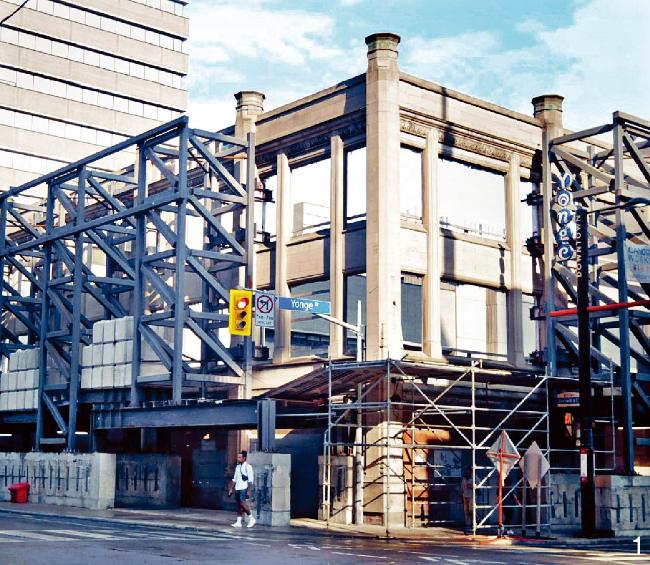
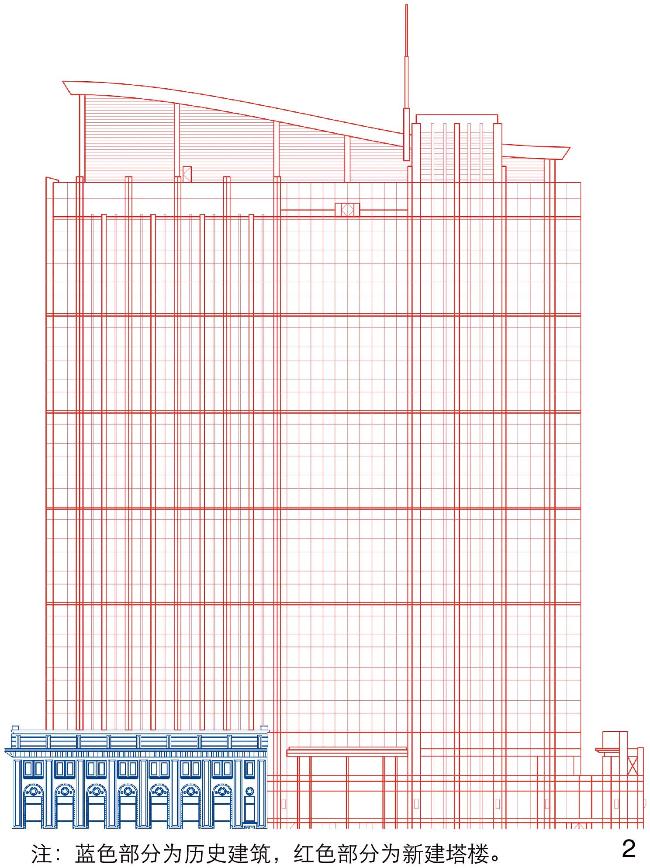
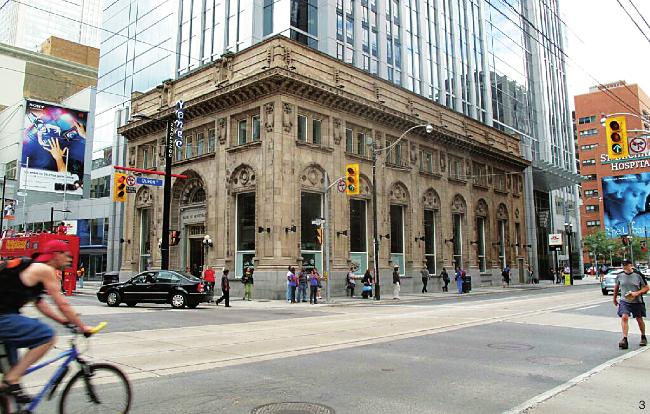
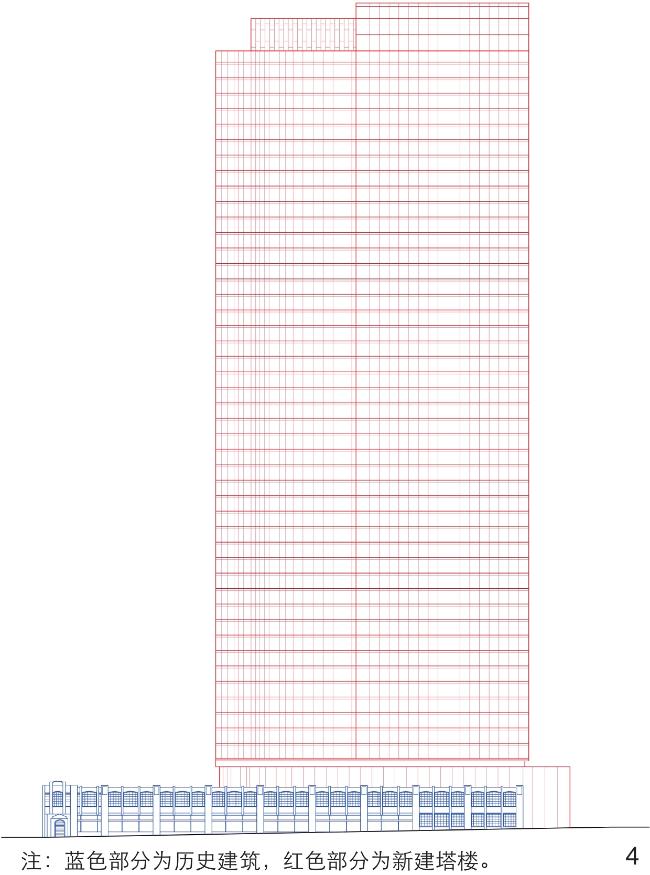
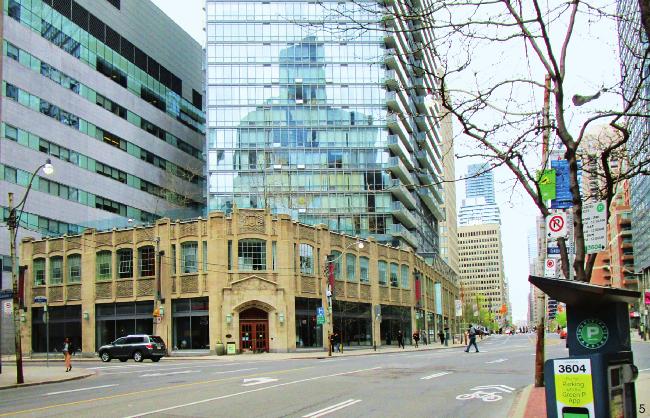
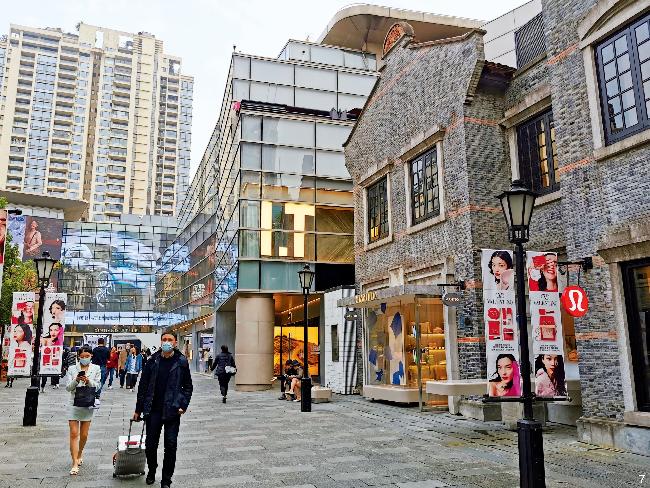
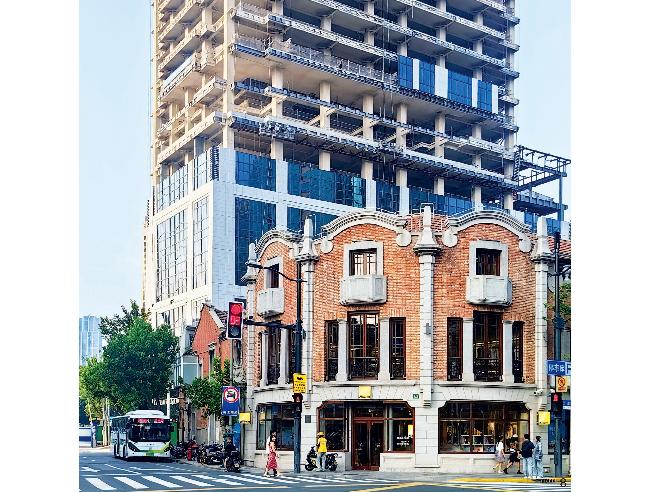
Results/conclusion Through an analysis of the adaption of the Bank of Montreal, the McLaughlin Showroom, and a row of Victorian buildings, this research categorizes the façade-led design strategies for adding high-rises on existing historic buildings into three groups: Sheet mode, podium mode, and attachment mode. The research also identifies similar approaches in adaptive reuse practices in Shanghai, such as the redevelopment of Jianyeli, Shangxianfang, and arcades on East Jinling Road. However, this research notes that although practitioners have used Facadism approache in Shanghai’s heritage adaption, the term “Facadism” is not introduced and known to the academia and the general public as a term or a keyword to describe a retrofitting strategy. Furthermore, in the China Knowledge Network database, there is no evidence of any papers or other results related to “Facadism” through keyword search. This research further suggests that the general idea of “adaptive reuse” for summarizing various heritage approaches can directly lead to two drawbacks in heritage conservation practice. On the one hand, it allows stakeholders to obfuscate concepts, to use slogans such as “conservation development” to disguise actual destructive operation of heritage in a speculative manner and to lower the public’s psychological line of defense against the destruction of cultural heritage. On the other hand, this leads to a lack of respect for the designation of significant heritage and conservation planning by stakeholders, requiring adjustments of legally valid conservation planning in implementation. This research further argues that the most alarming aspect of Facadism approach is not its outcome, but the impact on the integrated conservation of historic landscapes and the choice of values in the extensive urbanism process. In China’s post-2021 urban renewal, an increasing number of historic blocks, neighborhoods, and roads selected into the heritage list are facing the challenge of being transformed. This research argues for the introduction of more pragmatically oriented adaptive reuse concepts in contemporary urban renewal in China, preventing the hybridization and misuse of conservation concepts by stakeholders and maintaining the purity of heritage conservation principles. Overall, this research emphasizes the implications of Facadism in contemporary urban renewal from the perspective of heritage integrity and authenticity of the conservation of historic urban landscape.
Emilee CHEN (CAN) , Kaiyi ZHU . Adaptive Reuse Approach to the Conservation of Historic Urban Landscape: Evolution and Role of Facadism[J]. Landscape Architecture, 2024 , 31(10) : 49 -57 . DOI: 10.3724/j.fjyl.202405260296
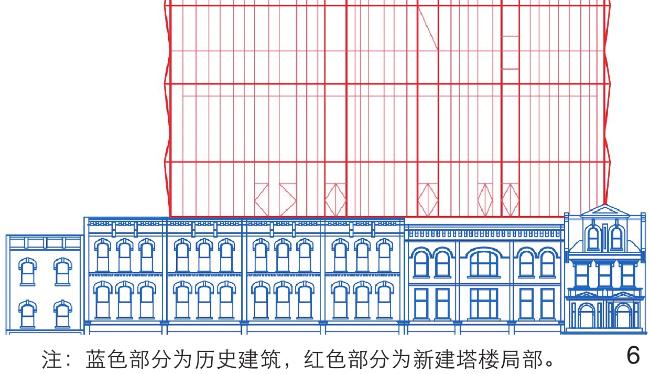
图6 维多利亚时期的历史建筑改造和新建豪华公寓的局部立面图Fig. 6 Partial elevation of the transformed Victorian architecture and the new luxury condos |
| [1] |
LANZ F, PENDLEBURY J. Adaptive Reuse: A Critical Review[J]. The Journal of Architecture, 2022, 27: 441-462.
|
| [2] |
PLEVOETS B, VAN CLEEMPOEL K. Adaptive Reuse of the Built Heritage Concepts and Cases of an Emerging Discipline[M]. London: Routledge, 2019.
|
| [3] |
RICHARDS J. Facadism[M]. London: Routledge, 1994.
|
| [4] |
HERNOWO B, DEWI S A, ARIANA H L. Heritage Facadism and Its Concept of Value[C]// HERNOWO B. 2nd International Conference on Urban Heritage and Sustainable Infrastrcture Development. Semarang: Diponegoro University, 2013.
|
| [5] |
KYRIAZI E. Façadism, Building Renovation and the Boundaries of Authenticity[J]. Aesthetic Investigations. 2019, 2(2): 184-195.
|
| [6] |
姚萍, 赵晔. 基于上海新天地对历史遗产保护利用问题的思考[J]. 辽东学院学报(自然科学版), 2009, 16(1): 75-78.
YAO P, ZHAO Y. How to Protect and Utilize Historical Heritage: A Case Study with Xintiandi Shopping Mall in Shanghai[J]. Journal of Liaodong University (Natural Science Edition), 2009, 16(1): 75-78.
|
| [7] |
常青. 上海石库门里弄演替历程与再生模式新探[J]. 中国科学: 技术科学, 2023, 53(5): 681-692.
CHANG Q. Shanghai Shikumen Lilong: Transformation Process and Regeneration Models[J]. Scientia Sinica (Technologica), 2023, 53(5): 681-692.
|
| [8] |
上海明悦建筑设计事务所有限公司. 张园城市更新(西区保护性综合改造: 1—17号文物和优秀历史建筑保护修缮)[J]. 建筑实践, 2022(6): 46-71.
Shanghai H.N.A. Architects Co., Ltd. Zhangjia Garden Regeneration: West District Protective and Comprehensive Renovation: Conservation and Restoration of No. 1−17 Cultural Relics and Heritage Buildings[J]. Architectural Practice, 2022(6): 46-71.
|
| [9] |
张如翔. 石库门里弄保护更新策略探讨: 以上海市建业里改造设计为例[J]. 中外建筑, 2018(12): 99-101.
ZHANG R X. Discussion on Protection and Renewal Strategy of Shikumen Lane: Taking Jianye Lane Renovation Design as an Example[J]. Chinese & Overseas Architecture, 2018(12): 99-101.
|
| [10] |
杨振之, 谢辉基.“修旧如旧”“修新如旧”与层摞的文化遗产[J].旅游学刊, 2018, 33(9): 6-9.
YANG Z Z, XIE H J. “Repairing the Old as Old, Repairing the New as Old” and Stacks of Cultural Heritage[J]. Tourism Tribune, 2018, 33(9): 6-9.
|
| [11] |
BARGERY R. The Ethics of Façadism: Pragmatism Versus Idealism[EB/OL]. (2005) [2014-02-25]. https://www.buildingconservation.com/articles/facadism/facadism.htm.
|
| [12] |
JOKILEHTO J. World Heritage: Defining the Outstanding Universal Value[J]. City & Time, 2006, 2(2): 1-10.
|
| [13] |
LOYER F, SCHMUCKLE-MOLLARD C. Façadisme et Identité Urbaine[C]. Paris: Centre des Monuments Nationaux, 2001.
|
| [14] |
ZHU K Y, HEIN C M. Temporalities and the Conservation of Cultural Relic Protection Units: Legislative, Economic and Citizen Times of the Bugaoli Community in Globalising Shanghai[J]. Built Heritage, 2020, 4(1): 11
|
| [15] |
THROSBY D. Economics and Culture[M]. Cambridge: Cambridge University Press, 2000.
|
| [16] |
HIGHFIELD D. The Construction of New Buildings behind Historic Facades[M]. London: CRC Press, 1991.
|
| [17] |
AL-HINKAWI W S, HASAN N A, ZEDAN S K. Facadism: An Approach for Spatial Reconfiguration[J]. International Journal of Design & Nature and Ecodynamics, 2021, 16(6): 631-640.
|
| [18] |
JOKILEHTO J. A History of Architectural Conservation[M]. London: Routledge, 2017.
|
| [19] |
POULIOS I. Moving Beyond a Values-Based Approach to Heritage Conservation[J]. Conservation and Management of Archaeological Sites, 2010, 12(2): 170-185.
|
| [20] |
LEWIS R K. D.C.’s New Role in Modern Architecture[EB/OL]. (1985-03-01) [2024-04-15]. https://www.washingtonpost.com/archive/realestate/1985/03/02/dcs-new-role-in-modern-architecture/e96b6bd9-39ba-4b95-85e1-0498e846f8f4/.
|
| [21] |
JIVEN G, LARKHAM P J. Sense of Place, Authenticity and Character: A Commentary[J]. Journal of Urban Design, 2003, 8(1): 67-81.
|
| [22] |
STEVENS D A. Changing the Perspective of Facadism Within San Francisco[D]. Honolulu: University of Hawaii, 2008.
|
| [23] |
MIRABELLI J. It’s All a Facade! The Perilous State of Heritage in Toronto[EB/OL]. (2016-11-05) [2024-04-15]. https://complexitiesandcontradictions.wordpress.com/2016/11/05/its-all-a-facade-the-perilous-state-of-heritage-in-toronto/.
|
| [24] |
WILL G. Façadism: Past / Present[EB/OL]. (2021-04-15) [2024-04-15]. https://vancouverreviewmedia.com/facadism-past-present/.
|
| [25] |
LIGAYA A. Heritage, Development at Odds as Cities Come Under Pressure to Accomodate Growth[EB/OL]. (2017-12-06) [2024-04-15]. https://financialpost.com/real-estate/heritage-development-at-odds-as-cities-come-under-pressure-from-growth.
|
| [26] |
BALL M. The 1980s Property Boom[J]. Environment and Planning A: Economy and Space, 1994, 26(5): 671-695.
|
| [27] |
WINTERTON D E. Toronto’s Edwardian Skyscraper Row[J]. Journal of the Society for the Study of Architecture in Canada, 2015, 40(2): 77-99.
|
| [28] |
LANDAU J. Throwback Thursday: Burano[EB/OL].(2015-02-19) [2024-04-15]. https://urbantoronto.ca/news/2015/02/throwback-thursday-burano.15199.
|
| [29] |
LEONHARDT B. 832 Bay Street (McLaughlin Motor Car Showroom): Approval of Alterations to a Heritage Building, and Authority to Enter into a Heritage Easement Agreement[R/OL]. (2008-04-14) [2024-04-15]. https://www.toronto.ca/legdocs/mmis/2008/te/bgrd/backgroundfile-12595.pdf.
|
| [30] |
LI Z. Facadist Toronto: Heritage at Face Value[D]. Waterloo: University of Waterloo, 2023.
|
| [31] |
杨春蓉.历史街区保护与开发中建筑的原真与模仿之争: 以成都宽窄巷子为例[J].西南民族大学学报(人文社科版), 2009, 30(6): 108-112.
YANG C R. The Debate Between Architectural Authenticity and Imitation in the Conservation and Development of Historic Neighbourhoods: A Case Study of the Kuanzhai Alley in Chengdu[J]. Journal of Southwest Minzu University (Humanities and Social Sciences Edition), 2009, 30(6): 108-112.
|
| [32] |
林大彰. “修旧如旧”仿古景观的困惑: 以苏州平江历史街区改造为例[J]. 新美术, 2017, 38(9): 116-119.
LIN D Z. The Confusion of “Repairing the Old as Old” Antique Landscape: An Example of the Renovation of Pingjiang Historic District in Suzhou[J]. New Arts, 2017, 38(9): 116-119.
|
| [33] |
CHANG Q. A Chinese Approach to Urban Heritage Conservation and Inheritance: Focus on the Contemporary Changes of Shanghai’s Historic Spaces[J]. Built Heritage, 2017, 1(3): 13-33.
|
| [34] |
FLEMING D, SIMON H. Epilogue: Disneyfied Dreamwork Shi-nema: Tracing a New “Old” Path Through the Inauthentic “Traditional”, in Chinese Urban Shi-nema: Cinematicity, Society and Millennial China[M]. Cham: Palgrave Macmillan, 2020: 219-230.
|
| [35] |
住房和城乡建设部办公厅.住房和城乡建设部办公厅关于开展第一批城市更新试点工作的通知[EB/OL].(2021-11-04)[2024-04-15]. https://www.gov.cn/zhengce/zhengceku/2021-11/06/content_5649443.htm.
Office of the Ministry of Housing and Urban Rural Development. Notice from the General Office of the Ministry of Housing and Urban Rural Development on Launching the First Batch of Pilot Projects for Urban Renewal[EB/OL]. (2021-11-04) [2024-04-15]. https://www.gov.cn/zhengce/zhengceku/2021-11/06/content_5649443.htm.
|
/
| 〈 |
|
〉 |