

Resourceful Application of Landscaping Waste in Soil Improvement
|
CHEN Yue, Master, is an engineer in Chongqing Landscape and Gardening Research Institute, Chongqing Garden Soil Quality Testing Center, and Chongqing Key Laboratory of Germplasm Innovation and Utilization of Native Plants. Her research focuses on resourceful utilization of organic solid waste, and soil quality management and improvement |
|
HU Yan Yan, Ph.D., is a professorate senior engineer in Chongqing Landscape and Gardening Research Institute, director of Urban Soil Research Institute, and a senior engineer in Chongqing Garden Soil Quality Testing Center and Chongqing Key Laboratory of Germplasm Innovation and Utilization of Native Plants. Her research focuses on resourceful utilization of organic solid waste, and soil quality management and improvement |
Received date: 2024-02-28
Revised date: 2024-07-24
Online published: 2025-12-16
Copyright
[Objective] With the continuous improvement of social and economic development levels, as well as the ongoing urbanization process, there is a growing emphasis on refining conservation and management practices for various green spaces in response to the gradual expansion of urban landscaping construction. Consequently, the issue of rapidly increasing landscaping waste production has become an important concern that cannot be overlooked in urban management. In Chongqing’s central urban area, where large amounts of pruning wastes from trees and shrubs are generated, current disposal methods primarily involve landfilling and incineration with low rates of resourceful utilization. This not only leads to pollution in the atmosphere, water bodies, and soil environment, but also results in wastage of resources. However, it is worth noting that landscaping waste holds significant potential for resourceful utilization; the main products of landscape waste may include biochar, garden mulch, organic compost, soil amendments, cultivation substrates, and wood-plastic products. Among these options, composting technology stands out as an efficient method for dealing with landscaping waste while being a relatively mature organic solid waste treatment technology thus far. Therefore, establishing an industry chain for harmless disposal of landscaping waste through resourceful land utilization holds great significance in promoting the harmless treatment and resourceful utilization of landscaping waste while actively boosting the achievement of carbon peaking and carbon neutrality goals and fostering the development of a green circular economy.
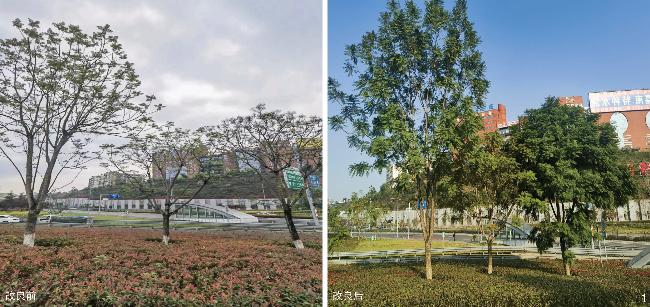
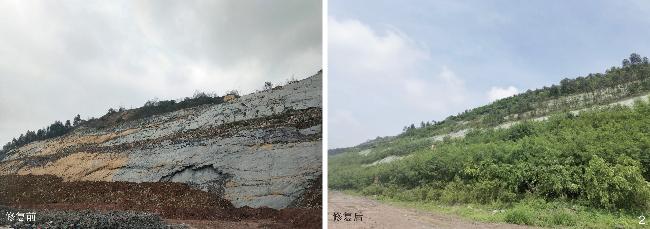
[Methods] The composting technology aims to raise the temperature within the compositing system by means of metabolic and proliferative reactions of microorganisms under conditions characterized by abundant oxygen, excellent ventilation, suitable temperature, and moisture content. This facilitates the decomposition of composts while further eliminating harmful microorganisms therein, ultimately transforming them into organic fertilizer. Landscaping waste contains a substantial amount of cellulose, lignin, and other components with high carbon content and low moisture content that can effectively adjust the C/N ratio and moisture content of composts, thus becoming an exceptional bulking agent for composting purposes. Urban sludge possesses a dense texture along with high organic and moisture contents. The combination of landscaping waste and domestic waste in composting processes can not only complement their respective deficiencies, but also significantly improve the overall composting effectiveness. Based on the characteristics exhibited by landscaping waste and domestic sludge, the method of coordinated composting is adopted to conduct harmless disposal of sludge and landscaping waste according to the volume ratio of 1∶1.5 − 1∶2.0, and compost products are prepared. According to the demand for soil improvement in green space, the application amount of improved products is calculated after soil testing, the compost products are applied in soil improvement engineering practice according to local conditions, and the landscaping effect and soil quality before and after the improvement are compared to evaluate the application effect of landscaping waste in soil improvement engineering.
[Results] After improvement, the organic matter and nutrient indexes of soil are significantly improved compared with those before improvement. The composted product resulting from the combination of landscaping waste and municipal domestic sludge plays a pivotal role in enhancing soil quality in urban green spaces. It can not only regulate soil pH but also effectively address the limitations associated with single-component improvement, comprehensively augmenting soil nutrients, improving soil structure, optimizing the microenvironment for plant growth, and facilitating the healthy “soil − plant” cycle. The utilization of landscaping waste for soil improvement can not only enhance landscape aesthetics and ecological restoration but also resolve the issue of resourceful utilization pertaining to urban organic solid waste. In the practical implementation of garden compost products for soil improvement projects, it is crucial to develop scientific improvement plans based on soil survey findings and tailored to the specific needs of plants. Moreover, enhancing technology promotion and training programs is essential for elevating the technical proficiency and operational efficiency of practitioners. Regardless of whether it pertains to upgrading soil quality in urban green spaces or rehabilitating mine soils, there is a promising market prospect for harnessing landscaping waste in land use applications. To fully exploit this potential, we must establish and refine market mechanisms that facilitate the resourceful utilization of landscaping waste while simultaneously encouraging and supporting social enterprises to contribute to the same. Furthermore, reinforcing the development of technical regulations and standard systems pertaining to the use of landscaping waste in soil improvement endeavors is paramount as it can ensure standardized treatment and efficient resourceful utilization.
[Conclusion] In accordance with the characteristics of urban landscaping waste resources, a mature and low-carbon environmentally friendly composting technology is employed for the harmless disposal of such waste. By integrating it with the demand for soil improvement substrates in projects like soil enhancement and mine restoration, effective resourceful utilization of landscaping waste can be achieved. This approach aligns with the national concept of circular economy and green development, thereby realizing the objective of “coming from green space and returning to green space” for landscaping waste. The aforesaid approach provides a comprehensive and well-established technical industry chain for treating and utilizing urban landscaping waste resources, fostering relatively advanced experiences in product promotion and application, while also driving forward the development of resource recycling industry.
Yue CHEN , Yanyan HU . Resourceful Application of Landscaping Waste in Soil Improvement[J]. Landscape Architecture, 2024 , 31(9) : 94 -100 . DOI: 10.3724/j.fjyl.202402280115
表1 堆肥试验材料基本理化指标Tab. 1 Basic physical and chemical properties of composting test materials |
| 堆肥材料 | pH值 | 含水率/% | 有机质含量/g·kg-1 |
| 园林绿化垃圾 | 6.4~6.8 | 28~35 | 3.5~5.5 |
| 城镇生活污泥 | 6.6~7.0 | 78~81 | 5.0~7.0 |
表2 改良前绿地种植土壤理化性质Tab. 2 Physical and chemical properties of planting soil in green space before improvement |
| 样品编号 | pH值 | EC值(1∶5)/ mS·cm-1 | 有机质含量/ g·kg-1 | 碱解氮含量/ mg·kg-1 | 有效磷含量/ mg·kg-1 | 速效钾含量/ mg·kg-1 |
| 1 | 7.4~7.5 | 0.229 | 9.1 | 45.6 | 4.0 | 78.3 |
| 2 | 7.8~7.9 | 0.104 | 4.6 | 53.2 | 4.7 | 68.8 |
| 3 | 7.8~8.0 | 0.127 | 14.2 | 43.1 | 10.5 | 97.3 |
| 综合均值 | 7.4~8.0 | 0.153 | 9.3 | 47.3 | 6.4 | 81.5 |
| 标准参考值 | 4.5~8.5 | 0.300~1.200 | ≥15.0 | ≥80.0 | ≥15.0 | ≥80.0 |
表3 改良后绿地种植土壤理化性质Tab. 3 Physical and chemical properties of planting soil in green space after improvement |
| 样品编号 | pH值 | EC值(1∶5)/ mS·cm-1 | 有机质含量/ g·kg-1 | 碱解氮含量/ mg·kg-1 | 有效磷含量/ mg·kg-1 | 速效钾含量/ mg·kg-1 |
| 1 | 7.6~7.7 | 0.326 | 25.8 | 95.4 | 36.3 | 133 |
| 2 | 7.5~7.6 | 0.363 | 28.7 | 103.3 | 65.1 | 176 |
| 3 | 7.6~7.7 | 0.345 | 26.9 | 99.5 | 24.6 | 182 |
| 综合均值 | 7.5~7.7 | 0.344 | 27.1 | 99.4 | 42.0 | 164 |
| 标准参考值 | 4.5~8.5 | 0.300~1.200 | ≥15.0 | ≥80.0 | ≥15.0 | ≥80 |
表4 修复前石灰矿区土壤理化性质Tab. 4 Physical and chemical properties of soil the lime mine area to be improved before restoration |
| 采样位置 | pH值 | EC值(1∶5)/ mS·cm-1 | 有机质含量/ g·kg-1 | 碱解氮含量/ mg·kg-1 | 有效磷含量/ mg·kg-1 | 速效钾含量/ mg·kg-1 |
| 坡底 | 8.3 | 0.287 | 5.2 | 27.2 | 6.0 | 75.2 |
| 坡中 | 8.4 | 0.243 | 5.4 | 21.6 | 7.4 | 61.3 |
| 坡上 | 8.6 | 0.216 | 4.9 | 25.0 | 5.4 | 55.7 |
表5 修复后石灰矿区土壤理化性质Tab. 5 Physical and chemical properties of soil in the lime mine area after restoration |
| 采样位置 | pH值 | EC值(1∶5)/ mS·cm-1 | 有机质含量/ g·kg-1 | 碱解氮含量/ mg·kg-1 | 有效磷含量/ mg·kg-1 | 速效钾含量/ mg·kg-1 |
| 坡底 | 7.8 | 0.374 | 48.6 | 210.0 | 95.0 | 341.0 |
| 坡中 | 8.1 | 0.370 | 59.2 | 242.0 | 120.0 | 378.0 |
| 坡上 | 8.0 | 0.627 | 76.4 | 280.0 | 135.0 | 519.0 |
文中图表均由作者绘制。
| [1] |
梁晓烽, 王虹, 李玉中, 等. 沼液与园林废弃物共堆肥下的氮素转化及其微生物作用机制[J]. 应用生态学报, 2023, 34(7): 1745-1753.
LIANG X F, WANG H, LI Y Z, et al. Nitrogen Transformation and Its Microbial Mechanism Under Co-Composting of Biogas Slurry with Garden Waste[J]. Chinese Journal of Applied Ecology, 2023, 34(7): 1745-1753.
|
| [2] |
胡永恒, 张程, 万华琴, 等. 不同园林废弃物堆肥过程中化学性状变化及其对发芽指数的影响[J]. 南京林业大学学报(自然科学版), 2023, 47(6): 133-140.
HU Y H, ZHANG C, WAN H Q, et al. Changes of Chemical Properties During Composting of Different Garden Wastes and Their Effects on Germination Index[J]. Journal of Nanjing Forestry University (Natural Science Edition), 2023, 47(6): 133-140.
|
| [3] |
ZHANG B X, FAN F F, GUO C, et al. Evaluation of Maturity and Odor Emissions in the Process of Combined Composting of Kitchen Waste and Garden Waste[J]. Applied Sciences, 2021, 11(12): 5500
|
| [4] |
孙玉鑫, 常瑞雪, 李季, 等. 园林绿化垃圾堆肥化处理的优化策略研究[J]. 中国农业大学学报, 2024, 29(3): 63-78.
SUN Y X, CHANG R X, LI J, et al. Study on the Optimization Strategies for Green Waste Composting Treatment[J]. Journal of China Agricultural University, 2024, 29(3): 63-78.
|
| [5] |
蔡文婷, 陈艳, 伏凯, 等. 基于文献计量分析的中国城市园林绿化垃圾资源化处理利用研究[J]. 园林, 2021, 38(8): 54-62.
CAI W T, CHEN Y, FU K, et al. Research on the Recycling and Utilization of Urban Garden Waste in China Based on Bibliometric Analysis[J]. Landscape Architecture, 2021, 38(8): 54-62.
|
| [6] |
陈艳, 王香春, 蔡文婷, 等. 园林垃圾资源化处理技术研究进展: 基于Citespace和VOSViewer知识图谱分析[J]. 环境卫生工程, 2021, 29(2): 22-34.
CHEN Y, WANG X C, CAI W T, et al. Research Progress on the Resource Treatment Technology of Garden Waste: Based on the Knowledge Map Analysis of Citespace and VOS Viewers[J]. Environmental Sanitation Engineering, 2021, 29(2): 22-34.
|
| [7] |
王胜永, 吴晗, 张天颖. 园林绿化废弃物资源化利用技术进展探究[J]. 现代园艺, 2017(10): 158
WANG Y S, WU H, ZHANG T Y. Research on the Technical Progress of Resource Utilization of Garden Greening Waste[J]. Modern Horticulture, 2017(10): 158
|
| [8] |
蔡守峰, 萧优平, 贺文员, 等. 园林绿化垃圾资源化利用产品在园林绿化中的应用效果评价[J]. 中国农学通报, 2021, 37(29): 64-70.
CAI S F, XIAO Y P, HE W Y, et al. The Evaluation of Application of Landscaping Waste Resource Utilization Products in Landscaping[J]. Chinese Agricultural Science Bulletin, 2021, 37(29): 64-70.
|
| [9] |
陈月, 杨丽军, 胡艳燕, 等. 园林废弃物制成的有机覆盖物对土壤理化性质的影响[J]. 南方农业, 2022, 16(23): 121-123.
CHEN Y, YANG L J, HU Y Y, et al. Effects of Organic Mulch Made from Garden Wastes on Soil Physicochemical Properties[J]. South China Agriculture, 2022, 16(23): 121-123.
|
| [10] |
罗景阳, 李依, 李涵, 等. 基于城市固体废弃物的生物炭制备及其在垃圾填埋场和土壤改良中的应用研究进展[J]. 环境工程, 2022, 40(3): 194-202.
LUO J Y, LI Y, LI H, et al. Research Progress on Biochar Production Derived from Municipal Solid Waste and Its Application in Landfills Treatment and Soil Improvement[J]. Environmental Engineering, 2022, 40(3): 194-202.
|
| [11] |
YAO J, WANG Z, LIU M, et al. Nitrate-Nitrogen Adsorption Characteristics and Mechanisms of Various Garden Waste Biochars[J]. Materials, 2023, 16: 1-17.
|
| [12] |
李婧男, 汪群慧, 梁宝瑞, 等. 园林废弃物对滨海盐渍土固碳减排效应与微生物群落结构的影响[J]. 环境工程, 2024, 42(1): 95-101.
LI J N, WANG Q H, LIANG B R, et al. Effects of Garden Waste on Emission Reduction and Microblalcommunity in Coastal Saline Sail[J]. Environmental Engineering, 2024, 42(1): 95-101.
|
| [13] |
RIJO B, SOARES DIAS A P, SAKSIWI N D, et al. Biofuels from Pyrolysis of Third-Generation Biomass from Household and Garden Waste Composting Bin: Kinetics Analysis[J]. Reactions, 2023, 4(2): 295-310.
|
| [14] |
常远, 李若琪, 李珺, 等. 好氧堆肥腐殖酸形成机制及促腐调控技术概述[J]. 中国环境科学, 2023, 43(10): 5291-5302.
CHANG Y, LI R Q, LI J, et al. Mechanism and Regulation Method of Humic Acid Formation in Composting: A Review[J]. China Environmental Science, 2023, 43(10): 5291-5302.
|
| [15] |
闫芳彬, 郑景明, 宫殷婷, 等. 园林废弃物资源化处理对人工林土壤养分及微生物碳源利用的影响[J]. 浙江农林大学学报, 2023, 40(5): 1045-1053.
YAN F B, ZHENG J M, GONG Y T, et al. Effects of Garden Waste Reuse Treatments on Soil Nutrients and Microbial Carbon Source Utilization in Plantation Soil[J]. Journal of Zhejiang A&F University, 2023, 40(5): 1045-1053.
|
| [16] |
刘源鑫, 李维庭, 孙向阳, 等. 园林废弃物堆肥对铅镉污染土壤的修复效果[J]. 农业环境科学学报, 2022, 41(4): 802-810.
LIU Y X, LI W T, SUN X Y, et al. Pb and Cd-Polluted Soil Remediation Effects by Green Waste Compost[J]. Journal of Agro-Environment Science, 2022, 41(4): 802-810.
|
| [17] |
赖余港, 陈君晓, 赵彩霞, 等. 园林废弃物堆肥操作参数调控及优化策略研究进展[J]. 杭州师范大学学报(自然科学版), 2022, 21(3): 291-300.
LAI Y G, CHEN J X, ZHAO C X, et al. Operation Parameter Control and Optimization Strategy of Garden Waste Composting: A Review[J]. Journal of Hangzhou Normal University (Natural Sciences Edition), 2022, 21(3): 291-300.
|
| [18] |
司莉青, 陈利民, 郑景明, 等. 城市污泥与园林废弃物堆肥混合添加对土壤改良的影响[J]. 草业科学, 2018, 35(1): 1-9.
SI L Q, CHEN L M, ZHENG J M, et al. Effects of Mixed Sewage Sludge and Garden Waste Composts on Potting Soil Amendment[J]. Pratacultural Science, 2018, 35(1): 1-9.
|
| [19] |
LI Y, SUN B, DENG T, et al. Safety and Efficiency of Sewage Sludge and Garden Waste Compost as a Soil Amendment Based on the Field Application in Woodland[J]. Ecotoxicology and Environmental Safety, 2021, 222: 112497
|
| [20] |
孟国欣, 查同刚, 巩潇, 等. 污泥添加园林废弃物堆肥过程参数变化及腐熟度综合评价[J]. 生态环境学报, 2018, 27(8): 1538-1546.
MENG G X, ZHA T G, GONG X, et al. Parameter Changes and Comprehensive Evaluation of Maturity During the Composting Process of Adding Garden Waste to Sewage Sludge[J]. Ecology and Environment Sciences, 2018, 27(8): 1538-1546.
|
| [21] |
郭振胜, 张可意, 冀薇, 等. 园林废弃物与污泥混合堆肥的理化性质变化规律研究[J]. 安徽农业科学, 2023, 51(20): 57-62.
GUO Z S, ZHANG K Y, JI W, et al. Study on Changes of Physicochemical Properties of Co-composting of Garden Waste and Sludge[J]. Journal of Anhui Agricultural Sciences, 2023, 51(20): 57-62.
|
| [22] |
韦依伶, 巩潇, 苏光瑞, 等. 城市污泥与园林废弃物堆肥混合应用的效果评价[J]. 绿色科技, 2018(24): 30-33.
WEI Y L, GONG X, SU G R, et al. Evaluation on the Effect of Mixed Application of Urban Sludge and Garden Waste Composts[J]. Journal of Green Science and Technology, 2018(24): 30-33.
|
| [23] |
赵霞, 胡自航, 郑景明, 等. 污泥与园林废弃物混合堆肥对波斯菊生长及重金属积累的影响[J]. 生态学杂志, 2019, 38(3): 810-817.
ZHAO X, HU Z H, ZHENG J J, et al. Effects of Mixed Compost of Sewage Sludge and Green Waste on Growth and Heavy Metal Accumulation of Cosmos Bipinnatus Chinese Journal of Ecology, 2019, 38(3): 810-817.
|
| [24] |
重庆市统计局, 国家统计局重庆市调查总队.重庆统计年鉴[M].重庆: 中国统计出版社, 2023: 178.
Chongqing Municipal Bureau of Statistics, National Bureau of Statistics Chongqing Survey Office. Chongqing Statistical Yearbook[M]. Chongqing: China Statistics Press, 2023, 178.
|
| [25] |
刘晓文, 张莹莹, 钟艳辉. 重庆市主城区园林绿化废弃物产生量及处置情况调研[J]. 低碳世界, 2020, 10(3): 1-2.
LIU X W, ZHANG Y Y, ZHONG Y H. Investigation on the Production and Disposal of Garden Greening Waste in Main Urban Area of Chongqing[J]. Low Carbon World, 2020, 10(3): 1-2.
|
| [26] |
杨丽军, 王丽娟, 朱本国, 等. 重庆市主城区城市绿地土壤质量研究现状[J]. 绿色科技, 2019(19): 16-17.
YANG L J, WANG L J, ZHU B G, et al. Research Status of Urban Green Land Soil Quality in Chongqing City[J]. Journal of Green Science and Technology, 2019(19): 16-17.
|
| [27] |
朱本国, 王丽娟, 胡艳燕, 等. 重庆城市绿地土壤质量现状分析与改良建议[J]. 现代园艺, 2020, 43(15): 30-32.
ZHU B G, WANG L J, HU Y Y, et al. Analysis of Soil Quality Status and Suggestions for Improvement of Urban Green Space in Chongqing[J]. Modern Horticulture, 2020, 43(15): 30-32.
|
| [28] |
王丽娟, 何琴, 朱本国, 等. 重庆市大渡口区矿山废弃地土壤现状分析[J]. 南方农业, 2021, 15(23): 1-3.
WANG L J, HE Q, ZHU B G, et al. Analysis of Soil Status in Abandoned Mine Land in Dadukou District, Chongqing[J]. South China Agriculture, 2021, 15(23): 1-3.
|
| [29] |
郝桂枝, 祝浩翔, 秦坤蓉, 等. 重庆市石灰岩废弃矿山生态修复植物的筛选与应用[J]. 林业调查规划, 2019, 44(2): 77-81.
HAO G Z, ZHU H X, QIN K R, et al. Selection and Application of Ecological Restoration Plants for Abandoned Limestone Mines in Chongqing[J]. Forest Inventory and Planning, 2019, 44(2): 77-81.
|
| [30] |
龚维清. 污泥堆肥应用于废弃金属矿山表土基质改良的研究[J]. 湖南有色金属, 2023, 39(2): 59-62.
GONG W Q. Study on the Application of Sludge Compost to the Improvement of Topsoil Matrix in Abandoned Metal Mines[J]. Hunan Nonferrous Metals, 2023, 39(2): 59-62.
|
| [31] |
陈思思, 董滨, 徐祖信. 矿山生态修复及市政污泥稳定化产物应用潜力[J]. 中国环境科学, 2022, 42(12): 5734-5747.
CHEN S S, DONG B, XU Z X. Mine Land Ecological Restoration and Application Potential of Sewage Sludge Stabilization Products[J]. China Environmental Science, 2022, 42(12): 5734-5747.
|
| [32] |
MALONE Z, BERHE A A, RYALS R. Impacts of Organic Matter Amendments on Urban Soil Carbon and Soil Quality: A Meta-Analysis[J]. Journal of Cleaner Production, 2023, 419: 138-148.
|
| [33] |
LI J N, ZHANG H Y, ZHENG L. Influence of Organic Amendments Based on Garden Waste for Microbial Community Growth in Coastal Saline Soil[J]. Sustainability, 2023, 15(6): 5038
|
| [34] |
王丽娟, 何琴, 白家云, 等.重庆市主城区公园绿地土壤养分状况调查与评价[J].绿色科技, 2018(19): 1-3.
WANG L J, HE Q, BAI J Y, et al. Investigation and Evaluation of Soil Nutrient Status of Green Park in the Main Urban Area of Chongqing[J]. Journal of Green Science and Technology, 2018(19): 1-3.
|
| [35] |
李惠敏, 高建梅. 重庆市石灰岩矿边坡植物配置研究: 以重庆市石柱县石灰岩矿为例[J]. 中国资源综合利用, 2021, 39(12): 34-36.
LI H M, GAO J M. Study on Plant Configuration of Limestone Mine Slope in Chongqing City: Take the Limestone Mine in Shizhu County, Chongqing City as an Example[J]. Journal of Green Science and Technology, 2021, 39(12): 34-36.
|
/
| 〈 |
|
〉 |