

Measurement of the Public Activity Richness of Urban Park Based on Large Language Models and Social Media Data: A Case Study of Shanghai
|
ZHONG Yue, Master, is an assistant research fellow in the Key Laboratory of Ecology and Energy-Saving Study of Dense Habitat, Ministry of Education. Her research focuses on computational urban design |
|
LIU Yuxuan, Master, is an assistant research fellow in the Key Laboratory of Ecology and Energy-Saving Study of Dense Habitat, Ministry of Education. Her research focuses on computational urban design |
|
YE Yu, Ph.D., is an associate professor and deputy director of Built Environment Technology Center in the College of Architecture and Urban Planning (CAUP), Tongji University, and deputy director of the Key Laboratory of Ecology and Energy-Saving Study of Dense Habitat, Ministry of Education. His research focuses on computational urban design |
Received date: 2024-06-29
Revised date: 2024-07-28
Online published: 2025-12-16
Copyright
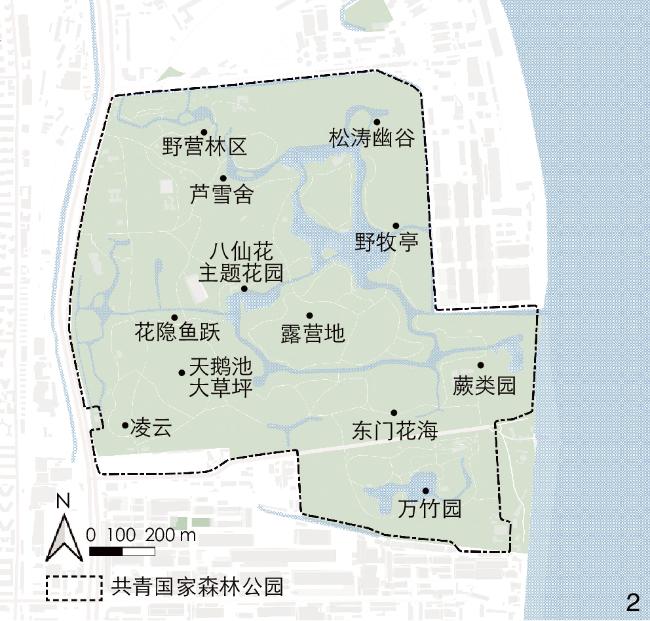
[Objective] Urban parks are one of the most vital carriers of public services. Public perception and usage of urban parks can significantly impact their management and planning. In recent years, social media data has emerged as a critical source for understanding public interaction within urban spaces, making park analysis based on social media a research hotspot. However, the current research typically focuses on single-mode data analysis (such as text or image), and relies on traditional machine learning and natural language processing (NLP) techniques, which may limit the comprehensiveness and accuracy of research results. Advancements in artificial intelligence, particularly in large language models (LLM), have made significant breakthroughs in language understanding, reasoning, and image recognition, providing the technical foundation for using multi-modal social media data, including image and text, to analyze the rich urban park activities. This research aims to explore the methods for quantitative analysis of multi-modal social media big data to build a more accurate measurement system for park public activity richness.
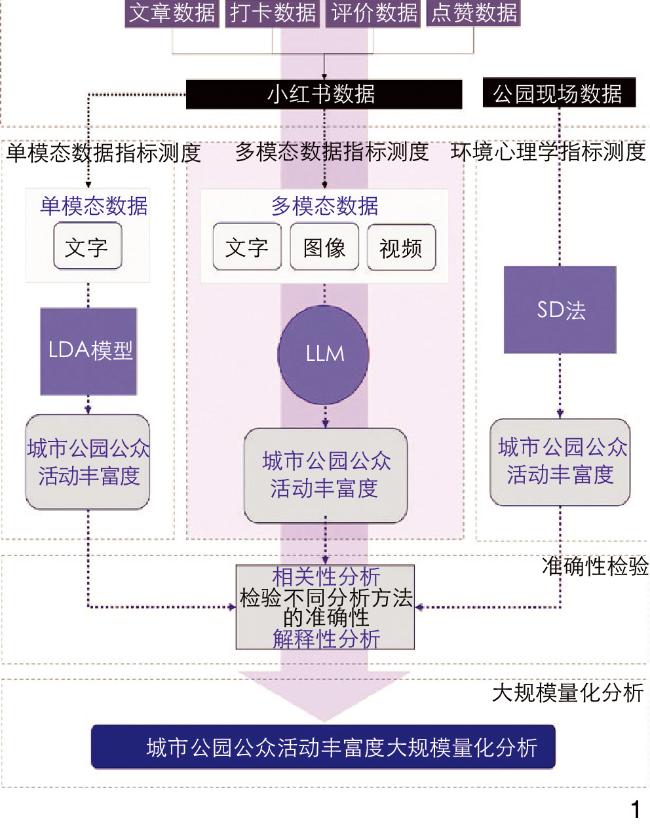
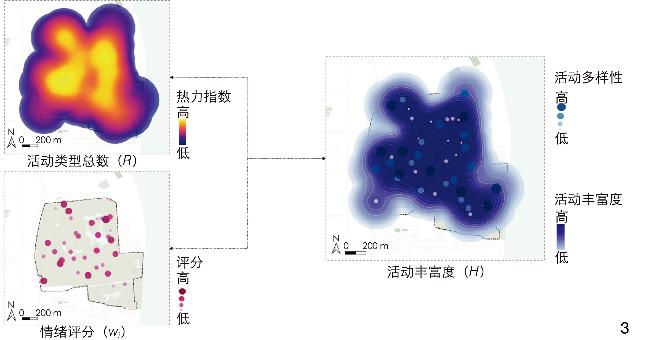
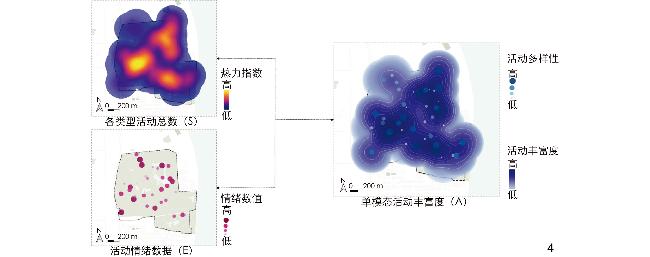
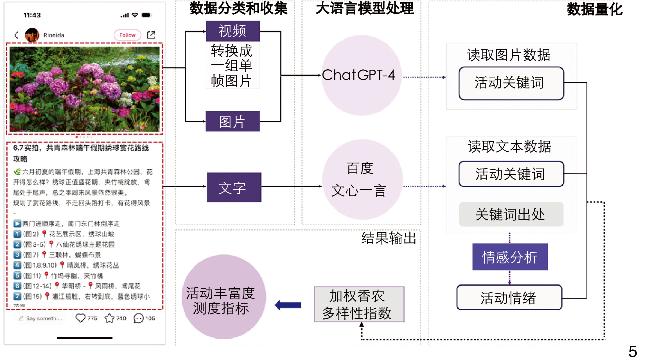
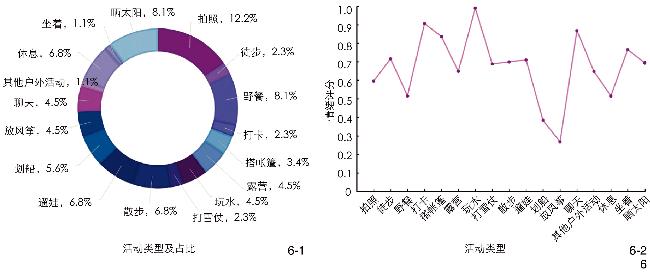
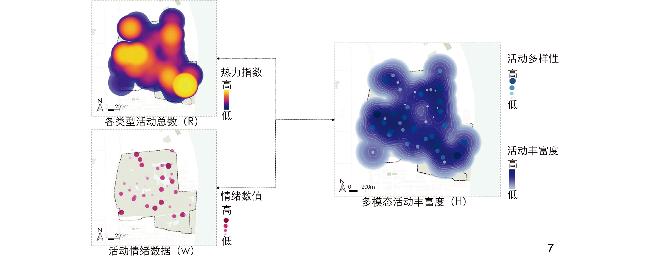
[Methods] Taking Shanghai Gongqing National Forest Park, the most popular and discussed urban park on the social media platform “Xiaohongshu”, as an example, this research employs a combination of classical questionnaire methods, LLM analysis, and traditional classical analysis methods. First, through the design and implementation of a semantic analysis questionnaire, multiple uniform surveys are conducted at the 43 most popular spots in Gongqing National Forest Park to understand public activity preferences and perceptions of different scenes. Descriptive statistical methods are used for analyzing activity intention data. Respondents are presented with images of various park scenes and their locations, and are required to detail their expected activities such as walking, running, or picnicking. The semantic differential (SD) method is used to analyze site perception data. Through statistical analysis of respondents’ ratings on different perception dimensions, a comprehensive perception evaluation of each scene is conducted to help construct quantitative indicators of activity preferences and emotional tendencies. And GIS technology is adopted to visualize public activity richness. Second, for the LLM analysis method, multi-modal data (text, image, video, etc.) from the 43 most popular spots in Gongqing National Forest Park on the Xiaohongshu platform are mined. For text data analysis, the application programming interface (API) of China’s leading LLM, Wenxin Yiyan, was used to extract activity information and calculate sentiment values. This helped identify activities and emotions of “Xiaohongshu” users in the park. For image data analysis, the API of ChatGPT-4 was used to extract activity information. Since LLM can’t directly process videos, the videos were first converted into frames and then analyzed using the same method as for images. The Shannon’s diversity index formula is adopted to calculate activity diversity in combination with the type and quantity of activities extracted from the multi-modal data, based on which a quantitative image of urban park public activity richness is constructed. Third, in the traditional classical analysis method, text data from the multi-modal data (all text portions of “Xiaohongshu” notes) are extracted as original data. The latent dirichlet allocation (LDA) model is adopted for topic modeling analysis, and NLP technology for calculation of sentiment values for each topic. Additionally, the diversity of various activities and sentiment values are combined to construct single-modal data indicators.
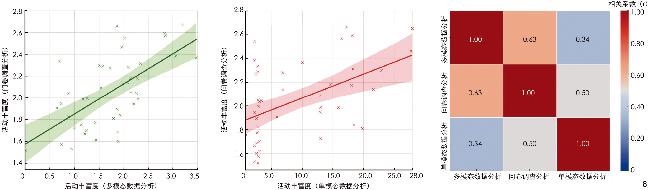
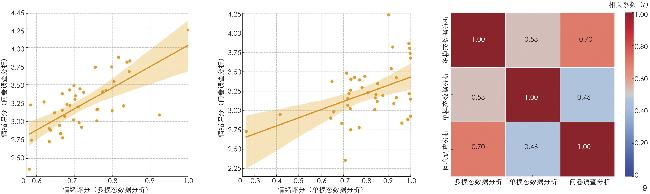
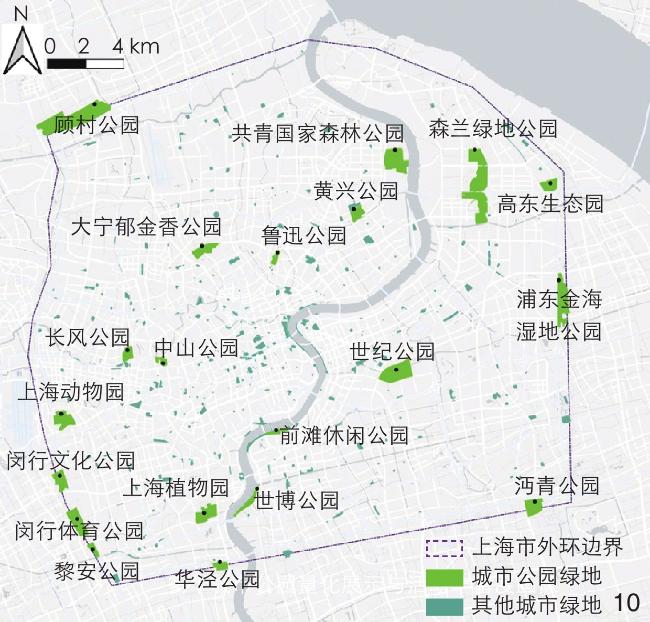
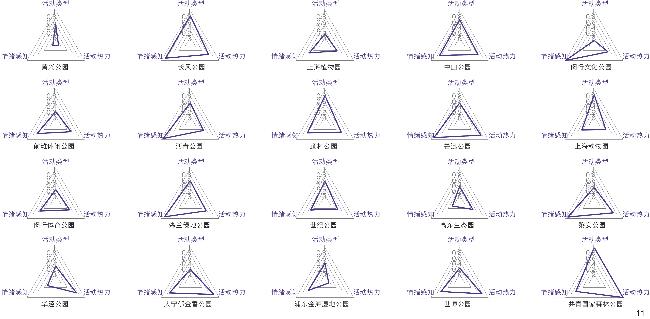
[Results] This research explores various measurement methods for public activity richness. Using traditional questionnaire perception measurement as a benchmark, correlation analysis is conducted to compare the accuracy of traditional classical analysis and LLM analysis. Statistical results show that LLM analysis can significantly outperforms traditional classical analysis in terms of accuracy for public activity richness and emotional perception data, demonstrating high consistency with the benchmark questionnaire method. And LLM analysis proves superior in evaluating public activity richness. Based on these findings, LLM technology and multi-modal social media data are used to conduct large-scale data retrieval and analysis of the 20 largest urban parks within Shanghai’s Outer Ring, and public activity richness and sub-indicators for these parks are calculated, forming activity portrait for each park, including activity heat data, activity type, and emotional perception data. Moreover, specific suggestions for urban park improvement strategies are provided, achieving a panoramic and high-precision analysis of park public activity richness.
[Conclusion] This research innovatively adopts LLM and multi-modal social media data for urban analysis, supporting comprehensive and rapid monitoring of urban park activities and user perceptions from the city scale to a larger scale. This can not only improve research efficiency and accuracy, but also provide scientific evidence for urban park planning and management. The successful application of this method indicates a scholarly transformation and deepening development of artificial intelligence in urban research, holding significant importance for promoting smart city construction and management.
Yue ZHONG , Yuxuan LIU , Yu YE . Measurement of the Public Activity Richness of Urban Park Based on Large Language Models and Social Media Data: A Case Study of Shanghai[J]. Landscape Architecture, 2024 , 31(9) : 34 -41 . DOI: 10.3724/j.fjyl.202406290356
文中图片均由作者绘制,其中
| [1] |
KIM J, KAPLAN R. Physical and Psychological Factors in Sense of Community: New Urbanist Kentlands and Nearby Orchard Village[J]. Environment and Behavior, 2004, 36(3): 313-340.
|
| [2] |
塔特, 曹新, 吴龙峰. 伟大的城市公园: 环境、持续和连接的重要性[J]. 风景园林, 2018, 25(3): 84-99.
TATE A, CAO X, WU L F. Great City Parks: The Importance of Context, Continuity and Connection[J]. Landscape Architecture, 2018, 25(3): 84-99.
|
| [3] |
王志芳, 康佳, 徐敏, 等. 北京公园用户类型刻画[J]. 风景园林, 2021, 28(9): 96-102.
WANG Z F, KANG J, XU M, et al. Characterizing User Groups in Beijing Parks[J]. Landscape Architecture, 2021, 28(9): 96-102.
|
| [4] |
SIM J, MILLER P. Understanding an Urban Park Through Big Data[J]. International Journal of Environmental Research and Public Health, 2019, 16(20): 3816
|
| [5] |
WU S Q, HAO F, QU L G, et al. NExT-GPT: Any-to-Any Multimodal LLM[EB/OL]. (2023-09-11)[2024-06-29]. https://arxiv.org/pdf/2309.05519
|
| [6] |
WILKINS E J, WOOD S A, SMITH J W. Uses and Limitations of Social Media to Inform Visitor Use Management in Parks and Protected Areas: A Systematic Review[J]. Environmental Management, 2021, 67(1): 120-132.
|
| [7] |
BARROS C, MOYA-GÓMEZ B, GUTIÉRREZ J. Using Geotagged Photographs and GPS Tracks from Social Networks to Analyse Visitor Behaviour in National Parks[J]. Current Issues in Tourism, 2019, 23(10): 1291-1310.
|
| [8] |
FISHER D M, WOOD S A, WHITE E M, et al. Recreational Use in Dispersed Public Lands Measured Using Social Media Data and On-Site Counts[J]. Journal of Environmental Management, 2018, 222: 465-474.
|
| [9] |
HAMSTEAD Z A, FISHER D, ILIEVA R T, et al. Geolocated Social Media as a Rapid Indicator of Park Visitation and Equitable Park Access[J]. Computers, Environment and Urban Systems, 2018, 72: 38-50.
|
| [10] |
KIM Y, KIM C, LEE D K, et al. Quantifying Nature-Based Tourism in Protected Areas in Developing Countries by Using Social Big Data[J]. Tourism Management, 2019, 72: 249-256.
|
| [11] |
CLEMENTE P, CALVACHE M, ANTUNES P, et al. Combining Social Media Photographs and Species Distribution Models to Map Cultural Ecosystem Services: The Case of a Natural Park in Portugal[J]. Ecological Indicators, 2019, 96: 59-68.
|
| [12] |
ROBERTS H, SADLER J, CHAPMAN L. The Value of Twitter Data for Determining the Emotional Responses of People to Urban Green Spaces: A Case Study and Critical Evaluation[J]. Urban Studies, 2019, 56(4): 818-835.
|
| [13] |
HUANG S C L, SUN W E. Exploration of Social Media for Observing Improper Tourist Behaviors in a National Park[J]. Sustainability, 2019, 11(6): 1637
|
| [14] |
ROBERTS H V. Using Twitter Data in Urban Green Space Research: A Case Study and Critical Evaluation[J]. Applied Geography, 2017, 81: 13-20.
|
| [15] |
PENG J, CHEN X, LIU Y, et al. Spatial Identification of Multifunctional Landscapes and Associated Influencing Factors in the Beijing-Tianjin-Hebei Region, China[J]. Applied Geography, 2016, 74: 170-181.
|
| [16] |
HEIKINHEIMO V, MININ E D, TENKANEN H, et al. User-Generated Geographic Information for Visitor Monitoring in a National Park: A Comparison of Social Media Data and Visitor Survey[J]. ISPRS International Journal of Geo-Information, 2017, 6(3): 85
|
| [17] |
PICKERING C, WALDEN-SCHREINER C, BARROS A, et al. Using Social Media Images and Text to Examine How Tourists View and Value the Highest Mountain in Australia[J]. Journal of Outdoor Recreation and Tourism, 2020, 29: 100252
|
| [18] |
HAUSMANN A, TOIVONEN T, SLOTOW R, et al. Social Media Data Can Be Used to Understand Tourists’ Preferences for Nature-Based Experiences in Protected Areas[J]. Conservation Letters, 2018, 11(1): e12343
|
| [19] |
TENERELLI P, PÜFFEL C, LUQUE S. Spatial Assessment of Aesthetic Services in a Complex Mountain Region: Combining Visual Landscape Properties with Crowdsourced Geographic Information[J]. Landscape Ecol, 2017, 32: 1097-1115.
|
| [20] |
SINCLAIR M, GHERMANDI A, SHEELA A M. A Crowdsourced Valuation of Recreational Ecosystem Services Using Social Media Data: An Application to a Tropical Wetland in India[J]. Science of the Total Environment, 2018, 642: 356-365.
|
| [21] |
SONG X P, RICHARDS D R, TAN P Y. Using Social Media User Attributes to Understand Human-Environment Interactions at Urban Parks[J]. Scientific Reports, 2020, 10(1): 808
|
| [22] |
LEE S, SON Y. Mapping of User-Perceived Landscape Types and Spatial Distribution Using Crowdsourced Photo Data and Machine Learning: Focusing on Taeanhaean National Park[J]. Journal of Outdoor Recreation and Tourism, 2023, 44: 100616
|
| [23] |
VASWANI A, SHAZEER N, PARMAR N, et al. Attention Is All You Need[C]// VON LUXBURG U. Advances in Neural Information Processing Systems 30. Long Beach: NeurIPS, 2017: 5998-6008.
|
| [24] |
WU T Y, HE S Z, LIU J P, et al. A Brief Overview of ChatGPT: The History, Status Quo and Potential Future Development[J]. IEEE/CAA Journal of Automatica Sinica, 2023, 10(5): 1122-1136.
|
| [25] |
LUO X M, TONG S L, FANG Z, et al. Frontiers: Machines vs. Humans: The Impact of Artificial Intelligence Chatbot Disclosure on Customer Purchases[J]. Marketing Science, 2019, 38(6): 937-947.
|
| [26] |
GIBSON S C. “Let’s Go To the Park.” An Investigation of Older Adults in Australia and Their Motivations for Park Visitation[J]. Landscape and Urban Planning, 2018, 180: 234-246.
|
| [27] |
ZHANG W J, YANG J, MA L Y, et al. Factors Affecting the Use of Urban Green Spaces for Physical Activities: Views of Young Urban Residents in Beijing[J]. Urban Forestry & Urban Greening, 2015, 14(4): 851-857.
|
| [28] |
SCHIPPERIJN J, BENTSEN P, TROELSEN J, et al. Associations Between Physical Activity and Characteristics of Urban Green Space[J]. Urban Forestry & Urban Greening, 2013, 12(1): 109-116.
|
| [29] |
LIU J, MENG B, WANG J, et al. Exploring the Spatiotemporal Patterns of Residents’ Daily Activities Using Text-Based Social Media Data: A Case Study of Beijing, China[J]. ISPRS International Journal of Geo-Information, 2021, 10(6): 389
|
| [30] |
ZHU Q, LUO J. Generative Pre-trained Transformer for Design Concept Generation: An Exploration[C]// International Design Conference. Proceedings of the Design Society: Design 2022. Cambridge: Cambridge University Press, 2022: 1825-1834.
|
/
| 〈 |
|
〉 |