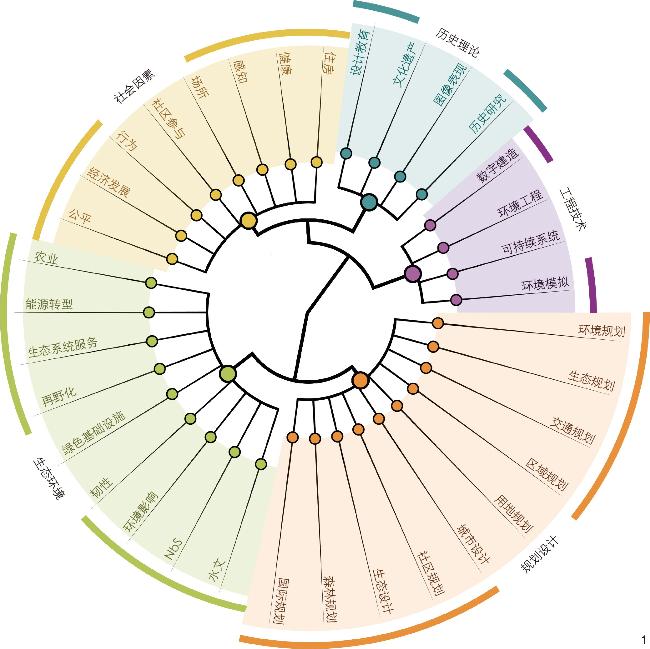


Practice-Oriented Doctoral Education in Landscape Architecture: A Comparative Research Based on 29 European and American Universities
|
ZHENG Xi, Ph.D., is a professor and doctoral supervisor in the School of Landscape Architecture, Beijing Forestry University, and editor-in-chief of this journal. His research focuses on landscape planning and design |
|
LI Zheng, Ph.D., is an associate professor in the School of Landscape Architecture, Beijing Forestry University, and a young editorial board member of this journal. His research focuses on urban mountain landscape preservation, cultural landscape, and landscape representation |
Received date: 2023-02-09
Online published: 2025-12-15
Copyright
[Objective] In 2022, the State Council Academic Degree Committee and the Ministry of Education issued the Catalogue of Disciplines and Specialties in Postgraduate Education (2022), upgrading the graduate degree of landscape architecture from a professional master’s degree to a professional doctoral degree. In 2023, the Opinions of the Ministry of Education on Further Promoting the Classification and Development of Graduate Education for Academic and Professional Degrees proposed that it is necessary to attach equal importance to the academic and professional degrees of graduate education, and to strengthen their differentiation. With professional degree becoming the strategic focus of the reform and development of China’s degree and graduate education, how to respond to the practical needs of urban and rural ecological civilization construction in the new era has become a key challenge for doctoral education in landscape architecture at present, for which there is an urgent need to clarify the differentiated requirements between academic and professional degrees. China’s doctoral education in landscape architecture is still in its infancy, and most of the existing researches are confined to individual countries and regions in terms of geographic location, focus on the doctor of philosophy (Ph.D.) in terms of type, or tend to focus on a single aspect in terms of breadth. Focusing on English-taught doctoral programs related to landscape architecture at universities in the United States, Commonwealth countries, and some continental European countries, this research comparatively analyzes various aspects of the training process of such programs and identifies their strategies for responding to practical issues, so as to provide a reference for the reform of professional doctoral education in landscape architecture in China.
[Methods] In this research, “doctor” and “landscape architecture” are used as the combined keywords to search online information about doctoral degree programs related to landscape architecture through the Google search engine, supplemented by related programs mentioned in the literature searched in the WoS (Web of Science) core collection, based on which the doctoral degree programs initially searched are screened according to four criteria. The research figures out 29 universities with doctoral degree programs related to landscape architecture, which offer a total of 33 doctoral degree programs related to landscape architecture, including 29 Ph.D. programs and 4 Doctor of Design (DDes) ones. Using the information about doctoral degree program searched from the official websites of the universities as the main data source, this research comparatively analyzes the doctoral training modes related to landscape architecture of the 29 European and American universities to reveal the similarities and differences between the related degree programs from the 6 perspectives of enrollment, training process, learning mode, research field, dissertation, and financial support, and to identify the specific strategies they have adopted to respond to practical needs.
[Results] The doctoral graduate education in landscape architecture at 29 European and American universities has three training modes overall, namely full-time Ph.D. training (17 universities), parallel full-time and part-time Ph.D. training (8 universities), and dual-track separate Ph.D. and DDes training (4 universities). The mode of full-time Ph.D. training tends to favor purely academic research on the whole, but it also adopts three strategies to take into account practical needs, including limiting the requirements for admission, integrating the field of research with contemporary economic and social needs, and permitting diversified forms of dissertations. The parallel full-time and part-time Ph.D. training provides both full-time and part-time training modes in the traditional Ph.D. degree training system, and adopt Internet-based distance learning and diversified dissertation forms. As to the dual-track separate training mode, both Ph.D. and DDes training take course learning, qualifying examination, opening report, and dissertation as mandatory parts, but they also have obvious differences in enrollment target, learning mode, training process, dissertation, and financial support. Generally speaking, these training modes respond to the practical needs mainly from three aspects: first, highlight the professional attributes in terms of training targets, and do well in qualification review; second, adhere to the academic basis and cater to social needs in terms of training contents; and third, explore the flexibility of teaching and innovating learning modes in terms of training process.
[Conclusion] While doctoral education in landscape architecture certainly needs to get rid of the path dependence on traditional academic doctoral training modes, the academic attributes of the doctoral degree cannot be ignored. It is necessary to continue to take classical theories and research methods as the core teaching contents, and at the same time to strengthen the professional attributes and the scientific exploration based on applied research in terms of admission qualification review, dissertation topic and learning mode, so as to integrate academic research and professional practice. This research fails to deeply explore the development history and social context of doctoral programs related to landscape architecture at the 29 European and American universities, neither does it cover non-English-taught doctoral programs related to landscape architecture in other countries and regions, leaving room for future research to deepen and expand.
ZHENG Xi , LI Zheng . Practice-Oriented Doctoral Education in Landscape Architecture: A Comparative Research Based on 29 European and American Universities[J]. Landscape Architecture, 2024 , 31(3) : 36 -42 . DOI: 10.3724/j.fjyl.202302090089
表1 29所欧美大学的风景园林相关博士学位项目Tab. 1 Doctoral degree programs related to landscape architecture at 29 European and American universities |
| 培养模式 | 国家 | 大学 | 院系 | 学位 |
|---|---|---|---|---|
| 注:*表示以“风景园林”(landscape architecture)命名的院系;大学院系名称中“college”“school”“faculty”均译为“学院”。 | ||||
| 全日制哲学博士 | 美国 | 加州大学伯克利分校 | 风景园林与环境规划系* | 风景园林与环境规划哲学博士(Ph.D. in Landscape Architecture & Environmental Planning) |
| 伊利诺伊大学香槟分校 | 风景园林系* | 风景园林哲学博士(Ph.D. in Landscape Architecture) | ||
| 俄勒冈大学 | 风景园林系* | 风景园林哲学博士(Ph.D. in Landscape Architecture) | ||
| 麻省大学阿默斯特分校 | 风景园林与区域规划系* | 规划哲学博士(Ph.D. in Planning) | ||
| 得克萨斯农工大学 | 风景园林与城市规划系* | 城市与区域科学哲学博士(Ph.D. in Urban & Regional Sciences) | ||
| 得克萨斯理工大学 | 建筑学院 | 土地利用规划、管理与设计哲学博士(Ph.D. in Land Use Planning, Management, and Design) | ||
| 马里兰大学 | 建筑、规划与保护学院 | 城市与区域规划设计哲学博士(Ph.D. in Urban and Regional Planning and Design) | ||
| 俄克拉何马大学 | 建筑学院 | 规划、设计与建造哲学博士(Ph.D. in Planning, Design, and Construction) | ||
| 佛罗里达大学 | 设计、建造与规划学院 | 设计、建造与规划哲学博士(Ph.D. in Design, Construction and Planning) | ||
| 科罗拉多大学丹佛分校 | 建筑与规划学院 | 地理、规划与设计哲学博士(Ph.D. in Geography, Planning, and Design) | ||
| 弗吉尼亚理工大学 | 建筑与设计学院 | 建筑与设计研究哲学博士(Ph.D. in Architecture and Design Research) | ||
| 华盛顿大学 | 建成环境学院 | 建成环境哲学博士(Ph.D. in Built Environment) | ||
| 佐治亚大学 | 环境与设计学院 | 环境设计与规划哲学博士(Ph.D. in Environmental Design and Planning) | ||
| 加拿大 | 多伦多大学 | 建筑、景观与设计学院 | 建筑、景观与设计哲学博士(Ph.D. in Architecture, Landscape, and Design) | |
| 曼尼托巴大学 | 建筑学院 | 设计与规划哲学博士(Ph.D. in Design and Planning) | ||
| 瑞士 | 苏黎世联邦理工大学 | 建筑系 | 景观与城市研究哲学博士(Ph.D. in Landscape & Urban Studies) | |
| 挪威 | 奥斯陆建筑与设计学院 | 城市与景观研究系 | 哲学博士(Ph.D.) | |
| 全日制与非全日制 并轨的哲学博士 | 英国 | 爱丁堡大学 | 建筑与风景园林学院* | 风景园林哲学博士(Ph.D. in Landscape Architecture) |
| 伯明翰建筑与设计学院 | 艺术与设计哲学博士(Ph.D. in Art and Design) | |||
| 纽卡斯尔大学 | 人文与社会科学学院 | 建筑、规划与景观哲学博士(Ph.D. in Architecture, Planning and Landscape) | ||
| 格鲁斯特大学 | 艺术学院 | 建筑、建造与环境哲学博士(Ph.D. in Architecture, Construction and Environment) | ||
| 澳大利亚 | 皇家墨尔本理工大学 | 建筑与城市设计学院 | 建筑与设计哲学博士(Ph.D. in Architecture and Design) | |
| 墨尔本大学 | 设计学院 | 建筑、建造与规划哲学博士(Ph.D. in Architecture, Building and Planning) | ||
| 新西兰 | 惠灵顿维多利亚大学 | 建筑与设计创新学院 | 哲学博士(Ph.D.) | |
| 荷兰 | 代尔夫特理工大学 | 都市主义系 | 都市主义哲学博士(Ph.D. in Urbanism) | |
| 分设哲学博士与 设计博士的双轨制 | 美国 | 哈佛大学 | 设计学院 | 建筑、风景园林与城市规划哲学博士 (Ph.D. in Architecture, Landscape Architecture, and Urban Planning) |
| 设计博士(Doctor of Design) | ||||
| 北卡罗来纳州立大学 | 设计学院 | 设计哲学博士(Ph.D. in Design) | ||
| 设计博士(Doctor of Design) | ||||
| 英国 | 谢菲尔德大学 | 风景园林系* | 哲学博士(Ph.D.) | |
| 设计博士(Doctorate by Design) | ||||
| 加拿大 | 卡尔加里大学 | 建筑、规划与景观学院 | 环境设计哲学博士(Ph.D. in Environmental Design) | |
| 设计博士(Doctor of Design) | ||||
文中图表均由作者绘制。
| [1] |
国务院学位委员会, 教育部. 研究生教育学科专业目录(2022年)[EB/OL]. (2022-09-13)[2024-02-09].https://www.gov.cn/zhengce/zhengceku/2022-09/14/content_5709785.htm?eqid=9643dbe800019dea00000003645de6cd.
Academic Degrees Committee of the State Council, Ministry of Education. Catalogue of Disciplines and Specialties in Postgraduate Education (2022)[EB/OL]. (2022-09-13)[2024-02-09].https://www.gov.cn/zhengce/zhengceku/2022-09/14/content_5709785.htm?eqid=9643dbe800019dea00000003645de6cd.
|
| [2] |
教育部. 教育部关于深入推进学术学位与专业学位研究生教育分类发展的意见[EB/OL]. (2023-11-24)[2024-02-09]. https://www.gov.cn/zhengce/zhengceku/202312/content_6922068.htm.
Ministry of Education. Opinions of the Ministry of Education on Further Promoting the Classification and Development of Graduate Education for Academic and Professional Degree[EB/OL]. (2023-11-24)[2024-02-09]. https://www.gov.cn/zhengce/zhengceku/202312/content_6922068.htm.
|
| [3] |
梁传杰. 研究生教育学科专业目录调整: 理论逻辑、历史逻辑与实践逻辑[J]. 学位与研究生教育, 2023 (2): 1-9.
LIANG C J. Adjustment of Graduate Education Discipline Specialty Catalog: Theoretical Logic, Historical Logic and Practical Logic[J]. Academic Degrees & Graduate Education, 2023 (2): 1-9.
|
| [4] |
张苏. 我国专业学位博士扩招的历程、动因及进路选择[J]. 教育学术月刊, 2022 12: 65-73.
ZHANG S. On the History, Motivation and Approach Selection of the Enrolment Expansion of Chinese Professional Doctorate[J]. Education Research Monthly, 2022 12: 65-73.
|
| [5] |
罗英姿, 李雪辉. 专业学位博士研究生培养的路径依赖及其优化[J]. 学位与研究生教育, 2018 (5): 55-60.
LUO Y Z, LI X H. Path Dependence and Its Optimization in Professional Degree Doctoral Cultivation[J]. Academic Degrees & Graduate Education, 2018 (5): 55-60.
|
| [6] |
柯婧秋, 闫广芬. 专业博士专业社会化: 科学内涵、影响因素与实现路径[J]. 研究生教育研究, 2023 (2): 67-74.
KE J Q, YAN G F. Social Demand-Oriented Professional Doctoral Students: Scientific Connotation, Influencing Factors and Realization Path[J]. Journal of Graduation Education, 2023 (2): 67-74.
|
| [7] |
刘进, 葛浩, 林松月. 专业博士学术化: 挑战与应对: 基于对282篇博士学位论文的文本分析[J]. 学位与研究生教育, 2022 (5): 48-53.
LIU J, GE H, LIN S Y. Academization of the Professional Doctorate: Challenges and Responses: Based on a Textual Analysis of 282 Doctoral Dissertations[J]. Academic Degrees & Graduate Education, 2022 (5): 48-53.
|
| [8] |
王坦. 专业型博士“热”背后的“冷”思考[J]. 研究生教育研究, 2021 (1): 55-62.
WANG T. Calm Reflections on the Overheated Pursuit for Professional Doctorate Education[J]. Journal of Graduation Education, 2021 (1): 55-62.
|
| [9] |
罗英姿, 李雪辉. 我国专业学位博士教育面临的问题与改进策略: 基于“全国专业学位博士教育质量调查”的结果[J]. 高等教育研究, 2019, 40 (11): 67-78.
LUO Y Z, LI X H. Problems of China Professional Doctorate Education and Their Improvement Strategies[J]. Journal of Higher Education, 2019, 40 (11): 67-78.
|
| [10] |
韩霜, 罗英姿. 专业学位博士生教育对博士职业发展的影响路径研究: 基于全国专业学位博士教育质量调查[J]. 中国高教研究, 2022 (4): 85-90.
HAN S, LUO Y Z. Research on the Influence Path of Professional Doctoral Education on Doctoral Career Development: Based on the National Survey of Professional Doctorate Education Quality[J]. China Higher Education Research, 2022 (4): 85-90.
|
| [11] |
邹海燕. 美国专业博士及其培养研究[J]. 中国高教研究, 2005 (2): 41-44.
ZOU H Y. A Study of Professional Doctorates and Their Training in the United States[J]. China Higher Education Research, 2005 (2): 41-44.
|
| [12] |
李云鹏. 美国专业博士学位的几个关键问题论析[J]. 学位与研究生教育, 2014 (1): 65-69.
LI Y P. An Analysis of Several Key Issues in the U.S. Professional Doctorate Degree Program[J]. Academic Degrees & Graduate Education, 2014 (1): 65-69.
|
| [13] |
吴敏, 姚云. 美国专业博士学位的学科与规模特点研究[J]. 学位与研究生教育, 2018 (8): 73-77.
WU M, YAO Y. A Study of the Disciplinary and Size Characteristics of Professional Doctoral Degrees in the United States[J]. Academic Degrees & Graduate Education, 2018 (8): 73-77.
|
| [14] |
黎学平. 英国哲学博士学位与专业博士学位比较[J]. 学位与研究生教育, 2005 (6): 53-58.
LI X P. Comparison of Doctor of Philosophy and Professional Doctorates in the UK[J]. Academic Degrees & Graduate Education, 2005 (6): 53-58.
|
| [15] |
朴雪涛. 英国专业博士学位教育发展的特征及启示[J]. 教育研究, 2005 (5): 77-82.
PIAO X T. On the Features and Enlightenment of the Evolution of Professional Doctorates Education in UK[J]. Educational Research, 2005 (5): 77-82.
|
| [16] |
邓光平. 澳大利亚专业博士生培养模式的演变及启示[J]. 中国高教研究, 2010 (9): 40-42.
DENG G P. The Evolution of Professional Doctorate Training Model in Australia and Its Implications[J]. China Higher Education Research, 2010 (9): 40-42.
|
| [17] |
周富强. 美、澳、英专业博士教育模式浅论[J]. 学位与研究生教育, 2006 (6): 68-73.
ZHOU F Q. An Introduction to Professional Doctoral Education Models in the United States, Australia, and the United Kingdom[J]. Academic Degrees & Graduate Education, 2006 (6): 68-73.
|
| [18] |
吕哲. 国际比较视野下浅述我国专业博士发展的启示[J]. 教育现代化, 2019, 6 (61): 192-194.
LYU Z. Insights on the Development of Professional Doctorate in China in an International Comparative Perspective[J]. Education Modernization, 2019, 6 (61): 192-194.
|
| [19] |
翟月, 毛立伟, 陈玥. 专业博士教育研究20年: 主题比较与路向探寻[J]. 研究生教育研究, 2022 (1): 16-23.
ZHAI Y, MAO L W, CHEN Y. Themes Comparison and Path Exploration: A Retrospective Study on Professional Doctoral Education in the Past 20 Years[J]. Journal of Graduation Education, 2022 (1): 16-23.
|
| [20] |
熊星, 唐晓岚, 王燕燕. 中国风景园林专业博士学位论文选题研究[J]. 中国园林, 2015, 31 (2): 94-100.
XIONG X, TANG X L, WANG Y Y. Study on Doctoral Dissertation Topics of Landscape Architecture in China[J]. Chinese Landscape Architecture, 2015, 31 (2): 94-100.
|
| [21] |
李正, 李雄. 基于国际视野的风景园林学博士研究生培养体系的研究: 以北京林业大学与美国伊利诺伊大学为例[J]. 中国林业教育, 2018, 36 (6): 38-44.
LI Z, LI X. Research on the Training System of Doctoral Students in Landscape Architecture Based on International Perspective: A Case Study of Beijing Forestry University and the University of Illinois, USA[J]. Forestry Education in China, 2018, 36 (6): 38-44.
|
| [22] |
张云路, 李雄. 要求-需求-追求: 响应新形势新变化的风景园林专业学位教育发展探索[J]. 中国园林, 2023, 39 (1): 26-28.
ZHANG Y L, LI X. Requirements-Demand-Pursuit: Exploring the Development of Landscape Architecture Professional Degree Education in Response to the New Situation and New Changes[J]. Chinese Landscape Architecture, 2023, 39 (1): 26-28.
|
| [23] |
杨锐. 风景园林学科专业发展评估、困境与突破[J]. 中国园林, 2023, 39 (1): 23-25.
YANG R. Evaluation, Dilemma and Breakthrough of the Development of Chinese Landscape Architecture Discipline[J]. Chinese Landscape Architecture, 2023, 39 (1): 23-25.
|
| [24] |
张振威, 毛颜康. 反思风景园林学: 写在学科专业目录调整之际[J]. 中国园林, 2023, 39 (1): 29-33.
ZHANG Z W, MAO Y K. Reflections on Landscape Architecture: Focusing on the 2022 Edition of the Catalogue of Disciplines and Specialties in Postgraduate Education[J]. Chinese Landscape Architecture, 2023, 39 (1): 29-33.
|
| [25] |
PROMINSKI M. Design Research as a Non-linear Interplay of Five Moments[M]// PROMINSKI M, SEGGERN H. Design Research for Urban Landscapes: Theories and Methods. London: Routledge, 2019: 33-49.
|
| [26] |
BEZA B B, ZEUNERT J, KILBANE S, et al. Examining Ph.D. Modes in the Australian Landscape Architecture Academy[J]. Landscape Research, 2022, 47 (5): 679-694.
|
| [27] |
HARRIS R, GIARD J, PIJAWKA D. Interdisciplinary Doctoral Education in Environmental Design: Assessment of Programs, Issues, Structure, and Vision[C]//DURLING D, SUGIYAMA K. Proceedings of the 3rd Doctoral Education in Design. Tsukuba: Tsukuba International Congress Center, 2003: 43-53.
|
| [28] |
李伟, 闫广芬. 专业学位研究生教育的理论定位与实践路径: 基于对其本质属性的考察[J]. 研究生教育研究, 2022 (5): 76-81.
LI W, YAN G F. Theoretical Positioning and Practice Approach for Professional Degree Postgraduate Education: Based on the Investigation in Its Essential Attributes[J]. Journal of Graduate Education, 2022 (5): 76-81.
|
/
| 〈 |
|
〉 |