

Stone Chamber (“Shishi”) and Chamber of Quietude (“Jingshi”): Construction Techniques of Taoist Temples and Environmental Spaces in Mount Hua
|
WANG Ruiqi, Ph.D., is a lecturer in the School of Architecture and Urban Planning, Beijing University of Civil Engineering and Architecture. Her research focuses on protection and development planning of heritage resources in scenic spots |
|
LOU Ying gained her bachelor degree in Beijing University of Civil Engineering and Architecture, and is a master student in the Faculty of Architecture and Urban Planning, Chongqing University. Her research focuses on national parks and protected areas |
|
LI Xiong, Ph.D., is a professor and doctoral supervisor in the School of Landscape Architecture, Beijing Forestry University, and director of the editorial board of this journal. His research focuses on landscape planning theory and design |
Received date: 2023-04-23
Online published: 2025-12-15
Copyright
[Objective] The core of China’s religious mountains lies in the well-known mountains with Taoist culture as their primary constituent, and the design of their scenic system reflects both the regional characteristics and the interplay between religious culture and the surrounding environment. As the westernmost one of the Five Mountains, Mount Hua is a significant part of China’s well-known spiritual mountains. It has evolved over time into an organic totality that incorporates Taoist cultural principles and has a strong connection to both nature and culture. The location, design and scale, as well as the surrounding area of Taoist temples in Mount Hua, are heavily impacted by the royal ritual system and incorporate Taoist cultural concepts. In order to provide theoretical support for the current protection and development of scenic areas in China, this research reviews the construction techniques of Taoist temples in Mount Hua.
[Methods] To better understand the significant cultural and historical values of Taoist temples and environmental spaces, a general summary of their cultural connotations and overall composition is given first. Second, this research sorts out two types of Taoist temples known as “stone chamber” and “chamber of quietude”, depending on whether external building materials are used. A stone chamber is a secluded area resembling a cave that is used by the Taoist community’s individual members and is constructed solely out of rocks or cliffs. A chamber of quietude is constructed utilizing construction materials on top of its original foundation to serve different socioeconomic groups. After gathering first-hand knowledge about the two types of temples by combining field investigation and data collection, their building origins, spatial distribution and construction techniques are explored.
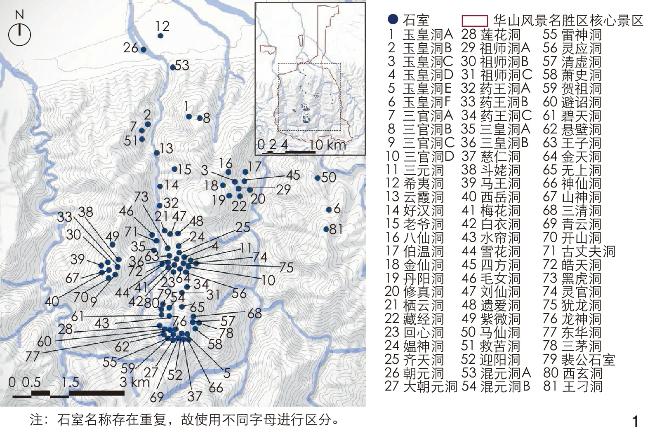
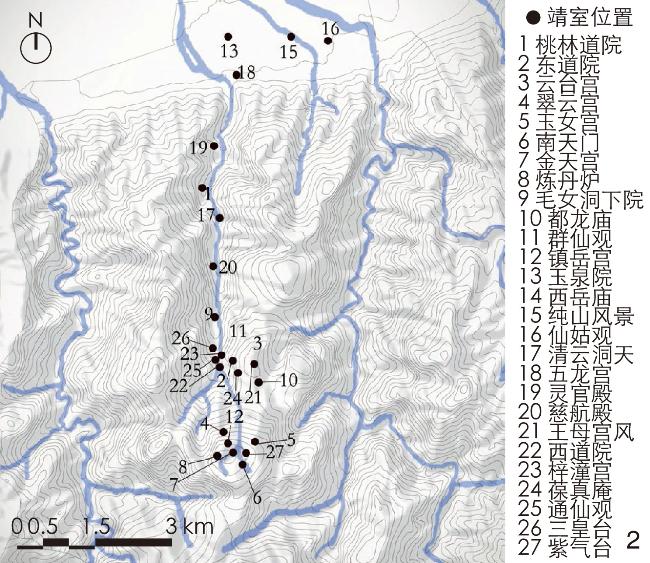
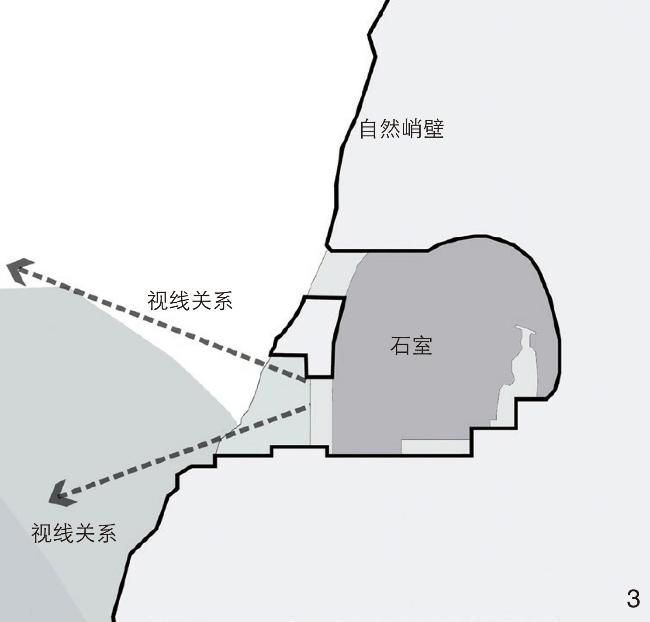
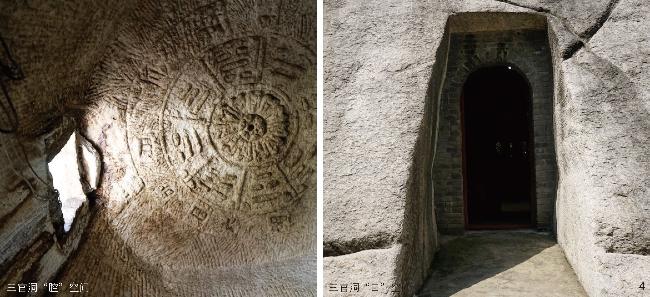
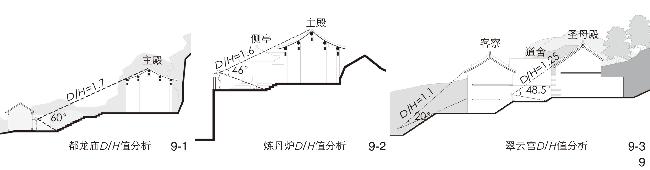
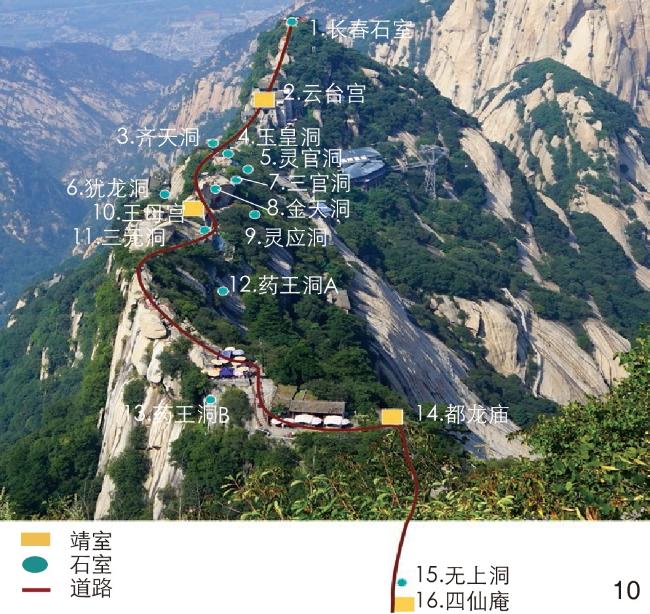
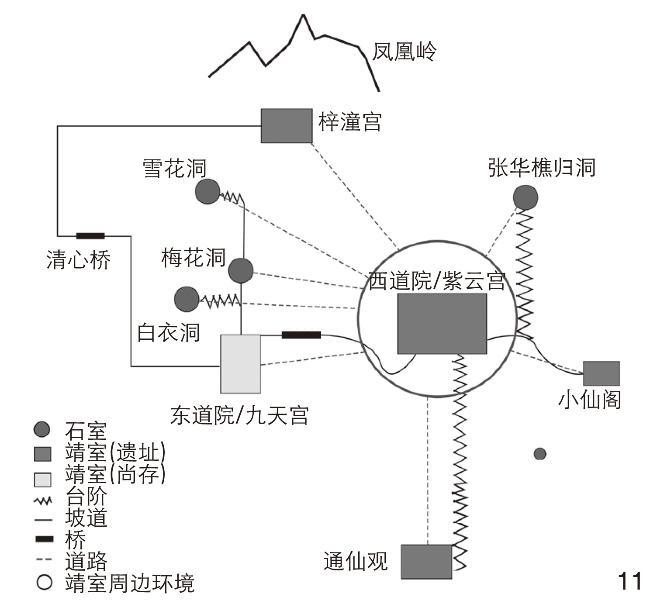
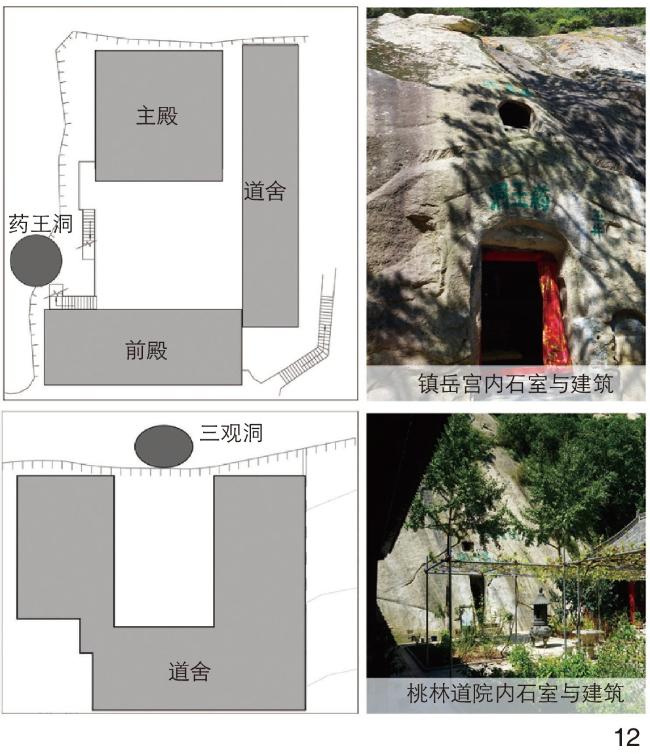
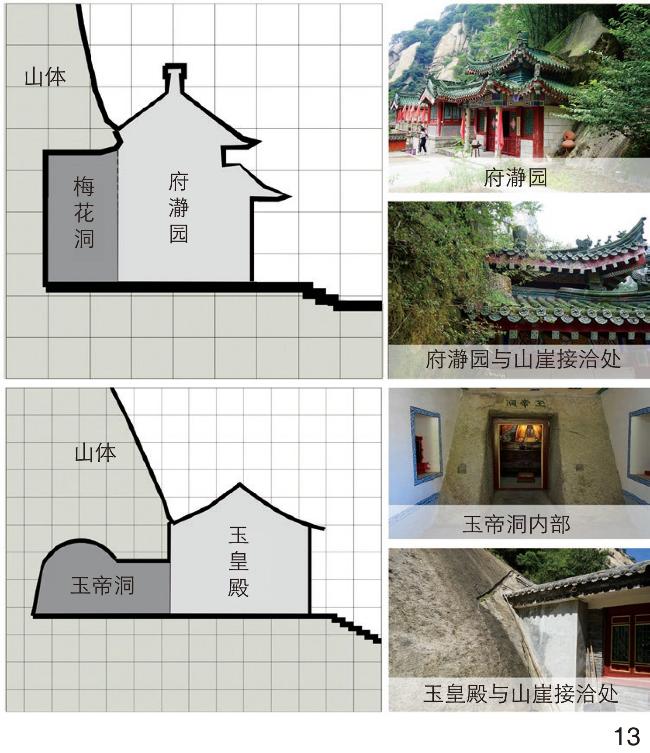
[Results] The spatial construction features of the aforesaid two types of temples and relevant composite temples in relation to the surrounding environment are summarized. Stone chambers are typically constructed against cliffs and rocks for purpose of spiritual purification and isolation, which are primarily manifested in the two aspects of site selection and structural form. The siting of stone chambers in Mount Hua is flexible and adapts to the rich mountainous topography of Mount Hua and the ideal fairyland mode in Taoist culture, aiming to create a place for cultivation and isolation that is in tune with the surroundings. Stone chambers often have a circular shape and are medium in size, which meets the requirements for dwelling, worshiping and cultivating. They are mostly featured by large internal area while small door opening. The chambers of quietude seek to create a “divine fairyland” that unites heaven and man, primarily manifested in the four aspects of site selection, courtyard layout, architectural space, and guiding space. They prefer high-altitude regions that are closer to the “sky” and pursue integrating with the heaven. They are typically sited to simultaneously accommodate living necessities and foster a hallowed religious ambiance, with the courtyard design thereof emphasizing the use of gardening techniques to process the environment and incorporates the goal of “being high and hidden” into the Taoist culture of Mount Hua. The structure and layout of the chambers of quietude are entirely based on the objective natural environment of the site. The ratio of architectural scale to courtyard space is not a set rule in architectural space, which is mostly regulated within the parameters of balance and alienation, giving the impression of a homey interior. In terms of guiding space, the guiding space may create a progressive or drastically altering visitor experience, evoking religious feelings of “gradual realization” or “epiphany” and “enlightenment” based on the huge and dark shifts in the surroundings. The two types of temple landscapes, which together make up the temple landscape system of Mount Hua, are inextricably linked by organic principles. Three combination methods, namely beaded, clustered and inclusive combination, are used to express the aforesaid inextricable linkage, which exhibits a high level of environmental integration and an ongoing derivation and updating of historical process.
[Conclusion] The research viewpoint of Taoist temple landscape has now reached the level of comprehensive cognitive theory thanks to the research categorization strategy of “stone chamber” and “chamber of quietude”, which may provide positive reference for related research. Research on the evolution of Mount Hua Taoism can be improved by classifying the modifications that Taoist temples in Mount Hua have underwent from the past to the present. In the context of the ongoing reconstruction of China’s natural protected area system, it is crucial to advance researches on the surroundings of the well-known Taoist temples in the Five Mountains. The Mount Hua Scenic Area may profit from good management and protection in the current optimization and integration of China’s natural protected area system by preserving the authenticity and integrity of the Taoist temples and their surroundings in Mount Hua. It is helpful to integrate and improve China’s network of protected areas while promoting the use of the “Five Mountains Alliance” for preservation of global cultural treasures.
WANG Ruiqi , LOU Ying , LI Xiong . Stone Chamber (“Shishi”) and Chamber of Quietude (“Jingshi”): Construction Techniques of Taoist Temples and Environmental Spaces in Mount Hua[J]. Landscape Architecture, 2024 , 31(3) : 132 -139 . DOI: 10.3724/j.fjyl.202304230200
表1 华山石室的“腔”“口”比例(可调研部分)Tab. 1 Ratio of cavity to entrance of stone chambers in Mount Hua (Investigable) |
| 序号 | 名称 | “腔”面积/m2 | “口”面积/m2 | “腔”“口”比例 |
|---|---|---|---|---|
| 注:华山81个石室均有古籍记载,其中只有14个能够徒步到达,其余多位于悬崖峭壁上,在航拍图片中可见,但无法徒步到达;“腔”即石室内部空间,“口”即门洞,“腔”“口”比例为两者面积之比。 | ||||
| 1 | 三元洞 | 8.00 | 2.85 | 2.81 |
| 2 | 慈航洞 | 1.50 | 0.48 | 3.13 |
| 3 | 希夷洞 | 5.20 | 1.44 | 3.61 |
| 4 | 吕祖洞 | 5.20 | 1.44 | 3.61 |
| 5 | 药王洞A | 7.40 | 1.80 | 4.11 |
| 6 | 碧天洞 | 10.50 | 2.40 | 4.38 |
| 7 | 大朝元洞 | 7.20 | 1.52 | 4.74 |
| 8 | 黑虎洞 | 15.00 | 3.00 | 5.00 |
| 9 | 梅花洞 | 9.00 | 1.52 | 5.92 |
| 10 | 齐天洞 | 8.00 | 1.33 | 6.02 |
| 11 | 玉皇洞B | 10.90 | 1.44 | 7.57 |
| 12 | 无上洞 | 10.50 | 1.26 | 8.33 |
| 13 | 三官洞 | 13.80 | 1.44 | 9.58 |
| 14 | 金天洞 | 45.00 | 1.33 | 33.83 |
| [1] |
韩锋, 郭晓彤, 杨晨. 中国世界自然遗产地乡村景观保护与发展协同: 以武陵源中湖乡为例[J]. 风景园林, 2022, 29 (10): 89-94.
HAN F, GUO X T, YANG C. Collaboration Between the Protection and Development of Rural Landscape in China’s World Natural Heritage Sites: A Case Study of Zhonghu Township, Wulingyuan[J]. Landscape Architecture, 2022, 29 (10): 89-94.
|
| [2] |
吴会, 金荷仙. 明清齐云山香道景观序列分析[J]. 风景园林, 2022, 29 (6): 135-140.
WU H, JIN H X. Analysis of the Landscape Sequence of Pilgrimage Path in Mount Qiyun in Ming and Qing Dynasties[J]. Landscape Architecture, 2022, 29 (6): 135-140.
|
| [3] |
吴会, 金荷仙. “洞天福地”题材绘画中的仙境景观流变驱动力与呈现要素[J]. 中国园林, 2022, 38 (1): 134-138.
WU H, JIN H X. Evolution Drives and Presented Elements of Fairyland Landscape in the “Taoism Nature Sanctuary” Theme Paintings[J]. Chinese Landscape Architecture, 2022, 38 (1): 134-138.
|
| [4] |
王鲁辛. 论道教宫观建筑的衍变脉络[J]. 湖南大学学报(社会科学版), 2019, 33 (5): 41-46.
WANG L X. A Brief Discussion on the Evolution of Taoist Palace Architecture[J]. Journal of Hunan University (Social Sciences), 2019, 33 (5): 41-46.
|
| [5] |
二十五史: 隋书、旧唐书[M]. 上海: 上海古籍出版社, 1986.
Twenty Five Histories: Sui Shu, Old Tang Shu[M]. Shanghai: Shanghai Ancient Books Publishing House, 1986.
|
| [6] |
胡锐. 道教宫观文化概论[M]. 成都: 巴蜀书社, 2007.
HU R. Introduction of Taoist Temple Culture[M]. Chengdu: Bashu Publishing House, 2007.
|
| [7] |
段启明. 中国佛寺道观[M]. 北京: 北京燕山出版社, 1997.
DUAN Q M. Chinese Buddhist Temples and Taoist Temples[M]. Beijing: Beijing Yanshan Press, 1997.
|
| [8] |
杨嵩林. 中国建筑艺术全集[M]. 北京: 中国建筑工业出版社, 2002.
YANG S L. Complete Collection of Chinese Architectural Art[M]. Beijing: China Architecture & Building Press, 2002.
|
| [9] |
茹竞华, 彭华亮. 中国古建筑大系[M]. 北京: 中国建筑工业出版社, 2004.
RU J H, PENG H L. Series of Ancient Chinese Architecture[M]. Beijing: China Architecture & Building Press, 2004.
|
| [10] |
王贵祥. 中国古建筑测绘十年(2000—2020)[M]. 北京: 清华大学出版社, 2011.
WANG G X. Ten Years of Surveying and Mapping of Ancient Chinese Architecture (2000−2020)[M]. Beijing: Tsinghua University Press, 2011.
|
| [11] |
李光富. 武当山道教宫观建筑群[M]. 武汉: 湖北科学技术出版社, 2000.
LI G F. Architectural Complex of Wudang Mountain Taoist Palace[M]. Wuhan: Hubei Science and Technology Press, 2000.
|
| [12] |
姜生. 论道教的洞穴信仰[J]. 文史哲, 2003 (5): 54-62.
JIANG S. The Belief in Cave of Religious Daoism[J]. Literature, History, and Philosophy, 2003 (5): 54-62.
|
| [13] |
姜永帅. 中国古代绘画中的洞穴[D]. 南京: 南京师范大学, 2015.
JIANG Y S. Caves in Ancient Chinese Painting[D]. Nanjing: Nanjing Normal University, 2015.
|
| [14] |
赵宁. 陇南地区的道教宫观与神仙信仰研究[D]. 兰州: 兰州大学, 2020.
ZHAO N. Study of Taoist Temple and Immortal Belief in Longnan Area[D]. Lanzhou: Lanzhou University, 2020.
|
| [15] |
徐朋辉. 皖北地区道教建筑研究[D]. 合肥: 安徽建筑大学, 2020.
XU P H. Research on Taoist Architecture in Northern Anhui Province[M]. Hefei: Anhui Jianzhu University, 2020.
|
| [16] |
袁野. 地域化视角下的邯郸道教建筑研究[D]. 邯郸: 河北工程大学, 2020.
YUAN Y. Research on Taoist Architecture in Handan from the Perspective of Regionalization[M]. Handan: Hebei University of Engineering, 2020.
|
| [17] |
王雨苗. 元明清时期天水道教研究: 以碑刻为中心[D]. 兰州: 兰州大学, 2020.
WANG Y M. Study of Taoism in Tianshui from Yuan Dynasty to Qing Dynasty: Centered on Inscription of Stone[D]. Lanzhou: Lanzhou University, 2020.
|
| [18] |
贺英. 宋至清代陕西药王山与地方社会研究[D]. 南昌: 江西师范大学, 2020.
HE Y. Research on Yaowang Mountain and Local Society in Shaanxi from Song to Qing Dynasties[D]. Nanchang: Jiangxi Normal University, 2020.
|
| [19] |
晏安. 听文物诉说: 四川青城山常道观的建筑艺术[J]. 城市建筑, 2020, 17 (14): 128-129.
YAN A. Listening to the Cultural Relics: Architectural Art of Chang Taoist Temple in Qingcheng Mountain, Sichuan[J]. Urbanism and Architecture, 2020, 17 (14): 128-129.
|
| [20] |
吴怡林. 泰山斗母宫景观环境研究[D]. 泰安: 山东农业大学, 2019.
WU Y L. Study on Landscape Environments of Dou Mu Palace at the Mount Tai[D]. Tai’an: Shandong Agricultural University, 2019.
|
| [21] |
华晨阳. 西安青华宫建筑空间形态研究[D]. 西安: 西安理工大学, 2017.
HUA C Y. A Study on the Architectural Space Form of Qinghua Palace[D]. Xi’an: Xi’an University of Technology, 2017.
|
| [22] |
桂国敏, 魏雯. 黑龙潭宫观环境空间建筑空间营造特征[J]. 园林, 2017, 34 (10): 54-57.
GUI G M, WEI W. Characteristics of Architectural Space Creation in the Environmental Space of Heilongtan Palace[J]. Landscape Architecture Academic Journal, 2017, 34 (10): 54-57.
|
| [23] |
张晓明. 华山崇拜论略[J]. 渭南师范学院学报, 2013, 28 (3): 40-44.
ZHANG X M. On the Worship of Mount Huashan[J]. Journal of Weinan Normal University, 2013, 28 (3): 40-44.
|
| [24] |
王永莉, 何炳武. 以《华岳志》为中心的西岳山神信仰研究[J]. 人文杂志, 2012 (6): 184-189.
WANG Y L, HE B W. A Study on the Belief in Xiyue Mountain Gods Centered on Huayue Zhi[J]. The Journal of Humanities, 2012 (6): 184-189.
|
| [25] |
刘缙. 北宋华山信仰初探[J]. 中原文化研究, 2017, 5 (1): 71-78.
LIU J. The Research of the Mount Hua Belief in the Northern Song Dynasty[J]. The Central Plains Culture Research, 2017, 5 (1): 71-78.
|
| [26] |
凌富亚. 明清以降关中祭祀系统兴衰与社会互动(1368—1949)[D]. 西安: 陕西师范大学, 2016.
LING F Y. The Rise and Fall of the Sacrificial System and Social Interaction in Guanzhong Since Ming and Qing Dynasties (1368−1949)[D]. Xi’an: Shaanxi Normal University, 2016.
|
| [27] |
熊建伟. 道家、道教在五岳定位中的作用[J]. 中国道教, 1993, 14 (2): 36-41.
XIONG J W. The Role of Taoism and Taoism in the Positioning of the Five Mountains[J]. China Taoism, 1993, 14 (2): 36-41.
|
| [28] |
韩理洲. 华山志[M]. 西安: 三秦出版社, 2006.
HAN L Z. Huashan Zhi[M]. Xi’an: Sanqin Publishing House, 2006.
|
| [29] |
南志方. 西岳华山旅游史研究[D]. 西安: 陕西师范大学, 2017.
NAN Z F. A Study on the Tourism History of Mount Hua in Xiyue[D]. Xi’an: Shaanxi Normal University, 2017.
|
| [30] |
权美. 华山玉泉院空间艺术研究[D]. 西安: 西安建筑科技大学, 2012
QUAN M. Spatial Arts Investigation for Yuquan Taoist Temple on Hua Mountain[D]. Xi’an: Xi’an University of Architecture and Technology, 2012
|
| [31] |
詹石窗, 李怀宗. 张天师与云台山治考论[J]. 世界宗教文化, 2018, 39 (1): 105-111.
ZHAN S C, LI H Z. Zhang Tianshi and the Study of Yuntai Mountain Governance[J]. The World Religious Cultures, 2018, 39 (1): 105-111.
|
| [32] |
张宇初. 道藏[M]. 北京: 九州出版社, 2015.
ZHANG Y C. Daozang[M]. Beijing: Jiuzhou Press, 2015.
|
| [33] |
长弓, 可人. 华山全景[M]. 西安: 陕西旅游出版社, 1999.
CHANG G, KE R. Huashan Panorama[M]. Xi’an: Shaanxi Tourism Press, 1999.
|
| [34] |
吕不韦. 吕氏春秋[M]. 北京: 线装书局, 2007.
LYU B W. Lyu’s Spring and Autumn Annals[M]. Beijing: Thread Binding Bookstore, 2007.
|
| [35] |
葛洪. 神仙传校释[M].胡守为, 校释. 北京: 中华书局, 2010.
GE H. Explanation of the Legend of Immortals[M]. HU S W, proofread and annotated. Beijing: Zhonghua Book Company, 2010.
|
| [36] |
王其亨. 风水理论研究[M]. 天津: 天津大学出版社, 1998.
WANG Q H. Research on Feng Shui Theory[M]. Tianjin: Tianjin University Press, 1998.
|
| [37] |
盖建民, 王鲁辛. 论道教建筑营建的基本思想原则[J]. 宁夏社会科学, 2018, 37 (5): 161-168.
GAI J M, WANG L X. On the Basic Principles of Taoist Architecture Construction[J]. Ningxia Social Sciences, 2018, 37 (5): 161-168.
|
| [38] |
彭一刚. 中国古典园林分析[M]. 北京: 中国建筑工业出版社, 1986.
PENG Y G. Analysis of the Traditional Chinese Garden[M]. Beijing: China Architecture & Building Press, 1986.
|
| [39] |
《华阴县志》编纂委员会. 华阴县志[M]. 北京: 作家出版社, 1995.
Editorial Committee of Huayin County Records. Huayin County Records[M]. Beijing: The Writers Publishing House, 1995.
|
/
| 〈 |
|
〉 |