

Landscape Architectural Programming: An Approach to Exploring Design Basis
|
LIN Guangsi, Ph.D., is a professor in the School of Architecture, South China University of Technology, a fixed research fellow in the State Key Laboratory of Subtropical Building and Urban Science, and a deputy editor-in-chief of this journal. His research focuses on landscape planning and design and theory of landscape architecture, and education of landscape architecture |
|
LUO Yue gained her master degree in South China University of Technology, and is a Ph.D. candidate in the School of Architecture, Tsinghua University. Her research focuses on landscape planning and design and theory of landscape architecture, and landscape architectural programming |
Received date: 2023-08-27
Online published: 2025-12-15
Copyright
[Objective] Design brief is the main basis for determining capital construction projects and preparing design documents, whose preparation entails strict compliance with scientific and rigorous processes and methods. In the current construction process of landscape architecture projects in China, the preparation of design brief relies more on the experience of practitioners than on reliable evidence, and it is difficult to control the scientificity and rationality of the design basis. If landscape architectural programming is incorporated in the construction process of landscape architecture projects by designers and building owners to demonstrate the scale, nature, positioning and design requirements of such projects, and the preparation process and content of design brief as the basis for design are controlled before the design is carried out, it may be an effective way to promote scientific decision-making in landscape design. Landscape architectural programming is precisely a set of theories and methods for studying the process of design basis formation. As a matter of fact, the use of programming to enhance the scientificity of design decision-making has received considerable attention in the field of urban design and architecture. However, the current research on landscape architectural programming is still in its infancy, and there is an urgent need to clarify the connotations and attributes and develop the research methods of landscape architectural programming.
[Methods/process] This research firstly traces and comparatively analyzes the development process of programming in the fields of urban design, architectural design and landscape architecture, and comparatively analyzes the design programming in the three human settlement environment disciplines in terms of the chronological position of programming in practice, the connotation of programming and the purpose of implementing programming, so as to put forward the broad and narrow connotations of landscape architectural programming, and point out the specific definitions and essential attributes of landscape planning. Secondly, from the perspective of scientific research, according to the process and hierarchy of scientific research, landscape architectural programming is reviewed as an independent research topic, and the research framework of landscape architectural programming in line with the characteristics and needs of the landscape architecture specialty is explored.
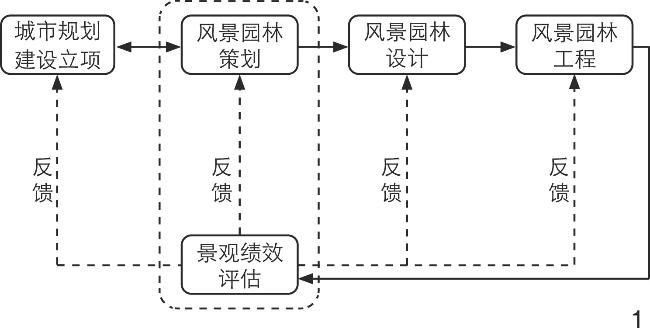
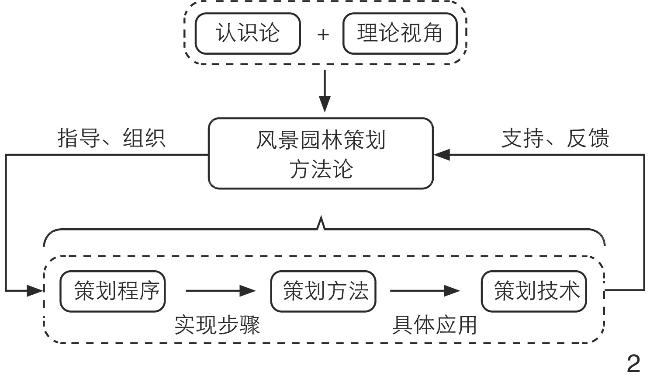
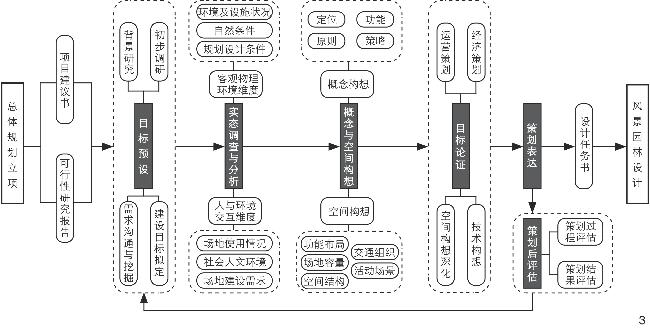
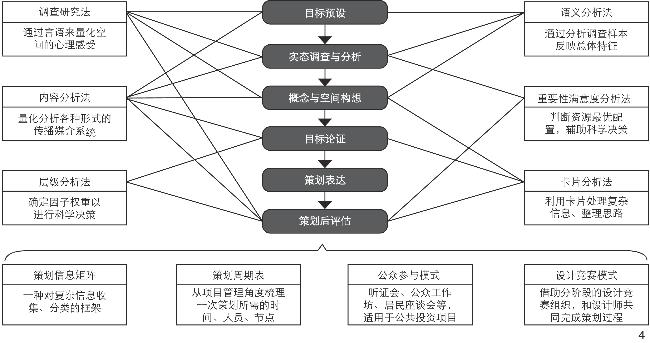
[Results/conclusion] The research shows that design programming has two layers of connotation: Design programming in the broad sense is the programming of the whole cycle of project practice, covering the whole process of project planning, approval, design, construction, use, etc. Design programming in the narrow sense is the study of design basis and its formation process, which is positioned after project approval and before design. The current landscape architectural programming should prioritize the connotation in the narrow sense. As to the definition of the concept, landscape architectural programming refers to the research work in which landscape architects propose a combination of qualitative and quantitative design bases through various methods and procedures, which requires landscape architects to, following the target of a landscape architecture construction project, make rational and objective analysis of the social context and other relevant factors of the project by multidimensional investigation methods based on field investigation in combination with personal experience and technical specifications, and to justify the construction target as appropriate. Landscape architectural programming is evidence-based, which advocates evidence-based science rather than experience, and can thus contribute to scientific decision-making of design. The research framework of landscape architectural programming contains epistemology, theoretical perspective, programming methodology, programming procedure, programming methodology, and programming technology. The relationship between these 5 parts is as follows: Programming methodology is a complete set of action plans necessary for programming and a systematic collection of multiple methods and approaches, which links epistemology and theoretical perspective upward, and coordinates the three aspects of programming procedure, programming methodology and programming technology downward; programming procedure serves as an operation program for the modes and steps of programming practice, involving a variety of specific planning methods; programming methodology depends on the support of various techniques or tools in data collection, processing and analysis. In addition, this research integrates the author’s research and practical experience, and initially proposes a six-phase programming procedure: Goal presetting, field investigation and analysis, concept and spatial conception, goal justification, programming expression, and post-programming evaluation. This research also proposes 6 alternative programming methods including the survey research method, content analysis method, hierarchical analysis method, semantic analysis method, importance-satisfaction analysis method, and card analysis method, as well as 4 alternative programming techniques including the programming information matrix, programming periodic table, public participation model, and design competition model.
LIN Guangsi , LUO Yue . Landscape Architectural Programming: An Approach to Exploring Design Basis[J]. Landscape Architecture, 2024 , 31(3) : 43 -50 . DOI: 10.3724/j.fjyl.202308270385
文中图片均由作者绘制。
| [1] |
BROWN R D, CORRY R C. Evidence-Based Landscape Architecture: The Maturing of a Profession[J]. Landscape and Urban Planning, 2011, 100 (4): 327-329.
|
| [2] |
钟和丽, 罗越, 林广思. 基于城市公园的风景园林策划工作程序构建[J]. 风景园林, 2022, 29 (7): 97-102.
ZHONG H L, LUO Y, LIN G S. Formulation of Working Procedures for Landscape Architectural Programming Based on Urban Parks[J]. Landscape Architecture, 2022, 29 (7): 97-102.
|
| [3] |
程晓夏. 理性规划, 策划先行: 小议城市公园规划设计前期策划[C]//中国城市规划学会.持续发展 理性规划: 2017中国城市规划年会论文集(13风景环境规划). 北京: 中国建筑工业出版社, 2017.
CHENG X X. Rational Planning, Programming First: Discussing the Pre-programming of Urban Park Planning and Design[C]//Urban Planning Society of China. Sustainable Development and Rational Planning: Proceedings of the 2017 China Urban Planning Annual Conference (13 Landscape and Environmental Planning). Beijing: China Architecture & Building Press, 2017.
|
| [4] |
姜春林, 王良增. 现代城市公园的现状、存在问题和发展方向[J]. 设计, 2018 (9): 45-47.
JIANG C L, WANG L Z. Present Situation, Problems and Development Direction of Modern Urban Parks[J]. Design, 2018 (9): 45-47.
|
| [5] |
冉展, 朱文一. 弹性调控对城市公共空间品质的提升作用研究[J]. 城市设计, 2020 (3): 22-35.
RAN Z, ZHU W Y. Research on the Effect of Elastic Control on Improving the Quality of Urban Public Space[J]. Urban Design, 2020 (3): 22-35.
|
| [6] |
皮雨鑫. 我国当代城市公园发展历程与特征研究[D]. 哈尔滨: 东北林业大学, 2013: 68.
PI Y X. Research on the Development and the Features of China’s Contemporary Urban Park[M]. Harbin: Northeast Forestry University, 2013: 68.
|
| [7] |
吴承照, 王晓庆, 许东新. 城市公园社会协同管理机制研究[J]. 中国园林, 2017, 33 (2): 66-70.
WU C Z, WANG X Q, XU D X. Study on Mechanism of Social Collaborative Management for Urban Parks[J]. Chinese Landscape Architecture, 2017, 33 (2): 66-70.
|
| [8] |
林广思. 风景园林工程建设项目可行性研究编制概述[J]. 中国园林, 2010, 26 (3): 81-84.
LIN G S. An Overview of the Compilation of the Feasibility Study of Landscape Engineering[J]. Chinese Landscape Architecture, 2010, 26 (3): 81-84.
|
| [9] |
蒋爱萍. 园林工程管理中项目前期工作流程浅析[J]. 广东园林, 2016, 38 (3): 95-97.
JIANG A P. Working Process in Pre-project Phase of Landscape Engineering Management[J]. Journal of Guangdong Landscape Architecture, 2016, 38 (3): 95-97.
|
| [10] |
《投资项目可行性研究指南》编写组. 投资项目可行性研究指南(试用版)[M]. 北京: 中国电力出版社, 2002: 3, 50-53, 254.
Preparation Team for the Guide to Feasibility Studies For Investment Projects. The Guide to Feasibility Studies for Investment Projects (Trial Version)[M]. Beijing: China Electric Power Press, 2002: 3, 50-53, 254.
|
| [11] |
庄惟敏. 建筑策划与设计[M]. 北京: 中国建筑工业出版社, 2016: 156-174.
ZHUANG W M. Architectural Programming and Design[M]. Beijing: China Architecture & Building Press, 2016: 156-174.
|
| [12] |
WILLIAM L. Exploring the Relationship Between Academic Knowledge and Practice in Landscape Architecture[D]. Guelph: University of Guelph, 2015: 98.
|
| [13] |
FEIN A. A Study of the Profession of Landscape Architecture: Technical Report[R]. Washington D.C.: American Society of Landscape Architects Foundation, 1972.
|
| [14] |
ASLA, CSLA, CELA, et al. Landscape Architecture Body of Knowledge (LABOK) Study Report[R]. Washington, D.C.: American Society of Landscape Architects, 2004.
|
| [15] |
庄惟敏, 李道增. 建筑策划论: 设计方法学的探讨[J]. 建筑学报, 1992 (7): 4-9.
ZHUANG W M, LI D Z. Architectural Programming Theory: An Exploration of Design Methodology[J]. Architectural Journal, 1992 (7): 4-9.
|
| [16] |
王续琨. 策划·策划学·策划科学[J]. 软科学, 2001 (6): 91-95.
WANG X K. Planning, Planning Studies, Science of Planning[J]. Soft Science, 2001 (6): 91-95.
|
| [17] |
金广君. 预先设计: 市场经济下城市设计的一个概念[J]. 新建筑, 1998 (1): 7-9.
JIN G J. Pre-design: A Concept of Urban Design in a Market Economy[J]. New Architecture, 1998 (1): 7-9.
|
| [18] |
党雨田. 乡村建设的建筑策划方法体系架构[d]. 北京: 清华大学, 2019: 136.
DANG Y T. Architectural Programming Method System for Rural Construction[D]. Beijing: Tsinghua University, 2019: 136.
|
| [19] |
胡飞, 时吉星. 英国设计方法研究60年之进程[J]. 艺术设计研究, 2022 (4): 50-57.
HU F, SHI J X. A 60-Year Approach to the Study of British Design Methods[J]. Art and Design Research, 2022 (4): 50-57.
|
| [20] |
LANGRISH J Z. The Design Methods Movement: From Optimism to Darwinism[C]// Proceedings of 2016 Design Research Society 50th Anniversary Conference. Brighton: Design + Research + Society, 2016.
|
| [21] |
PEÑA W, CAUDILL W. Architectural Analysis: Prelude to Good Design[J]. Architectural Record, 1959, 125 (5): 178-182.
|
| [22] |
PEÑA W, FOCKE J. Problem Seeking: New Directions in Architectural Programming[M]. Houston: Caudill Rowlett Scott, 1969: 1.
|
| [23] |
HERSHBERGER R. Architectural Programming and Predesign Manager[M]. New York: McGraw Hill, Inc., 1999: 166.
|
| [24] |
KUMLIN R. Architectural Programming: Creative Techniques for Design Professionals[M]. New York: McGraw Hill, Inc., 1995: 104.
|
| [25] |
EDITH C. Programming for Design: From Theory to Practice[M]. Hoboken: John Wiley & Sons Inc., 1999: 21-30.
|
| [26] |
SANOFF H. Methods of Architectural Programming[M]. London: Routledge, 1977: 67-90.
|
| [27] |
德克. 建筑计划导论[M].宋立垚, 译. 台北: 六台出版社, 1977: 4.
DUERK D. Introduce to Architectural Programming[M]. SONG L Y, translated. Taipei: Liutai Press, 1977: 4.
|
| [28] |
黄晶涛, 杨惠芳, 刘晓宇, 等. 城市设计策划创新: 问题、路径与实践: 以杨柳青大运河国家文化公园为例[J]. 新建筑, 2021 (3): 61-66.
HUANG J T, YANG H F, LIU X Y, et al. Innovative Exploration of Urban Design Programming in Yangliuqing Grand Canal National Cultural Park[J]. New Architecture, 2021 (3): 61-66.
|
| [29] |
金广君, 单樑. 预则立, 巧预则通: 论以开发项目为导向的城市设计策划[J]. 华中建筑, 2008 (7): 55-61.
JIN G J, SHAN L. Well Masterminded, Well Done: Urban Design Mastermind of Development Project-Oriented[J]. Huazhong Architecture, 2008 (7): 55-61.
|
| [30] |
金广君. 当代城市设计探索[M]. 北京: 中国建筑工业出版社, 2010: 83.
JIN G J. Contemporary Urban Design Exploration[M]. Beijing: China Architecture & Building Press, 2010: 83.
|
| [31] |
刘宛. 总体策划: 城市设计实践过程的全面保障[J]. 城市规划, 2004 (7): 59-63.
LIU W. Overall Strategic Program: A Comprehensive Guarantee for the Process of Urban Design Practice[J]. Urban Planning, 2004 (7): 59-63.
|
| [32] |
韩静. 对当代建筑策划方法论的研析与思考[D]. 北京: 清华大学, 2005: 14.
HAN J. Research and Thinking on Contemporary Architectural Programming Methodology[D]. Beijing: Tsinghua University, 2005: 14.
|
| [33] |
张维, 梁思思. 对我国建筑策划发展的分析与思考[J]. 建筑学报, 2006 11: 85-87.
ZHANG W, LIANG S S. Analysis and Reflections on the Development of Architectural Programming in China[J]. Architectural Journal, 2006 11: 85-87.
|
| [34] |
张维, 庄惟敏. 中美建筑策划教育的比较分析[J]. 新建筑, 2008 (5): 111-114.
ZHANG W, ZHUANG W M. A Comparative Analysis of Architectural Programming Education Between China and United States[J]. New Architecture, 2008 (5): 111-114.
|
| [35] |
庄惟敏. 建筑策划导论[M]. 北京: 中国水利水电出版社, 2000: 7-11.
ZHUANG W M. An Introduce to Architectural Programming[M]. Beijing: China Water & Power Press, 2000: 7-11.
|
| [36] |
庄惟敏. 建筑策划的反思与完善: 从前策划—后评估到全过程咨询[J]. 景观设计学, 2017, 5 (6): 62-67.
ZHUANG W M. Reflections and Improvements on Architectural Programming: Programming and Post-Occupancy Evaluation to Whole-Process Consultation[J]. Landscape Architecture Frontiers, 2017, 5 (6): 62-67.
|
| [37] |
庄惟敏. “前策划—后评估”: 建筑流程闭环的反馈机制[J]. 住区, 2017 (5): 125-129.
ZHUANG W M. From Architectural Programming to Post Occupancy Evaluation: A Feedback Mechanism of Architectural Procedure Circle[J]. Design Community, 2017 (5): 125-129.
|
| [38] |
MURPHY M. Landscape Architecture Theory: An Ecological Approach[M]. Washington, D.C.: Island Press, 2016: 217-243.
|
| [39] |
NORMAN T. An Approach to Design[M]. Boston: Addison-Wesley Press, 1951: 113.
|
| [40] |
刘滨谊. 三元论: 人类聚居环境学的哲学基础[J]. 规划师, 1999 (2): 81-84.
LIU B Y. Trialism: The Philosophical Basis for Studies of Human Inhabitation Environment[J]. Planners, 1999 (2): 81-84.
|
| [41] |
刘滨谊. 景观规划设计三元论: 寻求中国景观规划设计发展创新的基点[J]. 新建筑, 2001 (5): 1-3.
LIU B Y. Trilism of Landscape Planning and Design: The Basis of Development and Creation of Chinese Planning and Design[J]. New Architecture, 2001 (5): 1-3.
|
| [42] |
MURPHY M. Landscape Architecture Theory: An Evolving Body of Thought[M]. Long Grove: Waveland Press, 2005: 58-62.
|
| [43] |
李国钦. 景观意象与社区景观策划[D]. 北京: 北京林业大学, 2004: 14-16, 83.
LI G Q. Landscape Image and the Plotting of the Community Landscape[D]. Beijing: Beijing Forestry University, 2004: 14-16, 83.
|
| [44] |
姜乃煊. 城市景观设计策划研究[D]. 哈尔滨: 哈尔滨工业大学, 2016: 23-26, 43-58.
JIANG N X. Research on the Urban Landscape Design Programming[D]. Harbin: Harbin Institute of Technology, 2016: 23-26, 43-58.
|
| [45] |
李丽媛. 围绕“目标需求”的居住区景观策划法初探[D]. 武汉: 武汉理工大学, 2008: 13, 51.
LI L Y. Investigation on Object-and-Demand Landscape Programming of Residential District[D]. Wuhan: Wuhan University of Technology, 2008: 13, 51.
|
| [46] |
LI L Y, XU Y G. Innovative Landscape Architectural Programming[C]//ICETCE. Proceedings of 2011 International Conference on Electric Technology and Civil Engineering. New York: IEEE, 2011.
|
| [47] |
钟和丽. 城市公园的风景园林策划工作程序研究[D]. 广州: 华南理工大学, 2021: 29-31.
ZHONG H L. Research on Operational Procedures of Urban Park Landscape Architectural Programming[D]. Guangzhou: South China University of Technology, 2021: 29-31.
|
| [48] |
李丽媛. 基于目标系统的景观策划方法研究[D]. 武汉: 武汉理工大学, 2012: 62-79.
LI L Y. On Methodology of Goal-System-Oriented Landscape Architecture Programming[D]. Wuhan: Wuhan University of Technology, 2012: 62-79.
|
| [49] |
刘滨谊. 人造生态景观与旅游策划规划设计: 安徽南艳湖[M]. 南京: 东南大学出版社, 2002: 9-15.
LIU B Y. Man-Made Ecological Landscape and Tourism Planning and Design: Nanyan Lake, Anhui[M]. Nanjing: Southeast University Press, 2002: 9-15.
|
| [50] |
刘滨谊. 城市滨水区景观规划设计[M]. 南京: 东南大学出版社, 2006: 24.
LIU B Y. Landscape Planning and Design of Urban Waterfronts[M]. Nanjing: Southeast University Press, 2006: 24.
|
| [51] |
张驰. 基于全程化服务的风景园林师执业流程[D]. 济南: 山东建筑大学, 2019: 64.
ZHANG C. Landscape Architects’ Practicing Process Based on Whole Course Service[D]. Jinan: Shandong Jianzhu University, 2019: 64.
|
| [52] |
PEÑA W, PARSHALL S. Problem Seeking: An Architectural Programming Primer[M]. New York: John Wiley & Sons Inc., 2012: 1.
|
| [53] |
黎鹏志, 刘博新, 高翼文. 让设计决策有章可循: 循证设计作为景观实践的方法论[J]. 景观设计学, 2018, 6 (5): 92-101.
LI P Z, LIU B X, GAO Y W. An Evidence-Based Methodology for Landscape Design[J]. Landscape Architecture Frontiers, 2018, 6 (5): 92-101.
|
| [54] |
TAYLOR E. 2010 Survey of Design Research in Healthcare Settings; The Use and Impact of Evidence-Based Design[R/OL]. (2010-01-01)[2023-08-27]. https://www.healthdesign.org/sites/default/files/EBDSurveyReport_2010_FINAL.pdf
|
| [55] |
张维, 庄惟敏. 建筑策划操作体系: 从理论到实践的实现[J]. 建筑创作, 2008 (6): 159-163.
ZHANG W, ZHUANG W M. Operation System of Architectural Programming Realization from the Theory to the Practice[J]. Jianzhu Chuangzuo, 2008 (6): 159-163.
|
| [56] |
CROTTY M. Foundations of Social Research[M]. London: Routledge, 1998: 2-3.
|
| [57] |
格鲁特, 王. 建筑学研究方法[M].王何忆, 译.2版. 北京: 电子工业出版社, 2015: 9-11.
GROAT L, WANG D. Architectural Research Methods[M]. WANG H Y, translated. 2nd ed. Beijing: Publishing House of Electronics Industry, 2015: 9-11.
|
| [58] |
克雷斯威尔. 研究设计与写作指导: 定性、定量与混合研究的路径[M].崔延强, 译. 重庆: 重庆大学出版社, 2007: 3-4, 10, 13.
CRESWELL J. Research Design: Qualitative, Quantitative, and Mixed Methods Approaches[M]. CUI Y Q, translated. Chongqing: Chongqing University Press, 2007: 3-4, 10, 13.
|
| [59] |
戴明, 斯沃菲尔德. 景观设计学: 调查·策略·设计[M].陈晓宇, 译. 北京: 电子工业出版社, 2013: 3.
DEMING M, SWAFFIELD S. Landscape Architectural Research: Inquiry, Strategy, Design[M]. CHEN X Y, translated. Beijing: Publishing House of Electronics Industry, 2013: 3.
|
| [60] |
ROSSMAN G B, WILSON B L. Numbers and Words: Combining Quantitative and Qualitative Methods in a Single Large-Scale Evaluation Study[J]. Evaluation Review, 1985, 9 (5): 627-643.
|
| [61] |
邓毅. 城市生态公园规划设计方法[M]. 北京: 中国建筑工业出版社, 2007: 100-104, 115-117, 125.
DENG Y. The Methods of Urban Ecological Park Planning and Design[M]. Beijing: China Architecture & Building Press, 2007: 100-104, 115-117, 125.
|
| [62] |
张维, 庄惟敏. 美国建筑策划工具演变研究[J]. 建筑学报, 2008 (2): 27-30.
ZHANG W, ZHUANG W M. Research on the Evolution of Architectural Programming Tools in the United States[J]. Architectural Journal, 2008 (2): 27-30.
|
/
| 〈 |
|
〉 |