

Research Progress on the Application of Eye Tracking Technology in Landscape Architecture
|
BAO Yanyan is a master student in the School of Architecture and Urban Planning, Suzhou University of Science and Technology. Her research focuses on landscape perception |
|
SUN Minkai, Ph.D., is a lecturer in the School of Architecture and Urban Planning, Suzhou University of Science and Technology. His research focuses on landscape perception and therapeutic landscape |
|
ZHANG Jian is a master student in the School of Architecture and Urban Planning, Suzhou University of Science and Technology. His research focuses on therapeutic landscape |
|
LU Yudie is a master student in the School of Architecture and Urban Planning, Suzhou University of Science and Technology. Her research focuses on landscape perception |
Received date: 2023-07-08
Online published: 2025-12-15
Copyright
[Objective] Eye tracking technology was initially widely applied in fields such as medicine, education, transportation, and human-computer interaction. Subsequently, it gradually found its way into geography, tourism, and landscape research. This technology can collect and analyze behavioral data of individuals in landscape environments, revealing the inherent correlation between visual attention and spatial features. In the field of landscape architecture, eye tracking technology is primarily used for landscape evaluation and perception, yielding numerous outcomes. However, there is a lack of systematic research on the hotspots and trends of eye tracking technology in landscape architecture. This research reviews and summarizes the current application status of this technology in landscape architecture research, aiming to provide a reference for future landscape architecture research based on eye tracking technology.
[Method] In this research, CiteSpace software is employed for bibliometric analysis and construction of visual knowledge map in an effort to figure out the development trends, disciplinary distribution characteristics, and keyword clustering of eye tracking technology. The research aims to explore the evolutionary trends, dynamics, hotspots, and frontiers of eye tracking technology in the field of landscape architecture research, thereby revealing the overall development status of relevant researches. The English literature data are sourced from the Web of Science (WoS) core collection. The retrieval uses the following query: “TS = (eye movement OR eye tracking) AND (landscape OR visual landscape preference) AND (visual attention OR perception).” The document type selected for retrieval is “article (academic journal paper)”, and the articles retrieved are mainly designed to adequately reflect the characteristics and development trends of the research topic. The retrieval of English literature was conducted on May 10, 2023, with the literature retrieved spanning the period from 2000 to 2022 and a total of 98 articles meeting the specified criteria being retrieved. Chinese literature data are obtained from the China National Knowledge Infrastructure (CNKI). The retrieval uses the keywords “eye tracking” AND “landscape” OR “landscape architecture”, focusing on article titles. The retrieval of Chinese literature was conducted on May 10, 2023, covering academic journal papers published during the period from 2000 and 2022, with a total of 105 articles meeting the specified criteria being retrieved.
[Results] The research uses CiteSpace to integrate high-frequency keywords and keyword clustering. By combining the authority and latest literature of representative scholars within each cluster, the foreign research direction of eye tracking technology in landscape architecture is summarized as landscape perception and therapeutic landscape. Meanwhile, the domestic research focuses on eye tracking technology in landscape architecture include landscape perception, landscape evaluation, and therapeutic landscape. The research on therapeutic landscape primarily focuses on the positive impact of the environment on human stress recovery and attention fatigue improvement. In existing researches, eye tracking technology primarily records the visual attention characteristics of individuals in natural environments or urban settings dominated by natural elements, and analyzes the therapeutic effects of different environments. In landscape perception research, eye tracking technology is primarily employed to explore differences between various landscape types, such as urban or natural landscape. It is also used to investigate the impact of the quantity and design techniques of different elements within similar landscapes on landscape perception. Landscape evaluation is the outcome of the interaction between evaluators’ psychological activities and the quality of landscape, which entails evaluators to make value judgments on the external and functional aspects of landscape based on visual perception. In the future, landscape architecture research based on eye tracking technology may pay more attention to the following three aspects. 1) Expansion of the interdisciplinary integration scope of the research on eye tracking technology. Eye tracking technology can be applied in areas such as ecological perception, making it possible to evaluate the reactions of different populations to ecological landscape, identify the change trends of ecological environments, and thus optimize ecological environments. 2) Innovative research involving the combination of eye tracking technology with various other technologies. Eye tracking technology can synergize with physiological sensing technologies such as heart rate variability, magnetic resonance imaging, and functional near-infrared spectroscopy. 3) Research on the application of eye tracking technology in the health research field. Future research may combine virtual reality technology, biofeedback technology, and other approaches to obtain more comprehensive empirical data support.
[Conclusion] This research summarizes the progress of landscape architecture research based on eye tracking technology, elucidating the key roles of eye tracking technology in the research on therapeutic landscape, landscape perception, landscape evaluation, etc. In the future, the research on landscape architecture based on eye tracking technology is expected to evolve into an interdisciplinary and technologically integrated research system.
BAO Yanyan , SUN Minkai , ZHANG Jian , LU Yudie . Research Progress on the Application of Eye Tracking Technology in Landscape Architecture[J]. Landscape Architecture, 2024 , 31(4) : 79 -86 . DOI: 10.3724/j.fjyl.202307080307
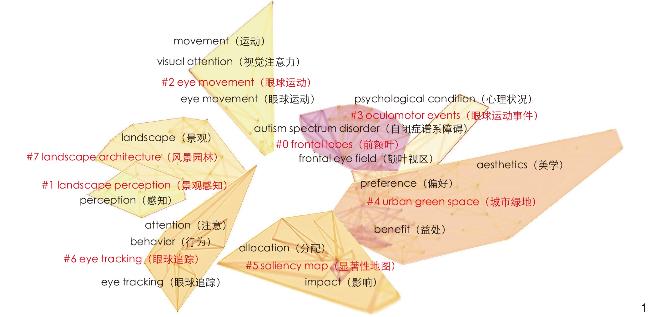
图1 国外眼动追踪技术在风景园林领域的关键词聚类Fig. 1 Keyword clustering for eye tracking technology in the field of landscape architecture abroad |
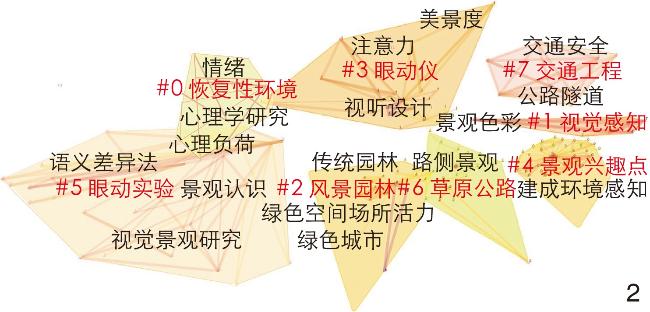
图2 国内眼动追踪技术在风景园林领域的关键词聚类Fig. 2 Keyword clustering for eye tracking technology in the field of landscape architecture in China |
表1 国外关键词共现聚类下的研究方向Tab. 1 Research directions in classification of keyword co-occurrence clustering abroad |
| 序号 | 聚类名称 | 关键词 | 研究方向 |
|---|---|---|---|
| #0 #1 #2 #3 | 前额叶(frontal lobes) 景观感知(landscape perception) 眼球运动(eye movement) 眼球运动事件(oculomotor events) | 探索(exploration)、影响(impact)、健康(health)、模型(model)、注视时间(fixation duration)、压力强度(stress intensity)、瞳孔反应(pupillary response)、新冠病毒感染(covid-19 pandemic)、额叶视区(frontal eye field)、心理状况(psychological condition)、自闭症谱系障碍(autism spectrum disorder) | 景观感知 |
| #4 #5 #6 #7 | 城市绿地(urban green space) 显著性地图(saliency map) 眼球追踪(eye tracking) 风景园林(landscape architecture) | 偏好(preference)、影响(impact)、图像(image)、美学(aesthetics)、风景秀丽(scenic beauty)、注意(attention)、分配(allocation)、视觉偏好(visual preference)、视觉场景(visual scene)、遗产保护(heritage protection)、心理认知因素(psychological cognitive factor)、观看任务(viewing task) | 景观疗愈 |
表2 国内关键词共现聚类分类下的研究方向Tab. 2 Research directions in classification of keyword co-occurrence clustering in China |
| 序号 | 聚类名称 | 研究关键词 | 研究方向 |
|---|---|---|---|
| #0 | 恢复性环境 | 恢复性环境、情绪、心理学研究、人本主义、心理负荷、注意力恢复、环境恢复力 | 景观疗愈 |
| #1 #2 #3 | 视觉感知 风景园林 眼动仪 | 视觉感知、注意力、景观认识、传统园林、视觉景观研究、景观色彩、视听设计 | 景观感知 |
| #4 #5 | 景观兴趣点 眼动实验 | 建成环境感知、美景度、语义差异法、绿色城市、绿色空间场所活力、景观视觉质量、旅游景观 | 景观评价 |
| #6 #7 | 草原公路 交通工程 | 公路隧道、交通工程、路侧景观、交通安全 | 其他关联 学科 |
文中图表均由作者绘制。
| [1] |
UNDERWOOD G. Cognitive Processes in Eye Guidance[M]. New York: Oxford University Press, 2005.
|
| [2] |
YARBUS A L. Eye Movements and Vision[M]. New York: Springer, 2005.
|
| [3] |
RAYNER K. Eye Movements in Reading and Information Processing: 20 Years of Research[J]. Psychological Bulletin, 1998, 124 (3): 372.
|
| [4] |
ANDERSON J R. Cognitive Psychology and Its Implications[M]. London: Macmillan, 2005.
|
| [5] |
CARTER B T, LUKE S G. Best Practices in Eye Tracking Research[J]. International Journal of Psychophysiology, 2020, 155: 49-62.
|
| [6] |
GIBALDI A, VANEGAS M, BEX P J, et al. Evaluation of the Tobii Eyex Eye Tracking Controller and Matlab Toolkit for Research[J]. Behavior Research Methods, 2017, 49: 923-946.
|
| [7] |
BERTO R, MASSACCESI S, PASINI M. Do Eye Movements Measured Across High and Low Fascination Photographs Differ? Addressing Kaplan’s Fascination Hypothesis[J]. Journal of Environmental Psychology, 2008, 28 (2): 185-191.
|
| [8] |
LI S P, ZHANG X L, KIM F J, et al. Attention-Aware Robotic Laparoscope Based on Fuzzy Interpretation of Eye-Gaze Patterns[J]. Journal of Medical Devices, 2015, 9 (4): 041007.
|
| [9] |
TINKER M A. Experimental Studies on the Legibility of Print: An Annotated Bibliography[J]. Reading Research Quarterly, 1966, 1 (4): 67-118.
|
| [10] |
徐昉. 碳中和背景下风能发展对景观规划的影响[J]. 风景园林, 2022, 29 (5): 52-58.
XU F. The Impacts of Wind Energy Development on Landscape Planning in the Context of Carbon Neutrality[J]. Landscape Architecture, 2022, 29 (5): 52-58.
|
| [11] |
张若诗, 颜夏悦, 王晨, 等. 多模态数据驱动的人与建成环境情感交互研究: 以京张铁路遗址公园五道口段为例[J]. 城市发展研究, 2022, 29 (7): 55-66.
ZHANG R S, YAN X Y, WANG C, et al. Research on Emotional Interaction Between People and Built Environment Driven by Multi-Modal Data: Take Wudaokou Jingzhang Railway Park as an Example[J]. Urban Development Studies, 2022, 29 (7): 55-66.
|
| [12] |
赵莹, 林家惠, 刘逸. 基于眼动实验的旅游地景观视觉评价研究: 以珠海市唐家古镇为例[J]. 人文地理, 2020, 35 (5): 130-140.
ZHAO Y, LIN J H, LIU Y. Research on Visual Evaluation of Tourism Scenery Based on Eye Movement Experiment: A Case of Tangjia Ancient Town in Zhuhai[J]. Human Geography, 2020, 35 (5): 130-140.
|
| [13] |
成实, 张潇涵, 成玉宁. 数字景观技术在中国风景园林领域的运用前瞻[J]. 风景园林, 2021, 28 (1): 46-52.
CHENG S, ZHANG X H, CHENG Y N. Prospect of the Application of Digital Landscape Technology in the Field of Landscape Architecture in China[J]. Landscape Architecture, 2021, 28 (1): 46-52.
|
| [14] |
李欣, 李渊, 任亚鹏, 等. 融合主观评价与眼动分析的城市空间视觉质量研究[J]. 建筑学报, 2020 S2: 190-196.
LI X, LI Y, REN Y P, et al. Research on the Urban Spatial Visual Quality Based on Subjective Evaluation Method and Eye Tracking Analysis[J]. Architectural Journal, 2020 S2: 190-196.
|
| [15] |
魏方, 陈鲁, 昝鹏, 等. 机器与自然之间: 后工业景观再野化的公众感知研究[J]. 中国园林, 2022, 38 (8): 36-41.
WEI F, CHEN L, ZAN P, et al. Between Industrial Remains and the Green: Research on Public Perception of Rewilded Postindustrial Landscape[J]. Chinese Landscape Architecture, 2022, 38 (8): 36-41.
|
| [16] |
武钰林, 董卫华, 张文佳. 街区建成环境感知影响因素研究: 基于行为实验的证据[J]. 城市规划, 2022, 46 (12): 99-109.
WU Y L, DONG W H, ZHANG W J. Research on Influencing Factors of Built Environment Perception in Neighborhoods: Evidence from Behavioral Experiment[J]. City Planning Review, 2022, 46 (12): 99-109.
|
| [17] |
张卫东, 梁倩, 方海兰, 等. 城市绿化景观观赏性的眼动研究[J]. 心理科学, 2009, 32 (4): 801-803.
ZHANG W D, LIANG Q, FANG H L, et al. An Eye-Movement Research on City Greening Landscape Appreciation[J]. Journal of Psychological Science, 2009, 32 (4): 801-803.
|
| [18] |
叶靓俏, 尹彩春, 赵文武. 基于Web of Science的联合国可持续发展目标研究文献计量分析[J/OL].生态学报, 2023(24)(24): 1-11[2024-03-07].https://doi.org/10.20103/j.stxb.202307101483.
YE L Q, YIN C C, ZHAO W W. Bibliometric Analysis of Research on United Nations Sustainable Development Goals Based on Web of Science[J/OL].生态学报, 2023(24)(24): 1-11[2024-03-07].https://doi.org/10.20103/j.stxb.202307101483.
|
| [19] |
张瑞, 张青萍, 唐健, 等. 我国城市绿地生态网络研究现状及发展趋势: 基于CiteSpace知识图谱的量化分析[J]. 现代城市研究, 2019 10: 2-11.
ZHANG R, ZHANG Q P, TANG J, et al. Research Status and Development Trend of Urban Green Space Ecological Network in China: Visualized Quantitative Study Based on CiteSpace[J]. Modern Urban Research, 2019 10: 2-11.
|
| [20] |
GIDLÖF-GUNNARSSON A, ÖHRSTRÖM E. Noise and Well-Being in Urban Residential Environments: The Potential Role of Perceived Availability to Nearby Green Areas[J]. Landscape and Urban Planning, 2007, 83 2-3: 115-126.
|
| [21] |
LI H S, BROWNING M H, RIGOLON A, et al. Beyond “Bluespace” and “Greenspace”: A Narrative Review of Possible Health Benefits from Exposure to Other Natural Landscapes[J]. Science of the Total Environment, 2023, 856: 159292.
|
| [22] |
陈筝. 高密高异质性城市街区景观对心理健康影响评价及循证优化设计[J]. 风景园林, 2018, 25 (1): 106-111.
CHEN Z. Assessing the Impact of High-density High-Heterogeneity Urban District Landscape on Psychological Health and Optimizing via Evidence-Based Design[J]. Landscape Architecture, 2018, 25 (1): 106-111.
|
| [23] |
AMATI M, PARMEHR E G, MCCARTHY C, et al. How Eye-Catching are Natural Features When Walking Through a Park? Eye tracking Responses to Videos of Walks[J]. Urban Forestry & Urban Greening, 2018, 31: 67-78.
|
| [24] |
ELSADEK M, SUN M K, FUJII E. Psycho-Physiological Responses to Plant Variegation as Measured Through Eye Movement, Self-Reported Emotion and Cerebral Activity[J]. Indoor and Built Environment, 2017, 26 (6): 758-770.
|
| [25] |
GOTO S, MOROTA Y, LIU C C, et al. The Mechanism of Relaxation by Viewing a Japanese Garden: A Pilot Study[J]. Health Environments Research & Design Journal, 2020, 13 (4): 31-43.
|
| [26] |
翁羽西, 朱玉洁, 黄雅冰, 等. 顺光与逆光森林景观图片诱导的大学生焦虑和注意水平[J]. 中国心理卫生杂志, 2020, 34 (4): 361-366.
WENG Y X, ZHU Y J, HUANG Y B, et al. Anxiety and Attention Level Induced by Forest Landscape Images of Backlight and Frontlight in College Students[J]. Chinese Mental Health Journal, 2020, 34 (4): 361-366.
|
| [27] |
朱玉洁, 董嘉莹, 翁羽西, 等. 基于眼动追踪技术的森林公园环境视听交互评价[J]. 中国园林, 2021, 37 (11): 69-74.
ZHU Y J, DONG J Y, WENG Y X, et al. Audio-Visual Interaction Evaluation of Forest Park Environment Based on Eye Movement Tracking Technology[J]. Chinese Landscape Architecture, 2021, 37 (11): 69-74.
|
| [28] |
张昶, 韩文静, 王成. 城镇河岸带植物色彩对视觉疲劳的影响[J]. 中国城市林业, 2021, 19 (6): 8-14.
ZHANG C, HAN W J, WANG C. Effects of Urban Riparian Plants’ Color on Visual Fatigue[J]. Journal of Chinese Urban Forestry, 2021, 19 (6): 8-14.
|
| [29] |
任欣欣, 康健. 声景视角下湿地景观视听评价的交互影响[J]. 建筑学报, 2016 S2: 7-11.
REN X X, KANG J. Interaction of Audiovisual Evaluation for Wetland Landscapes from the Perspective of Soundscape[J]. Architectural Journal, 2016 S2: 7-11.
|
| [30] |
KANG Y, KIM E J. Differences of Restorative Effects While Viewing Urban Landscapes and Green Landscapes[J]. Sustainability, 2019, 11 (7): 2129.
|
| [31] |
CUI W Y, LI Z, XUAN X D, et al. Influence of Hospital Outdoor Rest Space on the Eye Movement Measures and Self-Rating Restoration of Staff[J]. Frontiers in Public Health, 2022, 10: 855857.
|
| [32] |
朱玉洁, 翁羽西, 黄钰麟, 等. 眼动分析用于校园恢复性声景观初探: 以福建农林大学校园观音湖为例[J]. 科学技术与工程, 2020, 20 (25): 10444-10451.
ZHU Y J, WENG Y X, HUANG Y L, et al. A Tentative Research on Campus Restorative Soundscape by Eye Movement Analysis Technique: A Case Study of Guanyin Lake on Campus of Fujian Agriculture and Forestry University[J]. Science Technology and Engineering, 2020, 20 (25): 10444-10451.
|
| [33] |
翁羽西, 朱玉洁, 董嘉莹, 等. 校园绿地声景观对情绪和注意力的影响: 以福建农林大学为例[J]. 中国园林, 2021, 37 (2): 88-93.
WENG Y X, ZHU Y J, DONG J Y, et al. Effects of Soundscape on Emotion and Attention on Campus Green Space: A Case Study of Fujian Agriculture and Forestry University[J]. Chinese Landscape Architecture, 2021, 37 (2): 88-93.
|
| [34] |
李鑫, 王子尧, 吴丹子, 等. 基于生理反馈的城市滨河步道对青年人压力缓解的研究[J]. 中国园林, 2022, 38 (5): 86-91.
LI X, WANG Z Y, WU D Z, et al. Research on Pressure Relief of Young People by Urban Waterfront Trail Based on Physiological Feedback[J]. Chinese Landscape Architecture, 2022, 38 (5): 86-91.
|
| [35] |
付而康, 王艺澔, 周佳玟, 等. 眼动分析用于社区公园恢复性环境评价初探[J]. 南方建筑, 2022 (6): 93-99.
FU E K, WANG Y H, ZHOU J W, et al. A Tentative Research of Restorative Environmental Evaluation of Community Parks Based on Eye Movement Analysis[J]. South Architecture, 2022 (6): 93-99.
|
| [36] |
刘滨谊. 走向景观感应: 景观感知及视觉评价的传承发展[J]. 风景园林, 2022, 29 (9): 12-17.
LIU B Y. Towards Landscape Interaction: Inheritance and Development of Landscape Perception and Visual Evaluation[J]. Landscape Architecture, 2022, 29 (9): 12-17.
|
| [37] |
PORTEOUS J D. Environmental Aesthetics: Ideas, Politics and Planning[M]. London: Routledge, 2013.
|
| [38] |
张洋, 葛梦婷, 董孟斌, 等. 数字化背景下人机交互对景观感知的影响[J]. 风景园林, 2022, 29 (9): 48-54.
ZHANG Y, GE M T, DONG M B, et al. The Influence of Human-Computer Interaction on Landscape Perception in the Digital Context[J]. Landscape Architecture, 2022, 29 (9): 48-54.
|
| [39] |
PÓŁROLNICZAK M, POTOCKA I, KOLENDOWICZ L, et al. The Impact of Biometeorogical Conditions on the Perception of Landscape[J]. Atmosphere, 2019, 10 (5): 264.
|
| [40] |
ZHANG Z, GAO Y, ZHOU S T, et al. Psychological Cognitive Factors Affecting Visual Behavior and Satisfaction Preference for Forest Recreation Space[J]. Forests, 2022, 13 (2): 136.
|
| [41] |
SUN M K, DONG L. Impact of the Classic Chinese Garden Soundscape with Focus on Physiological and Psychological Effects, Tested Through Eye Tracking, and Subjective Evaluation[J]. Frontiers in Psychology, 2022, 13: 902630.
|
| [42] |
帕特里克, 刘滨谊, 唐真. 从视觉偏好研究: 一种理解景观感知的方法[J]. 中国园林, 2013, 29 (5): 22-26.
PATRICK M, LIU B Y, TANG Z. Visual Preference Research: An Approach to Understanding Landscape Perception[J]. Chinese Landscape Architecture, 2013, 29 (5): 22-26.
|
| [43] |
陆邵明, 杜力. 基于主体视野下传统园林要素的视觉认知研究[J]. 中国名城, 2019 (6): 28-32.
LU S M, DU L. Study on Visual Cognition of Landscape Elements in Traditional Gardens with the View of Users[J]. China Ancient City, 2019 (6): 28-32.
|
| [44] |
李渊, 高小涵, 黄竞雄, 等. 基于摄影照片与眼动实验的旅游者视觉行为分析: 以厦门大学为例[J]. 旅游学刊, 2020, 35 (9): 41-52.
LI Y, GAO X H, HUANG J X, et al. Visual Behavior Analysis of Tourists Based on Photography and Eye Tracking Experiment: A Case of Xiamen University[J]. Tourism Tribune, 2020, 35 (9): 41-52.
|
| [45] |
成实, 王建国. 基于动态观览评价的视觉景观研究探索: 以南京市滨江型公共空间为例[J]. 中国园林, 2021, 37 (11): 57-62.
CHENG S, WANG J G. Visual Landscape Research on Dynamic Viewing Evaluation: A Case Study of Nanjing Riverside Public Viewing Space[J]. Chinese Landscape Architecture, 2021, 37 (11): 57-62.
|
| [46] |
MISTHOS L-M, PAVLIDIS A, KARABASSAKIS E, et al. Exploring the Visual Impact from Open Pit Mines Applying Eye Movement Analyses on Mining Landscape Photographs[J]. Reclamation and Environment, 2020, 34 (9): 609-624.
|
| [47] |
LIU Q Y, ZHU Z P, ZENG X J, et al. The Impact of Landscape Complexity on Preference Ratings and Eye Fixation of Various Urban Green Space Settings[J]. Urban Forestry & Urban Greening, 2021, 66: 127411.
|
| [48] |
GHOLAMI Y, TAGHVAEI S H, NOROUZIAN-MALEKI S, et al. Identifying the Stimulus of Visual Perception Based on Eye tracking in Urban Parks: Case Study of Mellat Park in Tehran[J]. Journal of Forest Research, 2021, 26 (2): 91-100.
|
| [49] |
鲁苗. 基于眼动技术的景观视觉感知分析: 以清华大学校园景观为例[J]. 艺苑, 2019 (1): 98-101.
LU M. Visual Perception Analysis of Landscape Based on Eye Tracking Technology: A Case Study of Campus Landscape of Tsinghua University[J]. Forum of Arts, 2019 (1): 98-101.
|
| [50] |
李渊, 黄竞雄, 梁嘉祺, 等. 文化遗产地商业街道空间视觉吸引力及其感知的影响因素研究: 以鼓浪屿龙头路为例[J]. 西部人居环境学刊, 2022, 37 (2): 114-121.
LI Y, HUANG J X, LIANG J Q, et al. Research on Visual Attraction and Influencing Factors of Perception of Commercial Street Space in Cultural Heritage Site: Taking Gulangyu Longtou Road as an Example[J]. Journal of Human Settlements in West China, 2022, 37 (2): 114-121.
|
| [51] |
邱瑶, 罗涛, 王艳云, 等. 基于视觉关注度与审美偏好的城市景观元素感知特征研究[J]. 中国园林, 2023, 39 (6): 82-87.
QIU Y, LUO T, WANG Y Y, et al. Study on the Perceptual Features of Urban Landscape Elements Based on Visual Attention and Aesthetic Preference[J]. Chinese Landscape Architecture, 2023, 39 (6): 82-87.
|
| [52] |
陈筝. 眼动和行为证据支持下城市更新的循证助推[J]. 世界建筑, 2023 (7): 68-69.
CHEN Z. Positive Nudges for Urban Regeneration via Eye Tracking and Behavioural Evidence[J]. World Architecture, 2023 (7): 68-69.
|
| [53] |
PIHEL J, SANG Å O, HAGERHALL C, et al. Expert and Novice Group Differences in Eye Movements When Assessing Biodiversity of Harvested Forests[J]. Forest Policy and Economics, 2015, 56: 20-26.
|
| [54] |
DUPONT L, ANTROP M, VAN EETVELDE V. Does Landscape Related Expertise Influence the Visual Perception of Landscape Photographs? Implications for Participatory Landscape Planning and Management[J]. Landscape and Urban Planning, 2015, 141: 68-77.
|
| [55] |
ELSADEK M, SUN M K, SUGIYAMA R, et al. Cross-Cultural Comparison of Physiological and Psychological Responses to Different Garden Styles[J]. Urban Forestry & Urban Greening, 2019, 38: 74-83.
|
| [56] |
LI C, GE S W, WANG R Y. Similarities and Differences in the Outsiders and Insiders’ Visual Preferences on Sacred Landscape[J]. Frontiers in Psychology, 2022, 13: 743933.
|
| [57] |
陆邵明. 眼动追踪视野下上海古典园林文化基因的刻画[J]. 同济大学学报(社会科学版), 2020, 31 (6): 93-102.
LU S M. A Study on the Cultural Gene of Shanghai Classic Gardens Based on Eye tracking[J]. Journal of Tongji University (Social Science Edition), 2020, 31 (6): 93-102.
|
| [58] |
陈奕言, 陈筝, 杜明. 注意力的设计: 眼动追踪技术辅助下的上海市南京路步行街景观体验研究[J]. 景观设计学(中英文), 2022, 10 (2): 52-70.
CHEN Y Y, CHEN Z, DU M. Designing Attention: Research on Landscape Experience Through Eye Tracking in Nanjing Road Pedestrian Mall (Street) in Shanghai[J]. Landscape Architecture Frontiers, 2022, 10 (2): 52-70.
|
| [59] |
张琳, 张佳琪, 刘滨谊. 基于游客行为偏好的传统村落景观情境感知价值研究[J]. 中国园林, 2017, 33 (8): 92-96.
ZHANG L, ZHANG J Q, LIU B Y. Landscape Context Perception Value of Traditional Village: A Study Based on Tourist Behavior Preference[J]. Chinese Landscape Architecture, 2017, 33 (8): 92-96.
|
| [60] |
唐岳兴, 邵龙, 王雪. 基于数据分析的哈尔滨城市景观特色评价[J]. 东北林业大学学报, 2017, 45 (1): 65-70.
TANG Y X, SHAO L, WANG X. Evaluation of Urban Landscape Features of Harbin Based on Data Analysis[J]. Journal of Northeast Forestry University, 2017, 45 (1): 65-70.
|
| [61] |
王博, 邵泽彪, 孙良, 等. 基于眼动分析的城市下沉广场景观满意度研究[J]. 华中建筑, 2022, 40 (7): 108-113.
WANG B, SHAO Z B, SUN L, et al. Landscape Satisfaction of Sunken Square Based on Eye Movement Analysis[J]. Huazhong Architecture, 2022, 40 (7): 108-113.
|
| [62] |
张昶, 王涵, 王成. 基于眼动的城市森林景观视觉质量评价及距离变化分析[J]. 中国城市林业, 2020, 18 (1): 6-12.
ZHANG C, WANG H, WANG C. Visual Quality Evaluation and Distance Change Analysis of Urban Forest Landscape Based on Eye Movement[J]. Journal of Chinese Urban Forestry, 2020, 18 (1): 6-12.
|
| [63] |
杨阳, 唐晓岚. 南京市紫金山国家森林公园风景林景观的视觉质量评价及因子分析[J]. 中国园林, 2020, 36 (6): 135-140.
YANG Y, TANG X L. The Evaluation and Factor Analysis of the Visual Quality of Scenic Forest Landscape: A Case Study of Purple Mountain National Forest Park in Nanjing[J]. Chinese Landscape Architecture, 2020, 36 (6): 135-140.
|
| [64] |
郭素玲, 赵宁曦, 张建新, 等. 基于眼动的景观视觉质量评价: 以大学生对宏村旅游景观图片的眼动实验为例[J]. 资源科学, 2017, 39 (6): 1137-1147.
GUO S L, ZHAO N X, ZHANG J X, et al. Landscape Visual Quality Assessment Based on Eye Movement: College Student Eye Tracking Experiments on Tourism Landscape Pictures[J]. Resources Science, 2017, 39 (6): 1137-1147.
|
| [65] |
罗映舜, 沈守云, 詹文. 基于SD与眼动分析的张谷英村文化景观体验评价研究[J]. 中国园林, 2022, 38 (5): 98-103.
LUO Y S, SHEN S Y, ZHAN W. Research on Experience Evaluation of Cultural Landscape of Zhang Guying Village Based on SD and Eye Movement Analysis[J]. Chinese Landscape Architecture, 2022, 38 (5): 98-103.
|
| [66] |
赵小平, 马有才, 万平, 等. 情绪对新手驾驶员视觉特性的影响研究[J]. 中国安全科学学报, 2022, 32 (1): 34-40.
ZHAO X P, MA Y C, WAN P, et al. Research on the Influence of Emotion on Visual Characteristics of Novice Drivers[J]. China Safety Science Journal, 2022, 32 (1): 34-40.
|
| [67] |
彭慧蕴, 杨婷婷, 谭少华. 神经都市主义视角下城市健康支持性环境研究: 范式创新与研究框架[J]. 中国园林, 2022, 38 (4): 62-67.
PENG H Y, YANG T T, TAN S H. Research on Urban Health Supportive Environment from the Perspective of Neurourbanism: Paradigm Innovation and Research Framework[J]. Chinese Landscape Architecture, 2022, 38 (4): 62-67.
|
| [68] |
张琪, 周延祯, 屈海燕. 脑电技术在风景园林领域的应用研究现状综述[J]. 南方建筑, 2023 (5): 75-83.
ZHANG Q, ZHOU Y Z, QU H Y. A Review of Research Status on the Application of EEG Technology to the Field of Landscape Architecture[J]. South Architecture, 2023 (5): 75-83.
|
| [69] |
成玉宁, 樊柏青. 数字景观进程[J]. 中国园林, 2023, 39 (6): 6-12.
CHENG Y N, FAN B Q. Digital Landscape Process[J]. Chinese Landscape Architecture, 2023, 39 (6): 6-12.
|
/
| 〈 |
|
〉 |