

Research on Causes of Water System Changes Inside and Outside the Mountain Resort
|
CAO Pan, Ph.D., is deputy director of and an associate professor and master supervisor in the Department of the Landscape Architecture, College of Architecture, Changsha University of Science & Technology. His research focuses on engineering and technology of landscape architecture, and history of landscape architecture |
|
TANG Jia is a Ph.D. candidate in the School of Landscape Architecture, Central South University of Forestry and Technology. Her research focuses on landscape planning and ecological restoration |
|
ZHOU Chen, Master, is vice dean of and a professor and master supervisor in the College of Architecture, Changsha University of Science & Technology. Her research focuses on landscape planning and design |
|
HU Xijun, Ph.D., is a professor and doctoral supervisor in the College of Landscape Architecture, Central South University of Forestry and Technology. His research focuses on landscape planning and ecological restoration, and history, theory and heritage protection of landscape architecture |
Received date: 2023-07-14
Online published: 2025-12-15
Copyright
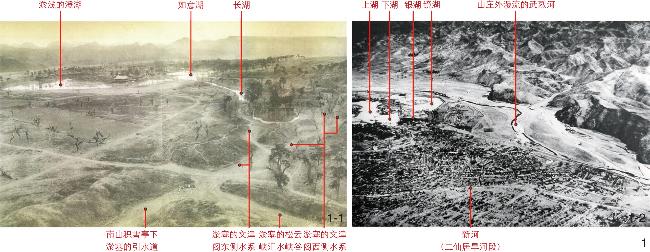
[Objective] As the largest royal garden in the world today, the Mountain Resort is renowned for its classic natural landscape construction. From the initial construction of the Mountain Resort in 1703 to the collapse of Qing Dynasty in 1911, the water systems inside and outside the Mountain Resort underwent significant changes. However, the historical process of water system changes inside and outside the Mountain Resort hasn’t been clearly sorted out, and the causes thereof haven’t been researched in depth. These deficiencies have brought obstacles to the comprehensive understanding of the Mountain Resort, and also brought challenges to the recognition of multiple values of landscape heritage.
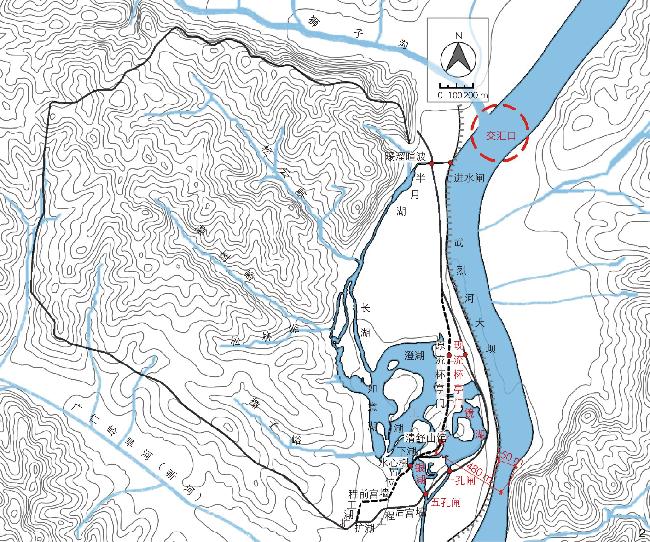
[Methods] This research reviews water system changes inside and outside the Mountain Resort over the past 200 years since its initial construction. The central research topic is developed by using the method of historical data analysis and relevant calculation results with a focus on the specific process of water system construction inside and outside the Mountain Resort in history. Through the interpretation of ancient drawings and documents and the implementation of field investigation, the boundary of the palace wall of the Mountain Resort before the lake expansion project is roughly drawn. Based on the interpretation of the archival records and the principle of river dynamics, the influence of erosion and sediment deposition in the channel confluence on the water diversion area of the Mountain Resort is expounded. According to the changes of the flood section area of the Wulie River before and after the lake expansion project of the Mountain Resort, it can be seen that the flood discharge capacity of the Wulie River has decreased significantly. This research sorts out the river management work during the rapid change of water system inside and outside the Mountain Resort, including the excavation of internal rivers and lakes, the annual maintenance of dry rivers, and the maintenance of external Wulie River channels, and summarizes the general process of the establishment, modification and abandonment of relevant river governance systems, In addition, the restrictive effects of the diversion project, the lake extension project and the river engineering policy on waterscape change are summarized. Based on historical documents and maps, remote sensing data of land use/land cover monitoring in the early 1980s, and the soil loss data in Chengde during the same period, this research discusses the source of river sediment, which is a more important factor causing water system change, from the perspective of Wulie River basin.
[Results] Although the water system construction of the Mountain Resort has created a classic waterscape, it has also promoted the water system regression of the Mountain Resort. Specifically, the main water diversion project is located near the confluence of the Lion Ditch and the Wulie River, where the fluvial facies changes are far more frequent than other river sections and river sediment is more likely to accumulate river near the diversion point, leading to the significant accretion of river channel while bringing the risk of diversion channel cut-off. During the reign of Emperor Kangxi in Qing Dynasty, the lake expansion project was implemented to excavate the Mirror Lake and the Silver Lake within the palace wall of the Mountain Resort, which reduced the flood section of the Wulie River on the east side of the Mountain Resort by more than 50%, forming a bottle-neck reach for river discharge, causing backwater and sedimentation in the upper reaches of the Mountain Resort, and raising the river bed year by year. The establishment, improvement and abandonment of such systems as “annual repair of dry river”, “river and lake dredging” and “annual repair of major river” with respect to the Mountain Resort, coupled with the rapid water system change inside and outside the Mountain Resort, played a non-negligible role in the decline of local waterscape. Based on historical archives and photographic images, it can be found that since the middle and late Qing Dynasty, the problem of land overdevelopment in the Wulie River basin has become more and more serious. According to the annual soil loss scale of cultivated land at different slopes in Chengde compiled by Chengde Institute of Soil and Water Conservation in the 1980s, and relevant combined with DEM data and the earliest remote sensing data of land use/land cover in China in the same period, it is calculated that the total amount of annual soil loss of cultivated land in the Wulie River basin is about 1,025,422.30 t, roughly equivalent to the annual total mean sediment runoff of the Wulie River basin collected by Chengde Hydrographic Station in the 1970s, which is about 1,070,000.00 t.
[Conclusion] Despite its creation of a classic waterscape, the water-related construction of the Mountain Resort also plays a significant role in the disappearance of water systems inside and outside the Mountain Resort. However, since the late Qing Dynasty, the serious soil and water loss arising from the overcultivation in the Wulie River basin is the most critical factor causing the water system changes inside and outside the Mountain Resort, which serves as a precious sample of the temporal and spatial changes of landscape. An in-depth research on the causes of such changes is the prerequisite for the recognition of multiple values of landscape heritage, and also an important way to excavate and cultivate the ecological wisdom.
CAO Pan , TANG Jia , ZHOU Chen , HU Xijun . Research on Causes of Water System Changes Inside and Outside the Mountain Resort[J]. Landscape Architecture, 2024 , 31(4) : 111 -117 . DOI: 10.3724/j.fjyl.202307140319
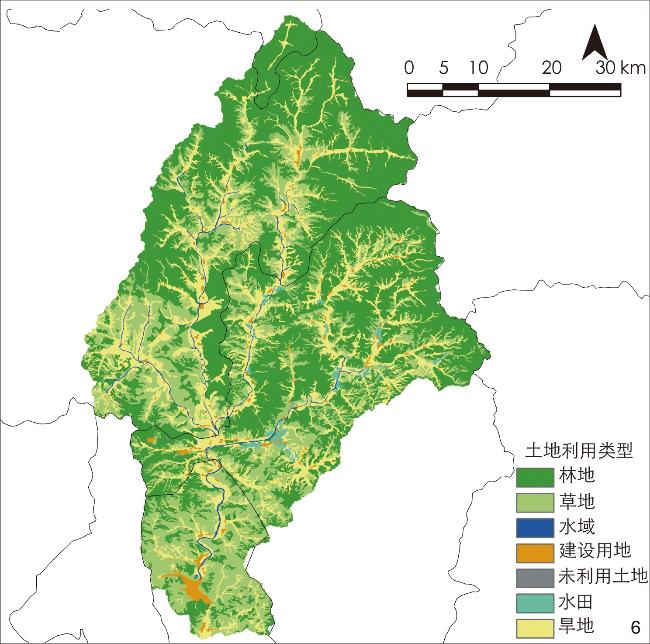
图6 武烈河流域土地利用类型图(1980年)Fig. 6 Map of land use types in the Wulie River basin (1980) |
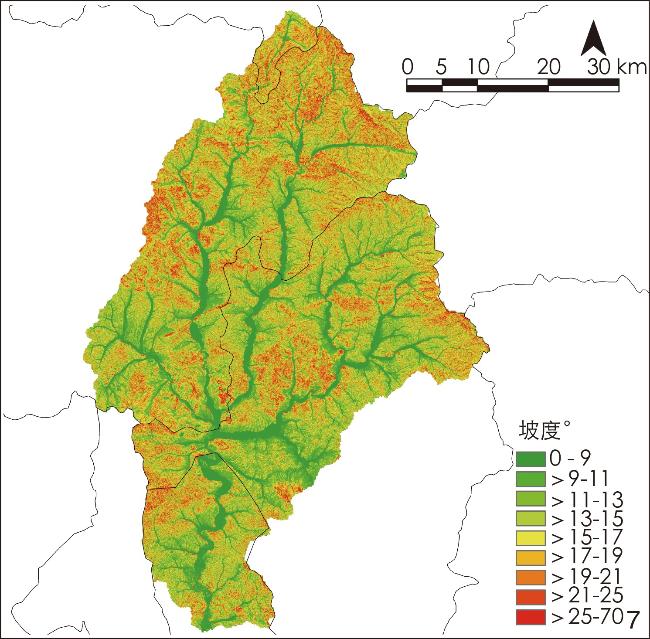
表2 武烈河流域坡耕地土壤年流失总量(基于1980年数据)Tab. 2 Total annual soil loss of sloping farmland in the Wulie River basin (based on data in 1980) |
| 坡度/° | 面积/km2 | 流域内坡度占比/% | 耕地面积/km2 | 年土壤流失量/t | |
|---|---|---|---|---|---|
| 0~9 | 301.41 | 11.57 | 270.20 | — | |
| >9~11 | 341.18 | 13.10 | 43.47 | 46 078.20 | |
| >11~13 | 395.20 | 15.17 | 39.89 | 84 566.80 | |
| >13~15 | 428.74 | 16.46 | 34.03 | 130 334.90 | |
| >15~17 | 378.30 | 14.52 | 28.98 | 184 892.40 | |
| >17~19 | 320.22 | 12.29 | 25.39 | 253 900.00 | |
| >19~21 | 237.52 | 9.12 | 21.71 | 325 650.00 | |
| >21~25 | 150.90 | 5.79 | 33.44 | — | |
| >25~70 | 51.51 | 1.98 | 39.85 | — | |
| 合计 | — | 2604.98 | 100 | 536.96 | 1 025 422.30 |
| [1] |
汪菊渊. 避暑山庄发展历史及其园林艺术[C]//北京林学院林业史研究室.林业史园林史论文集: 第二集.北京: 北京林学院林业史研究室, 1983:2
WANG J Y. The Development History of the Mountain Resort and Its Garden Art[C]//Research Office of Forestry History, Beijing Forestry College. Forest History Garden History Essays: The Second Collection. Beijing: Department of Forestry History, Beijing Forestry College, 1983:2
|
| [2] |
韩宝庄, 孔宪梁. 承德避暑山庄的园林艺术特色[J]. 建筑学报, 1982, 28 (6): 46-51, 70-83.
HAN B Z, KONG X L. The Characteristics of Garden Art of the Chengde Mountain Resort[J]. Architectural Journal, 1982, 28 (6): 46-51, 70-83.
|
| [3] |
孟兆祯. 避暑山庄园林艺术[M]. 北京: 紫禁城出版社, 1985.
MENG Z Z. The Garden Art of the Mountain Resort[M]. Beijing: Forbidden City Press, 1985.
|
| [4] |
张羽新. 避暑山庄的园林理水(一)[J]. 古建园林技术, 1986, 4 (2): 49-54.
ZHANG Y X. The Waterscape Design in the Mountain Resort(Ⅰ)[J]. Traditional Chinese Architecture and Gardens, 1986, 4 (2): 49-54.
|
| [5] |
WHITEMAN S H. Creating the Kangxi Landscape Bishu Shanzhuang and the Mediation of Qing Imperial Identity[D]. California: Stanford University, 2011,
|
| [6] |
刘慧轩, 于洋. 承德避暑山庄的驳岸景观分析[J]. 古建园林技术, 2016, 34 (4): 45-48.
LIU H X, YU Y. Analysis of Revetment Landscape of the Chengde Mountain Resort[J]. Traditional Chinese Architecture and Gardens, 2016, 34 (4): 45-48.
|
| [7] |
侯仁之. 承德市城市发展的特点和它的改造[M]. 河北: 承德市城市建设局, 1978.
HOU R Z. The Characteristics of Urban Development and Transformation of Chengde[M]. Hebei: Chengde City Urban Construction Bureau, 1978.
|
| [8] |
王福山. 引水入园是避暑山庄园林生命的源泉[C]//中国文物学会. 中国文物学会传统建筑园林委员会会议论文集. 北京: 北京林学院林业史研究室, 1999: 169-177.
WANG F S. Guiding Water into the Garden is the Source of Life of the Mountain Resort[C]//Chinese Cultural Relics Society. Collected Papers of the Traditional Architecture Garden Committee of the Chinese Cultural Relics Society. Beijing: Department of Forestry History, Beijing Forestry College, 1999: 169-177.
|
| [9] |
陈东, 马骁, 张守仁. 浅析避暑山庄建园之初遇到的几大难题[M]//清代宫廷史研究会, 承德文物局.清宫史研究(第十三辑). 沈阳: 辽宁民族出版社, 2020: 283-287.
CHEN D, MA X, ZHANG S R. Analysis of Several Major Encountered Problems at the Beginning of the Mountain Resort[M]//Qing Dynasty Court History Research Institute, Chengde Cultural Heritage Bureau. Qing Dynasty History Research (The Thirteenth Series). Shenyang: Liaoning Nationalities Publishing House, 2020: 283-287.
|
| [10] |
曹盼, 胡希军. 避暑山庄宫墙外引水水系探究[J]. 中国园林, 2021, 37 (4): 127-132.
CAO P, HU X J. Study on Water Diversion System Outside the Wall of the Mountain Resort[J]. Chinese Landscape Architecture, 2021, 37 (4): 127-132.
|
| [11] |
曹盼, 胡希军. 晚清热河河工考述[J]. 中国园林, 2022, 38 (2): 133-138.
CAO P, HU X J. Study on the Jehol River Engineering of the Mountain Resort in Late Qing Dynasty[J]. Chinese Landscape Architecture, 2022, 38 (2): 133-138.
|
| [12] |
爱新觉罗·玄烨, 等. 御制避暑山庄诗[M].揆叙, 注. 北京: 文物出版社, 2019.
The Kang Xi Emperor, et al. Imperial Mountain Resort Poem[M].KUI X, noted. Beijing: Cultural Relies Press, 2019.
|
| [13] |
《承德历史文献集成》编委会. 承德历史文献集成-1[M]. 北京: 中国广播影视出版社, 2015.
The Editorial Board of Chengde Historical Document Integration. Chengde Historical Document Integration Ⅰ[M]. Beijing: China Radio, Film and Television Press, 2015.
|
| [14] |
刑永福, 师力武. 清宫热河档案(第11册)[G]. 北京: 中国档案出版社, 2003: 29-32.
XING Y F, SHI L W. Rehe Archives of the Qing Dynasty (Volume 11)[G]. Beijing: China Archives Press, 2003: 29-32.
|
| [15] |
刑永福, 师力武.. 清宫热河档案(第15册)[G]. 北京: 中国档案出版社, 2003: 551.
XING Y F, SHI L W. Rehe Archives of the Qing Dynasty (Volume 15)[G]. Beijing: China Archives Press, 2003: 551.
|
| [16] |
海忠, 林从炯. 承德府志[M]. 台北: 成文出版社, 1968.
HAI Z, LIN C J. The Chengde Records[M]. Taibei: Chen Wen Publishing Co., Ltd, 1968.
|
| [17] |
水利水电科学研究院水利史研究室. 清代海河滦河洪涝档案史料[G]. 北京: 中华书局, 1981.
Water History Research Office, Research Institute of Water Resources and Hydropower. Archival Historical Data on Flood and Waterlogging in Haihe River and Luanhe River in Qing Dynasty[G]. Beijing: Zhonghua Book Company, 1981.
|
| [18] |
刑永福, 师力武. 清宫热河档案(第2册)[G]. 北京: 中国档案出版社, 2003: 195.
XING Y F, SHI L W. Rehe Archives of the Qing Dynasty (Volume 2)[G]. Beijing: China Archives Press, 2003: 195.
|
| [19] |
和珅, 梁国治. 钦定热河志(卷六十九)[M].文渊阁四库全书影印本第495册. 台北: 台湾商务印书馆, 1983: 137-138.
HE S, LIANG G Z. The Rehe Records (Volume 69)[M]. photostat copy of Wenyuange Si Ku Quan Shu (Volume 495). Taibei: The Commercial Press of Taiwan, 1983: 137-138.
|
| [20] |
石利锋. 热河庭园现行则例[M]. 北京: 团结出版社, 2012.
SHI L F. The Rehe Garden Current Rules[M]. Beijing: Unity Press, 2012.
|
| [21] |
陈东, 宋涛. 避暑山庄园林景观(动植物景观分卷)[M]. 河北: 河北科学技术出版社, 2010: 1-11.
CHEN D, SONG T. The Garden Landscape of Mountain Resort[M]. Hebei: Hebei Science and Technology Press, 2010: 1-11.
|
| [22] |
王家骥, 刘昕, 郭成群, 等. 承德市风景区山地阳坡生境评价及植被的恢复途径[M].[M]//杨本津.避暑山庄生态环境及其规划研究. 北京: 中国环境科学出版社, 1996: 187.
WANG J J, LIU X, GUO C Q, et al. Habitat Evaluation and Vegetation Restoration Approach of Mountain Sunny Slope in Chengde Scenic Area[M]//YANG B J. Study on Ecological Environment and Planning of the Mountain Resort. Beijing: China Environmental Science Press, 1996: 187.
|
| [23] |
中国第一历史档案馆. 康熙起居注[G]. 北京: 中华书局, 1984: 2189.
The First Historical Archives of China. The Life Notes of Kangxi[G]. Beijing: Zhonghua Book Company, 1984: 2189.
|
| [24] |
中国第一历史档案馆. 光绪朝硃批奏折(第98辑)[G]. 北京: 中华书局, 1996: 276-278.
The First Historical Archives of China. Emperor Guangxu’s Comment on Memorials Submitted to Him (Volume 98)[G]. Beijing: Zhonghua Book Company, 1996: 276-278.
|
| [25] |
王庆玉, 沈瑞珠, 王利, 等. 滦河流域山区土壤侵蚀系列图 遥感调查制图报告[R]. 天津: 水电部天津勘测设计院航测遥感大队, 1990: 34.
WANG Q Y, SHEN R Z, WANG L, et al. Report on Remote Sensing Survey and Mapping of Soil Erosion Series Maps in Mountainous Area of Luanhe River Basin[R]. Tianjin: Ministry of Hydropower Tianjin Survey and Design Institute Aerial Survey Remote Sensing Team, 1990: 34.
|
| [26] |
梁其瑞. 承德地区水土流失与治理规划[R]. 承德: 河北省承德地区水土保持科学研究所, 1984.
LIANG Q R. Soil and Water Loss and Control Planning in Chengde Area[R]. Chengde: Science Institute of Soil and Water Conservation, Chengde, Hebei Province, 1984.
|
| [27] |
汤尔和. 哀哉热河[M].[出版地不详: 出版者不详], 1933(民国二十二年): 1-40.
TANG E H. Alas for Jehol[M]. [S.I.: s.n.], 1933 (The 22nd Year of the Republic of China): 1-40.
|
| [28] |
郑晓东, 钱树信, 闫春生. 清史诗画: 清帝承德三百六十五天[M]. 北京: 人民出版社, 2012: 179.
ZHENG X D, QIAN S X, YAN C S. The Poems and Paintings About Qing Dynasty: The 365 Days of the Qing Emperors Stayed in Chengde[M]. Beijing: People’s Publishing House, 2012: 179.
|
/
| 〈 |
|
〉 |