

Relationship Between Heat Risk Perception and Physical Activity of Residents in the Context of Climate Change
|
DONG Wei, Ph.D., is a professor in and vice dean of the School of Architecture and Design, Harbin Institute of Technology, and a member of the Key Laboratory of Territorial Spatial Planning and Ecological Protection and Restoration in Cold Regions, Ministry of Natural Resources. Her research focuses on theory and method of urban design |
|
JIANG Runsheng is a Ph.D. candidate in the School of Architecture and Design, Harbin Institute of Technology, and a member of the Key Laboratory of Territorial Spatial Planning and Ecological Protection and Restoration in Cold Regions, Ministry of Natural Resources. His research focuses on urban climate adaptability and sustainable planning |
|
DONG Yu, Ph.D., is an associate professor and doctoral supervisor in the School of Architecture and Design, Harbin Institute of Technology, and a member of the Key Laboratory of Territorial Spatial Planning and Ecological Protection and Restoration in Cold Regions, Ministry of Natural Resources. His research focuses on low carbon city, community life circle, healthy city, national park, and protected area |
|
PEI Minghan is a master student in the School of Architecture and Design, Harbin Institute of Technology, and a member of the Key Laboratory of Territorial Spatial Planning and Ecological Protection and Restoration in Cold Regions, Ministry of Natural Resources. His research focuses on built environment, residents’ perception, and residents’ behavior |
Received date: 2023-10-05
Online published: 2025-12-15
Copyright
[Objective] As climate change and global warming continue to intensify, it is crucial to understand how appropriate urban built environments can mitigate the adverse effects of climate change stress and heat risk. However, less attention has been paid to the role of individual perception and behavior in response to climate change. Research has identified a set of psychological factors that dominate the process of decision-making in the face of climate change and heat risk, known as climate change and heat risk perception (HRP). Nevertheless, there is a lack of research exploring how urban residents’ perception of heat risk in the context of climate change might affect their physical activity in the built environment.
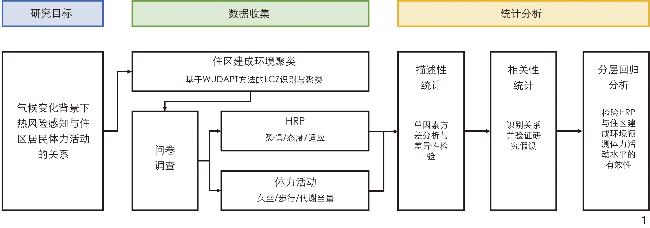
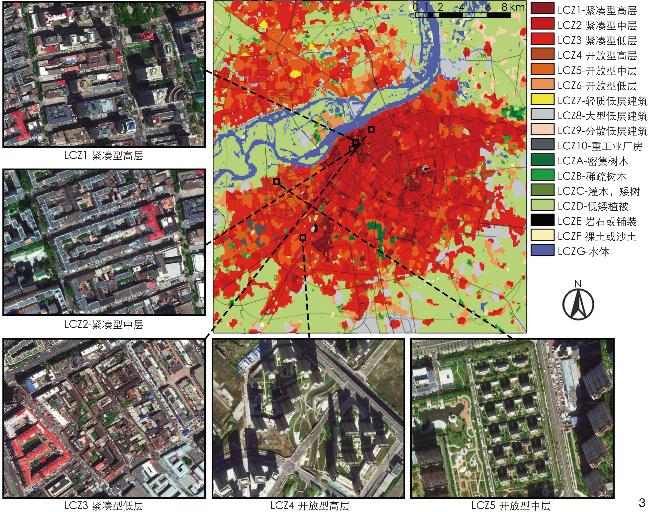
[Methods] To address the aforesaid research gap, this research focuses on the residential areas in Harbin’s built-up area. The World Urban Database and Access Portal Tools (WUDAPT) method is used to identify the LCZ types within these areas. A stratified sampling approach is then employed in five typical residential areas to gather data through questionnaire surveys. These surveys mainly collect information on residents’ HRP and physical activity levels, aiming to understand the differences and relationships between HRP levels in the dimensions of “fear”, “attitude” and “adaptation” and physical activity levels across residential areas with different LCZ types .
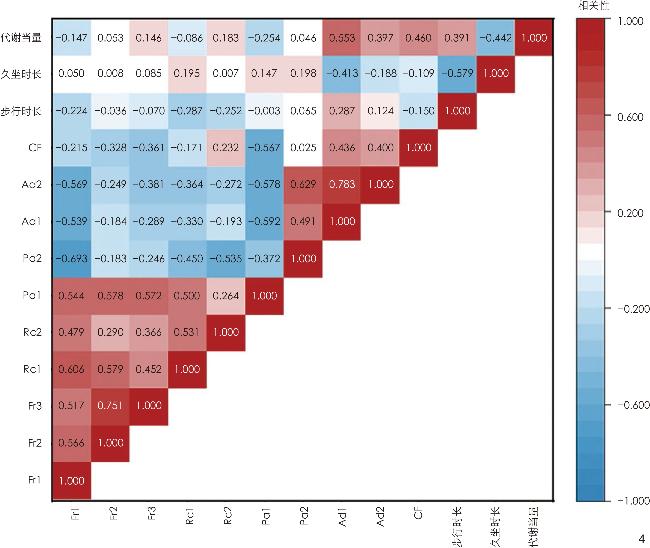
[Results] 1) This research suggests that HRP is indeed related to physical activity level. It is found that fear and attitude perceptions can reduce physical activity level, while adaptation perception can improve physical activity level. Additionally, HRP can significantly improve the accuracy of the built environment and physical activity model. Residents in residential areas with open layout and moderate density exhibit the lowest fear and attitude perceptions, as well as the highest adaptation perceptions and physical activity levels. 2) This research provides valuable insights into the indirect impacts of climate change and the built environment on residents’ health through the lens of risk perception. It highlights the importance of considering psychological factors such as HRP in urban climate governance and healthy urban planning. By understanding how individuals perceive and respond to climate change and heat risk, urban planners and policymakers can better design built environments that encourage physical activity and mitigate the negative health impacts of climate change. 3) The research underscores the need for further research on the complex interplay between climate change, the built environment, and human health. As the climate continues to change, it is essential to understand how individuals perceive and adapt to these changes and how urban environments can be designed to support healthy lifestyles. 4) This research can inform policies and interventions that promote physical activity and enhance the well-being of urban residents in the face of climate change. In conclusion, climate change and its associated heat risks pose significant challenges to human health, particularly in urban areas. Understanding the role of individual perception and behavior in response to climate change and heat risk is crucial for developing effective strategies to mitigate the negative health impacts of climate change. By considering psychological factors such as HRP in urban planning and design, urban environments can be better equipped to support physical activity and promote the well-being of residents.
[Conclusion] This research serves as a valuable contribution to the futrue literature on climate change, the built environment, and human health. It highlights the importance of integrating psychological factors into urban climate governance and healthy urban planning. As the world continues to grapple with the challenges of climate change, this research underscores the need for interdisciplinary approaches that consider the complex interactions between the environment, human behavior, and health outcomes. Ultimately, addressing the risks posed by climate change and creating healthy urban environments requires a comprehensive understanding of the social, psychological, and environmental factors at play. By referring the insights provided by this research, urban planners and policymakers can work towards creating built environments that are resilient to climate change.
DONG Wei , JIANG Runsheng , DONG Yu , PEI Minghan . Relationship Between Heat Risk Perception and Physical Activity of Residents in the Context of Climate Change[J]. Landscape Architecture, 2024 , 31(4) : 21 -28 . DOI: 10.3724/j.fjyl.202310050447
表1 HRP问卷的维度与指标[11, 17, 20, 29-34]Tab. 1 Dimensions and indicators of HRP questionnaire[11,17, 20, 29-34] |
| 假设 | 维度 | 指标编号 | 指标含义 |
|---|---|---|---|
| 负向 | 恐惧[29] | Fr1 | 对现阶段气候变化以及热浪等极端天气事件的恐惧程度[29] |
| Fr2 | 产生对气候变化以及热浪等极端天气事件的恐惧/担心情绪的频率[32] | ||
| Fr3 | 对未来气候变化进程的恐惧/担心程度[17] | ||
| 态度[30] | Rc1 | 认同气候变化对自己生活产生负面影响的程度[30] | |
| Rc2 | 认同未来气候变化会持续下去的程度[33] | ||
| Pa1 | 认为自己很关注气候变化[34] | ||
| Pa2 | 认为气候变化相关报道越来越多[34] | ||
| 正向 | 适应[20] | Ad1 | 认为自己和家人有能力应对气候变化[30] |
| Ad2 | 认为自己和家人为应对气候变化做好了准备[30] | ||
| CF | 认为自己所在住区的气候条件很舒适[11] |
表2 住区类型的哑变量设置Tab. 2 Dummy variable settings for residential area types |
| 住区类型 | 哑变量 | |||
|---|---|---|---|---|
| Lcz1 | Lcz2 | Lcz3 | Lcz4 | |
| LCZ1 | 1 | 0 | 0 | 0 |
| LCZ2 | 0 | 1 | 0 | 0 |
| LCZ3 | 0 | 0 | 1 | 0 |
| LCZ4 | 0 | 0 | 0 | 1 |
| LCZ5 | 0 | 0 | 0 | 0 |
表3 HRP的单因素方差分析结果Tab. 3 Results of one-way ANOVA for HRP |
| HRP 维度 | HRP 指标 | 平均数±标准差 | F值 | p值 | ||||
|---|---|---|---|---|---|---|---|---|
| LCZ1 | LCZ2 | LCZ3 | LCZ4 | LCZ5 | ||||
| 恐惧 | Fr1 | 2.981±0.310 | 2.948±0.510 | 2.829±0.790 | 2.154±0.537 | 1.561±0.963 | 56.174 | 0 |
| Fr2 | 2.906±0.405 | 2.610±0.691 | 2.610±0.803 | 2.662±0.668 | 2.167±0.514 | 10.019 | 0.017 | |
| Fr3 | 3.868±0.556 | 2.558±0.659 | 3.000±1.118 | 2.646±0.623 | 2.121±0.373 | 42.820 | 0 | |
| 态度 | Rc1 | 2.981±0.137 | 2.935±0.296 | 2.943±0.477 | 2.862±0.390 | 2.318±0.559 | 30.452 | 0.003 |
| Rc2 | 3.000±0.340 | 3.091±0.542 | 3.667±0.599 | 2.969±0.394 | 2.439±0.747 | 51.751 | 0 | |
| Pa1 | 3.925±0.385 | 3.468±0.804 | 2.743±0.665 | 2.846±0.537 | 2.273±0.542 | 67.794 | 0 | |
| Pa2 | 1.981±0.239 | 1.234±0.535 | 1.324±0.643 | 3.231±1.196 | 3.212±1.283 | 97.040 | 0 | |
| 适应 | Ad1 | 1.075±0.331 | 2.052±0.484 | 2.676±0.658 | 2.831±0.453 | 3.470±0.881 | 133.499 | 0 |
| Ad2 | 1.113±0.467 | 1.403±0.693 | 2.181±0.704 | 2.785±0.649 | 3.439±0.994 | 111.339 | 0 | |
| CF | 1.094±0.405 | 1.974±1.337 | 3.724±0.860 | 3.354±0.648 | 3.212±0.691 | 105.763 | 0 | |
表4 体力活动的单因素方差分析结果Tab. 4 Results of one-way ANOVA for physical activity |
| 体力活动 类型 | 平均数±标准差 | F值 | p值 | ||||
|---|---|---|---|---|---|---|---|
| LCZ1 | LCZ2 | LCZ3 | LCZ4 | LCZ5 | |||
| 步行时长 | 1.943±0.233 | 3.182±1.200 | 2.486±0.962 | 2.077±0.594 | 3.561±0.994 | 38.779 | 0 |
| 久坐时长 | 4.962±0.192 | 2.883±1.367 | 2.829±1.326 | 4.585±0.983 | 2.379±0.739 | 73.227 | 0 |
| 代谢当量 | 0.059±0.007 | 0.070±0.018 | 0.284±0.131 | 0.139±0.066 | 0.250±0.066 | 48.158 | 0 |
表5 OLS分层回归模型结果Tab. 5 Results of OLS layered regression model |
| 层级 | 自变量 | 影响系数 | ||||||||||
|---|---|---|---|---|---|---|---|---|---|---|---|---|
| 久坐时长 | 步行时长 | 代谢当量 | ||||||||||
| Model 1 | Model 2 | Model 3 | Model 4 | Model 5 | Model 6 | Model 7 | Model 8 | Model 9 | ||||
| 注:*代表显著性水平<0.05,**代表显著性水平<0.01,***代表显著性水平<0.001;空白表示对应的变量尚未被引入模型。 | ||||||||||||
| 人口与 社会经济因素 | 居住时长 | −0.281*** | −0.072 | −0.147 | 0.311*** | 0.104 | 0.165** | −0.098 | −0.028 | −0.009 | ||
| 性别 | 0.046 | 0.136** | 0.100 | −0.185*** | −0.277*** | −0.288*** | 0.074 | −0.040 | −0.109* | |||
| 受教育程度 | −0.078 | 0.000 | −0.005 | −0.149** | −0.118** | 0.061 | 0.377*** | 0.248*** | 0.033 | |||
| 年龄 | −0.333*** | −0.235*** | −0.240*** | 0.045 | 0.099 | 0.254*** | 0.438*** | 0.264*** | 0.185*** | |||
| 收入 | −0.081 | 0.045 | 0.041 | 0.210*** | 0.039 | −0.125** | 0.110 | −0.002 | −0.013 | |||
| 暴露经历 | 0.305*** | −0.199*** | 0.006 | −0.398*** | 0.320*** | 0.148** | 0.186*** | 0.320*** | 0.186*** | |||
| 住区类型 (对照LCZ5) | Lcz1 | 0.572*** | 0.540*** | −0.463*** | −0.671*** | −0.164* | 0.139 | |||||
| Lcz2 | 0.281*** | 0.129 | −0.319*** | −0.279*** | −0.453*** | −0.101 | ||||||
| Lcz3 | 0.282*** | 0.112 | −0.537*** | −0.297*** | −0.025 | 0.070 | ||||||
| Lcz4 | 0.495*** | 0.255*** | −0.431*** | −0.296*** | −0.231*** | −0.139* | ||||||
| HRP | Fr1 | 0.122* | −0.221*** | −0.114 | ||||||||
| Fr2 | −0.076 | 0.035 | 0.008 | |||||||||
| Fr3 | −0.240* | 0.098 | 0.252** | |||||||||
| Rc1 | 0.149* | −0.120c | −0.005 | |||||||||
| Rc2 | 0.099 | −0.153** | −0.021 | |||||||||
| Pa1 | 0.028 | 0.115 | 0.054 | |||||||||
| Pa2 | 0.317*** | 0.133 | −0.067 | |||||||||
| Ad1 | −0.267*** | 0.004 | 0.399*** | |||||||||
| Ad2 | −0.165* | 0.012 | 0.154* | |||||||||
| CF | 0.257*** | −0.360*** | 0.319*** | |||||||||
| 调整后R 2 | 0.402 | 0.542 | 0.653 | 0.339 | 0.463 | 0.566 | 0.416 | 0.540 | 0.649 | |||
| F | 410.875 | 440.227 | 350.332 | 320.260 | 290.170 | 240.764 | 420.677 | 410.734 | 310.941 | |||
| AIC | 840.007 | −70.052 | −1180.079 | −1000.634 | −1500.990 | −2560.446 | 23580.350 | 22810.956 | 21830.837 | |||
文中图表均由作者绘制,
| [1] |
ALLEN M, DUBE O P, SOLECKI W, et al. Intergovernmental Panel on Climate Change. Global Warming of 1.5 °C[EB/OL]. (2018) [2024-03-11]. http://www.ipcc.ch/report/sr15/.
|
| [2] |
WATTS N, AMANN M, AYEB-KARLSSON S, et al. The Lancet Countdown on Health and Climate Change: From 25 Years of Inaction to a Global Transformation for Public Health[J]. The Lancet, 2018, 391 (10120): 581-630.
|
| [3] |
袁青, 孟久琦, 冷红. 气候变化健康风险的城市空间影响及规划干预[J]. 城市规划, 2021, 45 (3): 71-80.
YUAN Q, MENG J Q, LENG H. Urban Spatial Impacts on Residents’ Health Risk Caused by Climate Change and Planning Intervention[J]. City Planning Review, 2021, 45 (3): 71-80.
|
| [4] |
SANEINEJAD S, ROORDA MJ, KENNEDY C. Modelling the Impact of Weather Conditions on Active Transportation Travel Behaviour[J]. Transportation Research Part D: Transport and Environment, 2012, 17 (2): 129-137.
|
| [5] |
TU L, MARZOUK S, DOWDELL K N, et al. Reimagining Urban Spaces: Green Spaces, Obesity, and Health Resilience in an Era of Extreme Heat[J/OL]. Journal of Urban Health, 2024: 38441853[2024-03-12]. https://doi.org/10.1007/s11524-024-00834-2.
|
| [6] |
HUANG Z L, DONG J Y, CHEN Z R, et al. Spatiotemporal Characteristics of Public Recreational Activity in Urban Green Space Under Summer Heat[J]. Forests, 2022, 13 (8): 1268.
|
| [7] |
刘珂秀, 马椿栋, 陈威, 等. 面向小气候热舒适性的滨水景观规划设计探索[J]. 风景园林, 2020, 27 (11): 104-109.
LIU K X, MA C D, CHEN W, et al. Exploration of Waterfront Landscape Planning and Design for Thermal Comfort in Microclimate[J]. Landscape Architecture, 2020, 27 (11): 104-109.
|
| [8] |
苏王新, 常青. 城市热缓解的基于自然的解决方案与实施路径: 以北京市为例[J]. 风景园林, 2022, 29 (6): 26-32.
SU W X, CHANG Q. Nature-Based Solutions for Urban Heat Mitigation and Implementation Path Thereof: A Case Study of Beijing[J]. Landscape Architecture, 2022, 29 (6): 26-32.
|
| [9] |
游晓婕, 李琼, 孟庆林. 城市热岛空间格局及形态差异化调控策略研究: 以广州市中心城区为例[J]. 风景园林, 2021, 28 (5): 74-79.
YOU X J, LI Q, MENG Q L. Research on Spatial Patterns and Morphological Differentiation Control Strategy of Urban Heat Islands: A Case Study of Downtown Area of Guangzhou City[J]. Landscape Architecture, 2021, 28 (5): 74-79.
|
| [10] |
李丹宁, 刘东云, 王鑫. 缓解城市热岛效应的硬质景观设计方法研究综述[J]. 风景园林, 2022, 29 (8): 71-78.
LI D N, LIU D Y, WANG X. A Review of Research on Hard Landscape Design Methods to Mitigate Urban Heat Island Effect[J]. Landscape Architecture, 2022, 29 (8): 71-78.
|
| [11] |
MA X Y, TIAN Y, DU M, et al. How to Design Comfortable Open Spaces for the Elderly? Implications of Their Thermal Perceptions in an Urban Park[J]. Science of The Total Environment, 2021, 768: 144985.
|
| [12] |
NIU J Q, XIONG J P, QIN H Q, et al. Influence of Thermal Comfort of Green Spaces on Physical Activity: Empirical Study in an Urban Park in Chongqing, China[J]. Building and Environment, 2022, 219: 109168.
|
| [13] |
WONG-PARODI G, GARFIN D R. Hurricane Adaptation Behaviors in Texas and Florida: Exploring the Roles of Negative Personal Experience and Subjective Attribution to Climate Change[J]. Environmental Research Letters, 2022, 17 (3): 034033.
|
| [14] |
STÅHL T, RÜTTEN A, NUTBEAM D, et al. The Importance of the Social Environment for Physically Active Lifestyle: Results from an International Study[J]. Social Science & Medicine, 2001, 52 (1): 1-10.
|
| [15] |
RENN O. Risk Governance: Coping with Uncertainty in a Complex World[M]. London: Routledge, 2017.
|
| [16] |
RANA I A, JAMSHED A, YOUNAS Z I, et al. Characterizing Flood Risk Perception in Urban Communities of Pakistan[J]. International Journal of Disaster Risk Reduction, 2020, 46: 101624.
|
| [17] |
ASLAM A, RANA I A. Impact of the Built Environment on Climate Change Risk Perception and Psychological Distancing: Empirical Evidence from Islamabad, Pakistan[J]. Environmental Science & Policy, 2022, 127: 228-240.
|
| [18] |
YAZAR M, YORK A, LARSON K L. Adaptation, Exposure, and Politics: Local Extreme Heat and Global Climate Change Risk Perceptions in the Phoenix Metropolitan Region, USA[J]. Cities, 2022, 127: 103763.
|
| [19] |
HASS A L, RUNKLE J D, SUGG M M. The Driving Influences of Human Perception to Extreme Heat: A Scoping Review[J]. Environmental Research, 2021, 197: 111173.
|
| [20] |
DHAR T, BORNSTEIN L, LIZARRALDE G, et al. Risk Perception: A Lens for Understanding Adaptive Behaviour in the Age of Climate Change? Narratives from the Global South[J]. International Journal of Disaster Risk Reduction, 2023, 95: 103886.
|
| [21] |
GROULX M, LEWIS J, LEMIEUX C, et al. Place-Based Climate Change Adaptation: A Critical Case Study of Climate Change Messaging and Collective Action in Churchill, Manitoba[J]. Landscape and Urban Planning, 2014, 132: 136-147.
|
| [22] |
BECHTEL B, ALEXANDER P J, BÖHNER J, et al. Mapping Local Climate Zones for a Worldwide Database of the Form and Function of Cities[J]. ISPRS International Journal of Geo-Information, 2015, 4 (1): 199-219.
|
| [23] |
BECHTEL B, ALEXANDER P J, BECK C, et al. Generating WUDAPT Level 0 Data: Current Status of Production and Evaluation[J]. Urban Climate, 2019, 27: 24-45.
|
| [24] |
CAO J L, MAO R, NING H R, et al. Exploring the Natural Ventilation Potential for Supertall Buildings Considering Vertical Meteorology: A Case Study in Harbin, China[J]. Applied Thermal Engineering, 2024, 239: 122163.
|
| [25] |
LIN Y F, YANG L, LUO M H. Physiological and Subjective Thermal Responses to Heat Exposure in Northern and Southern Chinese People[J]. Building Simulation, 2021, 14: 1619-1631.
|
| [26] |
STEWART I D, OKE T R. Local Climate Zones for Urban Temperature Studies[J]. Bulletin of the American Meteorological Society, 2012, 93 (12): 1879-1900.
|
| [27] |
LIU A W, MA X Y, DU M, et al. The Cooling Intensity of Green Infrastructure in Local Climate Zones: A Comparative Study in China’s Cold Region[J]. Urban Climate, 2023, 51: 101631.
|
| [28] |
MA L, HUANG G A, JOHNSON B A, et al. Investigating Urban Heat-Related Health Risks Based on Local Climate Zones: A Case Study of Changzhou in China[J]. Sustainable Cities and Society, 2023, 91: 104402.
|
| [29] |
RANA I A, ROUTRAY J K. Actual Vis-À-Vis Perceived Risk of Flood Prone Urban Communities in Pakistan[J]. International Journal of Disaster Risk Reduction, 2016, 19: 366-378.
|
| [30] |
HO M C, SHAW D, LIN S, et al. How Do Disaster Characteristics Influence Risk Perception?[J]. Risk Analysis: An International Journal, 2008, 28 (3): 635-643.
|
| [31] |
董慰, 王乃迪, 董禹, 等. 日常活动地绿地感知与居民主观幸福感的关系: 以哈尔滨香坊老工业区为例[J]. 风景园林, 2021, 28 (5): 23-29.
DONG W, WANG N D, DONG Y, et al. Relationship Between Perception of Green Space and Subjective Well-Being of Residents in Different Venues of Daily Activities: A Case Study of Xiangfang Old Industrial Area in Harbin[J]. Landscape Architecture, 2021, 28 (5): 23-29.
|
| [32] |
GILBERT C, LACHLAN K. The Climate Change Risk Perception Model in The United States: A Replication Study[J]. Journal of Environmental Psychology, 2023, 86: 101969.
|
| [33] |
MCDONALD R I, CHAI H Y, NEWELL B R. Personal Experience and the “Psychological Distance” of Climate Change: An Integrative Review[J]. Journal of Environmental Psychology, 2015, 44: 109-118.
|
| [34] |
SULLIVAN-WILEY K A, GIANOTTI A G S. Risk Perception in a Multi-hazard Environment[J]. World Development, 2017, 97: 138-152.
|
| [35] |
MCLOUGHLIN N. Communicating Adaptation: Using Psychological Insights to Facilitate Adaptive Responses to Climate Change Impacts[D]. Avon: University of Bath, 2021.
|
| [36] |
BELL S A, CHOI H J, LANGA K M, et al. Health Risk Behaviors After Disaster Exposure Among Older Adults[J]. Prehospital and Disaster Medicine, 2019, 34 (1): 95-97.
|
| [37] |
LAI B S, LA GRECA A M, LLABRE M M. Children’s Sedentary Activity After Hurricane Exposure[J]. Psychological Trauma: Theory, Research, Practice, and Policy, 2014, 6 (3): 280.
|
| [38] |
BADARO-SALIBA N, ADJIZIAN-GERARD J, ZAAROUR R, et al. LCZ Scheme for Assessing Urban Heat Island Intensity in a Complex Urban Area (Beirut, Lebanon)[J]. Urban Climate, 2021, 37: 100846.
|
| [39] |
YANG H O, LENG Q M, XIAO Y F, et al. Investigating the Impact of Urban Landscape Composition and Configuration on PM2.5 Concentration Under the LCZ Scheme: A Case Study in Nanchang, China[J]. Sustainable Cities and Society, 2022, 84: 104006.
|
/
| 〈 |
|
〉 |