

Research Progress in Urban Pollinator-Friendly Landscape Construction
|
LI Guiying is a master student in the College of Landscape Architecture, Nanjing Forestry University. Her research focuses on application of garden plants |
|
XIAO Hanwen is a Ph.D. candidate in the College of Landscape Architecture, Nanjing Forestry University. His research focuses on application of garden plants |
|
TIAN Runan, Ph.D., is a professor in the College of Landscape Architecture, Nanjing Forestry University. Her research focuses on application of garden plants |
Received date: 2024-09-10
Revised date: 2025-02-20
Online published: 2025-12-14
Copyright
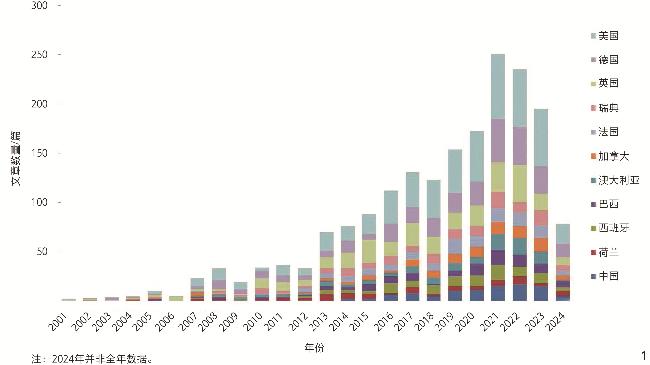
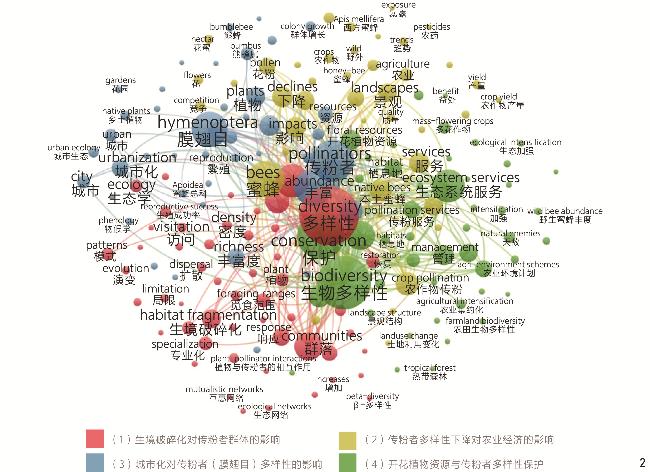
Objective In recent years, with the development of human society, many ecological problems have begun to emerge, and the number of pollinators is decreasing. In the whole ecosystem, pollinators, mainly insects, play an important role in maintaining the stability of plant communities and improving the yield and quality of crops. If the number and types of pollinators decrease sharply, the agricultural economy will decline, and the stability of the ecosystem will also be affected. The diversity of urban ecosystems as well as the heterogeneity of landscapes is now improving, with diverse green spaces such as large parks supporting the survival of pollinators, so urban green spaces have a significant potential to develop as pollinator habitat. Moreover, pollinator diversity is well related to urban ecology, and the conservation of urban pollinator communities contributes to the stability of urban ecology. In order to make full use of the protective effect of urban green spaces on pollinator communities, while improving the benefits of urban ecosystems, it is very significant to clarify a systematic approach for the construction of pollinator-friendly landscapes and to point out the future development direction of the field of pollinator-friendly landscapes in Chinese cities. Methods This research is based on VOS viewer software to visualize and analyze the effective literature in the field of pollinator-friendly landscapes filtered from Web of Science core database, Google Scholar and X-MOL academic platform. In this way, the research hopes to understand the research trends and hotspots in the field of pollinator-friendly landscapes, and at the same time, to sort out the methods for constructing urban pollinator-friendly landscapes and related cases. Results By analyzing the change in the number of articles over the years in each country based on the valid literature, it is found that the field of pollinator-friendly landscapes was in a slow development phase until 2007, with only a little research worldwide. Beginning in 2013, the number of articles in the field and their growth rate increased significantly, peaking in 2021 with over 200 articles. Although the amount of literature starts to decrease after 2021, it is still at a high level. All along, the United States, Germany and the United Kingdom have been at the forefront of research, and although China has also conducted relevant research, the amount of literature has been low. In addition, four major research clusters in the field of pollinator-friendly landscapes are obtained through keyword co-occurrence network analysis: 1) effects of habitat fragmentation on pollinator community diversity; 2) impacts of declining pollinator diversity on agricultural economy; 3) impacts of urbanization on pollinator (Hymenoptera) diversity; 4) flowering plant resources and pollinator diversity conservation. Research on the first three research clusters mainly focuses on the period up to 2020, after which scholars have begun to focus on the conservation of pollinators by flowering plant resources, further exploring specific measures for pollinator community conservation, namely how to construct pollinator-friendly landscapes in urban and agricultural landscapes. After 2020, research on urban pollinator-friendly landscape construction is receiving more and more attention from scholars, and the field is slowly developing into an important branch in the field of pollinator landscapes. In the future, urban pollinator-friendly landscape construction can be carried out in four aspects: 1) Building pollinator migration corridors; 2) prioritizing the application of plants with high attractiveness to pollinators through experiments or research; 3) creating diverse habitat conditions and diverse plant community structures; 4) carrying out differentiated ecological management. Conclusion Although there has been a large amount of related research based on urban pollinator-friendly landscapes, there are still areas entailing deeper research in some aspects, especially in the screening of pollinator-friendly plants, which has been weakly researched both at home and abroad. Currently, China is in the stage of rapid urbanization, and the construction of urban ecosystems has received focused attention. Pollinators play an important role in stabilizing urban ecology, the development of their communities is crucial for urban ecosystems. However, at present, China’s research in the field of pollinator-friendly landscapes mainly focuses on pollinator habitat construction. In terms of pollinator migration corridor construction, although the construction of stepped habitats and the design of migration corridors have been proposed in relevant literature, a systematic approach has not been formed, and the reference significance is small. Additional research on both pollinator-friendly plant selection and ecological management is needed. For the future development direction of pollinator-friendly landscapes in Chinese cities, the following aspects can be considered to continue in-depth: 1) Strengthening the connectivity between urban green spaces; 2) focusing on the role of non-flowering plants in pollinator conservation; 3) accelerating the publicity of pollinator conservation knowledge; 4) expediting the excavation of pollinator-friendly plant resources and their popularization; and 5) improving the requirements for the use of various types of pesticides, and speeding up the research and development process of low-toxicity pesticides. This research is helpful to accelerate the development of urban pollinator-friendly landscape construction, thus promoting the better development of cities as shelters for pollinator communities, while further improving the diversity of urban pollinators and the stability of urban ecology.
LI Guiying , XIAO Hanwen , TIAN Runan . Research Progress in Urban Pollinator-Friendly Landscape Construction[J]. Landscape Architecture, 2025 , 32(4) : 89 -96 . DOI: 10.3724/j.fjyl.202409100527
| 案例 | 营建年份 | 迁移廊道 | 生境条件 | 植物选择 | 管理水平 |
|---|---|---|---|---|---|
| 美国得克萨斯女子大学传粉者花园(Pollinator Garden at Texas Woman’s University, USA)[26] | 2015—2017 | / | 林生蝴蝶园和下沉式绿地 | 原生耐旱植物,如蜜蜂花属(Melissa)和丝兰属(Yucca)等 | 每年进行6次修整(整床、移栽、修剪和除草等) |
| 重庆市合川区森楷路雨水花园野花草甸[27] | 2017 | 实现传粉者在合川城区和郊野栖息地之间的移动 | 下沉式绿地和雨水花园等微地形空间,并在适宜位置构建小型多孔穴设施 | 30余种蜜源丰富的阔叶草本植物和部分寄主植物如紫花地丁 (Viola philippica)等 | / |
| 德州探索花园 (Texas Discovery Gardens)[28] | 不详 | / | 池塘和原生蝴蝶栖息区等 | 多种寄主植物如西番莲(Passiflora caerulea)、紫罗兰(Matthiola incana)等 | / |
| 帝王蝶中转站计划 (Monarch Waystation Program)[29] | 不详 | 在帝王蝶的迁徙路径上规划一系列生境 | 浅水沟、林生庇护所和植草沟等 | 主要为马利筋属(Asclepias) | / |
文中图表均由作者绘制。
| [1] |
POWNEY G D, CARVELL C, EDWARDS M, et al. Widespread Losses of Pollinating Insects in Britain[J]. Nature Communications, 2019, 10:1018
|
| [2] |
OLLERTON J, WINFREE R, TARRANT S. How Many Flowering Plants Are Pollinated by Animals?[J]. Oikos, 2011, 120(3):321-326.
|
| [3] |
阿如汗, 张启宇, 刘云慧. 欧美主要国家与我国传粉昆虫多样性保护政策和研究比较分析[J]. 生态与农村环境学报, 2023, 39(1):1-11.
OLHNUUD A, ZHANG Q Y, LIU Y H. Comparative Analysis on the Protection Policies and Researches of Insect Pollinator Diversity in Western Countries and China[J]. Journal of Ecology and Rural Environment, 2023, 39(1):1-11.
|
| [4] |
THOMSON D M. Effects of Long-Term Variation in Pollinator Abundance and Diversity on Reproduction of a Generalist Plant[J]. Journal of Ecology, 2019, 107(1):491-502.
|
| [5] |
KATUMO D M, LIANG H, OCHOLA A C, et al. Pollinator Diversity Benefits Natural and Agricultural Ecosystems, Environmental Health, and Human Welfare[J]. Plant Diversity, 2022, 44(5):429-435.
|
| [6] |
CAPPELLARI A, ORTIS G, MEI M, et al. Does Pollinator Conservation Promote Environmental Co-benefits?[J]. Agriculture, Ecosystems & Environment, 2023, 356:108615
|
| [7] |
LANNER J, KRATSCHMER S, PETROVIĆ B, et al. City Dwelling Wild Bees: How Communal Gardens Promote Species Richness[J]. Urban Ecosystems, 2020, 23(2):271-288.
|
| [8] |
THEODOROU P, RADZEVIČIŪTĖ R, LENTENDU G, et al. Urban Areas as Hotspots for Bees and Pollination but not a Panacea for all Insects[J]. Nature Communications, 2020, 11:576
|
| [9] |
COHEN H, EGERER M, THOMAS S S, et al. Local and Landscape Features Constrain the Trait and Taxonomic Diversity of Urban Bees[J]. Landscape Ecology, 2022, 37(2):583-599.
|
| [10] |
SIROHI M H, JACKSON J, OLLERTON J. Plant-Bee Interactions and Resource Utilisation in an Urban Landscape[J]. Urban Ecosystems, 2022, 25(6):1913-1924.
|
| [11] |
ERICKSON E, GROZINGER C M, PATCH H M. Measuring Plant Attractiveness to Pollinators: Methods and Considerations[J]. Journal of Economic Entomology, 2022, 115(5):1571-1582.
|
| [12] |
STEWART A B, SRITONGCHUAY T, TEARTISUP P, et al. Habitat and Landscape Factors Influence Pollinators in a Tropical Megacity, Bangkok, Thailand[J]. PeerJ, 2018, 6:e5335
|
| [13] |
AZEVEDO M, FIGUEIREDO E, REBELO M T. The Bee Fauna (Hymenoptera: Apoidea: Anthophila) of Allotments in Downtown Lisbon[J]. European Journal of Entomology, 2022, 119:327-336.
|
| [14] |
BANASZAK-CIBICKA W, TWERD L, FLISZKIEWICZ M, et al. City Parks vs. Natural Areas: Is It Possible to Preserve a Natural Level of Bee Richness and Abundance in a City Park?[J]. Urban Ecosystems, 2018, 21(4):599-613.
|
| [15] |
KALUZA B F, WALLACE H, HEARD T A, et al. Urban Gardens Promote Bee Foraging over Natural Habitats and Plantations[J]. Ecology and Evolution, 2016, 6(5):1304-1316.
|
| [16] |
THRELFALL C G, WALKER K, WILLIAMS N S G, et al. The Conservation Value of Urban Green Space Habitats for Australian Native Bee Communities[J]. Biological Conservation, 2015, 187:240-248.
|
| [17] |
RENAUD E, HERAUDET V, DEPARIS M, et al. Non-linear Effects of Landscape on Pollination Service and Plant Species Richness in a Peri-urban Territory with Urban and Agricultural Land Use[J]. Urban Forestry & Urban Greening, 2022, 68:127454
|
| [18] |
予茜, 张彦文, 郭友好. 传粉生物学常用术语释译[J]. 植物分类学报, 2008, 46(1):96-102.
YU Q, ZHANG Y W, GUO Y H. Translation and Elucidation of Common Terms in Pollination Biology[J]. Journal of Systematics and Evolution, 2008, 46(1):96-102.
|
| [19] |
HOPWOOD J, BLACK S H, FLEURY S. Pollinators and Roadsides: Best Management Practices for Managers and Decision Makers[R/OL].Washington, D.C.: U.S. Department of Transportation-Federal Highway Administration. (2015-12-01)[2025-02-18]. https://rosap.ntl.bts.gov/view/dot/55914
|
| [20] |
PHILLIPS B B, WALLACE C, ROBERTS B R, et al. Enhancing Road Verges to Aid Pollinator Conservation: A Review[J]. Biological Conservation, 2020, 250:108687
|
| [21] |
POTTS S G, ROBERTS S P M, DEAN R, et al. Declines of Managed Honey Bees and Beekeepers in Europe[J]. Journal of Apicultural Research, 2010, 49(1):15-22.
|
| [22] |
HALLMANN C A, SORG M, JONGEJANS E, et al. More than 75 Percent Decline over 27 Years in Total Flying Insect Biomass in Protected Areas[J]. PLoS One, 2017, 12(10):e0185809
|
| [23] |
BAUER D M, WING I S. The Macroeconomic Cost of Catastrophic Pollinator Declines[J]. Ecological Economics, 2016, 126:1-13.
|
| [24] |
吴学峰, 高亦珂, 谢哲城, 等. 昆虫野花带在农业景观中的应用[J]. 中国生态农业学报(中英文), 2019, 27(10):1481-1491.
WU X F, GAO Y K, XIE Z C, et al. Application of Wildflower Strips for Agricultural Landscaping[J]. Chinese Journal of Eco-Agriculture, 2019, 27(10):1481-1491.
|
| [25] |
WENZEL A, GRASS I, BELAVADI V V, et al. How Urbanization Is Driving Pollinator Diversity and Pollination: A Systematic Review[J]. Biological Conservation, 2020, 241:108321
|
| [26] |
MAGUIRE C F. ACS Symposium Series: Developing Sustainable Pollinator Gardens for Habitat and Education[M]./SHEARDY R, DMAGUIRE C F.Citizens First! Democracy, Social Responsibility and Chemistry. Washington, D.C.: American Chemical Society, 2018: 73-79.
|
| [27] |
袁嘉, 杜春兰. 城市植物景观与关键种的协同共生设计框架: 以野花草甸与传粉昆虫为例[J]. 风景园林, 2020, 27(4):50-55.
YUAN J, DU C L. Design Framework of Collaborative Symbiosis Between Urban Plant Landscape and Keystone Species: Taking Wildflower Meadows and Pollinators as a Case Study[J]. Landscape Architecture, 2020, 27(4):50-55.
|
| [28] |
潘虓宸, 王铖, 王洁, 等. 美国传粉花园建设与管理实践研究及其对中国的启示[J]. 园林, 2023, 40(9):116-122.
PAN X C, WANG C, WANG J, et al. Development and Management Practice of American Pollination Garden and Its Inspiration to China[J]. Landscape Architecture Academic Journal, 2023, 40(9):116-122.
|
| [29] |
LANDIS T D. Monarch Waystations: Propagating Native Plants to Create Travel Corridors for Migrating Monarch Butterflies[J]. Native Plants Journal, 2014, 15(1):5-16.
|
| [30] |
任一涵, 杨凡, 史琰, 等. 杭州地区构建蝶类生境的植物景观设计[J]. 风景园林, 2016, 23(3):105-114.
REN Y H, YANG F, SHI Y, et al. Planting Design for Constructing Butterfly Habitat in Hangzhou[J]. Landscape Architecture, 2016, 23(3):105-114.
|
| [31] |
魏兰君, 李凡凡, 秦毅, 等. 蝴蝶生态景观构建: 城市生物多样性保护实践[J]. 风景园林, 2024,31(3):115-122.
WEI L J, LI F F, QIN Y, et al. Construction of Butterfly Ecological Landscape: Practice for Urban Biodiversity Conservation[J]. Landscape Architecture, 2024,31(3):115-122.
|
| [32] |
PELLISSIER V, MAUREL N, MACHON N. Multi-scale Assessment of Pollination of Lotus corniculatus (L.) in a Peri-urban Fringe[J]. Plant Ecology & Diversity, 2013, 6(2):195-203.
|
| [33] |
MAJEWSKA A A, ALTIZER S. Planting Gardens to Support Insect Pollinators[J]. Conservation Biology, 2020, 34(1):15-25.
|
| [34] |
THEODOROU P, HERBST S C, KAHNT B, et al. Urban Fragmentation Leads to Lower Floral Diversity, with Knock-on Impacts on Bee Biodiversity[J]. Scientific Reports, 2020, 10:21756
|
| [35] |
BELLAMY C C, VAN DER JAGT A P N, BARBOUR S, et al. A Spatial Framework for Targeting Urban Planning for Pollinators and People with Local Stakeholders: A Route to Healthy, Blossoming Communities?[J]. Environmental Research, 2017, 158:255-268.
|
| [36] |
PLASCENCIA M, PHILPOTT S M. Floral Abundance, Richness, and Spatial Distribution Drive Urban Garden Bee Communities[J]. Bulletin of Entomological Research, 2017, 107(5):658-667.
|
| [37] |
AYERS A C, REHAN S M. Supporting Bees in Cities: How Bees Are Influenced by Local and Landscape Features[J]. Insects, 2021, 12(2):128
|
| [38] |
ABRAMSON E, BILLS E, RUHL R. Great Barrington Pollinator Action Plan: Connecting Habitat & Community[EB/OL].(2018-08-27)[2025-02-18].https://www.townofgb.org/sites/g/files/vyhlif636/f/uploads/greatbarringtonpollinatoractionplan2018.pdf
|
| [39] |
HOFMANN M M, FLEISCHMANN A, RENNER S S. Foraging Distances in Six Species of Solitary Bees with Body Lengths of 6 to 15 mm, Inferred from Individual Tagging, Suggest 150 m-Rule-of-Thumb for Flower Strip Distances[J]. Journal of Hymenoptera Research, 2020, 77:105-117.
|
| [40] |
GRIFFITHS-LEE J, NICHOLLS E, GOULSON D. Sown Mini-meadows Increase Pollinator Diversity in Gardens[J]. Journal of Insect Conservation, 2022, 26(2):299-314.
|
| [41] |
GARBUZOV M, RATNIEKS F L W. Listmania: The Strengths and Weaknesses of Lists of Garden Plants to Help Pollinators[J]. BioScience, 2014, 64(11):1019-1026.
|
| [42] |
ROWE L, GIBSON D, LANDIS D A, et al. Wild Bees and Natural Enemies Prefer Similar Flower Species and Respond to Similar Plant Traits[J]. Basic and Applied Ecology, 2021, 56:259-269.
|
| [43] |
PALMERSHEIM M C, SCHÜRCH R, O’ROURKE M E, et al. If You Grow It, They will Come: Ornamental Plants Impact the Abundance and Diversity of Pollinators and Other Flower-Visiting Insects in Gardens[J]. Horticulturae, 2022, 8(11):1068
|
| [44] |
JACHUŁA J, DENISOW B, STRZAŁKOWSKA-ABRAMEK M. Floral Reward and Insect Visitors in Six Ornamental Lonicera Species: Plants Suitable for Urban Bee-friendly Gardens[J]. Urban Forestry & Urban Greening, 2019, 44:126390
|
| [45] |
ROLLINGS R, GOULSON D. Quantifying the Attractiveness of Garden Flowers for Pollinators[J]. Journal of Insect Conservation, 2019, 23(5):803-817.
|
| [46] |
ZANINOTTO V, FAUVIAU A, DAJOZ I. Diversity of Greenspace Design and Management Impacts Pollinator Communities in a Densely Urbanized Landscape: The City of Paris, France[J]. Urban Ecosystems, 2023, 26(2):503-515.
|
| [47] |
PRENDERGAST K S, TOMLINSON S, DIXON K W, et al. Urban Native Vegetation Remnants Support more Diverse Native Bee Communities than Residential Gardens in Australia’s Southwest Biodiversity Hotspot[J]. Biological Conservation, 2022, 265:109408
|
| [48] |
MARTINS K T, GONZALEZ A, LECHOWICZ M J. Patterns of Pollinator Turnover and Increasing Diversity Associated with Urban Habitats[J]. Urban Ecosystems, 2017, 20(6):1359-1371.
|
| [49] |
KALAMAN H, WILSON S B, MALLINGER R E, et al. Evaluation of Native and Nonnative Ornamentals as Pollinator Plants in Florida: II. Floral Resource Value[J]. HortScience, 57(1):137-143.
|
| [50] |
SALISBURY A, ARMITAGE J, BOSTOCK H, et al. Editor’s Choice: Enhancing Gardens as Habitats for Flower-Visiting Aerial Insects (Pollinators): Should We Plant Native or Exotic Species?[J]. Journal of Applied Ecology, 2015, 52(5):1156-1164.
|
| [51] |
HANLEY M E, AWBI A J, FRANCO M. Going Native? Flower Use by Bumblebees in English Urban Gardens[J]. Annals of Botany, 2014, 113(5):799-806.
|
| [52] |
LOWENSTEIN D M, MATTESON K C, MINOR E S. Evaluating the Dependence of Urban Pollinators on Ornamental, Non-native, and ‘Weedy’ Floral Resources[J]. Urban Ecosystems, 2019, 22(2):293-302.
|
| [53] |
BAISDEN E C, TALLAMY D W, NARANGO D L, et al. Do Cultivars of Native Plants Support Insect Herbivores?[J]. HortTechnology, 28(5):596-606.
|
| [54] |
WATSON TRAVIS L, CARLOS M, GERARDO A. Plant Species Richness and Sunlight Exposure Increase Pollinator Attraction to Pollinator Gardens[J]. Ecosphere, 2022, 13(12):e4317
|
| [55] |
林宏伟, 王昌杰, 杨莉, 等. 城市化对台州市蝴蝶多样性的影响[J]. 四川动物, 2018, 37(5):541-547.
LIN H W, WANG C J, YANG L, et al. Effects of Urbanization on Butterfly Diversity of Taizhou[J]. Sichuan Journal of Zoology, 2018, 37(5):541-547.
|
| [56] |
HERRMANN J, BUCHHOLZ S, THEODOROU P. The Degree of Urbanisation Reduces Wild Bee and Butterfly Diversity and Alters the Patterns of Flower-Visitation in Urban Dry Grasslands[J]. Scientific Reports, 2023, 13(1):2702
|
| [57] |
MICHOŁAP P, SIKORA A, KELM M, et al. Variability of Bumblebee Communities (Apidae, Bombini) in Urban Green Areas[J]. Urban Ecosystems, 2017, 20(6):1339-1345.
|
| [58] |
WILLIAMS N M, BUDERI A, ROWE L, et al. Wildflower Plantings Enhance Nesting Opportunities for Soil-Nesting Bees[J]. Ecological Applications, 2024, 34(2):e2935
|
| [59] |
CANE J H. Landscaping Pebbles Attract Nesting by the Native Ground-Nesting Bee Halictus Rubicundus (Hymenoptera: Halictidae)[J]. Apidologie, 2015, 46(6):728-734.
|
| [60] |
MACIVOR J S. Cavity-Nest Boxes for Solitary Bees: A Century of Design and Research[J]. Apidologie, 2017, 48(3):311-327.
|
| [61] |
ZENG H, WANG J, GUAN M, et al. Effects of Vegetation Structure and Environmental Characteristics on Pollinator Diversity in Urban Green Spaces[J]. Urban Forestry & Urban Greening, 2023, 84:127928
|
| [62] |
MCCORMICK M L, ASLAN C E, CHAUDHRY T A, et al. Benefits and Limitations of Isolated Floral Patches in a Pollinator Restoration Project in Arizona[J]. Restoration Ecology, 2019, 27(6):1282-1290.
|
| [63] |
EGERER M, CECALA J, COHEN H. Wild Bee Conservation Within Urban Gardens and Nurseries: Effects of Local and Landscape Management[J]. Sustainability, 2020, 12(1):293
|
| [64] |
BRAATZ E Y, GEZON Z J, ROSSETTI K, et al. Bloom Evenness Modulates the Influence of Bloom Abundance on Insect Community Structure in Suburban Gardens[J]. PeerJ, 2021, 9:e11132
|
| [65] |
SHWARTZ A, MURATET A, SIMON L, et al. Local and Management Variables Outweigh Landscape Effects in Enhancing the Diversity of Different Taxa in a Big Metropolis[J]. Biological Conservation, 2013, 157:285-292.
|
| [66] |
LOWE A, JONES L, BRENNAN G, et al. Seasonal Progression and Differences in Major Floral Resource Use by Bees and Hoverflies in a Diverse Horticultural and Agricultural Landscape Revealed by DNA Metabarcoding[J]. Journal of Applied Ecology, 2022, 59(6):1484-1495.
|
| [67] |
PERRY K I, HOEKSTRA N C, CULMAN S W, et al. Vacant Lot Soil Degradation and Mowing Frequency Shape Communities of Belowground Invertebrates and Urban Spontaneous Vegetation[J]. Urban Ecosystems, 2021, 24(4):737-752.
|
| [68] |
LERMAN S B, MILAM J. Bee Fauna and Floral Abundance Within Lawn-Dominated Suburban Yards in Springfield, MA[J]. Annals of the Entomological Society of America, 2016, 109(5):713-723.
|
| [69] |
LERMAN S B, CONTOSTA A R, MILAM J, et al. To Mow or to Mow Less: Lawn Mowing Frequency Affects Bee Abundance and Diversity in Suburban Yards[J]. Biological Conservation, 2018, 221:160-174.
|
| [70] |
RAMER H, NELSON K C. Applying ‘Action Situation’ Concepts to Public Land Managers’ Perceptions of Flowering Bee Lawns in Urban Parks[J]. Urban Forestry & Urban Greening, 2020, 53:126711
|
| [71] |
WOLFIN J, WATKINS E, LANE I, et al. Floral Enhancement of Turfgrass Lawns Benefits Wild Bees and Honey Bees (Apis mellifera)[J]. Urban Ecosystems, 2023, 26(2):361-375.
|
| [72] |
BROM P D, UNDERHILL L G, WINTER K, et al. A Mowing Strategy for Urban Parks to Support Spring Flowers in a Mediterranean Climate City in South Africa[J]. Urban Ecosystems, 2023, 26(4):1143-1153.
|
| [73] |
王海洋, 王浩琪, 陈禧悦, 等. 国内外城市生物多样性评价与提升研究综述[J]. 生态学报, 2023, 43(8):2995-3006.
WANG H Y, WANG H Q, CHEN X Y, et al. Review on Evaluation and Enhancement of Urban Biodiversity[J]. Acta Ecologica Sinica, 2023, 43(8):2995-3006.
|
| [74] |
BURDINE J D, MCCLUNEY K E. Interactive Effects of Urbanization and Local Habitat Characteristics Influence Bee Communities and Flower Visitation Rates[J]. Oecologia, 2019, 190(4):715-723.
|
| [75] |
DONKERSLEY P. Trees for Bees[J]. Agriculture, Ecosystems & Environment, 2019, 270:79-83.
|
| [76] |
REQUIER F, LEONHARDT S D. Beyond Flowers: Including Non-floral Resources in Bee Conservation Schemes[J]. Journal of Insect Conservation, 2020, 24(1):5-16.
|
| [77] |
SILVA J L S, DE OLIVEIRA M T P, CRUZ-NETO O, et al. Plant−Pollinator Interactions in Urban Ecosystems Worldwide: A Comprehensive Review Including Research Funding and Policy Actions[J]. Ambio, 2021, 50(4):884-900.
|
| [78] |
ZANINOTTO V, DAJOZ I. Keeping up with Insect Pollinators in Paris[J]. Animals, 2022, 12(7):923
|
| [79] |
PYKE G H, PRENDERGAST K S, REN Z X. Pollination Crisis Down-Under: Has Australasia Dodged the Bullet?[J]. Ecology and Evolution, 2023, 13(11):e10639
|
| [80] |
STRATFORD ECOLOGICAL CENTER. Creating a Backyard Pollinator Habitat[EB/OL].(2021-09-27)[2025-02-18].https://stratfordecologicalcenter.org/wp-content/uploads/2021/09/Creat-ing-a-Backyard-Pollinator-Habitat.pdf
|
| [81] |
GRIFFIN B, BRAMAN S K. School and Community Garden Pollinator Census: A Pilot Project in Georgia[J]. Journal of Entomological Science, 2021, 56(3):287-304.
|
| [82] |
STURM U, STRAKA T M, MOORMANN A, et al. Fascination and Joy: Emotions Predict Urban Gardeners’ Pro-Pollinator Behaviour[J]. Insects, 2021, 12(9):785
|
| [83] |
TREVIÑO MURPHY L, ENGELMAN S, NEFF J L, et al. The Native Bees of Texas: Evaluating the Benefits of a Public Engagement Course[J]. Insects, 2021, 12(8):702
|
| [84] |
HANE E N, KORFMACHER K F. Insect “Bee&Bees” and Pollinator Penthouses: Teaching Students About Pollinators and Their Services in an Urban Environment[J]. Urban Ecosystems, 2022, 25(4):1057-1064.
|
| [85] |
KALAMAN H, KNOX G W, WILSON S B, et al. A Master Gardener Survey: Promoting Pollinator-Friendly Plants Through Education and Outreach[J]. HortTechnology, 30(2):163-167.
|
| [86] |
WIGNALL V R, ALTON K, RATNIEKS F L W. Garden Centre Customer Attitudes to Pollinators and Pollinator-Friendly Planting[J]. PeerJ, 2019, 7:e7088
|
| [87] |
TRULL N, PENN J, HU W. Visitor Support for Growth and Funding in Public Built Environments: The Case of an Arboretum[J]. Journal of Housing and the Built Environment, 2018, 33(4):829-841.
|
| [88] |
SIVITER H, PARDEE G L, BAERT N, et al. Wild Bees Are Exposed to Low Levels of Pesticides in Urban Grasslands and Community Gardens[J]. Science of the Total Environment, 2023, 858:159839
|
| [89] |
VOGT M A B. Toward Functional Pollinator Abundance and Diversity: Comparing Policy Response for Neonicotinoid Use to Demonstrate a Need for Cautious and Well-Planned Policy[J]. Biological Conservation, 2017, 215:196-212.
|
| [90] |
VARGA-SZILAY Z, POZSGAI G. Plant Growers’ Environmental Consciousness May Not Be Enough to Mitigate Pollinator Declines: A Questionnaire-Based Case Study in Hungary[J]. Pest Management Science, 2023, 79(4):1284-1294.
|
| [91] |
MURATET A, FONTAINE B. Contrasting Impacts of Pesticides on Butterflies and Bumblebees in Private Gardens in France[J]. Biological Conservation, 2015, 182:148-154.
|
| [92] |
RAINE N E, RUNDLÖF M. Pesticide Exposure and Effects on Non-Apis Bees[J]. Annual Review of Entomology, 2024, 69:551-576.
|
/
| 〈 |
|
〉 |