

Pathway for Renewable Energy Application in Urban Green Space under the Low Carbon Perspective
|
WANG Kailun, Master, is an engineer in China Academy of Urban Planning and Design. Her research focuses on construction of low-carbon blue-green space, child-friendly space, and landscape planning and design |
|
NIU Tonggang, Master, is a professorate senior engineer in the China Academy of Urban Planning and Design. His research focuses on construction of low-carbon blue-green space, climate change and sustainable development, and landscape planning and design |
|
LIU Lian is a Ph.D. candidate in the School of Landscape Architecture, Beijing Forestry University. Her research focuses on construction of low-carbon blue-green space, and landscape planning and design |
|
WANG Zhongjie, Master, is a professorate senior engineer in and director of the Landscape Architecture and Landscape Research Branch, China Academy of Urban Planning and Design. His research focuses on territorial spatial planning, park city, national park, urban and rural green eco-infrastructure, and urban and rural landscape planning and design |
Received date: 2024-08-15
Revised date: 2025-02-19
Online published: 2025-12-14
Copyright
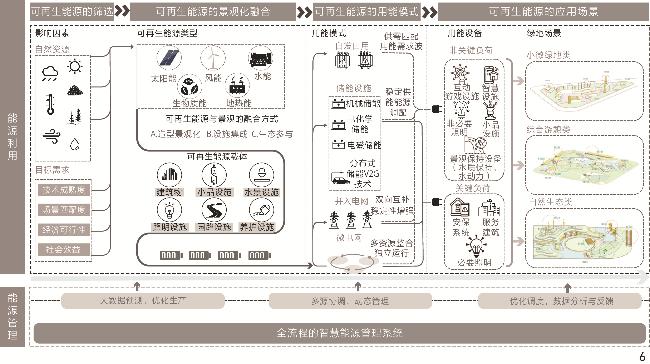
Objective In the context of global climate change and the ongoing transition of energy structures, promoting the application of renewable energy in urban green spaces has become a crucial strategy for achieving carbon neutrality and sustainable urban development. Urban green spaces, in addition to their ecological benefits such as regulating urban climates, improving air quality, and providing areas for social interaction, also play an essential role in meeting energy demands. These demands include lighting, heating, cooling, and infrastructure operation. Despite the importance of urban green spaces, existing research tends to focus primarily on individual renewable energy technologies or localized applications, with little systematic exploration of urban green spaces as a distinct spatial typology. Moreover, there is a lack of comprehensive adaptability analysis regarding the application of renewable energy technologies in different energy usage modes and spatial contexts. In practice, issues such as insufficient integration of energy facilities with landscape, the lack of tailored energy supply models, and underdeveloped management and operation systems have impeded the effective promotion of renewable energy. As such, there is a need to establish a scientifically grounded approach to applying renewable energy in urban green spaces to optimize energy configurations, enhance carbon reduction capabilities, and provide actionable planning and management strategies. This is particularly important for advancing the construction of low-carbon cities and promoting broader sustainability goals. Methods This research systematically reviews the research on renewable energy application in urban green spaces by exploring interdisciplinary fields such as landscape architecture, urban ecology, and energy planning. The research focuses on assessing the applicability of renewable energy in urban green spaces. Based on existing renewable energy classification systems, the research considers factors such as spatial openness, ecological foundation, and available areas of urban green spaces to examine five main types of renewable energy: solar, wind, biomass, hydropower, and geothermal energy. To evaluate the practical application of renewable energy in urban green spaces, the research analyzes 33 typical domestic and international case studies, with a particular emphasis on urban parks, which are the most widely implemented example of urban green spaces. The case studies are systematically analyzed to summarize key aspects including renewable energy technology selection, spatial distribution, landscape integration models, and operational management approaches. The cases are categorized into three major types: comprehensive recreational spaces, natural ecological spaces, and small green spaces. The research provides a detailed analysis of energy application types and methods, as well as energy consumption models for each of the aforesaid three types of green spaces. Results The research identifies three core challenges in the application of renewable energy in urban green spaces: 1) How to scientifically select the most appropriate renewable energy types and optimize spatial layouts in accordance with natural resource constraints and the functional requirements of green spaces in order to improve energy efficiency; 2) how to effectively integrate the technical functions of energy facilities with landscape and ecological values, so as to achieve a seamless integration of energy infrastructure with landscape, thereby enhancing both environmental adaptability and public acceptance; and 3) how to develop flexible energy utilization and management strategies tailored to the energy consumption characteristics of different green space types, thus ensuring long-term, stable, and sustainable energy supply. To address these challenges, the research proposes a systematic framework for renewable energy application that includes energy technology selection, landscape integration, and scenario adaptation. The proposed framework aims to optimize the energy structure of green spaces and enhance their carbon reduction effectiveness. The research finds that the applicability of solar, wind, biomass, hydropower, and geothermal energy in urban green spaces is significantly influenced by factors such as climate, topography, and hydrology. As such, renewable energy types should be selected based on the local resource endowment and the specific energy needs of each green space. Furthermore, the research highlights the importance of optimizing the layout of renewable energy facilities within green spaces. In terms of spatial organization, renewable energy facilities can be integrated into landscape using techniques such as sculptural landscape design, facility integration, and ecological participation. These methods not only enhance the aesthetic appeal of green spaces, but also promote multifunctional synergies. Regarding energy management, the research identifies several adaptive strategies, including self-generation and consumption, energy storage system, grid-connected solution, and microgrid model, all tailored to the energy consumption characteristics of different types of green spaces. These strategies are essential for adapting to diverse energy demands and ensuring that each green space can rely on a stable, sustainable, and adaptable energy supply. Conclusion The pathway for renewable energy application proposed in this research offers a comprehensive solution for low-carbon energy use in urban green spaces. This pathway can serve as a reference for other types of green spaces and provides valuable insights into urban energy transition and green infrastructure development. The research not only offers practical solutions for urban green spaces, but also contributes new theoretical support for global climate change mitigation efforts. The research findings underscore the importance of interdisciplinary collaboration in addressing the challenges of integrating renewable energy into urban environments. Future research should explore renewable energy application in urban green spaces in various climate zones, urban development models, and socio-economic contexts. The goal is to develop promotion strategies that are more universally applicable, thereby enhancing the scalability and operability of renewable energy application in urban green spaces. By doing so, the research contributes to the global transition towards sustainable, low-carbon cities and highlights the potential for renewable energy to play a transformative role in urban sustainability.
WANG Kailun , NIU Tonggang , LIU Lian , WANG Zhongjie . Pathway for Renewable Energy Application in Urban Green Space under the Low Carbon Perspective[J]. Landscape Architecture, 2025 , 32(4) : 116 -124 . DOI: 10.3724/j.fjyl.202408150454
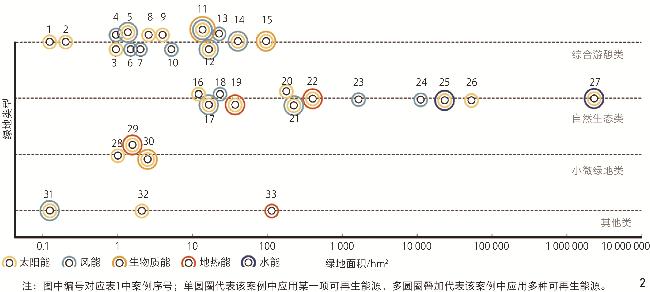
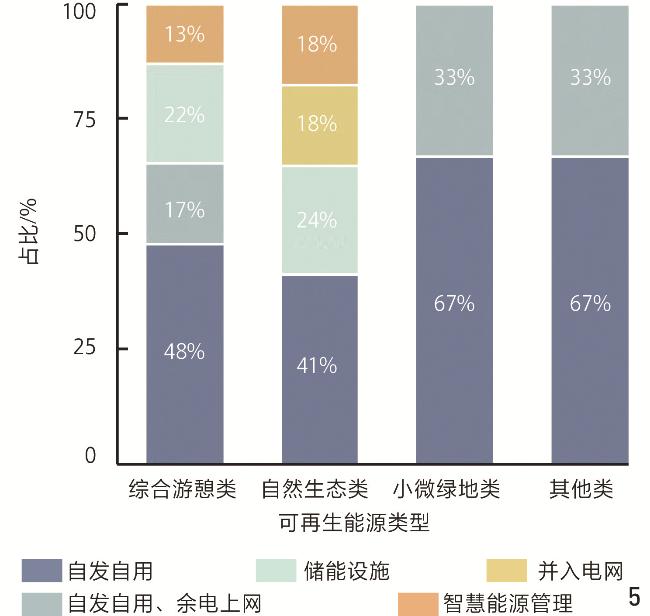
图2 不同类型公园中可再生能源应用概况Fig. 2 Overview of renewable energy application in different types of parks |
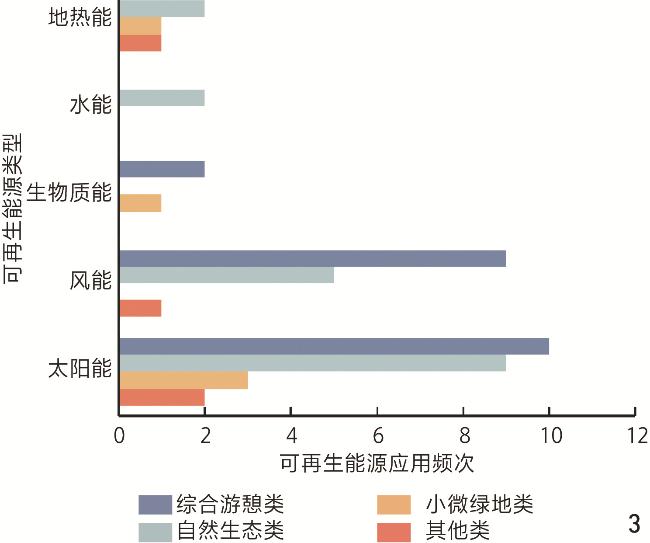
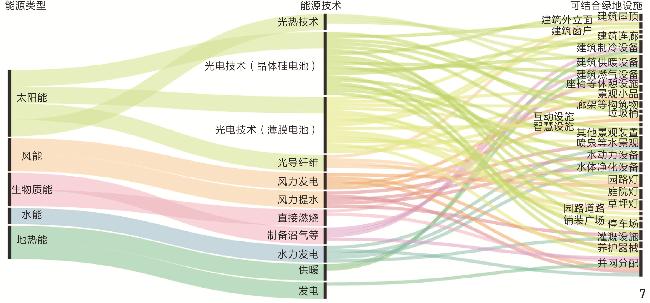
图3 不同类型可再生能源应用频次Fig. 3 Application frequency of different types of renewable energy |
表1 城市绿地中可再生能源应用案例Tab. 1 Cases of renewable energy application in urban green spaces |
| 序号 | 绿地名称 | 绿地类型 | 面积/hm2 | RE类型 | 应用形式a) | 用能模式b) |
|---|---|---|---|---|---|---|
| 注:*为国家公园案例,对于生态郊野绿地的实践具有重要参考价值,因此纳入讨论范围。 a)编码规则:IS为独立布设,指完全独立的能源设施,未与景观功能结合;IL为景观化独立布设,指独立布设的能源设施,造型景观化处理;CF为设施集成,指能源设施与绿地设施复合设置;EC为生态循环参与,指能源设施参与绿地生态循环的一部分。 b)编码规则:SC为自发自用,指能源完全用于本地负载,不涉及电网互动;FI为自发自用,余电上网,指能源首先自用,剩余部分接入电网;ES为储能,指设置储能设备;GI为并入电网,指能源直接并入电网,园区无需储能;SM为智慧能源管理,指设置智能系统动态管理。 | ||||||
| 1 | 广州越秀碳中和主题园 | 综合游憩类 | 0.1 | 太阳能 | CF | SC、ES、SM |
| 2 | 北京中建智地零碳公园 | 综合游憩类 | 0.3 | 太阳能 | CF | SC |
| 3 | 北京龙湖G-PARK科技公园 | 综合游憩类 | 1.0 | 太阳能 | CF | SC、ES、SM |
| 4 | 美国科珀斯克里斯蒂北部海湾公园 | 综合游憩类 | 1.0 | 风能 | IL | FI |
| 5 | 大连低碳公园 | 综合游憩类 | 1.2 | 太阳能 风能 | IS、CF | SC |
| 6 | 东莞万科建筑研究中心绿地 | 综合游憩类 | 1.9 | 风能 | IL、EC | SC |
| 7 | 德国慕尼黑风之庭院 | 综合游憩类 | 2.7 | 风能 | IL | SC |
| 8 | 上海李子园公园 | 综合游憩类 | 4.7 | 太阳能 | CF | SC |
| 9 | 北京昊天碳中和公园 | 综合游憩类 | 6.4 | 太阳能 | IS、CF | ES |
| 10 | 台湾高雄旅津风车公园 | 综合游憩类 | 7.0 | 风能 | IL | FI |
| 11 | 芬兰赫尔辛基能源公园 | 综合游憩类 | 15.0 | 太阳能 风能 生物质能 | IS、CF、EC | SC |
| 12 | 深圳龙岗零碳公园 | 综合游憩类 | 18.5 | 太阳能 风能 | IL、CF | FI |
| 13 | 法国博捷尔·谢奈生态区 | 综合游憩类 | 30.0 | 风能 | IL、CF | SC |
| 14 | 琼海博鳌零碳示范区 | 综合游憩类 | 62.0 | 太阳能 风能 | IL、CF | SC |
| 15 | 新加坡滨海湾花园 | 综合游憩类 | 101.0 | 太阳能 生物质能 | CF、EC | SC、ES |
| 16 | 美国卡瓦列雷公园 | 自然生态类 | 13.8 | 太阳能 | CF | SC |
| 17 | 扬中滨江公园 | 自然生态类 | 20.0 | 太阳能 风能 | CF | SC、ES、SM |
| 18 | 张家口风电主题公园 | 自然生态类 | 34.2 | 风能 | IS | GI |
| 19 | 北京温榆河低碳公园 | 自然生态类 | 48.8 | 太阳能 地热能 | IS、CF | ES、SM |
| 20 | 上海三林楔形绿地 | 自然生态类 | 240.0 | 太阳能 | CF | SC |
| 21 | 北京亦庄新城滨河公园 | 自然生态类 | 462.1 | 太阳能 风能 | IL、CF | SC、ES |
| 22 | 北京市城市绿心森林公园 | 自然生态类 | 739.0 | 太阳能 地热能 | IS、CF | ES、SM |
| 23 | 美国加利福尼亚州海峡群岛国家公园圣米格尔岛* | 自然生态类 | 2 450.0 | 风能 | IS | GI |
| 24 | 阳江海陵岛风电公园 | 自然生态类 | 10 889.0 | 风能 | IS | GI |
| 25 | 美国梅萨维德国家公园* | 自然生态类 | 21 140.0 | 太阳能 水能 | IS | SC |
| 26 | 美国锡安国家公园* | 自然生态类 | 59 300.0 | 太阳能 | CF | SC |
| 27 | 美国迪纳利国家公园和保护区* | 自然生态类 | 2 450 000.0 | 太阳能 水能 | IS、CF | SC |
| 28 | 丹麦新能源汽车充电公园 | 小微绿地类 | 1.0 | 太阳能 | IS | SC |
| 29 | 意大利绿豌豆零售公园 | 小微绿地类 | 2.0 | 太阳能 地热能 | IS、CF | SC |
| 30 | 丹麦阿马格焚烧中心绿地 | 小微绿地类 | 4.1 | 太阳能 生物质能 | IS、CF | FI |
| 31 | 西安世界园艺博览会荷兰园 | 其他类 | 0.2 | 太阳能 风能 | CF、EC | SC |
| 32 | 保定电谷城市低碳公园 | 其他类 | 3.2 | 太阳能 | CF | FI |
| 33 | 美国布朗诉教育委员会国家历史公园 | 其他类 | 130.0 | 地热能 | IS | SC |
表2 可再生能源应用的影响因素、影响机制及优化措施Tab. 2 Analysis of influencing factors, mechanisms, and optimization measures of renewable energy application |
| 可再生能源 | 影响因素 | 影响机制 | 优化措施 | ||||||||
|---|---|---|---|---|---|---|---|---|---|---|---|
| 气候条件 | 立地条件 | ||||||||||
| 光照 | 气温 | 降水 | 风力 | 现状 植被 | 土壤情况 | 地形地貌 | 水文 条件 | ||||
| 注:/无影响,+轻微影响,++低影响,+++中等影响,++++较强影响,+++++极强影响。 | |||||||||||
| 太阳能 | +++++ | +++ | + | / | +++ | / | + | / | 太阳辐射强度、气温、地形、尘埃影响效率。高温降低性能,坡度和朝向影响光照,尘埃减少透光率 | 优化日照、组件位置和倾角,改善散热,修剪遮挡植被 | |
| 风能 | / | + | + | +++++ | + | / | +++ | / | 风速、风向、地形等影响风力效率,地形改变风速或产生涡流,影响稳定性 | 选择风速高、风向稳定区域,结合地形优化风机布局,减少噪声和生物干扰 | |
| 生物质能 | ++ | ++ | ++ | / | +++++ | +++ | + | ++ | 植物生长速率、气候、降水、土壤影响生物量积累 | 选用适应性强、产量高的植物,优化废弃物收集与转化 | |
| 水能 | / | + | +++ | / | / | + | ++ | +++++ | 降水、流速、水文变化、地形坡度影响水能。水流落差大、降水丰沛区域适宜开发 | 水流落差大、降水丰沛区域适宜开发。结合水景设计,优化水能利用与灌溉系统,兼顾生态保护 | |
| 地热能 | / | / | / | / | / | + | + | / | 地质构造、地热梯度、土壤导热性决定可利用性 | 根据土壤类型和植被情况,优化埋管深度和布局 | |
文中图表均由作者绘制。
| [1] |
IEA. An Energy Sector Roadmap to Carbon Neutrality in China[EB/OL].(2021-09-29) [2024-12-27]https://www.efchina.org/Reports-en/report-lceg-20220303-2-en.
|
| [2] |
IEA. CO2 Emissions in 2023[R].(2024-03-01) [2024-12-27].Paris: IEA, 2024.https://www.iea.org/reports/co2-emissions-in-2023.
|
| [3] |
丁仲礼, 张涛. 碳中和逻辑体系与技术需求[M]. 北京: 科学出版社, 2022,99-116.
DING Z L, ZHANG T. Carbon Neutrality: Logic Systems and Technology Needs[M]. Beijing: Science Press, 2022,99-116.
|
| [4] |
中华人民共和国住房和城乡建设部. 2022年中国城市建设状况公报[R]. 北京: 中华人民共和国住房和城乡建设部, 2022.
Ministry of Housing and Urban-Rural Development of the People’s Republic of China. 2022 Bulletin on the State of Urban Construction in China[R]. Beijing: Ministry of Housing and Urban-Rural Development of the People’s Republic of China, 2022.
|
| [5] |
LOBOSCO G, TINTI L, MAGAGNOLI B, et al. Landscape as a Palimpsest for Energy Transition: Correlations Between the Spatial Development of Energy-Production Infrastructure and Climate-Mitigation Goals[J]. Atmosphere, 2023, 14(6):921.
|
| [6] |
BECK O D. Distributed Renewable Energy Generation and Landscape Architecture: A Critical Review[D]. Ann Arbor: ProQuest, UMI Dissertation Publishing, 2011.
|
| [7] |
葛楠. 我国可再生能源的立法保护研究[D]. 重庆: 重庆大学, 2007.
GE N. Research on the Legislative Protection of Renewable Energy in China[D]. Chongqing: Chongqing University, 2007.
|
| [8] |
能源所. 中华人民共和国可再生能源法解读[M]. 北京: 化学工业出版社, 2005.
Energy Research Institute. Interpretation of the Renewable Energy Law of the People’s Republic of China[M]. Beijing: Chemical Industry Press, 2005.
|
| [9] |
宋俊. 碳中和与低碳能源[M]. 北京: 机械工业出版社,2022: 75.
SONG J. Carbon Neutral and Low Carbon Energy[M]. Beijing: China Machine Press,2022: 75.
|
| [10] |
蔺阿琳, 陆明, 娄健坤. 能源景观视角下城市太阳能可利用空间评估研究[J]. 规划师, 2021, 37(1):77-83.
LIN A L, LU M, LOU J K. Research on Urban Solar Energy Utilization Space Evaluation from the Perspective of Energy Landscape[J]. Planners, 2021, 37(1):77-83.
|
| [11] |
OUDES D, STREMKE S. Next Generation Solar Power Plants? A Comparative Analysis of Frontrunner Solar Landscapes in Europe[J]. Renewable and Sustainable Energy Reviews, 2021, 145:111101
|
| [12] |
SIJMONS D, HUGTENBURG J, VAN HOORN A, et al. Landscape and Energy: Designing Transition[M]. Rotterdam: Nai010 Publishers, 2014.
|
| [13] |
NADAÏ A, VAN DER HORST D. Introduction: Landscapes of Energies[J]. Landscape Research, 2010, 35(2):143-155.
|
| [14] |
劳科曼. 利用扩展的城市代谢框架来设想未来的能源景观[J]. 风景园林, 2016, 23(11):54-71.
LOKMAN K. Utilizing an Expanded Framework of Urban Metabolism to Envision Future Energy Landscapes[J]. Landscape Architecture, 2016, 23(11):54-71.
|
| [15] |
STREMKE S. Designing Sustainable Energy Landscapes: Concepts, Principles and Procedures[M]. Wageningen: Wageningen University and Research, Netherlands,2010: 1-94.
|
| [16] |
ARMSTRONG H. Sustainable Energy Landscapes: Designing, Planning and Development[J]. Landscape Research, 2015, 40(4):510-512.
|
| [17] |
张惠青. 可持续能源景观审美创作范式研究[D]. 天津: 天津大学, 2014.
ZHANG H Q. Research on Aesthetic Creation Paradigm of Sustainable Energy Landscape[D]. Tianjin: Tianjin University, 2014.
|
| [18] |
LEIBENATH M, LINTZ G. Understanding “Landscape Governance”: The Case of Wind Energy Landscapes in Germany[J]. Landscape Research, 2018, 43(4):476-488.
|
| [19] |
NADAÏ A, LABUSSIÈRE O. Birds, Wind and the Making of Wind Power Landscapes in Aude, Southern France[J]. Landscape Research, 2010, 35(2):209-233.
|
| [20] |
KRAUSS W. The ‘Dingpolitik’ of Wind Energy in Northern German Landscapes: An Ethnographic Case Study[J]. Landscape Research, 2010, 35(2):195-208.
|
| [21] |
西蒙斯, 李佳怿. 景观和能源[J]. 风景园林, 2016, 23(11):22-40.
SIMONS D, LI J Y. Landscape and Energy[J]. Landscape Architecture, 2016, 23(11):22-40.
|
| [22] |
张玉坤, 宫盛男, 张睿. 基于生产性景观的城市节地生态补偿策略研究[J]. 中国园林, 2019, 35(2):81-86.
ZHANG Y K, GONG S N, ZHANG R. Research on the Urban Ecological Compensation Strategy of Urban Land Saving Based on Productive Landscape[J]. Chinese Landscape Architecture, 2019, 35(2):81-86.
|
| [23] |
MOUSSA R R, MAHMOUD A H A. Energy - Scape Elements: An Approach on Integrating Landscape Elements with Renewable Energy Devices[J]. Journal of Cleaner Production, 2017, 153:114-130.
|
| [24] |
科伊尔. 低能耗城市景观[M]. 潘潇, 贺艳飞, 译.桂林: 广西师范大学出版社, 2017.
COYLE M. Low Energy Urban Landscapes[M]. PAN X, HE Y F, translated. Guilin: Guangxi Normal University Press, 2017.
|
| [25] |
MARX R. Storage of Solar Thermal Energy in Dependency of Geographical and Climatic Boundary Conditions[J]. Encyclopedia of Renewable Energy, Sustainability and the Environment, 2015, 2:115-133.
|
| [26] |
GURTNER R, SCHMETZER T, RIEPL M. Solar Cooling for the Sunbelt Regions: Climatic Conditions & Applications[J]. Encyclopedia of Renewable Energy,Sustainability and the Environment, 2023, 4.
|
| [27] |
BEKTAŞ EKİCİ B. Variation of Photovoltaic System Performance Due to Climatic and Geographical Conditions in Turkey[J]. Turkish Journal of Electrical Engineering and Computer Sciences, 2016, 24:4693-4706.
|
| [28] |
SARVER T, AL-QARAGHULI A, KAZMERSKI L L. A Comprehensive Review of the Impact of Dust on the Use of Solar Energy: History, Investigations, Results, Literature, and Mitigation Approaches[J]. Renewable and Sustainable Energy Reviews, 2013, 22:698-733.
|
| [29] |
TOBIN I, JEREZ S, VAUTARD R, et al. Climate Change Impacts on the Power Generation Potential of a European Mid-Century Wind Farms Scenario[J]. Environmental Research Letters, 2016, 11(3):034013
|
| [30] |
BITSUAMLAK G T, BÉDARD C, STATHOPOULOS T. Modeling the Effect of Topography on Wind Flow Using a Combined Numerical: Neural Network Approach[J]. Journal of Computing in Civil Engineering, 2007, 21(6):384-392.
|
| [31] |
LIU S, ZHANG L, LU J, et al. Advances in Urban Wind Resource Development and Wind Energy Harvesters[J]. Renewable and Sustainable Energy Reviews, 2025, 207:114943
|
| [32] |
LI M Q, YU J H, LI M S, et al. Exploring the Influence of Urban Density and Mountainous Topography on Local Wind Patterns: An Experimental Study of Hongkong, China[J]. Advances in Wind Engineering, 2024, 1(2):100022
|
| [33] |
PHILIPPOPOULOS K, DELIGIORGI D. Application of Artificial Neural Networks for the Spatial Estimation of Wind Speed in a Coastal Region with Complex Topography[J]. Renewable Energy, 2012, 38(1):75-82.
|
| [34] |
QIN P, XU H, LIU M, et al. Assessing Concurrent Effects of Climate Change on Hydropower Supply, Electricity Demand, and Greenhouse Gas Emissions in the Upper Yangtze River Basin of China[J]. Applied Energy, 2020, 279:115694
|
| [35] |
GAUDARD L, GILLI M, ROMERIO F. Climate Change Impacts on Hydropower Management[J]. Water Resources Management, 2013, 27(15):5143-5156.
|
| [36] |
SOLTANI M, MORADI KASHKOOLI F M, SOURI M, et al. Environmental, Economic, and Social Impacts of Geothermal Energy Systems[J]. Renewable and Sustainable Energy Reviews, 2021, 140:110750
|
| [37] |
丛扬, 钱芳, 周瑾. 基于可再生能源开发视角的英国景观敏感性评估探索[J]. 城市建筑, 2024, 21(13):229-232.
CONG Y, QIAN F, ZHOU J. The Assessment on British Landscape Sensitivity from Perspective of Renewable Energy Development[J]. Urbanism and Architecture, 2024, 21(13):229-232.
|
| [38] |
赵春黎, 马文勇, 张雅京, 等. 不同尺度下光伏电站的生态效应探讨 [J]. 生态学报, 2024,44(23):10964-10973.
ZHAO C L, MA W Y, ZHANG Y J, et al. Exploration of Ecological Effects of Photovoltaic Power Stations at Different Scales[J]. Acta Ecologica Sinica, 2024,44(23):10964-10973.
|
| [39] |
陈达, 张玮. 风能利用和研究综述 [J]. 节能技术, 2007,25(4):339-343.
CHEN D, ZHANG W. Exploitation and Research on Wind Energy[J]. Energy Saving Technology, 2007,25(4):339-343.
|
| [40] |
SUN L L, HU W J, YUAN Y P, et al. Dynamic Performance of the Shading-Type Building-Integrated Photovoltaic Claddings[J]. Procedia Engineering, 2015, 121:930-937.
|
| [41] |
SAADON S, GAILLARD L, GIROUX-JULIEN S, et al. Simulation Study of a Naturally-Ventilated Building-Integrated Photovoltaic/Thermal (BIPV/T) Envelope[J]. Renewable Energy, 2016, 87:517-531.
|
| [42] |
KALOGIROU S A. Solar Energy Engineering: Processes and Systems[M]. Burlington: Elsevier/Academic Press, 2009.
|
| [43] |
HART P R. Crystalline vs. Amorphous Silicon: A Comparison of Their Respective Properties and Their Significance in Photovoltaic Applications[C] //SEVENTH E.C. Photovoltaic Solar Energy Conference. Dordrecht: Springer Netherlands,1987: 521-527.
|
| [44] |
BATTAGLIA C, CUEVAS A, DE WOLF S. High-Efficiency Crystalline Silicon Solar Cells: Status and Perspectives[J]. Energy & Environmental Science, 2016, 9(5):1552-1576.
|
| [45] |
CONSTANTINOU S, et al. Advances in Solar Photovoltaic Performance and Efficiency[J]. Energy Science & Engineering, 2023, 11(12):30-34.
|
| [46] |
张艺敏, 赵子芸, 徐欣蕾, 等. 太阳能光伏设施在景观中的运用与研究 [J]. 丝网印刷, 2023,41(7):65-68.
ZHANG Y M, ZHAO Z Y, XU X L, et al. Application and Research on Solar Photovoltaic Facilities in Landscape[J]. Screen Printing, 2023,41(7):65-68.
|
| [47] |
陈艳, 王香春, 蔡文婷, 等. 园林垃圾资源化处理技术研究进展: 基于Citespace和VOSViewer知识图谱分析[J]. 环境卫生工程, 2021, 29(2):22-34.
CHEN Y, WANG X C, CAI W T, et al. Research Progress on the Resource Treatment Technology of Garden Waste: Based on the Knowledge Map Analysis of Citespace and VOS Viewer[J]. Environmental Sanitation Engineering, 2021, 29(2):22-34.
|
| [48] |
ACHINAS S, ACHINAS V, EUVERINK W J G. A Review of Biogas Production from Biomass Waste[J]. Engineering, 2017, 3(3):49-66.
|
| [49] |
袁惊柱, 朱彤. 生物质能利用技术与政策研究综述[J]. 中国能源, 2018, 40(6):16-20.
YUAN J Z, ZHU T. Review on Biomass Energy Utilization Technology and Policy Research Synthesis[J]. Energy of China, 2018, 40(6):16-20.
|
| [50] |
何展, 祁高月, 陈为海. 苏州市有机垃圾资源化利用现状及展望 [J]. 城乡建设, 2019,(24):27-29.
HE Z, QI G Y, CHEN W H. Present Situation and Prospect of Organic Waste Resource Utilization in Suzhou[J]. Urban and Rural Development,2019(24): 27-29.
|
| [51] |
李玉宏, 陈维铅, 薛仰全, 等. 高校园林生物质废弃物资源化利用探索研究[J]. 甘肃科技, 2021, 37(15):43-46.
LI Y H, CHEN W Q, XUE Y Q, et al. Exploration and Research on Resource Utilization of Garden Biomass Waste in Colleges and Universities[J]. Gansu Science and Technology, 2021, 37(15):43-46.
|
| [52] |
田中兴. 合理开发利用水能资源促进水电可持续发展[J]. 中国水能及电气化, 2011(3):1-3.
TIAN Z X. Exploitation the Water Resources Rationally, Promotion the Hydropower Development Sustainably[J]. China Water Power & Electrification, 2011(3):1-3.
|
| [53] |
彭欣, 洪敏敬, 刘三明. 浅析景观水体治理新技术: 循环景观水系统[J]. 中国环保产业, 2016(12):64-66.
PENG X, HONG M J, LIU S M. Analysis on New Technology of Landscape Water System Body Treatment: The Circulating Landscape Water System[J]. China Environmental Protection Industry, 2016(12):64-66.
|
| [54] |
周浩, 林波荣, 李超, 等. 北京市公共建筑节能绿色化改造技术指南编制研究[J]. 建筑节能, 2018, 46(2):105-110.
ZHOU H, LIN B R, LI C, et al. Technical Guide Compiling for Energy-Saving and Green Retrofitting of Public Buildings in Beijing[J]. Building Energy Efficiency, 2018, 46(2):105-110.
|
| [55] |
陈召俊. 探究地热能在建筑环境中的应用[J]. 节能, 2022, 41(4):87-88.
CHEN Z J. Explore the Application of Geothermal Energy in Building Environment[J]. Energy Conservation, 2022, 41(4):87-88.
|
| [56] |
姜丽. 城市公共空间中可再生能源景观协同作用探究[J]. 城市建筑, 2022, 19(16):1-4.
JIANG L. Exploration on the Synergy of Renewable Energy Landscape in Urban Public Space[J]. Urbanism and Architecture, 2022, 19(16):1-4.
|
| [57] |
DEHLER J, KELES D, TELSNIG T, et al. Self-Consumption of Electricity from Renewable Sources[J]. Energy Procedia, 2017, 105:225-236.
|
| [58] |
赵健, 王奕凡, 谢桦, 等. 高渗透率可再生能源接入系统中储能应用综述[J]. 中国电力, 2019, 52(4):167-177.
ZHAO J, WANG Y F, XIE H, et al. An Overview of Energy Storage Applications in Power Systems with High Penetration Renewable Energy Resources[J]. China Electric Power, 2019, 52(4):167-177.
|
| [59] |
ABUELRUB A, HAMED F, SAADEH O. Microgrid Integrated Electric Vehicle Charging Algorithm with Photovoltaic Generation[J]. Journal of Energy Storage, 2020, 32:101858
|
| [60] |
ULLAH Z, ZEESHAN M, AHMED S. Practical Implementation of Electric Vehicle Integration into a Microgrid Using V2G and G2V[C] //IEEE. 2023 IEEE International Conference on Smart Mobility. Thuwal: IEEE,2023: 160-165.
|
| [61] |
CAO W L, ZHOU L. Resilient Microgrid Modeling in Digital Twin Considering Demand Response and Landscape Design of Renewable Energy[J]. Sustainable Energy Technologies and Assessments,2024, 64: 103628.
|
| [62] |
BAMPOULAS A, KARLIS A. Provision of Frequency Regulation by a Residential Microgrid Integrating PVS, Energy Storage and Electric Vehicle[C] //2017 IEEE International Conference on Environment and Electrical Engineering and 2017 IEEE Industrial and Commercial Power Systems Europe. Milan: IEEE, 2017.
|
| [63] |
陈晓华, 王志平, 吴杰康, 等. 微电网技术研究综述 [J]. 黑龙江电力,2023, 45 (06): 471 - 480.
CHEN X H, WANG Z P, WU J K, et al. A Review of Microgrid Technology [J]. Heilongjiang Electric Power,2023, 45 (6): 471-480.
|
| [64] |
MATHIESEN B V, LUND H, CONNOLLY D, et al. Smart Energy Systems for Coherent 100% Renewable Energy and Transport Solutions[J]. Applied Energy, 2015, 145:139-154.
|
| [65] |
MA J R, YANG F, LI Z, et al. A Renewable Energy Integration Application in a MicroGrid Based on Model Predictive Control[C] //IEEE. 2012 IEEE Power and Energy Society General Meeting. San Diego: IEEE,2012: 1-6.
|
| [66] |
TOMAR A, PATTNAIK A. Smart Energy Management in Renewable Energy Systems[C] //RIZWAN M,JAMIL M. Smart Energy Management Systems and Renewable Energy Resources. New York: AIP Publishing LLC, 2021: 1-24.
|
| [67] |
CECATI C, CITRO C, SIANO P. Combined Operations of Renewable Energy Systems and Responsive Demand in a Smart Grid[J]. IEEE Transactions on Sustainable Energy, 2011, 2(4):468-476.
|
| [68] |
COMODI G, GIANTOMASSI A, SEVERINI M, et al. Multi-apartment Residential Microgrid with Electrical and Thermal Storage Devices: Experimental Analysis and Simulation of Energy Management Strategies[J]. Applied Energy, 2015, 137:854-866.
|
/
| 〈 |
|
〉 |