

Diversity and Distribution Characteristics of Spontaneous Vegetation in Herbaceous Layer of Urban River Corridors in Harbin
|
SHEN Peixin is a master student in the School of Landscape Architecture, Northeast Forestry University. His research focuses on landscape planning and design, and urban biodiversity |
|
REN Shu is a master student in the School of Landscape Architecture, Northeast Forestry University. His research focuses on landscape planning and design, and urban biodiversity |
|
LIANG Xinyue is a clerk in Daqing Natural Resources Bureau. Her research focuses on landscape planning and design, and urban biodiversity |
|
HU Yuandong, Ph.D., is an associate professor in the School of Landscape Architecture, Northeast Forestry University and in the Institute for Interdisciplinary Innovation Research, Xi’an University of Architecture and Technology, a permanent research fellow in the Key Lab for Garden Plant Germplasm Development & Landscape Eco-Restoration in Cold Regions of Heilongjiang Province. His research focuses on landscape planning and design, urban ecology and ecological design, and urban biodiversity |
Received date: 2023-11-25
Revised date: 2024-04-18
Online published: 2025-12-12
Copyright
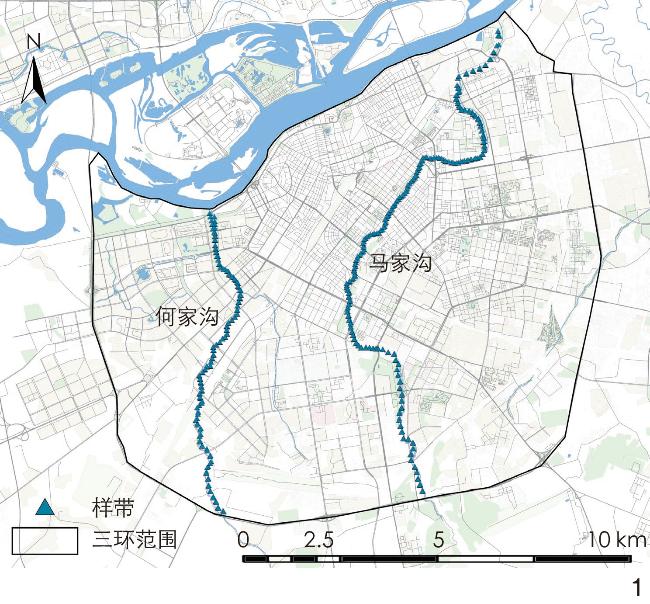
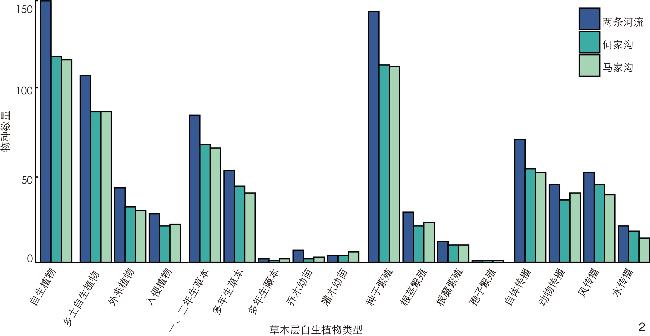
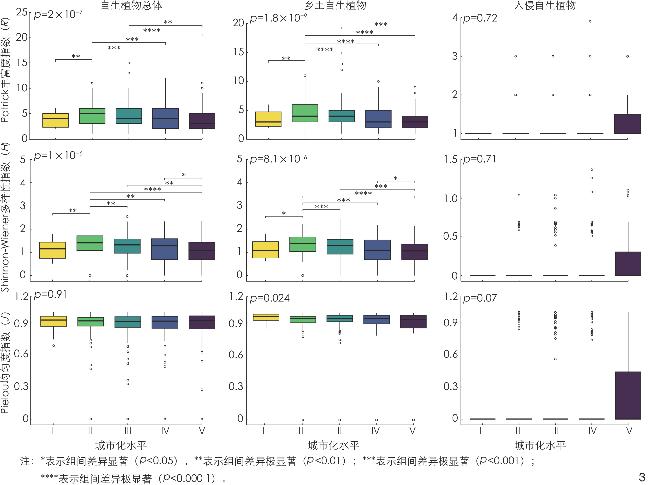
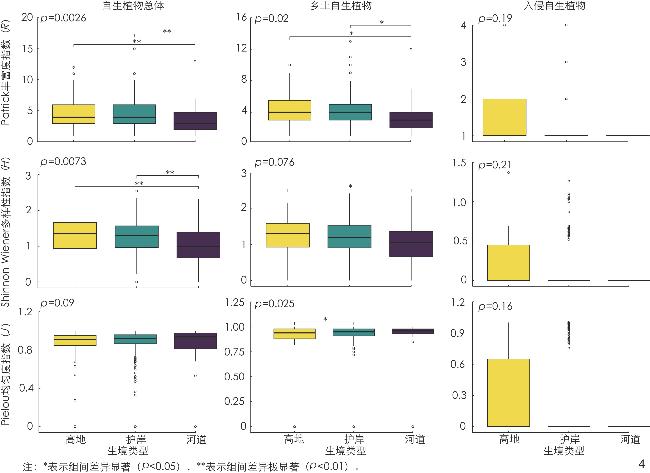
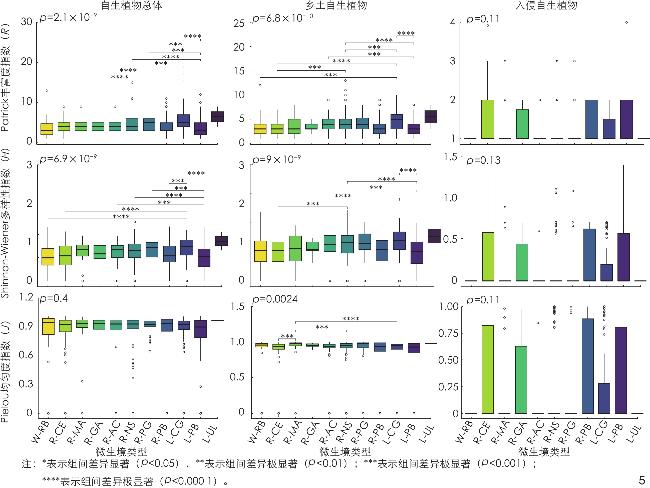
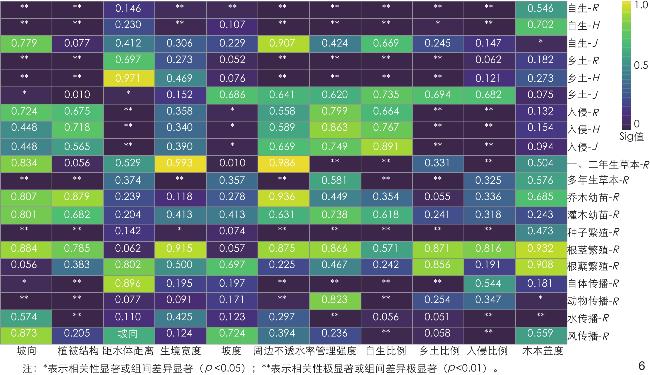
【Objective】In recent decades, the excessive development and continuous expansion of urban rivers and their surroundings have led to a series of ecological issues such as habitat fragmentation and loss, environmental pollution, invasion of alien species, and a sharp decrease in biodiversity. Urban rivers, as the interlace zones of urban aquatic and terrestrial ecosystems, play a crucial role as key ecological corridors and important habitats for biodiversity. They not only provide outdoor activities and recreational spaces for city residents, but also significantly contribute to the integrity and stability of urban ecosystems. River corridors serve as vital habitats for spontaneous vegetation, which are profoundly affected by urban development and human activities, leading to the formation of highly heterogeneous habitats. Spontaneous vegetation is an excellent subject for studying the feedback mechanisms between urbanization and urban ecosystems, and holds great potential for addressing issues such as urban biodiversity loss, pollution control, ecological restoration and rewilding, and for creating low-maintenance and sustainable plantscape. Based on this, this research takes the native plants in herbaceous layer in the central urban sections of the Hejiagou and Majiagou river corridors in Harbin as the research object, analyzes the compositional characteristics of spontaneous vegetation across different urbanization levels and habitats, elucidates the distribution patterns of spontaneous vegetation diversity and their influencing factors, and reveals the strategies for spontaneous vegetation to adapt to highly heterogeneous habitats.【Methods】The research period is from June to September 2022. In this research, a combination of uniform and typical sampling methods are employed to conduct a survey of spontaneous vegetation in herbaceous layer in 951 quadrats along the Hejiagou and Majiagou river corridors in Harbin. The river corridor habitats are classified into three major categories of river channels, revetments, and uplands, which are further divided into 11 microhabitats such as river beaches, concrete revetments, and stone revetments. The species composition and diversity distribution of spontaneous vegetation in herbaceous layer in these habitats and microhabitats are analyzed. Concurrently, based on the urbanization level index and the division of urbanization gradients, the differences in α-diversity of spontaneous vegetation among different urbanization levels and habitats are examined. Finally, from the perspectives of habitat creation and species selection, strategies for enhancing biodiversity in urban river corridors and creating low-maintenance and sustainable plantscape are discussed.【Results】Research results are summarized as follows. 1) Harbin’s urban river corridors are rich in spontaneous vegetation species, with a total of 151 species recorded, belonging to 112 genera under 36 families. The life forms of spontaneous vegetation are mainly annuals and biennials; native species account for 71.52%, and alien invasive species account for 18.54%. In terms of reproduction, seed reproduction dominates, accounting for 96.03%. Regarding dispersion, the types of spontaneous vegetation featuring autogenic dispersal, wind dispersal, animal dispersal and water dispersal respectively account for 47.02%, 34.44%, 29.80% and 13.91%. 2) The composition of spontaneous vegetation varies with different levels of urbanization. The α-diversity of herbaceous spontaneous vegetation and native spontaneous vegetation species is significantly higher at medium to low levels of urbanization (I – III); significant differences in diversity characteristics are observed among different habitat types, with invasive species showing a homogenized distribution pattern. 3) Such factors as slope aspect, distance from water body, vegetation structure, and management intensity significantly impact the life forms, occurrence modes, and dispersal methods of spontaneous vegetation in herbaceous layer. 4) Two strategies are proposed to enhance biodiversity and create low-maintenance and sustainable plantscape in urban river corridors. One is reducing the channelization of some river sections while ensuring the flood prevention and safety functions of urban rivers, protecting habitat continuity and integrity, and increasing the diversity of vegetation structure types within habitats; the other is preferentially selecting native plants and fully considering the life habits such as life forms, reproduction methods, and dispersal modes of native plant materials, while also focusing on monitoring invasive species along the edges of river corridors.【Conclusion】The spontaneous vegetation in urban river corridors is an important component of urban vegetation. It holds great potential for addressing issues such as loss of urban biodiversity, pollution control, ecological restoration and rewilding, and for creating sustainable plantscape with low maintenance requirements. This research analyzes the composition characteristics of spontaneous vegetation in different habitats under varying levels of urbanization, elucidates the causes of diversity distribution patterns, and proposes the strategies for habitat creation and spontaneous vegetation application for river corridor landscape. This research may help enrich the urban vegetation database of Harbin, provide a new perspective for the landscape creation of urban river corridors, and offer theoretical support for the conservation of urban river corridor biodiversity, the development and application of spontaneous vegetation, and the creation of low-carbon and sustainable green landscape. Ecological researches suggest that urban ecosystems and their spontaneous vegetation communities are dynamic. This research only conducts surveys during the summer season, which may impose certain limitations on the results. In subsequent work, the distribution characteristics of spontaneous vegetation in urban river corridors should be further explored through surveys conducted in multiple seasons and a community-level perspective should be formed.
Peixin SHEN , Shu REN , Xinyue LIANG , Yuandong HU . Diversity and Distribution Characteristics of Spontaneous Vegetation in Herbaceous Layer of Urban River Corridors in Harbin[J]. Landscape Architecture, 2024 , 31(6) : 28 -36 . DOI: 10.3724/j.fjyl.202311250534
表1 生境类型划分结果Tab. 1 Classification results of habitat types |
| 生境大类 | 大类编码 | 微生境类型 | 微生境类型编码 | 生境特征描述 |
| 河道 | W | 河漫滩 | W-RB | 季节性涨水的河道淤泥、沙砾、碎石 |
| 护岸 | R | 水泥护岸 | R-CE | 不同材质护岸表面的薄土或缝隙 |
| 砌石护岸 | R-MA | |||
| 石笼护岸 | R-GA | |||
| 人工覆土护岸 | R-AC | |||
| 自然土壤护岸 | R-NS | |||
| 铺装缝隙 | R-PG | 位于护岸的步道铺装缝隙 | ||
| 种植池 | R-PB | 位于护岸部分的种植池 | ||
| 高地 | L | 连续园林绿地 | L-CG | 连续的较大面积绿地 |
| 种植池 | L-PB | 硬质材料围合的小块绿地 | ||
| 废置地 | L-UL | 裸地、废弃地和未利用地 |
图2 两条河流廊道中草本层自生植物组成特征Fig. 2 Composition characteristics of spontaneous vegetation in herbaceous layer in the two river corridors |
表2 草本层自生植物的科属种组成Tab. 2 Species genus and family composition of spontaneous vegetation in herbaceous layer |
| 科名 | 属数 | 物种数 | 比例/% |
| 菊科 | 19 | 31 | 21.99 |
| 禾本科 | 13 | 14 | 9.93 |
| 蓼科 | 4 | 10 | 7.09 |
| 苋科 | 5 | 9 | 6.38 |
| 豆科 | 7 | 8 | 5.67 |
表3 草本层自生植物的生活型组成Tab. 3 Composition of life forms of spontaneous vegetation in herbaceous layer |
| 生活型 | 物种数 | 比例/% | 代表性物种 |
| 一、二年 生草本 | 85 | 56.29 | 狗尾草(Setaria viridis)、藜(Chenopodium album)、大籽蒿(Artemisia sieversiana) |
| 多年生草本 | 53 | 35.10 | 葎草(Humulus scandens)、皱叶酸模(Rumex crispus)、白屈菜(Chelidonium majus) |
| 多年生藤本 | 2 | 1.32 | 萝藦(Cynanchum rostellatum)、蛇葡萄(Ampelopsis glandulosa) |
| 灌木(幼苗) | 4 | 2.65 | 紫丁香(Syringa oblata)、接骨木(Sambucus williamsii) |
| 乔木(幼苗) | 7 | 4.64 | 榆(Ulmus pumila)、旱柳(Salix matsudana) |
表4 草本层自生植物物种的来源Tab. 4 Species origin of spontaneous vegetation in herbaceous layer |
| 生活型 | 物种数 | 比例/% | 代表性物种 |
| 乡土植物 | 108 | 71.52 | 狗尾草、葎草、皱叶酸模 |
| 外来植物 | 43 | 28.48 | 小蓬草、牛膝菊(Galinsoga parviflora)、虎尾草(Chloris virgata) |
| 外来入侵植物 | 28 | 18.54 | 小蓬草、鬼针草、反枝苋 |
表5 草本层自生植物的繁殖方式Tab. 5 Reproductive mode of spontaneous vegetation in herbaceous layer |
| 繁殖方式 | 物种数 | 比例/% | 代表性物种 |
| 种子繁殖 | 145 | 96.03 | 狗尾草、葎草、皱叶酸模 |
| 根茎繁殖 | 29 | 19.21 | 苣荬菜(Sonchus wightianus)、活血丹(Glechoma longituba)、芦苇(Phragmites australis) |
| 根蘖繁殖 | 12 | 7.95 | 皱叶酸模、白屈菜、宽叶荨麻(Urtica laetevirens) |
| 孢子繁殖 | 1 | 0.66 | 问荆 |
表6 草本层自生植物的扩散方式Tab. 6 Dispersal mode of spontaneous vegetation in herbaceous layer |
| 扩散方式 | 物种数 | 比例/% | 代表性物种 |
| 自体传播 | 71 | 47.02 | 狗尾草、葎草、白屈菜、藜 |
| 动物传播 | 45 | 29.80 | 狗尾草、白屈菜、稗(Echinochloa crus-galli)、马唐(Digitaria sanguinalis)、龙葵(Solanum nigrum) |
| 风传播 | 52 | 34.44 | 皱叶酸模、大籽蒿、小蓬草、苣荬菜 |
| 水传播 | 21 | 13.91 | 狗尾草、稗、反枝苋、芦苇 |
图6 不同驱动因素与草本层自生植物α多样性的相关性分析Fig. 6 Analysis of correlation analysis between different driving factors and the α-diversity of spontaneous |
表7 不同植被结构中草本层自生植物α多样性Tab. 7 α-diversity of spontaneous vegetation in herbaceous layer in different vegetation structures |
| 植被结构 | 草地 | 灌-草 | 乔-草 | 乔-灌-草 |
| 注:表中仅列出组间差异显著(p<0.05)的草本层自生植物α多样性指数;标记相同字母表示差异不显著(p≥0.05),标注不同字母表示差异显著(p<0.05)。 | ||||
| 自生-H | 1.24±0.49ac | 1.29±0.55abc | 1.29±0.51ac | 0.98±0.62b |
| 自生-R | 4.40±2.07ac | 4.78±2.43abc | 4.80±2.24ac | 3.61±2.41b |
| 乡土-H | 1.16±0.50a | 1.25±0.54a | 1.25±0.50a | 0.94±0.62b |
| 乡土-R | 3.87±1.89b | 4.31±2.21abc | 4.28±1.93a | 3.3±2.070c |
| 多年生草本-R | 2.18±1.21a | 2.20±1.08ab | 2.35±1.16a | 1.76±0.92b |
| 种子繁殖-R | 4.37±2.28a | 4.72±2.40a | 4.80±2.25a | 3.56±2.38b |
| 自体传播-R | 2.64±1.34a | 2.38±1.35ab | 2.95±1.33b | 2.33±1.37b |
| 动物传播-R | 1.80±0.99b | 2.06±1.07ab | 2.04±1.03a | 1.78±1.02ab |
| 水传播-R | 1.33±0.60a | 1.09±0.29ab | 1.23±0.52ab | 1.13±0.42b |
表8 不同坡向中草本层自生植物α多样性Tab. 8 α-diversity of spontaneous vegetation in herbaceous layer in different slope aspects |
| 坡向 | 北 | 东 | 东北 | 东南 | 南 | 西 | 西北 | 西南 |
| 注:同表7。 | ||||||||
| 自生-H | 1.15±0.52ab | 1.18±0.53abb | 1.28±0.53ab | 1.17±0.56ab | 1.04±0.56b | 1.26±0.50ab | 1.25±0.52abb | 1.35±0.46a |
| 自生-R | 4.14±2.27 ab | 4.22±2.14 ab | 4.73±2.25 ab | 4.18±2.09 ab | 3.75±2.16 b | 4.57±2.15 ab | 4.50±2.16 ab | 4.95±2.32 a |
| 乡土-H | 1.00±0.58bc | 1.15±0.49abc | 1.23±0.52abc | 1.06±0.54abc | 0.95±0.55c | 1.21±0.53ab | 1.20±0.51abc | 1.32±0.44a |
| 乡土-R | 3.43±1.95bd | 3.83±1.86abcd | 4.21±1.98abcd | 3.54±1.82abcd | 3.27±1.92d | 4.13±1.98bc | 3.99±1.93abcd | 4.44±2.02ac |
| 乡土-J | 0.79±0.36ab | 0.88±0.25abb | 0.87±0.25ab | 0.83±0.32ab | 0.81±0.31b | 0.86±0.27ab | 0.89±0.23ab | 0.94±0.12a |
| 多年生草本-R | 2.04±1.26ab | 2.12±1.16ab | 2.51±1.26a | 1.97±1.02ab | 1.84±1.06b | 2.33±1.11ab | 2.05±1.08ab | 2.20±1.39ab |
| 自体传播-R | 2.28±1.23b | 2.61±1.29ab | 2.79±1.26ab | 2.60±1.29ab | 2.46±1.40ab | 2.82±1.30a | 2.78±1.50ab | 2.66±1.61ab |
| 动物传播-R | 1.57±0.97bc | 1.70±0.89bc | 1.99±0.96abc | 1.74±0.88abc | 1.80±0.93abc | 1.98±1.09abc | 1.92±0.94abc | 2.19±1.25a |
表9 基于不同生境类型的草本层自生植物物种推荐Tab. 9 Recommendations for spontaneous vegetation species in herbaceous layer in different habitats and microhabitats |
| 生境区位 | 生境本底 | 生境类型 | 推荐物种 |
| 滨水 | 硬质 | 石笼、混凝土球、空心砌砖等生态护岸 | 萹蓄(Polygonum aviculare)、独行菜(Lepidium apetalum)、朝天委陵菜(Potentilla supina)、紫花地丁(Viola philippica)、早开堇菜(Viola prionantha)、萝藦、附地菜(Trigonotis peduncularis)、蒲公英(Taraxacum mongolicum)、马唐、披碱草( Elymus dahuricus )、狗尾草 |
| 土壤 | 河漫滩、人工覆土护岸、自然土壤护岸 | 问荆、透茎冷水花(Pilea pumila)、萹蓄、春蓼(Persicaria maculosa)、水蓼(Persicaria hydropiper)、酸模叶蓼(Persicaria lapathifolia)、红蓼(Persicaria orientalis)、繁缕、沼生蔊菜(Rorippa palustris)、附地菜、菵草(Beckmannia syzigachne)、稗、披碱草、画眉草(Eragrostis pilosa)、芦苇、香蒲(Typha orientalis)、头状穗莎草(Cyperus glomeratus) | |
| 远离水岸 | 硬质 | 嵌草铺装(景观道路)、混凝土球、空心砌砖等生态护岸 | 萹蓄、朝天委陵菜、车前(Plantago asiatica)、地锦、独行菜、附地菜、狗尾草、虎尾草、马唐、披碱草、蒲公英、夏至草(Lagopsis supina)、酢浆草(Oxalis corniculata) |
| 土壤 | 连续园林绿地、废置地、人工覆土护岸、自然土壤护岸、种植池 | 萹蓄、皱叶酸模、地肤(Bassia scoparia)、马齿苋(Portulaca oleracea)、繁缕(Stellaria media)、鹅肠菜、荠、风花菜(Rorippa globosa)、蛇莓(Duchesnea indica)、朝天委陵菜、天蓝苜蓿(Medicago lupulina)、苜蓿、草木樨、酢浆草、老鹳草(Geranium wilfordii)、鼠掌老鹳草(Geranium sibiricum)、紫花地丁、早开堇菜、蛇床(Cnidium monnieri)、打碗花(Calystegia hederacea)、附地菜、活血丹、夏至草、益母草(Leonurus japonicus)、毛酸浆、挂金灯(Alkekengi officinarum var. franchetii)、龙葵、赤瓟(Thladiantha dubia)、平车前(Plantago depressa)、紫菀(Aster tataricus)、菊芋、旋覆花(Inula japonica)、苣荬菜、蒲公英、虎尾草 |
文中图表均由作者绘制,其中
| [1] |
IGNATIEVA M, AHRNÉ K, WISSMAN J, et al. Lawn as a Cultural and Ecological Phenomenon: A Conceptual Framework for Transdisciplinary Research[J]. Urban Forestry & Urban Greening, 2015, 14(2): 383-387.
|
| [2] |
GAO Z W, PAN Y L, BODEGOM V, et al. Beta Diversity of Urban Spontaneous Plants and Its Drivers in 9 Major Cities of Yunnan Province, China[J]. Landscape and Urban Planning, 2023, 234: 104741.
|
| [3] |
潘王韵, 姚丽敏, 郭蓓琳, 等. 基于WoS和CiteSpace的自生植物研究进展[J]. 西南师范大学学报(自然科学版), 2022, 47(3): 100-110.
PAN W Y, YAO L M, GUO B L, et al. On Progress of Spontaneous Vegetation Based on WoS and Citespace[J]. Journal of Southwest China Normal University (Natural Science Edition), 2022, 47(3): 100-110.
|
| [4] |
陈春谛. 被遗忘的城市“生境”: 重庆市墙体自生植物调查分析[J]. 生态学报, 2020, 40(2): 473-483.
CHEN C D. Forgotten Urban Habitats: Analysis of Spontaneous Vegetation on the Urban Walls of Chongqing City[J]. Acta Ecologica Sinica, 2020, 40(2): 473-483.
|
| [5] |
李东咛, 李文, 董荣荣, 等. 哈尔滨城市工业废弃地自生植物多样性与分布特征[J]. 风景园林, 2024, 31(1): 112-120.
LI D N, LI W, DONG R R, et al. Diversity and Distribution Characteristics of Spontaneous Plants in Urban Industrial Wasteland in Harbin[J]. Landscape Architecture, 2024, 31(1): 112-120.
|
| [6] |
梁新悦, 游桂璇, 祝珊, 等. 哈尔滨市高校校园绿地自生植物多样性及其在异质生境中的分布特征[J]. 中国园林, 2023, 39(12): 138-144.
LANG X Y, YOU G X, ZHU S, et al. Spontaneous Vegetation Species Diversity and Distribution in Heterogeneous Habitats of University Campus Green Spaces of Harbin[J]. Chinese Landscape Architecture, 2023, 39(12): 138-144.
|
| [7] |
李晓鹏.城市化环境下公园自生植物的多样性与公众感知研究[D].北京: 北京林业大学, 2020.
LI X P. Diversity and Public Perception of Spontaneous Plants in Public Parks in Urban Environment[D]. Beijing: Beijing Forestry University, 2020.
|
| [8] |
李晓鹏, 张思凝, 冯黎, 等. 成都城区河流廊道自生植物的生境及物种多样性[J]. 风景园林, 2022, 29(1): 64-70.
LI X P, ZHANG S N, FENG L, et al. Habitat and Species Diversity of Spontaneous Plants on Both Sides of River Corridor in Chengdu Urban Area[J]. Landscape Architecture, 2022, 29(1): 64-70.
|
| [9] |
NAIMAN R J, DECAMPS H, POLLOCK M. The Role of Riparian Corridors in Maintaining Regional Biodiversity[J]. Ecological Applications, 1993, 3(2): 209-212.
|
| [10] |
KUGLEROVÁ L, KIELSTRA B W, MOORE R D, et al. Importance of Scale, Land-Use, and Stream Network Properties for Riparian Plant Communities Along an Urban Gradient[J]. Freshwater Biology, 2019, 64(3): 587-600.
|
| [11] |
张梦园, 李坤, 邢小艺, 等. 北京温榆河-北运河生态廊道自生植物多样性对城市化的响应[J]. 生态学报, 2022, 42(7): 2582-2592.
ZHANG M Y, LI K, XING X Y, et al. Responses of Spontaneous Plant Diversity to Urbanization in Wenyu River-North Canal Ecological Corridor, Beijing[J]. Acta Ecologica Sinica, 2022, 42(7): 2582-2592.
|
| [12] |
朱玲, 王睿, 魏宜, 等. 生态系统服务视角下的城市滨河缓冲带生态修复策略研究[J]. 景观设计, 2020 (6): 4-11.
ZHU L, WANG R, WEI Y, et al. Restoration Strategies of Urban Riparian Buffer Zone from the Perspective of Ecosystem Services[J]. Landscape Design, 2020 (6): 4-11.
|
| [13] |
张楠楠, 吴雪飞. 城市用地紧凑变化对河岸带生境的影响: 以汉江小流域武汉段为例[J]. 中国园林, 2021, 37(12): 87-91.
ZHANG N N, WU X F. Influence of Urban Land Use Compact Change on Riparian Habitat: A Case Study of Wuhan Section of Hanjiang River Small Watershed[J]. Chinese Landscape Architecture, 2021, 37(12): 87-91.
|
| [14] |
GAO Z W, SONG K, PAN Y J, et al. Drivers of Spontaneous Plant Richness Patterns in Urban Green Space Within a Biodiversity Hotspot[J]. Urban Forestry & Urban Greening, 2021, 61: 127098.
|
| [15] |
陈天一, 赵聪聪, 文素洁, 等. 城市生境单元制图研究进展及其在生物多样性保护中的应用[J]. 风景园林, 2022, 29(1): 12-17.
CHEN T Y, ZHAO C C, WEN S J, et al. Research Progress in Urban Habitate Mapping and Its Application in Biodiversity Conservation[J]. Landscape Architecture, 2022, 29(1): 12-17.
|
| [16] |
贾博.哈尔滨城乡梯度上城市绿地植物多样性与群落类型[D].上海: 华东师范大学, 2021.
JIA B. Plant Diversity and Community Types of Urban Green Space on Urban-Rural Gradient in Harbin[D]. Shanghai: East China Normal University, 2021.
|
| [17] |
张明娟, 李青青, 李竹君. 南京市公园绿地中自生草本植物的种子传播方式及园林应用策略研究[J]. 中国园林, 2020, 36(8): 119-123.
ZHANG M J, LI Q Q, LI Z J. Seed Dispersal Modes and Landscape Application Strategies of Autogenesis Herbs in the Parks of Nanjing City[J]. Chinese Landscape Architecture, 2020, 36(8): 119-123.
|
| [18] |
DITOMMASO A, STOKES C A, CORDEAU S, et al. Seed-Dispersal Ability of the Invasive Perennial Vines Vincetoxicum Nigrum and Vincetoxicum Rossicum[J]. Invasive Plant Science and Management, 2018, 11(1): 10-19.
|
| [19] |
GELMI-CANDUSSO T A, HÄMÄLÄINEN A M. Seeds and the City: The Interdependence of Zoochory and Ecosystem Dynamics in Urban Environments[J]. Frontiers in Ecology and Evolution, 2019, 7: 41.
|
| [20] |
达良俊.基于本土生物多样性恢复的近自然城市生命地标构建理念及其在上海的实践[J].中国园林, 2021, 37(5): 20-24.
DA L J. Urban Near-to-Nature Biocoenose Landmark Construction for the Restoration of Native Biodiversity: Concepts and Practices in Shanghai[J]. Chinese Landscape Architecture, 2021, 37(5): 20-24.
|
| [21] |
ARONSON M F J, PATEL M V, O’NEILL K M, et al. Urban Riparian Systems Function as Corridors for Both Native and Invasive Plant Species[J]. Biological Invasions, 2017, 19(12): 3645-3657.
|
| [22] |
鲍林林, 李叙勇, 智仕杰, 等. 张家口市河流筑坝与硬化的生态系统健康影响研究[J]. 水生态学杂志, 2021, 42(1): 1-9.
BAO L L, LI X Y, ZHI S J, et al. Effects of Damming and Channel Hardening on River Ecosystem Health in Zhangjiakou City[J]. Journal of Hydroecology, 2021, 42(1): 1-9.
|
| [23] |
LI X P, FAN S X, GUAN J H, et al. Diversity and Influencing Factors on Spontaneous Plant Distribution in Beijing Olympic Forest Park[J]. Landscape and Urban Planning, 2019, 181: 157-168.
|
| [24] |
王飞, 王永元, 杨萌萌, 等. 干旱河谷草本植物随海拔变化的物种多样性[J]. 森林与环境学报, 2017, 37(4): 471-476.
WANG F, WANG Y Y, YANG M M, et al. Biodiversity of Herbaceous Plants Along Altitude Gradient in the Arid Valley[J]. Journal of Forest and Environment, 2017, 37(4): 471-476.
|
| [25] |
XU Y, ZHANG X, LIU X J, et al. Biodiversity and Spatiotemporal Distribution of Spontaneous Vegetation in Tangdao Bay National Wetland Park, Qingdao City, China[J]. International Journal of Environmental Research and Public Health, 2022, 19 (18): 11665.
|
| [26] |
DONG M J, LIU M X, YIN L, et al. Concept and Practices Involved in Comprehensive River Control Based on the Synergy Among Flood Control, Ecological Restoration, and Urban Development: A Case Study on a Valley Reach of Luanhe River in a Semiarid Region in North China[J]. Water (Basel), 2022, 14 (9): 1413
|
| [27] |
武晶, 余新春, 刘志民, 等. 科尔沁沙地“生境岛屿”面积对植物物种多样性及其分布格局的影响[J]. 生态学杂志, 2017, 36(1): 43-53.
WU J, YU X C, LIU Z M, et al. Effects of “Habitat Island” Area on Plant Species Diversity and Its Distribution Pattern in Horqin Sand Land[J]. Chinese Journal of Ecology, 2017, 36(1): 43-53.
|
| [28] |
张颖, 朱建宁. 融入风景园林因子的生境单元制图法及在公园鸟类微生境研究中的应用[J]. 风景园林, 2021, 28(2): 96-102.
ZHANG Y, ZHU J N. Biotope Mapping with Landscape Architecture Elements and Its Application in the Research of Park Avian Microhabitats[J]. Landscape Architecture, 2021, 28(2): 96-102.
|
| [29] |
AGUIRRE-GUTIÉRREZ J, WALLISDEVRIES M F, MARSHALL L, et al. Butterflies Show Different Functional and Species Diversity in Relationship to Vegetation Structure and Land Use[J]. Global Ecology and Biogeography, 2017, 26(10): 1126-1137.
|
/
| 〈 |
|
〉 |