

Review and Prospect of Research on Residential Balcony Environment from the Perspective of Healing
|
SONG Tianming (Manchu) is a Ph.D. candidate in the College of Architecture and Urban Planning (CAUP), Tongji University. His research focuses on healing environment, environment-behavior studies, and environmental psychology |
|
XU Leiqing, Ph.D., is a professor and doctoral supervisor in the College of Architecture and Urban Planning (CAUP), Tongji University, director of the Urban Renewal Center, National Modernization Institute, and deputy director of Committee of Environment-Behavior of the Architectural Society of China. His research focuses on urban renewal, urban design, environment-behavior studies, environmental psychology, human engineering, and community empowerment |
Received date: 2023-03-01
Revised date: 2023-12-20
Online published: 2025-12-11
Copyright
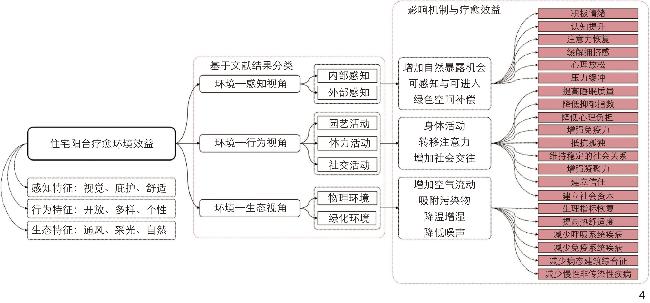
[Objective] Residential balcony, as an important healing space in family life, is gradually becoming a new topic of research in the field of habitat environment. Residential balcony plays an important role in improving environmental quality, promoting physical and mental health, and achieving physical and mental recovery. Clarifying the progress and development trend of the research on balcony environment and forming a systematic understanding of the healing benefits of balcony environment are of great theoretical and practical significance to enhance the quality of living environment, promote health and well-being, and accelerate physical and mental recovery. [Methods] From the perspective of the research on healing benefits of balcony environment, this research screens a total of 211 English literature and 35 Chinese literature from the Web of Science core collection database and the China Knowledge Network (CNKI) database as data sources for research analysis. The research is based on a review of relevant research hotspots, contents and methods at home and abroad, and a review of the current status, trends, limitations and shortcomings of current research. [Results] The researches on healing benefits of balcony environment can be divided into three areas. From the “environment − perception” perspective, the research explores the healing effects of balcony environment perception in promoting positive emotions, enhancing cognitive abilities, restoring attention, and relieving stress. From the “environment − activity” perspective, the research explores the physical and mental healing effects of gardening and the physical and social activities sustained by balcony in strengthening immunity, reducing psychological burden, maintaining stable social relationships, and building social capital. From the “environment − ecology” perspective, the research explores the healing effects of the combination of the physical environment and greening of balcony, finding that the physical environment of balcony can help strengthen natural ventilation and thermal comfort, while balcony greening can help adsorb harmful substances and maintain carbon and oxygen balance, thus improving the quality of living environment, and promoting physiological indicators of recovery and other functional health aspects. The research on healing benefits of balcony environment has realized the transition from unitary physical environment to perceptual experience and then to multiple integration and unification of physical participation, mainly seeking the in-depth analysis of the relationship between environment and physical and mental health. In recent years, the focus of research has also shifted from the health promotion role of physical environment to the physical and mental healing benefits of balcony environment. Accordingly, research perspective has also undergone a shift from subjective perception to humanistic perspective of physical and mental engagement. The promotion and development of emerging technologies are driving a transformation in research methods toward technical precision, which is expected to provide more precise methods and possibilities for evidence-based research on the healing benefits of balcony environment. Based on the analysis of current research status and practical needs, future research on healing benefits of balcony environment should focus on the following aspects: 1) Pay attention to the healing benefits and causality of the interaction between people and balcony environment. Combining with new human factor technology, high-quality physiological and psychological data can be obtained to identify and describe the behavioral reactions and physical and mental conditions of different people interacting with the balcony environment, and objectively demonstrate the causal relationship of balcony healing benefits. 2) Pay attention to the healing elements and influencing mechanism of balcony environment. The main contents include defining the influencing factors, weights and action mechanisms that affect the healing benefits, obtaining the key influencing factors, and realizing the fine measurement of the influence weights of spatial factors. 3) Pay attention to the configuration and comprehensive utilization of balcony space. It mainly includes understanding residents’ utilization status, utilization frequency and space demand of balcony. The space allocation required by ideal healing balcony environment should be further discussed in combination with the conclusion of empirical research, so as to improve the living quality, boost the diversified and comprehensive utilization of balcony and promote the health and well-being of residents. [Conclusion] As a potential health resource in high-density urban living environment, residential balcony is an important part of evaluating urban living quality and realizing healthy life. However, the main problem faced by the current research on the healing benefits of balcony environment is the lack of research combing and discrimination, and the failure to form a systematic and valuable research conclusion. At present, it is difficult to effectively guide balcony design in practice and give full play to the healing value of balcony. Therefore, it is necessary to clarify the current progress and development trend of balcony healing research, analyze the existing problems and shortcomings in the current research, and determine future research direction. The theoretical significance of this research is to promote the deepening and refinement of the research on the healing benefits of residential balcony environment, and to expand and enrich the theoretical framework for the research on healing built environment. The practical significance lies in summarizing the existing research conclusions, promoting the practical transformation of theoretical achievements, and providing guidance for the optimization and design of balcony space.
Tianming SONG , Leiqing XU . Review and Prospect of Research on Residential Balcony Environment from the Perspective of Healing[J]. Landscape Architecture, 2024 , 31(2) : 87 -94 . DOI: 10.3724/j.fjyl.202303010107
文中图片均由作者绘制。
| [1] |
ZARRABI M, YAZDANFAR A, HOSSEINI S. COVID-19 and Healthy Home Preferences: The Case of Apartment Residents in Tehran[J]. Journal of Building Engineering, 2020, 35: 102021
|
| [2] |
BURTON E J, MITCHELL L, STRIDE C. Good Places for Ageing in Place: Development of Objective Built Environment Measures for Investigating Links with Older People’s Wellbeing[J]. BMC Public Health, 2011, 11(1): 839-851.
|
| [3] |
叶海, 罗淼, 徐婧. 健康建筑及其评价标准[J]. 建筑科学, 2017, 33(2): 113-119.
YE H, LUO M, XU J. Healthy Building and Its Assessment Standards[J]. Building Science, 2017, 33(2): 113-119.
|
| [4] |
王清勤, 邓月超, 李国柱, 等. 我国健康建筑发展的现状与展望[J]. 科学通报, 2020, 65(4): 246-255.
WANG Q Q, DENG Y C, LI G Z, et al. The Current Situation and Trends of Healthy Building Development in China[J]. Chinese Science Bulletin, 2020, 65(4): 246-255.
|
| [5] |
姜斌, 张恬, 苏利文. 健康城市: 论城市绿色景观对大众健康的影响机制及重要研究问题[J]. 景观设计学, 2015, 3(1): 24-35.
JIANG B, ZHANG T, SULLIVAN W C. Healthy Cities: Mechanisms and Research Questions Regarding the Impacts of Urban Green Landscapes on Public Health and Well-Being[J]. Landscape Architecture Frontiers, 2015, 3(1): 24-35.
|
| [6] |
KLEY S. How a Lack of Green in the Residential Environment Lowers the Life Satisfaction of City Dwellers and Increases Their Willingness to Relocate[J]. Sustainability, 2021, 13(7): 3984
|
| [7] |
徐磊青, 言语. 抵抗孤独、隔离和不平等的恢复性空间规划实践[J]. 景观设计学, 2019, 7(6): 24-37.
XU L Q, YAN Y. Restorative Spatial Planning Practice in Response to Isolation, Segregation, and Inequality[J]. Landscape Architecture Frontiers, 2019, 7(6): 24-37.
|
| [8] |
DE BELL S, WHITE M, GRIFFITHS A, et al. Spending Time in the Garden is Positively Associated with Health and Wellbeing: Results from a National Survey in England[J]. Landscape and Urban Planning, 2020, 200: 103836
|
| [9] |
GIEDION S. Liberated Dwelling[M]. Baden: Lars Müller Publishers, 1929: 20.
|
| [10] |
阿韦马特, 徐知兰. 阳台: 现代建筑元素的传奇[J]. 世界建筑, 2020(10): 10-19.
AVERMAETE T, XU Z L. The Balcony: The Saga of a Modern Architectural Element[J]. World Architecture, 2020(10): 10-19.
|
| [11] |
张路峰. 论住宅阳台[J]. 世界建筑, 2020(10): 20-23.
ZHANG L F. On Housing Balcony[J]. World Architecture, 2020(10): 20-23.
|
| [12] |
KISNARINI R, KRISDIANTO J, INDRAWAN I A. Contribution of Balcony of Rusunawa Surabaya on the Use of Space[J]. IOP Conference Series: Earth and Environmental Science, 2018, 213: 012039
|
| [13] |
张峥. 阳台空间的中介效应和节能设计[J]. 住宅科技, 2000(2): 26-28.
ZHANG Z. Intermediary Effect and Energy-Saving Design of Balcony Space[J]. Housing Science, 2000(2): 26-28.
|
| [14] |
ANTCHAK V, GORCHAKOVA V C A, ROSSETTI G. The Value of Events in Times of Uncertainty: Insights from Balcony Performances in Italy During the COVID-19 Lockdown[J]. Annals of Leisure Research, 2022: 2046117.
|
| [15] |
ARONIC C. The Balconies of Tel-Aviv: Cultural History and Urban Politics[J]. Israel Studies, 2009, 14(3): 157-180.
|
| [16] |
MASOUDINEJAD S H, TERRY, Window View to the Sky as a Restorative Resource for Residents in Densely Populated Cities[J]. Environment & Behavior, 2020, 52(4): 401-436.
|
| [17] |
KHALIL M, EISSA D. Balconies During COVID-19 Lockdown: Exploring the Change in Patterns of Use in Cairo[J]. Open House International, 2022, 47(2): 235-253.
|
| [18] |
李路珂. 神衹之居: 中国建筑、文献与图像中的平坐(阳台)[J]. 世界建筑, 2020(10): 24-29.
LI L K. “God’s Dwelling”: The Ping Zuo (Balcony) in Chinese Architecture, Literature, and Image[J]. World Architecture, 2020(10): 24-29.
|
| [19] |
徐磊青, 何南, 孟丹诚. 疗愈建筑学: 都市疗愈中的建筑环境及其指标[J]. 时代建筑, 2022(5): 6-14.
XU L Q, HE N, MENG D C. Healing Architecture the Index and Factors of Built Environment in Urban Healing[J]. Time + Architecture, 2022(5): 6-14.
|
| [20] |
黄舒晴, 徐磊青, 陈筝. 起居室的疗愈景观: 室内及窗景健康效益VR研究[J]. 新建筑, 2019(5): 23-27.
HUANG S Q, XU L Q, CHEN Z. The Healing Landscape of the Living Room: A Study of the Health Benefits of Interior Design and Window Scape Through Virtual Reality Technology[J]. New Architecture, 2019(5): 23-27.
|
| [21] |
李孟琦, 徐磊青. 公共卫生视野下的疗愈环境研究与实践[J]. 西部人居环境学刊, 2020, 35(5): 39-47.
LI M Q, XU L Q. Research and Practice of Healing Environment from Public Health Perspective[J]. Journal of Human Settlements in West China, 2020, 35(5): 39-47.
|
| [22] |
SAMIMI P M, SHAHHOSSEINI. Evaluation of Resident’s Indoor Green Space Preferences in Residential Complexes Based on Plants’ Characteristics[J]. Indoor and Built Environment, 2021, 30(6): 859-868.
|
| [23] |
ZURAWICKI L. Neuromarketing: Exploring the Brain of the Consumer[M]. Berlin: Springer, 2010: 23.
|
| [24] |
林玉莲, 胡正凡.环境心理学[M].北京: 中国建筑工业出版社, 2006: 9.
LIN Y L, HU Z F. Environmental Psychology[M]. Beijing: China Architecture & Building Press, 2006: 9.
|
| [25] |
KAPLAN S. The Restorative Benefits of Nature: Toward an Integrative Framework[J]. Journal of Environmental Psychology, 1995, 15(3): 169-182.
|
| [26] |
ULRICH R S, SIMONS R F, LOSITO B D, Stress Recovery During Exposure to Natural and Urban Environments[J]. Journal of Environmental Psychology, 1991, 11(3): 201-230.
|
| [27] |
ALEXANDER C W, ISHIKAWA S, SILVERSTEIN M, et al. A Pattern Language: Towns, Buildings, Construction (Center for Environmental Structure Series) [M]. New York: Oxford University Press, 2015: 1171.
|
| [28] |
MOLAEI P, HASHEMPOUR P, TANG L M. Semi-Open Spaces of Apartments Considering COVID-19 Pandemic: General Expectations of Balcony Design in the Post-pandemic World[J]. Architectural Engineering and Design Management, 2021, 18(5): 705-722.
|
| [29] |
辛昱铮, 陆伟, 孙佩锦. 基于公众心理健康视角的绿色空间研究与展望[J]. 风景园林, 2022, 29(3): 79-85.
XIN Y Z, LU W, SUN P J. Research and Prospect of Green Space from the Perspective of Public Mental Health[J]. Landscape Architecture, 2022, 29(3): 79-85.
|
| [30] |
KOTULLA T, DENSTADLI J M,OUST A, et al. What Does It Take to Make the Compact City Liveable for Wider Groups? Identifying Key Neighbourhood and Dwelling Features[J]. Sustainability, 2019, 11(12): 3480
|
| [31] |
HARTIG T, EVANS G W, JAMNER L D, et al. Tracking Restoration in Natural and Urban Field Settings[J]. Journal of Environmental Psychology, 2003(23): 109-123.
|
| [32] |
HARTIG T, MITCHELL R, DE VRIES S, et al. Nature and Health[J]. Annual Review of Public Health, 2014, 35(4): 207-228.
|
| [33] |
POUSOA S, FLEMING LE,GÓMEZ-BAGGETHUN E, et al. Contact with Blue-Green Spaces During the COVID-19 Pandemic Lockdown Beneficial for Mental Health[J]. The Science of the Total Environment, 2021, 756: 143984
|
| [34] |
KO W H S, SCHIAVON S, ZHANG H, et al. The Impact of a View from a Window on Thermal Comfort, Emotion, and Cognitive Performance[J]. Building & Environment, 2020, 175: 106779
|
| [35] |
YIN J, YUAN J, ARFAEI N, et al. Effects of Biophilic Indoor Environment on Stress and Anxiety Recovery: A Between-Subjects Experiment in Virtual Reality[J]. Environment International, 2020, 136: 105427
|
| [36] |
PETERS T, HALLERAN A. How our Homes Impact Our Health: Using a COVID-19 Informed Approach to Examine Urban Apartment Housing[J]. Archnet-IJAR, 2020, 15(1): 10-27.
|
| [37] |
王思远, 杜宏武. 珠三角高层办公建筑空中庭院的疗愈作用研究[J]. 南方建筑, 2022(7): 29-35.
WANG S Y, DU H W. The Healing Effects of Skycourts in High-rise Office Buildings in the Pearl River Delta[J]. South Architecture, 2022(7): 29-35.
|
| [38] |
杜宏武, 王擎, 贾倍思. 从空间中的实体到实体中的空间: 《空中庭院和空中花园: 绿化城市人居》书评[J]. 新建筑, 2020(5): 33-36.
DU H W, WANG Q, JIA B S. From Objects Within Spaces to Spaces Within Objects: A Book Review of The Skycourt and Skygarden: Greening the Urban Habitat[J]. New Architecture, 2020(5): 33-36.
|
| [39] |
赖鹏程, 郑涵青, 林心影, 等. 室内植物对人体心理效益影响研究进展[J]. 风景园林, 2022, 29(5): 96-102.
LAI P C, ZHENG H Q, LIN X Y, et al. Review of Researches on the Effects of Indoor Plants on Human Psychological Benefits[J]. Landscape Architecture, 2022, 29(5): 96-102.
|
| [40] |
D’ALESSANDRO D, GOLA M, APPOLLONI L, et al. COVID-19 and Living Spaces Challenge. Well-Being and Public Health Recommendations for a Healthy, Safe, and Sustainable Housing[J]. Acta Bio-Medica: Atenei Parmensis, 2020, 91(9): 61-75.
|
| [41] |
TONY I. Urban Living with Nature: Design for Human-Nature Interactions in Communal Green Spaces at Residential High-Rises[J]. IOP Conference Series: Earth and Environmental Science, 2020, 588(5): 052002
|
| [42] |
ELSADEK M, LIU, B Y, LIAN, Z F. Green Facades: Their Contribution to Stress Recovery and Well-Being in High-Density Cities[J]. Urban Forestry & Urban Greening, 2019, 46: 126446
|
| [43] |
LOTFI Y A, REFAAT B, ATTAR M E, et al. Vertical Gardens as a Restorative Tool in Urban Spaces of New Cairo[J]. Ain Shams Engineering Journal, 2020, 11(3): 839-848.
|
| [44] |
CHAN S H M, QIU L, ESPOSITO G, et al. Vertical Greenery Buffers Against Stress: Evidence from Psychophysiological Responses in Virtual Reality[J]. Landscape and Urban Planning, 2021, 213: 104127
|
| [45] |
DAVIS M J M, TENPIERIK M J, RAMÍREZ F R, et al. More than Just a Green Facade: The Sound Absorption Properties of a Vertical Garden with and Without Plants[J]. Building & Environment, 2017, 116: 64-72.
|
| [46] |
DUARTE C C, et al. Home Balconies During the COVID-19 Pandemic: Future Architect’s Preferences in Lisbon and Warsaw[J]. Applied Sciences-Basel, 2022, 13: 298
|
| [47] |
蔚芳, 徐雯雯, 胡晓鸣, 等. 城市体力活动空间供需均衡与空间优化研究[J]. 西部人居环境学刊, 2022, 37(3): 88-96.
WEI F, XU W W, HU X M, et al. The Supply-Demand Balance and Spatial Optimization of Urban Physical Activity Space[J]. Journal of Human Settlements in West China, 2022, 37(3): 88-96.
|
| [48] |
MLADENOVIĆ E, LAKIĆEVIĆ M, PAVLOVIĆ L, et al. Opportunities and Benefits of Green Balconies and Terraces in Urban Conditions[J]. Contemporary Agriculture, 2017, 66(3-4): 38-45.
|
| [49] |
程灵芝, 杰克. 最美阳台里的园艺故事[J]. 园林, 2015(3): 18-23.
CHENG L Z, JACK. The Most Beautiful Gardening Story in the Balcony[J]. Garden, 2015(3): 18-23.
|
| [50] |
TALHOUK S N,CHALAK A,KAMAREDDINE Z, et al. Vertical Gardening and Syrian Women Refugees in Lebanon: An Exploratory Study on Motivation for Gardening and Depression Relief[J]. Local Environment, 2021, 26(10): 1235-1249.
|
| [51] |
HOWARTH M L, WITHNELL N, MCQUARRIE, et al. The Influence of Therapeutic Horticulture on Social Integration (Article)[J]. Journal of Public Mental Health, 2016, 15(3): 136-140.
|
| [52] |
SOFO A, SOFO A. Converting Home Spaces into Food Gardens at the Time of Covid-19 Quarantine: All the Benefits of Plants in this Difficult and Unprecedented Period[J]. Human Ecology, 2020, 48(2): 131-139.
|
| [53] |
BARTON J, PRETTY J. What is the Best Dose of Nature and Green Exercise for Improving Mental Health? A Multi-Study Analysis[J]. Environmental Science & Technology, 2010, 44(10): 3947-3955.
|
| [54] |
刘小虎, 郭娇妮, 司玉立, 等. 防疫住宅: 基于传统健康观的住宅防疫空间设计研究[J]. 新建筑, 2022(3): 67-71.
LIU X H, GUO J N, SI Y L, et al. Anti-epidemic Residence: Research on Residential Anti-epidemic Spatial Design Based on Traditional Health Concept[J]. New Architecture, 2022(3): 67-71.
|
| [55] |
WANG Y X, GAO Q, PEI F, et al. Innovative Technology-Enhanced Social Work Service During COVID-19: How “Garden on the Balcony” Promoted Resilience, Community Bonds and a Green Lifestyle[J]. Qualitative Social Work, 2022, 22(2): 321-399.
|
| [56] |
AYDIN D, SAYAR G. Questioning the Use of the Balcony in Apartments During the COVID-19 Pandemic Process[J]. Archnet-IJAR, 2021, 15(1): 51-63.
|
| [57] |
ALLARD-POESI F, MATOS L B S, MASSU J. Not all Types of Nature Have an Equal Effect on Urban Residents’ Well-Being: A Structural Equation Model Approach[J]. Health & Place, 2022, 74: 102759
|
| [58] |
LYLE P, CHOI H J, LAWSON S, et al. Urban Agriculture: A Growing Field of Research [C]//International Federation for Information Processing. The Workshop Proceedings Series of the INTERACT 2013 Conference. Berlin: Springer-Verlag, 2013: 21-24.
|
| [59] |
GASPERI D, PENNISI G, RIZZATI N, et al. Towards Regenerated and Productive Vacant Areas Through Urban Horticulture: Lessons from Bologna, Italy[J]. Sustainability, 2016, 8(12): 1347
|
| [60] |
张玉坤, 丁潇颖, 郑婕. 基于社会资本理论的社区农园功能与策略研究[J]. 风景园林, 2020, 27(1): 97-103.
ZHANG Y K, DING X Y, ZHENG J. Research on Function and Strategy of Community Gardens Based on Social Capital Theory[J]. Landscape Architecture, 2020, 27(1): 97-103.
|
| [61] |
XIAO Y, MIAO S Y, SARKAR C, et al. Do Neighborhood Ties Matter for Residents’ Mental Health in Affordable Housing: Evidence from Guangzhou, China[J]. Cities, 2020, 100: 102666
|
| [62] |
GRIGORIADOU E T. The Urban Balcony as the New Public Space for Well-Being in Times of Social Distancing[J]. Cities & Health, 2021, 5(S1): 208-211.
|
| [63] |
JACOBS J. The Death and Life of Great American Cities[M]. New York: Vintage Books, 1992: 458.
|
| [64] |
ARAMAYONA B, NOFRE J. The City of (Dis-)trust: Balconies, the Biopoliticised Self and the New Everyday Governmentality of the Public Space in Madrid in Times of COVID-19[J]. Town Planning Review, 2021, 92(2): 257-262.
|
| [65] |
CALVO K, BEJARANO E. Musicking on Balconies: Resilience in Times of COVID-19[J]. Revista Espanola de Investigaciones Sociologicas, 2022, 178(4): 23-37.
|
| [66] |
HWANG P R. A Study of Social Media Driven Value-Transformation: Case of Home Planting Service[C]//Association for Information Systems. Proceedings of the 25th Americas Conference on Information Systems. Atlanta: Assoc Information Systems, 2019: 1-5.
|
| [67] |
马琰, 李永辉, 刘志军. 室内霉菌污染的环境成因与健康人居[J]. 新建筑, 2019(5): 28-31.
MA Y, LI Y H, LIU Z J. Environmental Factors of Indoor Mold Contamination and Healthy Living[J]. New Architecture, 2019(5): 28-31.
|
| [68] |
潘小川. 室内空气质量对人体健康的影响[J]. 中国科学基金, 2005(4): 205-208.
PAN X C. Effects of Indoor Air Quality on Human Health[J]. Bulletin of National Science Foundation of China, 2005(4): 205-208.
|
| [69] |
姜坪, 赵秉文, 卫军锋. 病态建筑综合症与生态建筑[J]. 南方建筑, 2005(3): 11-14.
JIANG P, ZHAO B W, WEI J F. Sick Building Syndrome and Ecological Architecture[J]. South Architecture, 2005(3): 11-14.
|
| [70] |
OMRANI S, GARCIA-HANSEN V, CAPRA B R, et al. On the Effect of Provision of Balconies on Natural Ventilation and Thermal Comfort in High-Rise Residential Buildings[J]. Building & Environment, 2017, 123: 504-516.
|
| [71] |
MOHAMMADI A R, TAHIR M M, USMAN I, et al. The Effect of Balcony to Enhance the Natural Ventilation of Terrace Houses in the Tropical Climate of Malaysia[C]// FUJITA H, SASAKI J, WSEAS (Organization). International Conference on Electric Power Systems, High Voltages, Electric Machines, International Conference on Remote Sensing. [S.l.: s.n.], 2010: 278-284.
|
| [72] |
AI Z, MAK C, NIU J, et al. The Assessment of the Performance of Balconies Using Computational Fluid Dynamics[J]. Building Services Engineering Research & Technology, 2011, 32(3): 229-243.
|
| [73] |
GHADIKOLAEIA F M, OSSENB D R, MOHAMEDC M F. Effects of Wing Wall at the Balcony on the Natural Ventilation Performance in Medium-Rise Residential Buildings[J]. Journal of Building Engineering, 2020, 31: 101316
|
| [74] |
XUE P, MAK C M, CHEUNG H D, et al. Post-occupancy Evaluation of Sunshades and Balconies’ Effects on Luminous Comfort Through a Questionnaire Survey[J]. Building Services Engineering Research and Technology, 2016, 37(1): 51-65.
|
| [75] |
BHIKHOO N, HASHEMI A, CEUICKSHANK H. Improving Thermal Comfort of Low-Income Housing in Thailand Through Passive Design Strategies[J]. Sustainability, 2017, 9(8): 1440
|
| [76] |
IZADYAR N, MILLER W, RISMANCHI B, et al. A Numerical Investigation of Balcony Geometry Impact on Single-Sided Natural Ventilation and Thermal Comfort[J]. Building & Environment, 2020, 177: 106847
|
| [77] |
曾春霞. 立体绿化建设的新思考与新探索[J]. 规划师, 2014, 30(S5): 148-152.
ZENG C X. The New Thought and Exploration of Vertical Planting[J]. Planners, 2014, 30(S5): 148-152.
|
| [78] |
KLEMM W, HEUSINKVELD B G, LENZHOLZER S, et al. Psychological and Physical Impact of Urban Green Spaces on Outdoor Thermal Comfort During Summertime in The Netherlands[J]. Building & Environment, 2015, 83: 120-128.
|
| [79] |
SUN J K, LIU J, WU F, et al. Research on High-Efficient Balcony Greening Based on the Concept of Low-Carbon Green Buildings[C]//YARLAGADDA P. Proceedings of the 3rd International Conference on Advances in Energy and Environmental Science 2015. Paris: Atlantis Press, 2015: 1018-1021.
|
| [80] |
WONG N H, TAN A Y K, TAN P Y, et al. Perception Studies of Vertical Greenery Systems in Singapore[J]. Journal of Urban Planning and Development, 2010, 136(4): 330-338.
|
| [81] |
HADAVI S, KAPLAN R, HUNTER M C R. Environmental Affordances: A Practical Approach for Design of Nearby Outdoor Settings in Urban Residential Areas[J]. Landscape and Urban Planning, 2015, 134: 19-32.
|
| [82] |
陈明, 戴菲, 殷利华. 基于内容分析法的中国垂直绿化研究进展[J]. 风景园林, 2018, 25(5): 104-109.
CHEN M, DAI F, YIN L H. Research Progress of Vertical Greening in China by Content Analysis[J]. Landscape Architecture, 2018, 25(5): 104-109.
|
| [83] |
毛敏, 刘拾尘, 陈秋瑜. 垂直绿化对街道峡谷内PM(2.5)的影响研究[J]. 华中建筑, 2020, 38(6): 63-67.
MAO M, LIU S C, CHEN Q Y. The Effect of Vertical Greening on PM (2.5) in Street Canyon[J]. Huazhong Architecture, 2020, 38(6): 63-67.
|
| [84] |
PANDEY, KUMAR A, MAYANK, et al. Air Pollution Tolerance Index of Climber Plant Species to Develop Vertical Greenery Systems in a Polluted Tropical City[J]. Landscape and Urban Planning, 2015, 144: 119-127.
|
| [85] |
LIU S Q, HUANG G Q. The Ventilation Improvement Assessment of Sky Gardens: A Case Study of Hysan Place[J]. IOP Conference Series: Earth and Environmental Science, 2020, 440(5): 052033
|
| [86] |
KRZYMIÑSKA A, BOCIANOWSKI J, MDRACHOWSKA K. The Use of Plants on Balconies in the City[J]. Horticultural Science, 2020, 47(3): 180-187.
|
| [87] |
陈秋瑜, 王立岩, 胡能琢, 等. 植物活墙的空间效应与净化实测: 以武汉市为例[J]. 新建筑, 2021(4): 148-152.
CHEN Q Y, WANG L Y, HU N Z, et al. Spatial Effect and Air Purification Measurement of the Living Wall System: The Cases of Wuhan[J]. New Architecture, 2021(4): 148-152.
|
| [88] |
王珂. 室内植物墙空气净化效果的研究[J]. 风景园林, 2014(5): 107-109.
WANG K. Investigation on the Effect of the Air Purification of Indoor Green Wall[J]. Landscape Architecture, 2014(5): 107-109.
|
| [89] |
唐建, 李晓慧. 城市人因工程学与健康环境设计[J]. 世界建筑, 2021(3): 50-53.
TANG J, LI X H. Urban Ergonomics and Healthy Environmental Design[J]. World Architecture, 2021(3): 50-53.
|
| [90] |
孟丹诚, 徐磊青. 疗愈建筑与疗愈环境的回顾及展望: 基于文献计量分析方法[J]. 建筑学报, 2022(S1): 170-178.
MENG D C, XU L Q. Retrospect and Prospect of Frontier Research on Healing Architecture and Healing Environment Based on Bibliometrics Method[J]. Architectural Journal, 2022(S1): 170-178.
|
| [91] |
BUTTAZZONI A, PARKER A, MINAKER L. Investigating the Mental Health Implications of Urban Environments with Neuroscientific Methods and Mobile Technologies: A Systematic Literature Review[J]. Health & Place, 2021, 70(3): 102597
|
/
| 〈 |
|
〉 |