

Optimization of Long-Term Comprehensive Hydrology-Cost Performance of the Demonstrative Spongy Residential Area in Chongqing
|
LIU Jialin, Ph.D., is a professor and master supervisor in the College of Horticulture and Landscape Architecture, Southwest University, and a contributing editor of this journal. Her research focuses on sustainable design of green space, landscape performance evaluation and optimization of stormwater management, and green roof monitoring and technology optimization |
|
LIU Zhaoli has gained her master’s degree in the College of Horticulture and Landscape Architecture, Southwest University. Her research focuses on landscape performance evaluation and optimization of stormwater management |
|
ZHANG Rui is a master student in the College of Horticulture and Landscape Architecture, Southwest University. Her research focuses on landscape performance evaluation and optimization of stormwater management |
Received date: 2023-03-17
Revised date: 2023-12-06
Online published: 2025-12-11
Copyright
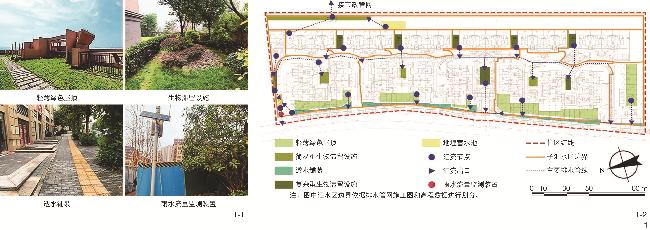
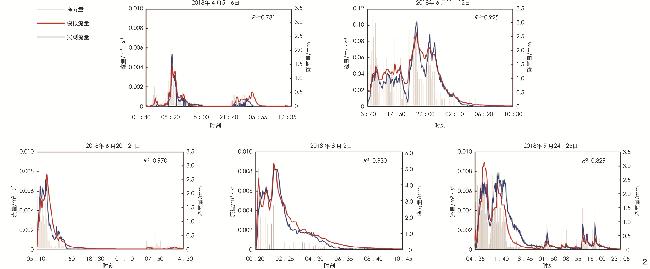
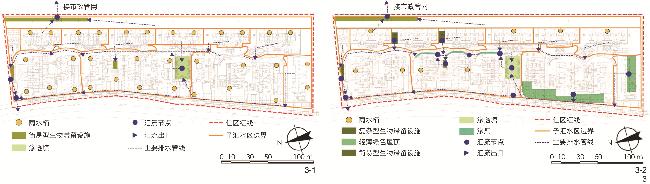
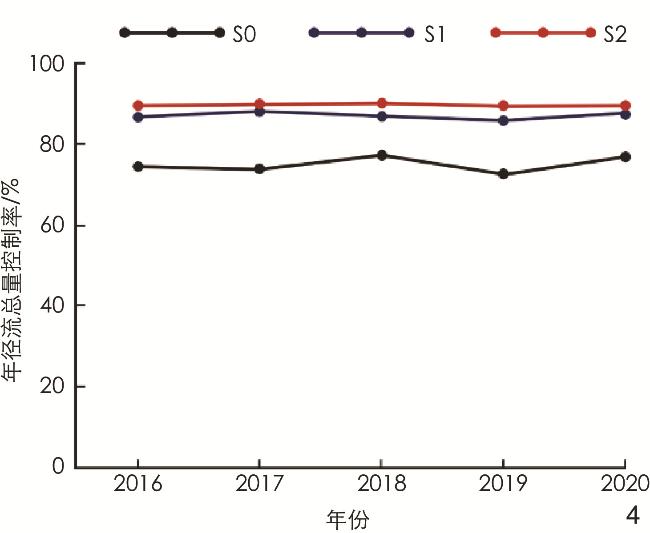
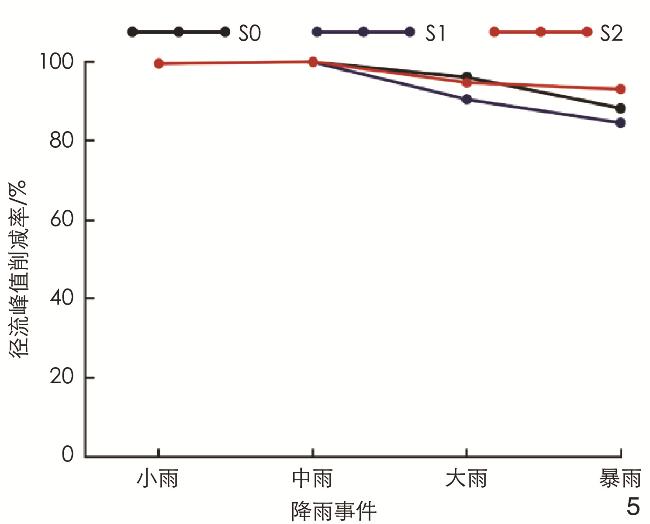
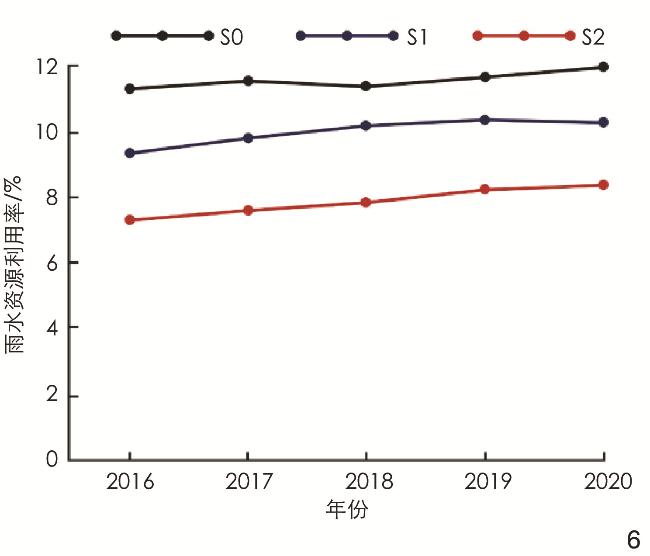
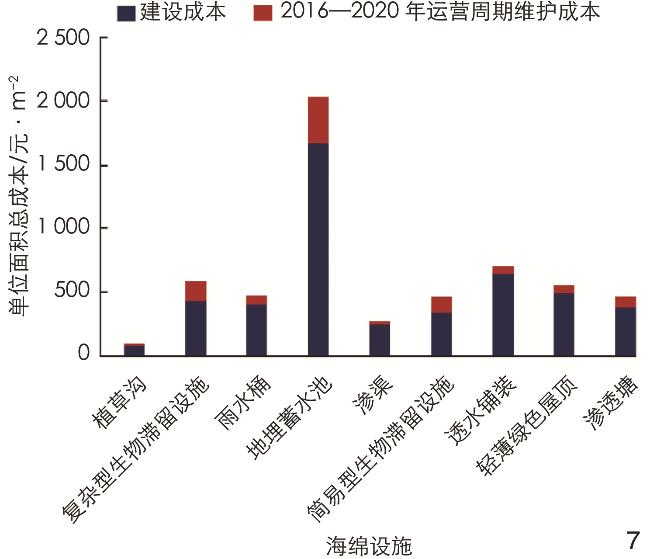
[Objective] The General Office of the Ministry of Housing and Urban-Rural Development clearly proposed that the construction of sponge city should focus on the integration of multiple objectives, emphasize the optimization of life cycle design, and advocate scientific hydrological performance evaluation of completed projects, which requires us to focus on built-up areas, build a more suitable and economical sponge facility system with higher comprehensive performance and establish and improve the evaluation mechanism for construction performance of sponge city, so as to usher sponge city into the construction optimization and scientific evaluation stage. According to the pilot requirements of sponge city, more than 80% of the built-up areas need to reach the sponge city construction target by 2030. In this context, the number of spongy residential areas, which apply the concept of sponge city to build sponge facilities to achieve the target requirements of runoff control, is on the rise. At present, there is a lack of research on long-term hydrologic performance evaluation of spongy residential areas in China. Most researches focus on hydrological performance under short-term rainfall scenarios, or on the elaboration of sponge technology design methods for completed projects. Besides, the verification process of hydrology model in the research on spongy residential areas is relatively lacking. Most researches adopt the outflow monitoring data spanning 1-2 short rainfall periods for model verification, so the verification results may be accidental. It is necessary to adopt the outflow monitoring data spanning multiple long rainfall periods for model verification, so as to improve the reliability of model results. In addition, there is a lack of post-evaluation of the cost consumption of sponge systems in completed projects in China. There are few researches on how to reduce the construction and maintenance cost of sponge system in residential areas. The aim of this research is to explore the design approach for typical sponge systems for residential areas in regions with subtropical monsoon humid climate through the quantitative evaluation of long-term hydrology-cost performance. [Methods] Taking the demonstrative spongy residential area in Chongqing as the research object, this research adopts EPA Storm Water Management Model 5.1 to build the current hydrological model. Modeling parameters include hydrological parameters of the underlying surface in the catchment area, parameters of the drainage pipe network, and structural parameters of sponge facilities. The model is accurately verified using monitoring data, and Nash-sutcliffe efficiency coefficient is used to test the matching degree between the monitored runoff value and the simulated model value. The data from rain gauges set around the residential area (stable data from April to October 2018) and the discharge monitoring data corresponding to the rainfall events of the residential area are used to select events with rainfall duration of more than 6 hours for parameter calibration and model verification. After parameter calibration, the monitoring data of typical rainfall events is selected and input into the model to verify the simulation results. The results reveal that the E NS and R 2 values are both above 0.75, indicating a high matching degree between the simulation results and the monitoring results, and that the current hydrological model is reliable. In order to explore the optimization model of sponge system design for typical residential green space, the research adopts two sponge system comparison schemes S1 and S2 (the current sponge system scheme is S0), with a view to improving the hydrology-cost performance of the sponge system. Both S1 and S2 are expected to achieve higher hydrological performance and lower cost than S0. On the basis of the current hydrological model already monitored and verified, the sponge system is reset according to S1 and S2 schemes. The hydrological model of the selected schemes is constructed to quantitatively evaluate the long-term hydrological performance, cost input and comprehensive hydrology-cost performance of each scheme. [Results] The results show that the total annual runoff control rate of the current scheme is 75.3%, which is slightly lower than the planning control target, and the construction and maintenance cost of the current sponge system is almost the highest. As to scheme S1, the average annual runoff total control rate is 87.2%, the peak reduction efficiency is slightly lower than the current scheme, and the total input cost of the sponge system is the lowest. As to scheme S2, the average annual runoff total control rate is the best, reaching 89.7%, the peak reduction rate of rainstorm (80.3 mm) is 92.8%, and the long-term comprehensive hydrology-cost performance is 3.6 times higher than the current scheme. [Conclusion] Based on the results above, this research proposes a suitable design approach for sponge facility system in residential areas under different application conditions. Specifically, scheme S0 is more suitable for application in residential areas with high green land rate, low requirements for annual runoff control rate, high requirements for rainwater resource recycling, and high investment cost. S1 is suitable for application in residential areas with relatively limited land use but still with certain green space conditions, and in projects with high requirements for annual runoff control rate and tight cost input. S2 is suitable for application in residential areas with certain green space conditions, and in projects with high requirements for comprehensive hydrology-cost performance. The aforesaid design approach can well balance the requirements of hydrological control and landscape diversity in an economical and efficient manner. The results of this research have positive reference value for the construction optimization of spongy residential areas in Chongqing and other subtropical humid areas with similar precipitation conditions.
Jialin LIU , Zhaoli LIU , Rui ZHANG . Optimization of Long-Term Comprehensive Hydrology-Cost Performance of the Demonstrative Spongy Residential Area in Chongqing[J]. Landscape Architecture, 2024 , 31(2) : 78 -86 . DOI: 10.3724/j.fjyl.202303170133
表1 现状海绵设施及新增海绵设施结构参数Tab. 1 Structural parameters of current and new sponge facilities |
| 参数 | 现状海绵设施结构 | 新增海绵设施结构 | |||||||
| 复杂型生物 滞留设施 | 简易型生物 滞留设施 | 透水铺装 | 轻薄绿色屋顶 | 渗透塘 | 渗渠 | 雨水桶a) | |||
| 注:“—”表示设施构造不包含该结构层。a)雨水桶设施单体容积3 m3,高1.8 m,为市场上的典型产品参数。 | |||||||||
| 表面层 | 蓄水或积水深度/mm | 300 | 150 | 10 | 65 | 300 | 150 | — | |
| 植被容积分数 | 0.1 | 0.1 | 0 | 0.1 | 0.1 | 0 | — | ||
| 表面粗糙系数 | 0.240 | 0.240 | 0.012 | 0.240 | 0.200 | 0.240 | — | ||
| 表面坡度/% | 0.0100 | 0.0100 | 0.0001 | 0.0200 | 0.0100 | 1.0000 | — | ||
| 土壤层 | 厚度/mm | 600 | 600 | — | 45 | 300 | — | — | |
| 孔隙率/m3·m-3 | 0.437 | 0.437 | — | 0.400 | 0.437 | — | — | ||
| 田间持水量/m3·m-3 | 0.105 | 0.105 | — | 0.150 | 0.105 | — | — | ||
| 枯萎点/m3·m-3 | 0.047 | 0.047 | — | 0.050 | 0.047 | — | — | ||
| 入渗率/mm·h-1 | 35 | 35 | — | 1 000 | 35 | — | — | ||
| 导水率坡度/% | 30 | 30 | — | 30 | 30 | — | — | ||
| 吸水头/mm | 127.6 | 127.6 | — | 127.6 | 127.6 | — | — | ||
| 蓄水层 | 厚度(高度)/mm | 200 | — | 150 | — | 450 | 300 | 1 800 | |
| 孔隙比 | 0.75 | — | 0.75 | — | 0.75 | 0.75 | — | ||
| 渗漏速率/mm·h-1 | 750 | — | 400 | — | 750 | 24 | — | ||
| 堵塞因子 | 0 | — | 250 | — | 0 | 0 | — | ||
| 暗渠层 | 排水系数 | 1.372 | — | 0.500 | — | 1.872 | 0.690 | 0.680 | |
| 排水指数 | 0.5 | — | 0.5 | — | 0.5 | 0.5 | 0.5 | ||
| 暗渠偏移高度/mm | 150 | — | 0 | — | 150 | 6 | 125 | ||
| 路面层 | 厚度/mm | — | — | 50 | — | — | — | — | |
| 孔隙比 | — | — | 0.2 | — | — | — | — | ||
| 不透水表面透水系数 | — | — | 0.05 | — | — | — | — | ||
| 入渗率/mm·h-1 | — | — | 360 | — | — | — | — | ||
| 阻塞因子 | — | — | 250 | — | — | — | — | ||
| 排水材料 | 厚度/mm | — | — | — | 25 | — | — | — | |
| 孔隙分数 | — | — | — | 0.5 | — | — | — | ||
| 粗糙系数 | — | — | — | 0.1 | — | — | — | ||
图2 不同降雨事件下排水口监测流量与模拟流量过程曲线Fig. 2 Curves of monitored and simulated outfall flow processes under different rainfall events |
表2 水文模型敏感参数率定前后结果Tab. 2 Results before and after rate determination of sensitive parameters of the hydrological model |
| 特征 参数 | 透水区 地表曼宁系数 | 透水区 洼地蓄水值 /mm | 不透水区 地表曼宁系数 | 不透水区 洼地蓄水值 /mm | 无洼地储蓄的 不透水面积率 /% | 土壤 饱和入渗率 /mm·h-1 | 土壤 初始入渗率 /mm·h-1 | 入渗衰减 系数 |
| 率定前 | 0.304 | 4.613 | 0.015 | 2.54 | 25 | 6.604 | 101.6 | 3 |
| 率定后 | 0.300 | 4.500 | 0.010 | 2.54 | 25 | 6.000 | 101.6 | 3 |
表3 比选方案海绵设施容量参数Tab. 3 Capacity parameters of sponge facilities involved in the comparative schemes |
| 方案 | 类型 | 设施 | 总占地面积/m2 | 总容积/m3 | 备注 |
| 注:“—”表示不以容积作为该设施的容量参数。 | |||||
| S1 | 储蓄 | 雨水桶 | 53 | 96.0 | 单体容积3 m3,底面积1.67 m2,高1.8 m |
| 滞留渗透 | 简易型生物滞留设施 | 470 | 70.5 | 蓄水或积水深度150 mm | |
| 受纳调蓄 | 渗透塘 | 600 | 180.0 | 蓄水或积水深度300 mm | |
| S2 | 储蓄 | 雨水桶 | 13 | 24.0 | 单体容积3 m3,底面积1.67 m2,高1.8 m |
| 滞留渗透 | 简易型生物滞留设施 | 470 | 70.5 | 蓄水或积水深度150 mm | |
| 复杂型生物滞留设施 | 70 | 21.0 | 蓄水或积水深度300 mm | ||
| 轻薄绿色屋顶 | 1 210 | — | 基质厚度45 mm | ||
| 受纳调蓄 | 渗透塘 | 600 | 180.0 | 蓄水或积水深度300 mm | |
| 传输 | 渗渠 | 200 | — | 宽度0.8 m | |
文中所有图表均由者绘制或拍摄,其中
| [1] |
住房和城乡建设部办公厅.住房和城乡建设部办公厅关于进一步明确海绵城市建设工作有关要求的通知(建办城〔2022〕17号)[EB/OL].(2022-04-27)[2022-10-15]. https://www.gov.cn/zhengce/zhengceku/2022-04/29/content_5687999.htm.
General Office of the Ministry of Housing and Urban-Rural Development. Notice of the General Office of the Ministry of Housing and Urban-Rural Development on Further Clarifying the Relevant Requirements for Sponge City Construction Work[EB/OL]. (2022-04-27)[2022-10-15]. https://www.gov.cn/zhengce/zhengceku/2022-04/29/content_5687999.htm.
|
| [2] |
财政部办公厅, 住房城乡建设部办公厅, 水利部办公厅.关于开展“十四五”第二批系统化全域推进海绵城市建设示范工作的通知(财办建〔2022〕28号)[EB/OL].(2022-04-08)[2022-10-15]. https://www.gov.cn/zhengce/zhengceku/2022-04/15/content_5685362.htm.
General Office of the Ministry of Finance, General Office of the Ministry of Housing and Urban-Rural Development, General Office of the Ministry of Water Resources. Notice on Carrying Out the “14th Five-Year Plan” Second Batch of Systematic Whole-Area Promotion of Sponge City Construction Demonstration Work[EB/OL]. (2022-04-08)[2022-10-15]. https://www.gov.cn/zhengce/zhengceku/2022-04/15/content_5685362.htm.
|
| [3] |
国务院办公厅.国务院办公厅关于推进海绵城市建设的指导意见(国办发〔2015〕75号)[EB/OL].(2015-10-16)[2022-10-15]. https://www.gov.cn/zhengce/content/2015-10/16/content_10228.htm.
General Office of the State Council. Guiding Opinions of The General Office of the State Council on Promoting the Construction of Sponge Cities[EB/OL]. (2015-10-16)[2022-10-15]. https://www.gov.cn/zhengce/content/2015-10/16/content_10228.htm.
|
| [4] |
向晨瑶, 刘家宏, 邵薇薇, 等. 海绵小区削峰减洪效率对降雨特征的响应[J]. 水利水电技术, 2017, 48(6): 7-12.
XIANG C Y, LIU J H, SHAO W W. Effectiveness of Systematically-Installed Sponge Facilities Under Different Rain Patterns[J]. Water Resources and Hydropower Engineering, 2017, 48(6): 7-12.
|
| [5] |
肖理中, 李铮. 基于海绵模型的年径流总量控制目标计算方法在居住区设计中的应用[J]. 建设科技, 2018(14): 48-51.
XIAO L Z, LI Z. Application of Calculation Method of Total Annual Runoff Volume Control Target Based on the Sponge Model in the Design of Residential Areas[J]. Construction Science and Technology, 2018(14): 48-51.
|
| [6] |
中国风景园林学会.海绵城市绿地建设管理技术标准: T/CHSLA 50009-2022[S].北京: 中国建筑工业出版社, 2022.
Chinese Society of Landscape Architecture. Technical Standard of Green Space Construction and Management in Sponge City: T/CHSLA 50009-2022[S]. Beijing: China Architecture & Building Press, 2022.
|
| [7] |
WRIGHT T J, LIU Y, CARROLL N J, et al. Retrofitting LID Practices into Existing Neighborhoods: Is It Worth It?[J]. Environmental Management, 2016, 57: 856-867.
|
| [8] |
LI Y, HUANG J J, HU M, et al. Design of Low Impact Development in the Urban Context Considering Hydrological Performance and Life-Cycle Cost[J]. Journal of Flood Risk Management, 2020, 13(3): e12625
|
| [9] |
中国天气网.重庆气象数据[EB/OL].(2010-09-02)[2022-10-15]. http://www.weather.com.cn/cityintro/101040100.shtml.
China Weather Website. Meteorological Data for Chongqing[EB/OL]. (2010-09-02)[2022-10-15]. http://www.weather.com.cn/cityintro/101040100.shtml.
|
| [10] |
United States Environmental Protection Agency. Storm Water Management Model User’s Manual Version 5.1[EB/OL]. (2016-01-29)[2022-10-15]. https://www.epa.gov/sites/default/files/2019-02/documents/epaswmm5_1_manual_master_8-2-15.pdf.
|
| [11] |
GIDDINGS J A. Determining Soil Texture Using the Ribboning Technique[R/OL]. (2015-02)[2022-10-15]. http://www.dpi.nsw.gov.au/__data/assets/pdf_file/0005/164615/determining_soil_texture_using_-ribboning_technique.pdf.
|
| [12] |
重庆两江新区管理委员会.两江新区海绵城市建设模型应用技术导则(试行) [EB/OL].(2018-03-13)[2022-10-15]. http://ljt.liangjiang.gov.cn/public/detail/645/0.
Chongqing Liangjiang New Area Management Committee. Technical Guidelines for Application of Sponge City Construction Model in Liangjiang New Area (Trial) [EB/OL]. (2018-03-13)[2022-10-15]. http://ljt.liangjiang.gov.cn/public/detail/645/0.
|
| [13] |
MORIASI D N, GITAU M W, PAI N, et al. Hydrologic and Water Quality Models: Performance Measures and Evaluation Criteria[J]. Transactions of the ASABE, 2015, 58(6): 1763-1785.
|
| [14] |
TUOMELA C, SILLANPÄÄ N, KOIVUSALO H. Assessment of Stormwater Pollutant Loads and Source Area Contributions with Storm Water Management Model (SWMM)[J]. Journal of Environmental Management, 2019, 233: 719-727.
|
| [15] |
中华人民共和国住房和城乡建设部. 海绵城市建设绩效评价与考核指标(试行)[EB/OL].(2015-07-10)[2022-10-15]. https://www.mohurd.gov.cn/gongkai/zhengce/zhengcefilelib/201507/20150716_222947.html.
General Office of the Ministry of Housing and Urban-Rural Development. Performance Evaluation and Assessment Indicators for Sponge City Construction (Trial) [EB/OL]. (2015-07-10)[2022-10-15]. https://www.mohurd.gov.cn/gongkai/zhengce/zhengcefilelib/201507/20150716_222947.html
|
| [16] |
CHUI T F M, LIU X, ZHAN W T. Assessing Cost- Effectiveness of Specific LID Practice Designs in Response to Large Storm Events[J]. Journal of Hydrology, 2016, 533: 353-364.
|
| [17] |
中华人民共和国住房和城乡建设部.海绵城市建设工程投资估算指标: ZYA1-02(01)-2018[S]. 北京: 中国计划出版社, 2018.
General Office of the Ministry of Housing and Urban-Rural Development. Indicators for Estimating Investment in Sponge City Construction Projects: ZYA1-02(01)-2018[S]. Beijing: China Planning Press, 2018.
|
| [18] |
周冠南, 梅超, 刘家宏, 等. 萍乡市西门片区海绵城市建设水文响应与成本效益分析[J]. 水利水电技术, 2019, 50(9): 10-17.
ZHOU G N, MEI C, LIU J H, et al. Analysis on Hydrological Response and Cost-Benefit of Sponge City Construction in Xinlen District of Pingxiang City[J]. Water Resources and Hydropower Engineering, 2019, 50(9): 10-17.
|
| [19] |
成玉宁, 杨锐.数字景观: 中国第四届数字景观国际论坛[M].南京: 东南大学出版社, 2019: 73-85.
CHENG Y N, YANG R. Digital Landscape: China’s 4th International Forum on Digital Landscape[M]. Nanjing: Southeast University Press, 2019: 73-85.
|
| [20] |
FLECK R, WESTERHAUSEN M T, KILLINGSWORTH N, et al. The Hydrological Performance of a Green Roof in Sydney, Australia: A Tale of Two Towers[J]. Building and Environment, 2022, 221: 109274
|
| [21] |
ZHANG Z M, HU W H, WANG W L, et al. The Hydrological Effect and Uncertainty Assessment by Runoff Indicators Based on SWMM for Various LID Facilities[J]. Journal of Hydrology, 2022, 613: 128418
|
| [22] |
KAYKHOSRAVI S, KHAN U T, JADIDI M A. A Simplified Geospatial Model to Rank LID Solutions for Urban Runoff Management[J]. Science of the Total Environment, 2022, 831: 154937
|
| [23] |
ZHANG S H, LIN Z X, ZHANG S X, et al. Stormwater Retention and Detention Performance of Green Roofs with Different Substrates: Observational Data and Hydrological Simulations[J]. Journal of Environmental Management, 2021, 291: 112682
|
| [24] |
LI Y F, LIU J L. Green Roofs in the Humid Subtropics: The Role of Environmental and Design Factors on Stormwater Retention and Peak Reduction[J]. Science of The Total Environment, 2022, 858(P1): 159710
|
| [25] |
李俊生, 尹海伟, 孔繁花, 等. 绿色屋顶雨洪调控能力与效益评价[J]. 环境科学, 2019, 40(4): 1803-1810.
LI J S, YIN H W, KONG F H, et al. Effects of a Green Roof on Stormwater Regulation and Cost-Benefit Analysis[J]. Environmental Science, 2019, 40(4): 1803-1810.
|
| [26] |
Toronto and Region Conservation Authority. Low Impact Development Stormwater Management Practice Inspection and Maintenance Guide[EB/OL]. (2016-03-13)[2022-10-15]. https://sustainabletechnologies.ca/app/uploads/2016/08/LID-IM-Guide-FrontMatter.pdf.
|
| [27] |
Toronto and Region Conservation Authority. Evaluation of Life Cycle Costs for Low Impact Development Stormwater Management Practices[R/OL]. (2013-04)[2022-10-15]. https://sustainabletechnologies.ca/app/uploads/2013/06/LID-LCC-final-2013.pdf.
|
| [28] |
LIAO Z L, CHEN H, HUANG F, et al. Cost-Effectiveness Analysis on LID Measures of a Highly Urbanized Area[J]. Desalination and Water Treatment, 2015, 56(11): 2817-2823.
|
| [29] |
刘家琳, 李武肸, 彭子岳, 等. 基于水文-成本综合绩效的山地公园雨洪管理景观系统策略研究[J]. 风景园林, 2021, 28(7): 90-96.
LIU J L, LI W X, PENG Z Y, et al. Research on Stormwater Management Landscape System Strategies in Mountainous Urban Parks Based on the Hydrological Cost Comprehensive Effectiveness[J]. Landscape Architecture, 2021, 28(7): 90-96.
|
| [30] |
戎贵文, 李姗姗, 甘丹妮, 等. 不同LID组合对水质水量影响及成本效益分析[J]. 南水北调与水利科技(中英文), 2022, 20(1): 21-29.
RONG G W, LI S S, GAN D N, et al. Impact of Different Low Impact Developmental Combinations on Water Quality and Quantity and Cost-Benefit Analysis[J]. South-to-North Water Transfers and Water Science & Technology, 2022, 20(1): 21-29.
|
| [31] |
ABI AAD M P, SUIDAN M T, SHUSTER W D. Modeling Techniques of Best Management Practices: Rain Barrels and Rain Gardens Using EPA SWMM-5[J]. Journal of Hydrologic Engineering, 2010, 15(6): 434-443.
|
| [32] |
HUA P, YANG W Y, QI X C, et al. Evaluating the Effect of Urban Flooding Reduction Strategies in Response to Design Rainfall and Low Impact Development[J]. Journal of Cleaner Production, 2020, 242: 118515
|
| [33] |
ALESSANDRO F, NAMRATA S, J. SCOTT M. The Contribution of Constructed Green Infrastructure to Urban Biodiversity: A Synthesis and Meta-Analysis[J]. Journal of Applied Ecology, 2019, 56(9): 2131-2143.
|
/
| 〈 |
|
〉 |