

Research Progress, System Construction and Prospect of Urban Recreational Green Space Layout in Response to Human-Oriented Demands in China
|
YU Zhentao is a master student in the School of Architecture and Urban Planning, Kunming University of Science and Technology. His research focuses on landscape planning and design, and planning and management of urban park green spaces and open spaces |
|
TAO Nan, Ph.D., is an associate professor in the School of Architecture and Urban Planning, Kunming University of Science and Technology. Her research focuses on adaptability of local landscapes, and public green space services and regeneration |
Received date: 2025-01-14
Revised date: 2025-08-28
Online published: 2025-12-10
Copyright
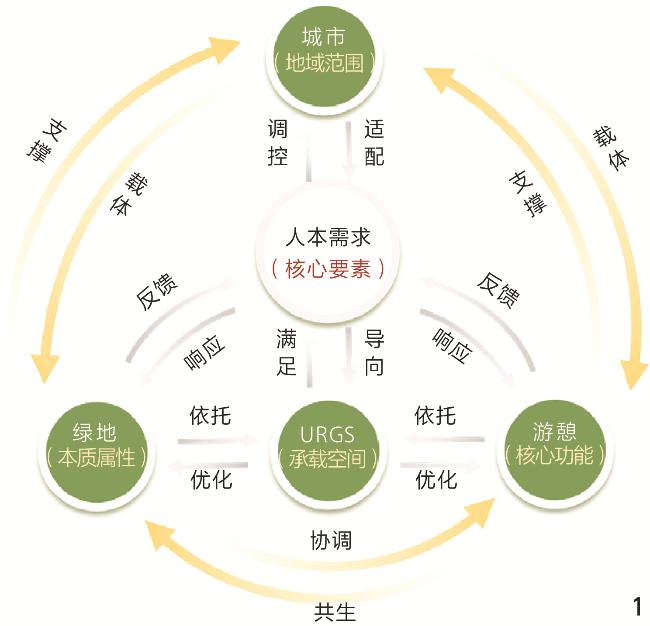
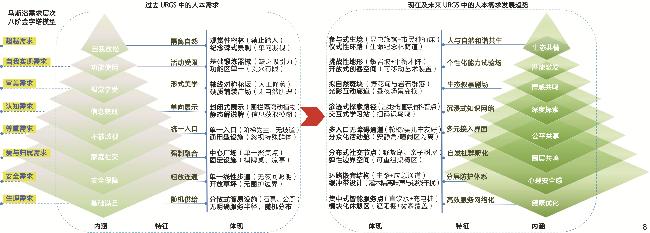
[Objective] China’s urbanization has entered a new phase of connotative development. The concept of “People’s City” is driving the transformation of urban recreational green space (URGS) planning towards “human-oriented demands”. In the post-pandemic era, residents’ leisure behaviors have shown characteristics such as proximity, healthiness, and diversity. AI technology has further given rise to differentiated recreational demands. The current URGS layout is confronted with shortcomings such as emphasizing indicators over demand response in planning, insufficient functional integration, structural imbalance in services, and low system integration. This research, through systematic review and theoretical prospect, innovatively constructs a “theoretical framework for URGS planning that responds to human-oriented demands”, breaking through the limitations of traditional static adaptation, promoting the dynamic coupling of URGS with people’s lifestyle, and supporting the modern governance goals of precision, refinement, depth, intelligence, and excellence. This research may provide theoretical support for resolving the structural mismatch contradiction between URGS layout and diversified demands.
[Methods] The China National Knowledge Infrastructure (CNKI) and Web of Science Core Collection are taken as data sources, journal article is determined as literature type, and the retrieval time is set from January 1st 2000 to December 31th 2024 based on the characteristics of the publication period. The advanced search formula for the subject terms of Chinese AND English literature is TS=(“recreation*” OR “leisure” OR “tour*” OR “entertain*”) AND (“green space*” OR “park*”) AND (“layout” OR “planning” OR “design*”). After eliminating the items irrelevant to the research topic, 687 Chinese and 345 English literature articles are ultimately selected as the research object. CiteSpace 6.2.R6 is utilized to conduct visual analysis of the selected articles, supplemented by traditional literature review methods and inductive comparative analysis. This approach systematically examines the evolutionary stages, research hotspots, and trend characteristics of URGS layout research, aiming to advance a forward-looking layout framework.
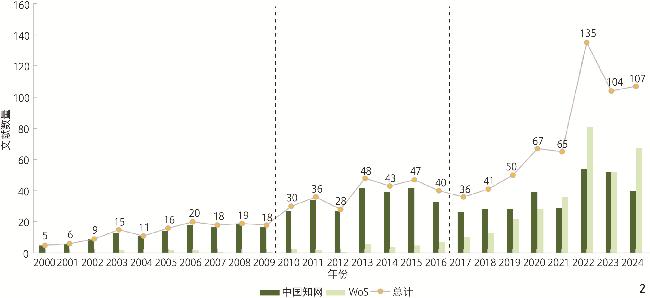
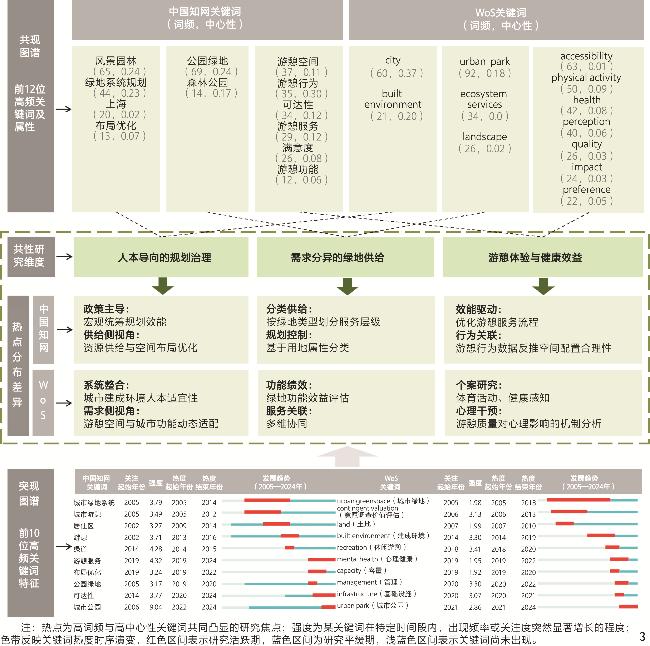
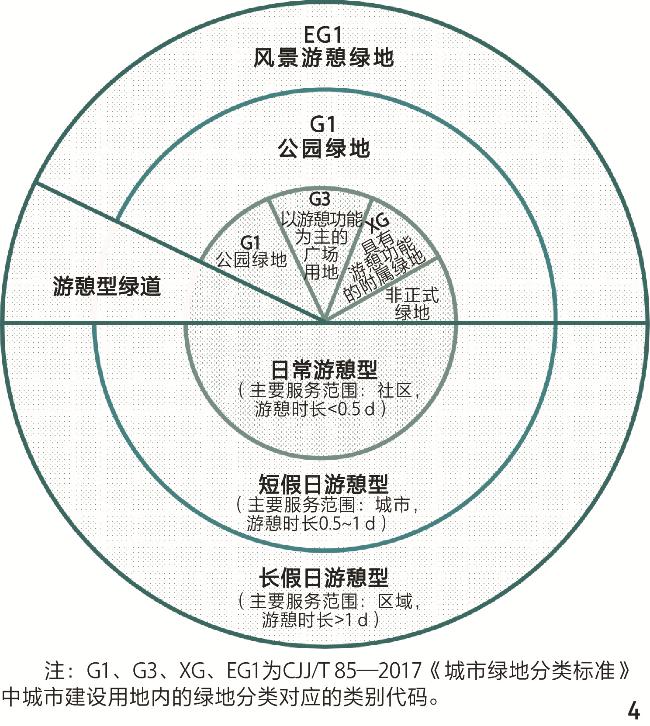
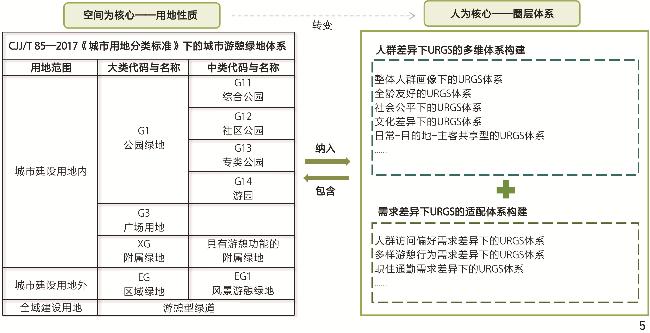
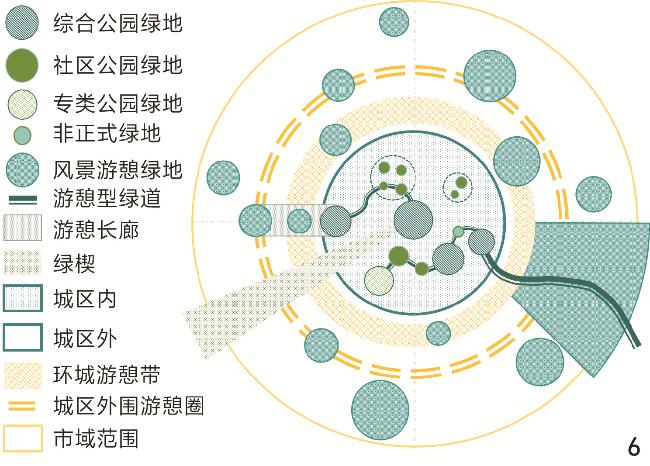
[Results] 1) Evolutionary stages: Research on URGS layout in China has progressed from planning control to spatial governance. From 2000 to 2009, it was the period of rough demand identification – initial exploration, with more attention paid to the configuration of recreational functions and scale estimation around the supply side. From 2010 to 2016, it was the period of coarse demand response – fluctuating growth, promoting the transformation of China’s URGS layout towards “social equity – demand response”. From 2017 to 2024, it was the period of refined and rapid development in demand, catering to diverse recreational demands. 2) Research hotspots: Common dimensions encompass human-oriented planning and governance, demand-differentiated green space provision, and recreational experience – health co-benefits. However, Chinese literature research prioritizes macro-level planning and supply-side refinement, while English literature emphasizes meso & micro-scale empirical studies and demand-side drivers. 3) Development trends: While both Chinese and English research converge on green space layout based on socio-spatial and spatiotemporal behavioral differentiation for demand identification, their divergences persist in primary research focus, depth of interdisciplinary integration, and intensity of policy-coupling. 4) Theoretical system: A “theoretical system framework for URGS layout that responds to human-oriented demands” has been constructed, covering a multi-dimensional hierarchical classification system based on the “time – space – demand” principle; based on the principle of “differential justice”, the traditional classification of green spaces has been broken and a “recreational circle” layout system adapting to urban functional spaces has been constructed; an evaluation-optimization system employing digital intelligence technologies for supply-demand matching has been constructed to advance optimally regulated connotative development.
[Conclusion] This research aims to address systemic issues — including extensive URGS system development, insufficient functional integration, low supply – demand matching efficiency, and inadequate open sharing mechanisms — by proposing holistic solutions with reference value for future urban recreational space planning, policy-making, and research. 1) Spatial planning dimension: Promote the statutory institutionalization and systematization of URGS-specific planning, clarify its position within the territorial spatial planning framework, strengthen horizontal coordination and vertical implementation, and guide high-quality development of diversified recreational green spaces. 2) Policy orientation dimension: Focus on diverse public needs to deepen the connotation of “human-oriented demands”. Establish a precision-tailored methodological framework for supply – demand matching, creating a synergistic governance model combining “top-down guidance” and “bottom-up participation” to operationalize differential justice in spatial allocation. 3) Academic research dimension: Construct a three-dimensional theoretical framework integrating recreational systems with resource distribution patterns, spatial ring characteristics and urban functional layouts. This research significantly enhances the precision and depth of population demand identification, considers behavioral traits and visitation preferences, and develops a demand-driven URGS layout adaptation model responsive to distinct urban functional spatial requirements. The accuracy and depth of crowd demand identification have been enhanced, taking into account behavioral characteristics and access preferences. Furthermore, an URGS layout adaptation mode driven by the demands of different urban functional spaces is proposed. This research responds to the people’s demand for a better life and is of great significance for promoting the transformation of URGS layout to a refined supply that responds to the differences in group demands, resolving the structural mismatch contradiction between URGS layout and diverse recreational demands, and ultimately achieving the dual goals of a sense of gain and happiness in green well-being.
Zhentao YU , Nan TAO . Research Progress, System Construction and Prospect of Urban Recreational Green Space Layout in Response to Human-Oriented Demands in China[J]. Landscape Architecture, 2025 , 32(11) : 79 -89 . DOI: 10.3724/j.fjyl.LA20250031
表1 URGS布局研究各发展阶段的相关政策法规Table 1 URGS layout research at various development stages and related policies and regulations |
| URGS布局研究发展阶段 | 出台的政策法规 |
| 起步探索期 (2000—2009年) | 《创建国家园林城市实施方案》、《国家园林城市标准》、《关于加强城市绿化建设的通知》、《城市绿线管理办法》、《城市绿地系统规划编制纲要(试行)》、CJJ/T 85—2002《城市绿地分类标准》、GB 50420—2007《城市绿地设计规范》等 |
| 波动增长期 (2010—2016年) | GB/T 50563—2010《城市园林绿化评价标准》、GB 50137—2011《城市用地分类与规划建设用地标准》、《关于促进城市园林绿化事业健康发展的指导意见》、《关于进一步加强公园建设管理的意见的通知》、《关于加快推进生态文明建设的意见》、《关于进一步加强城市规划建设管理工作的若干意见》、《关于实施旅游休闲重大工程的通知》、GB 50420—2007《城市绿地设计规范(2016年版)》、GB 51192—2016《公园设计规范》、《国家园林城市系列标准》等 |
| 高速发展期 (2017—2024年) | CJJ/T 85—2017《城市绿地分类标准》、GB/T 51346—2019《城市绿地规划标准》、《稳步推进城市绿道建设推动形成绿色发展方式和生活方式》、《美丽中国建设评估指标体系及实施方案》、《城市绿化规划建设指标的规定》、《关于命名2019年国家生态园林城市、园林城市(县城、城镇)的通知》、《关于开展城市公园绿地开放共享试点工作的通知》、《关于全面推进美丽中国建设的意见》等 |
图2 URGS布局研究发文量变化趋势Fig. 2 The trend of changes in the number of publications on URGS layout research |
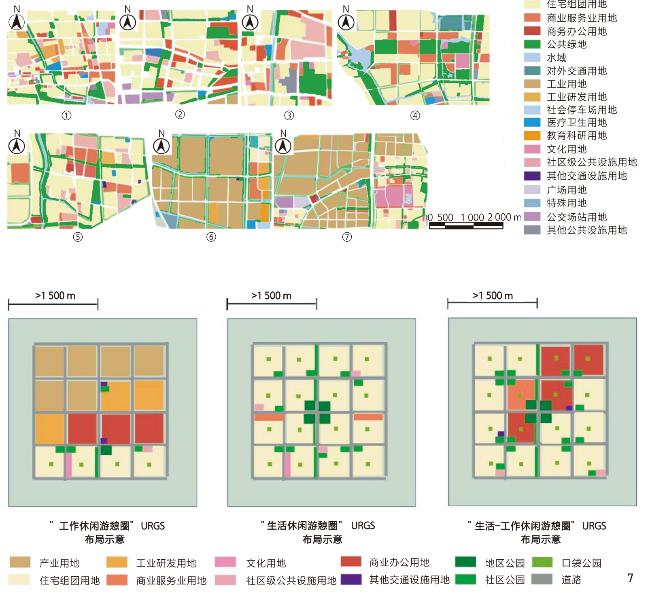
表2 不同城市功能空间板块中的URGS布局Table 2 Layout of URGS in different urban functional space sections |
| 城市功能 空间板块 | 城市功能空间 板块类型 | 示意 | 主要游憩 需求类型 | 主要服务 人群结构 | URGS 布局特征 | URGS布局模式与 服务体系 |
| 中心城区 | 高强度需求居住单元 | ① | 综合型 | 儿童、老年、 中青年群体 | 均布型-短半径 | 点-线-面的多核 网络服务体系 |
| 中强度需求居住单元 | ② | 品质型 | 点-线-面的服务体系 | |||
| 低强度需求居住单元 | ③ | 完善型 | 分散型-长半径 | 点-线-面的扁平 服务体系 | ||
| 新城片区 | 中央商务中心 | ④ | 品质型 | 集中型-长半径 | ||
| 居住单元 | ⑤ | 综合型 | 中青年外来人口、老漂族、儿童群体 | 均布型-短半径 | 点-线-面的服务体系 | |
| 产业园区 | 一般产业单元 | ⑥ | 基础型 | 就业、外来 人口群体 | 共享型-长半径 | 点状分散的服务体系 |
| 产城融合单元 | ⑦ | 必备型 | 分散型-短半径 | 点、线、面状分散分布的服务体系 |
| 匹配维度 | 代表方法名称 | 评价方法/内容 | 主要评价目的 |
| 数量绩效 | 洛伦茨曲线和基尼系数 | 通过洛伦茨曲线计算基尼系数,量化分布不均衡程度。基尼系数取值范围[0,1],越接近0表示分布越均衡 | 衡量URGS服务在不同人群或区域中的公平正义程度 |
| 标准分数模型 | 对URGS供给和需求水平的数值进行标准化处理,并划分象限分析其供需匹配类型 | 识别URGS服务过剩或不足的区域,评估供需匹配程度 | |
| 比率法 | 计算URGS实际服务人口数和可承载人口数的比率,将供需关系划分为不同等级 | 评价URGS供需的总体均衡程度与承载能力 | |
| 双变量局部空间自相关 | 通过空间统计,识别供给变量(S)与需求变量(D)的空间叠合,得到供给等于需求(S=D)、供给大于需求(S>D)、供给小于需求(S<D)等关系的空间聚集区域 | 反映供给与需求在空间上的相互关系与匹配或错配格局 | |
| 空间绩效 | 区位熵 | 测算子区域URGS服务水平相对于总区域水平的集中程度(比值>1,表示该子区域服务集聚程度高) | 体现URGS布局的集聚与分散程度,间接评估服务覆盖的公平性 |
| 全局空间自相关(莫兰指数) | 通过莫兰指数(Moran’s I)判断整个研究区域内某一属性在整个研究区域内的空间聚集性(取值范围[−1,1],值>0,表示该属性与空间正相关;值<0,表示与空间负相关;值=0,表示该属性在空间上随机分布) | 检验URGS服务在整个研究区域内是否存在显著的空间聚集效应 | |
| 局部空间自相关(local indicators of spatial association, LISA) | 通过空间统计,揭示供给变量(S)与需求变量(D)在局部空间上的关联性与聚集模式。得到高供给-高需求、高供给-低需求、低供给-高需求、低供给-低需求4种空间聚类结果 | 识别URGS供给与需求在空间上的具体匹配或错配格局 | |
| U值检验(Mann-Whitney U test) | 用于比较两组独立样本(如不同社会群体)在获取URGS服务上是否存在公平正义性问题 | 评估URGS服务在不同人群或区域间分配的公正性 | |
| GIS叠加分析 | 将代表URGS供给与需求的空间图层进行叠加运算,生成综合性的空间关系图谱 | 揭示URGS供给与需求的空间分布关系,直观展示供需匹配或错配的空间位置 | |
| 耦合协调度 | 计算耦合度(coupling degree)与协调度(coordination degree),值越趋近1,表示URGS供需系统的协同发展水平越高 | 评估URGS供给与需求两大系统间的整体协同效应与协调发展水平 | |
| 效度绩效 | 重要性-满意度(importance-performance analysis, IPA)匹配 | 采集使用者对URGS各项属性的重要性和满意度(即绩效)评价,将结果投射于四象限矩阵中进行可视化分析,判断URGS服务功能的优势区、维持区、改进区和盲区 | 精准定位需优先改进的领域,以提升资源利用效率与使用者体验 |
| 条件价值法 (contingent valuation method, CVM) | 通过构建假想市场,采用问卷调查引导受访者表达对URGS服务改善或品质提升的支付意愿(willingness to pay, WTP) | 量化URGS服务的非市场价值,为政策制定与资源可持续管理提供经济学依据 |
表4 URGS服务绩效评价维度及指标Table 4 Evaluation dimensions and relevant indicators for URGS service performance |
| 评价维度 | 评价指标 |
| 游憩服务功能 | 设施完备度、功能多样性、空间复合利用率、服务覆盖程度、环境舒适度、环境安全度等 |
| 游憩服务吸引力 | 区位条件、景观美感度、体验满意度、管理服务品质、访问频次、平均游憩时长等 |
| 游憩服务层级性 | 游憩型绿地分级与分类(服务范围、游憩时间、主题类型等) |
表5 URGS行为特征分析维度及指标Table 5 Analysis dimensions of URGS behavioral characteristics and related indicators |
| 分析维度 | 指标 |
| 游憩行为 | 不同群体的活动类型、单位时间内单位面积的空间活动量、不同时段活跃度差异、访问强度、场地访问密度等 |
| 出行行为 | 可以接受的出行距离、各交通方式出行占比、限制因素、群体类型差异等 |
| 访问偏好 | 访问动机、消费偏好、游憩时长、群体类型差异等 |
| 签到数据 | 手机信令,位置服务(location based services, LBS),兴趣点(point of interest, POI),腾讯易出行、高德、百度地图APP数据等 |
| [1] |
刘志强.进一步释放新型城镇化内需潜力[N].人民日报, 2024-08-12(2).
LIU Z Q. Further Unleashing the Domestic Demand Potential of New-Type Urbanization[N]. People's Daily, 2024-08-12(2).
|
| [2] |
余玲, 刘家明, 李涛, 等. 中国城市公共游憩空间研究进展[J]. 地理学报, 2018, 73(10): 1923-1941.
YU L, LIU J M, LI T, et al. Research Progress of Urban Public Recreational Space in China[J]. Acta Geographica Sinica, 2018, 73(10): 1923-1941.
|
| [3] |
叶洁楠, 章烨, 王浩. 新时期人本视角下公园城市建设发展新模式探讨[J]. 中国园林, 2021, 37(8): 24-28.
YE J N, ZHANG Y, WANG H. The New Mode of the Construction and Development of Park City from the Perspective of Humanism in the New Era[J]. Chinese Landscape Architecture, 2021, 37(8): 24-28.
|
| [4] |
LIU B X, TIAN Y, GUO M, et al. Evaluating the Disparity Between Supply and Demand of Park Green Space Using a Multi-dimensional Spatial Equity Evaluation Framework[J]. Cities, 2022, 121: 103484.
|
| [5] |
颜文涛, 李子豪, 陈卉, 等. 长三角城市群生态空间游憩服务的供需特征及格局分析[J]. 中国园林, 2023, 39(5): 109-115.
YAN W T, LI Z H, CHEN H, et al. Characteristics and Spatial Analysis of the Supply and Demand of Ecological Space Recreation Service in Yangtze River Delta Urban Agglomeration[J]. Chinese Landscape Architecture, 2023, 39(5): 109-115.
|
| [6] |
归云斐. 上海市民游憩需求偏好研究[J]. 上海城市规划, 2016, 3 102-108.
GUI Y F. Recreation Demand Preference Research of Citizens in Shanghai[J]. Shanghai Urban Planning Review, 2016, 3 102-108.
|
| [7] |
李敏稚, 怀露. 15分钟生活圈视角下城市公共绿地服务评价[J]. 南方建筑, 2023, 6 32-41.
LI M Z, HUAI L. Service Evaluation of Urban Public Green Land from the Perspective of a 15-Minute Living Circle[J]. South Architecture, 2023, 6 32-41.
|
| [8] |
XIA G Y, HE G F, ZHANG X. Assessing the Spatial Equity of Urban Park Green Space Layout from the Perspective of Resident Heterogeneity[J]. Sustainability, 2024, 16(13): 5631.
|
| [9] |
何艳玲. 当前人民群体结构的深度重塑与大治理观的确立[J]. 探索与争鸣, 2025, 1 73-90.
HE Y L. Deep Reshaping of the People’s Group Structure and the Establishment of a Grand Governance Perspective[J]. Exploration and Free Views, 2025, 1 73-90.
|
| [10] |
SU X, SPIERINGS B, DIJST M, et al. Analysing Trends in the Spatio-temporal Behaviour Patterns of Mainland Chinese Tourists and Residents in Hong Kong Based on Weibo Data[J]. Current Issues in Tourism, 2020, 23(12): 1542-1558.
|
| [11] |
王洁宁, 王浩. 新版《城市绿地分类标准》探析[J]. 中国园林, 2019, 35(4): 92-95.
WANG J N, WANG H. An Analysis of the New Standard for Classification of Urban Green Space Chinese Landscape Architecture 2019, 35(4): 92-95
|
| [12] |
中华人民共和国住房和城乡建设部.城市绿地规划标准: GB/T 51346—2019[S]. 北京: 中国建筑工业出版社, 2019.
Ministry of Housing and Urban-Rural Development of the People's Republic of China. Standard for Planning of Urban Green Space: GB/T 51346−2019[S]. Beijing: China Architecture & Building Press, 2019.
|
| [13] |
王凯, 徐颖. 《城市用地分类与规划建设用地标准》回顾与思考[J]. 城市建筑, 2018, 15(18): 15-18.
WANG K, XU Y. Review and Reflect on Code for Classification of Urban Land Use and Planning Standards of Development Land Urbanism and Architecture 2018, 15(18): 15-18
|
| [14] |
陈渝.城市游憩规划的理论建构与策略研究[D].广州: 华南理工大学, 2013.
CHEN Y. Theory Construction and Strategies of City Recreation Planning[D]. Guangzhou: South China University of Technology, 2013.
|
| [15] |
段进. 面向高质量未来的空间发展设计: 城市设计的新理念、新方法与新范式[J]. 城市规划学刊, 2025, (2): 13-19.
DUAN J. Urban Spatial Design for Future High-Quality Development: New Ideas, New Methods, and New Paradigm of Urban Design[J]. Urban Planning Forum, 2025, (2): 13-19.
|
| [16] |
魏峰群. 城市游憩空间规划发展的理论演进与国际经验启示[J]. 现代城市研究, 2025, 40(2): 89-95,124.
WEI F Q. Theoretical Evolution and International Experience in the Development of Urban Recreational Space Planning[J]. Modern Urban Research, 2025, 40(2): 89-95,124.
|
| [17] |
金云峰, 万亿, 周向频, 等. “人民城市”理念的大都市社区生活圈公共绿地多维度精明规划[J]. 风景园林, 2021, 28(4): 10-14.
JIN Y F, WAN Y, ZHOU X P, et al. Multi-dimensional Smart Planning of Metropolitan Community Life Circle Public Green Spaces Under the Guidance of People’s City Concept[J]. Landscape Architecture, 2021, 28(4): 10-14.
|
| [18] |
李浩. 城镇化率首次超过50%的国际现象观察: 兼论中国城镇化发展现状及思考[J]. 城市规划学刊, 2013, 1 43-50.
LI H. Observation on the International Phenomenon that the Urbanization Rate Exceeds 50% for the First Time: Also on the Present Situation and Thinking of Urbanization Development in China[J]. Urban Planning Forum, 2013, 1 43-50.
|
| [19] |
聂晓嘉, 张轶超, 周卫, 等. 城市空间活力研究现状与趋势: 基于中英文文献的比较分析[J]. 西南大学学报(自然科学版), 2021, 43(3): 147-155.
NIE X J, ZHANG Y C, ZHOU W, et al. Research Status and Trend of Urban Space Vitality: Comparative Analysis of Chinese and English Literature[J]. Journal of Southwest University (Natural Science Edition), 2021, 43(3): 147-155.
|
| [20] |
刘颂, 刘蕾. 再论我国市域绿地的管控[J]. 风景园林, 2015, 22(5): 38-43.
LIU S, LIU L. Re-discussion on the Green Space Control of Municipal Administrative Area in China[J]. Landscape Architecture, 2015, 22(5): 38-43.
|
| [21] |
周聪惠. 精细化理念下的公园绿地集约型布局优化调控方法[J]. 现代城市研究, 2015, 30(10): 47-54.
ZHOU C H. The Public Park Intensive Layout Optimization and Regulation Methods Oriented by Delicacy Management Theory[J]. Modern Urban Research, 2015, 30(10): 47-54.
|
| [22] |
金云峰, 高一凡, 沈洁. 绿地系统规划精细化调控: 居民日常游憩型绿地布局研究[J]. 中国园林, 2018, 34(2): 112-115.
JIN Y F, GAO Y F, SHEN J. Green Space System Planning Fine Regulation: Research on the Layout of Daily Recreational Green Space[J]. Chinese Landscape Architecture, 2018, 34(2): 112-115.
|
| [23] |
樊亚明, 田丽莹, 陈昭宇. 城市生态游憩空间可达性评价及规划回应: 以桂林市为例[J]. 规划师, 2023, 39(2): 125-132.
FAN Y M, TIAN L Y, CHEN Z Y. Evaluation and Planning Response of Ecological Recreational Space Accessibility[J]. Planners, 2023, 39(2): 125-132.
|
| [24] |
袁青, 霍锦葭, 冷红. 公园城市理念下小城镇公园绿地游憩与生态功能协调性研究: 以长兴县为例[J]. 小城镇建设, 2021, 39(7): 76-83.
YUAN Q, HUO J J, LENG H. Research on the Coordination of Recreation and Ecological Function of Small Town Green Space Under the Concept of Park City: Taking Changxing County as an Example[J]. Development of Small Cities & Towns, 2021, 39(7): 76-83.
|
| [25] |
孙媛媛, 赵梓彤.文旅融合视角下大运河国家文化公园游憩机会谱构建: 以运河杨柳青段为例[J/OL].中国城市林业, 2025: 1-13.(2025-06-05)[2025-07-05]. https://kns.cnki.net/KCMS/detail/detail.aspx?filename=CSLY20250604001&dbname=CJFD&dbcode=CJFQ.
SUN Y Y, ZHAO Z T. Construction of Recreation Opportunity Spectrum of Grand Canal National Cultural Park from the Perspective of Cultural Tourism Integration: Take Yangliuqing Section of the Canal as an Example[J/OL]. Journal of Chinese Urban Forestry, 2025: 1-13. (2025-06-05). [2025-07-05]. https://kns.cnki.net/KCMS/detail/detail.aspx?filename=CSLY20250604001&dbname=CJFD&dbcode=CJFQ.
|
| [26] |
姜芊孜, 王广兴, 李金煜. 城市公园生态系统文化服务的公众感知研究: 以济南市主城区城市公园为例[J]. 风景园林, 2022, 29(2): 127-133.
JIANG Q Z, WANG G X, LI J Y. Public Perception of Cultural Ecosystem Services in Urban Parks: A Case Study of Urban Parks of Jinan City Proper[J]. Landscape Architecture, 2022, 29(2): 127-133.
|
| [27] |
廉欢, 王尔大. 历史古迹旅游景区游憩属性价值评价研究: 以沈阳东陵公园为例[J]. 地域研究与开发, 2019, 38(4): 92-97.
LIAN H, WANG E D. Value Evaluation of Recreational Attributes of Historical Sites in Tourist Attractions: Taking the Shenyang Dongling Park as an Example[J]. Areal Research and Development, 2019, 38(4): 92-97.
|
| [28] |
郭维, 孟祥彬. 基于文化创意产业的宋庄镇绿地系统规划研究[J]. 西南林业大学学报(社会科学), 2017, 1(6): 69-73.
GUO W, MENG X B. Green System Planning of Songzhuang Town Based on the Development of Cultural and Creative Industries[J]. Journal of Southwest Forestry University (Social Sciences), 2017, 1(6): 69-73.
|
| [29] |
孙培博, 刘宁京. 国外不同尺度开放空间规划研究与借鉴[J]. 中国园林, 2021, 37(S1): 18-23.
SUN P B, LIU N J. Research and Reference of Foreign Open Space Planning with Different Scales[J]. Chinese Landscape Architecture, 2021, 37(S1): 18-23.
|
| [30] |
李欣, 叶果. 新加坡公园绿地及环境建设经验及启示[J]. 城市建筑, 2020, 17(33): 158-160.
LI X, YE G. Experience and Enlightenment of Park Green Space and Environment Construction in Singapore[J]. Urbanism and Architecture, 2020, 17(33): 158-160.
|
| [31] |
ANGUELOVSKI I, IRAZÁBAL-ZURITA C, CONNOLLY J J T. Grabbed Urban Landscapes: Socio-Spatial Tensions in Green Infrastructure Planning in Medellín[J]. International Journal of Urban and Regional Research, 2019, 43(1): 133-156.
|
| [32] |
金银日, 姚颂平, 刘东宁. 基于GIS的上海市公共体育设施空间可达性与公平性评价[J]. 上海体育学院学报, 2017, 41(3): 42-47.
JIN Y R, YAO S P, LIU D N. GIS-Based Spatial Accessibility and Equity Evaluation of Urban Public Sports Facilities in Shanghai[J]. Journal of Shanghai University of Sport, 2017, 41(3): 42-47.
|
| [33] |
朱秋宇, 塔娜. 空间行为视角下的上海郊区新城生活空间研究: 以奉贤与南汇新城为例[J]. 现代城市研究, 2022, 37(7): 48-57.
ZHU Q Y, TA N. A Study on the New Town’s Living Space in Suburb Shanghai from the Perspective of Spatial Behavior: A Case Study in Fengxian and Nanhui New Towns[J]. Modern Urban Research, 2022, 37(7): 48-57.
|
| [34] |
郑慧.基于ROS理论的城市游憩绿地体系规划研究[D].北京: 北京林业大学, 2017.
ZHENG H. Study on Urban Recreation Green Space System Planning Based on Recreation Opportunity Spectrum[D]. Beijing: Beijing Forestry University, 2017.
|
| [35] |
金云峰, 李涛, 王淳淳, 等. 城乡统筹视角下基于分形量化模型的游憩绿地系统布局优化[J]. 风景园林, 2018, 25(12): 81-86.
JIN Y F, LI T, WANG C C, et al. Optimization of Recreational Green Space System Layout Based on Fractal Quantification Model from the Perspective of Urban-Rural Integration[J]. Landscape Architecture, 2018, 25(12): 81-86.
|
| [36] |
朱战强, 张蕾, 翁时秀. 环城游憩带视角下的大都市游憩空间特征研究: 以广州市为例[J]. 中山大学学报(自然科学版)(中英文), 2022, 61(3): 83-92.
ZHU Z Q, ZHANG L, WENG S X. The Spatial Characteristics of Recreation Space from the Perspective of Recreational Belt Around Metropolis: A Case Study of Guangzhou City[J]. Acta Scientiarum Naturalium Universitatis Sunyatseni, 2022, 61(3): 83-92.
|
| [37] |
YU L, LIU J M, LI T. Important Progress and Future Prospects for Studies on Urban Public Recreational Space in China[J]. Journal of Geographical Sciences, 2019, 29(11): 1923-1946.
|
| [38] |
周聪惠. 城市微绿地的基本属性与规划关键问题[J]. 国际城市规划, 2022, 37(3): 105-113.
ZHOU C H. Basic Attributes and Key Planning Issues of Micro Green Space[J]. Urban Planning International, 2022, 37(3): 105-113.
|
| [39] |
万亿, 赵民. 上海环城大型公园游憩服务效用评价及规划启示[J]. 城市规划学刊, 2024, 6 19-26.
WAN Y, ZHAO M. Utility Evaluation and Planning Implications of Large City Ring Parks: A Case Study of Shanghai[J]. Urban Planning Forum, 2024, 6 19-26.
|
| [40] |
刘晔, 叶柏麟, 吴景豪. 基于手机信令数据的广州市居民公园访问行为空间分异及其影响因素分析[J]. 中山大学学报(自然科学版中英文), 2025, 64(1): 195-206.
LIU Y, YE B L, WU J H. The Spatial Divergence of Park Visits of Guangzhou Residents and Its Influencing Factors Based on Mobile Phone Signaling Data[J]. Acta Scientiarum Naturalium Universitatis Sunyatseni, 2025, 64(1): 195-206.
|
| [41] |
周聪惠, 张彧. 高密度城区小微型公园绿地布局调控方法[J]. 中国园林, 2021, 37(10): 60-65.
ZHOU C H, ZHANG Y. Mini-Park Layout Formation Method in High-Density Cities[J]. Chinese Landscape Architecture, 2021, 37(10): 60-65.
|
| [42] |
吴健生, 司梦林, 李卫锋. 供需平衡视角下的城市公园绿地空间公平性分析: 以深圳市福田区为例[J]. 应用生态学报, 2016, 27(9): 2831-2838.
WU J S, SI M L, LI W F. Spatial Equity Analysis of Urban Green Space from the Perspective of Balance Between Supply and Demand: A Case Study of Futian District, Shenzhen, China[J]. Chinese Journal of Applied Ecology, 2016, 27(9): 2831-2838.
|
| [43] |
BIERNACKA M, KRONENBERG J. Classification of Institutional Barriers Affecting the Availability, Accessibility and Attractiveness of Urban Green Spaces[J]. Urban Forestry & Urban Greening, 2018, 36: 22-33.
|
| [44] |
BIERNACKA M, KRONENBERG J, ŁASZKIEWICZ E. An Integrated System of Monitoring the Availability, Accessibility and Attractiveness of Urban Parks and Green Squares[J]. Applied Geography, 2020, 116: 102152.
|
| [45] |
唐子来, 顾姝. 上海市中心城区公共绿地分布的社会绩效评价: 从地域公平到社会公平[J]. 城市规划学刊, 2015, (2): 48-56.
TANG Z L, GU S. An Evaluation of Social Performance in the Distribution of Urban Parks in the Central City of Shanghai: From Spatial Equity to Social Equity[J]. Urban Planning Forum, 2015, (2): 48-56.
|
| [46] |
XIAO Y, WANG Z, LI Z G, et al. An Assessment of Urban Park Access in Shanghai: Implications for the Social Equity in Urban China[J]. Landscape and Urban Planning, 2017, 157: 383-393.
|
| [47] |
刘炳熙, 田宇, 王蕾, 等. 基于网格尺度的公园绿地供需时空差异: 以哈尔滨主城区为例[J]. 风景园林, 2022, 29(10): 115-121.
LIU B X, TIAN Y, WANG L, et al. Spatio-temporal Disparity Between Supply and Demand of Park Green Spaces Based on Grid Scale: A Case Study of the Main Urban Area of Harbin[J]. Landscape Architecture, 2022, 29(10): 115-121.
|
| [48] |
刘志强, 郑薇, 洪亘伟, 等. 社区公园布局空间公平性评价研究: 基于SE指数方法[J]. 南方建筑, 2025, (2): 1-9.
LIU Z Q, ZHENG W, HONG G W, et al. An Evaluation of Spatial Equity in Community Park Layouts: A Study Based on the SE Index Method[J]. South Architecture, 2025, (2): 1-9.
|
| [49] |
王敏, 朱安娜, 汪洁琼, 等. 基于社会公平正义的城市公园绿地空间配置供需关系: 以上海徐汇区为例[J]. 生态学报, 2019, 39(19): 7035-7046.
WANG M, ZHU A N, WANG J Q, et al. Supply and Demand Analysis of Urban Park Distribution Based on Social Equity and Justice: A Case Study of Xuhui District, Shanghai[J]. Acta Ecologica Sinica, 2019, 39(19): 7035-7046.
|
| [50] |
SHARIFI F, NYGAARD A, STONE W M, et al. Accessing Green Space in Melbourne: Measuring Inequity and Household Mobility[J]. Landscape and Urban Planning, 2021, 207: 104004.
|
| [51] |
江海燕, 梁挚呈, 肖希, 等. 三维视角下高密度街区开放空间供需匹配研究: 以广州珠江新城为例[J]. 城市规划, 2022, 46(11): 42-51.
JIANG H Y, LIANG Z C, XIAO X, et al. Research on Supply-Demand Match of Open Space in High-Density Block from a Three-Dimensional Perspective: Taking Guangzhou Zhujiang New Town as an Example[J]. City Planning Review, 2022, 46(11): 42-51.
|
| [52] |
王春晓, 黄舒语, 邓孟婷, 等. 供需耦合协调视角下高密度城市公园绿地公平性研究: 以深圳龙华区为例[J]. 中国园林, 2023, 39(1): 79-84.
WANG C X, HUANG S Y, DENG M T, et al. Research on Equity of Park Green Spaces in High-Density Cities from the Perspective of Supply-Demand Coupling Coordination: A Case Study of Longhua District, Shenzhen[J]. Chinese Landscape Architecture, 2023, 39(1): 79-84.
|
| [53] |
刘颂, 杨莹, 颜文涛. 基于生态系统文化服务供需平衡的公园绿地配置研究框架[J]. 中国城市林业, 2021, 19(3): 14-18.
LIU S, YANG Y, YAN W T. Research Framework of Green Space Allocation in Parks Based on Cultural Ecosystem Services Supply-Demand Balance[J]. Journal of Chinese Urban Forestry, 2021, 19(3): 14-18.
|
| [54] |
WANG D, BROWN G, ZHONG G P, et al. Factors Influencing Perceived Access to Urban Parks: A Comparative Study of Brisbane (Australia) and Zhongshan (China)[J]. Habitat International, 2015, 50: 335-346.
|
| [55] |
李雪松. 新时代城市精细化治理的逻辑重构: 一个“技术赋能” 的视角[J]. 城市发展研究, 2020, 27(5): 72-79.
LI X S. The Logic Reconstruction of Fine Management in the New Era City: A Perspective of “Technical Empowerment”[J]. Urban Development Studies, 2020, 27(5): 72-79.
|
| [56] |
金云峰, 李涛, 周聪惠, 等. 国标《城市绿地规划标准》实施背景下绿地系统规划编制内容及方法解读[J]. 风景园林, 2020, 27(10): 80-84.
JIN Y F, LI T, ZHOU C H, et al. Interpretation of Green Space System Planning Compilation and Methods Under the Background of Implementation of National Standard Urban Green Space Planning Standard Landscape Architecture 2020, 27(10): 80-84
|
/
| 〈 |
|
〉 |