

Research on the Influence Mechanism of Rural Public Space Characteristics on the Place Attachment of the Left-Behind Elderly and the Optimization of Rural Public Space
|
MENG Shiyu is a Ph.D. candidate in the School of Landscape Architecture, Beijing Forestry University. His research focuses on landscape planning and design |
|
ZHANG Shuying is a master student in the School of Landscape Architecture, Beijing Forestry University. Her research focuses on landscape planning and design |
|
ZHANG Leqi is a master student in the School of Landscape Architecture, Beijing Forestry University. His research focuses on landscape planning and design |
|
LIU Chenhui is a master student in the School of Landscape Architecture, Beijing Forestry University. Her research focuses on landscape planning and design |
|
ZHANG Yunlu, Ph.D., is a professor and doctoral supervisor in the School of Landscape Architecture, Beijing Forestry University, director of the Office of the Secretariat of the National Master of Landscape Architecture Education Steering Committee, and a member of Beijing Laboratory of Urban and Rural Ecological Environment. His research focuses on theory and practice of landscape planning and design, and urban and rural green space system planning |
Received date: 2025-05-09
Revised date: 2025-09-20
Online published: 2025-12-10
Copyright
[Objective] As an important part of the rural human settlement environment, public space is a place for the daily social activities of the elderly left behind in the countryside, and it also provides emotional support for these elderly people. In the process of long-term human − land interaction, the less mobile left-behind elderly have formed a stronger attachment to these spaces and environments. However, under the influence of rapid urbanization and tourism, the countryside has experienced rapid transformation and restructuring, facing the double crisis of the demise of the physical environment and the weakening of cultural connotations. Besides, the problems of homogenization and modeling of rural public space are prominent, making the left-behind elderly unable to retrieve their original sense of belonging and identity, and the relationship between people and place is very tense and acute. Therefore, it is of great significance to explore the relationship between rural public space and place attachment and its influence mechanism to cope with aging scientifically and enhance the happiness of the left-behind elderly.
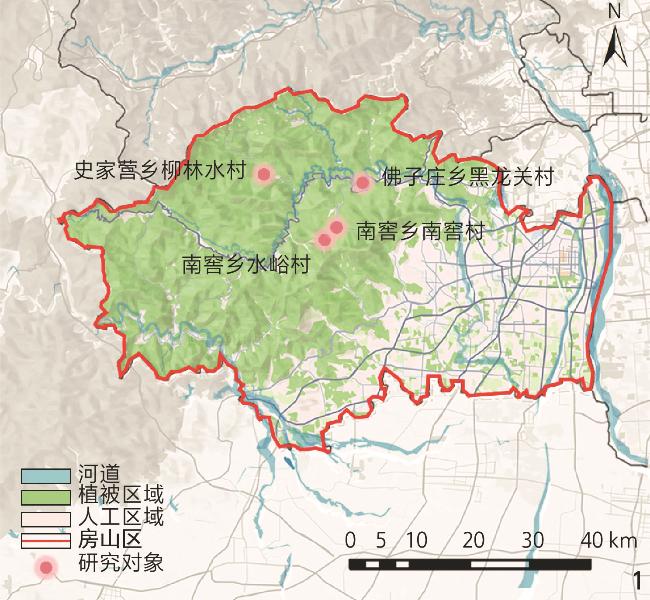
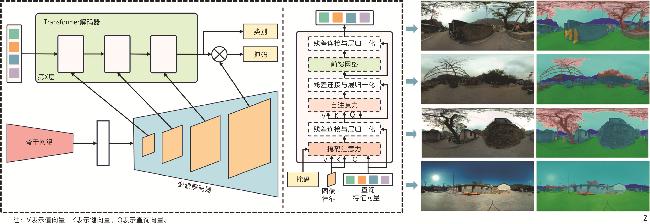
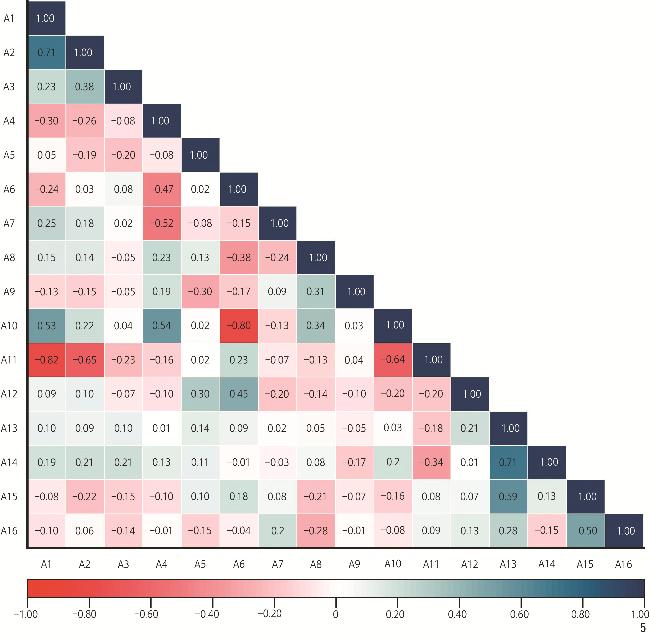
[Methods] Taking four villages in Beijing as the research object, this research evaluates the characteristics of rural public space based on deep learning, MATLAB software, social network analysis, questionnaire survey, etc., carries out spatial visualization analysis of the place attachment of the left-behind elderly in the villages through the public participation geographic information system (PPGIS), and finally explores the influence mechanism of the characteristics of rural public space on the place attachment of the left-behind elderly through the construction of a multiple linear regression analysis model.
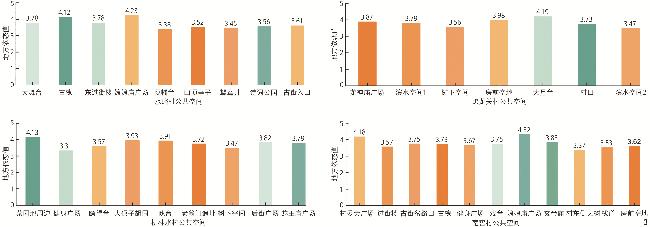
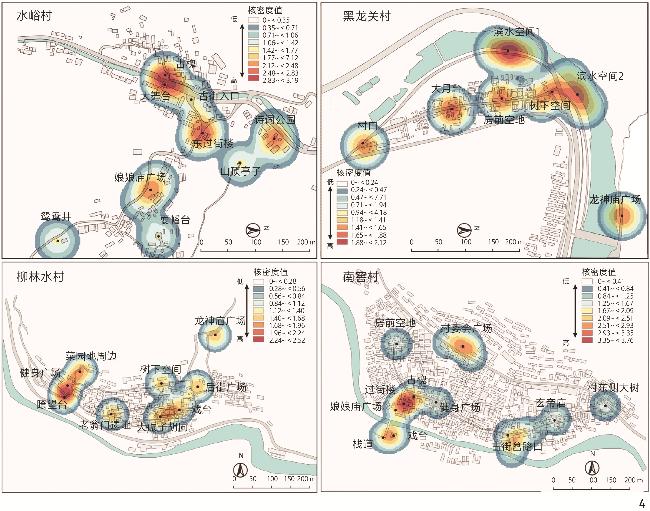
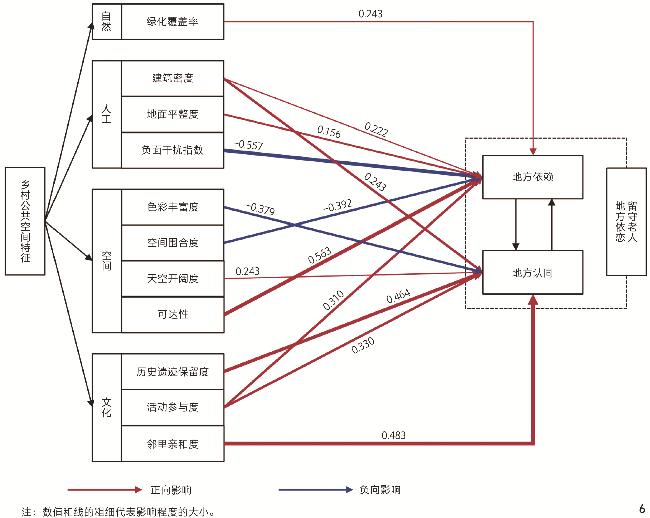
[Results] The results indicate that the top three sites with the highest average place attachment scores in Nanjiao Village are the Goddess Temple Square (4.32), the Village Committee Square (4.18), and the Xuandi Temple (3.83). In Heilongguan Village, the highest scores are recorded for the Dayue Platform (4.19), the Open Space in Front of Houses (3.98), and the Dragon God Temple Square (3.87). In Shuiyu Village, the top sites include the Goddess Temple Square (4.23), the Ancient Sophora Tree (4.12), the Grand Stage (3.78), and the East Street Gate Tower (3.78). Finally, in Liulinshui Village, the highest scores are associated with the Area Around the Vegetable Plots (4.13), the Big Millstone Alley (3.93), and the Opera Stage (3.91). In terms of the spatial distribution characteristics of the strength of local attachment, the local attachment of the left-behind elderly shows the “multi-center” distribution characteristics of strong intermittency and high local concentration, and the high value areas of local attachment are mainly concentrated in the spiritual and cultural spaces with rich connotation and daily life spaces that are convenient and easy to reach. Regarding the influence mechanism of rural public space characteristics on the place attachment of the left-behind elderly, on the whole, the cultural and spatial characteristics of rural public space constitute the core dimensions of place dependence and place identity, followed by the influence of artificial characteristics, while the influence of natural characteristics on the place attachment of the left-behind elderly is relatively limited, and only the greening coverage positively contributes to the place dependence by enhancing the ecological comfort of public space, but has no direct influence on the place identity. In terms of specific characteristic indicators, a total of 10 public space characteristic factors significantly affect the place dependence of the left-behind elderly, among which accessibility, activity participation, vegetation coverage and building density are the key factors positively affecting the place dependence of the left-behind elderly, while the negative interference index and the degree of spatial enclosure are the key factors negatively affecting the place dependence of the left-behind elderly. There are eight influencing factors of place identity, among which the degree of neighborhood affinity, the degree of preservation of historical relics, the degree of participation in activities and building density have a greater positive influence on place identity, and the degree of colorfulness has a significant negative influence on place identity.
[Conclusion] Based on the influence mechanism of rural public space characteristics on place attachment, this research proposes four optimization strategies for rural public spaces. 1) Construct an elderly-friendly spatial network to promote neighborhood social interaction. Specifically, we should create a barrier-free rural public space network integrated with “memory anchor points” to encourage left-behind elderly residents to spontaneously organize traditional festival activities and demonstrations of traditional skills. This approach transforms public spaces into dual carriers of neighborhood collaboration and cultural activities, enhances the participation of the left-behind elderly in activities, and thereby strengthens their sense of place dependence. 2) Safeguard carriers of local memory to reinforce historical identity and emotional connection. Specifically, we should restore and revitalize traditional spiritual and cultural spaces by converting historical memories into perceptible cultural narratives through methods such as displaying old photographs, exhibiting agricultural tools, and screening videos, and at the same time establish rural color management guidelines to preserve the authenticity of the rural human settlement environment. 3) Rationalize control of building density to reduce interference from modern elements. Specifically, we should optimize the architectural layout around public spaces to form a hierarchical transition between “architecture − space − nature”, and appropriately regulate the placement and quantity of modern facilities such as billboards and signages to ensure their style harmonizes with the surrounding environment, thereby minimizing the impact of modern elements on the daily lives and production activities of left-behind elderly residents. 4) Enhance ecological comfort to strengthen the foundation for human − landscape interaction. Specifically, we should focus on increasing green coverage rates to improve the microclimate environment in rural areas and enhance the ecological comfort of public spaces. In addition, we should create diversified elderly-friendly scenarios incorporating natural elements such as water systems and vegetable gardens to foster continuous interaction between left-behind elderly residents and the natural environment. The results of the research can provide scientific guidelines and case studies for building an age-friendly rural human settlement environment.
MENG Shiyu , ZHANG Shuying , ZHANG Leqi , LIU Chenhui , ZHANG Yunlu . Research on the Influence Mechanism of Rural Public Space Characteristics on the Place Attachment of the Left-Behind Elderly and the Optimization of Rural Public Space[J]. Landscape Architecture, 2025 , 32(11) : 51 -60 . DOI: 10.3724/j.fjyl.LA20250279
表1 地方依恋量表Table 1 Place attachment measurement scale |
| 地方依赖题项 | 地方认同题项 |
| 这里是我活动的最佳场所 | 这里非常有代表性 |
| 这里的活动是其他地方不能取代的 | 这里在我的生活中扮演重要的角色 |
| 这里是最让我感到满足的地方 | 这里对我来说意义重大 |
| 相对别的休闲场所,我对这里的环境更加满意 | 这里让我感到认同,很有亲切感 |
| 这里是我空闲时间最喜欢去的休闲场所 | 我舍不得离开这里 |
表2 传统村落公共空间特征指标体系Table 2 Indicator system for characteristics of public space in traditional villages |
| 环境特征 | 指标 | 内涵 | 量化方法 |
| 自然特征 | 绿视率A1 | 图像中绿色景观像素的比例 | 语义分割 |
| 绿化覆盖率A2 | 绿化面积与总面积之比 | 现场测量 | |
| 植被丰富度A3 | 空间内植物的种类 | 现场测量 | |
| 人工特征 | 建筑密度A4 | 图像中建筑像素的比例 | 语义分割 |
| 地面平整度A5 | 空间内地面的平整程度 | 问卷调查 | |
| 路面铺装比A6 | 图像中路面像素的比例 | 语义分割 | |
| 负面干扰指数A7 | 图像中车、电线杆等像素的比例 | 语义分割 | |
| 空间特征 | 视觉熵A8 | 图像的熵值 | MATLAB软件 |
| 色彩丰富度A9 | 肉眼感受得出的色彩丰富程度 | MATLAB软件 | |
| 空间围合度A10 | 建筑、植物、路面像素的比例 | 语义分割 | |
| 天空开阔度A11 | 图像中天空像素的比例 | 语义分割 | |
| 可达性A12 | 到达场地的便捷程度 | 社会网络分析 | |
| 文化特征 | 空间地域特色性A13 | 空间的地域特色程度 | 问卷调查 |
| 历史遗迹保留度A14 | 空间内历史遗迹的保留程度 | 问卷调查 | |
| 活动参与度A15 | 公共活动的参与程度 | 问卷调查 | |
| 邻里亲和度A16 | 邻里之间的亲和程度 | 问卷调查 |
表3 基于深度学习的乡村公共空间特征评价指标量化方法Table 3 Quantitative method of evaluation indicators for rural public space characteristics based on deep learning |
| 评价指标 | 视觉要素 | 计算式 | 式注 |
| 绿视率(I gv) | 绿植、山体 | $ {I}_{\mathrm{g}\mathrm{v}}=\dfrac{{A}_{g\_i}+{A}_{m\_i}}{{A}_{t\_i}} $ | $ {A}_{t\_i} $为图像i中的像素总数,$ {A}_{g\_i} $为图像i中绿植像素的数量, $ {A}_{m\_i} $为图像i中山体像素的数量,$ {A}_{b\_i} $为图像i中建筑像素的数量,$ {A}_{r\_i} $为图像i中道路像素的数量,$ {A}_{c\_i} $为图像i中车、电线杆、指示牌像素的数量,$ {A}_{s\_i} $是图像i中天空像素的数量 |
| 建筑密度(D b) | 建筑 | $ {D}_{\mathrm{b}}=\dfrac{{A}_{b\_i}}{{A}_{t\_i}} $ | |
| 路面铺装比(I rw) | 路面 | $ {I}_{\mathrm{r}\mathrm{w}}=\dfrac{{A}_{r\_i}}{{A}_{t\_i}} $ | |
| 负面干扰指数(I ni) | 车、电线杆、指示牌 | $ {I}_{\mathrm{n}\mathrm{i}}=\dfrac{{A}_{c\_i}}{{A}_{t\_i}} $ | |
| 空间围合度(D se) | 绿植、建筑、道路 | $ {D}_{\rm{se}}=\dfrac{{A}_{g\_i}+{A}_{b\_i}}{{A}_{r\_i}} $ | |
| 天空开阔度(I so) | 天空 | $ {I}_{\mathrm{s}\mathrm{o}}=\dfrac{{A}_{s\_i}}{{A}_{t\_i}} $ |
表4 乡村公共空间特征与留守老人地方依赖的多元线性回归分析结果Table 4 Results of multiple linear regression analysis of rural public space characteristics and place dependence of the left-behind elderly |
| 公共空间特征指标 | 非标准化系数B | 标准化系数Beta | 显著性 | 共线性统计 | |
| 容差 | VIF | ||||
| 绿化覆盖率 | 1.729 | 0.243 | 0.000 | 0.497 | 2.011 |
| 植被丰富度 | 0.006 | 0.017 | 0.000 | 0.549 | 1.821 |
| 建筑密度 | 0.606 | 0.222 | 0.001 | 0.313 | 3.199 |
| 地面平整度 | 0.122 | 0.156 | 0.000 | 0.512 | 1.952 |
| 负面干扰指数 | −0.218 | −0.557 | 0.012 | 0.568 | 1.76 |
| 色彩丰富度 | −0.044 | −0.100 | 0.000 | 0.458 | 2.181 |
| 空间围合度 | −0.025 | −0.392 | 0.023 | 0.593 | 1.687 |
| 可达性 | 0.106 | 0.563 | 0.008 | 0.643 | 1.555 |
| 历史遗迹保留度 | 0.049 | 0.113 | 0.000 | 0.701 | 1.426 |
| 活动参与度 | 0.551 | 0.310 | 0.000 | 0.551 | 1.816 |
表5 乡村公共空间特征与留守老人地方认同的多元线性回归分析结果Table 5 Results of multiple linear regression analysis of rural public space characteristics and local identity of the left-behind elderly |
| 公共空间特征指标 | 非标准化系数B | 标准化系数Beta | 显著性 | 共线性统计 | |
| 容差 | VIF | ||||
| 建筑密度 | 0.305 | 0.320 | 0.000 | 0.331 | 3.02 |
| 负面干扰指数 | -0.133 | −0.111 | 0.000 | 0.508 | 1.967 |
| 天空开阔度 | 0.227 | 0.236 | 0.000 | 0.551 | 1.814 |
| 色彩丰富度 | −0.544 | −0.379 | 0.000 | 0.626 | 1.597 |
| 可达性 | 0.222 | 0.177 | 0.001 | 0.707 | 1.415 |
| 历史遗迹保留度 | 0.400 | 0.464 | 0.008 | 0.459 | 2.18 |
| 活动参与度 | 0.304 | 0.330 | 0.001 | 0.587 | 1.703 |
| 邻里亲和度 | 0.443 | 0.483 | 0.000 | 0.369 | 2.707 |
文中图表均由作者绘制,其中
| [1] |
NAPIER S, NEVILLE S, ADAMS J, et al. Age-Friendly Attributes of a Rural Town in Aotearoa New Zealand[J]. Journal of Rural Studies, 2023, 100: 103033.
|
| [2] |
LIU Y S, ZANG Y Z, YANG Y Y. China’s Rural Revitalization and Development: Theory, Technology and Management[J]. Journal of Geographical Sciences, 2020, 30(12): 1923-1942.
|
| [3] |
国家统计局.中国人口与就业统计年鉴2023[M].北京: 中国统计出版社, 2023.
National Bureau of Statistics. China Population and Employment Statistics Yearbook 2023[M].Beijing: China Statistics Press, 2023.
|
| [4] |
董又铭, 郭炎, 李志刚, 等. 快速城镇化下乡村环境感知对乡村依恋的影响: 以湖南岳阳市为例[J]. 地域研究与开发, 2020, 39(2): 99-104.
DONG Y M, GUO Y, LI Z G, et al. Impacts of Rural Environmental Perception on People’s Rural Attachment Under Rapid Urbanization: A Case Study of Yueyang City, Hunan Province[J]. Areal Research and Development, 2020, 39(2): 99-104.
|
| [5] |
董慰, 娄健坤, 董禹. 社区可步行性对老年人地方依恋及就地养老意愿影响研究: 以哈尔滨市香坊老工业区为例[J]. 上海城市规划, 2020, 6 30-35.
DONG W, LOU J K, DONG Y. Impact of Community Walkability on the Elderly’s Place Attachment and Willingness to Aging in Place: An Empirical Study of Xiangfang Old Industrial Zone in Harbin[J]. Shanghai Urban Planning Review, 2020, 6 30-35.
|
| [6] |
LESTARI W M, SUMABRATA J. The Influencing Factors on Place Attachment in Neighborhood of Kampung Melayu[J]. IOP Conference Series: Earth and Environmental Science, 2018, 126(1): 012190
|
| [7] |
MADGIN R, BRADLEY L, HASTINGS A. Connecting Physical and Social Dimensions of Place Attachment: What Can We Learn from Attachment to Urban Recreational Spaces?[J]. Journal of Housing and the Built Environment, 2016, 31(4): 677-693.
|
| [8] |
黄瓴, 张真. 山地城市安置社区公共空间场所依恋研究及其更新启示: 以重庆市大渡口区鑫瑞康居为例[J]. 城市发展研究, 2024, 31(4): 82-89.
HUANG L, ZHANG Z. Research on Place Attachment of Resettlement Communities’ Public Spaces in Mountainous Cities and Its Inspiration for Regeneration: A Case Study of Xinruikangju Community of Dadukou District, Chongqing[J]. Urban Development Studies, 2024, 31(4): 82-89.
|
| [9] |
卢志霖, 殷冠文, 罗存菁, 等. 行政区划调整背景下的居民地方感建构: 以济南莱芜合并为例[J]. 人文地理, 2025, 40(1): 45-52.
LU Z L, YIN G W, LUO C J, et al. The Construction of Resident’s Sense of Place Under the Background of Administrative Division Adjustment: A Case Study of the Merger of Jinan and Laiwu[J]. Human Geography, 2025, 40(1): 45-52.
|
| [10] |
段伟, 何子晴, 申津羽. 地方依恋对保护区周边农户生态保护行为的影响[J]. 中国人口·资源与环境, 2025, 35(4): 190-199.
DUAN W, HE Z Q, SHEN J Y. The Influence of Place Attachment on Ecological Conservation Behavior Among Farmers Living Near Nature Reserves[J]. China Population, Resources and Environment, 2025, 35(4): 190-199.
|
| [11] |
WU W F, LI D L, JIAO T, et al. The Dynamic Interactive Influence of Community Identity, Being Accepted by Others, and Life Satisfaction Among Relocated Residents for Poverty Alleviation in China[J]. Cities, 2024, 150: 105080.
|
| [12] |
CHANG J, LIN Z H, VOJNOVIC I, et al. Social Environments Still Matter: The Role of Physical and Social Environments in Place Attachment in a Transitional City, Guangzhou, China[J]. Landscape and Urban Planning, 2023, 232: 104680.
|
| [13] |
冯宁宁, 崔丽娟. 从恢复体验到地方依恋: 环境偏好与居住时长的作用[J]. 心理科学, 2017, 40(5): 1215-1221.
FENG N N, CUI L J. The Relation Between Restorative Experience and Place Attachment: The Role of Environment Preference and Length of Residence[J]. Journal of Psychological Science, 2017, 40(5): 1215-1221.
|
| [14] |
何悦, 陈荣, 张云路. 基于原住民地方依恋的新型农村社区公共景观感知与优化策略: 以北京田仙峪村为例[J]. 风景园林, 2022, 29(3): 31-36.
HE Y, CHEN R, ZHANG Y L. Perception and Optimization Strategies of Public Landscape in New Rural Communities Based on Place Attachment of Indigenous People: A Case Study of Beijing Tianxianyu Village[J]. Landscape Architecture, 2022, 29(3): 31-36.
|
| [15] |
YANG C Y, SHI S, RUNESON G. Towards Sustainable Urban Communities: Investigating the Associations Between Community Parks and Place Attachment in Master-Planned Estates in Sydney[J]. Sustainable Cities and Society, 2023, 96: 104659.
|
| [16] |
管永康, 薛义. 第三空间视域下历史街区的日常生活实践与地方依恋: 以天津市鼓楼街区为例[J]. 地域研究与开发, 2023, 42(3): 92-97.
GUAN Y K, XUE Y. Everyday Life Practices and Place Attachment in the Historic Districts Under the Perspective of Third Space: A Case Study of Tianjin Gulou District[J]. Areal Research and Development, 2023, 42(3): 92-97.
|
| [17] |
HESARI E, MOOSAVY S M, ROHANI A, et al. Investigation the Relationship Between Place Attachment and Community Participation in Residential Areas: A Structural Equation Modelling Approach[J]. Social Indicators Research, 2020, 151(3): 921-941.
|
| [18] |
VAN DER STAR M E, HOCHSTENBACH C. Continuity Among Stayers: Levels, Predictors and Meanings of Place Attachment in Rural Shrinking Regions[J]. Journal of Rural Studies, 2022, 96: 369-380.
|
| [19] |
汝鹏, 沈娅云, 苏竣. 智慧社区如何影响社区依恋?: 基于北京老旧小区智慧化改造的案例研究[J]. 中国软科学, 2023, 4 66-75.
RU P, SHEN Y Y, SU J. Do Smart Renovations Increase Neighborhood Attachment?: Evidence from Field Surveys in Two Old Neighborhoods in Beijing[J]. China Soft Science, 2023, 4 66-75.
|
| [20] |
蔺阿琳, 娄健坤, 曾尔力, 等. 多尺度视角下大学生地方依恋特征及其对主观幸福感的影响研究[J]. 现代城市研究, 2023, 38(11): 128-132.
LIN A L, LOU J K, ZENG E L, et al. The Characteristics of College Students' Place Attachment and Its Impact on Subjective Well-Being with the Multi-Scale Perspective[J]. Modern Urban Research, 2023, 38(11): 128-132.
|
| [21] |
HESARI E, PEYSOKHAN M, HAVASHEMI A, et al. Analyzing the Dimensionality of Place Attachment and Its Relationship with Residential Satisfaction in New Cities: The Case of Sadra, Iran[J]. Social Indicators Research, 2019, 142(3): 1031-1053.
|
| [22] |
WILLIAMS D R, VASKE J J. The Measurement of Place Attachment: Validity and Generalizability of a Psychometric Approach[J]. Forest Science, 2003, 49(6): 830-840.
|
| [23] |
姜宏, 邵龙. 基于PPGIS的场所依恋综合测量方法探索: 以长春水文化生态园为例[J]. 中国园林, 2021, 37(12): 64-69.
JIANG H, SHAO L. Mapping and Measuring Place Attachment Based on Public Participation GIS: A Case Study of Changchun Culture of Water Ecology Park[J]. Chinese Landscape Architecture, 2021, 37(12): 64-69.
|
| [24] |
MAGUIRE B, KLINKENBERG B. Visualization of Place Attachment[J]. Applied Geography, 2018, 99: 77-88.
|
| [25] |
JAYAKODY D Y, ADAMS V M, PECL G, et al. What Makes a Place Special? Understanding Drivers and the Nature of Place Attachment[J]. Applied Geography, 2024, 163: 103177.
|
| [26] |
贾衍菊, 李思雨. 基于公众参与地理信息系统的乡村旅游区主客依恋空间表征差异研究[J]. 干旱区资源与环境, 2024, 38(6): 191-199.
JIA Y J, LI S Y. Spatial Representation Difference in Host-Guest Attachment in Rural Tourism Area Based on Public Participation GIS[J]. Journal of Arid Land Resources and Environment, 2024, 38(6): 191-199.
|
| [27] |
KIDO D, FUKUDA T, YABUKI N. Assessing Future Landscapes Using Enhanced Mixed Reality with Semantic Segmentation by Deep Learning[J]. Advanced Engineering Informatics, 2021, 48: 101281.
|
| [28] |
ZHANG X D, LIN E S, TAN P Y, et al. Beyond Just Green: Explaining and Predicting Restorative Potential of Urban Landscapes Using Panorama-Based Metrics[J]. Landscape and Urban Planning, 2024, 247: 105044.
|
| [29] |
王鹤潭, 巩贺, 黄玫, 等. 量化气候和土地利用变化对生态资产变化的相对贡献: 以房山区为例[J]. 生态学报, 2024, 44(8): 3213-3222.
WANG H T, GONG H, HUANG M, et al. Quantifying the Relative Contributions of Climate and Land Use Change to Ecological Asset Variations: A Case Study in Fangshan District[J]. Acta Ecologica Sinica, 2024, 44(8): 3213-3222.
|
| [30] |
杨映, 胡理乐. 北京市房山区自然保护地生境质量评估[J]. 西部林业科学, 2022, 51(4): 80-86.
YANG Y, HU L L. Assessment of Habitat Quality in Protected Areas of Fangshan District, Beijing[J]. Western Forestry Science, 2022, 51(4): 80-86.
|
| [31] |
曹蕾, 张舒盈, 张云路. 基于场所依恋和景观偏好评价的大城市近郊村镇公共空间景观地方性优化研究[J]. 园林, 2025, 42(3): 32-40.
CAO L, ZHANG S Y, ZHANG Y L. A Study on Optimizing Public Space Landscape Locality in Suburban Vil Ages and Towns of Large Cities Based on Place Attachment and Landscape Preference Evaluation[J]. Landscape Architecture Academic Journal, 2025, 42(3): 32-40.
|
| [32] |
侯鑫, 王艳, 王绚, 等. 全景影像在城市研究中的应用进展综述[J]. 计算机科学与探索, 2024, 18(7): 1661-1682.
HOU X, WANG Y, WANG X, et al. Review of Application Progress of Panoramic Imagery in Urban Research[J]. Journal of Frontiers of Computer Science and Technology, 2024, 18(7): 1661-1682.
|
| [33] |
严敏, 陈晨, 张泉. 徽州村落空间景观特征要素对游客场所依恋感知的影响[J]. 中国城市林业, 2025, 23(1): 46-54.
YAN M, CHEN C, ZHANG Q. Influence of Village Spatial Landscape Elements on Tourists' Perception of Place Attachment in Huizhou[J]. Journal of Chinese Urban Forestry, 2025, 23(1): 46-54.
|
| [34] |
姜宏.城市综合公园场所依恋的形成机制研究[D].哈尔滨: 哈尔滨工业大学, 2024.
JIANG H. Research on the Formation Mechanism of Place Attachment in Urban Comprehensive Parks[D]. Harbin: Harbin Institute of Technology, 2024.
|
| [35] |
毕慧缘, 汤辉, 关美燚, 等. 乡村公共空间场所依恋影响机制及营建策略: 以英德邱村为例[J]. 中国园林, 2022, 38(S2): 58-62.
BI H Y, TANG H, GUAN M Y, et al. The Impact Mechanism and Construction Strategy of Attachment to Public Places in Rural Areas: Taking Qiu Village in Yingde City as the Example[J]. Chinese Landscape Architecture, 2022, 38(S2): 58-62.
|
| [36] |
GUO S C, YANG Q, XIANG S M, et al. Mask2Former with Improved Query for Semantic Segmentation in Remote-Sensing Images[J]. Mathematics, 2024, 12(5): 765.
|
| [37] |
STAMPS III A E. Entropy and Visual Diversity in the Environment[J]. Journal of Architectural and Planning Research, 2004, 21(3): 239-256.
|
| [38] |
HASLER D, SUESSTRUNK S E. Measuring Colorfulness in Natural Images[J]. Human Vision and Electronic Imaging VIII, 2003: 87.
|
| [39] |
刘璇, 王思元. 基于参与式地理信息系统的城市绿地生态系统文化服务评价: 以北京市核心区为例[J]. 风景园林, 2024, 31(7): 131-136.
LIU X, WANG S Y. Evaluation of Cultural Ecosystem Services of Urban Green Space Based on Participatory Geographic Information System(PGIS): A Case Study of the Core Area of Beijing[J]. Landscape Architecture, 2024, 31(7): 131-136.
|
| [40] |
冯娴慧, 何慕. 基于粤港澳大湾区市域尺度的绿地空间格局、局地大气因素与居民呼吸健康三者之间的作用机制研究[J]. 中国园林, 2025, 41(1): 15-22.
FENG X H, HE M. Research on the Mechanism of Green Space Patterns, Local Atmospheric Factors, and Residents' Respiratory Health Based on the City Scale of Guangdong-Hong Kong-Macao Greater Bay Area[J]. Chinese Landscape Architecture, 2025, 41(1): 15-22.
|
/
| 〈 |
|
〉 |