

Perceptual Evaluation of Olfactory Landscape in Jiuzhaigou World Natural Heritage Site
|
XU Xiaoqing, Ph.D., is an associate professor and doctoral supervisor in the College of Architecture and Urban Planning (CAUP), Tongji University, deputy director of the CAUP Built Environment Technology Center of Tongji University, and co-director of the Sub-center of the Key Laboratory of Spatial Intelligent Planning Technology, Ministry of Natural Resources of the People’s Republic of China. Her research focuses on soundscape ecology, planning and management of national parks and protected areas, and the relationship between soundscapes and health |
|
ZOU Ning is a Ph.D. candidate in the College of Architecture and Urban Planning (CAUP), Tongji University. Her research focuses on soundscape ecology, planning and management of national parks and protected areas, and the relationship between soundscapes and health |
|
YU Chumeng is a master student in the College of Architecture and Urban Planning (CAUP), Tongji University. Her research focuses on soundscape ecology, planning and management of national parks and protected areas, and the relationship between soundscapes and health |
|
JIN Hexian, Ph.D., is a professor and doctoral supervisor in the College of Landscape Architecture, Zhejiang A&F University, and an editorial board of this journal. Her research focuses on history and theory of landscape architecture and heritage conservation, therapeutic gardens, and ecological restoration |
Received date: 2025-02-27
Revised date: 2025-09-21
Online published: 2025-12-10
Copyright
[Objective] The sense of smell is of vital importance to humans. Olfactory landscapes have a remarkable influence on human physiology, behaviors, and emotions. Nature reserves boast relatively unique types of scents, with their characteristic mechanisms differing from those of urban olfactory landscapes. However, current research on olfactory landscapes mainly centers around cities and gardens. The aim of this research is to clarify the elements of olfactory landscapes in the built environment of nature reserves and their influence mechanisms on human perception, so as to: 1) construct a classification system for the olfactory landscapes in the Jiuzhaigou World Natural Heritage Site; 2) explore the action paths of the characteristics of different types of olfactory landscapes on tourists’ perception; 3) provide new evidence for the knowledge system through the evidence of olfactory landscape walks.
[Methods] This research investigates olfactory landscapes in the Jiuzhaigou World Natural Heritage Site, focusing on how odors affect visitors’ perceptions of the environment. The reserve, recognized for its rich biodiversity and natural beauty, is studied through an olfactory walking survey, where eight key olfactory areas are identified. Data is collected from 100 healthy participants via interviews and questionnaires conducted between July 27–29, 2022. The participants, aged from under 18 to over 60, are asked to identify odors and rate their perceptions of the environment based on 12 sensory indicators such as familiarity, sweetness, and naturalness. Interviews help categorize odors into various types, such as human-driven, facility-driven, water-driven, plant-driven, and soil-driven odors. Statistical analysis, conducted in Excel and SPSS, focuses on the frequency of odor categories, the mean sensory ratings, and the correlations between olfactory characteristics and perceptions. The research adopts Spearman partial correlation to analyze relationships while adjusting for other factors. The goal is to explore how different elements of olfactory landscapes influence visitors’ experiences, in hope of providing valuable insights into the role of smell in enhancing natural tourism and environmental design.
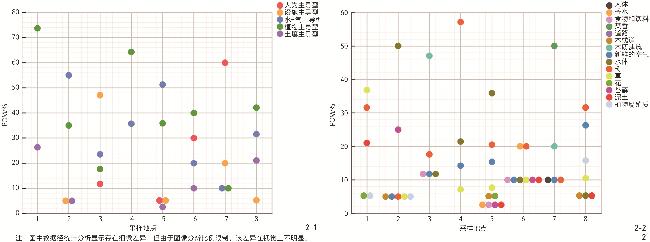
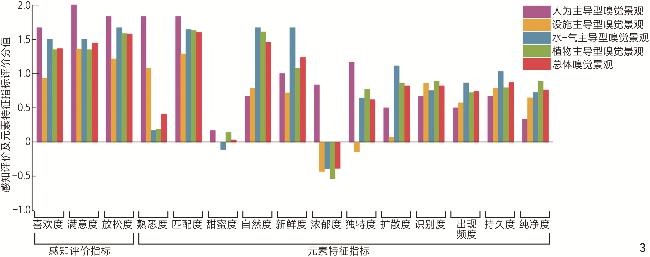
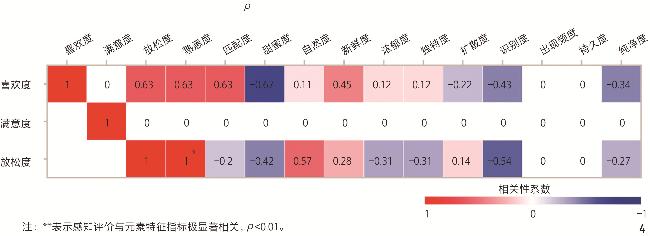
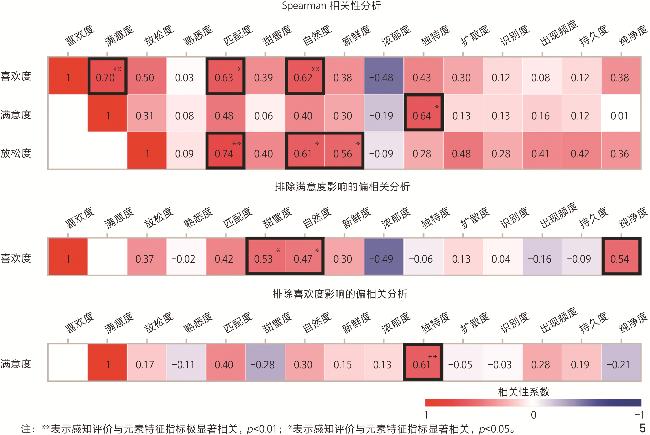
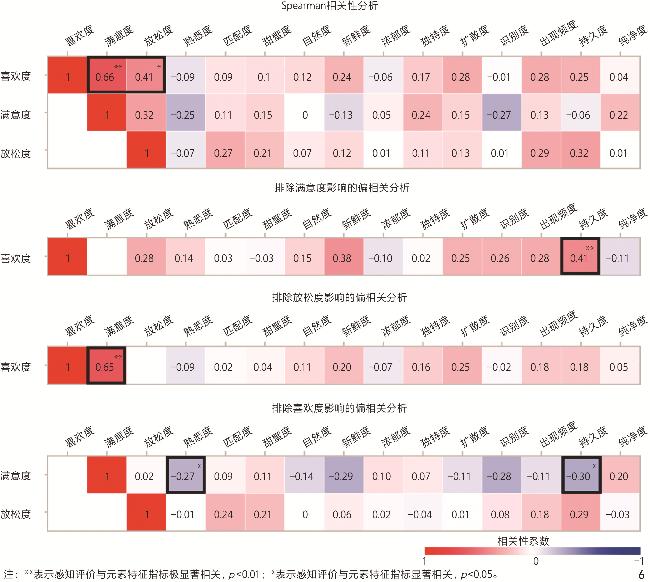
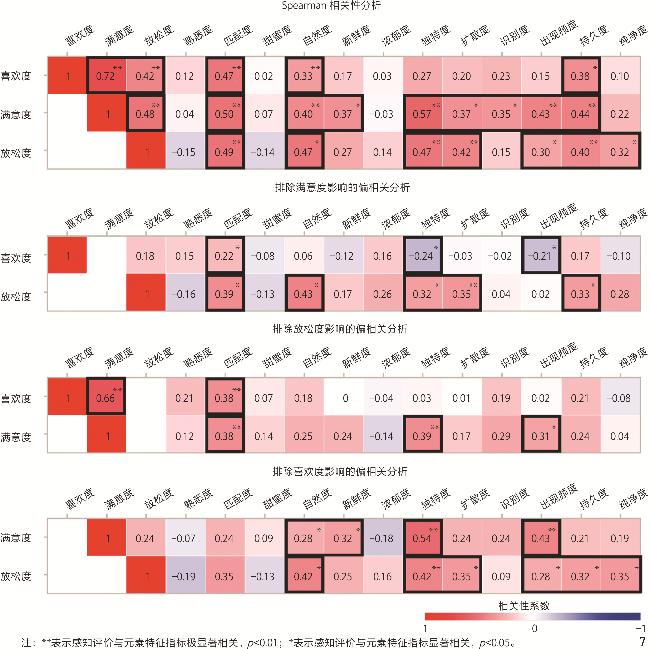
[Results] Respondents identify odors at eight sampling sites, which are categorized into four types of olfactory landscapes based on the dominant smells. 1) Human-dominated landscape: Site 7 has a 50.00% probability of odor manifestation (POM), dominated by incense from Tibetan Buddhist prayers. 2) Facility-dominated landscape: Site 3, with a POM of 47.06%, has wood smells from pavilions and boardwalks. 3) Water & air-dominated landscape: At sites 2 and 5, the odor is influenced by damp and cool characteristics of waterfalls, with POMs of 50.00% and 35.90%, respectively. 4) Plant-dominated landscape: Sites 1, 4, 6, and 8 have vegetation-based odors. Site 1 is dominated by grass with a POM of 36.84%, while the others have tree-dominant smells, with POMs ranging from 20.00% to 57.15%. The mean scores for perceptual evaluations and odor characteristics reveal the following: 1) Human-dominated and water & air-dominated landscapes score the highest in liking, relaxation, and satisfaction, ranking first and second, respectively; 2) plant-dominated landscapes rank lowest in satisfaction; 3) facility-dominated landscapes score lowest in liking and relaxation. In terms of odor characteristics: 1) Human-dominated landscapes excel in familiarity, compatibility, sweetness, intensity, and uniqueness; 2) water & air-dominated landscapes score highest in naturalness, freshness, diffusion, exposure frequency, and persistence; 3) plant-dominated landscapes score highest in recognition and mixing; 4) facility-dominated landscapes rank lowest in compatibility, freshness, uniqueness, and diffusion. Further analysis is conducted to explore how the characteristics of the olfactory landscapes influence perceptual evaluations: 1) Human-dominated landscapes: Familiarity is strongly positively correlated with relaxation (p < 0.01), with no significant correlations found for other indicators; 2) Facility-dominated landscapes: Compatibility and naturalness are positively correlated with liking (p < 0.05) and relaxation (p < 0.01), and sweetness, naturalness, and mixing are positively correlated with liking; 3) water & air-dominated landscapes: Duration is positively correlated with liking, while familiarity and duration are negatively correlated with satisfaction; 4) plant-dominated odor: Compatibility, uniqueness, and exposure frequency are positively correlated with liking, while compatibility, naturalness, uniqueness, diffusion, and persistence are correlated with relaxation.
[Conclusion] Understanding and revealing the current situation of olfactory landscapes in World Natural Heritage Sites is of great theoretical and practical significance for improving environmental quality and tourism experience. Based on on-site investigations and tourist perception evaluations, this research establishes a classification framework system for the scent landscapes in Jiuzhaigou and analyzes in detail the differences in elemental characteristics and perception evaluations of four types of olfactory landscapes. The research finds that: 1) For human-dominated olfactory landscapes, there is only a highly significant positive correlation between familiarity and relaxation, and there is no significant correlation among the three perception evaluation indicators; 2) facility-dominated olfactory landscapes are below the average level in all perception evaluation indicators and receive the most negative ratings; 3) water & air-dominated olfactory landscapes usually receive high perception ratings, and exceed the average level in all evaluation indicators; 4) plant-dominated olfactory landscapes stand out in relaxation ratings, with relaxation being related to its degree of matching, naturalness, uniqueness, diffusivity, exposure frequency, persistence, and degree of mixing. The same elemental characteristics have significant differences in the degree of influence and priority order on perception evaluations in different types of olfactory landscapes. The research results further emphasize the unique role of aroma in creating spiritual value and the significant influence of plant scents on relaxation experience.
XU Xiaoqing , ZOU Ning , YU Chumeng , JIN Hexian . Perceptual Evaluation of Olfactory Landscape in Jiuzhaigou World Natural Heritage Site[J]. Landscape Architecture, 2025 , 32(11) : 110 -119 . DOI: 10.3724/j.fjyl.LA20250124
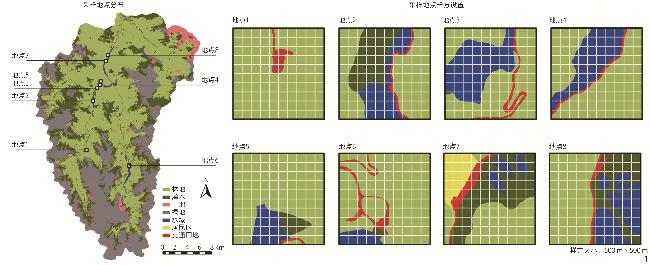
图1 九寨沟世界自然遗产地8个嗅觉景观区域采样地点Fig. 1 Eight olfactory landscape areas selected as sampling sites in Jiuzhaigou World Natural Heritage Site |
表1 九寨沟 8个嗅觉景观区域采样地点环境现状Table 1 Current environmental conditions in the eight olfactory landscape areas as sampling sites in Jiuzhaigou |
| 地点(景点 名称) | 实景 | 植被 | 水域 | 设施 | 空间 |
| 地点1(原始森林) | 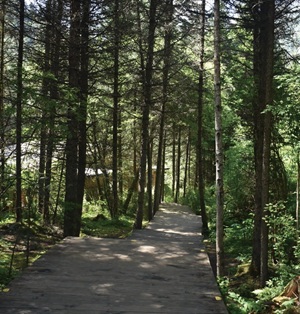 | 乔木:√ 灌木:√ 草坪:√ 上层植被量:☆☆☆☆☆ 下层植被量:☆☆☆ | 瀑布:× 溪流:× 湖泊:× 水面大小:无 水流速度:无 | 木质凳子:√ 木质厕所:√ 木质平台:× 亭子:√ 设施利用率:☆☆☆ | 封闭空间:√ 半封闭空间:× 开敞空间:× 空间开放度:☆ |
| 地点2(箭竹海瀑布) | 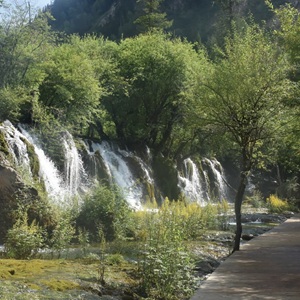 | 乔木:√ 灌木:√ 草坪:√ 上层植被量:☆☆☆ 下层植被量:☆☆ | 瀑布:√ 溪流:√ 湖泊:× 水面大小:☆☆☆☆ 水流速度:☆☆☆☆ | 木质凳子:√ 木质厕所:× 木质平台:× 亭子:× 设施利用率:☆☆ | 封闭空间:× 半封闭空间:√ 开敞空间:× 空间开放度:☆☆☆ |
| 地点3(五花海亭子) | 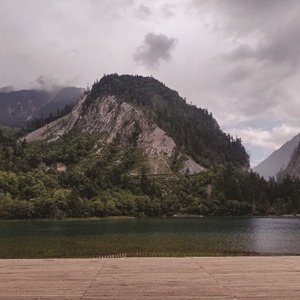 | 乔木:√ 灌木:× 草坪:√ 上层植被量:☆☆ 下层植被量:☆ | 瀑布:× 溪流:× 湖泊:√ 水面大小:☆☆☆☆ 水流速度:☆ | 木质凳子:√ 木质厕所:√ 木质平台:√ 亭子:√ 设施利用率:☆☆☆☆☆ | 封闭空间:× 半封闭空间:× 开敞空间:√ 空间开放度:☆☆☆☆☆ |
| 地点4(五花海珍珠滩栈道) | 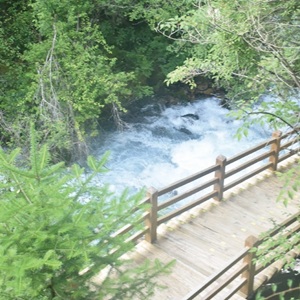 | 乔木:√ 灌木:× 草坪:√ 上层植被量:☆☆☆☆ 下层植被量:☆☆ | 瀑布:× 溪流:√ 湖泊:× 水面大小:☆☆☆ 水流速度:☆☆☆☆ | 木质凳子:√ 木质厕所:× 木质平台:× 亭子:× 设施利用率:☆☆ | 封闭空间:× 半封闭空间:√ 开敞空间:× 空间开放度:☆☆☆ |
| 地点5(珍珠滩瀑布) | 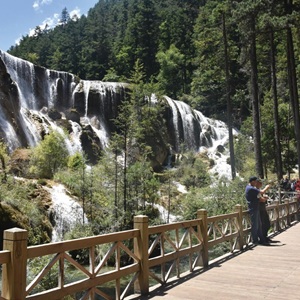 | 乔木:√ 灌木:√ 草坪:√ 上层植被量:☆☆☆ 下层植被量:☆☆ | 瀑布:√ 溪流:× 湖泊:× 水面大小:☆☆☆☆☆ 水流速度:☆☆☆☆☆ | 木质凳子:√ 木质厕所:√ 木质平台:√ 亭子:√ 设施利用率:☆☆☆☆☆ | 封闭空间:× 半封闭空间:√ 开敞空间:× 空间开放度:☆☆☆☆ |
| 地点6(长海) |  | 乔木:√ 灌木:√ 草坪:√ 上层植被量:☆☆☆ 下层植被量:☆☆ | 瀑布:× 溪流:× 湖泊:√ 水面大小:☆☆☆☆☆ 水流速度:☆ | 木质凳子:√ 木质厕所:× 木质平台:√ 亭子:× 设施利用率:☆☆☆☆ | 封闭空间:× 半封闭空间:× 开敞空间:√ 空间开放度:☆☆☆☆☆ |
| 地点7(树正寨) | 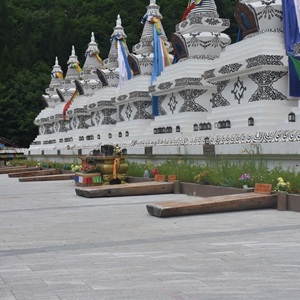 | 乔木:× 灌木:× 草坪:√ 上层植被量:☆ 下层植被量:☆ | 瀑布:× 溪流:× 湖泊:× 水面大小:无 水流速度:无 | 木质建筑:√ 白塔:√ 香炉:√ 设施利用率:☆☆☆☆☆ | 封闭空间:× 半封闭空间:× 开敞空间:√ 空间开放度:☆☆☆☆☆ |
| 地点8(树正寨-双龙海栈道) | 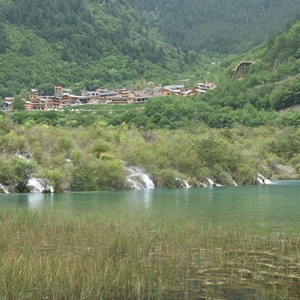 | 乔木:√ 灌木:√ 草坪:√ 上层植被量:☆☆☆ 下层植被量:☆☆ | 瀑布:× 溪流:√ 湖泊:√ 水面大小:☆☆☆☆ 水流速度:☆☆☆ | 木质凳子:√ 木质厕所:√ 木质平台:× 亭子:√ 设施利用率:☆☆☆☆ | 封闭空间:× 半封闭空间:√ 开敞空间:× 空间开放度:☆☆☆ |
注:√表示对应要素存在于该区域,否则为×;☆的数量越多,代表指标得分越高,得分为调查员基于景观元素状态的评级计算均值,用于综合评价采样地点的环境特征。 |
表2 受访者提到的气味元素分类Table 2 Classification of odor elements mentioned by respondents |
| 气味类别 | 气味子类别 |
| 人为主导型 | 人体、香水、食物(固态或半固态)和 饮料、焚香等 |
| 设施主导型 | 道路、木栈道、木质建筑、厕所等 |
| 水-气主导型 | 新鲜的空气、水体(如瀑布、 溪流、湖泊)等 |
| 植物主导型 | 树、草、花、苔藓等 |
| 土壤主导型 | 泥土、植物腐殖质等 |
| [1] |
KOU L R, WEI C, CHI C G, et al. Understanding Sensescapes and Restorative Effects of Nature-Based Destinations: A Mixed-Methods Approach[J]. Journal of Sustainable Tourism, 2025, 33(2): 243-264.
|
| [2] |
CALVERT G, SPENCE C, STEIN B E. The Handbook of Multisensory Processes[M]. Cambridge: MIT Press, 2004.
|
| [3] |
PHEASANT R J, FISHER M N, WATTS G R, et al. The Importance of Auditory-Visual Interaction in the Construction of “Tranquil Space”[J]. Journal of Environmental Psychology, 2010, 30(4): 501-509.
|
| [4] |
LIU J, XIONG Y C, WANG Y J, et al. Soundscape Effects on Visiting Experience in City Park: A Case Study in Fuzhou, China[J]. Urban Forestry & Urban Greening, 2018, 31: 38-47.
|
| [5] |
LIU Y P, HU M J, ZHAO B. Audio-Visual Interactive Evaluation of the Forest Landscape Based on Eye-Tracking Experiments[J]. Urban Forestry & Urban Greening, 2019, 46: 126476
|
| [6] |
DENG L, LUO H, MA J, et al. Effects of Integration Between Visual Stimuli and Auditory Stimuli on Restorative Potential and Aesthetic Preference in Urban Green Spaces[J]. Urban Forestry & Urban Greening, 2020, 53: 126702
|
| [7] |
HOU H R, ZHANG X N, MENG Q H. Odor-Induced Emotion Recognition Based on Average Frequency Band Division of EEG Signals[J]. Journal of Neuroscience Methods, 2020, 334: 108599.
|
| [8] |
QUERCIA D, SCHIFANELLA R, AIELLO L M, et al. Smelly Maps: The Digital Life of Urban Smellscapes[J]. Computer Science, 2015, 9(1): 327-336.
|
| [9] |
陈意微, 袁晓梅. 气味景观研究进展[J]. 中国园林, 2017, 33(2): 107-112.
CHEN Y W, YUAN X M. Research Progress on Smellscape[J]. Chinese Landscape Architecture, 2017, 33(2): 107-112.
|
| [10] |
HE J H, HAO Z Z, LI L, et al. Sniff the Urban Park: Unveiling Odor Features and Landscape Effect on Smellscape in Guangzhou, China[J]. Urban Forestry & Urban Greening, 2022, 78: 127764
|
| [11] |
LING X, GUAN H, PENG J S, et al. Critical Zone Recognition of Smellscape of a Chinese Traditional Market Based on the Sensitivity-Coordination Matrix[J]. Journal of Urban Planning and Development, 2022, 148(3): 05022021.
|
| [12] |
ALAOUI-ISMAÏLI O, ROBIN O, RADA H, et al. Basic Emotions Evoked by Odorants Comparison Between Autonomic Responses and Self-Evaluation[J]. Physiology & Behavior, 1997, 62(4): 713-720.
|
| [13] |
BENSAFI M, BROWN W M, KHAN R, et al. Sniffing Human Sex-Steroid Derived Compounds Modulates Mood, Memory and Autonomic Nervous System Function in Specific Behavioral Contexts[J]. Behavioural Brain Research, 2004, 152(1): 11-22.
|
| [14] |
LEHRNER J, MARWINSKI G, LEHR S, et al. Ambient Odors of Orange and Lavender Reduce Anxiety and Improve Mood in a Dental Office[J]. Physiology & Behavior, 2005, 86(1/2): 92-95.
|
| [15] |
HERZ R S. Aromatherapy Facts and Fictions: A Scientific Analysis of Olfactory Effects on Mood, Physiology and Behavior[J]. International Journal of Neuroscience, 2009, 119(2): 263-290.
|
| [16] |
BADACH J, KOLASIŃSKA P, PACIOREK M, et al. A Case Study of Odour Nuisance Evaluation in the Context of Integrated Urban Planning[J]. Journal of Environmental Management, 2018, 213: 417-424.
|
| [17] |
BALEZ S. Characterisation of an Existing Building According to Olfactory Parameters[EB/OL]. (2002-02-06) [2025-02-26]. https://www.researchgate.net/publication/228481880_Characterisation_of_an_existing_building_according_to_olfactory_parameters.
|
| [18] |
GIDLÖF-GUNNARSSON A, ÖHRSTRÖM E. Noise and Well-Being in Urban Residential Environments: The Potential Role of Perceived Availability to Nearby Green Areas[J]. Landscape and Urban Planning, 2007, 83(2/3): 115-126.
|
| [19] |
MACKAY G J, NEILL J T. The Effect of “Green Exercise” on State Anxiety and the Role of Exercise Duration, Intensity, and Greenness: A Quasi-Experimental Study[J]. Psychology of Sport and Exercise, 2010, 11(3): 238-245.
|
| [20] |
WARD THOMPSON C, ROE J, ASPINALL P, et al. More Green Space Is Linked to Less Stress in Deprived Communities: Evidence from Salivary Cortisol Patterns[J]. Landscape and Urban Planning, 2012, 105(3): 221-229.
|
| [21] |
SASMITHA R, ARUNACHALAM R. Therapeutic Value of Botanical Gardens and Their Role in Improving the Psychological Well-Being of the Visitors[J]. Trends in Biosciences, 2017, 10(34): 7304-7306.
|
| [22] |
高翔, 姚雷. 特定芳香植物组合对降压保健功能的初步研究[J]. 中国园林, 2011, 27(4): 37-38.
GAO X, YAO L. Preliminary Study on the Combinations of Specific Aromatic Plants for Hypotensive Healthcare[J]. Chinese Landscape Architecture, 2011, 27(4): 37-38.
|
| [23] |
MOSS M, COOK J, WESNES K, et al. Aromas of Rosemary and Lavender Essential Oils Differentially Affect Cognition and Mood in Healthy Adults[J]. International Journal of Neuroscience, 2003, 113(1): 15-38.
|
| [24] |
RAGUSO R A. Wake up and Smell the Roses: The Ecology and Evolution of Floral Scent[J]. Annual Review of Ecology, Evolution, and Systematics, 2009, 39: 549-569.
|
| [25] |
BLANES-VIDAL V, HANSEN M N, ADAMSEN A P S, et al. Characterization of Odor Released During Handling of Swine Slurry: Part I. Relationship Between Odorants and Perceived Odor Concentrations[J]. Atmospheric Environment, 2009, 43(18): 2997-3005.
|
| [26] |
KUO S C, TSAI Y I, SOPAJAREE K. Emission Identification and Health Risk Potential of Allergy-Causing Fragrant Substances in PM2.5 from Incense Burning Building and Environment 2015, 87: 23-33.
|
| [27] |
MIYAZAWA M, NOMURA M, MARUMOTO S, et al. Characteristic Odor Components of Essential Oil from Scutellaria Laeteviolacea[J]. Journal of Oleo Science, 2013, 62(1): 51-56.
|
| [28] |
肖捷菱, 冯慧超, 谢辉. 从“嗅”到“景”: 嗅觉景观研究方法与设计理论综述[J]. 西部人居环境学刊, 2021, 36(5): 7-14.
XIAO J L, FENG H C, XIE H. From “Smell” to “Smellscape”: A Systematic Review of Smellscape Research and Design Methods[J]. Journal of Human Settlements in West China, 2021, 36(5): 7-14.
|
| [29] |
ŚLIWA M, RIACH K. Making Scents of Transition: Smellscapes and the Everyday in “Old” and “New” Urban Poland[J]. Urban Studies, 2012, 49(1): 23-41.
|
| [30] |
KAEPPLER K, MUELLER F. Odor Classification: A Review of Factors Influencing Perception-Based Odor Arrangements[J]. Chemical Senses, 2013, 38(3): 189-209.
|
| [31] |
KUBARTZ B. Urban Smellscapes: Understanding and Designing City Smell Environments[J]. The AAG Review of Books, 2013, 2(3): 99-101.
|
| [32] |
RAKOTO P Y, DEILAMI K, HURLEY J, et al. Revisiting the Cooling Effects of Urban Greening: Planning Implications of Vegetation Types and Spatial Configuration[J]. Urban Forestry & Urban Greening, 2021, 64: 127266
|
| [33] |
REN Z B, ZHAO H B, FU Y, et al. Effects of Urban Street Trees on Human Thermal Comfort and Physiological Indices: A Case Study in Changchun City, China[J]. Journal of Forestry Research, 2022, 33(3): 911-922.
|
| [34] |
DOUKAKIS E, DEBATTISTA K, BASHFORD-ROGERS T, et al. Audio-Visual-Olfactory Resource Allocation for Tri-modal Virtual Environments[J]. IEEE Transactions on Visualization and Computer Graphics, 2019, 25(5): 1865-1875.
|
| [35] |
王一凡, 金荷仙, 周艳慧, 等. 城市绿地梅花听嗅刺激对人体情绪及压力恢复研究[J]. 中国园林, 2024, 40(1): 47-53.
WANG Y F, JIN H X, ZHOU Y H, et al. A Study of Human Mood and Stress Recovery by Auditory and Olfactory Stimulation of Plum Blossoms in Urban Green Space[J]. Chinese Landscape Architecture, 2024, 40(1): 47-53.
|
| [36] |
崔雪, 金荷仙, 曾程程. 校园绿地听嗅交互感知对大学生压力恢复的影响研究[J]. 中国园林, 2023, 39(2): 26-31.
CUI X, JIN H X, ZENG C C. A Study on the Influence of Campus Green Space Auditory and Olfactory Interactive Perception on Stress Recovery of College Students[J]. Chinese Landscape Architecture, 2023, 39(2): 26-31.
|
| [37] |
鲍齐齐, 金荷仙, 曾程程. 视嗅感知下月季景观的恢复性效益研究[J]. 景观设计学(中英文), 2024, 12(6): 25-46.
BAO Q Q, JIN H X, ZENG C C. Research on Restorative Benefits of Rose Landscapes Through Visual and Olfactory Perception[J]. Landscape Architecture Frontiers, 2024, 12(6): 25-46.
|
| [38] |
LIU C, WU W, OUYANG J Y, et al. Influence of Multisensory Perceptions on Thermal Comfort in Heat Wave Weather with Different Heat Pressures[J]. Ecosystem Health and Sustainability, 2025, 11: 305.
|
| [39] |
王可, 金荷仙, 曾程程, 等. 嗅觉感知下园林植物气味类型、浓度对人生理心理的影响[J]. 林业科学, 2025, 61(1): 126-136.
WANG K, JIN H X, ZENG C C, et al. Influence of Landscape Plant Odor Type and Concentration on Human Physiology and Psychology Under Olfactory Perception[J]. Scientia Silvae Sinicae, 2025, 61(1): 126-136.
|
| [40] |
WANG C, ZHU R L, ZHONG J, et al. Smellscape Characteristics of an Urban Park in Summer: A Case Study in Beijing, China[J]. Sustainability, 2024, 16(1): 163
|
| [41] |
DEGEN M M, ROSE G. The Sensory Experiencing of Urban Design: The Role of Walking and Perceptual Memory[J]. Urban Studies, 2012, 49(15): 3271-3287.
|
| [42] |
KITSON J, LEIVA M, CHRISTMAN Z, et al. Evaluating Urban Odor with Field Olfactometry in Camden, NJ[J]. Urban Science, 2019, 3(3): 93.
|
| [43] |
TOLAAS S. The City from the Perspective of the Nose[C]// MOSTAFAVI M, DOHERTY G. Ecological Urbanism, Revised Edition. Baden: Lars Müller Publishers, 2010.
|
| [44] |
BUCHROITHNER M F, PRECHTEL N, BURGHARDT D, et al. Proceedings of the 26th International Cartographic Conference[C/OL]. Dresden: International Cartographic Association, 2013 [2025-02-26]. https://icaci.org/icc2013/.
|
| [45] |
XIAO J L, TAIT M, KANG J. A Perceptual Model of Smellscape Pleasantness[J]. Cities, 2018, 76: 105-115.
|
| [46] |
XIAO J L, TAIT M, KANG J. Understanding Smellscapes: Sense-Making of Smell-Triggered Emotions in Place[J]. Emotion, Space and Society, 2020, 37: 100710.
|
| [47] |
BOUCHARD N. Le théâtre de la mémoire olfactive: le pouvoir des odeurs à modeler notre perception spatiotemporelle de l'environnement[D]. Montréal: Université de Montréal, 2013.
|
| [48] |
ROSS S M. The Garden of Serenity: The Soothing Scents of Aromatic Plants[J]. Holistic Nursing Practice, 2009, 23(2): 124-126.
|
| [49] |
MCLEAN K. Smellmap: Amsterdam: Olfactory Art and Smell Visualization Leonardo 2017, 50(1): 92-93.
|
| [50] |
余娇, 周恬仪, 杨雨清, 等. 公众感知视角下的森林公园嗅觉景观评价体系构建[J]. 中国城市林业, 2022, 20(6): 106-111.
YU J, ZHOU T Y, YANG Y Q, et al. Construction of Forest Park Olfactory Landscape Evaluation System from the Perspective of Public Perception[J]. Journal of Chinese Urban Forestry, 2022, 20(6): 106-111.
|
| [51] |
GAO Y J, WANG C L, HUANG M L, et al. A New Perspective of Sustainable Perception: Research on the Smellscape of Urban Block Space[J]. Sustainability, 2022, 14(15): 9184.
|
| [52] |
MARKOVIC S, VULIN J. The Structure of Olfactory Experience[J]. Psihologija, 2008, 41(1): 21-34.
|
| [53] |
JIANG Y, LIU R, WANG L. Recent Progress in the Study of Consciousness and Multisensory Integration[J]. Chinese Science Bulletin, 2016, 61(1): 2-11.
|
| [54] |
STEIN B E, STANFORD T R. Multisensory Integration: Current Issues from the Perspective of the Single Neuron[J]. Nature Reviews Neuroscience, 2008, 9(4): 255-266.
|
| [55] |
MURPHY C, CAIN W S, GILMORE M M, et al. Sensory and Semantic Factors in Recognition Memory for Odors and Graphic Stimuli: Elderly Versus Young Persons[J]. The American Journal of Psychology, 1991, 104(2): 161-192.
|
| [56] |
SAIVE A L, ROYET J P, PLAILLY J. A Review on the Neural Bases of Episodic Odor Memory: From Laboratory-Based to Autobiographical Approaches[J]. Frontiers in Behavioral Neuroscience, 2014, 8: 240
|
| [57] |
ENGEN T, ROSS B M. Long-Term Memory of Odors with and Without Verbal Descriptions[J]. Journal of Experimental Psychology, 1973, 100(2): 221-227.
|
| [58] |
MARTINEC NOVÁKOVÁ L, FIALOVÁ J, HAVLÍČEK J. Effects of Diversity in Olfactory Environment on Children’s Sense of Smell[J]. Scientific Reports, 2018, 8: 2937.
|
| [59] |
BROMLEY S M. Smell and Taste Disorders: A Primary Care Approach[J]. American Family Physician, 2000, 61(2): 427-436,438.
|
| [60] |
PRIYADARSHANI S, MANI M. Sensory Perception of Humidity in the Built Environment for Wellness: A Scoping Review[J]. Current Science, 2024, 127(2): 160.
|
| [61] |
XIAO J L, TAIT M, KANG J. The Design of Urban Smellscapes with Fragrant Plants and Water Features[M]// HENSHAW V, MCLEAN K, MEDWAY D. Designing with Smell: Practices, Techniques and Challenges. London: Routledge, 2017: 83-95.
|
| [62] |
CONTI C, GUARINO M, BACENETTI J. Measurements Techniques and Models to Assess Odor Annoyance: A Review[J]. Environment International, 2020, 134: 105261.
|
| [63] |
WIŚNIEWSKA M, SZYŁAK-SZYDŁOWSKI M. The Impact of Objects with a Potential Odour Nuisance on the Life Comfort of the Urban Agglomeration Inhabitants[J]. Applied Sciences, 2024, 14(22): 10708.
|
/
| 〈 |
|
〉 |