

Research Hotspots in and Practical Experience and Insights from Germany’s Resilient City Construction
|
LI Yinong, Ph.D., is a lecturer in the School of Landscape Architecture, Beijing Forestry University. Her research focuses on urban and rural planning and governance, and the digital transformation of urban and rural areas |
|
(GER) Annette Rudolph-Cleff, Ph.D., is a professor in Architectural Design and Urban Development Department, TU Darmstadt, Germany. Her research focuses on critical infrastructure (water and energy supply) and community-based development |
Received date: 2025-02-25
Revised date: 2025-09-01
Online published: 2025-12-10
Copyright
[Objective] The increasing frequency of environmental changes and natural disasters has intensified pressures and disturbances on urban systems, making the development of “resilient city” a key focus in global spatial governance and risk prevention. Leveraging scientific methods to plan and construct resilient cities, enhance the resilience of human settlement systems, and explore mechanisms for achieving resilient urban and rural development has become a consensus among academia, industry, and governments in response to urban disaster risk prevention and control. In recent years, frequent crises such as the COVID-19 pandemic in 2020 and the Ahr Valley floods in 2021 have significantly advanced Germany’s theoretical and practical approaches to resilient city construction. “Resilient city” gradually became a core concept in German urban master planning during the latter half of the 2010s. Analyzing the theoretical hotspots and practical experience of resilient city construction in Germany can provide theoretical foundations and practical guidance for the systematic integration and action-oriented refinement of resilient city development and governance in China.
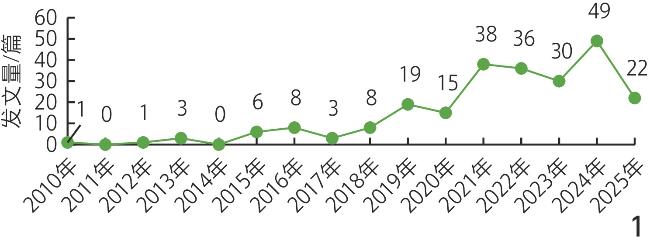
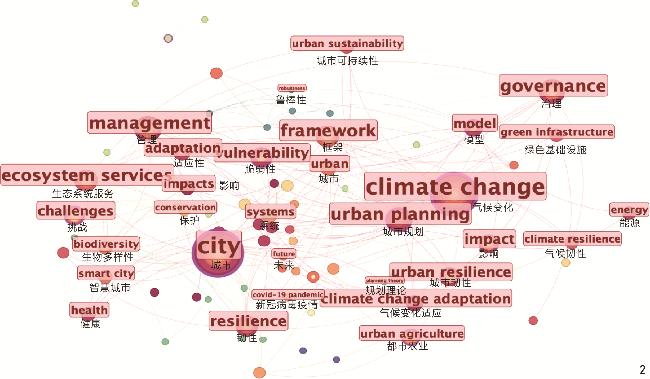
[Methods] Based on the Web of Science database, this research employs bibliometric analysis and visualization to examine publications on resilient cities in Germany spanning the period from 2010 to 2025. Based on a timeline analysis of 239 publications and a keyword hotspot analysis, the research and practical progress in Germany’s resilient city construction are summarized.
[Results] The results of timeline and keyword frequency analysis reveal that research on resilient cities in Germany is relatively limited in quantity and mainly concentrated in the period from 2010 to 2019. However, since 2019, academic interest has grown steadily, with a peak in publications between 2021 and June 2025, accounting for 73% of the total publications over the 15-year period. Keyword analysis highlights that climate-related terms such as climate change, climate change adaptation, and climate resilience appear most frequently. Urban sustainability also ranks highly, reflecting the mainstream influence of the United Nations Sustainable Development Goals (SDGs), which place “resilience” and “sustainability” on equal footing. Additionally, terms commonly used to describe resilience characteristics, such as vulnerability and adaptation, are prominent, indicating strong academic focus on the attributes of resilience in the German context. These clues may serve as entry points for analyzing Germany’s theoretical and practical progress in resilient city development.
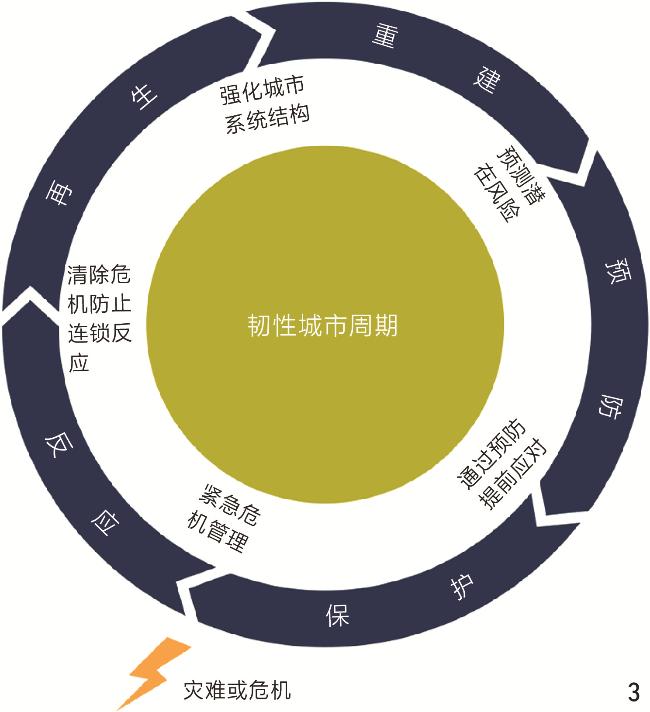
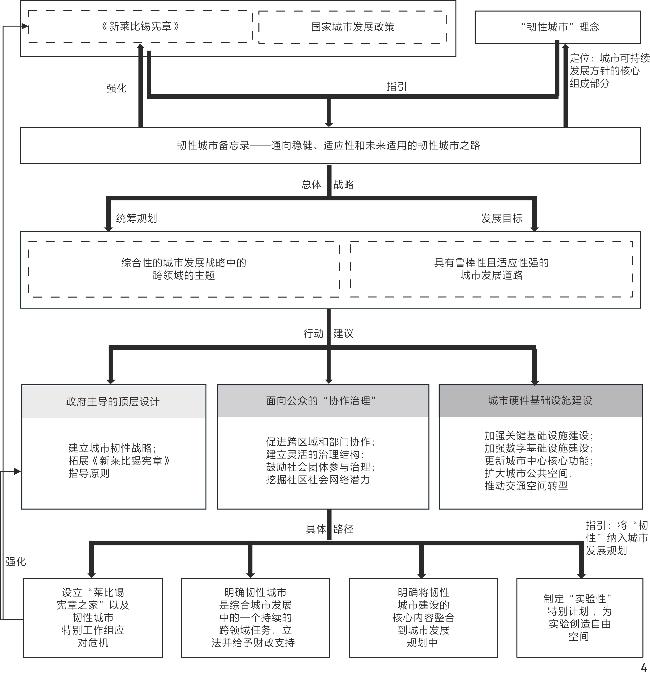
[Conclusion] Against the backdrop that “sustainable development” has long served as the dominant theme in German urban policy, the interpretation of “resilience” in German academia involves a conceptual distinction from “sustainability”. Resilience complements the sustainability notion that future problems can be preventively addressed by treating uncertainties, surprises, or disasters as “permanent companions of humanity” and preparing for them through continuous learning. The core definition of the concept of “resilient city” can be summarized as the robustness, redundancy, diversity, flexibility and other resilience characteristics of various urban elements in supporting system operations during crises or disasters, as well as the recovery and innovative learning capabilities in maintaining basic system functions and urban resident life. Furthermore, German academia incorporates diverse perspectives in defining the basic scope of resilience characteristics and the delineation of resilience planning and governance cycles. To address the complexity, vulnerability, and uncertainties of cities in a risk society, it is essential to enhance decentralized economic and infrastructure systems, natural systems (“hardware environment”), efficient and rapid response mechanisms, cross-sectoral planning and collaborative governance (“soft power”), as well as the crisis response capabilities of individuals and organizations within urban systems — such as social networks and trust relationships — to minimize disruption duration and strengthen the ability to cope with sudden disasters or crises. The Memorandum “Urbane Resilienz — Wege zur robusten, adaptiven und zukunftsfähigen Stadt” (the “Memorandum”), adopted at the 14th Federal Conference on Urban Development Policy in 2021, spurred broad discussions on the resilience concept, prompting some cities to integrate resilience into urban development plans and formulate related policies and action plans. Several cities have launched pilot projects, exploring infrastructure resilience, climate resilience, and social resilience, thereby accumulating valuable experience. However, overall, sudden crises and disasters have been the direct drivers prompting local governments in Germany to shift their mindset and explore “resilience” development pathways. Research projects and funding programs have been a major avenue for introducing resilience themes into German urban and landscape planning. Based on Germany’s experiences and challenges in resilient city construction, several recommendations for China’s resilient city construction are proposed as follows. 1) Develop targeted action guidelines and standard systems for resilient cities at the top strategic design level; 2) strengthen full-cycle resilient city construction by creating refined, precise, and comprehensive city-wide risk maps to help government departments clearly understand uncertain risks across different times and locations, improve the scientificity and effectiveness of prevention and early warning, and explore pathways for full-cycle resilient city development; and 3) enhance interdisciplinary and cross-departmental collaboration to promote goal-coordinated and systematic resilient city construction.
Key words: resilient city; Germany; bibliometrics; practical experience
Yinong LI , Rudolph-Cleff Annette . Research Hotspots in and Practical Experience and Insights from Germany’s Resilient City Construction[J]. Landscape Architecture, 2025 , 32(10) : 42 -50 . DOI: 10.3724/j.fjyl.LA20250112
| 类别 | 韧性特征 | 内涵 |
| 城市系统中个体和 组织在危急时刻的 应对能力 | 包容性 | 居民有使用城市基础设施和公共服务的通道,以及参与决定的权利 |
| 平等性 | 城市规划的实施平等的影响每个居民 | |
| 适应性 | 确保城市居民能够适应城市的变化 | |
| 透明性 | 确保城市系统和决定是公开透明的 | |
| (社会)连通性 | 社会网络和信任关系,提升城市自我组织和自我恢复的能力 | |
| 城市系统的 “硬件”环境 | 鲁棒性 | 确保城市从基础设施和城市组织伤害中快速恢复的能力 |
| 冗余性 | 备份系统,在极端情况下能够快速投入使用 | |
| 多样性 | 作为城市发展的基础,具有多元化的城市经济和基础设施 | |
| 环境保护 | 保护自然系统并保障其效能 | |
| 去中心化 | 将公共服务及资源在城市中分散布置 | |
| 可塑性 | 城市规划和决策流程应尽可能地灵活,必要时允许适当做出改变 | |
| 城市规划和治理过 程中的“软实力” | 融合性 | 确保规划举措在多部门协作的实施过程中能够融合 |
| 反思性 | 将反馈和经验运用于未来的城市规划和治理实践 | |
| 反馈 | 实现发展决策者高效快速反应的机制 | |
| 效率 | 确保本地政府能够高效地应对危机 | |
| 前瞻性 | 在城市规划和治理中融入城市未来发展的相关信息 | |
| 预见性 | 城市系统对于可能遇见的干扰或灾害有所准备 | |
| 创新能力 | 为应对未来的危机、灾难和冲击,需要摆脱传统的控制模式,具备创新的解决方案的能力 |
表2 德国韧性城市建设的代表性案例Tab. 2 Representative cases of resilient city construction in Germany |
| 资助方 | 项目名称 | 项目背景 | 研究目标 | 核心策略 |
| 德国联邦教育和研究部 | ZURES | 为“可持续发展研究”(research for sustainable developments)框架计划的一部分内容,主要关注热应激和城市社会转型过程 | 以德国波恩市和路德维希堡市为例,识别城市和社区空间的转型过程 | 提出多种适应性措施,包括绿色和蓝色基础设施投资、自然区域保护等 |
| KAHR | 以2021年阿尔河谷洪灾为契机,研究洪灾后灾区重建与长期气候适应能力建设方式 | 结合气象学、地理学、风景园林和城市规划学等学科知识,开发用于评估、提升城市应对洪水灾害的韧性的方法和工具 | 通过重构自然防洪系统、绘制基于高精度水文模型的洪水风险图、建设“公民实验室”并组织居民参与重建决策等方式提升韧性 | |
| ZIZ | 支持城市和社区应对城市中心和区域中心的突发危机及城市功能结构问题 | 资金支持城市和社区开发创新概念和措施,以增强它们未来的适应能力 | 将空置历史建筑改造为文化创意中心或社区枢纽;采取微气候优化,洪水适应性设计等气候韧性技术;开发城市数字孪生等平台 | |
| 德国联邦教育和研究部、斯图加特大学、施瓦比施格明德市 | RESI-Extrem | 聚焦极端气候事件(如洪水、热浪)对城市系统的冲击 | 通过系统总结极端气候事件的经验教训,提出气候韧性城市建设的综合性城市发展策略 | 开发“气候压力地图”,实现风险可视化,试点“海绵街道”等基础设施冗余设计,建立“气候邻里大使”等社区响应网络 |
| 黑森州政府 | EmergenCity | 通过推动多部门协同响应突发公共事件,提高城市系统面临未知风险时的整体韧性 | 基于韧性城市规划及治理周期的各阶段设计了涵盖城市与社会、信息技术、通信系统以及物联网系统的子课题项目,并构建基于数字孪生技术的城市危机模拟平台 | 通过高精度建模,实现城市运转状态的毫秒级更新;开发应急路径优化模型,使救援响应和时间缩短22% |
| 德国联邦住房和 城市发展部 | Post-Corona-Stadt | 是亚琛区域韧性协会发起的、德国国家城市发展政策框架下的“后疫情时代的城市发展”征集项目之一 | 识别疫情对城市经济、社会及空间结构的长期影响,提出整合公共卫生、经济复苏与气候适应的发展目标 | 建设混合功能街区;建设可升降广场地面等“韧性”公共空间;推出“韧性企业认证”,并对采用无接触支付、分布式仓储的小企业减免税收 |
文中图表均由作者绘制。
| [1] |
李依浓, 李洋. 数字化背景下的韧性城市建设: 以德国达姆施塔特为例[J]. 城市发展研究, 2021, 28(7): 65-74.
LI Y N, LI Y. Towards Resilient Cities in the Light of Digitalization: Case Study of Darmstadt[J]. Urban Development Studies, 2021, 28(7): 65-74.
|
| [2] |
翟国方, 邹亮, 马东辉, 等. 城市如何韧性[J]. 城市规划, 2018, 42(2): 42-46.
ZHAI G F, ZOU L, MA D H, et al. How Can Cities Become Resilient[J]. City Planning Review, 2018, 42(2): 42-46.
|
| [3] |
陶希东. 中国韧性城市建设: 内涵特征、短板问题与规划策略[J]. 城市规划, 2022, 46(12): 28-34.
TAO X D. Construction of Resilient Cities in China: Connotation Characteristics, Weaknesses, and Planning Strategies[J]. City Planning Review, 2022, 46(12): 28-34.
|
| [4] |
陶希东. 中国超大特大韧性城市建设: 理论逻辑、实践探索与路径选择[J]. 南京社会科学, 2025(7): 65-73.
TAO X D. Building Resilient Mega and Super-Large Cities in China: Theoretical Logic, Practical Exploration and Pathway Choices[J]. Nanjing Journal of Social Sciences, 2025(7): 65-73.
|
| [5] |
曾鹏. 韧性城市与城市韧性发展机制[J]. 人民论坛·学术前沿, 2022 S1 35 45
ZENG P. Resilient Cities and the Development Mechanism of Urban Resilience[J]. Frontiers, 2022 S1 35 45
|
| [6] |
李文硕, 等.历史学视野下的“韧性城市”[N].光明日报, 2021-07-19(14版).
LI W S, et al. “Resilient City” from a Historical Perspective[J]. Guangming Daily, 2021-07-19(14).
|
| [7] |
BECKMANN K J. Jetzt auch noch resilient?: Anforderungen an die Krisenfestigkeit der Städte[M]. Berlin: Deutsches Institut für Urbanistik, 2012.
|
| [8] |
JAKUBOWSKI P. Resilienz — eine zusätzliche Denkfigur für gute Stadtentwicklung[J]. Informationen zur Raumentwicklung, 2013(4): 371-378.
|
| [9] |
Bundesinstitut für Bau-, Stadt- und Raumforschung. Stadtentwicklung von Kleinstädten, mit Kleinstädten, für Kleinstädte: Tätigkeitsbericht zur Pilotphase Kleinstadtakademie[EB/OL]. (2022-07-01)[2025-02-12]. https://www.bbsr.bund.de/BBSR/DE/veroeffentlichungen/sonderveroeffentlichungen/2022/kleinstadtakademie-taetigkeitsbericht-dl.pdf?__blob=publicationFile&v=2
|
| [10] |
Cityif.何为“韧性城市”?权威概念解析及最新案例分析[EB/OL].(2017-07-17)[2025-02-12]. https://www.sohu.com/a/155180704_651721.
Cityif.What Is “Resilient City”? An Analysis of Authoritative Concepts and Latest Case Studies[EB/OL]. (2017-07-17)[2025-02-12]. https://www.sohu.com/a/155180704_651721.
|
| [11] |
钱玲燕, 杨永康, 陈炼.欧洲城镇可持续发展重要政策选编: 《新莱比锡宪章2020》[EB/OL].(2021-06-17)[2025-02-12]. https://m.thepaper.cn/baijiahao_13180844.
QIAN Y L, YANG Y K, CHEN L. Compilation of Key Policies for Sustainable Development in European Towns: The New Leipzig Charter 2020[EB/OL]. (2021-06-17)[2025-02-12]. https://m.thepaper.cn/baijiahao_13180844.
|
| [12] |
KEGLER H. Raum und Resilienz. Zwei Grundkategorien von stadtregionaler Planung[J]. Raum und Resilienz: Zukunft von Stadtregionen, 2016(1): 1-5.
|
| [13] |
SCHNUR O. Resiliente Quartiersentwicklung Eine Annäherung über das Panarchie-Modell adaptiver Zyklen[J]. Informationen zur Raumentwicklung, 2013(4): 337-350.
|
| [14] |
KUHLICKE C. Vulnerability, Ignorance and the Experience of Radical Surprises[M]//GROSS M, MCGOEY L. Routledge International Handbook of Ignorance Studies. London: Routledge, 2015: 239-246.
|
| [15] |
ENDREß M, RAMPP B. Resilienz als Perspektive auf Gesellschaftliche Prozesse: Auf dem Weg zu einer soziologischen Theorie[M]//ENDREß M, MAURER A. Resilienz im Sozialen: Theoretische und empirische Analysen. Wiesbaden: Springer Fachmedien Wiesbaden, 2014: 33-55.
|
| [16] |
SIEVERTS T. Am Beginn einer Stadtentwicklungsepoche der Resilienz? Folgen für Architektur, Städtebau und Politik[J]. Informationen zur Raumentwicklung, 2013(4): 315-323.
|
| [17] |
SCHNEIDER M, VOGT M. Responsible Resilience: Rekonstruktion der Normativität von Resilienz auf Basis einer responsiven Ethik[J]. GAIA - Ecological Perspectives for Science and Society, 2017, 26(1): 174-181.
|
| [18] |
TILLACK D, HORNBOSTEL L. Kommunale Resilienz als Innovationsmotor und Garant künftiger Daseinsvorsorge[M]//WITTPAHL V. Resilienz. Berlin: Heidelberg, 2023.
|
| [19] |
Bundesinstitut für Bau-, Stadt- und Raumforschung. Resilienz in der Smart City[M]. Bonn: Bundesinstitut für Bau-, Stadt- und Raumforschung, 2023:2.
|
| [20] |
KUHLICKE C, PÖßNECK J, RINK D. Wie halten Sie es mit der Resilienz? Kommunale Perspektiven auf ein Aktuelles Stadtkonzept[R/OL]. Berlin: Bundesverband für Wohnen und Stadtentwicklung, 2024. https://www.vhw.de/fileadmin/user_upload/08_publikationen/vhw-schriftenreihe-tagungsband/PDFs/vhw_Schriftenreihe_Nr._47_Resilienz_in_der_kommunalen_Praxis.pdf.
|
| [21] |
石晓冬, 张晓昕, 冯雅薇, 等. 北京市韧性城市建设的系统路径与规划实践[J]. 城市学报, 2024(6): 24-29.
SHI X D, ZHANG X X, FENG Y W, et al. Systematic Path and Planning Practice of Resilient City Construction in Beijing[J]. Journal of Urban Sciences, 2024(6): 24-29.
|
| [22] |
Bundesinstitut für Bau-, Stadt- und Raumforschung. Stresstest Stadt — wie resilient sind unsere Städte? Unsicherheiten der Stadtentwicklung identifizieren, analysieren und bewerten Bonn[R/OL]. (2018-02-01)[2025-02-12]. https://www.bbsr.bund.de/BBSR/DE/veroeffentlichungen/sonderveroeffentlichungen/2018/stresstest-stadt.html.
|
| [23] |
BOLTE G, HAMILTON J, HALLMANN A, et al. Stresstest Resilientes Quartier. Eine Arbeitshilfe für Planungs- und Bauverwaltungen[R]. Bremen: Uni Bremen. 2022: 18-20.
|
| [24] |
Bundesministerium des Innern, für Bau und Heimat. Memorandum Urbane Resilienz — Wege zur robusten, adaptiven und zukunftsfähigen Stadt[EB/OL]. (2021-05-01)[2025-02-12]. https://www.nationale-stadtentwicklungspolitik.de/NSPWeb/SharedDocs/Blogeintraege/DE/memorandum_urbane_resilienz.html.
|
| [25] |
SWECO. Stadt Bremervörde Innenstadt Mitte Zweite Fortschreibung Städtebaulicher Rahmenplan[R/OL]. Quedlinburg: SWECO, 2021: 58. https://www.quedlinburg.de/Bauen-und-Umwelt/Stadtplanung/Städtebaulicher-Rahmenplan/index.php.
|
| [26] |
Kompetenzzentrum Klimafolgen und Anpassung. ZURES — Vulnerability and Risk Analysis as an Instrument for the Advancement of Resilience of Cities and Urban Infrastructure[EB/OL]. (2021-08-16)[2025-02-12]. https://www.umweltbundesamt.de/en/topics/climate-energy/climate-change-adaptation/adaptation-tools/projects-studys/zures-vulnerability-risk-analysis-as-an-instrument.
|
| [27] |
Deutsches Institut für Urbanistik. Nach der Flutkatastrophe: Chance für Veränderungen-Ein Praxisleitfaden mit Strategienund Beispielen für Kommunen[EB/OL]. (2025-02-01)[2025-02-08]. https://repository.difu.de/items/5d42d79b-d068-453c-a128-5e441b35c7a0.
|
| [28] |
Bundesministerium für Wohnen, Stadtentwicklung und Bauwesen. ZUKUNFTS-VIT — Installierung eines Resilienzmanagers sowie Erstellung eines Resilienzkonzepts für die Stadt Viechtach zur Zukunftssicherung der strategischen Transformationsfähigkeit in verschiedenen Handlungsbereichen[EB/OL]. (2023-01-01)[2025-02-08]. https://www.innenstadtprogramm.bund.de/SharedDocs/textbaustein/Webs/ZIZ/DE/projekte/Viechtach.html.
|
| [29] |
University of Stuttgart. Um was geht es bei “RESI-extrem”?[EB/OL]. (2022-12-19)[2025-02-05]. https://www.project.uni-stuttgart.de/resi-extrem/.
|
| [30] |
Technische Universität Darmstadt. Emergen CITY — The Resilient Digital City[EB/OL]. (2020-05-09)[2025-02-05]. https://www. emergencity.de/research.html.
|
| [31] |
Bundesinstitut für Bau-, Stadt- und Raumforschung. Urbane Resilienz in der Praxis[ EB/OL]. (2024-08-14)[2025-02-05]. https://www.nationale-stadtentwicklungspolitik.de/NSPWeb/SharedDocs/Publikationen/DE/Publikationen/Urbane-Resilienz-in-der-Praxis.pdf?__blob=publicationFile&v=2.
|
| [32] |
KUHLICKE C. Resiliente Stadt[M]//RINK D, HAASE A. Handbuch Stadtkonzepte. Analysen, Diagnosen, Kritiken und Visionen. Stuttgart: UTB GmbH, 2018: 359-380.
|
| [33] |
张雨, 付彦荣, 邵继中, 等. 风景园林应对气候变化的实践与气候积极性设计方法[J]. 华中农业大学学报, 2023, 42(4): 32-41.
ZHANG Y, FU Y R, SHAO J Z, et al. Practice of Landscape Architecture in Responding to Climate Change and Design Method of Climate Initiative[J]. Journal of Huazhong Agricultural University, 2023, 42(4): 32-41.
|
| [34] |
HUCK A, MONSTADT J, DRIESSEN P P J, et al. Towards Resilient Rotterdam? Key Conditions for a Networked Approach to Managing Urban Infrastructure Risks[J]. Journal of Contingencies and Crisis Management, 2021, 29(1): 12-22.
|
/
| 〈 |
|
〉 |