

The Concept of Resilience to Withstand Floods in China’s Traditional Construction Wisdom and Its Modern Implications
|
TIAN Jian, Ph.D., is deputy director of and an associate research fellow in the Department of Urban and Rural Planning, School of Architecture, Tianjin University, a senior planner in Tianjin University Research Institute of Architectural Design and Urban Planning Co., Ltd., a National Registered Planner, and a member of the Resilient City Council, Chinese Society for Urban Studies. His research focuses on urban and rural resilience planning and design |
|
MA Kaiyue is a master student in the School of Architecture, Tianjin Chengjian University. Her research focuses on urban and rural resilience planning and design |
|
ZENG Suiping, Ph.D., is vice dean of and a professor in the School of Architecture, Tianjin Chengjian University, a National Registered Planner, and a member of the Resilient City Council, China Society for Urban Studies. Her research interests are urban and rural resilience planning and design |
Received date: 2024-08-29
Revised date: 2025-08-03
Online published: 2025-12-10
Copyright
[Objective] Facing frequent extreme climate disasters from global change, especially severe rainstorms and floods, human society faces unprecedented challenges. According to the Global Disaster Data Platform, floods have become one of the main factors causing global casualties and social and economic losses. In 2021, floods accounted for 56.13% of major natural disasters worldwide, causing 41.87% of disaster-related deaths. In the same year, the torrential rain in Zhengzhou caused 380 deaths and direct economic losses of 40.9 billion yuan. These data reveal the destructive nature of floods and the current disaster vulnerability of cities. Therefore, this research delves deeply into the ancient Chinese concepts and experiences of flood resilience, distills universal prevention and control strategies from the long-term flood control practices of the ancients, and provides scientific guidance for current urban construction and disaster prevention and mitigation, in order to enhance the flood resilience of cities, reduce disaster losses, and ensure the safety of people’s lives and property.
[Methods] To comprehensively analyze the concept of resilience to withstand flood in ancient China, this research adopts a multi-dimensional approach: by sorting out historical records and cases to construct a theoretical − methodological − practical cognitive framework, it explores its theoretical basis, methodological system and practical application; this research analyzes the traditional concept from three aspects: flood control, flood response and flood adaptation. At the flood control level, it focuses on the construction, maintenance and strategy formulation and implementation of flood control facilities in ancient cities. At the flood response level, it explores the emergency mechanisms, rescue measures and post-disaster reconstruction of ancient people. At the flood adaptation level, it emphasizes the concept of coexistence between humans and floods, and achieves harmony between cities and floods by adjusting urban layout and optimizing water conservancy facilities. At the same time, from the perspectives of multi-party coexistence and game symbiosis, it analyzes concept of resilience to withstand flood the evolution and adaptation of the ancient flood control resilience concept in different historical periods and regional backgrounds to more comprehensively reveal its internal logic and laws.
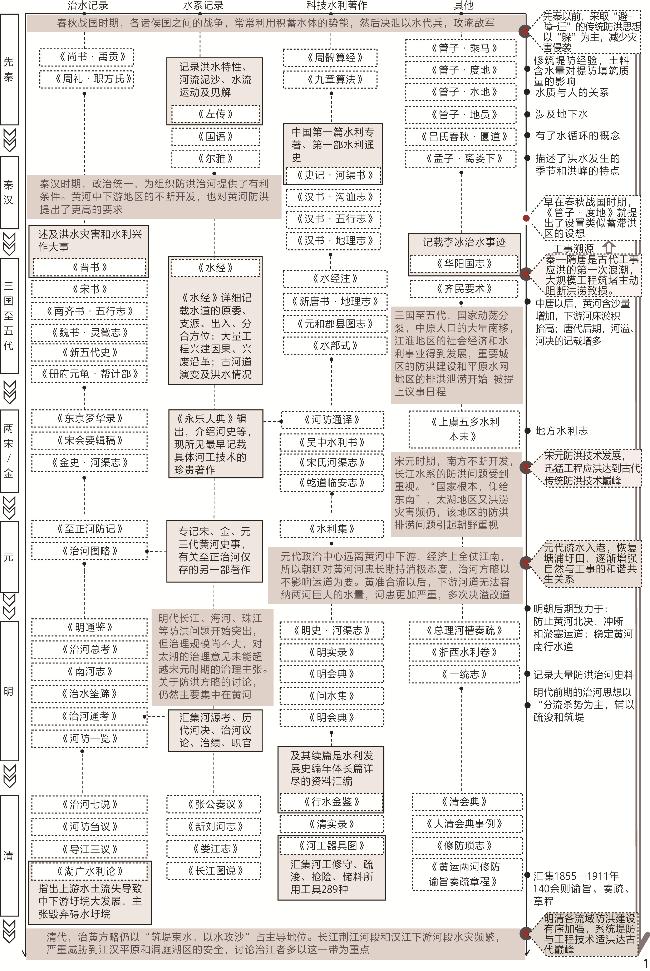
[Results] After an in-depth analysis of ancient flood control ideas such as urban management and water conservancy projects, this research summarizes the evolution law of the concept of resilience to withstand flood from “passive prevention and control” to “active diversion” and then to “harmonious coexistence”. During the passive prevention and control stage, ancient people mainly built defense facilities such as city walls and DAMS to resist floods. Although this alleviated disasters, it had problems such as insufficient defense and high maintenance costs. With the advancement of technology and the deepening of understanding, active drainage strategies have gradually become mainstream. By excavating canals and building reservoirs to regulate water flow, the threat of floods can be effectively reduced. However, there are also limitations such as soil erosion and ecological damage. In the long-term practice, the ancients gradually formed the concept of harmonious coexistence with floods. Through measures such as afforestation and building wetland parks, they not only enhanced the flood control capacity of cities but also protected the ecology, achieving harmonious coexistence between humans and nature.
[Conclusion] By analyzing the changes in the concepts and experiences of flood resilience in ancient China, this research draws conclusions and inspirations: First, the wisdom and experience accumulated by the ancients in long-term flood control have important reference significance for enhancing the current flood resilience of cities; secondly, the ancient Chinese concept of resilience to withstand flood has undergone an evolution from “passive prevention and control − active guidance − harmonious coexistence”, which reflects the ancients’ profound understanding of the relationship between humans and nature. Thirdly, it proposes three levels of resilience disaster prevention experiences: “conforming to nature”, “adapting to the trend”, and “adapting to local conditions”. Conforming to nature means respecting the laws and conforming to the characteristics of floods, and achieving coexistence between humans and nature through reasonable planning. Adapting to the trend means making use of the terrain and hydrological conditions and adopting flexible flood control measures to enhance efficiency. Adapting measures to local conditions means adapting to the environmental and economic conditions of different regions and formulating strategies that are in line with local realities. These experiences are not only of great significance for enhancing the flood resilience of Chinese cities, but also provide references for disaster prevention and mitigation in cities around the world.
Jian TIAN , Kaiyue MA , Suiping ZENG . The Concept of Resilience to Withstand Floods in China’s Traditional Construction Wisdom and Its Modern Implications[J]. Landscape Architecture, 2025 , 32(10) : 12 -20 . DOI: 10.3724/j.fjyl.202408290491
表1 中国古代历朝避洪迁城记录Tab. 1 Records on city relocation for flood evasion in ancient China |
| 朝代 | 时间 | 所迁城名 | 资料来源 |
| 东晋 | 晋末 | 济州理信通城 | 《元和郡县图志》 |
| 唐代 | 乾元二年(759年) | 齐州禹城 | 《太平寰宇记》 |
| 五代 | 后晋开运三年(946年) | 博州 | 《东昌府志》 |
| 宋代 | 建隆元年(960年) | 济南府临邑县城 | 《宋史·地理志》 |
| 太平兴国八年(983年) | 山东阳谷县城 | 《乾隆山东通志》 | |
| 淳化三年(992年) | 东昌府城 | 《乾隆山东通志》 | |
| 同平三年(1000年) | 郓州城 | 《宋史·河渠志》 | |
| 大中祥符四年(1011年) | 棣州 | 《宋史·河渠志》 | |
| 大中祥符八年(1015年) | 棣州 | 《宋史·河渠志》 | |
| 明道三年(1033年) | 朝城县城 | 《乾隆山东通志》 | |
| 熙宁元年(1068年) | 堂邑县城 | 《乾隆山东通志》 | |
| 熙宁二年(1069年) | 沧州锁安县城 | 《宋史·五行志》 | |
| 元丰(1078—1085)年间 | 青平县城 | 《乾隆山东通志》 | |
| 大观二年(1108年) | 邢州钜鹿县城、赵州隆平县城 | 《宋史·河渠志》 | |
| 金 | 大定六年(1166年) | 郓城 | 《金史·地理志》 |
| 大定(1161—1189)年间 | 封丘城、孟州城 | 《元史·地理志》 | |
| 金代(1115—1234年) | 济州城 | 《元史·地理志》 | |
| 元 | 元初 | 封丘、杞县城 | 《元史·地理志》 |
| 明 | 洪武四年(1371年) | 定陶县城 | 《乾隆山东通志》 |
| 洪武八年(1376年) | 谷城县城 | 《乾隆山东通志》 | |
| 洪武十三年(1380年) | 范县城 | 《乾隆山东通志》 | |
| 洪武二十二年(1389年) | 仪封县城 | 《明史·河渠志》 | |
| 宣德三年(1428年) | 灵州千户所城 | 《明史·河渠志》 | |
| 景泰三年(1452年) | 侯州城 | 《乾隆山东通志》 | |
| 景泰三年(1452年) | 原武县城 | 《道光河南通志》 | |
| 景泰( | 西华县城 | 《明史·河渠志》 |
| 专题学术主持人 Guest Editors of the Special | ||||
| 李依浓 LI Yinong | 安奈特·鲁道夫·克莱夫 Annette Rudolph-Cleff | |||
| 北京林业大学园林学院讲师Lecturer in the School of Landscape Architecture, Beijing Forestry University | 德国达姆施塔特理工大学建筑设计及城市发展系教授Professor in Architectural Design and Urban Development Department, TU Darmstadt, Germany | |||
| [1] |
曾穗平, 王琦琦, 田健. 应对气候变化的韧性国土空间规划理论框架与规划响应研究[J]. 规划师, 2023, 39(2): 21-29.
ZENG S P, WANG Q Q, TIAN J. The Theoretical Framework and Planning Response of Resilient Territorial Space Planning in Response to Climate Change[J]. Planners, 2023, 39(2): 21-29.
|
| [2] |
张建云, 舒章康, 王鸿杰, 等. 郑州“7·20”暴雨洪涝几个水文问题的讨论[J]. 地理学报, 2023, 78(7): 1618-1626.
ZHANG J Y, SHU Z K, WANG H J, et al. A Discussion on Several Hydrological Issues of “7·20” Rainstorm and Flood in Zhengzhou[J]. Acta Geographica Sinica, 2023, 78(7): 1618-1626.
|
| [3] |
王小杰, 夏军强, 董柏良, 等. 基于汇水区分级划分的城市洪涝模拟[J]. 水科学进展, 2022, 33(2): 196-207.
WANG X J, XIA J Q, DONG B L, et al. Simulation of Urban Flood Using the SWMM with the Hierarchical Catchment Partition Method[J]. Advances in Water Science, 2022, 33(2): 196-207.
|
| [4] |
田健, 曾穗平, 曾坚, 等. 基于智慧—韧性理念的滨海城市雨洪灾害防控规划方法[J]. 西部人居环境学刊, 2022, 37(6): 66-72.
TIAN J, ZENG S P, ZENG J, et al. Planning Method of Coastal City Rain Flood Disaster Prevention and Control Based on the Concept of Intelligence − Resilience[J]. Journal of Human Settlements in West China, 2022, 37(6): 66-72.
|
| [5] |
汪德华. 试论水文化与城市规划的关系[J]. 城市规划汇刊, 2000(3): 29-36.
WANG D H. On the Relationship Between Water Culture and Urban Planning[J]. Urban Planning Review, 2000(3): 29-36.
|
| [6] |
郑连第. 古代城市防洪[J]. 中国水利, 1989(5): 40-41.
ZHENG L D. Flood Control in Ancient Cities[J]. China Water Resources, 1989(5): 40-41.
|
| [7] |
焦泽阳. 周“礼制” 与《考工记·匠人营国》对早期都城形态的影响[J]. 城市规划学刊, 2012(1): 114-118.
JIAO Z Y. The Influence of the Ritual Ethics of the Zhou Dynasty and The National Engineering Standards for Capital Construction on the Capital Urban Form in Ancient China[J]. Urban Planning Forum, 2012(1): 114-118.
|
| [8] |
毛振培, 谭徐明.中国古代防洪工程技术史.太原: 山西教育出版社, 2017.
MAO Z P, YAN X M. History of Ancient Chinese Flood Control Engineering Technology. Taiyuan: Shanxi Education Press, 2017.
|
| [9] |
吴庆洲. 古代经验对城市防涝的启示[J]. 灾害学, 2012, 27(3): 111-115.
WU Q Z. Enlightenment from Ancient Experience Against Urban Waterlogging After Rainstorm[J]. Journal of Catastrophology, 2012, 27(3): 111-115.
|
| [10] |
仇渊勋, 王瑞琦, 李雄. 黄泛平原现存十四古城“城-湖风景” 的结构体系与营造方法[J]. 风景园林, 2024, 31(4): 118-124.
QIU Y X, WANG R Q, LI X. Structural System and Construction Method of the Existing “City − Lake Landscape” of 14 Ancient Cities in Yellow River Floodplain[J]. Landscape Architecture, 2024, 31(4): 118-124.
|
| [11] |
王树声, 高元, 李小龙. 中国城市山水人文空间格局研究[J]. 城市规划学刊, 2019(1): 27-32.
WANG S S, GAO Y, LI X L. A Study on the Spatial Structure of Chinese Landscaping and Cultural Cities[J]. Urban Planning Forum, 2019(1): 27-32.
|
| [12] |
吴庆洲, 李炎, 吴运江, 等. 赣州古城理水经验对“海绵城市” 建设的启示[J]. 城市规划, 2020, 44(3): 84-92.
WU Q Z, LI Y, WU Y J, et al. Enlightenment of the Ancient Urban Canal System in Ganzhou to the Construction of Sponge City[J]. City Planning Review, 2020, 44(3): 84-92.
|
| [13] |
俞孔坚, 张蕾. 黄泛平原古城镇洪涝经验及其适应性景观[J]. 城市规划学刊, 2007(5): 85-91.
YU K J, ZHANG L. The Flood and Waterlog Adaptive Landscapes in Ancient Chinese Cities in the Yellow River Basin[J]. Urban Planning Forum, 2007(5): 85-91.
|
| [14] |
田银生. 自然环境: 中国古代城市选址的首重因素[J]. 城市规划汇刊, 1999(4): 28-29.
TIAN Y S. Natural Environment: The First Aspect for Site Choice of City Construction in Ancient China[J]. Urban Planning Review, 1999(4): 28-29.
|
| [15] |
赵宏宇, 解文龙, 卢端芳, 等. 中国北方传统村落的古代生态实践智慧及其当代启示[J]. 现代城市研究, 2018, 33(7): 20-24.
ZHAO H Y, XIE W L, LU D F, et al. Ancient Ecological Practice Wisdom in Traditional Villages in North China and Its Contemporary Enlightenment[J]. Modern Urban Research, 2018, 33(7): 20-24.
|
| [16] |
吴庆洲.中国古代城市防洪研究[M].北京: 中国建筑工业出版社, 1995.
WU Q Z. Study on Flood Control of Ancient Cities in China[M]. Beijing: China Architecture & Building Press, 1995.
|
| [17] |
熊志辉. 中国古代“天人合一” 思想对当代人的启示[J]. 城市规划汇刊, 2002(5): 5 10,79
XIONG Z H. Inspirations from Being Harmonious with Nature, an Ancient Chinese Philosophy[J]. Urban Planning Forum, 2002(5): 5 10,79
|
| [18] |
俞绳方. 宋《平江图》与古代苏州城市的规划与布局[J]. 中国文化遗产, 2016(1): 84-93.
YU S F. The Map of Pingjiang in Song Dynasty and the Planning and Layout of Ancient Suzhou City[J]. China Cultural Heritage, 2016(1): 84-93.
|
| [19] |
马祖铭, 马玉宇.苏州古城是人类智慧的光芒: 苏州古代的防洪设施[C]//中国民族建筑研究会.中国民族建筑论文集.北京: 中国建筑工业出版社, 2004.
MA Z M, MA Y Y. The Ancient City of Suzhou: A Radiance of Human Wisdom: Suzhou’s Ancient Flood Control Facilities[C]//Chinese National Architecture Research Association. Proceedings of the Chinese National Architecture Symposium. Beijing: China Architecture & Building Press, 2004.
|
| [20] |
闫水玉, 董玲巧. 苏州古城空间格局的自然适应性及生态智慧探索[J]. 西部人居环境学刊, 2017, 32(6): 58-63.
YAN S Y, DONG L Q. The Study on Nature Adaptability and Ecological Wisdom of Suzhou Ancient City’s Spatial Form[J]. Journal of Human Settlements in West China, 2017, 32(6): 58-63.
|
| [21] |
俞绳方. 我国古代城市规划的一个杰作: 宋、平江(苏州)图[J]. 建筑学报, 1980(1): 15-20.
YU S F. A Masterpiece of Urban Planning in Ancient China: Map of Song Dynasty and Pingjiang (Suzhou)[J]. Architectural Journal, 1980(1): 15-20.
|
| [22] |
于悦, 刘志成. 苏州古城洪涝适应景观语言探析[J]. 华中建筑, 2018, 36(3): 97-100.
YU Y, LIU Z C. The Landscape Language of Ancient Suzhou Flood Adaption[J]. Huazhong Architecture, 2018, 36(3): 97-100.
|
| [23] |
张翼, 牛阿敏. 历史上黄河下游的几次重大改道及其影响[J]. 学理论, 2021(3): 64-66.
ZHANG Y, NIU A M. Several Major Diversions of the Lower Reaches of the Yellow River in History and Their Effects[J]. Theory Research, 2021(3): 64-66.
|
| [24] |
杜鹏飞, 钱易. 中国古代的城市排水[J]. 自然科学史研究, 1999, 18(2): 136-146.
DU P F, QIAN Y. City Drainage in Ancient China[J]. Studies in the History of Natural Sciences, 1999, 18(2): 136-146.
|
/
| 〈 |
|
〉 |