

Construction Approaches and Practices for Habitat Garden in the Context of Garden City
|
REN Binbin, Ph.D., is a professorate senior engineer in Beijing Academy of Forestry and Landscape Architecture. Her research focuses on urban biodiversity conservation and garden city construction |
|
ZHU Jian’gang, Ph.D., is a senior engineer in and president of Beijing Academy of Forestry and Landscape Architecture. His research focuses on urban ecology |
|
WANG Jianhong, Master, is a professorate senior engineer in Beijing Academy of Forestry and Landscape Architecture. His research focuses on conservation biological control |
Received date: 2025-06-30
Revised date: 2025-07-25
Online published: 2025-12-10
Copyright
[Objective] “Habitat garden” is an urban green space that integrates “habitat” and “garden”, and is a garden with habitat function, and auxiliary functions such as landscape beautification, leisure and recreation, communication and interaction, public education, health and healing, or improvement of living environment. It is a practical carrier to achieve the core goal of a garden city featuring “harmonious coexistence between man and nature”, and it is also an innovative model for urban biodiversity conservation. Clarifying the scientific construction approaches is key to promote the large-scale and standardized construction of habitat gardens in garden cities.
[Methods] Based on an in-depth examination of the definition and status of habitat gardens within the context of garden city construction, this research discusses in combination with practice, the feasible approach for habitat garden construction.
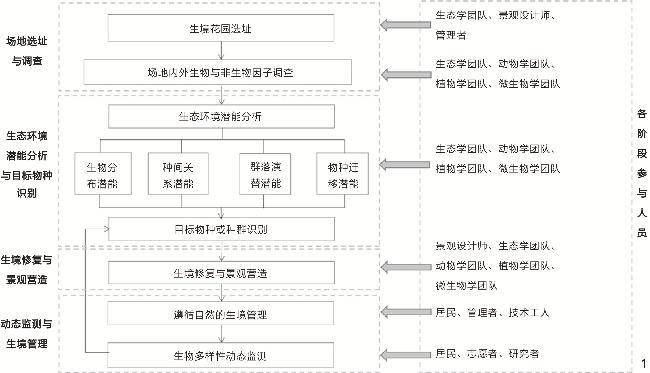
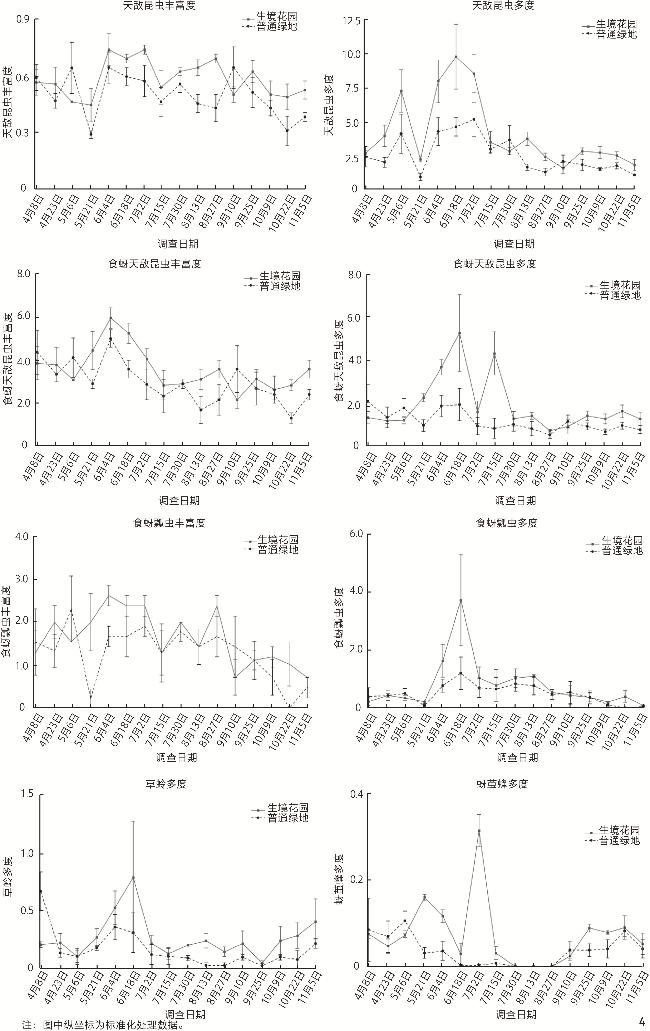
[Results] The habitat garden construction approaches consist of the following 4 steps. Firstly, select a habitat garden site in combination with multi-scale site analysis, while investigating local and surrounding biotic and abiotic environments. Secondly, evaluate environmental potential and further identify the target species to be restored. Thirdly, implement the project of habitat restoration and landscape creation according to the habitat characteristics and local function positioning of those target species. Finally, carry out ecological monitoring and nature-based habitat management in the project. As for the site selection for habitat garden, a multi-scale feasibility analysis should be conducted first, involving the ecological analysis of landscape connectivity index and ecological sources, and the feasibility analysis of land management. Then a site investigation should be conducted, including the investigation of nonbiological environment aiming to reveal the habitat characteristics of the selected site and clarify prominent environmental issues of the site, accompanied by a species, population, or community investigation for existing and former plants, insects, birds, small mammals, amphibians and reptile, soil and surface arthropods, soil microorganisms, and other biological groups within and around the site in an effort to understand the current and potential distribution levels of biodiversity in the site. The evaluation of environmental potential encompasses four key analytical components: biological distribution potential analysis for evaluating local spatial distribution and local habitat suitability of dominant species, populations, and ecological communities; interspecific interaction potential analysis for examining trophic relationships, competitive interactions, and symbiotic associations among organisms; community succession potential analysis for investigating ecosystem succession trajectories, developmental rates, and potential equilibrium states; migration potential analysis for assessing dispersal capabilities and movement patterns of flora and fauna. The project entails habitat restoration and landscape recreation for target species and populations comprising two integral components: One is that habitat construction strategy should be based on habitat and feeding preferences of the target species and populations, and optimize conditions to support organisms’ survival, reproduction, and adaptive capacity against stressors by replenishing native vegetation and food resources, creating sheltered microhabitats with optimal perching conditions, and restoring natural refuges; the other is to set up artificial overwintering sites for natural enemies within the site. The nature-based habitat management encompasses two key aspects: One is to emphasize the “self sustain” of the ecosystem by minimizing artificial interference, such as night protection, noise isolation, and volunteer plant protection, and the other is to provide necessary artificial regulation that conforms to nature, such as the removal or cutting of malignant weeds. The ecological monitoring is to realize the sustainable development and dynamic regulation of habitat gardens. The monitoring results show that the richness and abundance of natural enemies (including natural enemy insects, aphidophagus natural enemies, and aphidophagus ladybugs) in a habitat garden after one year of construction of the garden, along with the abundance of lacewings, are significantly higher than in ordinary green spaces. Conversely, the average pest density per branch in ordinary green spaces is 3.91 times higher than in the habitat garden. The construction of habitat gardens has achieved the goals of restoring local food chains and repairing nutrient relationships, while significantly advancing sustainable pest control and biodiversity enhancement. The vegetation richness has increased from over 30 to over 130, as well as the diversity of birds. Mammals such as the Northeast Hedgehog (Erinaceus amurensis) and Weasel (Mustela sibirica) have also built burrows here as habitat.
[Conclusion] This research proposes that the fundamental prerequisite for the construction of habitat gardens is the joint participation of multiple fields throughout the entire process, the key link for the construction of habitat gardens is the evaluation of environmental potential, and the basic guarantees for the sustainable development of habitat garden are ecological monitoring and habitat management in alignment with nature.
Binbin REN , Jian’gang ZHU , Jianhong WANG . Construction Approaches and Practices for Habitat Garden in the Context of Garden City[J]. Landscape Architecture, 2025 , 32(9) : 65 -73 . DOI: 10.3724/j.fjyl.LA20250394
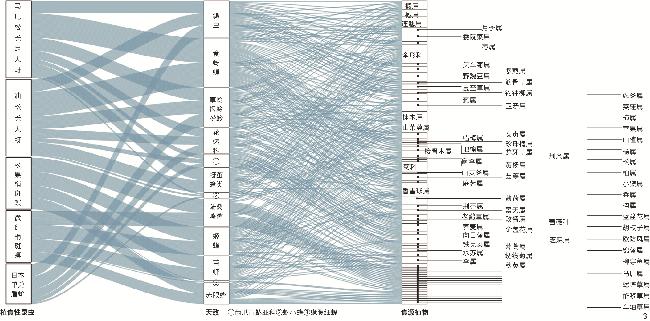
图3 “油松—植食性昆虫—天敌(昆虫、鸟类)—食源植物”互作关系Fig. 3 Interaction among “Pinus tabuliformis − phytophagous insects − natural enemies (insects and birds) − foodborne plants” |
表1 “油松—植食性昆虫—天敌昆虫”互作关系Tab. 1 Interaction among “Pinus tabuliformis − phytophagous insects − natural enemy insects” |
| 编号 | 植食性昆虫 | 天敌 | ||||
| 中文名 | 拉丁学名 | 危害概率等级 | 危害等级 | 类别 | ||
| 1 | 马尾松长足大蚜 | Cinara formosana | 高 | 低 | 刺吸类 | 捕食性食蚜蝇、草蛉、食蚜瓢虫、蚜茧蜂、粉蛉、褐蛉、蚜小蜂、 花蝽、齿爪盲蝽、食蚜瘿蚊 |
| 2 | 油松长大蚜 | Eulachnus pinitabulaeformis | 高 | 低 | ||
| 3 | 日本单蜕盾蚧 | Fiorinia japonica | 中 | 低 | 食蚧瓢虫、方头甲、草蛉、褐蛉、粉蛉、花蝽、齿爪盲蝽、蚜小蜂 | |
| 4 | 松果梢斑螟 | Dioryctria mendacella | 中 | 中 | 蛀食类 | 姬蜂、茧蜂、缘腹细蜂、赤眼蜂、鸣禽、陆禽、攀禽 |
| 5 | 微红梢斑螟 | Dioryctria rubella | 中 | 中 | ||
表2 蜜粉源植物与天敌昆虫取食偏好Tab. 2 Feeding preferences of natural enemy insects to insectary plants |
| 编号 | 蜜粉源植物种类 | 花期 | 天敌昆虫类别 | ||||
| 中文名 | 拉丁学名 | 食蚜蝇 | 瓢虫 | 草蛉 | 蚜茧蜂 | ||
| 注:●表示天敌昆虫嗜食强度为“非常强”;○表示嗜食强度为“较强”;--示诱集强度为“较弱”。 | |||||||
| 1 | 蜡梅 | Chimononthus praecox | 3月 | ● | -- | -- | -- |
| 2 | 山茱萸 | Cornus officinalis | 3月 | ● | -- | ● | ○ |
| 3 | 金钟花 | Forsythia viridissima | 3—4月 | -- | -- | ● | ○ |
| 4 | 荆芥 | Nepeta cataria | 4—11月 | ○ | -- | ● | -- |
| 5 | 现代月季 | Rosa hybrida | 4—9月 | ○ | ● | -- | -- |
| 6 | 刺芹 | Eryngium foetidum | 4—9月 | ● | ● | -- | ○ |
| 7 | 野蔷薇 | Rosa multiflora | 5—7月 | ● | -- | -- | -- |
| 8 | 白车轴草 | Trifolium repens | 5—10月 | ○ | -- | -- | -- |
| 9 | 龙牙草 | Agrimonia pilosa | 5—11月 | ● | -- | -- | -- |
| 10 | 扶芳藤 | Euonymus fortunei | 6—7月 | ● | -- | ● | ○ |
| 11 | 蒙椴 | Tilia mongolica | 6—7月 | ● | ● | ○ | -- |
| 12 | 华北珍珠梅 | Sorbaria kirilowii | 6—7月 | ○ | -- | ○ | -- |
| 13 | 荆条 | Vitex negundo var. heterophylla | 6—8月 | ○ | -- | -- | ○ |
| 14 | 地榆 | Sanguisorba officinalis | 6—8月 | ○ | -- | -- | -- |
| 15 | 蓍 | Achillea millefolium | 6—9月 | ○ | -- | -- | ○ |
| 16 | 薄荷 | Mentha canadensis | 7—9月 | ○ | -- | -- | -- |
| 17 | 长药八宝 | Hylotelephium spectabile | 7—10月 | ○ | -- | -- | -- |
| 18 | 藁本 | Conioselinum anthriscoides | 8—9月 | ● | ● | -- | ○ |
| 19 | 甘菊 | Chrysanthemum lavandulifolium | 9—11月 | ● | -- | -- | -- |
| [1] |
张贇, 张银龙, 吴永波, 等. 自然度评价应用于城市生物多样性保护的研究进展[J]. 生态与农村环境学报, 2022, 38(6): 681-688.
ZHANG Y, ZHANG Y L, WU Y B, et al. Research Progress in Naturalness Assessment of Urban Biodiversity Conservation[J]. Journal of Ecology and Rural Environment, 2022, 38(6): 681-688.
|
| [2] |
MCKINNEY M L. Urbanization as a Major Cause of Biotic Homogenization[J]. Biological Conservation, 2006, 127(3): 247-260.
|
| [3] |
LUCK G W, SMALLBONE L T. The Impact of Urbanization on Taxonomic and Functional Similarity Among Bird Communities[J]. Journal of Biogeography, 2011, 38(5): 894-906.
|
| [4] |
CANEDOLI C, MANENTI R, PADOA-SCHIOPPA E. Birds Biodiversity in Urban and Periurban Forests: Environmental Determinants at Local and Landscape Scales[J]. Urban Ecosystems, 2018, 21(4): 779-793.
|
| [5] |
FERENC M, SEDLÁČEK O, FUCHS R, et al. Geographic Trends in Range Sizes Explain Patterns in Bird Responses to Urbanization in Europe[J]. European Journal of Ecology, 2019, 5(2): 16-29.
|
| [6] |
森本幸裕. 日本城市生境营造前沿性案例研究[J]. 风景园林, 2020, 27(4): 25-35.
YUKIHIRO M. Case Studies on Pioneering Urban Habitat Projects in Japan[J]. Landscape Architecture, 2020, 27(4): 25-35.
|
| [7] |
MIYAWAKI A, GOLLEY F B. Forest Reconstruction as Ecological Engineering[J]. Ecological Engineering, 1993, 2(4): 333-345.
|
| [8] |
林良任, 陈莉娜, 福铭. 增进城市地区生物多样性: 以新加坡模式为例[J]. 风景园林, 2019, 26(8): 25-34.
LIM L J, CHAN L, LOO A H B. Enhancing Biodiversity in Urban Areas: The Singapore Model[J]. Landscape Architecture, 2019, 26(8): 25-34.
|
| [9] |
任斌斌, 王建红, 王月宾, 等. 不同植物群落生境下土壤节肢动物群落特征: 以横滨国立大学校园绿地为例[J]. 中国园林, 2024, 40(10): 113-118.
REN B B, WANG J H, WANG Y B, et al. Characteristics of the Soil Arthropod Community at Different Plant Communities: A Case Study of Campus Green Spaces at Yokohama National University[J]. Chinese Landscape Architecture, 2024, 40(10): 113-118.
|
| [10] |
SEXTON A N, LAWHORN K A. Best Practices for Designing Resilient Urban Ecosystems Through Native Species Restoration[J]. Urban Forestry & Urban Greening, 2025, 104: 128657.
|
| [11] |
DESCHAMPS-COTTIN M, JACEK G, SEGUINEL L, et al. A 12-Year Experimental Design to Test the Recovery of Butterfly Biodiversity in an Urban Ecosystem: Lessons from the Parc Urbain des Papillons[J]. Insects, 2023, 14(10): 780
|
| [12] |
苏雪痕. 鼎湖山植物群落对广州园林中植物造景的启示[J]. 北京林学院学报, 1983, 5(3): 46-54.
SU X H. Plant Communities of Dinghushan as Sources of Reference for Landscape Gardening in Guang Zhou[J]. Journal of Beijing Forestry University, 1983, 5(3): 46-54.
|
| [13] |
达良俊, 杨永川, 陈鸣. 生态型绿化法在上海“近自然” 群落建设中的应用[J]. 中国园林, 2004, 20(3): 38-40.
DA L J, YANG Y C, CHEN M. The Method of Ecological Greening and Its Application in the Construction of the Approaching Nature Plant Community in Shanghai[J]. Chinese Landscape Architecture, 2004, 20(3): 38-40.
|
| [14] |
任斌斌, 李树华. 模拟延安地区自然群落的植物景观设计研究[J]. 中国园林, 2010, 26(5): 87-90.
REN B B, LI S H. Research on Plant Landscape Design by Simulating Natural Plant Communities of Yan’an[J]. Chinese Landscape Architecture, 2010, 26(5): 87-90.
|
| [15] |
苏荣菲, 陈睿山, 郭晓娜. 城市社区更新中生物多样性的保护策略: 以上海市长宁区生境花园为例[J]. 生物多样性, 2023, 31(7): 194-207.
SU R F, CHEN R S, GUO X N. Conservation Strategies for Biodiversity in Urban Community Renewal: A Case Study of Habitat Garden in Changning District, Shanghai[J]. Biodiversity Science, 2023, 31(7): 194-207.
|
| [16] |
苏荣菲, 陈睿山, 俞霖琳, 等. 基于红外相机调查的上海市长宁区社区生境花园生物多样性[J]. 生物多样性, 2024, 32(8): 177-192.
SU R F, CHEN R S, YU L L, et al. Biodiversity in Community Habitat Gardens in Changning District, Shanghai Based on Camera Trapping[J]. Biodiversity Science, 2024, 32(8): 177-192.
|
| [17] |
卢晓强, 董姗姗, 马月, 等. 前沿技术在生物多样性研究中的应用现状、挑战与展望[J]. 生物多样性, 2025, 33(4): 196-204.
LU X Q, DONG S S, MA Y, et al. Current Status, Challenges, and Prospects of Frontier Technologies in Biodiversity Conservation Applications[J]. Biodiversity Science, 2025, 33(4): 196-204.
|
| [18] |
胡原, 王其, 曾维忠. 森林碳汇与生物多样性保护协同: 理论逻辑与提升路径[J]. 生态学报, 2025, 45(10): 5053-5063.
HU Y, WANG Q, ZENG W Z. Synergy Between Forest Carbon Sink and Biodiversity Conservation: Theoretical Logic and Improvement Paths[J]. Acta Ecologica Sinica, 2025, 45(10): 5053-5063.
|
| [19] |
张璐璐, 朱丹, 宋德萱. 生态修复视角下高密度城市老旧住区更新路径: 上海生境花园营造的经验与启示[J]. 住宅科技, 2023, 43(2): 1 6, 54
ZHANG L L, ZHU D, SONG D X. A Probe into the Renewal Path of High-Density Urban Old Residential Area from the Perspective of Ecological Restoration: The Experience and Enlightenment from Shanghai Habitat Garden[J]. Housing Science, 2023, 43(2): 1 6, 54
|
| [20] |
BAUER N. The California Wildlife Habitat Garden: How to Attract Bees, Butterflies, Birds, and Other Animals[M]. California: University of California Press, 2012.
|
| [21] |
龟山章, 仓本宣, 日置佳之.自然再生生态工程学研究法[M].桂萍, 詹雪红, 孔彦鸿, 译.北京: 中国建筑工业出版社, 2011: 15-17.
KAMEYAMA A, KURAMOTO N, HICHIKI Y. Natural Regeneration: Research Method of Ecological Engineering[M]. GUI P, ZHAN X H, KONG Y H, translated. Beijing: China Architecture & Building Press, 2011: 15-17.
|
| [22] |
北京市人民政府. 北京市人民政府关于印发《北京花园城市专项规划(2023年—2035年)》的通知[J]. 北京市人民政府公报, 2024(27): 3-91.
Beijing Municipal People’s Government. Notice on Issuing the “Beijing Garden City Special Plan (2023−2035)”[J]. Beijing Municipal Government Gazette, 2024(27): 3-91.
|
| [23] |
王金洲, 徐靖. “基于自然的解决方案” 应对生物多样性丧失和气候变化: 进展、挑战和建议[J]. 生物多样性, 2023, 31(2): 231-236.
WANG J Z, XU J. Nature-Based Solutions for Addressing Biodiversity Loss and Climate Change: Progress, Challenges and Suggestions[J]. Biodiversity Science, 2023, 31(2): 231-236.
|
| [24] |
THORPE W H, CAUDLE H B. A Study of the Olfactory Responses of Insect Parasites to the Food Plant of Their Host[J]. Parasitology, 1938, 30(4): 523-528.
|
| [25] |
CHARLES-TOLLERUP J J. Resource Provisioning as a Habitat Manipulation Tactic to Enhance the Aphid Parasitoid, Aphidius Colemani Viereck (Hymenoptera: Braconidae: Aphidiinae), and the Plant-Mediated Effects of a Systemic Insecticide, Imidacloprid[D]. Riverside: University of California, Riverside, 2013.
|
| [26] |
BALZAN M V, WÄCKERS F L. Flowers to Selectively Enhance the Fitness of a Host-Feeding Parasitoid: Adult Feeding by Tuta absoluta and Its Parasitoid Necremnus artynes[J]. Biological Control, 2013, 67(1): 21-31.
|
| [27] |
WONG S K, FRANK S D. Pollen Increases Fitness and Abundance of Orius insidiosus Say (Heteroptera: Anthocoridae) on Banker Plants[J]. Biological Control, 2013, 64(1): 45-50.
|
| [28] |
任斌斌, 王建红, 李广, 等. 基于保育式生物防治的蜜粉源植物调查与群落构建研究[J]. 中国园林, 2018, 34(1): 108-112.
REN B B, WANG J H, LI G, et al. Floral Resource Plant Investigation and Community Construction Based on Conservation Biological Control[J]. Chinese Landscape Architecture, 2018, 34(1): 108-112.
|
| [29] |
王建红, 仇兰芬, 车少臣, 等. 蜜粉源植物对天敌昆虫的作用及其在生物防治中的应用[J]. 应用昆虫学报, 2015, 52(2): 289-299.
WANG J H, QIU L F, CHE S C, et al. The Effects of Floral Resource Plants on Natural Enemy Insects and Implications for Biological Control[J]. Chinese Journal of Applied Entomology, 2015, 52(2): 289-299.
|
| [30] |
绿地保育式生物防治技术规程: DB11/T 1733—2020[S].北京: 北京市市场监督管理局, 2020
Greenland Conservation Biological Control Technical Regulations: DB11/T 1733−2020[S]. Beijing: Beijing Municipal Administration for Market Regulation, 2020.
|
| [31] |
ADAMS B, YUSUF A A, TORTO B, et al. Non-Host Plant Odors Influence the Tritrophic Interaction Between Tomato, Its Foliar Herbivore Tuta Absoluta and Mirid Predator Nesidiocoris Tenuis[J]. Frontiers in Plant Science, 2023, 14: 1014865.
|
| [32] |
M K S, KHAJURIA M, L S K V, et al. The Role of Herbivore-Induced Plant Volatiles in Tri-Trophic Interactions and Pest Management[J]. Journal of Advances in Biology & Biotechnology, 2024, 27(11): 763-770.
|
| [33] |
王琦, 任斌斌, 王月宾, 等. 北京城市绿地节肢动物多样性与微环境因子关系[J]. 华中农业大学学报, 2024, 43(6): 161-170.
WANG Q, REN B B, WANG Y B, et al. Relationship Between Diversity of Arthropods and Microenvironmental Factors in Urban Green Spaces of Beijing[J]. Journal of Huazhong Agricultural University, 2024, 43(6): 161-170.
|
| [34] |
KEHOE R, VAN VEEN F. Longer Daylengths Associated with Poleward Range Shifts Accelerate Aphid Extinction by Parasitoid Wasps[J]. Ecological Entomology, 2022, 47(3): 475-480.
|
/
| 〈 |
|
〉 |