

Spatial Planning Framework for Beijing Garden City Oriented Towards High-Quality Development
|
SHI Xiaodong is chief planner of Beijing Municipal Commission of Planning and Natural Resources, director of and a professorate senior engineer in Beijing Municipal Institute of City Planning & Design. His research focuses on science of human settlement environment, urban planning, urban design, and urban renewal |
|
GUO Jing, Master, is a senior engineer in Beijing Municipal Institute of City Planning & Design. Her research focuses on urban planning, urban design, urban renewal, and public space design & fine governance |
|
LI Jiaxin, Master, is an intermediate engineer in Beijing Municipal Institute of City Planning & Design. Her research focuses on urban planning, and urban design |
Received date: 2025-01-26
Revised date: 2025-07-21
Online published: 2025-12-10
Copyright
[Objective] The concept of Beijing Garden City is not only a continuous development of the concept of Forest City and Park City, but also an integral part of the construction of Beautiful China. As a mega-city that has entered the era of renewal development and fine governance, Beijing has taken the lead in exploring the path of garden city construction, and attempts to establish a spatial planning framework that fits its positioning as the capital of China, while exploring an innovative path of high-quality urban development driven by green space through the integration of natural landscapes, historical culture and modern urban functions, thereby promoting the integration and mutual promotion of green space and urban functions, and providing theoretical reference and practical guidance for solving the problems of ecological governance, cultural inheritance and spatial quality improvement of megacities.
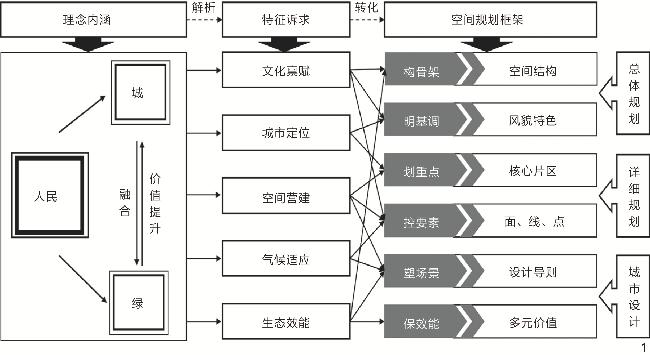
[Methods] Based on the in-depth interpretation of the connotation and evolution of Garden City and the excellent practical experience of China and foreign countries, this research compares and analyzes the connotative differences among related concepts such as eco-city, Shan-shui city, landscape city, forest city, and park city, and refines the core connotation that garden city focuses on the urban characteristic core and takes the whole domain space as the object to enhance urban livability. Secondly, based on the five value dimensions of construction process, urban positioning, construction characteristics, natural conditions, and ecosystem, this research analyzes the relationship between Beijing’s urban characteristics and the connotation of garden city, clarifies the key directions for Beijing Garden City to respond to the needs of high-quality development, and puts forward development suggestions from the five dimensions of garden city construction resource carrier utilization, urban positioning response, fine spatial construction, climate adaptation methods, and ecosystem efficiency improvement. Furthermore, based on the perspectives of “greenery enhancement”, “greenery integration”, and “greenery governance”, this research proposes a high-quality transformation idea that planning needs to shift from quantitative expansion to quality improvement, from embedding greenery into the city to integrating greenery with the city, and from garden landscape construction to scene construction from the three dimensions of quantity and quality, space and function, and planning and implementation. Additionally, the research constructs a spatial planning framework for the transformation of “characteristic demands – spatial strategies”, forming the Beijing path for garden city construction.
[Results] Five transformation paths are formed to promote the transformation of Beijing from traditional mode to high-quality development. First, lead the pattern and style of Garden City with natural and cultural characteristics: Constructing the foundation and structure of garden city relying on natural landscapes, and building the characteristics of garden city by utilizing historical and cultural elements. Second, guide the spatial priorities of garden city based on the capital positioning: Strengthening the functions of the “four centers”, designating elite demonstration areas of garden city, showcasing the national capital image, and shaping the ceremonial spaces of garden city. Third, create colorful urban landscapes based on Beijing’s seasonal characteristics: Exploring four-season garden city landscapes integrated with urban colors, and probing into the aesthetic values of landscapes under the interaction between seasonal changes and humanistic characteristics. Fourth, deepen the construction methods of garden city based on human-perceived needs: Constructing visual corridors to enhance the observability of garden landscapes; improving greenways to enhance the accessibility of garden spaces; activating boundaries to strengthen the integration of garden elements; revitalizing micro-spaces to achieve the accessibility of garden areas; and shaping scenarios to enhance the permeability of garden concepts. Fifth, improve the ecological efficiency of garden city with the concept of safety and resilience: Emphasizing environmental health efficiency and strengthening climate regulation; focusing on the integration of refined and wild landscapes to enhance biodiversity; and attaching importance to the dual-purpose design for normal and emergency use to improve safety and resilience.
[Conclusion] The construction of Garden City represents a critical pathway for Beijing’s pursuit of high-quality development. Against the backdrop of intertwined historical and cultural heritage and the diverse development needs of a modern metropolis, the concept of garden city has injected new vitality into Beijing’s growth. This research provides practical experience for garden city concepts and related ideas, offering a construction path for promoting high-quality development in super-large high-density cities through the creation of high-quality “gardens” under the context of stock transformation, while presenting new approaches for advancing urban high-quality development through green spaces. The construction methods proposed, including the establishment of visual corridors, improvement of greenways, activation of boundaries, revitalization of micro-spaces, and shaping of scenarios, offer feasible strategies for constructing green spaces based on human-perceived needs. These efforts aim to provide conceptual and methodological guidance for the planning and construction of garden city in China, and inspire other cities to deeply explore their characteristic resources and achieve high-quality urban development through the scientific planning and efficient utilization of green spaces.
Xiaodong SHI , Jing GUO , Jiaxin LI . Spatial Planning Framework for Beijing Garden City Oriented Towards High-Quality Development[J]. Landscape Architecture, 2025 , 32(9) : 15 -22 . DOI: 10.3724/j.fjyl.LA20250055
| 城市 | 目标与定位 | 主要战略 | 重要举措 | |
| 国外 城市 | 新加坡 | 在1968年提出“花园城市”的定位,并已经进阶到“花园中的城市”,并逐步向“自然中的城市”转型,致力于打造一座绿色美丽被自然包围的城市[3] | 将“花园城市”作为国策; 将自然恢复到城市环境中; 多维度构建生物多样性保护体系 | 生态廊道打造; 立体绿化置换; 公园连接系统 |
| 伦敦 | 世界上首个国家公园城市,致力于成为一座人、地与自然紧密相连的城市[4] | 搭建内涵丰富、健全完善的工作体系; 绿环、绿楔、绿网、绿斑构建的可持续公园系统; 创建科学透明的自然资产管理系统 | 融合开放的绿地系统; 战略指引的顶层设计; 数字支撑的管控平台 | |
| 巴黎 | 持续探索建设转型中的良性循环与韧性城市,致力于让绿色空间成为城市的灵魂[5] | 响应生态转型,提高城市韧性; 实行城市森林计划,注重建筑绿化; 践行公众参与,提倡全民共建 | 环形绿带结构; 打造低碳城市; 鼓励立体绿化 | |
| 东京 | 定位为四季都有绿水青山的城市,致力于建设任何地方都可以感受到绿色的城市[6] | 推动公园入市,带动城市经济良性发展; 将农业用地作为珍贵的自然资源加以保护和活用; 创造高质量绿色空间,关注人的心理感受 | 注重绿地使用效果; 非绿空间增绿; 打造魅力农业空间 | |
| 首尔 | 将首尔打造成以花园和绿地为中心,365天绿意盎然的城市[7] | 拆除:空地上建起野生花草庭园; 连接:修建绿道连接点状绿地; 生态:打造“生态型”自然空间、生态廊道与森林博物馆; 体验:举办丰富的花园城市主题活动,鼓励公众参与 | 建设空中花园; 促进绿色空间增量提质; 打造旅游品牌和文化产品 | |
| 国内 城市 | 成都 | 定位为雪山下的公园城市,建设“一山连两翼”的大山水格局,实现“人、城、境、业”和谐统一[8] | 构建大美公园城市总体形态,充分释放生态效应; 坚持场景营城理念,探索生态价值转化机制; 示范引领,推进公园城市示范片区建设 | 机制创新; 全域增绿; 共建共享 |
| 上海 | 探索“公园+”和“+公园”的无界融合,致力于实现从“城市中建公园”到“公园中建城市”[9] | 开展全域公园建设; 推动绿色空间与城市功能无界融合; 因地制宜制定城市环境政策 | 全域公园、全面提质; 无界融合、无界创新; 全民共建、全民共享 | |
| 深圳 | 定位为“山海连城”生态型城市,建设安全韧性、绿色健康的山海家园,市民乐享自然野趣的户外天堂[10] | 打造魅力生态骨架; 全域营建分类指引; 山海连城、生态筑城、公园融城和人文趣城四大行动推进实施 | 营造山海生境; 打造全景城区; 丰盈绿色生活 | |
表2 国内花园城市相关概念的由来和解读[12-17]Tab. 2 Origin and interpretation of relevant domestic concepts regarding garden city[12-17] |
| 概念 | 由来 | 内涵 |
| 生态城市 | 1971年,联合国教科文组织提出“生态城市”概念;1988年,江西省宜春市建立了中国第一个生态城市试点[12] | 以现代生态学的科学理论为指导,以生态系统的科学调控为手段,建立起来的一种社会-经济-生态和谐共生的城镇型人类聚落地[13] |
| 山水城市 | 1990年,由钱学森先生提出“山水城市”概念 | 指具有山水物质空间形态环境和精神内涵的理想城市,强调城市结合自然,反映了人们对美好自然环境的向往和改造自然的努力方向[14] |
| 园林城市 | 1992年,住房城乡建设部组织开展园林城市创建工作,后进一步提出国家生态园林城市概念 | 根据《国家园林城市标准》评价标准,指分布均衡、结构合理、功能完善、景观优美,人居生态环境清新舒适、安全宜人的城市[15] |
| 森林城市 | 2004年,全国绿化委员会、国家林业局启动“国家森林城市”评定程序,并制定相关标准 | 指城市生态系统以森林植被为主体,城市生态建设实现城乡一体化发展,各项建设指标达到国家森林城市标准并经国家林业主管部门批准授牌的城市[16] |
| 公园城市 | 2018年,习近平总书记在天府新区调研时首次提出“公园城市”理念 | 指将公园形态与城市空间有机融合,生产生活生态空间相宜、自然经济社会人文相融合的复合系统,是人、城、境、业高度和谐统一的现代化城市[17] |
表3 全市自然本底现状概况Tab. 3 An overview of Beijing’s natural background |
| 自然本底 | 总量/km2 | 占比/% | |
| 注:表格中的数据由作者依据2022年北京市国土变更调查结果计算。 | |||
| 田 | 耕地 | 1 292 | 7.9 |
| 林 | 园地 | 1 099 | 6.7 |
| 林地 | 9 790 | 59.7 | |
| 草地 | 176 | 1.1 | |
| 园 | 公园与绿地 | 135 | 0.8 |
| 水 | 湿地、水域及水利 设施用地 | 683 | 4.1 |
| 总量 | 13 175 | 80.3 | |
表4 花园场景体系Tab. 4 Garden scenario system |
| 序号 | 分类 | 衔接工作 | 设计要点 | |
| 1 | 花园住区 | 花园小区 | 老旧小区改造; 平房区改造 | 家庭园艺;微花园;屋顶绿化; 垂直绿化;阳台绿化 |
| 花园院落 | ||||
| 花园住宅 | ||||
| 2 | 花园工厂 | 老旧厂区改造 | 功能转型;植物配置;开放共享 | |
| 3 | 花园办公 | 老旧低效楼宇改造; 绿色建筑改造 | 绿化景观改造;多元人性化交流场所; 屋顶绿化;垂直绿化 | |
| 4 | 花园街道 | 花园街道 | 背街小巷整治、重点大街改造; 公共空间改造 | 街道一体化设计; 三网融合 |
| 花园滨水 | ||||
| 5 | 花园场站 | 交通场站 | 轨道微中心建设; 公共空间改造 | 一体化景观设计; 多元复合利用 |
| 市政场站 | ||||
| 6 | 花园商圈 | 国际消费中心城市建设 | 广场、连廊、步行街、半室外空间花园化改造; 屋顶绿化;垂直绿化 | |
| 7 | 花园公共 服务设施 | 花园学校 | 公共空间改造; 老旧低效楼宇改造 | 绿化开放度与利用率;花园散步道; 适老化设计 |
| 花园医院 | ||||
| 花园养老 | ||||
| 花园文体 | ||||
| 8 | 花园乡村 | 乡村振兴 | 村庄秩序与自然环境;现代化生活与传统文化; 城市服务与田园风光 | |
文中图表均由作者绘制。
| [1] |
周苗, 滕玥. 谈唐诗宋词中的中国古典园林[J]. 山西建筑, 2017, 43(29): 187-188.
ZHOU M, TENG Y. The Discussion of Chinese Traditional Garden Based on Tang and Song Poetry[J]. Shanxi Architecture, 2017, 43(29): 187-188.
|
| [2] |
HOWARD E. To-Morrow: A Peaceful Path to Real Reform[M]. Cambridge, UK: Cambridge University Press, 2010.
|
| [3] |
王君, 刘宏. 从“花园城市”到“花园中的城市”: 新加坡环境政策的理念与实践及其对中国的启示[J]. 城市观察, 2015(2): 5-16.
WANG J, LIU H. From “Garden City” to “City in a Garden”: The Ideals and Practices of Singapore’s Environmental Greenery Policy and Its Implications for the Chinese Government[J]. Urban Insight, 2015(2): 5-16.
|
| [4] |
郑宇, 李玲玲, 陈玉洁, 等. 公园城市视角下伦敦城市绿地建设实践[J]. 国际城市规划, 2021, 36(6): 136-140.
ZHENG Y, LI L L, CHEN Y J, et al. Practice of Urban Green Space Construction in London from the Perspective of Park City[J]. Urban Planning International, 2021, 36(6): 136-140.
|
| [5] |
徐沁仪. 危机、韧性与风险: 《巴黎协定》下的全球气候治理[J]. 国际政治研究, 2023, 44(5): 62 82,6
XU Q Y. Crises, Resilience, and Risks: Trend Analysis of Global Climate Governance Under the Paris Agreement[J]. The Journal of International Studies, 2023, 44(5): 62 82,6
|
| [6] |
郝钰, 贺旭生, 刘宁京, 等. 城市公园体系建设与实践的国际经验: 以伦敦、东京、多伦多为例[J]. 中国园林, 2021, 37 S1 34 39
HAO Y, HE X S, LIU N J, et al. International Experience in the Construction and Practice of Urban Park System: A Case Study of London, Tokyo and Toronto[J]. Chinese Landscape Architecture, 2021, 37 S1 34 39
|
| [7] |
首尔发布《首尔花园城市》计划[J].上海城市规划, 2023(4): 159.
Seoul Released the Plan of “Seoul Garden City”[J]. Shanghai Urban Planning Review, 2023(4): 159.
|
| [8] |
李晓江, 吴承照, 王红扬, 等. 公园城市, 城市建设的新模式[J]. 城市规划, 2019, 43(3): 50-58.
LI X J, WU C Z, WANG H Y, et al. Urban Park: A New Model of Urban Construction[J]. City Planning Review, 2019, 43(3): 50-58.
|
| [9] |
程馨, 冯学钢. 上海加快推进“公园城市”建设研究[J]. 科学发展, 2024(1): 68-76.
CHENG X, FENG X G. Study on Accelerating the Construction of “Park City” in Shanghai[J]. Scientific Development, 2024(1): 68-76.
|
| [10] |
于光宇, 吴素华, 黄思涵, 等. 从“千园之城” 到“一园之城”: 深圳公园城市规划纲要编制思路与实践[J]. 风景园林, 2023, 30(4): 69-77.
YU G Y, WU S H, HUANG S H, et al. From “City of a Thousand Parks” to “City as a Park”: Compilation Idea and Practice of the Outline of Shenzhen Park City Planning[J]. Landscape Architecture, 2023, 30(4): 69-77.
|
| [11] |
谢长坤, 梁安泽, 车生泉. 生态城市、园林城市和生态园林城市内涵比较研究[J]. 城市建筑, 2018, 15(33): 16-21.
XIE C K, LIANG A Z, CHE S Q. Comparative Study on Connotations of Ecological City, Garden City and Ecological Garden City[J]. Urbanism and Architecture, 2018, 15(33): 16-21.
|
| [12] |
王爱兰. 加快我国生态城市建设的思考[J]. 城市, 2008(4): 53-56.
WANG A L. Reflections on Accelerating the Construction of Ecological Cities in China[J]. City, 2008(4): 53-56.
|
| [13] |
王发曾. 我国生态城市建设的时代意义、科学理念和准则[J]. 地理科学进展, 2006, 25(2): 17-25.
WANG F Z. The Times Significance, Scientific Ideas and Principles of the Construction of Ecological City in China[J]. Progress in Geography, 2006, 25(2): 17-25.
|
| [14] |
吴人韦, 付喜娥. “山水城市” 的渊源及意义探究[J]. 中国园林, 2009, 25(6): 39-44.
WU R W, FU X E. On the Origin and Meaning of “Shanshui City”[J]. Chinese Landscape Architecture, 2009, 25(6): 39-44.
|
| [15] |
薛成刚. 国家园林城市评选标准和建设理念的转变研究[J]. 现代园艺, 2024, 47(19): 179-181.
XUE C G. Research on the Evolution of National Garden City Selection Criteria and Construction Concepts[J]. Contemporary Horticulture, 2024, 47(19): 179-181.
|
| [16] |
李新平, 李文龙. 森林城市的研究进展[J]. 山西林业科技, 2011, 40(2): 33 36,50
LI X P, LI W L. Research Progress of Forest City[J]. Shanxi Forestry Science and Technology, 2011, 40(2): 33 36,50
|
| [17] |
吴岩, 王忠杰, 束晨阳, 等. “公园城市”的理念内涵和实践路径研究[J]. 中国园林, 2018, 34(10): 30-33.
WU Y, WANG Z J, SHU C Y, et al. Discussion on the Concept & Practice Approach of “Park City”[J]. Chinese Landscape Architecture, 2018, 34(10): 30-33.
|
| [18] |
张春彦, 王玫, 王其亨. 平地起蓬瀛, 城市而林壑: 清代北京城市园林化营建研究[J]. 中国园林, 2022, 38(1): 14-19.
ZHANG C Y, WANG M, WANG Q H. Gardens in City: Study on the Construction of Gardens in Beijing in Qing Dynasty[J]. Chinese Landscape Architecture, 2022, 38(1): 14-19.
|
| [19] |
北京市地方志编纂委员会.北京志·城乡规划卷·规划志[M].北京: 北京出版社, 2000.
Beijing Local Chronicles Compilation Committee. Beijing Chronicles · Urban-Rural Planning Volume · Planning Annals [M]. Beijing: Beijing Publishing House Group, 2000.
|
| [20] |
北京市生态环境局.本市年度环境状况公报[EB/OL]. (2025-05-09)[2025-06-16]. https://sthjj.beijing.gov.cn/bjhrb/index/xxgk69/sthjlyzwg/1718880/1718881/1718882/index.html.
Beijing Municipal Ecology and Environment Bureau. Annual Report on the City’s Environmental Status[EB/OL]. (2025-05-09) [2025-06-16]. https://sthjj.beijing.gov.cn/bjhrb/index/xxgk69/sthjlyzwg/1718880/1718881/1718882/index.html.
|
| [21] |
吴淑琴. 北京城市园林绿地系统规划20年[J]. 北京规划建设, 2006(5): 62-66.
WU S Q. Beijing’s Urban Park Green Space System Planning Over the Past 20 Years[J]. Beijing Planning Review, 2006(5): 62-66.
|
| [22] |
王楠.绘就花园城市新貌打造宜居魅力首都[N].中国城市报, 2024-05-06(013).
WANG N. Painting a New Landscape of Garden City to Build a Livable and Charming Capital[N]. China City News, 2024-05-06(013).
|
| [23] |
陈思. 把首都建设成为一个大花园: 访北京市园林绿化局党组书记、局长高大伟[J]. 前线, 2024(9): 54-57.
CHEN S. Building the Capital into a Grand Garden: Interview with GAO D W, Secretary of the Party Leadership Group and Director of Beijing Municipal Forestry and Parks Bureau[J]. Frontline, 2024(9): 54-57.
|
| [24] |
骆倩雯.北京获评“生物多样性魅力城市”[N].北京日报, 2024-11-04(001).
LUO Q W. Beijing Wins “Biodiversity-Charmed City” Award [N]. Beijing Daily, 2024-11-04 (001).
|
| [25] |
石晓冬, 黄晓春, 高雅, 等. 超大城市气候适应性规划技术体系及应用: 以北京为例[J]. 城市学报, 2023(5): 105-113.
SHI X D, HUANG X C, GAO Y, et al. Technical System and Application of Climate Adaptation Planning for Megacities: Taking Beijing as an Example[J]. Journal of Urban Sciences, 2023(5): 105-113.
|
| [26] |
北京市人民政府. 本市已有公园1100个 三分之二无界融通 2025年再建15处城市休闲公园[EB/OL]. (2025-02-20)[2025-06-16]. https://www.beijing.gov.cn/ywdt/gzdt/202502/t20250220_4015204.html.
Beijing Municipal People’s Government. The City Now Has 1,100 Parks, Two-Thirds of Which Achieve Boundaryless Integration; 15 More Urban Leisure Parks to Be Built in 2025 [EB/OL]. (2025-02-20)[2025-06-16]. https://www.beijing.gov.cn/ywdt/gzdt/202502/t20250220_4015204.html.
|
| [27] |
北京市人民政府. 北京市人民政府关于印发《北京花园城市专项规划(2023年—2035年)》的通知[J]. 北京市人民政府公报, 2024(27): 3-91.
Beijing Municipal People’s Government. Notice on Issuing the “Beijing Garden City Special Plan (2023-2035)”[J]. Beijing Municipal Government Gazette, 2024(27): 3-91.
|
| [28] |
廖正昕, 冯斐菲, 刘健. 推动北京历史文化名城保护与发展[J]. 前线, 2024(10): 60-62.
LIAO Z X, FENG F F, LIU J. Promoting the Protection and Development of Beijing’s Historic and Cultural City[J]. Frontline, 2024(10): 60-62.
|
| [29] |
石晓冬, 冯雅薇, 杨春, 等. 立足多道融合、功能复合的北京绿道系统规划创新思路[J]. 北京规划建设, 2024(5): 6-12.
SHI X D, FENG Y W, YANG C, et al. Innovative Approaches for Beijing Greenway System Planning Based on Multi-path Integration and Functional Compositing[J]. Beijing Planning Review, 2024(5): 6-12.
|
/
| 〈 |
|
〉 |