

Research on Pedestrians’ Visual Perception Characteristics Based on USGGS: A Case Study of the Six Inner-City Districts of Tianjin
|
YANG Hanwen is a master student in the School of Architecture, Tianjin University. His research focuses on landscape planning and design and theory of landscape architecture, urban public space, and urban data science |
|
TSOU Shang’en is a Ph.D. candidate in the School of Architecture, Tianjin University, and deputy secretary-general of the Human Settlements Committee, Chinese Society for Urban Studies. His research focuses on landscape planning and design and theory of landscape architecture, urban public space, and urban data science |
|
HU Yike, Ph.D., is a professor in and deputy director of the Department of Landscape Architecture, School of Architecture, Tianjin University, and executive deputy director of the Human Settlements Committee, Chinese Society for Urban Studies. His research focuses on urban public space |
Received date: 2024-11-15
Revised date: 2025-03-17
Online published: 2025-12-10
Copyright
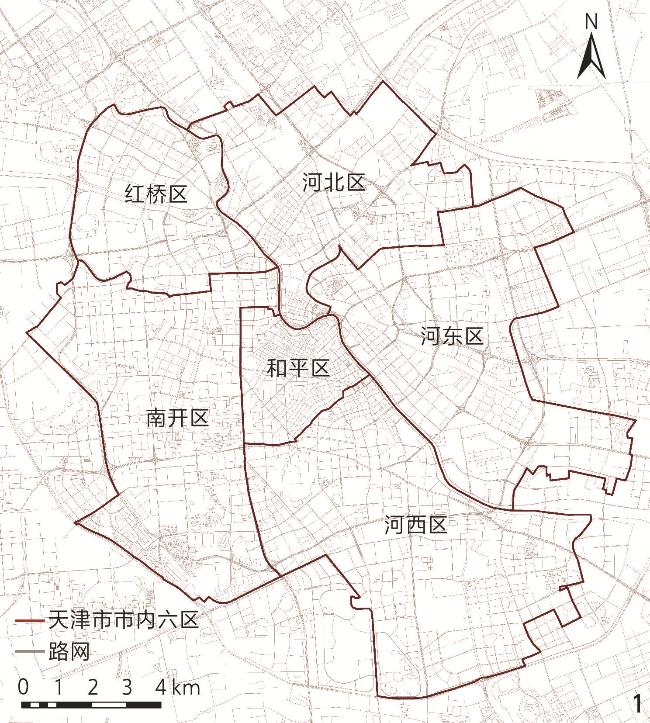
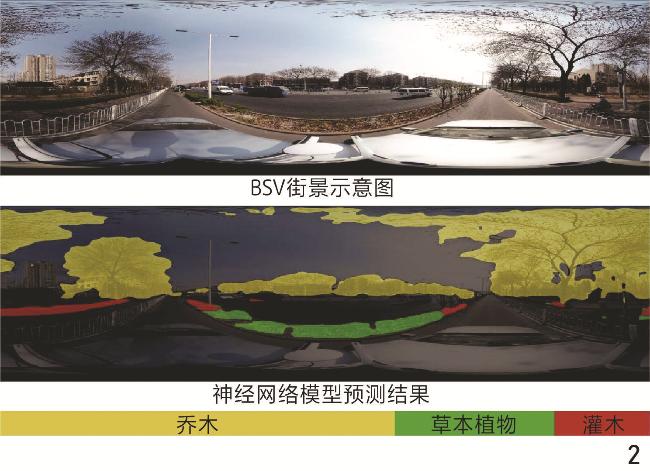
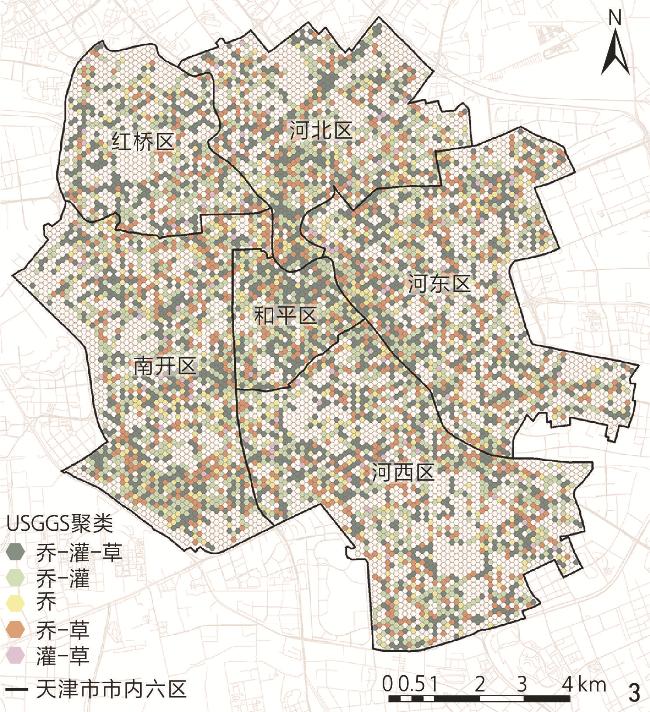
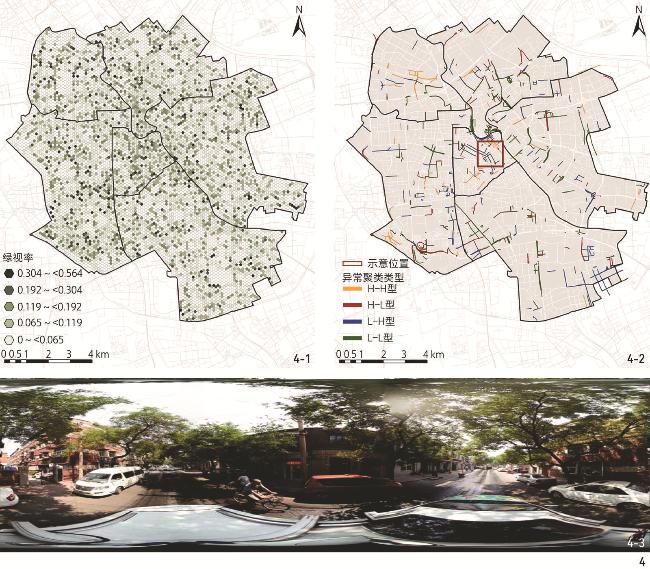
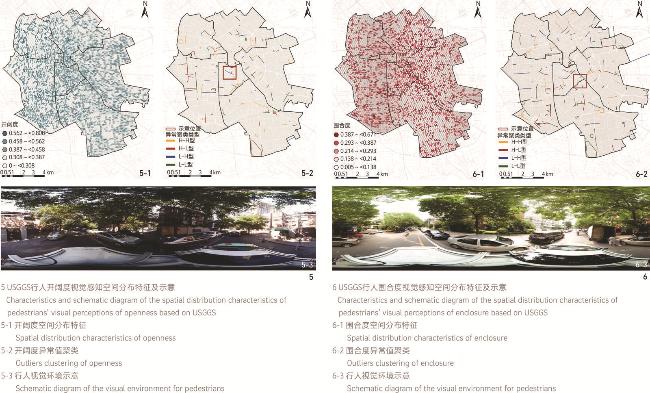
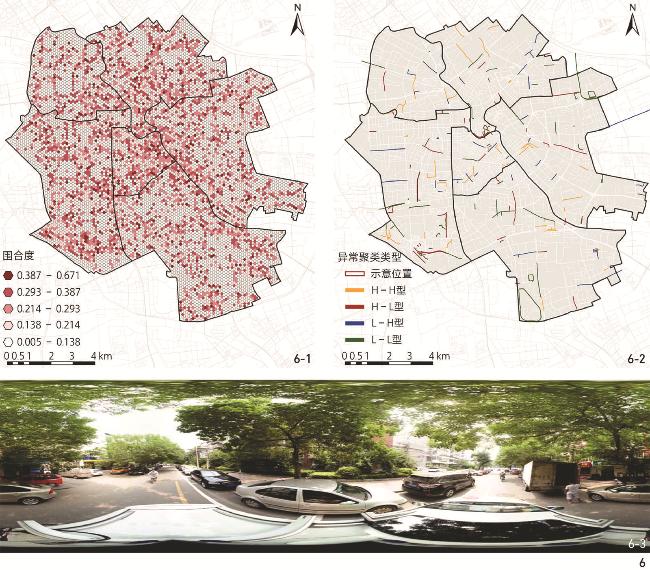
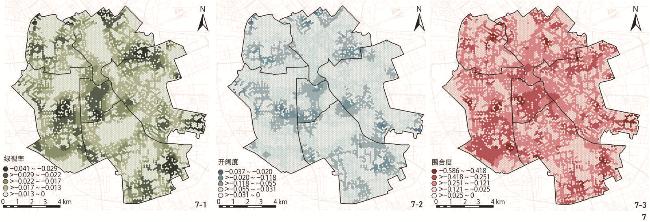
[Objective] This research aims to explore in depth the interactions between urban street greening general structure (USGGS), and pedestrians’ visual perception, and the influence of USGGS on urban ecological environment and residents’ health. USGGS, the vertical hierarchical structure of urban street greening, covers a variety of dimensions such as trees, shrubs, and grasses, which is of great importance for enhancing the quality of urban ecological environment, improving the physiological health of residents, and alleviating the tension between urban residents and the natural environment. The core objective of the research is to propose strategies to optimize the greening structure of urban streets by analyzing the correlation between USGGS and visual perception of pedestrians, so as to enhance the quality of the visual environment of street pedestrians, improve the urban human settlement environment and promote the organic integration of the urban ecological and humanistic environments, thus providing a new way of thinking for urban planning and construction, and promoting the high-quality and sustainable development of urban street space. [Methods] The research selects the six inner-city districts of Tianjin City as the research area, utilizes Baidu street view image (SVI) as data source, and collect SVIs and their coordinates in the six districts in 2019 by calling Baidu API, with a total of 17,326 points selected and 13,281 valid samples obtained after screening. The DeepLabV3+ neural network model is used for semantic segmentation of SVIs to accurately recognize and segment various landscape elements in urban SVIs. The model increases the sensory field of the convolution kernel by Atrous convolution technique and null convolution, allowing the model to capture image details at different resolutions and providing more accurate feature recognition support for subsequent SVI segmentation tasks. Based on the study of pedestrians’ visual perception, green view index (GVI), openness, and enclosure are selected as quantitative indicators. Through multiple linear regression, anomaly and clustering analysis by ArcGis software, and geographically weighted regression analysis, the influence of different USGGS on pedestrians’ visual perception and their spatial distribution characteristics are explored. [Results] The results of the research reveal the significant influence of uneven spatial distribution of USGGS on pedestrians’ visual perception. The vegetation hierarchy configuration in the six inner-city districts of Tianjin presents a spatial distribution characteristic of centripetal aggregation, while the proximity of the six inner-city districts and the four ring city districts presents a more homogeneous distribution trend of greening structure. Through the clustering and outlier analysis tools, it is found that the causes of the abnormal areas of pedestrians’ visual perception are closely related to the spatial distribution characteristics of USGGS. In addition, the spatial distribution characteristics of pedestrians’ visual perception of openness show negative correlation with the distribution characteristics of GVI, while the high values of visual perception of enclosure are mainly concentrated in areas with high building density. These results not only reveal the significant influence of USGGS type on pedestrians’ visual perception, but also provide a scientific basis for the optimization of urban street greening structure. [Conclusion] The research emphasizes the importance of rationally configuring USGGS types to enhance the environmental quality of urban streets. USGGS not only changes the physical spatial morphology of urban streets, but also significantly affects the visual perception of pedestrians. The arbor – shrub – grass structure, the arbor – shrub structure, the arbor – grass structure, and the arbor structure have a significant influence on pedestrians’ visual perception of GVI and openness, while the structure containing shrubs can significantly increase the level of pedestrians’ visual perception of enclosure. These findings emphasize the importance of considering USGGS configurations in urban planning to create visual environments that are better suited to the function of the place, enhance the ecological value of streets as well as the life quality of residents, and promote sustainable urban development.The challenges faced by street greening in Tianjin include uneven spatial distribution, insufficient resilience, low public participation and varying regional management levels. It is recommended to increase the area of street greening space, optimize the allocation of greening resources, and improve community participation and residents’ sense of belonging through scientific planning and construction. In addition, measures such as strengthening cross-regional collaboration, sharing practical experience, upgrading management standards and providing technical support are needed to achieve a balanced development of management level among regions. The research also proposes directions for future research, including improving the accuracy of element identification through image correction techniques, utilizing POI place attribute data to conduct a large-scale USGGS research of spatial heterogeneity in pedestrians’ visual perception, and incorporating more physical spatial measurement data to expand the depth of research and provide more comprehensive scientific support for urban planning. Through these comprehensive measures, the level of urban street greening can be enhanced more effectively to create a healthier and more comfortable living environment for residents.
Hanwen YANG , Shang’en TSOU , Yike HU . Research on Pedestrians’ Visual Perception Characteristics Based on USGGS: A Case Study of the Six Inner-City Districts of Tianjin[J]. Landscape Architecture, 2025 , 32(5) : 37 -44 . DOI: 10.3724/j.fjyl.LA20240048
表1 USGGS聚类结果Tab. 1 USGGS clustering results |
| 聚类序号 | 聚类标签 | 样本个数 | 类别占比/% |
| 1 | 乔-灌-草 | 4 547 | 34.3 |
| 2 | 乔-灌 | 4 284 | 32.3 |
| 3 | 乔 | 2 612 | 19.7 |
| 4 | 乔-草 | 1 371 | 10.4 |
| 5 | 灌-草 | 467 | 3.3 |
表2 线性回归与统计检验结果Tab. 2 Results of linear regression and statistical tests |
| 因变量 (视觉感知特征) | 自变量 (USGGS聚类) | 数据分析 | 统计检验 | ||||
| 回归系数 | 显著性 | VIF | D-W | R 2 | |||
| GVI | 1 | 0.106 | 0.010 | 9.142 | 1.657 | 0.165 | |
| 2 | 0.060 | 0.010 | 9.712 | ||||
| 3 | 0.032 | 0.010 | 8.782 | ||||
| 4 | 0.059 | 0.020 | 5.572 | ||||
| 5 | 0.006 | 0.010 | 1.748 | ||||
| 开阔度 | 1 | −0.117 | <0.001 | 9.142 | 1.602 | 0.168 | |
| 2 | −0.045 | <0.001 | 9.712 | ||||
| 3 | −0.053 | <0.001 | 8.782 | ||||
| 4 | −0.114 | <0.001 | 5.572 | ||||
| 5 | 0.016 | 0.121 | 1.748 | ||||
| 围合度 | 1 | 0.068 | <0.001 | 9.142 | 1.581 | 0.141 | |
| 2 | 0.088 | <0.001 | 9.712 | ||||
| 3 | 0.006 | 0.433 | 8.782 | ||||
| 4 | 0.016 | 0.034 | 5.572 | ||||
| 5 | 0.053 | <0.001 | 1.748 | ||||
文中图表均由作者绘制,
| [1] |
唐婧娴, 龙瀛. 特大城市中心区街道空间品质的测度: 以北京二三环和上海内环为例[J]. 规划师, 2017, 33(2): 68-73.
TANG J X, LONG Y. Metropolitan Street Space Quality Evaluation: Second and Third Ring of Beijing, Inner Ring of Shanghai[J]. Planners, 2017, 33(2): 68-73.
|
| [2] |
KOZAMERNIK J, RAKUŠA M, NIKŠIČ M. How Green Facades Affect the Perception of Urban Ambiences: Comparing Slovenia and the Netherlands[J]. Urbani Izziv, 2020, 31(2): 88-100.
|
| [3] |
陈崇贤, 刘欣宜, 邱添, 等. 夜跑友好视角下城市街道环境视觉感知评价[J]. 风景园林, 2024, 31(4): 36-43.
CHEN C X, LIU X Y, QIU T, et al. Evaluation on Visual Perception of Urban Street Environment from the Perspective of Being Friendly to Nighttime Running[J]. Landscape Architecture, 2024, 31(4): 36-43.
|
| [4] |
胡一可, 张龙浩, 刘开鑫. 基于计算机视觉与街景图像的城市街道绿化泛类结构量化分析与分布机制研究[J]. 中国园林, 2024, 40(9): 22-28.
HU Y K, ZHANG L H, LIU K X. Quantitative Analysis and Distribution Mechanism of Urban Street Greening General Structure Based on Computer Vision and Street View Images[J]. Chinese Landscape Architecture, 2024, 40(9): 22-28.
|
| [5] |
张钰岑. 基于街景图像的郑州市街道空间特征量化研究与优化设计[D]. 郑州: 河南农业大学, 2024.
ZHANG Y C. Research on Quantification of Street Spatial Characteristics and Optimization Design in Zhengzhou Based on Street View Images[D]. Zhengzhou: Henan Agricultural University, 2024.
|
| [6] |
吴园园, 王爱霞, 秦亚楠, 等. 半干旱地区步行街道过渡季微气候生态性营造研究: 以呼和浩特市塞上老街、通顺大巷、大召前街为例[J]. 西部人居环境学刊, 2019, 34(3): 26-34.
WU Y Y, WANG A X, QIN Y N, et al. Research on Microclimate Ecology Construction of Pedestrian Streets in Transitional Season in Semi-arid Areas: A Case Study of the Saishang Old Street, Tongshun Avenue and Dazhao Street in Hohhot[J]. Journal of Human Settlements in West China, 2019, 34(3): 26-34.
|
| [7] |
张一. 景观环境视觉感知空间量化研究[D]. 天津: 天津大学, 2021.
ZHANG Y. Study on the Optimization Strategy of Children’s Living Space in Villages and Towns in Jiangxi Province from the Perspective of Healthy[D]. Tianjin: Tianjin University, 2021.
|
| [8] |
POLAT A T, AKAY A. Relationships Between the Visual Preferences of Urban Recreation Area Users and Various Landscape Design Elements[J]. Urban Forestry & Urban Greening, 2015, 14(3): 573-582.
|
| [9] |
邵钰涵, 刘滨谊. 乡村景观的视觉感知分析[J]. 中国园林, 2016, 32(9): 5-10.
SHAO Y H, LIU B Y. Analyzing the Visual Perception of Rural Landscape[J]. Chinese Landscape Architecture, 2016, 32(9): 5-10.
|
| [10] |
MAYELI M. Neurophysiology of Visual Perception[J/OL]. Biophysics and Neurophysiology of the Sixth Sense, 2019: 13-26[2024-11-14]. https://api.semanticscholar.org/CorpusID:151167935. DOI: 10.1007/978-3-030-10620-1_2.
|
| [11] |
刘思雨, 宋希法, 王玏. 乡村景观视觉感知特征与影响因素研究: 以湖南紫鹊界龙普梯田群为例[J]. 西北林学院学报, 2024, 39(4): 242-249.
LIU S Y, SONG X F, WANG L. Visual Perception Characteristics and Influence Factors of Rural Landscapes: An Example of the Longpu Rice Terraces in the Ziquejie of Hunan Province[J]. Journal of Northwest Forestry University, 2024, 39(4): 242-249.
|
| [12] |
王中德, 王小焱. 基于街景分析技术的滨江路空间品质研究: 以重庆三代滨江路为例[J]. 中国园林, 2024, 40(7): 45-51.
WANG Z D, WANG X Y. Study on the Spatial Quality of Riverside Road Based on Streetscape Analysis Technology: Taking the Third Generation Riverside Road in Chongqing as an Example Square[J]. Chinese Landscape Architecture, 2024, 40(7): 45-51.
|
| [13] |
黄志强, 李智轩, 郎嵬. 基于多源大数据的街道空间品质测度及其对街道活力的影响: 以广州历史城区为例[J]. 上海城市规划, 2023(6): 122-130.
HUANG Z Q, LI Z X, LANG W. Street Space Quality Measurement Based on Multi-source Big Data and Its Impact on Street Vitality: A Case Study of Guangzhou’s Historic Urban Area[J]. Shanghai Urban Planning Review, 2023(6): 122-130.
|
| [14] |
邵源, 叶丹, 叶宇. 基于街景数据和深度学习的街道界面渗透率大规模测度研究: 以上海为例[J]. 国际城市规划, 2023, 38(6): 39-47.
SHAO Y, YE D, YE Y. Measuring the Transparency of Street Interface Based on Street View Images and Deep Learning: Taking Shanghai as an Example[J]. Urban Planning International, 2023, 38(6): 39-47.
|
| [15] |
MA X, MA C, WU C, et al. Measuring Human Perceptions of Streetscapes to Better Inform Urban Renewal: A Perspective of Scene Semantic Parsing[J]. Cities, 2021, 110: 103086
|
| [16] |
刘滨谊, 杨轶伦. 城市街景动态环视旷奥度评价[J]. 风景园林, 2022, 29(8): 64-70.
LIU B Y, YANG Y L. Evaluation of Kuang-Ao Degree in Dynamic Circular Viewing of Urban Streetscape[J]. Landscape Architecture, 2022, 29(8): 64-70.
|
| [17] |
HE J, ZHANG J, YAO Y, et al. Extracting Human Perceptions from Street View Images for Better Assessing Urban Renewal Potential[J]. Cities, 2023, 134: 104189
|
| [18] |
ZHANG L, WANG L, WU J, et al. Decoding Urban Green Spaces: Deep Learning and Google Street View Measure Greening Structures[J]. Urban Forestry & Urban Greening, 2023, 87: 128028
|
| [19] |
王磊, 章璇, 韩昊英, 等. 基于时序街景数据的城市街道绿化结构演变: 以上海市中心城区为例[J]. 风景园林, 2024, 31(9): 42-50.
WANG L, ZHANG X, HAN H Y, et al. Evolution of Urban Street Greening Structure Based on Time Series Street View Data: A Case Study of the Central Urban Area of Shanghai[J]. Landscape Architecture, 2024, 31(9): 42-50.
|
| [20] |
刘淼. 基于GIS和RS的天津城市绿色空间研究[D]. 天津: 天津大学, 2018.
LIU M. The Study of Green Space of Tianjin City Based on GIS and RS[D]. Tianjin: Tianjin University, 2018.
|
| [21] |
李智礼, 匡文慧, 张澍. 近70 a天津主城区城市土地利用/覆盖变化遥感监测与时空分析[J]. 遥感技术与应用, 2020, 35(3): 527-536.
LI Z L, KUANG W H, ZHANG S. Remote Sensing Monitoring and Spatiotemporal Pattern of Land Use/Cover Change in Built-Up Area of Tianjin in the Past 70 Years[J]. Remote Sensing Technology and Application, 2020, 35(3): 527-536.
|
| [22] |
天津市统计局. 天津市2020年第七次全国人口普查主要数据公报(第2号)[EB/OL].(2021-05-21)[2024-11-03]. https://stats.tj.gov.cn/ztzl_52045/wqhg/rkpchg/zk/html/fu0102.pdf.
Tianjin Municipal Bureau of Statistics. Main Data Bulletin of the 7th National Population Census of Tianjin Municipality (2020)(No.2)[EB/OL]. (2021-05-21)[2024-11-03]. https://stats.tj.gov.cn/ztzl_52045/wqhg/rkpchg/zk/html/fu0102.pdf.
|
/
| 〈 |
|
〉 |