

Computational Analysis Method for Multi-subject Behavior in Public Spaces Based on Targeted Computer Vision Tracking
|
YAN Chao, Ph.D., is an assistant professor in the College of Architecture and Urban Planning (CAUP), Tongji University. His research focuses on computational design, environment-behavior studies, and interactive design in mixed reality |
|
LIU Siyan is an undergraduate student in the College of Architecture and Urban Planning (CAUP), Tongji University. Her research focuses on human-centered architectural design |
|
HE Shanshu is an undergraduate student in the College of Architecture and Urban Planning (CAUP), Tongji University. His research focuses on human-centered architectural design |
|
XU Leiqing, Ph.D., is a professor and doctoral supervisor in the College of Architecture and Urban Planning (CAUP), Tongji University. His research focuses on urban renewal, urban design, environment-behavior studies, environmental psychology, human engineering, and community empowerment |
Received date: 2025-01-16
Revised date: 2025-03-24
Online published: 2025-12-10
Copyright
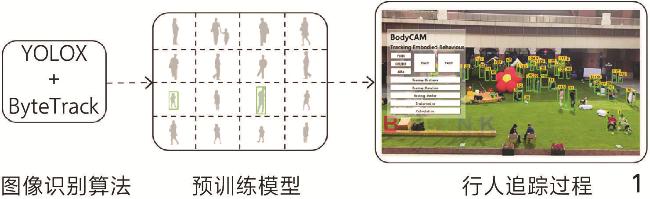
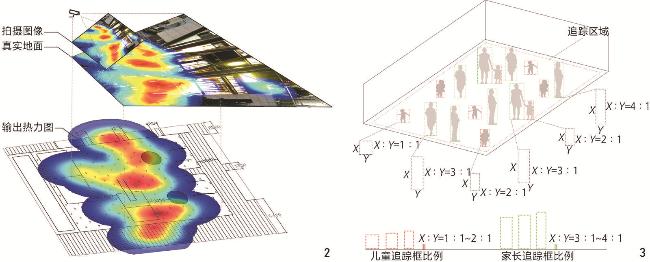
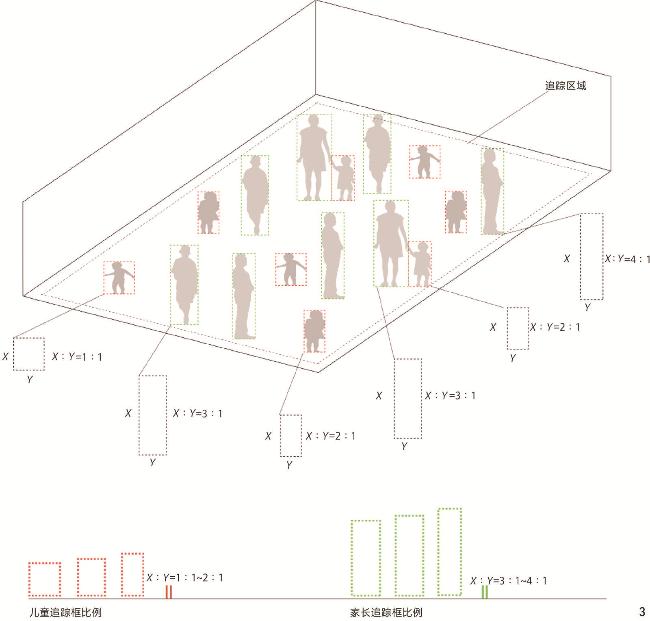
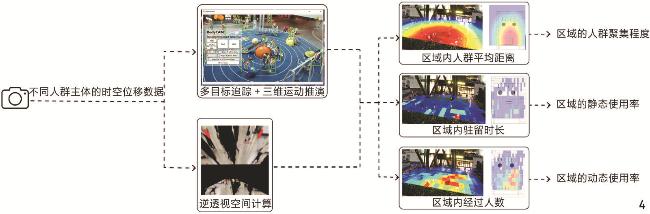
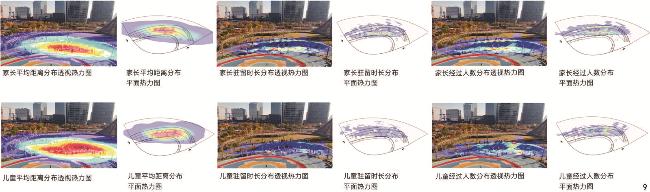
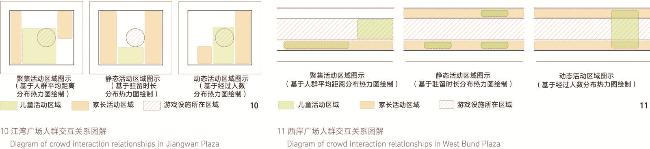
[Objective] Quantitative analysis of children’s behaviors has emerged as a new requirement in the research on urban public spaces. To this end, the primary focus of research lies in the precise spatiotemporal positioning of the crowd within the space. Traditional methods often involve long-term video recording and manual notation of crowd positions in every frame using the “observation method”. While effective, these methods are time-intensive. With the development of computer vision technology, it has become possible to automate the tracking of complex crowd behaviors in public spaces, thereby introducing novel methodologies for computational analysis in urban public space. However, the detailed identification and analysis of different crowd categories, such as children and parents, remain a significant challenge. This research aims to establish a computational analysis method for multi-subject behavior based on targeted computer vision tracking. This method reveals interaction patterns among children, parents and spatial morphology, thereby supporting spatial optimization designs for specific crowd behaviors. [Methods] Taking multi-subject interaction behaviors in public spaces as the research object, this research adopts a three-stage research approach: technological investigation, methodology construction, and case study validation. Initially, the technical framework for targeted pedestrian tracking is established. Video data is recorded from selected angles based on spatial conditions, ensuring adequate representation of spatial-temporal dynamics. And a pre-trained deep learning model is adopted for precise localization and trajectory annotation of pedestrians. Subsequently, computational analysis and visualization methods for revealing the interaction behaviors of different groups are explored, which involves a pedestrian identification threshold model based on human proportion characteristics that enables targeted identification and differentiation of children from adults, and a dedicated analysis module designed to visualize behavioral patterns of each identified crowd and thereby provide visual patterns for the spatial-temporal distributions of different crowds. Finally, the effectiveness of the multi-subject behavior analysis framework is validated through a case study on children’s recreational public spaces. The research selects two typical children’s recreational public spaces located in commercial areas. It analyzes three key behavioral metrics: average spatial distance distribution, stay duration distribution, and passer-by count distribution. Correlation analyses and interpretations of these metrics reveal the interaction patterns between children and parents and their relationship with the spatial morphological layout. [Results] The computational analysis method for multi-subject behavior enables long-term, large-scale behavioral data collection and analysis for different crowd categories. The case study on the children’s recreational public spaces reveals that, children’s activities in radially organized spatial layouts tend to be concentrated independently in central areas, while parents often move along the periphery for supervision. No significant overlap between the activity areas of children and parents is observed, suggesting minimal need for spatial overlap consideration. In such designs, the focus should be on the orientation of children’s activity spaces, as the layout of play facilities affects the observation points of supervising parents. In linear spatial layouts, parents and children closely accompany each other, primarily engaging in stationary supervision. These layouts require the consideration of spatial overlap between parents and children, as well as additional seating or rest facilities. The placement of play facilities in linear spaces significantly influences both children’s resting positions and parents’ supervision points. The empirical findings indicate that tracking technology based on human proportion features is effective for identifying target children and adults crowds at the scale of public space. The computational analysis method based on congestion degree, static usage rate, and dynamic usage rate systematically reveals adult − child interaction dynamics, and the cross-comparative analysis using visualized heatmaps uncovers the effects of spatial features on multi-subject interaction behaviors. [Conclusion] The computational analysis method for multi-subject behavior supports spatial behavioral research involving interactions of various crowd categories and is applicable to post-occupancy evaluations and design optimization in complex public spaces. It facilitates targeted spatial renovations and facility placements based on the actual spatial usage and behavioral requirements of different crowds. The research further recognizes existing technological limitations and potential future developments. While the method effectively differentiates adults and children using body aspect ratios, it cannot yet distinguish other demographic groups and their detailed semantic behaviors. Therefore, future development using human pose tracking is essential for more refined analysis. Furthermore, this research primarily explores technical methodologies based on a case study on children’s recreational spaces in commercial areas, resulting in certain sample limitations. Future research should expand the case categories, propose comprehensive optimization principles, and validate outcomes through feedback from practical projects.
Chao YAN , Siyan LIU , Shanshu HE , Leiqing XU . Computational Analysis Method for Multi-subject Behavior in Public Spaces Based on Targeted Computer Vision Tracking[J]. Landscape Architecture, 2025 , 32(5) : 29 -36 . DOI: 10.3724/j.fjyl.LA20250043
表1 行为分析方法比较Tab. 1 Comparison of behavioral analysis methods |
| 行为分析方法 | 分析对象 | 分析结果 | 数据指向 | 数据规模 | 数据周期 |
| 人工观察法 | 针对不同类型人群 | 人群计数、行为轨迹图 | 人群时空行为规律、人群与人群之间交互关系 | 通常适用于少量样本 | 通常适用短时间观测 |
| 基于图像识别技术的行为计算分析方法(自动化追踪) | 通常不区分人群类型 | 人群计数、行为轨迹图、行为分布热力图 | 人群时空行为规律 | 通常适用于大量样本 | 不受时间周期限制 |
| 基于定向视觉追踪的多主体行为计算分析方法(自动化追踪) | 针对不同类型人群 | 人群计数、行为轨迹图、行为分布热力图 | 人群时空行为规律、人群与人群之间交互关系 | 通常适用于大量样本 | 不受时间周期限制 |
文中图表均由作者绘制。
| [1] |
李斌. 环境行为学的环境行为理论及其拓展[J]. 建筑学报, 2008(2): 30-33.
LI B. The Environmental Behavior Theory and Development in Environment-Behavior Studies[J]. Architectural Journal, 2008(2): 30-33.
|
| [2] |
张利, 邓慧姝, 梅笑寒, 等. 城市人因工程学: 一种关于人的空间体验质量的设计科学[J]. 科学通报, 2022, 67(16): 1744-1756.
ZHANG L, DENG H S, MEI X H, et al. Urban Ergonomics: A Design Science on Spatial Experience Quality[J]. Chinese Science Bulletin, 2022, 67(16): 1744-1756.
|
| [3] |
WHYTE W H. The Social Life of Small Urban Spaces[M]. New York: Project for Public Spaces, Inc., 2001.
|
| [4] |
ANTONINI G, MARTINEZ S V, BIERLAIRE M, et al. Behavioral Priors for Detection and Tracking of Pedestrians in Video Sequences[J]. International Journal of Computer Vision, 2006, 69(2): 159-180.
|
| [5] |
陆伟, 叶宇. 日益数字化的时代带给环境行为研究的机遇与挑战[J]. 时代建筑, 2017(5): 69-71.
LU W, YE Y. Opportunities and Challenges for Environmental-Behavior Studies in the Increasingly Digital Age[J]. Time + Architecture, 2017(5): 69-71.
|
| [6] |
李早, 叶茂盛, 孙慧, 等. 徽州传统村落街巷空间与居游通行的关联规律[J]. 建筑学报, 2021(S1): 24-32.
LI Z, YE M S, SUN H, et al. The Correlation Law Between Street Space and Residential Travel in Huizhou Traditional Villages[J]. Architectural Journal, 2021(S1): 24-32.
|
| [7] |
HUANG W, LIN Y, WU M. Spatial-Temporal Behavior Analysis Using Big Data Acquired by Wi-FI Indoor Positioning System[C]//JANSSEN P, RAONIC P L A, SCHNABEL M A. Protocols, Flows, and Glitches: Proceedings of the 22nd CAADRIA Conference. Suzhou: CAADRIA, 2017: 745-754.
|
| [8] |
MARASINGHE R, YIGITCANLAR T, MAYERE S, et al. Computer Vision Applications for Urban Planning: A Systematic Review of Opportunities and Constraints[J]. Sustainable Cities and Society, 2024, 100: 105047
|
| [9] |
ZHANG N, FAN J. A Lightweight Object Detection Algorithm Based on YOLOv3 for Vehicle and Pedestrian Detection[C]//HE J, XU X. 2021 IEEE Asia-Pacific Conference on Image Processing, Electronics and Computers. Dalian: IEEE, 2021: 742-745.
|
| [10] |
LIU Q, LI Z, ZHANG L, et al. MSCD-YOLO: A Lightweight Dense Pedestrian Detection Model with Finer-Grained Feature Information Interaction[J]. Sensors, 2025, 25(2): 438
|
| [11] |
丁梦月. 基于计算机视觉技术的城市街道步行空间人群行为原型研究[D]. 天津: 天津大学, 2018.
DING M Y. The Crowd Behavior Prototype Study of Urban Street Pedestrian Space Based on Computer Vision Technology[D]. Tianjin: Tianjin University, 2018.
|
| [12] |
黄蔚欣, 齐大勇, 周宇舫, 等. 基于视频数据提取的环境行为分析初探: 以清华大学校河与近春园区域为例[J]. 住区, 2019(4): 8-14.
HUANG W X, QI D Y, ZHOU Y F, et al. Pilot Analysis of Environmental Behavior Using Big Data Extracted from Video: A Case Study of School River and Jinchun Garden Area in Tsinghua University[J]. Design Community, 2019(4): 8-14.
|
| [13] |
HOU J, CHEN L, ZHANG E, et al. Quantifying the Usage of Small Public Spaces Using Deep Convolutional Neural Network[J]. PLoS One, 2020, 15(10): e0239390
|
| [14] |
董照诚, 周宇舫. 步行空间中行人运动特征的实测和比对分析: 以典型轨道交通站出入口接驳通道为例[J]. 城市建筑, 2024, 21(5): 142-146.
DONG Z C, ZHOU Y F. Measurement and Comparative Analysis on Pedestrian Motion Characteristics in Pedestrian Space: A Case of the Connecting Channels at the Entrance of Typical Urban Rail Transit Stations[J]. Urbanism and Architecture, 2024, 21(5): 142-146.
|
| [15] |
NIU T, QING L, HAN L, et al. Small Public Space Vitality Analysis and Evaluation Based on Human Trajectory Modeling Using Video Data[J]. Building and Environment, 2022, 225: 109563
|
| [16] |
LIANG S, LENG H, YUAN Q, et al. How Does Weather and Climate Affect Pedestrian Walking Speed During Cool and Cold Seasons in Severely Cold Areas?[J]. Building and Environment, 2020, 175: 106811
|
| [17] |
LIANG S, LENG H. Residents’ Seasonal Behavior Patterns and Spatial Preferences in Public Open Spaces of Severely Cold Regions: Evidence from Harbin, China[J]. Habitat International, 2025, 156: 103279
|
| [18] |
汪丽君, 刘天宇. 全龄友好理念下小微公共空间的包容性设计与建设研究[J]. 世界建筑, 2024(6): 25-29.
WANG L J, LIU T Y. Inclusive Design in the Construction of Micro and Small Public Spaces Under the Concept of All-Age-Friendly[J]. World Architecture, 2024(6): 25-29.
|
| [19] |
舒平, 王娇婧, 赵子豪, 等. 基于老幼交互行为的既有住区户外空间类型研究[J]. 建筑学报, 2019(S1): 80-83.
SHU P, WANG J J, ZHAO Z H, et al. Research on Outdoor Space Types of Existing Residential Areas Based on the Interaction Between Old and Young[J]. Architectural Journal, 2019(S1): 80-83.
|
| [20] |
ZHANG Y, WANG X, YE X, et al. ByteTrackV2: 2D and 3D Multi-object Tracking by Associating Every Detection Box[EB/OL]. (2023-03-27)[2025-03-20]. https://arxiv.org/abs/2303.15334.
|
| [21] |
GE Z, LIU S, WANG F, et al. YOLOX: Exceeding YOLO Series in 2021[EB/OL]. (2021-07-18)[2025-03-20]. https://arxiv.org/abs/2107.08430.
|
| [22] |
ZHANG Y, SUN P, JIANG Y, et al. ByteTrack: Multi-object Tracking by Associating Every Detection Box[C]//AVIDAN S, BROSTOW G, CISSE M, et al. Computer Vision − ECCV 2022. Cham: Springer Nature Switzerland, 2022: 1-21.
|
| [23] |
GONZALEZ ROJAS P. Space and Motion: Data-Driven Model of 4D Pedestrian Behavior[C]//NAGAKURA T, TIBBITS S, MUELLER C. ACADIA Proceedings. Cambridge (Massachusetts): ACADIA, 2017: 266-273.
|
| [24] |
张菁, 付冬楠, 王颖. 城市儿童友好空间建设思考[J]. 世界建筑, 2024(6): 12-19.
ZHANG J, FU D N, WANG Y. Reflections on the Construction of Child-Friendly Spaces in Cities[J]. World Architecture, 2024(6): 12-19.
|
| [25] |
吕元, 曹小芳, 李婧, 等. 社区公共空间老幼共享模式研究[J]. 建筑学报, 2021(S1): 80-85.
LÜ Y, CAO X F, LI J, et al. Research on the Sharing Mode of Community Public Space Between the Old and the Young[J]. Architectural Journal, 2021(S1): 80-85.
|
| [26] |
徐磊青, 郑婷婷. 商业综合体布局对外部空间公共性的影响: 以上海12个商业综合体地块为例[J]. 南方建筑, 2023(11): 1-12.
XU L Q, ZHENG T T. Effects of Commercial Complex Layout on Publicity of External Spaces: A Case Study of 12 Commercial Complex Plots in Shanghai[J]. South Architecture, 2023(11): 1-12.
|
| [27] |
BATTY M. Predicting Where We Walk[J]. Nature, 1997, 388(6637): 19-20.
|
| [28] |
闫超, 李特, 袁烽. 具身形态学: 基于身体行为的计算性几何[J]. 建筑师, 2023(5): 4-11.
YAN C, LI T, YUAN F. Embodied Morphology: Computational Geometry Based on Human Body Behaviors[J]. The Architect, 2023(5): 4-11.
|
/
| 〈 |
|
〉 |