

Identification and Interpretation of Cultural Landscape Field from the Integral Conservation Perspective
|
LIANG Zhitong is a Ph.D. candidate in the College of Horticulture & Forestry Sciences, Huazhong Agricultural University, and a visiting Ph.D. candidate in École Pratique des Hautes Études, Université Paris Sciences et Lettres (EPHE-PSL). Her research focuses on history and theory of landscape architecture |
|
DU Yan, Ph.D., is an associate professor in the College of Horticulture & Forestry Sciences, Huazhong Agricultural University, and a visiting scholar in the University of Washington (Seattle). Her research focuses on history and theory of landscape architecture, and landscape planning and design |
|
XIA Haiyan, Master, is a lecturer in the College of Horticulture & Forestry Sciences, Huazhong Agricultural University. Her research focuses on landscape planning and design, and landscape culture and heritage conservation |
Received date: 2024-09-29
Revised date: 2025-03-18
Online published: 2025-12-10
Copyright
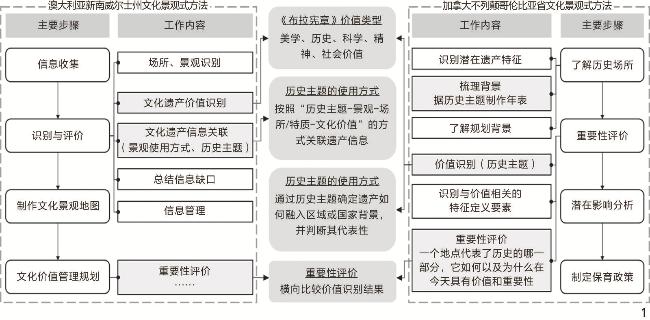
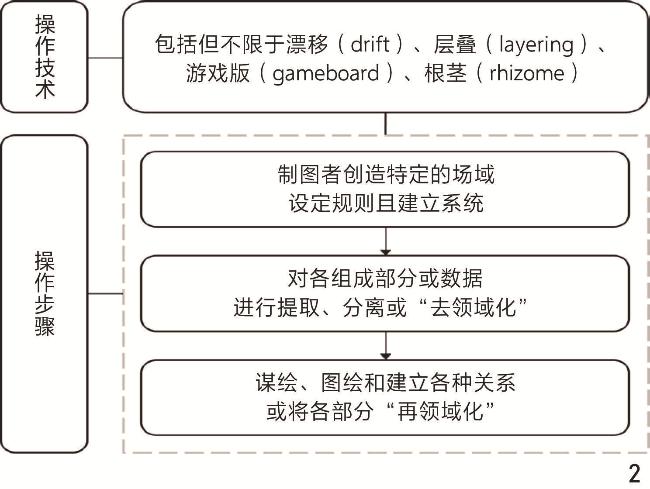
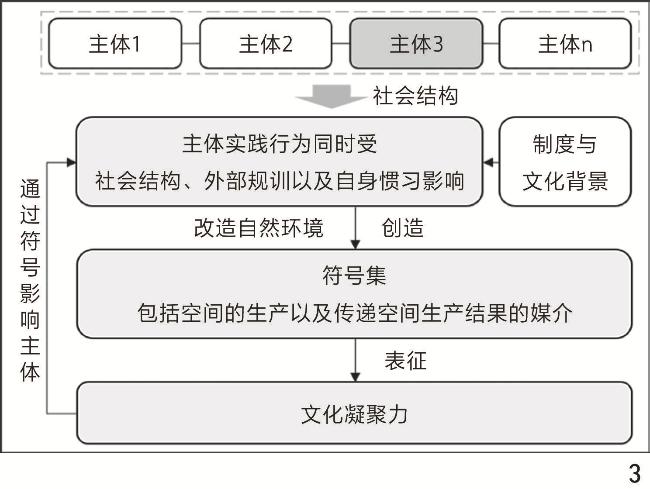
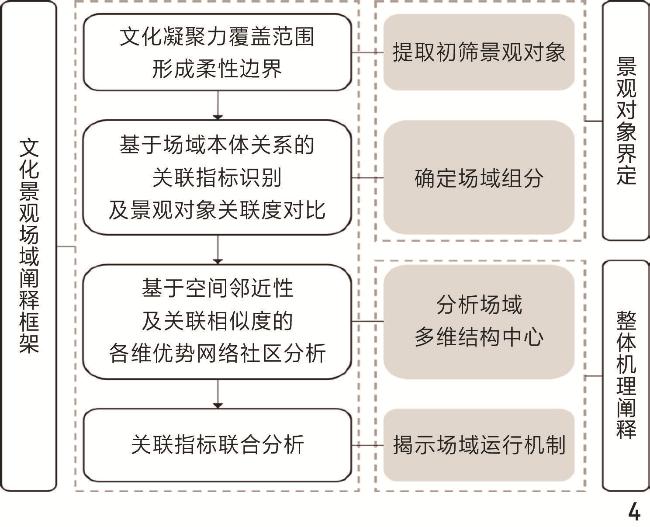
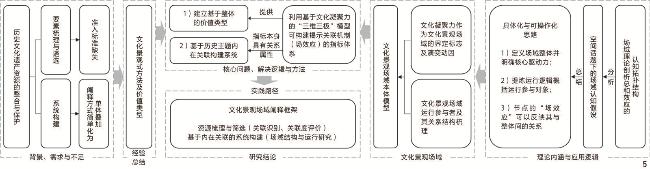
[Objective] The integrity-based paradigm in cultural heritage conservation and utilization has achieved disciplinary consensus within the professional domain, where systematic documentation of historical − cultural heritage resources (HCHR) constitutes the foundation for resource integration and subsequent spatial specific planning. However, current research is still in its infancy and faces dual challenges: ambiguous criteria for integrity definition and insufficient methodologies for revealing intra-systemic relationships. While cultural landscape approaches have gained international traction, their application predominantly focuses on protected areas, rarely addressing critical aspects of integrity assessment, resource selection, or boundary delineation, for which a relational network has yet to be established in the sense of a system. Aiming to explore a viable path for the collation and integration of HCHR, this research proposes an innovative framework that shifts from single-entity feature extraction to systemic integrity characterization, investigating how constituent elements functionally interact within integral configurations. [Methods] Through inductive − deductive analysis of literature and case studies, the research first deconstructs the operational logic of cultural landscape approach. Subsequently, field theory is introduced to establish a cultural landscape field (CLF) conceptual model via interdisciplinary theoretical synthesis, involving: 1) Systematic review; 2) ontological modeling of CLF; 3) development of an association-based indicator system integrating resource networks, value hierarchies, and historical contexts. [Results] This research establishes three pivotal advancements through systematic inquiry. First, critical examination of existing cultural landscape methodologies identifies two fundamental means addressing definitional ambiguities and interpretive enhancement in HCHR research: integrity value evaluation and historical − thematic information correlation. These means respectively resolve the criteria formulation for integral delineation and the methodological reinforcement for systemic relationship revelation. Second, field theory demonstrates significant epistemological and methodological value by its features of the cognitive topology. Specifically, the research showcases the capacity of the field theory to formally describe the aggregate effects and integral characteristics that arise from the interactions among diverse entities, as well as the role played by components within such integral manifestations. Through synthesizing theoretical postulates from multidisciplinary scholarship on spatial interpretation, this research establishes the application logic of field paradigm in spatial cognition and mechanistic explanation: Conceptual demarcation of the spatial field entity coupled with identification of its core driving forces; abstraction of operational logic encompassing participatory actor typologies and their interaction patterns; elucidation of the mechanistic relationships between constituent elements and the integral system through nodal field effects. Moreover, by incorporating the connotations of cultural landscape, this research posits that cultural cohesion is the fundamental rationale for the existence and operation of the CLF in its entirety. The actors involved in the overall operation and their relational network are highly generalized into an ontological model of the CLF, which consists of the subject, object, place, and the three-dimensional relationships among them. Third, in the context of the CLF, the field effect of cultural cohesion, which refers to the associative mechanism between landscape objects and the field (comprising two aspects: strength and mode of association), holds the key to identification and interpretation. It is posited that substituting the identification of relationships with that of indicators represents an effective means of uncovering the intricate associations between elements and the cultural landscape in its entirety. Accordingly, the establishment of indicator types that interconnect resources, values, networks, and historical contexts, based on the three-dimensional relationships within the ontology model, not only offers a integrity value type grounded in the nodal field effect but also provides the basis for constructing an associative system centered around historical and cultural themes. The development of an interpretive framework is enabled by this, in turn enabling a formal portrayal of the organizational structure and operational mechanism of the CLF. Main operating steps of the framework are as follows: 1) Unearthing of potential elements by exploring the scope of cultural cohesion coverage; 2) definition of integrity by identifying associative indicators and comparing the degree of association; 3) analysis of the organizational structure by integrating the associative similarity and spatial proximity of elements; 4) representation of the overall operational mechanism at multiple levels through the combined analysis of associative indicators. [Conclusion] The CLF interpretative framework advances HCHR conservation theory by bridging relational analysis and spatial practice. Its core contribution lies in translating abstract integrity concepts into operational planning tools through: 1) An association-driven resource identification system; 2) geospatial mapping of cultural cohesion effects; 3) mechanism representation combining historical narratives with spatial configurations. This paradigm shift from entity-based to relationship-focused conservation provides an actionable methodology for sustainable HCHR management, effectively reconciling theoretical discourse with practical planning implementation.
Zhitong LIANG , Yan DU , Haiyan XIA . Identification and Interpretation of Cultural Landscape Field from the Integral Conservation Perspective[J]. Landscape Architecture, 2025 , 32(5) : 125 -132 . DOI: 10.3724/j.fjyl.202409290573
表1 空间规划领域场域假设的认知与解释思路[28-30, 32]Tab. 1 Cognition and interpretation of field hypotheses in the context of spatial planning[28-30, 32] |
| 认知拓扑 结构特征 | 应用场景 | 总结 | |||
| “意境”“气” | 神圣空间 | “自然—文化”共生 | 场域操作模式 | ||
| 场域边界 | “心理流”贯穿之处 | “圣域” 与 “世俗域”的边界 | 凝聚力的影响范围 | 制图者、设计师划定 | 定义整体并明确核心驱动力;提炼运行逻辑并概括参与对象;场效应即对象与整体间的关系 |
| 场域对象 | 绕 “气” 而生的 “形” 、承载心理流的环境空间 | 具有宗教内涵性的节点 | 景观 | 通过地图术探寻揭示、关联建构,具体做法不设定式 | |
| 场效应(场域 对象状态) | 文脉意念核心的正价引力 | 世俗域—圣域—至圣域渐次升华、重复划分 | 自然、社会、文化模式动态演变产生的景观变化 | ||
表2 文化景观场域事实总和的三元划分Tab. 2 Ternary division of the aggregate of facts in cultural landscape fields |
| 三元划分 | 场域事实总和 | ||
| 人 | 塑造场域文化凝聚力过程的活动与事件 | 承载活动与事件的场域环境 | |
| 物质 | 身体 | 人类的互动实践对象 | “物”是环境的构成成分 |
| 精神心智 | 个体 | 体验、领悟、内省 | 环境触发体悟 |
| 客观共识 | 群体、集体 | 产生宗教、艺术、制度等文化符号 | 文化符号被投射至环境 |
表3 基于文化景观场域本体的关联指标类型Tab. 3 Types of correlation indicators based on the ontology of cultural landscape field |
| 三维关系 | 关联指标类型 |
| 主体—场所 | 组织管理、社会影响、场所叙事、生产要素流动等 |
| 对象—场所 | 建筑、节点布局与空间关系,空间功能,命名题额等 |
| 主体—对象—场所 | 信息传播、民俗、意向感知、文化认同、人员流动等 |
① 学者提出以心理场认识意境:在审美观照中,当对象可以提供一个心理环境、刺激身体产生自我观照、自我肯定的愿望并完成这一愿望,就可以认为这样的审美对象具有意境,详见参考文献[
② 景观都市主义在意识形态上形成了2种主流模式:分别是以英国建筑联盟学院(Architectural Association School of Architecture)为代表的机器模式(mechanic mode)和以美国宾夕法尼亚大学为代表的场域操作模式(field operations mode)。前者侧重场地抽象作用力的提取,后者侧重以场地整体系统设计为原则,详见参考文献[
③ 文化景观有一种凌驾于各物质因素和非物质因素之上、可以感觉到但难以表达出来的“气氛”,它像区域个性一样,是一种抽象的感觉,详见参考文献[
④ 波普尔将世界划分为3个世界:物理世界(世界1)、意识经验世界(世界2)以及以固态形式存在的各类知识世界(世界3)。其中世界3是由符号所承载的人类客观知识世界(知识在这里是广义的),详见参考文献[
⑤ 波普尔“3个世界”理论在本体论层面将世界划分为3个实在的次世界(subworlds),同注释④ 。基于这一划分,波普尔将身心问题中的心灵拆分为心理状态和思想内容两大范畴,且世界2是其余2个世界交互的中介,详见参考文献[
⑥ 澳大利亚文化遗产认定的重要性评价过程中,为避免“重要性泛化”而采取“横向比较”,具有重要性的文化景观可能看上去很普通或缺乏吸引力,因而不能单纯以稀缺性或独特性来衡量,详见参考文献[
⑦ 美国文化景观遗产认定过程中,强调在边界划定时采用一种相对宏观的地理观、进行多尺度考量,保证文化景观的历史完整性,详见参考文献[
⑧ 在对一个广泛背景下的关系或交叉节点的位置进行处理时,关系论聚焦于地方和场地是如何在特定的关系网络中确定位置;实体论既强调等级层次组织,也强调将空间变成明确的、有着清晰界限和边界的独立区域,详见参考文献[
| [1] |
陈紫涵, 柳肃. 国土空间规划语境下遗产保护体系的价值转向[J]. 规划师, 2023, 39(8): 66-73.
CHEN Z H, LIU S. The Value Reorientation of Heritage Conservation System in the Context of Territorial Space Planning[J]. Planners, 2023, 39(8): 66-73.
|
| [2] |
张能, 武廷海, 王学荣, 等. 中国历史文化空间重要性评价与保护研究[J]. 城市与区域规划研究, 2020, 12(1): 1-17.
ZHANG N, WU T H, WANG X R, et al. A Study on Evaluation of the Significance of China's Historical and Cultural Space and Its Protection[J]. Journal of Urban and Regional Planning, 2020, 12(1): 1-17.
|
| [3] |
杨涛. 国土空间规划视角下的国家文化遗产空间体系构建思考[J]. 城市规划学刊, 2020(3): 81-87.
YANG T. On the Construction of National Cultural Heritage Spatial System from the Perspective of Territorial Spatial Planning[J]. Urban Planning Forum, 2020(3): 81-87.
|
| [4] |
徐倩, 郑曦. 大运河影响下的城市内港码头地区景观演变与发展探析[J]. 中国园林, 2016, 32(5): 46-51.
XU Q, ZHENG X. The Landscape Evolution of Inner Port City District Under the Influence of the Grand Canal[J]. Chinese Landscape Architecture, 2016, 32(5): 46-51.
|
| [5] |
汤茂林. 文化景观的内涵及其研究进展[J]. 地理科学进展, 2000, 19(1): 70-79.
TANG M L. The Inventory and Progress of Cultural Landscape Study[J]. Progress in Geography, 2000, 19(1): 70-79.
|
| [6] |
汪芳, 蒋春燕, 卫然. 文化景观安全格局: 概念和框架[J]. 地理研究, 2017, 36(10): 1834-1842.
WANG F, JIANG C Y, WEI R. Cultural Landscape Security Pattern: Concept and Structure[J]. Geographical Research, 2017, 36(10): 1834-1842.
|
| [7] |
姜岩, 孙婷, 董钰, 等. 国土空间规划体系下历史文化遗产保护传承专项研究及西安实践[J]. 规划师, 2022, 38(3): 110-116.
JIANG Y, SUN T, DONG Y, et al. Research on the Special Planning of Historical and Cultural Heritage Protection and Inheritance in the Territorial Space Planning System, Xi'an[J]. Planners, 2022, 38(3): 110-116.
|
| [8] |
BROWN S, GOETCHEUS C. Routledge Handbook of Cultural Landscape Practice[M]. New York: Routledge, 2023: 1-13, 205-215.
|
| [9] |
刘庆柱, 汤羽扬, 张朝枝, 等. 笔谈: 国家文化公园的概念定位、价值挖掘、传承展示及实现途径[J]. 中国文化遗产, 2021(5): 15-27.
LIU Q Z, TANG Y Y, ZHANG C Z, et al. Written Talk: Concept Orientation, Value Mining, Inheritance and Exhibition of National Cultural Park and Its Realization Ways[J]. China Cultural Heritage, 2021(5): 15-27.
|
| [10] |
ANTROP M, EETVELDE V V. Landscape Perspectives: The Holistic Nature of Landscape[M]. Dordrecht: Springer, 2017: 81-82.
|
| [11] |
申克, 孔洞一. 文化景观维护视野下德国历史性文化景观的两种方法论: 清单盘点与空间区划[J]. 风景园林, 2019, 26(12): 41-51.
SCHENK W, KONG D Y. Inventories and Regionalization of Historical Cultural Landscapes in Germany in the Context of Cultural Landscape Conservation[J]. Landscape Architecture, 2019, 26(12): 41-51.
|
| [12] |
梁芷彤, 张斌, 杜雁. 从“基于遗产地”到“基于文化景观”: 文化遗产资源管理的国际实践[J]. 中国园林, 2024, 40(8): 85-90.
LIANG Z T, ZHANG B, DU Y. From “Site-Based” to “Cultural Landscape-Based”: International Practices in the Management of Cultural Heritage Resources[J]. Chinese Landscape Architecture, 2024, 40(8): 85-90.
|
| [13] |
BROWN Steve. Cultural Landscapes: A Practical Approach to Park Management[Z]. Sydney: Department of Environment, Climate Change and Water (NSW), 2010.
|
| [14] |
British Columbia Parks. BC Parks Cultural Heritage Conservation Handbook: A Guide for Conserving Cultural Heritage in British Columbia’s Protected Areas System[EB/OL]. (2018-03-28)[2024-12-19]. http://www.vancouvergunners.ca/uploads/2/5/3/2/25322670/bc_parks_handbook_28_march_2018_copy.pdf.
|
| [15] |
STEPHENSON J. The Cultural Values Model: An Integrated Approach to Values in Landscapes[J]. Landscape and Urban Planning, 2008, 84(2): 127-139.
|
| [16] |
FREDHEIM L H, KHALAF M. The Significance of Values: Heritage Value Typologies Re-examined[J]. International Journal of Heritage Studies, 2016, 22(6): 466-481.
|
| [17] |
HEILEN M, ALTSCHUL J H. Connecting the Dots: Integrating Cultural and Natural Resource Management in the United States[J]. Ex Novo: Journal of Archaeology, 2020, 4: 31-51.
|
| [18] |
MCMULLIN E. The Origins of the Field Concept in Physics[J]. Physics in Perspective, 2002, 4(1): 13-39.
|
| [19] |
KADAR E E, SHAW R E. Toward an Ecological Field Theory of Perceptual Control of Locomotion[J]. Ecological Psychology, 2000, 12(2): 141-180.
|
| [20] |
LEWIN K, CARTWRIGHT D. Field Theory in Social Science: Selected Theoretical Papers[M]. New York: Harper & Row, 1951: 240.
|
| [21] |
WACQUANT L J D. Towards a Reflexive Sociology: A Workshop with Pierre Bourdieu[J]. Sociological Theory, 1989, 7(1): 26-63.
|
| [22] |
MARTIN J L. What Is Field Theory?[J]. American Journal of Sociology, 2003, 109(1): 1-49.
|
| [23] |
王亚秋, 王德利. 改进的植物生态场模型与实例分析[J]. 生态学报, 2005, 25(11): 2855-2861.
WANG Y Q, WANG D L. The Improved Model of Plant Ecological Field and the Case Analyzing[J]. Acta Ecologica Sinica, 2005, 25(11): 2855-2861.
|
| [24] |
艾伦, 吴洪德. 知不可绘而绘之 论标记符号[J]. 时代建筑, 2015(2): 124-129.
STAN A, WU H D. Mapping the Unmappable: On Notation[J]. Time + Architecture, 2015(2): 124-129.
|
| [25] |
RUMMEL R J. Understanding Conflict and War (Vol. 1): The Dynamic Psychological Field[M]. New York: Halsted Press, 1975-1981: 33-35.
|
| [26] |
杜雁, 梁芷彤, 赵茜. 本体与机理: 场域理论的建构、演变与应用[J]. 国际城市规划, 2022, 37(3): 59-66.
DU Y, LIANG Z T, ZHAO Q. Ontology and Mechanism: Construction, Evolution and Application of Field Theory[J]. Urban Planning International, 2022, 37(3): 59-66.
|
| [27] |
何昉. 从心理场现象看中国园林美学思想[J]. 中国园林, 1989(3): 20-27.
HE F. Research on Chinese Garden Aesthetic Thought from Psychological Field Phenomenon[J]. Chinese Landscape Architecture, 1989(3): 20-27.
|
| [28] |
徐苏斌.风水说中的心理场因素[M]//王其亨, 编.风水理论研究.天津: 天津大学出版社, 1999: 107-116.
XU S B. Mental Field Factors in Fengshui Theory[M]// WANG Q H, edited. Study of Fengshui Theory. Tianjin: Tianjin University Press, 1999: 107-116.
|
| [29] |
王贵祥.东西方的建筑空间: 传统中国与中世纪西方建筑的文化阐释[M].2版.天津: 百花文艺出版社, 2006: 244-245.
WANG G X. Architectural Space in the East and the West: Cultural Interpretation of Traditional China and Medieval Western Architecture[M]. 2nd ed. Tianjin: Baihua Literature Press, 2006: 244-245
|
| [30] |
LAPKA M, CUDLINOVA E, RIKOONE S, et al. Integrating Nature, Culture, and Society: The Concept of Landscape Field[J]. Ekologia Bratislava, 2001, 20(1): 125-138.
|
| [31] |
章明, 吴尤. “场域”理念下的城市基础设施复合化转型研究[J]. 园林, 2023, 40(3): 4-11.
ZHANG M, WU Y. Research on the Compound Transformation of Urban Infrastructure Under the “Field Theory”[J]. Landscape Architecture Academic Journal, 2023, 40(3): 4-11.
|
| [32] |
科纳.景观之想象: 詹姆斯·科纳思想文集1990—2010[M].慕晓东, 吴尤, 译.北京: 中国建筑工业出版社, 2021: 111-257.
CORNER J. The Landscape Imagination: Collected Essays of James Corner 1990−2010[M]. MU X D, WU Y, translated. Beijing: China Architecture & Building Press, 2021: 111-257.
|
| [33] |
翟俊.景观都市主义的理论与方法[M].北京: 中国建筑工业出版社, 2018: 64-47, 70-87.
ZHAI J. The Theory and Method of Landscape Urbanism[M]. Beijing: China Architecture & Building Press, 2018: 64-47, 70-87.
|
| [34] |
GOTTMANN J. A Geography of Europe[M]. 4th ed. New York: Holt, Rinehart and Winston, 1969: 76.
|
| [35] |
郭斌. 浅析“世界三”与卡西尔符号世界的异同: 从卡西尔的符号世界看波普尔的“三个世界”理论[J]. 自然辩证法通讯, 2015, 37(6): 131-137.
GUO B. Elementary Analysis on the Differences and Similarities Between "World Three" and Cassirer's Symbolic World: View Popper's Three World Theory from Cassirer's Symbolic World[J]. Journal of Dialectics of Nature, 2015, 37(6): 131-137.
|
| [36] |
列斐伏尔.空间的生产[M].刘怀玉, 译.北京: 商务印书馆, 2021: 12-13, 170, 539.
LEFEBVRE H. The Production of Space[M]. LIU H Y, translated. Beijing: The Commercial Press, 2021: 12-13, 170, 539.
|
| [37] |
BARNETT R. Emergence in landscape architecture[M]. London and New York: Routledge, 2013: 67-69, 203-229.
|
| [38] |
CRUMLEY C L, KOLEN J C A, DE KLEIJN M, et al. Studying Long-Term Changes in Cultural Landscapes: Outlines of a Research Framework and Protocol[J]. Landscape Research, 2017, 42(8): 880-890.
|
| [39] |
SPIES M, ALFF H. Assemblages and Complex Adaptive Systems: A Conceptual Crossroads for Integrative Research?[J]. Geography Compass, 2020, 14(10): 1-13.
|
| [40] |
王前, 陈佳. “行动者网络理论”的机体哲学解读[J]. 东北大学学报(社会科学版), 2019, 21(1): 1-7.
WANG Q, CHEN J. An Interpretation of the Actor-Network Theory from the Perspective of Philosophy of Organism[J]. Journal of Northeastern University (Social Science), 2019, 21(1): 1-7.
|
| [41] |
CRESSWELL T. Geographic Thought: A Critical Introduction[M]. Chichester, West Sussex: Wiley-Blackwell, 2013
|
| [42] |
TAYLOR K. Landscape and Meaning: Context for A Global Discourse on Cultural Landscape Values[J]. Managing Cultural Landscapes, 2012: 21-44.
|
| [43] |
赵仲牧.赵仲牧学术文选[M].昆明: 云南大学出版社, 2015: 133-135, 276-278.
ZHAO Z M. Selected Academic Works of Zhao Zhongmu[M]. Kunming: Yunnan University Press, 2015: 133-135, 276-278.
|
| [44] |
秦州. 莱文森修正波普尔3个世界理论的得与失[J]. 自然辩证法研究, 2013, 29(5): 105-110.
QIN Z. Gains and Losses of Levinson’s Revision to the “Three Worlds” Schema of Popper[J]. Studies in Dialectics of Nature, 2013, 29(5): 105-110.
|
| [45] |
刘牧. 波普尔的心灵哲学遗产: 对交互主义二元论的捍卫[J]. 自然辩证法研究, 2021, 37(12): 26-32.
LIU M. The Heritage of Popper's Philosophy of Mind: In Defence of Dualist-Interactionism[J]. Studies in Dialectics of Nature, 2021, 37(12): 26-32.
|
| [46] |
卡尔波普尔.客观知识: 一个进化论的研究[M].舒伟光, 卓如飞, 周柏乔, 等, 译.上海: 上海译文出版社, 2005: 163-166.
POPPER K. Objective Knowledge: An Evolutionary Approach[M]. SHU W G, ZHUO R F, ZHOU B Q, et al, translated. Shanghai: Shanghai Translation Publishing House, 2005: 163-166.
|
| [47] |
诺伯舒兹.场所精神: 迈向建筑现象学[M].施植明, 译.4版.武汉: 华中科技大学出版社, 2010: 7-11.
NORBERG-SCHULZ Christian. Genius Loci: Towards a Phenomenology of Architecture[M]. SHI Z M, translated. 4th ed. Wuhan: Huazhong University of Science & Technology Press, 2010: 7-11.
|
| [48] |
Australian ICOMOS. The Burra Charter (2013)[EB/OL]. (2013-10-31)[2024-12-19]. https://australia.icomos.org/wp-content/uploads/The-Burra-Charter-2013-Adopted-31.10.2013.pdf.
|
| [49] |
边思敏, 王向荣. 诗性与意义的景观: 一种“事件”而非“事物”的视角[J]. 中国园林, 2021, 37(4): 20-25.
BIAN S M, WANG X R. Poetic and Meaningful Landscape: A Perspective of Analysis from Event Instead of Object[J]. Chinese Landscape Architecture, 2021, 37(4): 20-25.
|
| [50] |
孙淼, 奚雪松, 王策. 澳大利亚文化景观遗产的认定方法[J]. 国际城市规划, 2020, 35(3): 148-151.
SUN M, XI X S, WANG C. Methods of Identifying Cultural Landscape in Australian[J]. Urban Planning International, 2020, 35(3): 148-151.
|
| [51] |
奚雪松, 张宇芳. 美国文化景观遗产的认定方法及其对我国的启示[J]. 国际城市规划, 2014, 29(2): 77-82.
XI X S, ZHANG Y F. The National Registration Method of American Cultural Landscape Heritage and Its Reference Value to China[J]. Urban Planning International, 2014, 29(2): 77-82.
|
| [52] |
希利, 王红扬, 马璇. 欧洲新空间战略规划对“空间”和“地方”概念的处理[J]. 国际城市规划, 2008, 23(3): 53-65.
HEALEY P, WANG H Y, MA X. The Treatment of Space and Place in the New Strategic Spatial Planning in Europe[J]. Urban Planning International, 2008, 23(3): 53-65.
|
/
| 〈 |
|
〉 |