

Syntactic Analysis of Spatial Structure Characteristics of Traditional Villages Along the Yellow River in Western Shanxi Province
|
GAO Chenge, Ph.D., is an associate professor in the College of Architecture & Art, Taiyuan University of Technology. Her research focuses on river basin habitats and settlement heritage conservation |
|
WANG Fang, Ph.D., is a professor in the College of Architecture and Landscape, Peking University, and director of the River Basin Habitats Research Center. Her research focuses on riv-habitats and their human-water adaptation domains |
Received date: 2024-12-30
Revised date: 2025-03-09
Online published: 2025-12-10
Copyright
[Objective] Traditional villages are typical carriers for examining the genetic makeup and cultural lineage of the Chinese nation and reflecting the interaction between human and nature. The traditional villages located along the Yellow River in the Loess Plateau bear the millennia-old Yellow River culture, mirroring the evolution of human-land relationships and regional cultural characteristics. They are important media for the inheritance of historical continuity and heritage values, and deepening the understanding of their spatial structure characteristics is a crucial foundation for the protection and inheritance of rural settlement heritage. This research explores the intrinsic connections between the spatial form and structure of traditional village settlements and between relevant cognitive and behavioral patterns, and explains the generation and evolution of landscape patterns, in an effort to enhance the understanding of the integration and centripetal degree of local and overall spatial functions within the village domain, the perceptibility of the spatial system, the consistency of behavioral experiences among residents and visitors, and the potential of local spaces to contribute to the overall spatial construction. [Methods] This research uses cluster sampling to select 33 national-level traditional villages in the four counties along the Yellow River in Lyuliang City, Shanxi Province, located on the eastern side of the Jin-Shaan Gorge in the middle reaches of the Yellow River. Firstly, based on space syntax, a vectorized spatial axial model is constructed. Through regression analysis of the second-order measurement indicators of space syntax, the fitting degree is calculated to obtain spatial synergy, intelligibility, and accessibility. These metrics are used to measure the global and local spatial structural characteristics of the village samples, deepening the understanding of the intrinsic connection between the spatial structure characteristics of traditional villages and human behavior. Secondly, based on the angular segment analysis method, a cross-star model is constructed to explore the accessibility and structural degree of the foreground and background networks of the village samples. Comparative analysis is conducted on the spatial construction and adaptation of traditional villages to achieve a quantitative analysis of the differentiated spatial structural characteristics. Finally, the K-prototype mixed clustering analysis method is employed to iteratively analyze the data on the global and local, as well as the foreground and background spatial structures of the 33 traditional village samples. Villages with similar characteristics are classified into the same category, with the analysis of variance (ANOVA) being further used to explore the differences between these categories. The spatial structure characteristics of traditional villages from different construction periods and counties are classified and defined based on their attributes. [Results] The research has the following findings. 1) The specific topological structure formed by spatial structure and functional layout can influence the distribution of pedestrian flow and the travel modes of people. The spatial structure of traditional villages creates or constrains space through the interplay of local and global aspects, nodes and networks, connectivity and isolation, and structural integrity and fragmentation. This process provides opportunities for creating social interaction and activity spaces for users and reinforces the local characteristics of the villages. 2) Moderate fragmentation of local spaces can enhance the diversity and richness of the overall spatial characteristics of traditional villages. However, excessive and disorderly fragmentation can lead to disconnection of spaces, fragmentation of forms, and dysfunctionality. By adjusting the integration and connectivity of local spaces through spatial planning, the synergy, intelligibility, and accessibility of the spatial structure of the villages can be optimized. This, in turn, can guide the efficiency and potential of social activities among residents and visitors, thereby enhancing the vitality or privacy of important spatial nodes within the villages. 3) The foreground network of the spatial structure of traditional villages plays a constructive role in the continuity of the background network. Structural optimization of the foreground network can help mitigate spatial fragmentation and enhance the cohesiveness of the spatial network. The level of grid-like structure in the background network can reflect the extent to which the villages’ spatial pattern is influenced by urbanization. However, there is no direct correlation between the grid-like level of the background space network and the overall vitality of the villages’ utilization. 4) The spatial structure of traditional villages along the Yellow River in Western Shanxi Province can be categorized into three types: locally constructed, transportation-integrated, and centripetally collaborative structures. Some villages exhibit outlier characteristics in their foreground and background network structures. After undergoing diachronic iterative changes and processes such as the anchoring, disappearance, replacement, and permeation of spatial functions, these traditional villages exhibit diverse spatial structure characteristics. [Conclusion] The internal spatial structure of traditional villages is subject to complex adaptive changes influenced by local internal and external spatial factors, which in turn affects aspects such as spatial use, pedestrian distribution, social interaction, and behavioral patterns. This research reveals the intrinsic connections between the global and local as well as the foreground and background spatial structure characteristics of traditional villages, and human behaviors and activities. It provides an optimized basis for the protection and inheritance practices of rural settlement heritage and offers a reference for the implementation of targeted policies in traditional villages.
Key words: traditional villages; space syntax; spatial structure; locality; Yellow River Basin
Chenge GAO , Fang WANG . Syntactic Analysis of Spatial Structure Characteristics of Traditional Villages Along the Yellow River in Western Shanxi Province[J]. Landscape Architecture, 2025 , 32(5) : 116 -124 . DOI: 10.3724/j.fjyl.LA20240170
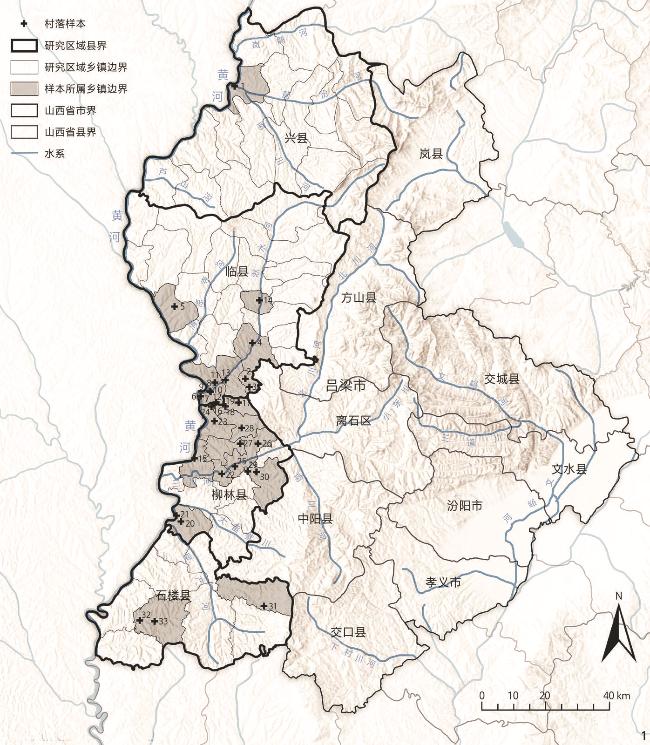
表1 传统村落样本Tab. 1 Sample of traditional villages |
| 市域 | 县域 | 村落名称 | 数量 |
| 注:*表示该村落同时被列入中国传统村落与中国历史文化名镇名村名录。 | |||
| 吕梁市 | 兴县 | 碧村 | 1 |
| 临县 | 渠家坡村、小塔则村、孙家沟村*、白道峪村、李家山村*、西湾村*、寨则山村、寨则坪村、尧昌里村、白家山村、垣上村、南圪垛村、前青塘村* | 13 | |
| 柳林县 | 贺昌村、三交村*、后冯家沟村、高家垣村*、南洼村*、曹家塔村、兴隆湾村、于家沟村、穆村二村、军渡村、下塔村、王家坡村、西坡村、康家垣村、闫家湾村、大庄村 | 16 | |
| 石楼县 | 君庄村、义牒村、留村 | 3 | |
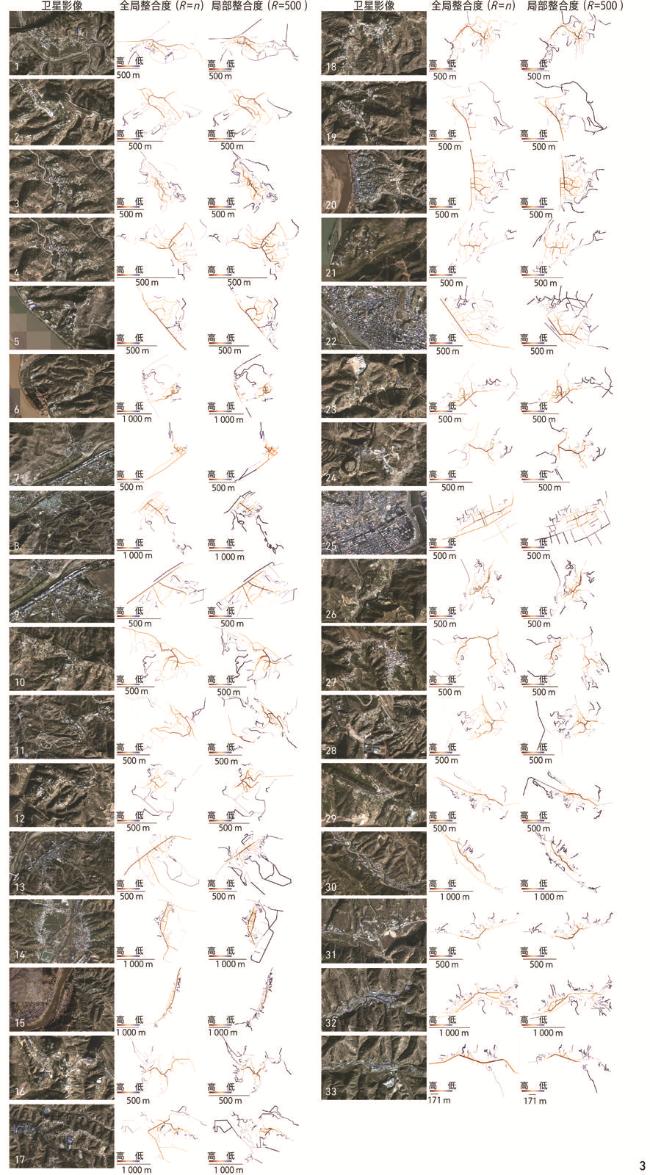
表2 传统村落全局-局部空间结构特征Tab. 2 The global-local spatial structure characteristics of traditional villages |
| 序号 | 村落名称 | 建成年代 | 协同度 | 可理解度 | 可达度 |
| 注:表格中色阶由深红色至浅红色,再由浅蓝色至深蓝色表示数值由高到低。 | |||||
| 1 | 碧村 | 元代及以前 | 0.47 | 0.81 | 0.48 |
| 2 | 渠家坡村 | 明代 | 0.79 | 0.63 | 0.59 |
| 3 | 小塔则村 | 元代及以前 | 0.79 | 0.92 | 0.55 |
| 4 | 孙家沟村 | 明代 | 0.92 | 0.72 | 0.45 |
| 5 | 白道峪村 | 清代 | 0.64 | 0.24 | 0.24 |
| 6 | 李家山村 | 清代 | 0.59 | 0.65 | 0.37 |
| 7 | 西湾村 | 清代 | 0.71 | 0.53 | 0.29 |
| 8 | 寨则山村 | 明代 | 0.79 | 0.76 | 0.54 |
| 9 | 寨则坪村 | 明代 | 0.64 | 0.41 | 0.52 |
| 10 | 尧昌里村 | 明代 | 0.87 | 0.85 | 0.46 |
| 11 | 白家山村 | 明代 | 0.37 | 0.45 | 0.49 |
| 12 | 垣上村 | 元代及以前 | 0.90 | 0.70 | 0.41 |
| 13 | 南圪垛村 | 清代 | 0.78 | 0.64 | 0.59 |
| 14 | 前青塘村 | 明代 | 0.72 | 0.56 | 0.64 |
| 15 | 军渡村 | 元代及以前 | 0.70 | 0.69 | 0.55 |
| 16 | 兴隆湾村 | 清代 | 0.80 | 0.38 | 0.48 |
| 17 | 大庄村 | 元代及以前 | 0.32 | 0.69 | 0.56 |
| 18 | 南洼村 | 元代及以前 | 0.84 | 0.56 | 0.49 |
| 19 | 曹家塔村 | 元代及以前 | 0.85 | 0.63 | 0.46 |
| 20 | 三交村 | 元代及以前 | 0.72 | 0.71 | 0.44 |
| 21 | 下塔村 | 明代 | 0.89 | 0.70 | 0.47 |
| 22 | 穆村二村 | 明代 | 0.58 | 0.63 | 0.43 |
| 23 | 后冯家沟村 | 元代及以前 | 0.82 | 0.82 | 0.43 |
| 24 | 西坡村 | 明代 | 0.89 | 0.53 | 0.46 |
| 25 | 贺昌村 | 元代及以前 | 0.61 | 0.67 | 0.51 |
| 26 | 于家沟村 | 元代及以前 | 0.77 | 0.72 | 0.34 |
| 27 | 康家垣村 | 元代及以前 | 0.68 | 0.45 | 0.49 |
| 28 | 王家坡村 | 明代 | 0.82 | 0.83 | 0.45 |
| 29 | 高家垣村 | 明代 | 0.72 | 0.63 | 0.40 |
| 30 | 闫家湾村 | 元代及以前 | 0.66 | 0.73 | 0.50 |
| 31 | 君庄村 | 明代 | 0.84 | 0.60 | 0.60 |
| 32 | 义牒村 | 明代 | 0.69 | 0.76 | 0.51 |
| 33 | 留村 | 明代 | 0.58 | 0.66 | 0.52 |
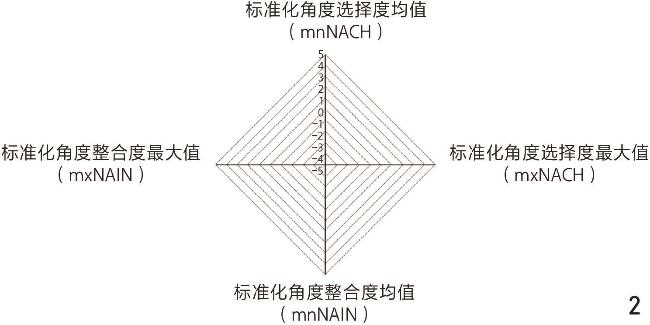
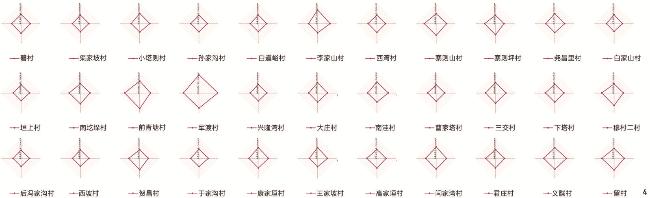
图4 传统村落样本的前景-背景网络特征Fig. 4 Characteristics of the foreground-background networks of the traditional village samples |
表3 传统村落前景-背景网络空间结构特征Tab. 3 Spatial structure characteristics of the foreground-background networks of traditional villages |
| 序号 | 村落名称 | 前景网络 | 背景网络 | ||
| NAIN最大值 | NACH最大值 | NAIN均值 | NACH均值 | ||
| 注:表格中色阶由深红色至浅红色,再由浅蓝色至深蓝色表示数值由高到低。 | |||||
| 1 | 碧村 | -0.16 | -0.32 | -0.01 | -0.34 |
| 2 | 渠家坡村 | -0.85 | -0.67 | -0.81 | -0.66 |
| 3 | 小塔则村 | -0.66 | 0.19 | -0.65 | 0.20 |
| 4 | 孙家沟村 | -0.76 | -0.71 | -0.80 | -0.73 |
| 5 | 白道峪村 | -0.88 | -0.71 | -0.87 | -0.66 |
| 6 | 李家山村 | -0.40 | 1.37 | -0.26 | 1.97 |
| 7 | 西湾村 | -0.48 | -0.63 | -0.44 | -0.64 |
| 8 | 寨则山村 | 1.13 | 0.34 | 1.00 | 0.05 |
| 9 | 寨则坪村 | 0.59 | -0.65 | 0.71 | -0.74 |
| 10 | 尧昌里村 | -0.42 | 0.08 | -0.40 | 0.09 |
| 11 | 白家山村 | -1.07 | -0.72 | -1.02 | -0.52 |
| 12 | 垣上村 | -1.00 | -0.69 | -1.06 | -0.79 |
| 13 | 南圪垛村 | 0.77 | -0.11 | 0.59 | -0.28 |
| 14 | 前青塘村 | 2.69 | 0.46 | 2.98 | 1.09 |
| 15 | 军渡村 | 2.97 | 4.66 | 2.76 | 4.25 |
| 16 | 兴隆湾村 | -0.90 | -0.67 | -0.91 | -0.65 |
| 17 | 大庄村 | -0.44 | 0.04 | -0.33 | 0.20 |
| 18 | 南洼村 | -0.28 | 0.82 | -0.29 | 0.56 |
| 19 | 曹家塔村 | -0.63 | -0.69 | -0.74 | -0.80 |
| 20 | 三交村 | 0.08 | 0.32 | 0.27 | 0.31 |
| 21 | 下塔村 | -0.20 | -0.36 | -0.31 | -0.53 |
| 22 | 穆村二村 | 1.32 | -0.27 | 1.39 | -0.39 |
| 23 | 后冯家沟村 | -0.87 | -0.72 | -0.88 | -0.80 |
| 24 | 西坡村 | -0.90 | -0.63 | -0.97 | -0.65 |
| 25 | 贺昌村 | 0.58 | -0.63 | 0.80 | -0.60 |
| 26 | 于家沟村 | -0.73 | -0.22 | -0.81 | -0.28 |
| 27 | 康家垣村 | -0.18 | 0.21 | -0.08 | 0.49 |
| 28 | 王家坡村 | -0.75 | 0.07 | -0.71 | 0.51 |
| 29 | 高家垣村 | 0.17 | -0.31 | -0.03 | -0.44 |
| 30 | 闫家湾村 | 0.39 | 0.28 | 0.48 | 0.83 |
| 31 | 君庄村 | -0.03 | -0.38 | -0.10 | -0.55 |
| 32 | 义牒村 | 0.66 | 0.99 | 0.58 | 0.50 |
| 33 | 留村 | 1.25 | 0.24 | 0.92 | 0.03 |
表4 传统村落样本聚类分析结果Tab. 4 Results of cluster analysis of traditional villages samples |
| 测度指标 | 聚类分析结果(平均值±标准差) | F | p | ||
| A类 | B类 | C类 | |||
| 注:*表示p<0.05,**表示p<0.01。 | |||||
| 协同度 | 0.66±0.15 | 0.69±0.16 | 0.80±0.10 | 3.426 | 0.046* |
| 可理解度 | 0.75±0.09 | 0.59±0.11 | 0.57±0.15 | 8.514 | 0.001** |
| 可达度 | 0.48±0.06 | 0.56±0.05 | 0.42±0.08 | 11.653 | 0.000** |
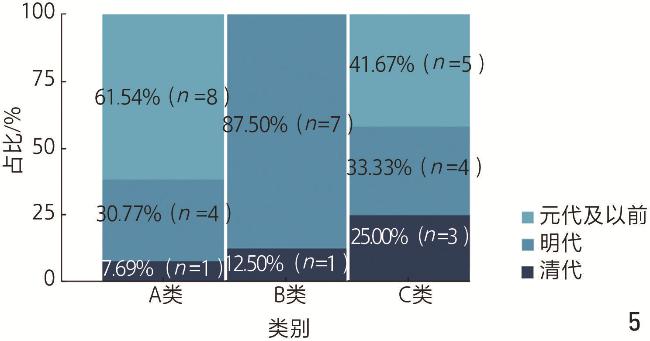
图5 不同建成年代的传统村落样本空间结构分类Fig. 5 Classification of spatial structures of traditional villages constructed in different periods |
文中图表均由作者绘制。
| [1] |
陈驰, 李伯华, 袁佳利, 等. 基于空间句法的传统村落空间形态认知: 以杭州市芹川村为例[J]. 经济地理, 2018, 38(10): 234-240.
CHEN C, LI B H, YUAN J L, et al. Spatial Morphology Cognition of Traditional Village Based on Space Syntax: A Case Study of Qinchuan Village of Hangzhou[J]. Economic Geography, 2018, 38(10): 234-240.
|
| [2] |
习近平.高举中国特色社会主义伟大旗帜 为全面建设社会主义现代化国家而团结奋斗: 在中国共产党第二十次全国代表大会上的报告[EB/OL].(2022-10-25)[2023-12-09].https://www.gov.cn/xinwen/2022-10/25/content_5721685.htm.
XI J P. Hold High the Great Banner of Socialism with Chinese Characteristics and Strive in Unity to Build a Modern Socialist Country in all Respects-Report on the 20th National Congress of the Communist Party of China(CPC)[EB/OL]. (2022-10-25)[2023-12-09]. https://www.gov.cn/xinwen/2022-10/25/content_5721685.htm.
|
| [3] |
中共中央办公厅 国务院办公厅.关于在城乡建设中加强历史文化保护传承的意见[EB/OL].(2021-09-03)[2023-12-09].https://www.gov.cn/gongbao/content/2021/content_5637945.htm.
General Office of the Central Committee of the Communist Party of China and General Office of the State Council. Opinions on Strengthening the Protection and Inheritance of Historical and Cultural Heritage in Urban and Rural Construction[EB/OL]. (2021-09-03)[2023-12-09]. https://www.gov.cn/gongbao/content/2021/content_5637945.htm.
|
| [4] |
MA Y, ZHANG Q L, HUANG L Y. Spatial Distribution Characteristics and Influencing Factors of Traditional Villages in Fujian Province, China[J]. Humanities and Social Sciences Communications, 2023, 10(1): 883
|
| [5] |
李伯华, 刘敏, 刘沛林, 等. 景观基因信息链视角的传统村落风貌特征研究: 以上甘棠村为例[J]. 人文地理, 2020, 35(4): 40-47.
LI B H, LIU M, LIU P L, et al. Research on the Characteristics of Traditional Village Style from the Perspective of Landscape Genetic Information Chain: A Case Study of Shanggantang Village[J]. Human Geography, 2020, 35(4): 40-47.
|
| [6] |
LEI Y L, ZHOU H T, WANG M, et al. Analysis on Spatial Characteristics and the Adaptation Mechanism of Miao Traditional Settlement in Qiandongnan, China[J]. Mathematical Problems in Engineering, 2022, 2022(1): 6293833
|
| [7] |
LI H B, YUAN Y, ZHANG X L, et al. Evolution and Transformation Mechanism of the Spatial Structure of Rural Settlements from the Perspective of Long-Term Economic and Social Change: A Case Study of the Sunan Region, China[J]. Journal of Rural Studies, 2022, 93: 234-243.
|
| [8] |
魏峰群, 马文硕, 杨蕾洁. 传统村落活态化价值认知与多维弹性评估模型研究: 基于陕北地区案例实证[J]. 地理科学进展, 2023, 42(4): 701-715.
WEI F Q, MA W S, YANG L J. A Flexible Multidimensional Evaluation Model for the Dynamic Values of Traditional Villages: Empirical Study of Cases in Northern Shaanxi[J]. Progress in Geography, 2023, 42(4): 701-715.
|
| [9] |
BOEING G. Spatial Information and the Legibility of Urban Form: Big Data in Urban Morphology[J]. International Journal of Information Management, 2021, 56: 102013
|
| [10] |
GUDMUNDSSON A, MOHAJERI N. Entropy and Order in Urban Street Networks[J]. Scientific Reports, 2013, 3: 3324
|
| [11] |
XU Y H, CHANG A, RONGNA A, et al. Change and Driving Mechanism of the Daily Living Space of Residents in Rural Tourist Destinations: An Exploratory Analysis Based on a Cognitive Map[J]. Journal of Resources and Ecology, 2024, 15(3): 601-613.
|
| [12] |
HILLIER B, HANSON J. The Social Logic of Space[M]. Cambridge: Cambridge University Press, 1984.
|
| [13] |
吴丽平, 刘春腊, 龚娟, 等. 传统村落空间形态演变及特征的句法解析: 以焦溪村为例[J]. 测绘科学技术学报, 2020, 37(6): 628-635.
WU L P, LIU C L, GONG J, et al. The Syntactic Analysis on the Evolution and Characteristics of Traditional Village Spatial Morphology: A Case Study of Jiaoxi Village[J]. Journal of Geomatics Science and Technology, 2020, 37(6): 628-635.
|
| [14] |
陈语轲, 孟世玉, 熊一名, 等. 耦合SNA与空间句法的传统村落公共空间结构特征与优化[J]. 农业工程学报, 2024, 40(24): 304-314.
CHEN Y K, MENG S Y, XIONG Y M, et al. Optimizing Public Space Structure of Traditional Villages Coupling SNA and Spatial Syntax[J]. Transactions of the Chinese Society of Agricultural Engineering, 2024, 40(24): 304-314.
|
| [15] |
张宇, 吴和平, 董丽. 东北少数民族传统村落结构形态比较研究[J]. 西部人居环境学刊, 2022, 37(1): 125-131.
ZHANG Y, WU H P, DONG L. A Comparative Study on the Structure and Form of Traditional Ethnic Minority Villages in the Northeast China[J]. Journal of Human Settlements in West China, 2022, 37(1): 125-131.
|
| [16] |
张斌, 郭冰玉, 岳士俊. 旅游型传统村落用地与空间格局演变微尺度分析: 以陕西省礼泉县袁家村为例[J]. 地域研究与开发, 2024, 43(1): 174-180.
ZHANG B, GUO B Y, YUE S J. Micro-scale Analysis of the Evolution of Land Use and Spatial Structure of Tourism-Oriented Traditional Villages: Taking Yuanjia Village in Liquan County of Shaanxi Province as Example[J]. Areal Research and Development, 2024, 43(1): 174-180.
|
| [17] |
林可枫, 陶伟, 古恒宇. 传统村落空间形态与空间认知的句法研究: 贵州加车村案例[J]. 地理科学, 2023, 43(9): 1608-1618.
LIN K F, TAO W, GU H Y. Spatial Form and Spatial Cognition of Traditional Villages Based on Space Syntax: A Case Study of Jiaju Village, Guizhou Province[J]. Scientia Geographica Sinica, 2023, 43(9): 1608-1618.
|
| [18] |
HILLIER B. Space is the Machine: A Configurational Theory of Architecture[M]. Cambridge: Cambridge University Press, 1999.
|
| [19] |
汪强, 李早, 马虎, 等. 皖南地区民居的功能拓扑关系解析[J]. 工业建筑, 2021, 51(4): 63-73.
WANG Q, LI Z, MA H, et al. Analysis of Topological Relations on Regional Dwelling Functions in Southern Anhui[J]. Industrial Construction, 2021, 51(4): 63-73.
|
| [20] |
陈星汉, 于瀚婷, 熊若璟, 等. 基于空间句法与机器学习的中国古典园林空间指征分析框架建构[J]. 风景园林, 2024, 31(3): 123-131.
CHEN X H, YU H T, XIONG R J, et al. Construction of an Analytical Framework for Spatial Indicator of Chinese Classical Gardens Based on Space Syntax and Machine Learning[J]. Landscape Architecture, 2024, 31(3): 123-131.
|
| [21] |
GÜNAYDIN A S, YÜCEKAYA M. Evaluation of the History of Cities in the Context of Spatial Configuration to Preview Their Future[J]. Sustainable Cities and Society, 2020, 59: 102202
|
| [22] |
程明洋, 陶伟, 贺天慈. 空间句法理论与建筑空间的研究[J]. 地域研究与开发, 2015, 34(3): 45-52.
CHENG M Y, TAO W, HE T C. Space Syntax and Building Space Study[J]. Areal Research and Development, 2015, 34(3): 45-52.
|
| [23] |
裘亦书, 詹起林. 基于景区空间安全管理视角的空间句法视域分析: 以东平国家森林公园为例[J]. 地域研究与开发, 2018, 37(4): 126-130.
QIU Y S, ZHAN Q L. Spatial Syntactic Viewshed Analysis Based on Spatial Safety Management of Scenic Spots: A Case Study of Dongping National Forest Park[J]. Areal Research and Development, 2018, 37(4): 126-130.
|
| [24] |
裘亦书, 闫梦. 基于空间句法的城市路网形态对酒店布局影响研究[J]. 旅游论坛, 2018, 11(2): 101-111.
QIU Y S, YAN M. The Study of Spatial Distribution Under the Effect of the Urban Road Network on the Hotel Industry Based on Space Syntax Method[J]. Tourism Forum, 2018, 11(2): 101-111.
|
| [25] |
GAO C G, WU Y, BIAN C L, et al. Spatial Characteristics and Influencing Factors of Chinese Traditional Villages in Eight Provinces the Yellow River Flows Through[J]. River Research and Applications, 2023, 39(7): 1255-1269.
|
| [26] |
HILLIER B, BURDETT R, PEPONIS J, PENN A. Creating Life: Or, Does Architecture Determine Anything?[J]. Architecture & Comportement/Architecture & Behaviour, 1986, 3(3): 233-250.
|
| [27] |
XIE N, CHENG B. The Impact of Urban Expressways on the Street Space of Traditional Tibetan Villages in Kham, Taking Daofu County as an Example[J]. Sustainability, 2023, 15(4): 3513
|
| [28] |
HILLIER B, YANG T, TURNER A. Normalising Least Angle Choice in Depthmap and it Opens up New Perspectives on the Global and Local Analysis of City Space[J]. Journal of Space Syntax, 2012, 3(2): 155-193.
|
/
| 〈 |
|
〉 |