

Mechanism of Influence of Spatial Perception on Residents’ Emotion in Child-Friendly Urban Streets of Fuzhou City
|
CHEN Shaofeng is a master student in the College of Landscape Architecture and Art, Fujian Agriculture and Forestry University. His research focuses on traditional gardening theory and practice, and street landscape design |
|
CHEN Zhengyan is a master student in the College of Landscape Architecture and Art, Fujian University of Agriculture and Forestry. His research focuses on urban and rural environmental valuation |
|
XU Yuhan is a master student in the College of Landscape Architecture and Art, Fujian Agriculture and Forestry University. His research focuses on urban thermal environment and green space planning |
|
DING Zheng, Ph.D, is a professor in the College of Landscape Architecture and Art, Fujian Agriculture and Forestry University. His research focuses on landscape architecture planning and design |
Received date: 2024-09-12
Revised date: 2025-03-17
Online published: 2025-12-10
Copyright
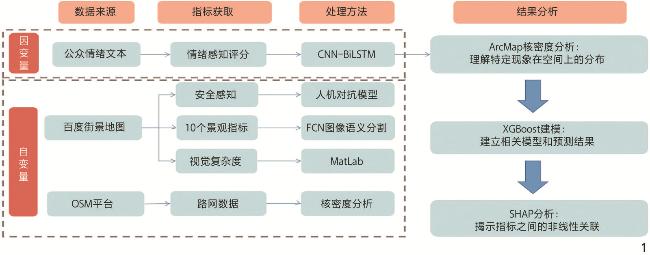
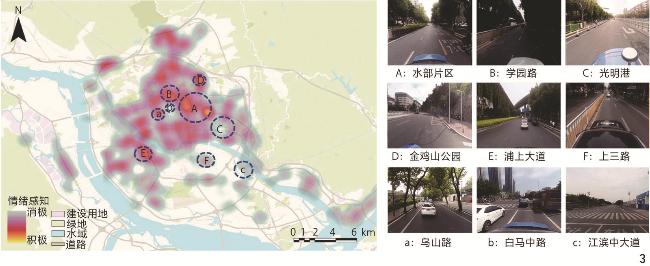
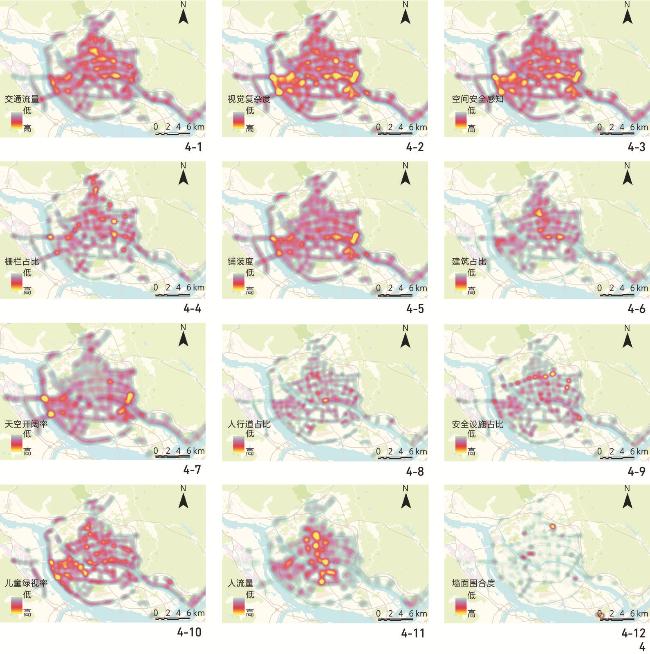
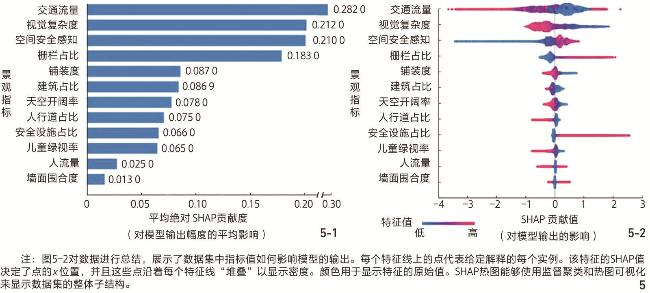
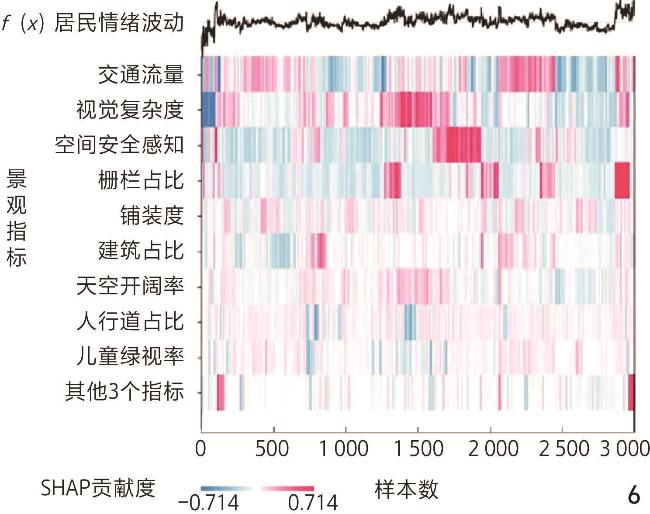
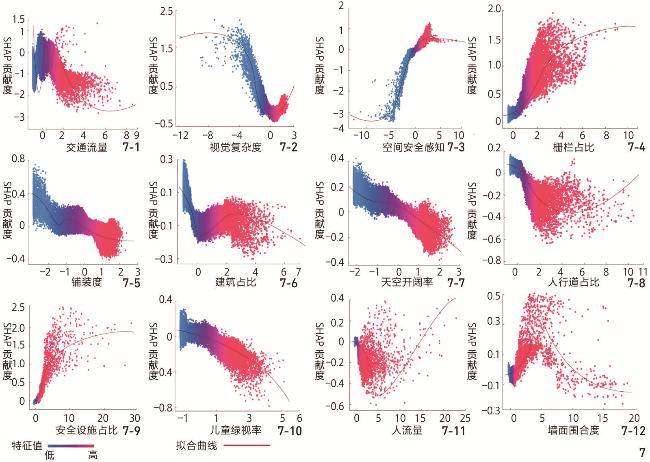
[Objective] Amid China’s strategic push for child-friendly urbanization and its evolving demographic policies, this research explores how urban street environments affect children’s emotional well-being. Focusing on Fuzhou, a national pilot city for child-friendly initiatives, the research addresses a critical gap in urban planning literature: The lack of empirical evidence linking micro-scale street design to the emotional dynamics of children and their caregivers. Existing research primarily prioritizes physical safety and functional infrastructure, while often neglecting the psychosocial dimensions of urban spaces, such as how sensory stimuli, spatial aesthetics, and perceived safety collectively influence residents’ daily emotional states. By examining interactions between street environment elements and residents’ emotional responses, this research aims to generate actionable insights for creating emotionally supportive urban environments that align with China’s child-friendly urbanization goals. [Methods] The research employs a multi-modal analytical framework integrating geospatial data, machine learning, and participatory scoring. Data sources include 53,771 Baidu Street View images, 1,474 social media texts (from platforms like Weibo and government portals), and human − machine adversarial scores derived from 40 children − caregiver dyads evaluating street safety perceptions. Three machine learning architectures are deployed: CNN-BiLSTM Hybrid Model, FCN-RF Semantic Segmentation, and XGBoost-SHAP Interpretability Framework. For FCN-RF Semantic Segmentation, street view images are processed by fully convolutional networks to quantify 10 spatial metrics, validated against human-scored safety perceptions via random forest-based adversarial training; for XGBoost-SHAP Interpretability Framework, the nonlinear relationships between 12 street environment indicators and emotional indices are modeled through extreme gradient boosting, with SHapley additive explanations (SHAP) decoding feature contributions and interaction effects. This combination of methods enables detailed analysis of how spatial metrics and perceptions shape emotions. [Results] Key findings highlight the nonlinear effects of street environment elements on residents’ emotion. Traffic flow: Moderate traffic flow enhances urban vitality, but excessive traffic flow leads to negative emotion due to noise and safety concerns. SHAP analysis reveals a threshold effect, whereby emotion scores peak and then decline at a given traffic flow: Balanced visual stimuli promote positive emotion, while overly cluttered or monotonous streetscapes reduce emotional satisfaction. Areas such as Academy Road in Gulou District are optimized for visual diversity and exhibit higher emotion scores. Higher safety scores enhance positive emotion, especially in areas with adequate lighting, visible safety facilities, and caregiver-friendly infrastructure. However, poorly maintained security facilities reduce emotional benefits, despite high design scores. For example, in terms of guardrail density, guardrails improve emotion in high-traffic areas, but may create unwelcoming environments that are overly safe in recreational areas, suggesting a dependence on environmental influence. Spatial analysis finds that clusters of low-emotion areas are associated with fragmented pedestrian networks, insufficient green space, and mismatched security measures. Notably, child-friendly renovations in Fuzhou perform poor emotionally due to disjointed maintenance and environmental mismatches, emphasizing the need for adaptive design strategies. In view of this, a three-level optimization path of “traffic control (base layer) — safety creation (middle layer) — spatial quality (enhancement layer)” is proposed. [Conclusion] This research advances child-friendly urban planning by street spatial perceptions to residents’ emotional outcomes. Methodologically, the research demonstrates the efficacy of combining machine learning (CNN-BiLSTM, XGBoost) with participatory human − machine scoring. Key practical implications include prioritizing traffic calming measures near schools and residential areas, balancing visual complexity through context-sensitive landscaping to avoid sensory overload or monotony, ensuring that safety infrastructure is supplemented by regular maintenance and caregiver-centered amenities, and employing adaptive fencing strategies that are consistent with spatial functions. Although limited by data granularity and area specificity, this research highlights the importance of embedding sentiment analysis into urban governance. Machine learning and SHAP methodology provide nuanced analysis of how urban environments impact residents’ emotions. These methods not only expand the data base for research on the built environment of child-friendly urban streets, but also validate the feasibility of multi-source fusion of subjective perception data and built environment data in emotion perception measurement, providing an effective methodological reference for the field of spatial research on child-friendly city streets. The present research has made important progress, but there are still limitations in data sources and methods of analyzing residents’ emotions. Future research should expand the diversity of data and refine sentiment recognition models to address cultural and environmental variability. By combining spatial indicators with emotional experiences, this research may contribute to the creation of inclusive, resilient and emotionally supportive child-friendly cities that prioritize safety and well-being.
Key words: child-friendly city; street perception; residents’ emotion; machine learning; Fuzhou
Shaofeng CHEN , Zhengyan CHEN , Yuhan XU , Zheng DING . Mechanism of Influence of Spatial Perception on Residents’ Emotion in Child-Friendly Urban Streets of Fuzhou City[J]. Landscape Architecture, 2025 , 32(5) : 105 -115 . DOI: 10.3724/j.fjyl.202409120535
表1 指标体系说明Tab. 1 Description of the indicator system |
| 维度 | 研究指标 | 计算式 | 指标说明 | 处理方法 |
| 居民情绪感知 | 居民情绪感知 | 基于自然语言处理的文本分析 | CNN-BiLSTM | |
| 交通安全性 | 交通流量(T) | T=0.44C+M+2N/P I×100% | C代表大型机动车百分比,M代表小型机动车百分比,N代表非机动车百分比,P I是图像中识别的像素总数 | 基于FCN |
| 人行道占比(S) | S=P S/P I×100% | S代表图像的人行道的百分比;P S是模型识别的人行道元素的总像素数;P I是图像中识别的像素总数 | ||
| 自然舒适性 | 儿童绿视率(G) | G=(1/2PG)/P I×100% | G表示图像中被植被覆盖的地面百分比;P G是模型识别的草地和其他绿色地面元素的像素数;P I是图像中识别的像素总数 | 基于FCN |
| 天空开阔率(O) | O=P O/P I×100% | O代表图像的天空开阔率;P O是模型识别的天空的总像素数;P I是图像中识别的像素总数 | ||
| 环境多样性 | 视觉复杂度 | $H( x ) = - \displaystyle\sum\limits_{i = 1}^n {P({a_i})} *{\rm{log} } P({a_i})$ | n为计算的图像中具有显著边界的区域或单元个数,i为划分后的区域,P(a i)为区域a(i=1,2,…,n)出现的概率,H(x)则表示n个区域构成的整个视觉对象产生的总信息量,即视觉复杂度[30] | MatLab软件 |
| 社会监管性 | 人流量(H) | H=P H/P I×100% | H表示图像中行人百分比;P H是模型识别的行人像素数;P I是图像中识别的像素总数 | 基于FCN |
| 建筑占比(B) | B=P B/P I×100% | B代表图像的建筑的百分比;P B是模型识别的建筑的总像素数;P I是图像中识别的像素总数 | ||
| 墙面围合度(W) | W=P W/P I×100% | W表示图像中墙面百分比;P W是模型识别的墙面像素数;P I是图像中识别的像素总数 | ||
| 成长健康安 全性 | 空间安全感知 | 景观感知中的安全感知得分 | 基于FCN和RF算法的人机对抗评分框架 | |
| 栅栏占比(F) | F=P F/P I×100% | F代表图像的栅栏占比,P F是模型识别的栅栏的总像素数;P I是图像中识别的像素总数 | ||
| 安全设施占比(A) | S=PA/PI×100% | A代表图像的安全设施的百分比;P A是模型识别的安全设施元素的总像素数;其中安全设施是由监控+标识+路灯+布告牌总像素数百分比组成;P I是图像中识别的像素总数 | ||
| 铺装度(Z) | P Z=P Z/P I×100% | Z代表图像的地面铺装的百分比;P Z是模型识别的铺装的总像素数;P I是图像中识别的像素总数 |
表2 儿童安全的维度划分权重Tab. 2 Dimension weighting for child safety |
| 一级维度 | 二级维度 | 指标描述(以儿童口吻描述) | 权重/% |
| 交通安全 | 交通标志和信号 | 嘿,小朋友!你觉得这条路上那些指路的牌子和红绿灯多不多呀?你喜欢在这里散步和玩耍吗? | 15.08 |
| 交通车辆影响度 | 嘿,小朋友!你在街上走的时候,有没有注意到周围的车呀?你觉得这些车哪种最多呢?是呼啸而过的小轿车多,还是慢悠悠的大型车多,或者是轻便的非机动车多呢?你喜欢和这些车一起分享街道吗? | 15.88 | |
| 行人安全 | 人行道条件 | 嘿,小朋友!这条路宽不宽,有没有坑,你喜欢在这里跑来跑去玩吗? | 30.29 |
| 过街设施 | 嘿,小朋友,你敢自己过这条街等红绿灯吗?喜欢在这里等爸爸妈妈吗? | 9.66 | |
| 公共安全 | 街道照明 | 嘿,小朋友,你觉得晚上这里的路灯亮不亮?能不能照亮我们走路的地方呢? | 15.84 |
| 行人隔离设施 | 嘿,小朋友,这里有没有护栏挡着车,让你走在马路上时更安全,你觉得怎么样? | 6.33 | |
| 环境安全 | 绿化和树木 | 嘿,小朋友,你觉得这里的街道绿树多不多?它们长得健康好看吗? | 2.44 |
| 清洁和维护 | 嘿,小朋友,这里的街道和人行道干净吗?垃圾都及时清理了吗? | 4.48 |
① 此数据和推算来源于北京市城市规划设计研究院儿童友好课题组的“北京儿童无障碍出行”主题问卷调研。
②儿童友好类关键词主要围绕城市设计、安全设施、教育资源、娱乐活动等方面,旨在反映为儿童提供安全、舒适、健康成长环境的关键要素。数据来自福州市生态环境局官方数据开放平台(data.fujian.gov.cn/#/oportal/index)、12345政务服务平台(fz12345.fuzhou.gov.cn/)。
③ 本研究通过以下方式支撑人机对抗训练:将原始151维向量输入RF算法。人机对抗评分框架根据151维特征向量训练得出各项评分。
文中图表均由作者绘制,其中
| [1] |
国家发展改革委, 等.关于推进儿童友好城市建设的指导意见[EB/OL].(2021-09-30)[2024-12-24]. https://www.gov.cn/zhengce/zhengceku/2021-10/21/content_5643976.htm.
National Development and Reform Commission, et al. Guidelines on Promoting the Construction of Child-Friendly Cities[EB/OL]. (2021-09-30) [2024-12-24]. https://www.gov.cn/zhengce/zhengceku/2021-10/21/content_5643976.htm.
|
| [2] |
福建省发展和改革委员会.福州市创建国家儿童友好试点城市方案[EB/OL].(2021-05-13)[2024-12-24]. https://fgw.fujian.gov.cn/zfxxgkzl/zfxxgkml/bwgfxwj/202205/t20220520_5915155.htm.
Fujian Provincial Development and Reform Commission. Fuzhou City’s Plan for Establishing a National Child-Friendly Pilot City[EB/OL]. (2021-05-13) [2024-12-24]. https://fgw.fujian.gov.cn/zfxxgkzl/zfxxgkml/bwgfxwj/202205/t20220520_5915155.htm.
|
| [3] |
福州市统计局.福州市第七次全国人口普查公报(第二号)[EB/OL].(2021-05-21)[2024-12-24]. https://tjj.fuzhou.gov.cn/zz/zwgk/tjzl/ndbg/202105/t20210524_4105019.htm.
Fuzhou Municipal Bureau of Statistics. Fuzhou City’s Seventh National Population Census Bulletin (No. 2)[EB/OL]. (2021-05-21) [2024-12-24]. https://tjj.fuzhou.gov.cn/zz/zwgk/tjzl/ndbg/202105/t20210524_4105019.htm.
|
| [4] |
盖尔.交往与空间[M].何人可, 译.北京: 中国建筑工业出版社, 2002.
GEHL J. Life Between Buildings[M]. HE R K, translated. Beijing: China Architecture & Building Press, 2002.
|
| [5] |
沈瑶, 木下勇, 贺磊. 高层居住小区儿童游戏空间发展特征与更新方向[J]. 人文地理, 2015, 30(3): 28-33.
SHEN Y, KINOSHITA I, HE L. Study on the Development Characteristics and Re-developing Direction of Children’s Playing Space in High-Rise Housing Estate[J]. Human Geography, 2015, 30(3): 28-33.
|
| [6] |
靳珂. 儿童友好型城市街道步行空间评价体系及策略研究[D]. 福州: 福建农林大学, 2019.
JIN K. Research on Evaluation System and Strategy of Child-Friendly Urban Street Walking Space[D]. Fuzhou: Fujian Agriculture and Forestry University, 2019.
|
| [7] |
武凤文, 陈明远. 儿童健康安全视角下的步行通学道评测与优化策略[J]. 城市发展研究, 2020, 27(7): 20-27.
WU F W, CHEN M Y. The Evaluation and Improvement Strategy of the Way to Elementary School from the Perspective of Children[J]. Urban Development Studies, 2020, 27(7): 20-27.
|
| [8] |
张克凡, 吴晓华, 陈楚文, 等. 儿童通学空间环境健康安全评估技术研究及实践: 以杭州市为例[J]. 风景园林, 2024, 31(12): 113-120.
ZHANG K F, WU X H, CHEN C W, et al. Research and Practice of Techniques for Environmental Health and Safety Assessment of Children’s School Trip Space: A Case Study of Hangzhou City[J]. Landscape Architecture, 2024, 31(12): 113-120.
|
| [9] |
LI H, LI M, ZOU H, et al. Urban Sensory Map: How Do Tourists “Sense” a Destination Spatially?[J]. Tourism Management, 2023, 97: 104723
|
| [10] |
ANDERSON K, SMITH S J. Editorial: Emotional Geographies[J]. Transactions of the Institute of British Geographers, 2001, 26(1): 7-10.
|
| [11] |
朱竑, 高权. 西方地理学“情感转向”与情感地理学研究述评[J]. 地理研究, 2015, 34(7): 1394-1406.
ZHU H, GAO Q. Review on “Emotional Turn” and Emotional Geographies in Recent Western Geography[J]. Geographical Research, 2015, 34(7): 1394-1406.
|
| [12] |
YANG L, MARMOLEJO DUARTE C, MARTÍ CIRIQUIÁN P. Quantifying the Relationship Between Public Sentiment and Urban Environment in Barcelona[J]. Cities, 2022, 130: 103977
|
| [13] |
HUANG Y, LI J, WU G, et al. Quantifying the Bias in Place Emotion Extracted from Photos on Social Networking Sites: A Case Study on a University Campus[J]. Cities, 2020, 102: 102719
|
| [14] |
MEHRA P. Unexpected Surprise: Emotion Analysis and Aspect Based Sentiment Analysis (ABSA) of User Generated Comments to Study Behavioral Intentions of Tourists[J]. Tourism Management Perspectives, 2023, 45: 101063
|
| [15] |
JIAO Y, LI C, YAO Z, et al. How Can Online Citizen Complaints Provide Solutions to Refine Environmental Management: A Spatio-Temporal Perspective[J]. Information Processing & Management, 2024, 61(2): 103611
|
| [16] |
NEOGI A S, GARG K A, MISHRA R K, et al. Sentiment Analysis and Classification of Indian Farmers’ Protest Using Twitter Data[J]. International Journal of Information Management Data Insights, 2021, 1(2): 100019
|
| [17] |
VAIRETTI C, ARÁNGUIZ I, MALDONADO S, et al. Analytics-Driven Complaint Prioritisation via Deep Learning and Multicriteria Decision-Making[J]. European Journal of Operational Research, 2024, 312(3): 1108-1118.
|
| [18] |
SONG W, RONG W, TANG Y. Quantifying Risk of Service Failure in Customer Complaints: A Textual Analysis-Based Approach[J]. Advanced Engineering Informatics, 2024, 60: 102377
|
| [19] |
JAIN P K, PAMULA R, SRIVASTAVA G. A Systematic Literature Review on Machine Learning Applications for Consumer Sentiment Analysis Using Online Reviews[J]. Computer Science Review, 2021, 41: 100413
|
| [20] |
NYKIFORUK C I J, HEWES J, BELON A P, et al. Evaluating Child-Friendly Spaces: Insights from a Participatory Mixed Methods Study of a Municipality’s Free-Play Preschool and Space[J]. Cities & Health, 2019, 3(1/2): 169-183.
|
| [21] |
福州市鼓楼区人民政府.道路适儿化改造创新: 共创儿童友好城市[EB/OL].(2025-01-02)[2025-03-13]. https://www.gl.gov.cn/xjwz/zwgkml/zdlyxxgk/szjs/gzjz/202501/t20250102_4955164.htm.
Fuzhou Gulou District People's Government. Roads Child-Friendly Transformation Innovation: Creating a Child-Friendly City Together[EB/OL]. (2025-01-02) [2025-03-13]. https://www.gl.gov.cn/xjwz/zwgkml/zdlyxxgk/szjs/gzjz/202501/t20250102_4955164.htm.
|
| [22] |
YANG Y, WANG Q, WU D, et al. Constructing Child-Friendly Cities: Comprehensive Evaluation of Street-Level Child-Friendliness Using the Method of Empathy-Based Stories, Street View Images, and Deep Learning[J]. Cities, 2024, 154: 105385
|
| [23] |
廖瀚博, 余志, 周兵, 等. 广州市机动车尾气排放特征研究[J]. 环境科学与技术, 2012, 35(1): 134-138,163.
LIAO H B, YU Z, ZHOU B, et al. Characteristics of Motor Vehicle Exhaust Emission in Guangzhou[J]. Environmental Science & Technology, 2012, 35(1): 134-138,163.
|
| [24] |
LIU R, YAN X, LIN X, et al. Urban Spontaneous Plant Richness in Response to the 2D/3D Building and Green Space Patterns in a Highly Urbanized Area[J]. Ecological Indicators, 2023, 154: 110852
|
| [25] |
AKPıNAR A. How Perceived Sensory Dimensions of Urban Green Spaces Are Associated with Teenagers’ Perceived Restoration, Stress, and Mental Health?[J]. Landscape and Urban Planning, 2021, 214: 104185
|
| [26] |
梁思思, 黄冰冰, 宿佳境, 等. 儿童友好视角下街道空间安全设计策略实证探索: 以北京老城片区为例[J]. 上海城市规划, 2020(3): 29-37.
LIANG S S, HUANG B B, SU J J, et al. Safety Street Design Strategies for Child-Friendly Environment: An Empirical Study of Residential Community in Beijing Old City[J]. Shanghai Urban Planning Review, 2020(3): 29-37.
|
| [27] |
LADD G W. Peer Relationships and Social Competence During Early and Middle Childhood[J]. Annual Review of Psychology, 1999, 50: 333-359.
|
| [28] |
PITSIKALI A, PARNELL R. Fences of Childhood: Challenging the Meaning of Playground Boundaries in Design[J]. Frontiers of Architectural Research, 2020, 9(3): 656-669.
|
| [29] |
YAO Y, LIANG Z, YUAN Z, et al. A Human-Machine Adversarial Scoring Framework for Urban Perception Assessment Using Street-View Images[J]. International Journal of Geographical Information Science, 2019, 33(12): 2363-2384.
|
| [30] |
窦燕, 孔令富, 王柳锋. 基于视觉熵的视觉注意计算模型[J]. 光学学报, 2009, 29(9): 2511-2515.
DOU Y, KONG L F, WANG L F. A Computational Model of Visual Attention Based on Visual Entropy[J]. Acta Optica Sinica, 2009, 29(9): 2511-2515.
|
| [31] |
CHEN Z, YANG H, YE P, et al. How Does the Perception of Informal Green Spaces in Urban Villages Influence Residents’ Complaint Sentiments? A Machine Learning Analysis of Fuzhou City, China[J]. Ecological Indicators, 2024, 166: 112376
|
| [32] |
HE A, ABISADO M. Text Sentiment Analysis of Douban Film Short Comments Based on BERT-CNN-BiLSTM-Att Model[J]. IEEE Access, 2024, 12: 45229-45237.
|
| [33] |
联合国儿童基金会.儿童友好型城市规划手册[EB/OL]. ( 2019-07)[2024-01-18]. https://www.unicef.cn/reports/ shaping-urbanization-children.
UNICEF. Shaping Urbanization for Children: A Handbook on Child-Responsive Urban Planning[EB/OL]. (2019-07) [2024-01-18]. https://www.unicef.cn/reports/shaping urbanization-children.
|
| [34] |
KAPLAN R. Impact of Urban Nature: A theoretical Analysis[J]. Urban ecology, 1984, 8(3): 189-197.
|
| [35] |
陈铮衍, 丁铮, 谢源琴. 城中村及正式住区环境对居民情绪感知的影响差异分析: 以福州市主城区为例[J/OL]. 世界地理研究, 2024: 1-20(2024-10-15)[2025-03-13]. http://kns.cnki.net/kcms/detail/31.1626.p.20241015.0950.002.html.
CHEN Z Y, DING Z, XIE Y Q. Differential Analysis of the Influence of Urban Village and Formal Settlement Environment on Residents’ Emotional Perception-Taking the Main Urban Area of Fuzhou as an Example[J/OL]. World Regional Studies, 2024: 1-20(2024-10-15)[2025-03-13]. http://kns.cnki.net/kcms/detail/31.1626.p.20241015.0950.002.html.
|
| [36] |
LUNDBERG S, LEE S I. A Unified Approach to Interpreting Model Predictions[C]//VON LUXBURG U. et al. Advances in Neural Information Processing Systems 30. Long Beach: Curran Associates, Inc, 2018: 07874.
|
| [37] |
CHEN T, GUESTRIN C, CHEN T, et al. XGBoost: A Scalable Tree Boosting System[C]//BALAJI K et al. Proceedings of the 22nd ACM SIGKDD International Conference on Knowledge Discovery and Data Mining. San Francisco: ACM, 2016: 785-794.
|
| [38] |
MEDEIROS A, FERNANDES C, GONÇALVES J F, et al. How Can Landscape Visual Assessment Inform Landscape Planning and Management?: Alto Douro Wine Region Case Study, Portugal[J]. Applied Geography, 2024, 164: 103203
|
| [39] |
王霞, 李可月, 贾适夷, 等. 基于儿童户外活动特征解析的社区活动空间更新建设策略研究[J]. 风景园林, 2024, 31(8): 86-94.
WANG X, LI K Y, JIA S Y, et al. Research on Renewal and Construction Strategies for Community Spaces Based on the Analysis of Children’s Outdoor Activity Characteristics[J]. Landscape Architecture, 2024, 31(8): 86-94.
|
| [40] |
GABENNESCH H. The Perception of Social Conventionality by Children and Adults[J]. Child Development, 1990, 61(6): 2047-2059.
|
| [41] |
WU Y, LIU Q, HANG T, et al. Integrating Restorative Perception into Urban Street Planning: A Framework Using Street View Images, Deep Learning, and Space Syntax[J]. Cities, 2024, 147: 104791
|
| [42] |
BUGENTAL D E, KASWAN J W, LOVE L R, et al. Child Versus Adult Perception of Evaluative Messages in Verbal, Vocal, and Visual Channels[J]. Developmental Psychology, 1970, 2(3): 367
|
| [43] |
SZTUKA I M, ÖRKEN A, SUDIMAC S, et al. The Other Blue: Role of Sky in the Perception of Nature[J]. Frontiers in Psychology, 2022, 13: 932507
|
| [44] |
GOUGHERTY A V, DAVIES T J. A Global Analysis of Tree Pests and Emerging Pest Threats[J]. Proceedings of the National Academy of Sciences, 2022, 119(13): e2113298119
|
| [45] |
MCALLISTER C. Child Friendly Cities and Land Use Planning: Implications for Children’s Health[J]. Environments, 2008, 35(3): 45-61.
|
| [46] |
GUO D, SHI Y, CHEN R. Environmental Affordances and Children’s Needs: Insights from Child-Friendly Community Streets in China[J]. Frontiers of Architectural Research, 2023, 12(3): 411-422.
|
| [47] |
RAMANI G B, ZIPPERT E, SCHWEITZER S, et al. Preschool Children's Joint Block Building During a Guided Play Activity[J]. Journal of Applied Developmental Psychology, 2014, 35(4): 326-336.
|
/
| 〈 |
|
〉 |