

Nature City: A Historical Perspective on the Natural Vision for the Construction of Human Settlement Environment
|
WANG Xiangrong, Ph.D., is a professor and doctoral supervisor in the School of Landscape Architecture, Beijing Forestry University, and deputy director of the editorial board of this journal. His research focuses on territorial landscape, and theory of modern landscape design |
|
ZHANG Jinshi, Ph.D., is a professor and doctoral supervisor in the School of Landscape Architecture, Beijing Forestry University. His research focuses on landscape architecture and urbanization |
Received date: 2025-05-12
Revised date: 2025-06-30
Online published: 2025-12-09
Copyright
Urban development has always been intricately linked with the natural environment, characterized by a dynamic and complex interplay involving the dependence on, and utilization, management, degradation, and restoration of natural resources. This research aims to clarify the theoretical foundations and practical significance of the concept of “Nature City”, and to explore its viability as a paradigm for sustainable urban development in the future.
This research combines documentary research with inductive analysis. By reviewing the evolution of nature-related thought, the research systematically examines classical theories and representative models in the fields of landscape architecture and urban-rural planning, and extracts their shared characteristics, based on which it constructs a contemporary cognitive framework that reflects current sustainability challenges and values.
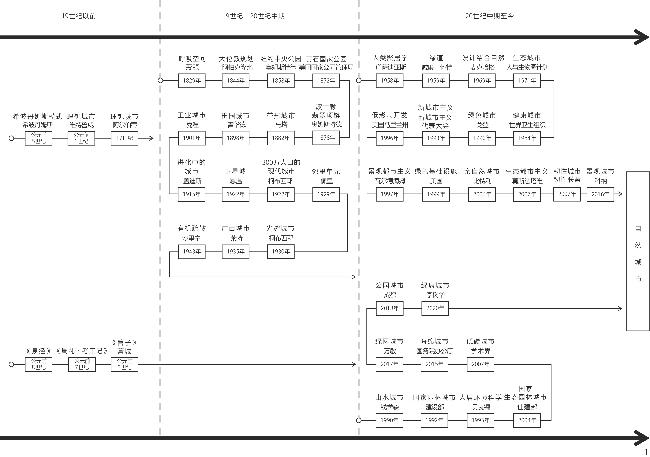
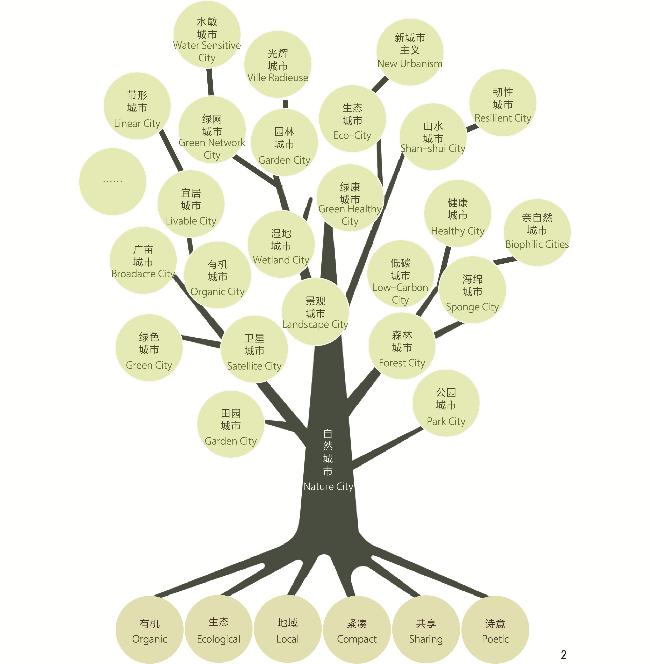
The research identifies three major views of nature that have shaped urban planning through history. The ancient and intuitive view emphasizes the harmony between humans and nature, believing that the city is deeply dependent on natural resources and influenced by cosmological and religious perceptions in terms of spatial organization. The mechanistic materialist view, by contrast, focuses on science, rationality, efficiency, and order, treating nature as a resource to be conquered and reshaped. This has led to a deterministic understanding of the environment and contributed to problems such as poor sanitation and urban overcrowding. The dialectical materialist view considers the city and nature as an interacting whole and advocates for a new mode of coexistence and symbiosis between the two. Historically, urban construction has demonstrated different interactions with nature, including adaptation, intervention, and reconciliation. Prior to industrialization, ancient Chinese cities followed natural patterns and displayed unique wisdom in adapting to, managing, and aesthetically shaping nature. Ancient Western cities similarly relied heavily on environmental factors such as topography and hydrology. Even rationalist and romantic landscape traditions influenced urban form. The advent of industrialization brought about new modes of production, social structures, and lifestyles, drastically reshaping both the natural environment and social systems, resulting in challenges like public health crises, urban sprawl, and environmental degradation. In response, Western societies began proposing solutions to urban issues through improvements in the material environment, aiming to construct more harmonious and efficient cities. Theoretical and practical responses included The Greater London Plan, Linear City, Industrial City, Park System, Garden City, Satellite City, Regional City, Radiant City, Neighborhood Units, Broadacre City, and Organic City. In the post-industrial era, Western urbanism evolved into Ecological City, Resilient City, Healthy City, Green City, New Urbanism, Biophilic City, and Landscape City. In parallel, Chinese planning introduced models such as Shan-Shui city, Garden City, Ecological Garden City, Forest City, Sponge City, Livable City, Low Carbon City, Park City, Green-Network City, and Green-Health City. A historical review shows that nearly all ideal city models seek to closely integrate urban form with nature, striving to coordinate urban ecological systems with human cultural systems. They emphasize the combination of rational infrastructure and natural environments to sustain both urban life and cultural prosperity. In essence, these models can be understood as varied expressions of the nature city ideal. Nature serves as both the intrinsic attribute and sustainable foundation of human settlement environments and ideal city models. The nature city can be structured through six core dimensions: Spatial configuration, urban culture, environmental health, development patterns, social equity, and urban aesthetics. These correspond to six conceptual types: compact city, regional city, ecological city, organic city, inclusive city, and poetic city.
The Nature City represents an extension of urban and landscape theory. Confronting the multifaceted challenges of global climate change, ecological degradation, and erosion of local urban culture, the Nature City concept offers a forward-looking development model that guides cities toward greater sustainability. It provides both a theoretical foundation and a practical direction for building healthier, more resilient, ecological, and aesthetically enriching urban environments. Looking ahead, the Nature City will continue to evolve along six distinct trajectories. 1) At multiple spatial scales, cities will integrate natural elements — mountains, water bodies, forests, farmlands, and grasslands — into adaptive spatial structures. Compact development will support efficient human settlements. 2) By preserving regional cultural contexts and interpreting the symbolic meanings behind urban natural patterns, cities will build culturally resonant living environments. Streets, parks, squares, rivers, and wetlands will become carriers of place-based identity and spiritual belonging. 3) Attention will span both macro-scale ecological systems — such as ecological networks, watershed governance, and corridors — and micro-scale interventions like rooftop greening and rain gardens. Cities will function as vital ecological nodes in broader environmental systems. 4) The implementation of the concept of “Nature City” will be facilitated by advanced ecological planning methods, green infrastructure design, and smart city technologies, fostering a renewed symbiosis between humans and nature through nuanced spatial design. 5) Inclusive public space networks — community gardens, green corridors, and park belts — will provide spaces for interaction and social cohesion. Varied natural spaces will stimulate neighborhood vitality and transform public areas into civic stages. 6) Beyond ecological and functional goals, cities will pursue poetic and humanistic environments to evoke aesthetic resonance and emotional connection to nature, making nature the emotional and perceptual backdrop of urban form.
Key words: landscape architecture; nature city; compactness; locality; ecology; organic; sharing; poetic
WANG Xiangrong , ZHANG Jinshi . Nature City: A Historical Perspective on the Natural Vision for the Construction of Human Settlement Environment[J]. Landscape Architecture, 2025 , 32(8) : 82 -92 . DOI: 10.3724/j.fjyl.LA20250281
| [1] |
王中江. 中国“自然” 概念的源流和特性考论[J]. 学术月刊, 2018, 50(9): 15-34.
WANG Z J. Chinese “Nature”: Its Meanings and Characteristics[J]. Academic Monthly, 2018, 50(9): 15-34.
|
| [2] |
殷杰, 郭贵春. 自然辩证法概论[M]. 2版. 北京: 高等教育出版社, 2020.
YIN J, GUO G C. Introduction to Dialectics of Nature[M]. 2nd ed. Beijing: Higher Education Press, 2020.
|
| [3] |
柯林武德. 自然的观念[M]. 吴国盛, 译. 北京: 商务印书馆, 2017.
COLLINGWOOD R G. Idea of Nature[M]. WU G S, translated. Beijing: The Commercial Press, 2017.
|
| [4] |
戴圣. 礼记[M]. 中华文化讲堂, 注译. 北京: 团结出版社, 2017.
DAI S. Chinese Culture Lecture Hall, noted and translated[M]. Chinese Culture Lecture Hall, noted and translated. Beijing: Unity Press, 2017.
|
| [5] |
吴良镛. 中国人居史[M]. 北京: 中国建筑工业出版社, 2014.
WU L Y. Human Settlement History of China[M]. Beijing: China Architecture & Building Press, 2014.
|
| [6] |
李约瑟. 中国科学技术史: 第4卷第3分册(土木工程与航海技术)[M]. 北京: 科学出版社, 2008.
NEEDHAM J. Science and Civilization in China: Volume 4, Part 3 (Civil Engineering and Nautical Technology)[M]. Beijing: Science Press, 2008.
|
| [7] |
王向荣. 中国城市的自然系统[J]. 城乡规划, 2020(5): 12-20.
WANG X R. The Natural System of Chinese Cities[J]. Urban and Rural Planning, 2020(5): 12-20.
|
| [8] |
王向荣, 林箐. 国土景观视野下的中国传统山—水—田—城体系[J]. 风景园林, 2018, 25(9): 10-20.
WANG X R, LIN Q. Traditional Chinese Mountain − Water − Field − City System from the Perspective of Territorial Landscape[J]. Landscape Architecture, 2018, 25(9): 10-20.
|
| [9] |
董鉴泓. 中国古代城市二十讲[M]. 北京: 中国建筑工业出版社, 2009.
DONG J H. Twenty Lectures on Ancient Cities in China[M]. Beijing: China Architecture & Building Press, 2009.
|
| [10] |
张京祥. 西方城市规划思想史纲[M]. 南京: 东南大学出版社, 2005.
ZHANG J X. A Brief History of Western Urban Planning Thought[M]. Nanjing: Southeast University Press, 2005.
|
| [11] |
维特鲁威. 建筑十书[M]. 高履泰, 译. 北京: 中国建筑工业出版社, 1986.
VITRUVIUS P M. De Architecura Libri Decem[M]. GAO L T, translated. Beijing: China Architecture & Building Press, 1986.
|
| [12] |
贝纳沃罗. 世界城市史[M]. 薛钟灵, 等, 译. 北京: 科学出版社, 2000.
BENEVOLO L. Die Geschichte Der Stadt[M]. XUE Z L, et al, translated. Beijing: Science Press, 2000.
|
| [13] |
DE GIRARDIN R-L. An Essay on Landscape; Or the Means of Improving and Embellishing the Country Round Our Habitations[M]. London: Dodsley, 1783.
|
| [14] |
王向荣. 德国的自然风景园(下)[J]. 中国园林, 1997, 13(6): 17-23.
WANG X R. Natural Landscape Gardens in Germany (Ⅱ)[J]. Chinese Landscape Architecture, 1997, 13(6): 17-23.
|
| [15] |
GÜNTHER H. Peter Joseph Lenné: Gärten, Parke, Landschaften[M]. Berlin: VEB Verlag für Bauwesen, 1985.
|
| [16] |
LOUDON J C. The Gardener’s Magazine and Register of Rural and Domestic Improvement[M]. London: Legare Street Press, 1826.
|
| [17] |
LEGATES R, STOUT F. Early Urban Planning V1[M]. London: Routledge, 2004.
|
| [18] |
WIEBENSON D. Tony Garnier: the Cité Industrielle[M]. New York: Braziller, 1969.
|
| [19] |
BEVERIDGE C E, ROCHELEAU P. Frederick Law Olmsted: designing the American landscape[M]. New York: Rizzoli, 1995.
|
| [20] |
霍华德. 明日的田园城市[M]. 金经元, 译. 北京: 商务印书馆, 2000.
HOWARD E. Garden Cities of Tomorrow[M]. JIN J Y, translated. Beijing: The Commercial Press, 2000.
|
| [21] |
PURDOM C B. The Building of Satellite Towns[M]. London: J. M. Dent & Sons Ltd, 1949.
|
| [22] |
格迪斯. 进化中的城市[M]. 北京: 中国建筑工业出版社, 2012.
GEDDES P. Cities in Evolution[M]. Beijing: China Architecture & Building Press, 2012.
|
| [23] |
柯布西耶. 光辉城市[M]. 金秋野, 王又佳, 译. 北京: 中国建筑工业出版社, 2010.
CORBUSIER L. La Ville Radieuse[M]. JIN Q Y, WANG Y J, translated. Beijing: China Architecture & Building Press, 2010.
|
| [24] |
LEGATES R T, STOUT F, CAVES R J. The City Reader[M]. London: Routledge, 2011.
|
| [25] |
WRIGHT F L. Broadacre City: A New Community Plan[J]. Architectural Record, 1935, 4: 243-254.
|
| [26] |
沙里宁. 城市: 它的发展、衰败与未来[M]. 北京: 中国建筑工业出版社, 1986.
SAARINEN E. The City: Its Growth, Its Decay, Its Future[M]. Beijing: China Architecture & Building Press, 1986.
|
| [27] |
MARSH G P. Man and Nature[M]. Cambridge: The Belknap Press, 1965.
|
| [28] |
王向荣, 张晋石. 风景园林: 地表空间管理与塑造的科学与艺术[J]. 中国园林, 2023, 39(1): 14-22.
WANG X R, ZHANG J S. Landscape Architecture: The Science and Art of Earth Surface Space Management and Shaping[J]. Chinese Landscape Architecture, 2023, 39(1): 14-22.
|
| [29] |
UNESCO and UNEP. Final Report of International Experts Meeting on Ecological Approaches to Urban Planning[R/OL]. Suzdal: USSR, 1984.https://unesdoc.unesco.org/ark:/48223/pf0000079017.
|
| [30] |
王祥荣, 谢玉静, 李瑛, 等. 气候变化与中国韧性城市发展对策研究[M]. 北京: 科学出版社, 2016.
WANG X R, XIE Y J, LI Y, et al. Studies on Climate Change and Development Strategies for the Resilient Cities in China[M]. Beijing: Science Press, 2016.
|
| [31] |
中国城市科学研究会. 2020—2021城市科学学科发展报告健康城市[M]. 北京: 中国科学技术出版社, 2022.
Chinese Society for Urban Studies. Report on Advances in Urban Science from 2020 to 2021[M]. Beijing: China Science and Technology Press, 2022.
|
| [32] |
GORDON D. Green Cities: Ecologically Sound Approaches to Urban Space[M]. Montréal: Black Rose Books, 1990.
|
| [33] |
泰伦. 新城市主义宪章[M]. 北京: 电子工业出版社, 2016.
TALEN E. Charter of the New Urbanism[M]. Beijing: Publishing House of Electronics Industry, 2016.
|
| [34] |
BEATLEY T. Biophilic Cities: Integrating Nature into Urban Design and Planning[M]. Washington: Island Press, 2010.
|
| [35] |
Landscape Architecture Foundation. The New Landscape Declaration: A Call to Action for the Twenty-First Century[M]. Los Angeles: Rare Bird Books, 2016.
|
| [36] |
吴良镛. “山水城市” 与21世纪中国城市发展纵横谈: 为山水城市讨论会写[J]. 建筑学报, 1993(6): 4-8.
WU L Y. “Landscape City” and China’s Urban Development in the 21st Century: Written for the Symposium on Landscape Cities[J]. Architectural Journal, 1993(6): 4-8.
|
| [37] |
建设部城市建设司, 中国公园协会. 中国园林城市[M]. 北京: 中国建筑工业出版社, 1999.
Ministry of Housing and Urban-Rural Development, Department of Construction, Chinese Assotiation of Parks. Landscape Garden City in China[M]. Beijing: China Architecture & Building Press, 1999.
|
| [38] |
成都市公园城市建设领导小组. 公园城市城市建设新模式的理论探索[M]. 成都: 四川人民出版社, 2019.
Chengdu Park City Construction Leading Group. Park City: Theoretical Exploration of a New Urban Development Model[M]. Chengdu: Sichuan People’s Publishing House, 2019.
|
| [39] |
万敏, 胡锦洲, 翟娜娜. 绿网城市理论及其武汉在地实验[J]. 中国园林, 2017, 33(2): 5-13.
WAN M, HU J Z, ZHAI N N. Green Network City Theory and Experiment in Wuhan[J]. Chinese Landscape Architecture, 2017, 33(2): 5-13.
|
| [40] |
李树华, 康宁, 史舒琳, 等. “绿康城市” 论[J]. 中国园林, 2020, 36(7): 14-19.
LI S H, KANG N, SHI S L, et al. The Theory of Green Healthy City[J]. Chinese Landscape Architecture, 2020, 36(7): 14-19.
|
| [41] |
比特利. 亲自然城市规划设计手册[M]. 干靓, 姚雪艳, 丁宇新, 译. 上海: 上海科学技术出版社, 2018.
BEATLEY T. Handbook of Biophilic City Planning and Design[M]. GAN J, YAO X Y, DING Y X, translated. Shanghai: Shanghai Scientific & Technical Publishers, 2018.
|
| [42] |
ICLEI. CitiesWithNature[EB/OL]. GAN J, YAO X Y, DING Y X, translated. [2025-06-30]. https://citieswithnature.org/.
|
/
| 〈 |
|
〉 |