

Assessment of Watershed Restoration Effectiveness from the Perspective of Water-Related Ecosystem Service Trade-Offs
|
GUO Manman is a Ph.D. candidate in the School of Architecture and Urban Planning, Shenyang Jianzhu University. Her research focuses on watershed planning and ecological governance |
|
LU Xu, Ph.D., is a professor and doctoral supervisor in the School of Architecture and Urban Planning, Shenyang Jianzhu University. His research focuses on urban and rural development and regional planning |
|
MA Qing (Hui), Master, is a professor and doctoral supervisor in the School of Architecture and Urban Planning, Shenyang Jianzhu University. Her research focuses on human settlement environment construction and territorial spatial planning |
Received date: 2024-12-11
Revised date: 2025-06-19
Online published: 2025-12-09
Copyright
Mountains, forests, grasslands, and other landscape elements are all intricately connected by hydrological processes in watersheds, which are essential ecological communities. Theoretically, watersheds are the best geographical scale for effectiveness of ecological restoration since they are whole ecological units with cohesive biological processes. As ecosystem services having the most direct impact on human civilizations and serving as the primary determinants of the effectiveness of watershed restoration, water-related ecosystem services (WES) are vital connections between ecological restoration processes and human well-being. Additionally, one crucial metric for assessing the relationship between ecosystem services is the trade-offs between WES. Not merely the main source of WES, the ecological spatial pattern of watersheds is also the physical expression of coupled natural-anthropogenic processes, making it an essential analytical viewpoint for restoration ecology. In addition to improving effectiveness assessment, examining watershed restoration from the perspective of WES trade-offs may also help guide strategic approaches to integrated watershed management.
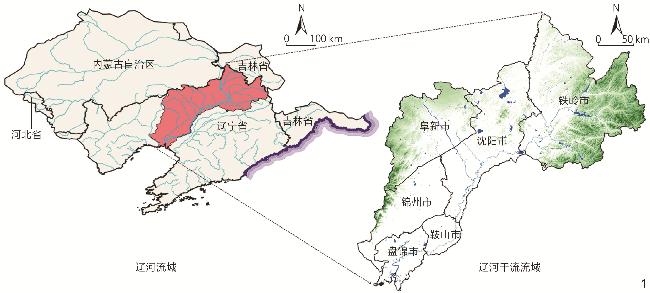
An integrated methodological approach is used in this research to assess the effectiveness of ecological restoration in the mainstream watershed of the Liaohe River from 2000 to 2020. To thoroughly assess restoration results, the research employs a multi-model approach that includes geospatial analysis, landscape ecology measures, and ecosystem service modeling. In order to measure changes in the composition and layout of ecological spaces, satellite imagery processed in ArcGIS 10.8 is used to create land use transition matrices and landscape pattern indices. Four important WES are assessed using the InVEST 3.14.1 model, namely water purification (nutrient delivery ratio module), water conservation (annual water yield module), soil conservation (sediment delivery ratio module), and habitat quality (habitat quality module). Root mean square deviation (RMSD) is used to calculated the trade-off intensity between various services, and Origin 2024 is used for data standardization and statistical analysis. Additionally, the research adopts multiscale geographically weighted regression (MGWR 2.2 software) to distinguish between natural elements (driven by climate) and anthropogenic elements (driven by land use) affecting WES trade-offs in order to pinpoint the driving processes. Through spatial explicit modeling, this analytical methodology makes it possible to diagnose the root causes of restoration effectiveness and quantify them across several dimensions (spatial pattern, individual service, and ecosystem service trade-off). To guarantee region-specific accuracy, local hydrological and ecological data are used to calibrate all model parameters.
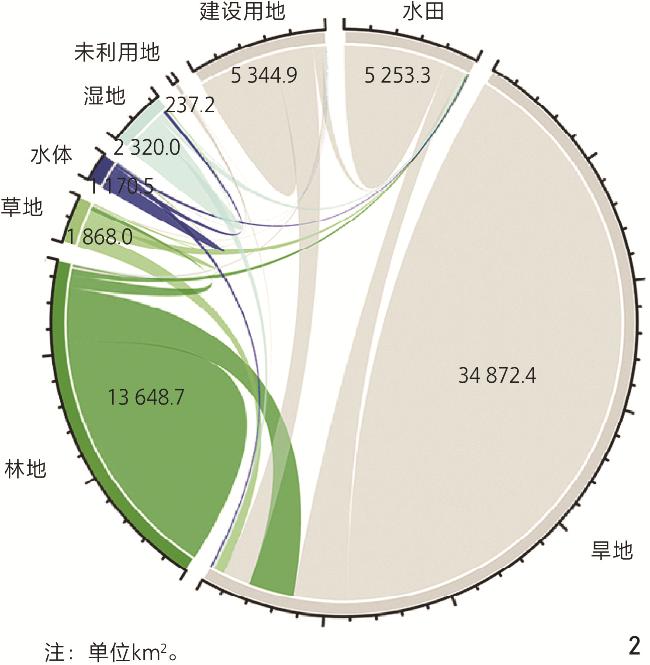
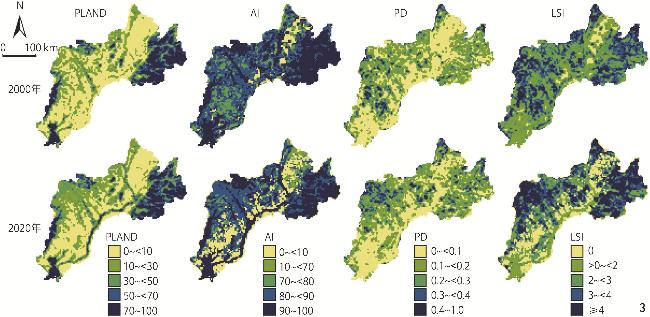
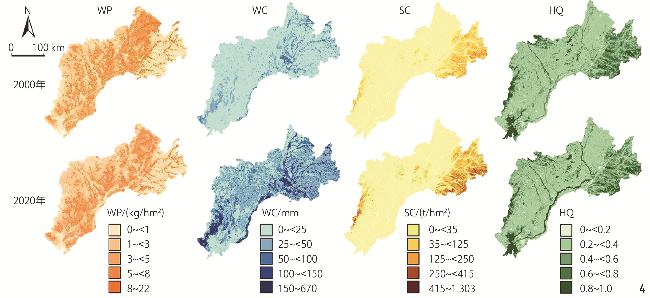
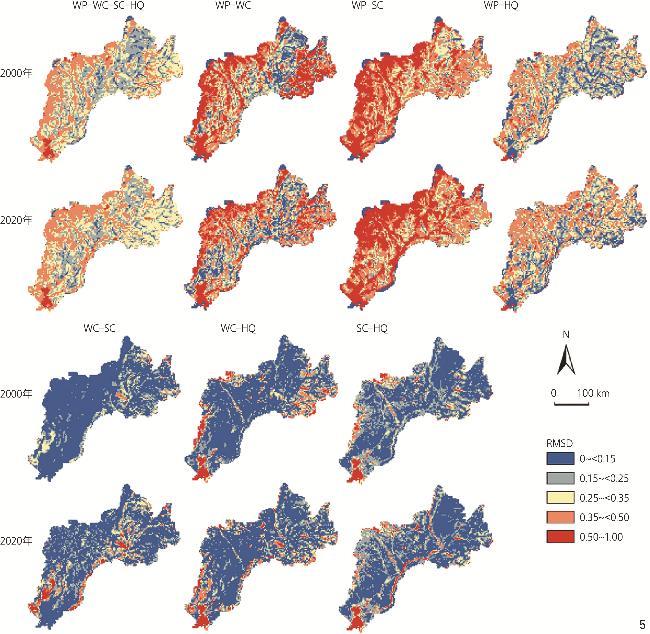
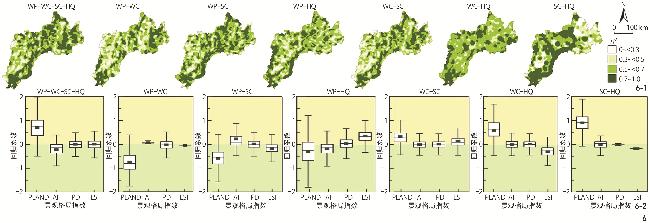
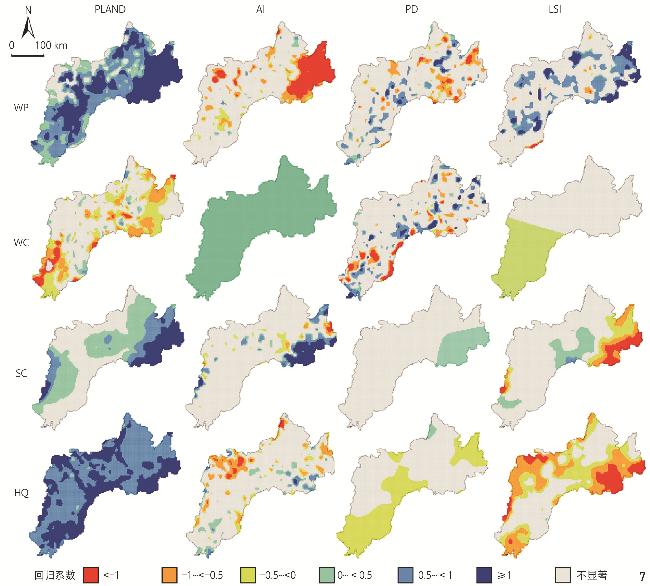
Research results are summarized as follows (covering the period from 2000 to 2020). 1) Landscape transformation: The conversion of agricultural production space (2,765.45 km2) creates 1,873.06 km2 of new ecological space (including 292.67 km2 of forests, 980.10 km2 of grasslands, 382.96 km2 of wetlands, and 217.33 km2 of water bodies), and produces unique spatial patterns, such as aggregated growth down the mainstream (AI increases by over 17%), and dispersed expansion in upper tributaries (PD and LSI increase by 11.77% and 2.64%, respectively). 2) Despite regional variation, all the four WES display quantifiable improvements: There is a 9.14% improvement (with nitrogen output decreasing from 1.74×10⁷ kg to 1.58×10⁷ kg) in water purification (WP), mostly along the mainstream of the Liaohe River and upper reaches of its tributaries; a remarkable 184% increase (from 9.81×10⁷ m3 to 27.86×10⁷ m3) in water conservation (WC); a significant gain of 85.73×10⁶ tons in soil conservation (SC), representing a 74.7% improvement from the baseline in 2000; and a modest but ecologically significant progress in habitat quality (HQ), with the watershed-wide mean index increasing from 0.315 to 0.321 (a 1.9% increase). 3) Two of the six trade-off connections under investigation indicate a decline in trade-off intensity (WC-WP: RMSD decreases by 0.0339; WC-HQ: RMSD decreases by 0.0035), while the other four show the reverse pattern (WP-SC: RMSD increases by 0.0219; WP-HQ: RMSD increases by 0.0192; WC-SC: RMSD increases by 0.0515; SC-HQ: RMSD increases by 0.0039). 4) In particular, the landscape composition is advantageous for WP, SC, and HQ but detrimental for WC, the landscape fragmentation is advantageous for WP but detrimental for SC, while the landscape aggregation is opposite. These ecological spatial patterns have opposite effects on WES, which is the primary cause of the increase in WES trade-offs. 5) In addition, the ecological spatial layout plan previously centered on water purification is a significant factor in the rise in WES trade-offs.
From the perspective of WES, this research has verified that ecological restoration in the mainstream watershed of the Liaohe River from 2000 to 2020 is a traditional single-objective ecological restoration mode, which is beneficial for single-objective local restoration, but detrimental for multi-objective coordinated restoration. Optimizing the ecological spatial pattern is a crucial tactic to raise the overall effectiveness of ecological restoration of territorial space and human well-being in watersheds. In the future, integrating the trade-off intensity of WES into the effectiveness assessment system will support the multi-objective coordinated development of ecological restoration in watersheds. This research provides factual support for the shift from single-objective to multi-functional watershed restoration strategies, as well as a replicable assessment framework. There are new avenues for operationalizing “ecological civilization” principles in real-world watershed management through the scientific fusion of landscape ecology, ecosystem service research, and spatial statistics.
GUO Manman , LU Xu , MA Qing . Assessment of Watershed Restoration Effectiveness from the Perspective of Water-Related Ecosystem Service Trade-Offs[J]. Landscape Architecture, 2025 , 32(8) : 40 -48 . DOI: 10.3724/j.fjyl.LA20240117
表1 研究数据来源Table 1 Data sources |
| 名称 | 分辨率/m | 来源 | |
| 高程数据 | 30 | 地理空间数据云(www.gscloud.cn) | |
| 卫星图 | Landsat 4-5 TM | 30 | |
| Landsat 8 OLI | |||
| 土地利用数据 | 30 | 资源与环境科学数据平台(www.resdc.cn) | |
| 降雨量数据 | 中国气象局官网(www.cma.gov.cn) | ||
| 蒸散量数据 | 1 000 | 哈佛数据储存库(doi.org/10.7910/DVN/ZGOUED) | |
| 土壤数据 | 1 000 | 世界土壤数据库(HWSD,webarchive.iiasa.ac.at/Research/LUC/External-World-soil-database/HTML);100 m分辨率的中国深基岩地图(globalchange.bnu.edu.cn/research/cdtb.jsp) | |
| 水文水质数据 | 水资源公报 | 辽宁省水利厅官网(slt.ln.gov.cn/jbgb/szygb) | |
| 水土保持公报 | |||
| 水质监测报告 | 辽宁省生态环境厅官网(sthj.ln.gov.cn) | ||
图5 流域水生态系统服务权衡强度变化Fig. 5 Spatio-temporal changes in trade-off intensity of WES in the watershed |
表2 水生态系统服务权衡强度的归因统计Table 2 Attributional statistics of the trade-off intensity of WES |
| 水生态系统服务权衡关系 | 总增长量 | 人工贡献率/% | 自然贡献率/% |
| WP-WC | -0.033 9 | -80.83 | 180.83 |
| WP-SC | | 163.47 | -63.47 |
| WP-HQ | 0.019 2 | 134.38 | -34.38 |
| WC-SC | 0.051 5 | 14.56 | 85.44 |
| WC-HQ | -0.003 5 | -268.57 | 368.57 |
| SC-HQ | | 110.26 | -10.26 |
| WP-WC-SC-HQ | 0.010 9 | 212.84 | -112.84 |
| [1] |
曹宇, 王嘉怡, 李国煜. 国土空间生态修复: 概念思辨与理论认知[J]. 中国土地科学, 2019, 33(7): 1-10.
CAO Y, WANG J Y, LI G Y. Ecological Restoration for Territorial Space: Basic Concepts and Foundations[J]. China Land Science, 2019, 33(7): 1-10.
|
| [2] |
李志国, 徐昔保, 李景宜, 等. 生态修复研究进展与展望[J]. 环境生态学, 2024, 6(1): 103-110.
LI Z G, XU X B, LI J Y, et al. Research Progress and Prospect of Ecological Restoration[J]. Environmental Ecology, 2024, 6(1): 103-110.
|
| [3] |
彭建, 吕丹娜, 董建权, 等. 过程耦合与空间集成: 国土空间生态修复的景观生态学认知[J]. 自然资源学报, 2020, 35(1): 3-13.
PENG J, LYU D N, DONG J Q, et al. Processes Coupling and Spatial Integration: Characterizing Ecological Restoration of Territorial Space in View of Landscape Ecology[J]. Journal of Natural Resources, 2020, 35(1): 3-13.
|
| [4] |
傅伯杰. 国土空间生态修复亟待把握的几个要点[J]. 中国科学院院刊, 2021, 36(1): 64-69.
FU B J. Several Key Points in Territorial Ecological Restoration[J]. Bulletin of Chinese Academy of Sciences, 2021, 36(1): 64-69.
|
| [5] |
HACKBART V C S, DE LIMA G T N P, DOS SANTOS R F. Theory and Practice of Water Ecosystem Services Valuation: Where Are We Going?[J]. Ecosystem Services, 2017, 23: 218-227.
|
| [6] |
顾恬玮, 彭建, 姜虹, 等. 流域国土空间生态修复: 理论认知与规划要点[J]. 自然资源学报, 2023, 38(10): 2464-2474.
GU T W, PENG J, JIANG H, et al. Watershed-Based Territorial Ecological Restoration: Theoretical Cognition and Key Planning Issues[J]. Journal of Natural Resources, 2023, 38(10): 2464-2474.
|
| [7] |
GRIZZETTI B, LIQUETE C, PISTOCCHI A, et al. Relationship Between Ecological Condition and Ecosystem Services in European Rivers, Lakes and Coastal Waters[J]. Science of The Total Environment, 2019, 671: 452-465.
|
| [8] |
WANG Z K, GUO J, LING H B, et al. Function Zoning Based on Spatial and Temporal Changes in Quantity and Quality of Ecosystem Services Under Enhanced Management of Water Resources in Arid Basins[J]. Ecological Indicators, 2022, 137: 108725.
|
| [9] |
程艳, 崔瑶, 林涛, 等. 额尔齐斯河流域山水林田湖草工程生态保护修复成效评价[J]. 自然资源学报, 2024, 39(12): 2798-2818.
CHENG Y, CUI Y, LIN T, et al. Ecological Protection and Restoration Performance Evaluation of the Mountains – Waters – Forests – Fields – Lakes – Grasslands Project in the Irtysh River Basin[J]. Journal of Natural Resources, 2024, 39(12): 2798-2818.
|
| [10] |
李冠城, 侯敏驰, 李梓君, 等. 珠江流域“十三五” 水污染防治成效与经验[J]. 环境保护, 2021, 49(19): 9-13.
LI G C, HOU M C, LI Z J, et al. Success and Experience of Water Pollution Prevention and Control During the 13th Five-Year Plan in the Pearl River Valley[J]. Environmental Protection, 2021, 49(19): 9-13.
|
| [11] |
董晓蝶. 基于生态系统服务视角的常州市河长制推行成效评价[J]. 湖北农业科学, 2020, 59(15): 163-168.
DONG X D. Performance Evaluation of River Chief System in Changzhou City Based on the Perspective of Ecosystem Service[J]. Hubei Agricultural Sciences, 2020, 59(15): 163-168.
|
| [12] |
陈妍, 周妍, 包岩峰, 等. 山水林田湖草沙一体化保护和修复工程综合成效评估技术框架[J]. 生态学报, 2023, 43(21): 8894-8902.
CHEN Y, ZHOU Y, BAO Y F, et al. A Technical Framework for Effectiveness Evaluation of Holistically Ecological Conservation and Restoration Project of Mountains, Rivers, Forests, Farmlands, Grasslands, and Deserts[J]. Acta Ecologica Sinica, 2023, 43(21): 8894-8902.
|
| [13] |
肖武, 阮琳琳, 岳文泽, 等. 面向国土空间生态保护修复的多尺度成效评估体系构建[J]. 应用生态学报, 2023, 34(9): 2566-2574.
XIAO W, RUAN L L, YUE W Z, et al. Construction of a Multi-scale Effectiveness Evaluation System for Ecological Restoration and Protection of Territorial Space[J]. Chinese Journal of Applied Ecology, 2023, 34(9): 2566-2574.
|
| [14] |
HU X W, XU W W, LI F Y. Spatiotemporal Evolution and Optimization of Landscape Patterns Based on the Ecological Restoration of Territorial Space[J]. Land, 2022, 11(12): 2114.
|
| [15] |
WANG L X, LI Z W, WANG D Y, et al. Unbalanced Social-Ecological Development Within the Dongting Lake Basin: Inspiration from Evaluation of Ecological Restoration Projects[J]. Journal of Cleaner Production, 2021, 315: 128161.
|
| [16] |
SHENG W P, ZHEN L, XIAO Y, et al. Ecological and Socioeconomic Effects of Ecological Restoration in China’s Three Rivers Source Region[J]. Science of The Total Environment, 2019, 650: 2307-2313.
|
| [17] |
袁哲, 许秋瑾, 宋永会, 等. 辽河流域水污染治理历程与“十四五” 控制策略[J]. 环境科学研究, 2020, 33(8): 1805-1812.
YUAN Z, XU Q J, SONG Y H, et al. Water Pollution Management Process and “14th Five-Year Plan” Pollution Control Strategy for Liao River Basin[J]. Research of Environmental Sciences, 2020, 33(8): 1805-1812.
|
| [18] |
GENG S B, ZHU W R, SHI P L. A Functional Land Use Classification for Ecological, Production and Living Spaces in the Taihang Mountains[J]. Journal of Resources and Ecology, 2019, 10(3): 246.
|
| [19] |
贾振宇, 王世曦, 刘学, 等. 辽河保护区土壤保持功能时空变化及其影响因素分析[J]. 环境工程技术学报, 2021, 11(4): 686-692.
JIA Z Y, WANG S X, LIU X, et al. Spatial and Temporal Variation of Soil Conservation Function and Its Influencing Factors in Liaohe Conservation Area[J]. Journal of Environmental Engineering Technology, 2021, 11(4): 686-692.
|
| [20] |
孙才志, 安志英. 基于生态系统服务流的东北地区水安全格局[J]. 水资源保护, 2024, 40(3): 11-19,27.
SUN C Z, AN Z Y. Water Security Pattern in Northeast China Based on Ecosystem Service Flow[J]. Water Resources Protection, 2024, 40(3): 11-19,27.
|
| [21] |
王飞, 陶芹, 程宪波, 等. 快速城镇化地区景观格局变化对水生态系统服务的影响[J]. 水土保持学报, 2023, 37(1): 159-167.
WANG F, TAO Q, CHENG X B, et al. Influence of Landscape Pattern Change on Water Ecosystem Service in Rapidly Urbanization Areas[J]. Journal of Soil and Water Conservation, 2023, 37(1): 159-167.
|
| [22] |
刘晓曼, 王超, 王燕, 等. 青海祁连山区山水林田湖草生态保护修复工程生态成效评估[J]. 生态学报, 2024, 44(14): 5960-5973.
LIU X M, WANG C, WANG Y, et al. Evaluation on the Implementation Effect of Ecological Protection and Restoration Project of Mountain – Water – Forest –Cropland – Lake – Grass System in Qilian Mountains, Qinghai Province[J]. Acta Ecologica Sinica, 2024, 44(14): 5960-5973.
|
| [23] |
BAI Y, OCHUODHO T O, YANG J. Impact of Land Use and Climate Change on Water-Related Ecosystem Services in Kentucky, USA[J]. Ecological Indicators, 2019, 102: 51-64.
|
| [24] |
RIEB J T, BENNETT E M. Landscape Structure as a Mediator of Ecosystem Service Interactions[J]. Landscape Ecology, 2020, 35(12): 2863-2880.
|
| [25] |
RAN P L, HU S G, FRAZIER A E, et al. The Dynamic Relationships Between Landscape Structure and Ecosystem Services: An Empirical Analysis from the Wuhan Metropolitan Area, China[J]. Journal of Environmental Management, 2023, 325: 116575.
|
| [26] |
王飞, 陶宇, 欧维新. 景观格局变化的水质净化服务响应关系研究进展[J]. 地球科学进展, 2021, 36(1): 17-28.
WANG F, TAO Y, OU W X. Research Progress on Response Relationship of Water Quality Purification Service with Landscape Pattern Change[J]. Advances in Earth Science, 2021, 36(1): 17-28.
|
| [27] |
李宁, 田川, 程小文, 等. 流域视角下生态系统保护规划策略与实践[J]. 规划师, 2022, 38(11): 28-34.
LI N, TIAN C, CHENG X W, et al. Strategy and Practice of Ecosystem Protection Planning from the Perspective of Watershed[J]. Planners, 2022, 38(11): 28-34.
|
| [28] |
刘芦萌, 邬建国. 生态系统服务与人类福祉关系的研究框架、途径与方法[J]. 自然资源学报, 2024, 39(9): 2044-2065.
LIU L M, WU J G. Frameworks, Approaches, and Methods for Studying the Relationship Between Ecosystem Services and Human Wellbeing[J]. Journal of Natural Resources, 2024, 39(9): 2044-2065.
|
| [29] |
岳邦瑞, 钱芝弘. 生态系统服务权衡与协同机制及其在景观规划中的应用[J]. 风景园林, 2022, 29(10): 20-25.
YUE B R, QIAN Z H. Formation Mechanism of Trade-Offs and Synergies Between Ecosystem Services and Application in Landscape Planning[J]. Landscape Architecture, 2022, 29(10): 20-25.
|
| [30] |
张碧天, 闵庆文, 焦雯珺, 等. 生态系统服务权衡研究进展[J]. 生态学报, 2021, 41(14): 5517-5532.
ZHANG B T, MIN Q W, JIAO W J, et al. Research Progress and Perspective on Ecosystem Services Trade-Offs[J]. Acta Ecologica Sinica, 2021, 41(14): 5517-5532.
|
| [31] |
ZHANG M, MA S, GONG J W, et al. A Coupling Effect of Landscape Patterns on the Spatial and Temporal Distribution of Water Ecosystem Services: A Case Study in the Jianghuai Ecological Economic Zone, China[J]. Ecological Indicators, 2023, 151: 110299.
|
| [32] |
LI W J, KANG J W, WANG Y. Identifying the Impacts of Landscape Structure on Ecosystem Services Trade-Offs Among Ecosystem Services Bundles in the Mountains of Southwest China[J]. Ecological Engineering, 2024, 209: 107419.
|
| [33] |
黄璐, 邬建国, 王珂, 等. 可持续景观规划: 融合景观可持续性研究与地理设计[J]. 生态学报, 2022, 42(2): 442-449.
HUANG L, WU J G, WANG K, et al. Sustainable Landscape Planning: Integrating Landscape Sustainability Research with GeoDesign[J]. Acta Ecologica Sinica, 2022, 42(2): 442-449.
|
| [34] |
彭建, 李冰, 董建权, 等. 论国土空间生态修复基本逻辑[J]. 中国土地科学, 2020, 34(5): 18-26.
PENG J, LI B, DONG J Q, et al. Basic Logic of Territorial Ecological Restoration[J]. China Land Science, 2020, 34(5): 18-26.
|
| [35] |
王晨旭, 刘焱序, 于超月, 等. 国土空间生态修复布局研究进展[J]. 地理科学进展, 2021, 40(11): 1925-1941.
WANG C X, LIU Y X, YU C Y, et al. Research Progress on the Arrangement of Territorial Ecological Restoration[J]. Progress in Geography, 2021, 40(11): 1925-1941.
|
/
| 〈 |
|
〉 |