

Pathways Through Which Green Exposure Type Influences Cardiovascular Diseases Mortality in Shanghai, China
|
HUANG Jianzhong, Ph.D., is a professor in the College of Architecture and Urban Planning (CAUP), Tongji University. His research focuses on urban spatial activity and spatial network, and urban-rural resilience and transport planning |
|
XU Yanting is a Ph.D. candidate in the College of Architecture and Urban Planning (CAUP), Tongji University. Her research focuses on healthy city planning |
|
WANG Lan, Ph.D., is dean of and a professor in the College of Architecture and Urban Planning (CAUP), Tongji University, and an editorial board member of this journal. Her research focuses on healthy city science and planning, urban renewal, and new town planning and development |
|
HE Zhouqian, Master, is an engineer in Wuhan Natural Resources and Planning Information Center. Her research focuses on regional governance, and smart city |
Received date: 2024-01-19
Revised date: 2024-12-08
Online published: 2025-12-06
Supported by
国家自然科学基金面上项目“针对多元城市规划要素的健康影响评估模型研究”(52078349)
国家自然科学基金面上项目“基于空间活动的大都市区多层网络结构的识别、评价与优化方法研究”(52178049)
高密度人居环境生态与节能教育部重点实验室(同济大学)暨上海同济城市规划设计研究院有限公司联合自主课题(KY-2022-LH-A03)
上海同济城市规划设计研究院有限公司暨长三角城市群智能规划协同创新中心科研课题(KY-2022-PT-A02)
Copyright
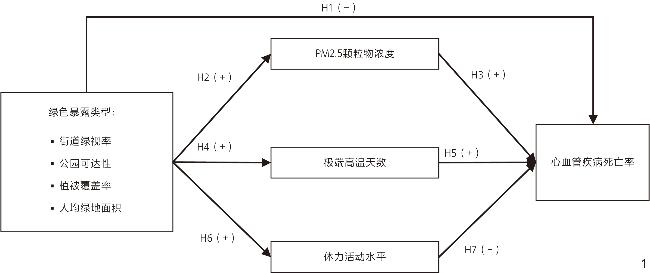
[Objective] Rapid urbanization has exacerbated traffic congestion, aggravated air and noise pollution, and limited public spaces, increasing the risk of suffering cardiovascular diseases (CVDs) such as hypertension and heart disease. Urban green spaces play a vital role in mitigating these risks by promoting mental restoration, reducing stress, encouraging outdoor exercise, improving air quality, and regulating temperature. The current research is identified with the following shortcomings despite the revealment of multiple positive health effects of urban green space. First, the research often focuses on single green exposure type, such as park accessibility or vegetation cover, overlooking the diverse pathways through which different green exposures influence cardiovascular health. Second, using streets or neighborhoods as research units can more comprehensively capture the group effect on health from people’s use of green space, and more specifically reveal the integrated effect of social interaction among residents, group behaviors and community public resources on health. Lastly, street-level analyses allow more precise environmental data integration, such as data on air pollution and temperature, which is often challenging in smaller individual-level units. Therefore, there is a need to conduct research on the influence of urban green exposure on CVDs mortality at the street level.
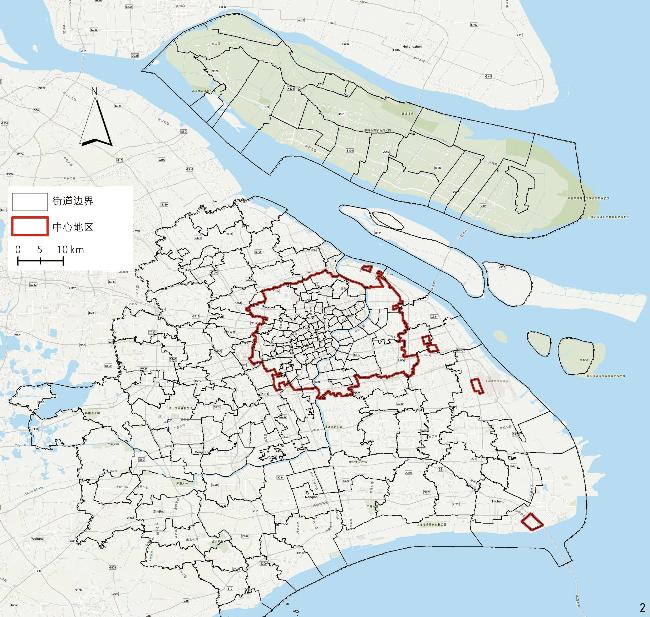
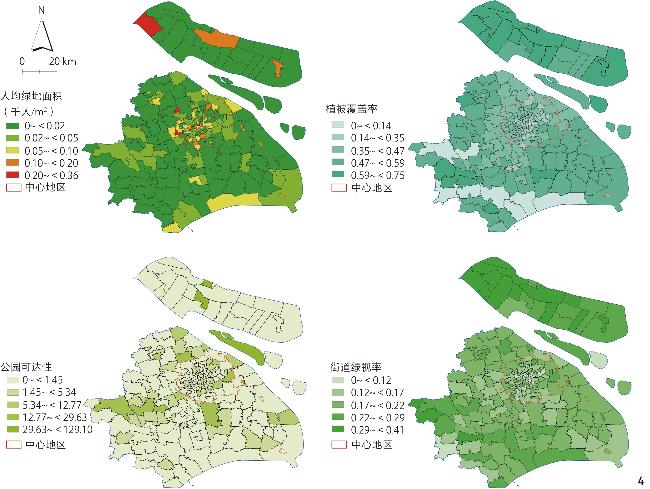
[Methods] This research uses the partial least squares structural equation modeling (PLS-SEM) to analyze how different types of green exposure (vegetation cover, park accessibility, street green visibility, and park area per capita) influence cardiovascular disease mortality in 212 communities in Shanghai, China. The model incorporates three key mediating factors: Air pollution (measured by PM2.5 concentration), extreme high temperature, and physical activity level. Through this approach, the research examines both the direct and indirect effects of vegetation coverage, park accessibility, street greenery, and per capita park area on CVDs mortality. The research draws on diverse data sources to ensure robust analysis: CVDs mortality data provided by the Shanghai Municipal Center for Disease Control and Prevention, PM2.5 concentration data retrieved from MODIS satellite imaging, temperature data sourced from Google Earth Engine, and LBS (location based services) data serving as the basis for estimating physical activity levels. This comprehensive dataset allows for an in-depth exploration of the pathways through which green exposure influences cardiovascular health in an urban context.
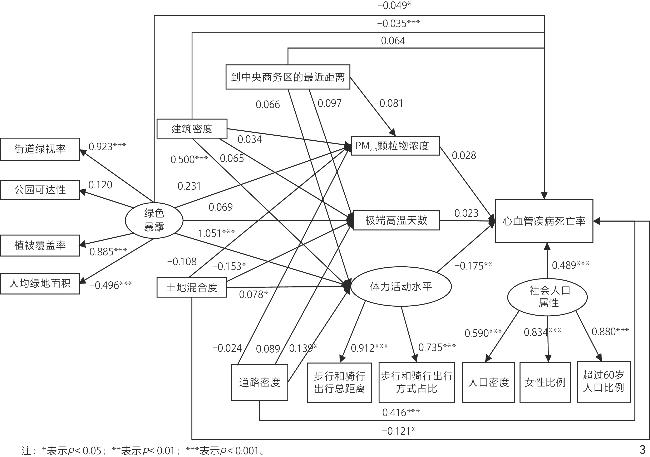
[Results] The research finds that green exposure primarily influences CVDs mortality through physical activity levels, based on which a pathway of “green exposure − physical activity level − CVDs mortality” is established (pathway coefficient = -0.184, p < 0.05). Notably, direct associations between PM2.5 levels, extreme heat days, heat waves, and CVDs mortality are not statistically significant. Specifically, visibility of street greenery and vegetation coverage were shown to reduce CVDs mortality by promoting higher levels of physical activity among residents. Residential green spaces, “pocket parks” and street trees — due to their extensive reach, longer boundaries, and greater accessibility — encourage walking, cycling, and other active travel modes. This frequent, natural exposure to green spaces significantly enhances cardiovascular health by increasing both the duration and frequency of interaction with greenery, even surpassing the health benefits of larger centralized parks. The results indicate that smaller green spaces within residential areas and street greenery in densely populated and resource-limited areas are particularly effective in supporting cardiovascular health. In contrast, streets with a higher per capita green space show lower levels of physical activity, a trend attributed to their location on the urban fringe area, where park accessibility, green space quality, and safety are generally lower. Additionally, building density, road density, and land-use mix emerge as direct predictors of CVDs mortality. Building density, in particular, can indirectly influence the influence of green exposure on CVDs mortality by modulating physical activity levels as a mediating factor.
[Conclusion] This research offers an in-depth analysis of the complex mechanisms by which various types of green exposure influence CVDs mortality, with a particular focus on the key mediating role of physical activity. Findings suggest that increasing street greenery, vegetation coverage, and per capita park area can significantly enhance residents’ physical activity levels, which in turn helps lower CVDs mortality. However, the research does not find significant mediating effects of air pollution or heat waves, and the potential of green spaces to improve air quality remains relevant. These findings contribute valuable insights to the theoretical understanding of how green exposure influences chronic non-communicable diseases and provide critical scientific support for urban planning and public health policies. In practice, urban planners should holistically consider the integration of diverse types of green spaces to maximize their benefits for cardiovascular health, thereby supporting the broader well-being of urban populations.
Jianzhong HUANG , Yanting XU , Lan WANG , Zhouqian HE . Pathways Through Which Green Exposure Type Influences Cardiovascular Diseases Mortality in Shanghai, China[J]. Landscape Architecture, 2025 , 32(2) : 72 -78 . DOI: 10.3724/j.fjyl.202401190051
表1 研究模型中变量的计算方式、数据来源和特征[26-29]Tab. 1 Calculation, data sources, and characteristics of the variables of the research model[26-29] |
| 变量 | 计算方式 | 数据来源 | 平均值(标准差) | |
| 疾病结果 (因变量) | 心血管疾病死亡率/ (1/10 000) | 每个街道心血管疾病死亡人数除以 街道户籍人口数据 | 上海市疾病控制与预防中心统计的 2021年心血管死亡人数 | 322.885(233.036) |
| 4种类型的绿色暴露 (自变量) | 街道绿视率 | 沿道路每隔400 m设置采样点,将采样点东南西北4个方向的街景图像绿视率均值作为采样点的绿视率,将每个街道内所有采样点的均值作为该街道的绿视率[26] | 2021年百度地图街景图片 | 0.192(0.061) |
| 公园可达性 | 考虑设施的数量、空间分布和每个街道的人口需求,使用改进高斯两步移动搜索法计算[27-28] | 免费、对外开放的城市公园(面积>1 000 m2)的2020年百度地图AOI、道路数据 | 2.895(10.685) | |
| 植被覆盖率 | 采用归一化植被指数,去掉value值小于0的部分,计算街道植被覆盖率均值 | 2021年中国科学数据网的地物光谱信息数据,分辨率为30 m | 0.430(0.144) | |
| 人均绿地面积/ (千人/m2) | 每个街道内的公园绿地面积除以街道总人数 | 2021年百度地图绿地AOI数据 | 0.034(0.049) | |
| 空气污染物浓度 (中介变量) | 人口加权PM2.5颗粒物浓度/ (μg/m3) | 街道内PM2.5浓度与街道人口数量的乘积再除以街道总人数 | PM2.5颗粒物浓度数据源于2020年全球年度PM2.5颗粒物网格数据集,分辨率为1 km;人口分布数据来自2021年Worldpopulation数据集,分辨率为100 m | 39.828(3.431) |
| 极端高温天气 (中介变量) | 极端高温天数 | 采用阈值温度方法[29](以每个街道前90%的温度为标准,超过该温度值认为是极端高温事件)计算2003—2021年每个街道极端高温天数 | 2003—2021年地表温度数据集,分辨率为0.05° | 9.651(2.059) |
| 体力活动水平 (中介变量) | 出行(步行和骑行)总距离/km | 每个街道内所有步行、骑行出行活动的总距离之和 | 中国联通公司提供的居民一日所有出行活动的出行时间和距离 | 0.341(0.059) |
| 出行(步行和骑行)比例/% | 每个街道内所有步行、骑行出行活动的次数除以街道内所有居民出行总次数 | 35.496(27.502) | ||
| 建成环境要素 (控制变量) | 建筑密度 | 每个街道内建筑总面积除以街道总用地面积 | 2020年百度地图提供的建筑轮廓数据 | 0.146(0.068) |
| 道路密度/ (km/km2) | 每个街道内道路长度除以街道面积 | 2020年百度地图提供的道路数据 | 4.641(2.176) | |
| 土地混合度 | 街道内绿地、商业、居住、工业等各类用地混合熵 | 源于2020年上海市自然资源局提供的土地利用数据 | 0.492(0.080) | |
| 到中央商务区的最近距离/m | 街道质心到上海市南京东路的欧氏距离 | 百度地图获得上海市中央商务区(南京东路)的地理点坐标 | ( | |
| 社会人口属性 (控制变量) | 人口密度/(百万人/km2) | 每个街道内人口总数除以街道面积 | 2021年全国第七次人口普查数据 | 0.014(0.014) |
| 女性比例/% | 每个街道女性人口总数除以街道总人数 | 0.489(0.028) | ||
| 60岁以上人口比例/% | 每个街道内超过60岁人口总数除以街道总人数 | 0.263(0.098) | ||
表2 模型信度检验结果Tab. 2 Results of reliability testing for the measurement model |
| 潜变量 | Cronbach’s α | CR值 | AVE值 |
| 绿色暴露 | 0.672 | 0.807 | 0.547 |
| 体力活动水平 | 0.755 | 0.624 | 0.559 |
| 社会人口属性 | 0.698 | 0.826 | 0.606 |
表3 模型假设检验结果Tab. 3 Results of hypothesis testing for the model |
| 原假设 | 路径系数 | 结论 |
| 注:*表示p < 0.05;**表示p < 0.01;***表示p < 0.001。 | ||
| H1 | -0.049* | 成立 |
| H2 | 0.231 | 不成立 |
| H3 | 0.028 | 不成立 |
| H4 | 0.069 | 不成立 |
| H5 | 0.023 | 不成立 |
| H6 | 1.051*** | 成立 |
| H7 | -0.175** | 成立 |
文中图表均由作者绘制,其中
| [1] |
LI X H, SONG J C, LIN T, et al. Urbanization and Health in China, Thinking at the National, Local and Individual Levels[J]. Environmental Health: A Global Access Science Source, 2016, 15(S1): 32
|
| [2] |
LI M, WU Y F. Urbanization and Public Health in China[M]. London: Imperial College Press, 2016.
|
| [3] |
World Health Organization. Cardiovascular Diseases (CVDs)[EB/OL]. (2021-06-11)[2024-10-08]. https://www.who.int/news-room/fact-sheets/detail/cardiovascular-diseases-(cvds).
|
| [4] |
姚亚男, 李树华. 基于公共健康的城市绿色空间相关研究现状[J]. 中国园林, 2018, 34(1): 118-124
YAO Y N, LI S H. Review on Research of Urban Green Space Based on Public Health[J]. Chinese Landscape Architecture, 2018, 34(1): 118-124
|
| [5] |
黄建中, 许燕婷, 王兰. 城市建成环境对心血管健康的影响路径与空间要素[J]. 城市发展研究, 2023, 30(7): 14-20
HUANG J Z, XU Y T, WANG L. The Pathway and Spatial Elements of Urban Built Environment on Cardiovascular Health[J]. Urban Development Studies, 2023, 30(7): 14-20
|
| [6] |
WILD C P. Complementing the Genome with an “Exposome”: The Outstanding Challenge of Environmental Exposure Measurement in Molecular Epidemiology[J]. Cancer Epidemiology, Biomarkers & Prevention, 2005, 14(8): 1847-1850.
|
| [7] |
杜新存, 李方正. 绿色暴露作为促进健康服务的评估指标与机制研究综述[J]. 风景园林, 2022, 29(10): 26-31
DU X C, LI F Z. A Review of Research on Green Exposure as an Assessment Indicator and Mechanism for Health Services Promotion[J]. Landscape Architecture, 2022, 29(10): 26-31.
|
| [8] |
董玉萍, 刘合林, 齐君. 城市绿地与居民健康关系研究进展[J]. 国际城市规划, 2020, 35(5): 70-79
DONG Y P, LIU H L, QI J. Progress of Studies on the Relationship Between Urban Green Space and Public Health[J]. Urban Planning International, 2020, 35(5): 70-79.
|
| [9] |
SONG J L, GASPARRINI A, WEI D, et al. Do Greenspaces Really Reduce Heat Health Impacts? Evidence for Different Vegetation Types and Distance-Based Greenspace Exposure[J]. Environment International, 2024, 191 108950
|
| [10] |
WU W, DING K W. Optimization Strategy for Parks and Green Spaces in Shenyang City: Improving the Supply Quality and Accessibility[J]. International Journal of Environmental Research and Public Health, 2022, 19(8): 4443
|
| [11] |
NAWRATH M, GUENAT S, ELSEY H, et al. Exploring Uncharted Territory: Do Urban Greenspaces Support Mental Health in Low- and Middle-Income Countries?[J]. Environmental Research, 2021, 194 110625
|
| [12] |
YITSHAK-SADE M, KLOOG I, NOVACK V. Do Air Pollution and Neighborhood Greenness Exposures Improve the Predicted Cardiovascular Risk?[J]. Environment International, 2017, 107 147-153
|
| [13] |
WANG Y N, SHI X X, HONG H L, et al. How Does Multiscale Greenspace Exposure Affect Human Health? Evidence from Urban Parks in the Central City of Beijing[J]. Journal of Environmental Management, 2024, 353 120253
|
| [14] |
LI Z, BAI X, XU Z J, et al. The Optimal Spatial Delineation Method for the Service Level of Urban Park Green Space from the Perspective of Opportunity Equity[J]. Environmental Science and Pollution Research, 2023, 30(36): 85520-85533
|
| [15] |
LUQUE-GARCÍA L, MUXIKA-LEGORBURU J, MENDIA-BERASATEGUI O, et al. Green and Blue Space Exposure and Non-communicable Disease Related Hospitalizations: A Systematic Review[J]. Environmental Research, 2024, 245 118059
|
| [16] |
韩冰冰, 冷红. 寒地社区绿色空间对老年人主观幸福感影响: 以长春市为例[J]. 风景园林, 2022, 29(1): 115-121
HAN B B, LENG H. Influence of Community Green Space on Subjective Well-Being of the Elderly in Cold Regions: A Case Study of Changchun[J]. Landscape Architecture, 2022, 29(1): 115-121.
|
| [17] |
MCMORRIS O, VILLENEUVE P J, SU J, et al. Urban Greenness and Physical Activity in a National Survey of Canadians[J]. Environmental Research, 2015, 137 94-100
|
| [18] |
KHRAISHAH H, ALAHMAD B, OSTERGARD R L J, et al. Climate Change and Cardiovascular Disease: Implications for Global Health[J]. Nature Reviews. Cardiology, 2022, 19(12): 798-812
|
| [19] |
汪结明, 王良桂, 朱柯铖杰, 等. 不同园林绿地类型内空气PM2.5浓度的动态变化及其滞尘效应分析[J]. 环境工程, 2016, 34(7): 120-124
WANG J M, WANG L G, ZHU K C J, et al. Dynamic Variation of Air PM2.5 Concentration in Different Greenland Types and Analysis of Dust Removal Effect[J]. Environmental Engineering, 2016, 34(7): 120-124.
|
| [20] |
LI Y, MA Z Q, ZHENG C J, et al. Ambient Temperature Enhanced Acute Cardiovascular-Respiratory Mortality Effects of PM2.5 in Beijing, China[J]. International Journal of Biometeorology, 2015, 59(12): 1761-1770
|
| [21] |
TISCHER C, KIRJAVAINEN P, MATTERNE U, et al. Interplay Between Natural Environment, Human Microbiota and Immune System: A Scoping Review of Interventions and Future Perspectives Towards Allergy Prevention[J]. Science of the Total Environment, 2022, 821 153422
|
| [22] |
SHWARTZ A, TZUNZ M, GAFTER L, et al. One Size Does Not Fit All: The Complex Relationship Between Biodiversity and Psychological Well-Being[J]. Urban Forestry & Urban Greening, 2023, 86 128008
|
| [23] |
BROWN V, DIOMEDI B Z, MOODIE M, et al. A Systematic Review of Economic Analyses of Active Transport Interventions that Include Physical Activity Benefits[J]. Transport Policy, 2016, 45 190-208
|
| [24] |
刘华斌. 手机信令数据背景下城市交通出行方式选择辨识方法研究[D]. 北京: 北京交通大学, 2019.
LIU H B. Urban Transportation Modes Recognition Based on Mobile Signaling Data[D]. Beijing: Beijing Jiaotong University, 2019.
|
| [25] |
TENENHAUS M, VINZI V E, CHATELIN Y M, et al. PLS Path Modeling[J]. Computational Statistics & Data Analysis, 2005, 48(1): 159-205.
|
| [26] |
SEIFERLING I, NAIK N, RATTI C, et al. Green Streets: Quantifying and Mapping Urban Trees With Street-Level Imagery and Computer Vision[J]. Landscape and Urban Planning, 2017, 165 93-101
|
| [27] |
仝德, 孙裔煜, 谢苗苗. 基于改进高斯两步移动搜索法的深圳市公园绿地可达性评价[J]. 地理科学进展, 2021, 40(7): 1113-1126
TONG D, SUN Y Y, XIE M M. Evaluation of Green Space Accessibility Based on Improved Gaussian Two-Step Floating Catchment Area Method: A Case Study of Shenzhen City, China[J]. Progress in Geography, 2021, 40(7): 1113-1126
|
| [28] |
窦钰霖. 基于改进高斯两步移动搜索法的西安市公园绿地可达性评价[D]. 西安: 西安工业大学, 2023.
DOU Y L. Evaluation of Park Green Space Accessibility in Xi’an Based on Improved Ga2SFCA Method[D]. Xi’an: Xi’an Technological University, 2023.
|
| [29] |
XU Z W, FITZGERALD G, GUO Y M, et al. Impact of Heatwave on Mortality Under Different Heatwave Definitions: A Systematic Review and Meta-analysis[J]. Environment International, 2016, 89/90 193-203
|
| [30] |
WANG R Y, LIU Y, LU Y, et al. Perceptions of Built Environment and Health Outcomes for Older Chinese in Beijing: A Big Data Approach with Street View Images and Deep Learning Technique[J]. Computers, Environment and Urban Systems, 2019, 78 101386
|
| [31] |
王小月, 杨东峰. 建成环境如何影响老年人绿地使用频率: 基于可达性和吸引力双重视角[J]. 中国园林, 2020, 36(11): 62-66
WANG X Y, YANG D F. How the Built Environment Affect the Frequency of Green Space Used by the Elderly: Based on the Dual Perspective of Accessibility and Attractiveness[J]. Chinese Landscape Architecture, 2020, 36(11): 62-66.
|
| [32] |
EWING R, CERVERO R. Travel and the Built Environment[J]. Journal of the American Planning Association, 2010, 76(3): 265-294
|
| [33] |
LIU Y, DING X Q, JI Y J. Enhancing Walking Accessibility in Urban Transportation: A Comprehensive Analysis of Influencing Factors and Mechanisms[J]. Information, 2023, 14(11): 595
|
/
| 〈 |
|
〉 |