

遗址复原展示真实性感知对公众感知价值的影响路径
|
张科/女/西安建筑科技大学建筑学院在读硕士研究生/研究方向为遗址阐释与展示 |
|
孔黎明/男/博士/西安建筑科技大学建筑学院副教授/研究方向为参数化设计、遗址数字化阐释 |
Copy editor: 王一兰
收稿日期: 2025-07-21
修回日期: 2026-03-07
网络出版日期: 2026-04-22
基金资助
全国哲学社会科学工作办公室一般项目“国家考古遗址公园文化效能评估与价值提升策略研究”(23BKG039)
Influence Path of Perceived Authenticity in Heritage Site Restoration and Display on Public Perceived Value
|
ZHANG Ke is a master student in the School of Architecture, Xi’an University of Architecture and Technology. Her research focuses on heritage site interpretation and presentation |
|
KONG Liming, Ph.D., is an associate professor in the School of Architecture, Xi’an University of Architecture and Technology. His research focuses on parametric design, and digital interpretation of heritage sites |
Received date: 2025-07-21
Revised date: 2026-03-07
Online published: 2026-04-22
遗址复原展示作为直观呈现遗址历史风貌的重要方式,对公众理解遗址历史文化和感知价值提升作用显著。既有研究尚未系统揭示不同复原展示方式对公众感知价值的影响机制,本研究旨在通过量化分析系统探究遗址复原展示对公众感知价值的影响路径。
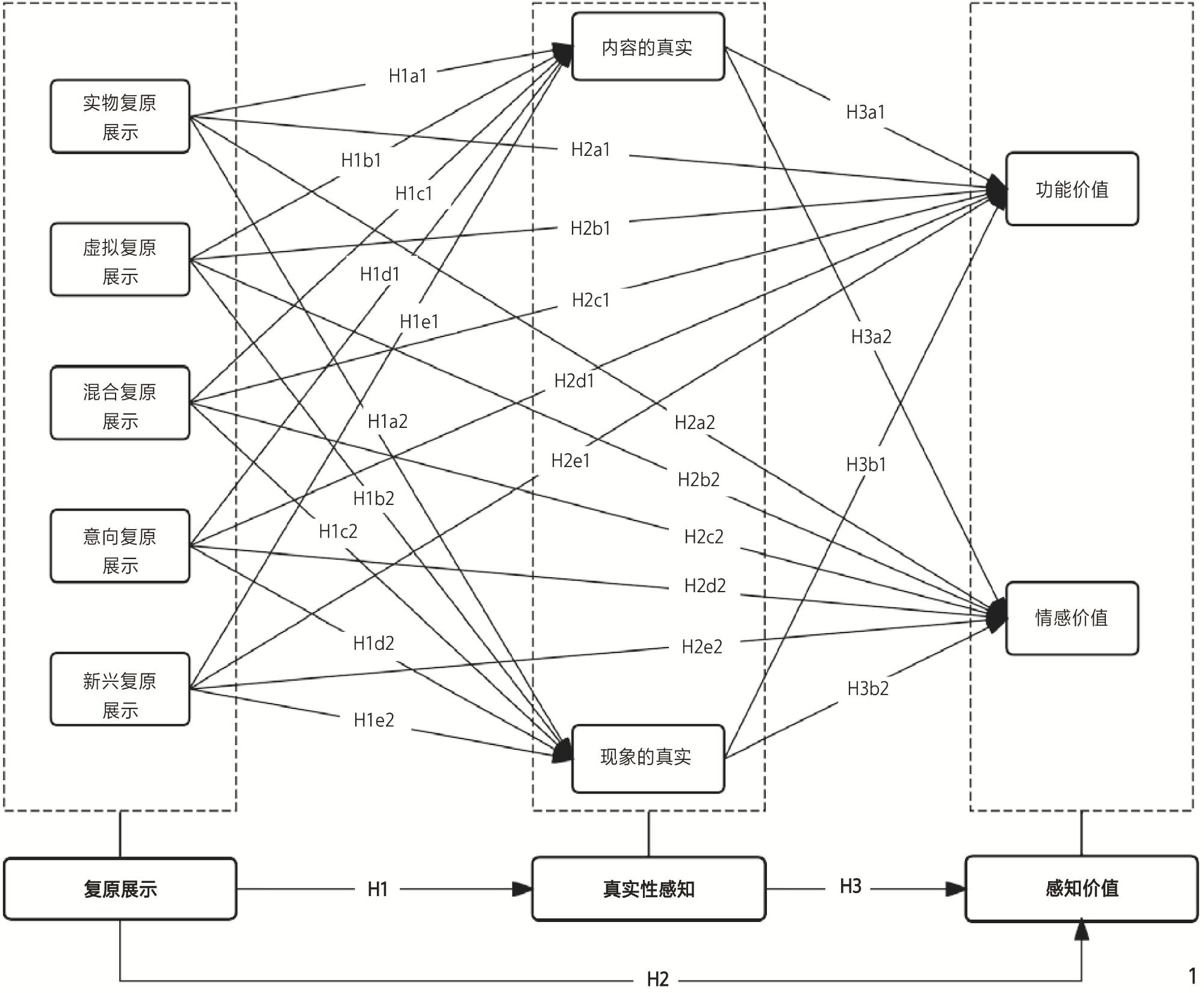
从公众真实性感知的角度,以大明宫国家考古遗址公园为实证对象,综合运用相关性分析、结构方程模型、Bootstrap中介效应检验等方法,构建“复原展示—真实性感知—感知价值”理论模型。
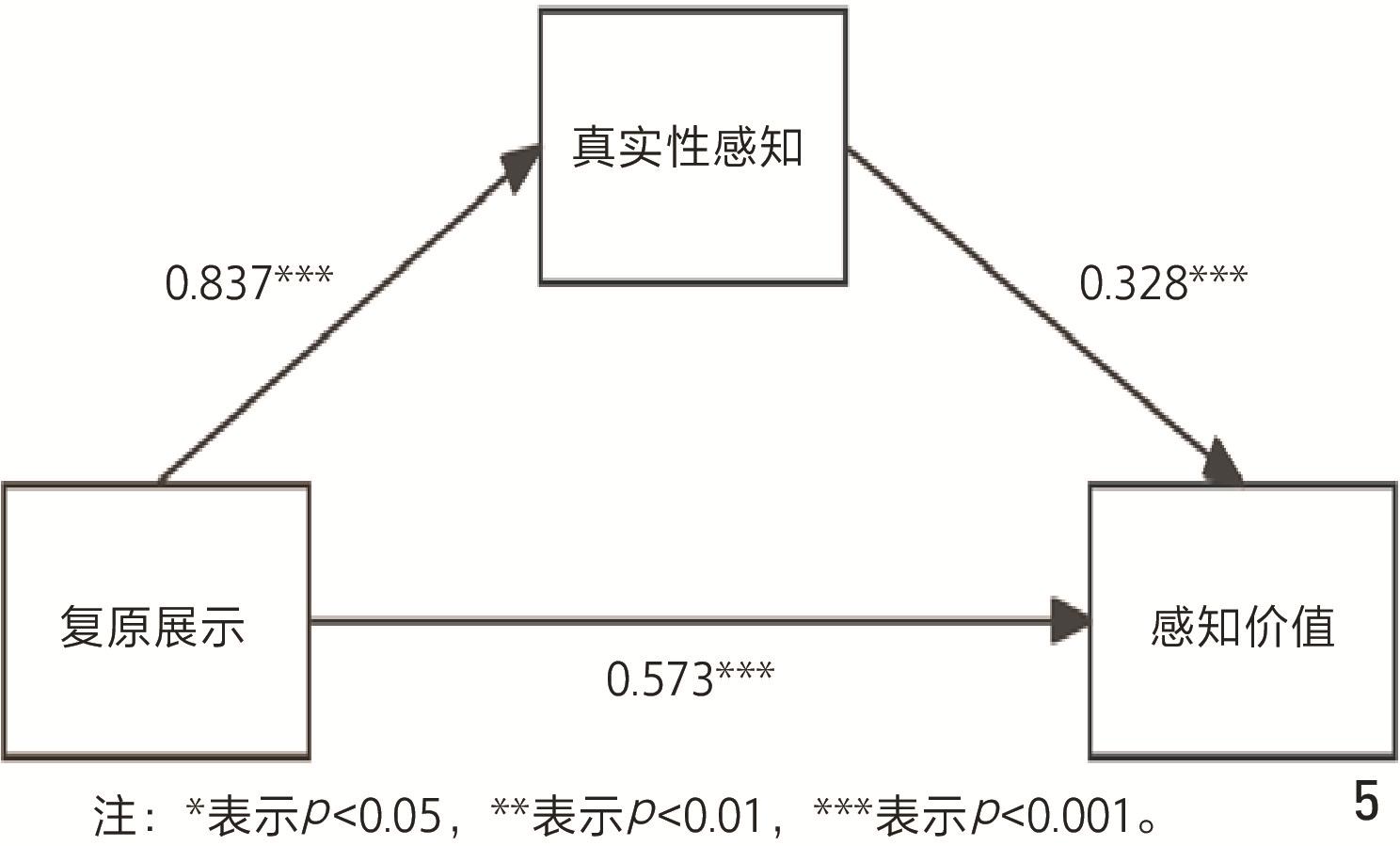
1)复原展示均显著提升真实性感知(β=0.837,p<0.001)。2)复原展示对公众感知价值的影响表现出异质性,实物复原展示(β=0.195,p<0.01;β=0.193,p<0.01)与新兴复原展示(β=0.181,p<0.05;β=0.198,p<0.01)对功能价值与情感价值提升显著;虚拟复原展示仅对情感价值影响显著(β=0.185,p<0.05);混合、意向复原展示对功能、情感价值影响均不显著。3)真实性感知显著影响感知价值(β=0.328,p<0.05),并在复原展示与感知价值间起部分中介作用;分路径分析表明,虚拟、混合及意向展示主要通过该中介路径影响感知价值,其直接作用不显著。
揭示了复原展示通过真实性感知的中介作用,对公众功能价值认知与情感价值体验产生的差异化影响路径。研究成果有助于优化复原展示方式与公众感知需求的匹配度,为遗址公园的复原展示项目提供合理化建议。
张科 , 孔黎明 . 遗址复原展示真实性感知对公众感知价值的影响路径[J]. 风景园林, 2026 , 33(4) : 132 -141 . DOI: 10.3724/j.fjyl.LA20250439
In Chinese archaeological site parks, restoration displays are an important means of conveying the historical value of sites to the public. However, how different types of restoration display approaches influence visitors’ perceptions of the functional and emotional value of a site, as well as the underlying psychological mechanisms through which these effects occur, remains unclear. In particular, the role of perceived authenticity—a core concept in heritage conservation—has not yet been fully clarified in the context of site display. This study therefore uses the Daming Palace National Archaeological Site Park as a representative case to construct and empirically test an integrated influence path model that systematically examines how multiple restoration display strategies affect public perceived value through perceived authenticity.
Based on the Stimulus−Organism−Response (SOR) theoretical framework, this study treats restoration displays as external stimuli, defines visitors’ perceived authenticity as the internal psychological response, and considers perceived value as the outcome variable. Drawing on literature related to heritage interpretation and authenticity theory, restoration display approaches are categorized into five types: physical, virtual, hybrid, intentional, and emerging restoration displays. Perceived authenticity is measured from two dimensions—content authenticity and experiential authenticity—while perceived value includes both functional value and emotional value. Data were collected through a questionnaire survey of visitors at the Daming Palace National Archaeological Site Park. A structural equation model was used to test the theoretical model, and the bootstrap method was applied to examine the mediating effect of perceived authenticity.
The results show that all types of restoration displays significantly enhance visitors’ perceived authenticity at the site. Among them, emerging restoration displays exert the strongest effect on content authenticity, whereas intentional displays show the strongest effect on experiential authenticity, indicating that symbolic and abstract display forms are more likely to stimulate visitors’ perception of historical atmosphere. In terms of perceived value, both physical and emerging restoration displays have significant positive effects on functional and emotional value; virtual restoration displays significantly influence emotional value but have a relatively weak effect on functional value; hybrid restoration displays and intentional displays show no significant direct effects on either dimension of perceived value. Further analysis indicates that perceived authenticity has significant positive effects on both functional value and emotional value, revealing its central mediating role in visitors’ value judgments. Moreover, perceived authenticity partially mediates the relationship between different display approaches and perceived value. Specifically, the influence of virtual, hybrid, and intentional restoration displays on perceived value operates mainly through the perceived authenticity pathway (as their direct effects are not significant), whereas physical and emerging restoration displays exert both direct effects and indirect effects mediated by perceived authenticity.
This study demonstrates that different types of restoration display strategies show heterogeneous effects in enhancing visitors’ perceived value, and that perceived authenticity serves as the key psychological mechanism linking display strategies with the public’s cognitive and emotional responses. Incorporating perceived authenticity into a multi-path analytical model not only enriches the theoretical perspective of heritage interpretation but also provides empirical evidence for differentiated restoration display design. From a practical perspective, virtual displays should be optimized by enriching display content and improving operational usability; hybrid displays should enhance technical integration and narrative coherence; and intentional displays should balance abstract creativity with information readability. Overall, strengthening perceived authenticity can help improve visitors’ learning outcomes, emotional experiences, and cultural identity. The findings provide practical guidance for managers of archaeological site parks seeking to balance heritage conservation, cultural interpretation, and visitor experience in the context of digitalization.
表1 国家考古遗址公园复原展示方式类型细分Tab. 1 Subdivision of restoration display methods for national archaeological site parks |
| 遗址复原展示一级分类 | 遗址复原展示二级分类 |
|---|---|
| 实物复原展示 | 局部模拟复原展示 |
| 整体模拟复原展示 | |
| 虚拟复原展示 | 增强现实(augmented reality, AR)复原展示 |
| 全息投影复原展示 | |
| 交互式数字复原展示 | |
| 数字化三维模型复原展示 | |
| 混合复原展示 | 遗址展示厅+基址复原 |
| 原状展示+复原展示装置 | |
| 意向复原展示 | 场景意向复原展示 |
| 构筑物意向复原展示 | |
| 标识意向复原展示 | |
| 新兴复原展示 | 钢网雕塑复原展示 |
| 3D打印复原展示 |
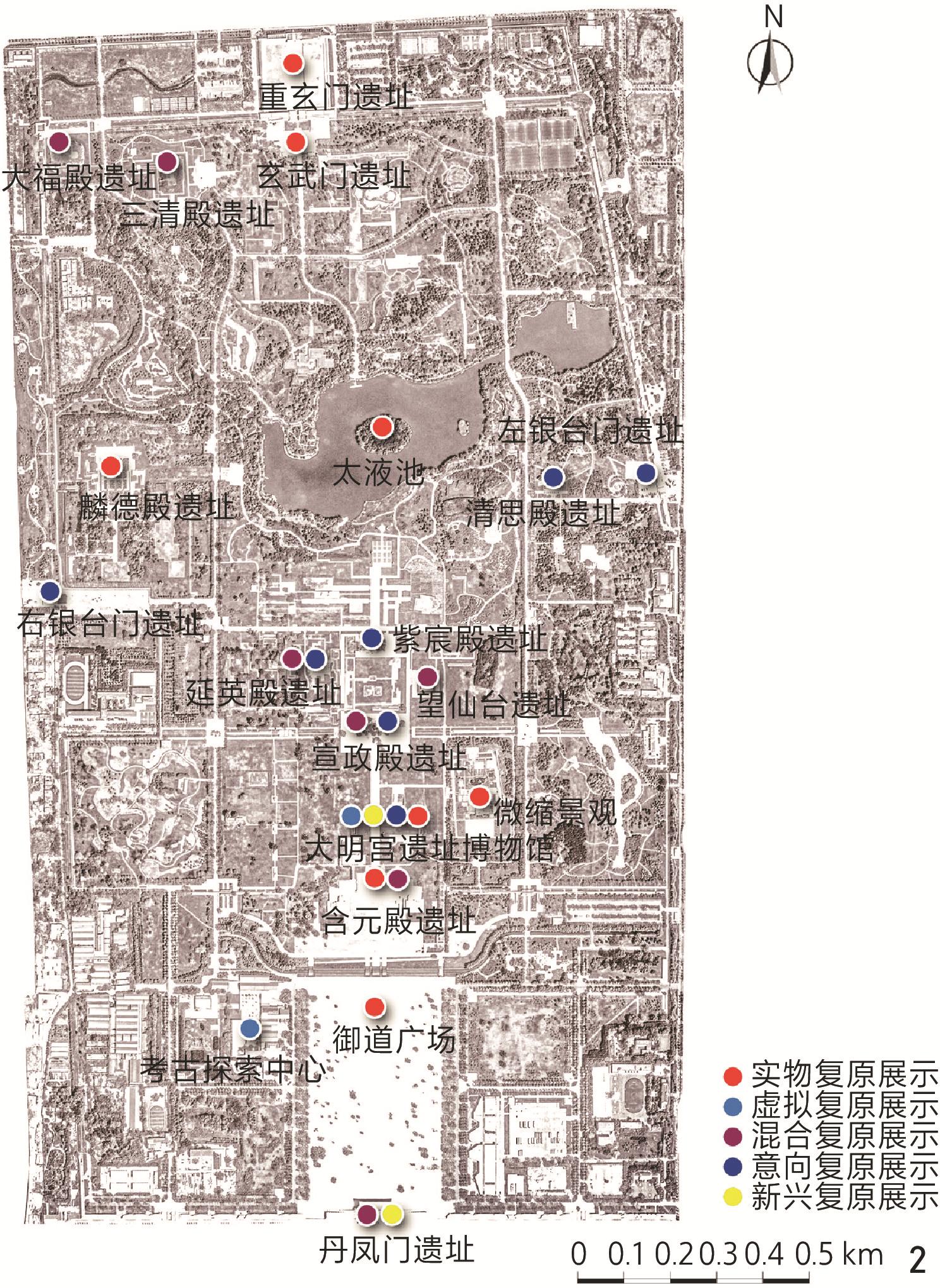
图2 大明宫复原展示方式分布Fig. 2 Distribution map of the restoration and exhibition methods of Daming Palace |
表2 遗址复原展示方式及实例Tab. 2 Restoration display methods and examples |
| 复原展示方式 | 遗址 | 代表案例 |
|---|---|---|
| 实物复原展示 | 御道广场、含元殿遗址、遗址博物馆内部、微缩景观群、太液池、麟德殿遗址、玄武门遗址、重玄门遗址等 | 大明宫微缩景观模型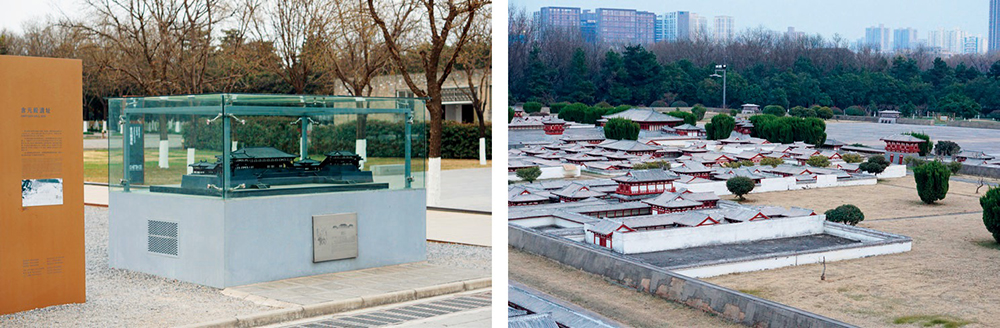 |
| 虚拟复原展示 | 云赏含元殿、含元殿结构分解、交互展示、大明宫全息影像等 | 虚拟交互设施与全息投影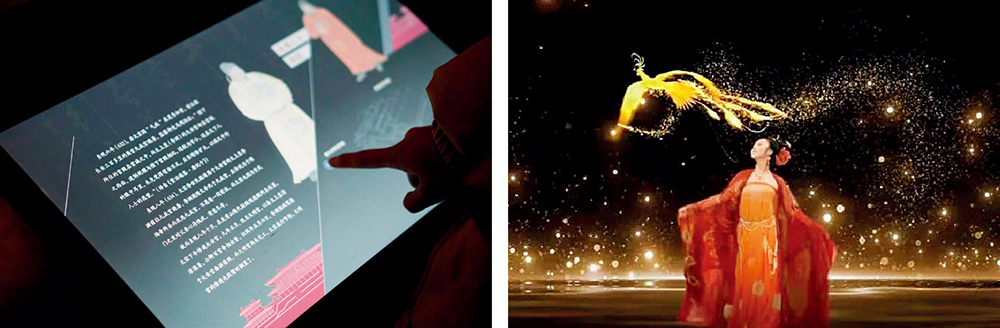 |
| 混合复原展示 | 复原装置:宣政殿、望仙台、大福殿、三清殿、延英殿、含元殿等;遗址展示厅:丹凤门 | 望仙台复原装置及丹凤门基址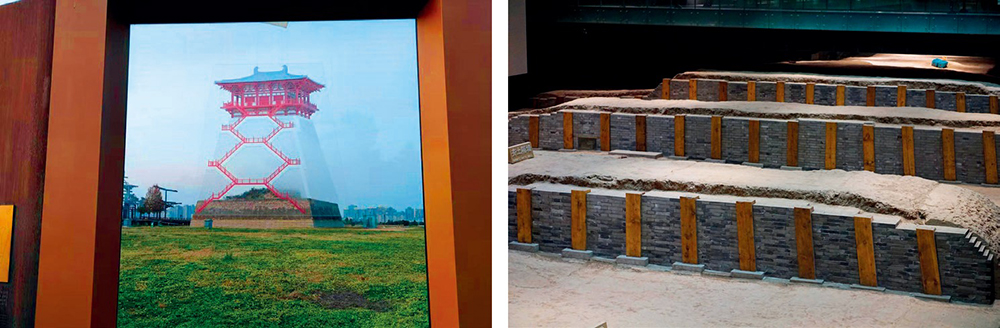 |
| 意向复原展示 | 紫宸殿、宣政殿、右银台门、左银台门、延英殿、含元殿建造场景微缩复原等 | 大明宫建造场景及紫宸殿构筑物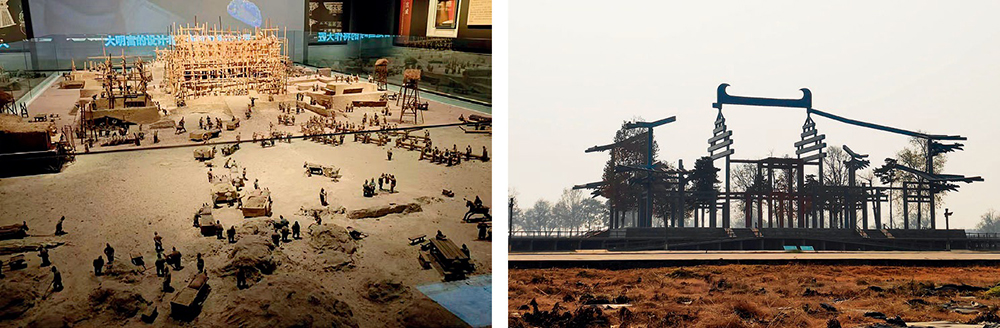 |
| 新兴复原展示 | 丹凤门展示厅内部、遗址博物馆内部等 | 丹凤门3D打印模型及含元殿结构拆解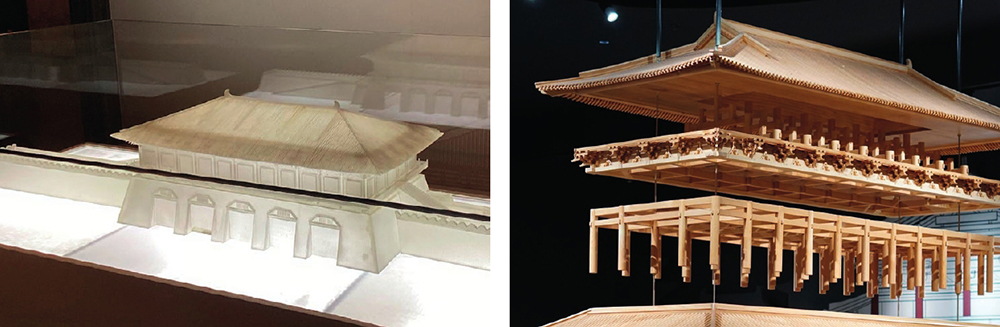 |
| 变量 | 测量题项 | 题项来源 |
|---|---|---|
| 实物复原展示 | A1展示内容全面、丰富 | [21][22] |
| A2展示增强了公众沉浸感 | 自拟 | |
| A3展示对本体干预最小 | [22] | |
| 虚拟复原展示 | B1展示让人回到过去、心情舒畅 | [23] |
| B2展示具有互动性,增强了公众参与感 | [21] | |
| B3操作便捷、使用方便 | 自拟 | |
| 混合复原展示 | C1展示具有艺术性和感染力 | 自拟 |
| C2不同展示方式互补,共同传递遗址信息 | 自拟 | |
| C3遗址展示具有多元性 | [24] | |
| C4展示具有吸引力,有视觉体验 | [23] | |
| 意向复原展示 | D1展示技术具有艺术性 | [22] |
| D2标识系统内容准确、与遗址风貌协调 | [21][22] | |
| D3展示具有可移动性与适用性 | 自拟 | |
| 新兴复原展示 | F1展示具有可读性 | [21][23][25] |
| F2展示具有创新性和技术性 | 自拟 |
表6 测量题项效度检验Tab. 6 Validity test of measurement items |
| 测量维度 | 测量题项 | 因子载荷 | 克隆巴赫系数 | CR | AVE |
|---|---|---|---|---|---|
| 实物 | A1 | 0.817 | 0.847 | 0.847 | 0.649 |
| A2 | 0.811 | ||||
| A3 | 0.819 | ||||
| 虚拟 | B1 | 0.797 | 0.861 | 0.861 | 0.674 |
| B2 | 0.789 | ||||
| B3 | 0.802 | ||||
| 混合 | C1 | 0.777 | 0.880 | 0.881 | 0.649 |
| C2 | 0.797 | ||||
| C3 | 0.850 | ||||
| C4 | 0.808 | ||||
| 意向 | D1 | 0.831 | 0.853 | 0.852 | 0.659 |
| D2 | 0.785 | ||||
| D3 | 0.802 | ||||
| 新兴 | F1 | 0.852 | 0.819 | 0.823 | 0.701 |
| F2 | 0.801 | ||||
| 内容的真实 | G1 | 0.722 | 0.889 | 0.889 | 0.617 |
| G2 | 0.741 | ||||
| G3 | 0.730 | ||||
| G4 | 0.768 | ||||
| G5 | 0.757 | ||||
| 现象的真实 | I1 | 0.804 | 0.885 | 0.886 | 0.661 |
| I2 | 0.780 | ||||
| I3 | 0.786 | ||||
| I4 | 0.788 | ||||
| 功能价值 | J1 | 0.784 | 0.853 | 0.855 | 0.665 |
| J2 | 0.736 | ||||
| J3 | 0.832 | ||||
| 情感价值 | K1 | 0.790 | 0.843 | 0.844 | 0.644 |
| K2 | 0.727 | ||||
| K3 | 0.750 |
表7 验证性因子分析拟合指标与推荐阈值对比Tab. 7 Confirmatory factor analysis (CFA) fit indices vs. recommended thresholds |
| 指标 | 参考标准 | 实测结果 | 是否适配 |
|---|---|---|---|
| CMIN/DF | <3为优秀,3~5为良好 | 1.144 | 是 |
| RMSEA | <0.05为优秀,<0.08为良好 | 0.022 | 是 |
| CFI | >0.9为优秀,>0.8为良好 | 0.989 | 是 |
| GFI | >0.9为优秀,>0.8为良好 | 0.914 | 是 |
| IFI | >0.9为优秀,>0.8为良好 | 0.989 | 是 |
| TLI | >0.9为优秀,>0.8为良好 | 0.987 | 是 |
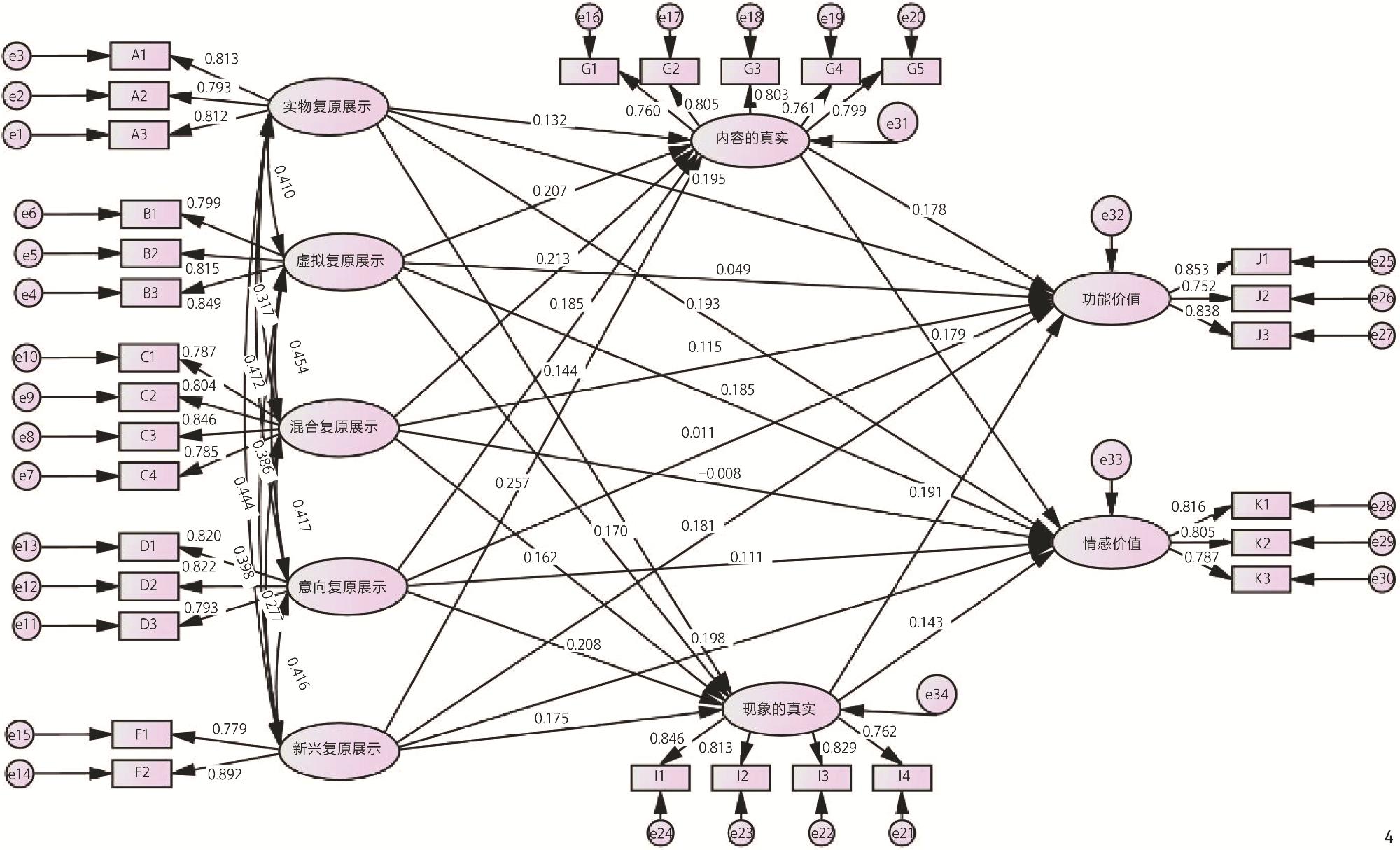
表8 复原展示对真实性的SEM路径关系检验结果Tab. 8 Path analysis results of the SEM for the effect of restoration on authenticity |
| 假设 | 路径关系 | B | 标准误 | p | 检验结果 | |
|---|---|---|---|---|---|---|
| 注:β为标准化回归系数,用于比较潜变量间的影响强度;B为非标准化回归系数,反映自变量对因变量的原始影响效应;p为显著性水平,采用双尾检验。 | ||||||
| H1a1 | G←A | 0.132 | 0.134 | 0.063 | 0.035 | 成立 |
| H1b1 | G←B | 0.207 | 0.185 | 0.062 | 0.003 | 成立 |
| H1c1 | G←C | 0.213 | 0.187 | 0.054 | 0.000 | 成立 |
| H1d1 | G←D | 0.185 | 0.181 | 0.066 | 0.006 | 成立 |
| H1e1 | I←F | 0.257 | 0.254 | 0.065 | 0.000 | 成立 |
| H1a2 | I←A | 0.144 | 0.148 | 0.070 | 0.035 | 成立 |
| H1b2 | I←B | 0.170 | 0.154 | 0.068 | 0.024 | 成立 |
| H1c2 | I←C | 0.162 | 0.143 | 0.059 | 0.016 | 成立 |
| H1d2 | I←D | 0.208 | 0.206 | 0.073 | 0.005 | 成立 |
| H1e2 | I←F | 0.175 | 0.175 | 0.070 | 0.014 | 成立 |
表9 复原展示对公众感知的SEM路径关系检验结果Tab. 9 SEM path relationship test results of restoration display on public perceived value |
| 假设 | 路径关系 | B | 标准误 | p | 检验结果 | |
|---|---|---|---|---|---|---|
| 注:β为标准化回归系数,用于比较潜变量间的影响强度;B为非标准化回归系数,反映自变量对因变量的原始影响效应;p为显著性水平,采用双尾检验。 | ||||||
| H2a1 | J←A | 0.195 | 0.213 | 0.075 | 0.005 | 成立 |
| H2a2 | K←A | 0.193 | 0.195 | 0.066 | 0.003 | 成立 |
| H2b1 | J←B | 0.049 | 0.047 | 0.074 | 0.523 | 不成立 |
| H2b2 | K←B | 0.185 | 0.164 | 0.065 | 0.012 | 成立 |
| H2c1 | J←C | 0.115 | 0.109 | 0.065 | 0.094 | 不成立 |
| H2c2 | K←C | −0.008 | −0.007 | 0.057 | 0.907 | 不成立 |
| H2d1 | J←D | 0.011 | 0.012 | 0.078 | 0.878 | 不成立 |
| H2d2 | K←D | 0.111 | 0.108 | 0.069 | 0.115 | 不成立 |
| H2e1 | J←F | 0.181 | 0.193 | 0.079 | 0.016 | 成立 |
| H2e2 | K←F | 0.198 | 0.194 | 0.070 | 0.006 | 成立 |
表10 真实性对公众感知的SEM路径关系检验结果Tab. 10 SEM path relationship test results of authenticity perception on perceived value |
| 假设 | 路径关系 | B | 标准误 | p | 检验结果 | |
|---|---|---|---|---|---|---|
| 注:β为标准化回归系数,用于比较潜变量间的影响强度;B为非标准化回归系数,反映自变量对因变量的原始影响效应;p为显著性水平,采用双尾检验。 | ||||||
| H3a1 | J←G | 0.178 | 0.193 | 0.091 | 0.035 | 成立 |
| H3a2 | K←G | 0.179 | 0.204 | 0.077 | 0.026 | 成立 |
| H3b1 | J←I | 0.191 | 0.177 | 0.080 | 0.009 | 成立 |
| H3b2 | K←I | 0.143 | 0.140 | 0.067 | 0.037 | 成立 |
表11 Bootstarp中介效应检验结果Tab. 11 Bootstrap mediation effect test results |
| 效应关系 | 效应值 | Bootstrap95%置信区间 | 效应 占比/% | ||
|---|---|---|---|---|---|
| 下限 | 上限 | ||||
| 总效应 | 0.848 | 0.750 | 0.946 | 100 | |
| 真实性 感知 | 直接效应 | 0.573 | 0.443 | 0.704 | 68 |
| 间接效应 | 0.275 | 0.156 | 0.395 | 32 | |
| 内容的 真实 | 直接效应 | 0.664 | 0.539 | 0.789 | 78 |
| 间接效应 | 0.184 | 0.071 | 0.306 | 22 | |
| 现象的 真实 | 直接效应 | 0.706 | 0.592 | 0.821 | 83 |
| 间接效应 | 0.142 | 0.063 | 0.224 | 17 | |
表12 访谈主题归纳与代表性引文Tab. 12 Summary of interview themes and representative quotations |
| 复原展示类型 | 核心主题 | 主题内涵 | 代表性原始语句引述 |
|---|---|---|---|
| 注:受访者编码规则——首字母代表复原展示类型(V为虚拟复原展示,M为混合复原展示,A为意向复原展示),数字为受访者顺序编号。 | |||
| 虚拟复原展示 | 技术操作复杂 | 界面存在使用门槛和流畅性问题,阻碍了游客的初步体验 | V05:我操作有点手忙脚乱,不太熟悉这种东西,有时点错 |
| 内容深度不足 | 展示偏重视觉冲击,缺乏足够的历史细节,知识传递功能弱 | V03:我记住的是规模宏大,细节基本没记住,主要是靠旁边的解说牌补充信息 | |
| 混合复原展示 | 装置设计缺陷 | 透明对位牌等装置存在反光、难以对准等问题 | M01:天气不好有点反光,还看不清; M02:必须站在一个特定角度,才能勉强对齐 |
| 信息呈现不足 | 透明对位牌缺乏明确的位置引导以及信息标注 | M05:只能看懂这个宫殿的外观,上面也没有注释 | |
| 内外关联弱 | 外观复原+内部基址模式造成了内外体验的割裂,游客无法将宏伟的外部形象与内部的遗址现状进行有效关联 | M06:站外面看能知道是以前城门的样子,进里面就看不出来了,感觉内部和外部关系不大 | |
| 意向复原展示 | 信息表达不足 | 展示方式过于抽象,难以激发有效想象,信息量有限且依赖解说牌 | A02:想象不出来,强行脑补,很难想象出以前是宫殿 |
| 体验效果欠佳 | 整体沉浸感弱,互动性不足,观众体验感差 | A03:没啥意思,跟工地盖房子没盖完一样 | |
1、突破传统研究对复原展示整体性讨论的局限,将展示方式细分为实物、虚拟、混合、意向及新兴5个维度,分别检验对公众感知价值的影响程度。
2、基于SOR理论框架,构建“复原展示—真实性感知—感知价值”结构方程模型,探讨复原展示通过真实性感知影响公众的感知价值的作用机制,为量化分析提供系统化模型支撑。
3、以大明宫国家考古遗址公园为实证案例,揭示不同复原展示对感知价值存在差异化影响路径,真实性感知在其中发挥关键中介作用,为优化遗址展示策略和提升公众文化认同提供科学依据。
| [1] |
俞静. 基于真实性与完整性概念解析的遗产保护评析方法: 两个案例的探讨[J]. 上海城市规划, 2022(5):138-145.
YU J. Heritage Protection Evaluation Method Based on the Concept Analysis of Authenticity and Integrity: Discussion on a Pair of Cases[J]. Shanghai Urban Planning Review, 2022(5):138-145.
|
| [2] |
冯健. 文化遗产真实性展示的技术路径: 以西安大遗址为例[J]. 长安大学学报(社会科学版), 2017, 19(4): 17-24.
FENG J. Technical Path of Authentic Display of Cultural Heritage: A Case Study of Xi’an Great Ruins[J]. Journal of Chang’an University (Social Science Edition), 2017, 19(4): 17-24.
|
| [3] |
马庆凯, 王思敏. 过去感理论视角下的文化遗产保护利用: 以德寿宫遗址博物馆为例[J]. 文博学刊, 2024(4):128-135.
MA Q K, WANG S M. Conservation and Utilization of Cultural Heritage from the Theoretical Perspective of Pastness: A Case Study of the Deshou Palace Ruins Museum[J]. Journal of Archaeology and Museology, 2024(4):128-135.
|
| [4] |
孔利宁, 李琳, 陈中慧. 试析考古遗址展示中的沉浸体验: 概念、路径与要义[J]. 博物院, 2024(2):68-75.
KONG L N, LI L, CHEN Z H. Immersive Experiences in the Presentation of Archaeological Sites: Concept, Approaches and Core Principles[J]. Museum, 2024(2):68-75.
|
| [5] |
田军.遗址博物馆展陈的真实性与虚构性问题探讨[C]//桂林博物馆.桂林博物馆文集.桂林: 广西师范大学出版社, 2023: 259-266.
TIAN J. A Discussion on the Authenticity and Fictionality in Exhibition Design of Site Museums[C]//Guilin Museum. Proceedings of Guilin Museum. Guilin: Guangxi Normal University Press, 2023: 259-266.
|
| [6] |
关伟锋. 城址类考古遗址中建筑遗址互动体验展示设计研究[J]. 装饰, 2023(7):142-144.
GUAN W F. Study on the Design of Interactive Experience Presentation of Architectural Sites in Urban Heritage Sites[J]. ZHUANGSHI, 2023(7):142-144.
|
| [7] |
席岳婷. 阐释与展示: 国家考古遗址公园公众感知度提升策略的思考[J]. 中国文化遗产, 2022(4):42-51.
XI Y T. Interpretation and Presentation: Reflection on the Strategies for Enhancing Public Perception in National Archaeological Parks[J]. China Cultural Heritage, 2022(4):42-51.
|
| [8] |
何金璐, 艾少伟. 大明宫国家考古遗址公园旅游体验对游客文化认同影响研究[J]. 地域研究与开发, 2021, 40(3): 99-103.
HE J L, AI S W. Study on Impact of Daming Palace National Heritage Park Tourist Experience on Tourists’ Cultural Identity[J]. Areal Research and Development, 2021, 40(3): 99-103.
|
| [9] |
石张宇, 齐文权. 仿古镇型旅游景区游客真实性感知、满意度与重游意愿研究: 以浙江湖州太湖古镇为例[J]. 旅游研究, 2024, 16(1): 45-55.
SHI Z Y, QI W Q. Research on Tourists’ Real Perception, Satisfaction, and Willingness to Revisit in Imitation Ancient Town Tourist Attraction[J]. Tourism Research, 2024, 16(1): 45-55.
|
| [10] |
黄颖华, 黄福才. 旅游者感知价值模型、测度与实证研究[J]. 旅游学刊, 2007, 22(8): 42-47.
HUANG Y H, HUANG F C. Tourists’ Perceived Value Model and Its Measurement: An Empirical Study[J]. Tourism Tribune, 2007, 22(8): 42-47.
|
| [11] |
马瑞.文化遗产地旅游者真实性感知对满意度的影响研究[D].重庆: 西南大学, 2022.
MA R. Research on the Influence of Tourists’ Authenticity Perception on Satisfaction at Cultural Heritage Sites[D]. Chongqing: Southwest University, 2022.
|
| [12] |
TILDEN F. Interpreting Our Heritage[M]. Chapel Hill: University of North Carolina Press, 1977.
|
| [13] |
国际古迹保护与修复宪章(威尼斯宪章)[S].威尼斯: 第二届历史古迹建筑师及技师国际会议, 1964.
International Charter for the Conservation and Restoration of Monuments and Sites (Venice Charter)[S]. Venice: 2nd International Congress of Architects and Technicians of Historic Monuments, 1964.
|
| [14] |
联合国教科文组织.会安草案: 亚洲最佳保护范例[R].会安: 联合国教科文组织, 2005.
UNESCO. Hoi An Protocols for Best Conservation Practice in Asia[R]. Hoi An: UNESCO, 2005.
|
| [15] |
史靖塬, 史耀华. 国际“真实性”概念、内涵演进过程及其对我国建筑遗产保护的启示[J]. 建筑师, 2017(4):115-118.
SHI J Y, SHI Y H. The Concept, Connotation, and Evolution Process of International “Authenticity” and Its Enlightenment to the Protection for Architectural Heritage in China[J]. The Architect, 2017(4):115-118.
|
| [16] |
吴承照, 王婧. 游客真实性感知与文化遗产资源持续利用策略研究[J]. 城市规划学刊, 2012(4):98-104.
WU C Z, WANG J. Modeling Tourists Perceived Authenticity and the Sustainable Use of Cultural Heritage[J]. Urban Planning Forum, 2012(4):98-104.
|
| [17] |
KNUDSEN B T, WAADE A M. Re-in-Vesting Authenticity Tourism, Place and Emotions[M]. Bristol: Short Run Press, 2010.
|
| [18] |
朱金华. 设计复原与意象重构: 江苏大运河沿线城市园林文化遗产保护利用策略[J]. 美术文献, 2024(3):102-104.
ZHU J H. Design Restoration and Image Reconstruction: Protection and Utilization Strategies of Garden Cultural Heritage Along the Jiangsu section of the Grand Canal[J]. Fine Arts Literature, 2024(3):102-104.
|
| [19] |
詹盈.论3D打印技术在文化遗产领域的应用及影响[D].杭州: 浙江大学, 2023.
ZHAN Y. An Analysis of the Application and Influence of 3D Printing Technology in the Field of Culture Heritage[D]. Hangzhou: Zhejiang University, 2023.
|
| [20] |
姚浪, 丁华. 基于文化自信的城市遗址公园保护和旅游发展研究: 以西安大明宫遗址公园为例[J]. 城市建筑, 2021, 18(3): 38-40.
YAO L, DING H. Research on the Protection and Tourism Development of Urban Heritage Parks Based on Cultural Confidence: A Case of Xi’an Daming Palace Ruins Park[J]. Urbanism and Architecture, 2021, 18(3): 38-40.
|
| [21] |
易雨婕.汉长安城未央宫国家考古遗址公园规划实施效果评估[D].西安: 西安建筑科技大学, 2022.
YI Y J. Plan Implementation Evaluation of the National Archaeological Park of Weiyang Palace in Han Chang’an[D]. Xi’an: Xi’an University of Architecture and Technology, 2022.
|
| [22] |
肖翌馨.汉阳陵国家考古遗址公园保护与展示实效评估[D].西安: 西安建筑科技大学, 2023.
XIAO Y X. Effectiveness Evaluation of the Conservation and Display of Hanyangling National Archaeological Site Park[D]. Xi’an: Xi’an University of Architecture and Technology, 2023.
|
| [23] |
陈凤娇.基于扎根理论的大明宫国家考古遗址公园使用后评价研究[D].西安: 西安建筑科技大学, 2023.
CHEN F J. Research on Post-occupancy Evaluation of Daming Palace National Archaeological Site Park Based on Grounded Theory[D]. Xi’an: Xi’an University of Architecture and Technology, 2023.
|
| [24] |
杨柳青, 周柳齐, 张毅, 等. 基于层次分析法的遗址景观展示评估及优化策略: 以三星堆遗址公园为例[J]. 城市建筑空间, 2024, 31(S1): 1-3.
YANG L Q, ZHOU L Q, ZHANG Y, et al. Site Landscape Display Evaluation and Optimization Strategy Based on AHP: Case Study of Sanxingdui Site Park[J]. City & House, 2024, 31(S1): 1-3.
|
| [25] |
阮嘉星.国家考古遗址公园使用后评价(POE)研究[D].绵阳: 西南科技大学, 2023.
RUAN J X. National Archaeological Park Post-occupancy Evaluation (POE) Research[D]. Mianyang: Southwest University of Science and Technology, 2023.
|
| [26] |
NGUYEN T H H, CHEUNG C. Chinese Heritage Tourists to Heritage Sites: What Are the Effects of Heritage Motivation and Perceived Authenticity on Satisfaction[J]. Asia Pacific Journal of Tourism Research, 2016, 21(11): 1155-1168.
|
| [27] |
LU L, CHI C G, LIU Y. Authenticity, Involvement, and Image: Evaluating Tourist Experiences at Historic Districts[J]. Tourism Management, 2015, 50, 85-96.
|
| [28] |
杭诗婵.心理学视角下建筑遗产再生的“真实性”认知研究[D].济南: 山东建筑大学, 2021.
HANG S C. Research on Authenticity Cognition of Architectural Heritage Reuse-in the Perspective of Psychology[D]. Jinan: Shandong Jianzhu University, 2021.
|
| [29] |
LIN Y C, LIU Y C. Deconstructing the Internal Structure of Perceived Authenticity for Heritage Tourism[J]. Journal of Sustainable Tourism, 2018, 26(12): 2134-2152.
|
| [30] |
戴永明.基于游客感知的古村落真实性研究: 以西递和宏村为例[D].杭州: 浙江大学, 2012.
DAI Y M. The Tourists’ Perception of the Ancient Village’s Authenticity: The Case of Xidi & Hongcun[D]. Hangzhou: Zhejiang University, 2013.
|
| [31] |
PETRICK J F. Development of a Multi-dimensional Scale for Measuring the Perceived Value of a Service[J]. Journal of Leisure Research, 2002, 34(2): 119-134.
|
| [32] |
BENTLER P M, CHOU C P. Practical Issues in Structural Modeling[J]. Sociological Methods & Research, 1987, 16(1): 78-117.
|
| [33] |
KLINE R B. Principles and Practice of Structural Equation Modeling[M]. 5th ed. New York: Guilford Press, 2023.
|
| [34] |
吴明隆.结构方程模型: AMOS的操作与应用[M].2版.重庆: 重庆大学出版社, 2009.
WU M L. Structural Equation Modeling: Operation and Application of AMOS[M]. 2nd ed. Chongqing: Chongqing University Press, 2009.
|
| [35] |
FORNELL C, LARCKER D F. Evaluating Structural Equation Models with Unobservable Variables and Measurement Error[J]. Journal of Marketing Research, 1981, 18(1): 39.
|
| [36] |
李渝方.数据分析之道: 用数据思维指导业务实战[M].北京: 电子工业出版社, 2022.
LI Y F. Tao of Data Analysis[M]. Beijing: Publishing House of Electronics Industry, 2022.
|
| [37] |
武松.SPSS实战与统计思维[M].北京: 清华大学出版社, 2019.
WU S. SPSS and Statistical Thinking[M]. Beijing: Tsinghua University Press, 2019.
|
| [38] |
马燕, 兰晓红, 杨琴.基于SEM的教育实证研究: 模型与案例[M].重庆: 重庆大学出版社, 2022.
MA Y, LAN X H, YANG Q. SEM-Based Empirical Research in Education: Models and Cases[M]. Chongqing: Chongqing University Press, 2022.
|
| [39] |
陈瑞, 郑毓煌, 刘文静. 中介效应分析: 原理、程序、Bootstrap方法及其应用[J]. 营销科学学报, 2013, 9(4): 120-135.
CHEN R, ZHENG Y H, LIU W J. Mediation Effect Analysis: Principles, Procedures, Bootstrap Methods and Applications[J]. Journal of Marketing Science, 2013, 9(4): 120-135.
|
| [40] |
杨紫瑄.基于用户体验的良渚古城遗址公园展示体系研究[D].杭州: 浙江大学, 2023.
YANG Z X. Research on the Presentation System of Liangzhu City Archaeological Site Park-Based on User Experience Theory[D]. Hangzhou: Zhejiang University, 2023.
|
| [41] |
SU Y J, XU J J, SOTIRIADIS M, et al. Authenticity, Perceived Value and Loyalty in Marine Tourism Destinations: The Case of Zhoushan, Zhejiang Province, China[J]. Sustainability, 2021, 13(7): 3716.
|
/
| 〈 |
|
〉 |