

面向社区更新的差异化合作性治理影响机制与优化路径
|
蒋文/女/博士/重庆大学建筑城规学院副教授/山地城镇建设与新技术教育部重点实验室研究员/研究方向为城市更新、居住行为研究 |
|
陈薇/女/苗族/重庆大学建筑城规学院在读硕士研究生/研究方向为城市更新 |
|
陈俊燚/男/重庆大学建筑城规学院在读硕士研究生/研究方向为社区改造、城市更新 |
|
李和平/男/博士/重庆大学建筑城规学院教授/山地城镇建设与新技术教育部重点实验室研究员/研究方向为城乡规划理论与方法、历史遗产保护、城市设计 |
Copy editor: 刘颖
收稿日期: 2025-11-03
网络出版日期: 2026-03-12
基金资助
国家自然科学基金“基于行为异质性的山地老旧社区应急步行疏散空间适应性优化研究”(52578061)
中央高校基本科研业务费专项“基于居民行为的老旧住区改造机制及策略研究”(2024CDJZCQ-008)
国家社科基金冷门绝学研究专项“中国城镇历史文化街区谱系与价值研究”(23VJXT019)
北大林肯研究基金“合作性治理视角下老旧小区居民自治改造机制研究”(FS03-20221001-JW)
版权
Impact of Mechanisms and Optimization Strategies of Differential Collaborative Governance in Community Regeneration
|
JIANG Wen, Ph.D., is an associate professor in the School of Architecture and Urban Planning, Chongqing University, a researcher of Key Laboratory of New Technology for Construction of Cities in Mountain Area. Her research focuses on urban regeneration and residential behavior |
|
CHEN Wei (Miao) is a master student in the School of Architecture and Urban Planning, Chongqing University. Her research focuses on urban regeneration |
|
CHEN Junyi is a master student in the School of Architecture and Urban Planning, Chongqing University. His research focuses on community renovation, and urban regeneration |
|
LI Heping, Ph.D., is a professor in the School of Architecture and Urban Planning, Chongqing University, a researcher of Key Laboratory of New Technology for Construction of Cities in Mountain Area. His research focuses on urban and rural planning theory and methods, historic heritage conservation, and urban design |
Received date: 2025-11-03
Online published: 2026-03-12
Copyright
本研究通过构建多元更新主体协同的合作性治理分析框架,探索社区更新中合作性治理的影响机制,提出差异化治理模式下的社区更新优化路径,以应对存量规划背景下多元主体诉求冲突、权责配置失衡与空间治理效能不足等更新难题。
在构建差异化合作性治理指标体系基础上,设计涵盖主体互动、制度设计、治理绩效等核心维度的问卷并开展数据收集。以重庆市中心城区典型老旧社区作为实证案例,依据不同治理模式进行分层抽样,并采用多元线性回归模型系统分析不同治理主体主导模式下的协作绩效影响机制。
1)在政府引导模式中,政府通过政策保障及信息共享,增强居民对政府的信任以达成共识,从而提升协作治理绩效。2)市场协同模式通过强化空间改造的专业性与项目落地效率,促进居民、施工方及相关主体的多方协同,但仍在信息公开与程序公平上缺乏有效支撑机制。3)居民主导模式围绕居民深度参与及社区情感认同展开,通过充分激活在地资本提升治理效能,却面临社会资本向制度化协商机制有效转化的困境。
合作性治理在社区更新中呈现显著的模式分异特征,可差异化加强不同治理模式的协作关系,通过针对性空间干预,实现治理效能提升。
蒋文 , 陈薇 , 陈俊燚 , 李和平 . 面向社区更新的差异化合作性治理影响机制与优化路径[J]. 风景园林, 2026 , 33(2) : 50 -58 . DOI: 10.3724/j.fjyl.LA20250690
With China’s urbanization shifting from incremental expansion to stock optimization, urban regeneration has become a national strategic priority for high quality development. As the fundamental unit of everyday urban life, the regeneration of old communities is essential for improving grassroots governance capacity and residents’ well-being. However, community regeneration faces a series of problems, including fragmented property rights, heterogeneous stakeholder demands, imbalances in power-responsibility allocation, and uneven governance performance. The traditional government-led, top-down regeneration model has struggled to address increasingly complicated regeneration challenges. To solve this issue, collaborative governance theory was introduced to emphasize multi-actor coordination, consensus building, and institutional integration. While existing studies have examined public participation in collaborative governance, there is limited systematic analysis of how different modes of collaborative governance during the community regeneration influence the effects of collaborative governance. Accordingly, this study aims to construct an analytical framework for collaborative governance in community regeneration, identify heterogeneity across governance modes, reveal the mechanisms shaping collaborative effectiveness and propose mode-specific optimization pathways to support sustainable community development in China.
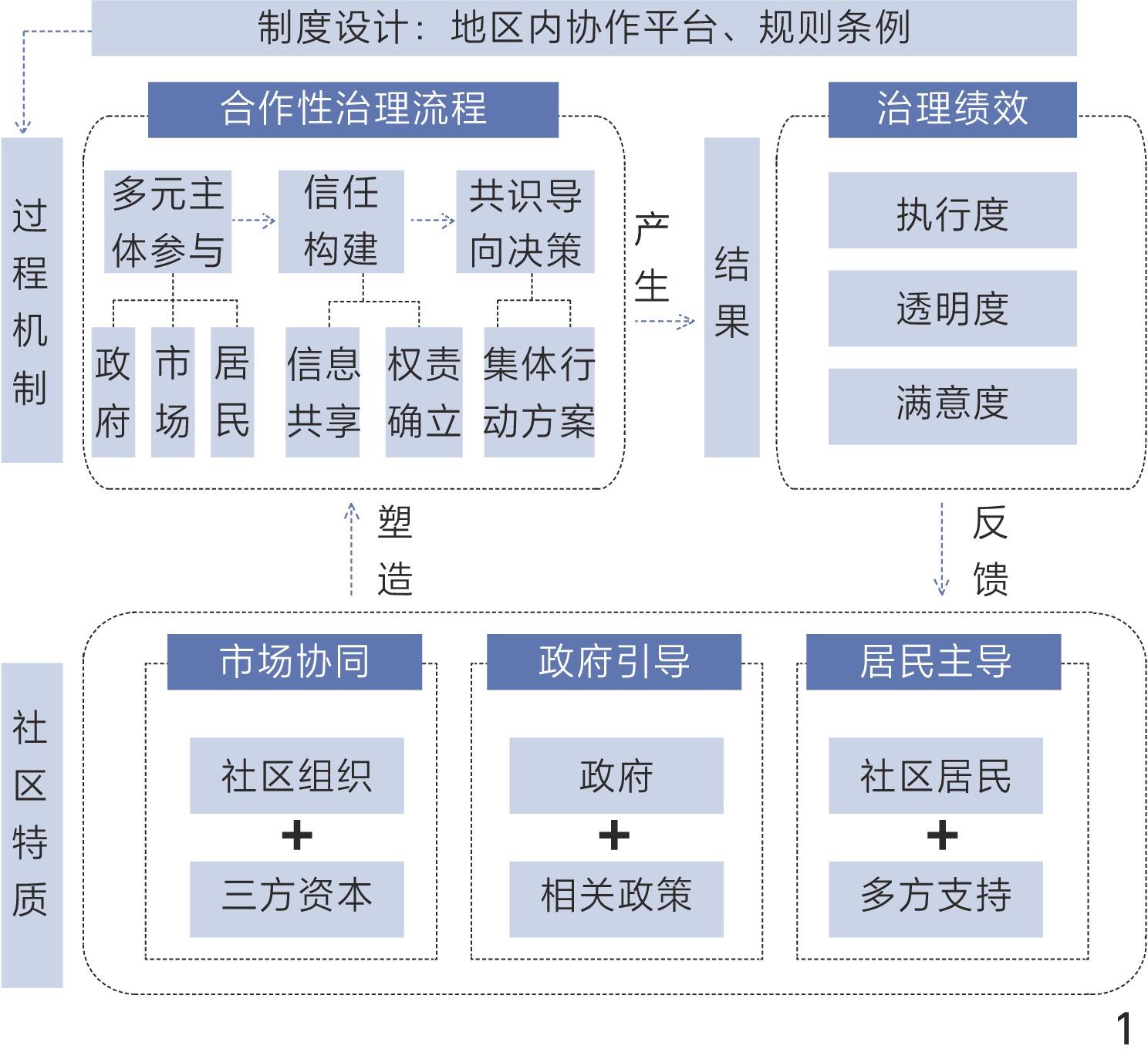
This study adopts a quantitative research approach. First, drawing on classical collaborative governance models and the institutional context of urban regeneration in China, a government –market –resident collaborative governance framework is constructed. Community regeneration practices are classified into three governance modes: a government-led mode, driven by administrative authority and public funding; a market-led mode, driven by capital and commercial operations; and a resident-led mode, driven by residents’ self-governance. Second, an evaluation indicator framework is developed across three modes: starting conditions (resource endowment), collaborative processes (information sharing, trust building, and consensus negotiation), and governance performance (execution effectiveness, transparency, and residential satisfaction). Data were collected through a structured questionnaire survey, conducted in Chongqing, a high-density city with extensive community regeneration. Using a stratified sampling method based on the three governance modes, seven representative old communities were selected. A total of 700 questionnaires were distributed, and after data cleaning, 664 valid responses were retained, yielding an effective response rate of 94.8%. Multiple linear regression models were employed to examine how explanatory variables influence governance performance under each governance mode.
The empirical results reveal heterogeneity in governance mechanisms across the three modes. In the government-led mode, trust government and information sharing emerge as significant positive predictors of governance performance. Transparent policy frameworks and clear information channels play a central role in shaping residents’ trust. When residents perceive strong value alignment and institutional credibility, their willingness to cooperate increases substantially, reflecting a top-down transmission mechanism in which policy transparency fosters trust and facilitates consensus building, ultimately enhancing execution effectiveness. In the market-led mode, reaching consensus with the contractor and participating in renovation management are identified as the core drivers of effectiveness of collaborative governance. Residents value tangible improvements in spatial quality and timely project delivery brought by market actors. However, variables related to information transparency and procedural fairness are found insignificant, indicating that the effective supporting regulations have not yet been established. While market participation enhances efficiency, insufficient institutional arrangements for equitable participation may undermine trust, particularly when profit motives outweigh public interests. The resident-led mode exhibits a strong positive relationship between effectiveness of collaborative governance and neighborhood consensus as well as community emotional attachment. Among all explanatory factors, consensus with neighbors shows the strongest influence, underlying the central role of social capital. The significant negative effect of creating community chat groups and the weak significance of having opinions accepted indicate obstacles in converting social capital into institutionalized negotiation. Without formal discussion platforms, informal channels such as WeChat groups are insufficient to translate residents’ self-governance efforts into higher levels of satisfaction with the collaborative governance.
Different modes of collaborative governance in community regeneration exhibit distinct characteristics, requiring differentiated regeneration optimization strategies. Findings show that in collaborative governance for community regeneration, the government-led model relies on policy provision and resource integration, the market-led model emphasizes professional expertise and implementation efficiency, and the resident-led model depends on internal consensus and self-governance. In the government-led model, improving the effectiveness of collaborative governance should focus on governmental execution capacity. Its effectiveness does not hinge on unilateral governmental input, but on building a multi-stakeholder collaborative platform that builds trust between the government and residents through transparency in policies and funding, thereby building sustainable consensus, and promoting collaborative regeneration. In the market-led model, transparency in market services and cooperation is fundamental. Future improvements require enhancing the supervision of the renovation process, conducting efficiency and residential needs assessments prior to regeneration, and strengthening residents’ participation during the regeneration process, so that regeneration efficiency is balanced with residents’ daily needs. In the resident-led model, the effectiveness of collaborative governance is primarily shaped by neighborhood consensus. Such consensus relies on social capital to generate self-organizing motivation for regeneration. However, due to the absence of formal discussion platforms and adequate supporting regulations, social capital is difficult to translate effectively into institutionalized negotiation. The core to improving this mode lies in promoting the transition of resident self-governance activities from being informal to becoming institutionalized and standardized.
表1 政府引导模式治理绩效影响指标体系Tab. 1 Impact indicator system for the effectiveness of collaborative governance under the government-led model |
| 变量类别 | 维度 | 指标 | 指标说明 | 指标内涵 |
|---|---|---|---|---|
| 自变量: 影响要素 | 执行与协 作传达 | 领导组织 | 居民对组织架构的认知情况 | 聚焦政府政策的执行效率与协作约束力,衡量政府政策传导机制的有效性及基层执行透明度 |
| 违建处罚 | 居民对管制政策的威慑感知 | |||
| 资源整合 与支持 | 政府出资 | 财政投入的公众可见性 | 聚焦政府政策引导与资金配置效能,衡量由土地要素、财政投入与社会资本共同构成的物质基础与制度保障水平 | |
| 土地使用支持政策 | 土地要素供给的制度激励 | |||
| 企业出资 | 多元主体协同的物质基础 | |||
| 居民信任 与共识 | 信息共享 | 政民信息传递渠道的畅通性 | 聚焦居民与政府及多元主体的“社会资本链接”,测度政府与居民互动质量与价值认同水平 | |
| 信任政府 | 居民对政府公信力的评价 | |||
| 与政府达成共识 | 目标认同度的客观行为表现 | |||
| 因变量: 治理绩效 | 执行度 | 政府执行效能 | 政府政策传导、资源投入与共识 构建的有效性 | 通过政策传达、资源整合与信任建构,增强居民对政府行为的信任与配合意愿,提升以政府目标为导向的治理效能 |
表2 市场协同模式治理绩效影响指标体系Tab. 2 Impact indicator system for the effectiveness of collaborative governance under the market-led model |
| 变量 类别 | 维度 | 指标 | 指标说明 | 指标内涵 |
|---|---|---|---|---|
| 自变量: 影响要素 | 三方企业服务 协作与落地 | 房屋改造加固 | 居民对房屋加固改造的感知 | 反映市场主体在实体改造中的执行能力与服务输出质量,是居民满意度形成的物质基础 |
| 适老化基础设施 | 居民对适老化基础设施改造的感知 | 体现市场主体在功能优化与居住品质提升方面的专业水平,影响居民对改造成效的评价 | ||
| 居民对三方企业 的信任与监督 | 与施工方 达成共识 | 居民与施工方在改造过程中达成共识的程度 | 衡量市场主体沟通意愿与居民参与有效性 | |
| 公示改造内容 | 居民对改造信息公示的完整性与透明性评价 | 信息透明是居民有效监督的前提,影响居民对市场主体的信任度 | ||
| 市场协同的 冲突解决 | 弱势群体 | 居民对改造中弱势群体需求回应程度的感知 | 反映市场服务在程序与结果上的包容性与公平性,影响居民对协同治理正义性的认可 | |
| 居民参与程度 | 参与改造管理 | 居民实际参与改造组织与管理的程度 | 综合反映市场协同治理在居民参与方面的效能 | |
| 因变量: 治理绩效 | 透明度 | 服务协作透明性 | 市场服务过程的信息公开、程序公平与居民监督有效性 | 通过服务落地、信息公示完整与程序执行公平,建立居民对市场主体的信任与监督 |
表3 居民主导模式治理绩效影响指标体系Tab. 3 Impact indicator system for the effectiveness of collaborative governance under the resident-led model |
| 变量 类别 | 维度 | 指标 | 指标说明 | 指标内涵 |
| 自变量: 影响要素 | 居民参与协作能力 | 宣传改造政策 | 居民参与政策宣传的实际行为 | 反映居民在改造过程中的主动传播与动员能力,是自治体系的“主动发声” |
| 乐意互帮互助 | 居民间自发互助的行为倾向 | 体现社区内部非正式支持网络的强度,为集体行动提供社会资本基础 | ||
| 邻里协作与共识 | 与居民达成共识 | 居民间就改造目标达成一致的程度 | 衡量居民群体内部协商与认同水平,反映居民借助外部资源协作的能力 | |
| 居民与外部的协作 | 创建过社区群 | 居民构建与其他主体的沟通平台 | 表征居民在多元协商中的话语权与影响力,直接影响居民的参与效能感 | |
| 意见被接受 | 意见在决策过程中被采纳的程度 | 体现居民参与从“形式表达”向“实质影响”的转化,反映治理权力的适度共享 | ||
| 社区凝聚力 | 归属感 | 居民对社区的情感认同与连接 | 居民对社区的认同与情感依附,是维系长期集体行动的内在动力 | |
| 信任邻居 | 居民对邻居的普遍信任程度 | 社区社会资本的核心维度,高信任度可降低协作成本,增强自治韧性 | ||
| 因变量: 治理绩效 | 满意度 | 协作更新满意度 | 居民自组织、集体决策与社区认同 的综合感受 | 通过居民自组织、集体协商与资源整合,构建以共识为基础、信任为纽带的可持续自治格局 |
表4 社区基础信息Tab. 4 Basic information of the community |
| 更新模式 | 行政区 | 所属街道 | 社区名称 | 建成年代 | 样本量 | |
|---|---|---|---|---|---|---|
| 政府引导 | 大渡口区 | 新山村街道 | 沪汉社区 | 20世纪90年代 | 92 | 278 |
| 沙坪坝区 | 石井坡街道 | 团结坝社区 | 20世纪80年代 | 115 | ||
| 渝中区 | 两路口街道 | 中山二路社区 | 20世纪90年代 | 71 | ||
| 市场协同 | 两江新区 | 人和街道 | 邢家桥社区 | 20世纪90年代 | 98 | 221 |
| 渝中区 | 上清寺街道 | 学田湾社区 | 20世纪90年代 | 123 | ||
| 居民主导 | 两江新区 | 人和街道 | 万年路社区 | 20世纪90年代 | 73 | 165 |
| 沙坪坝区 | 石井坡街道 | 中心湾社区 | 20世纪80年代 | 92 | ||
表5 3类治理模式的相关变量描述性统计Tab. 5 Descriptive statistics of three governance models |
| 治理模式 | 指标 | 均值 | 标准差 |
|---|---|---|---|
| 政府引导模式 | 政府执行效能 | 4.32 | 1.660 |
| 信任政府 | 5.64 | 1.399 | |
| 与政府达成共识 | 5.37 | 1.495 | |
| 信息共享 | 3.83 | 2.253 | |
| 土地使用支持政策 | 1.73 | 1.483 | |
| 领导组织 | 3.64 | 2.157 | |
| 违建处罚 | 2.58 | 1.869 | |
| 企业出资 | 2.59 | 2.016 | |
| 政府出资 | 4.24 | 2.189 | |
| 市场协同模式 | 服务协作透明性 | 4.23 | 1.842 |
| 与施工方达成共识 | 4.52 | 1.466 | |
| 弱势群体 | 4.36 | 1.724 | |
| 公示改造内容 | 4.03 | 1.734 | |
| 房屋改造加固 | 4.02 | 2.014 | |
| 适老化基础设施 | 3.99 | 2.035 | |
| 参与改造管理 | 2.49 | 2.016 | |
| 居民主导模式 | 协作更新满意度 | 4.80 | 1.708 |
| 宣传改造政策 | 5.69 | 1.282 | |
| 信任邻居 | 5.58 | 1.167 | |
| 归属感 | 5.26 | 1.661 | |
| 与居民达成共识 | 5.24 | 1.392 | |
| 乐意互帮互助 | 5.17 | 1.438 | |
| 意见被接受 | 3.94 | 1.828 | |
| 创建过社区群 | 1.91 | 0.283 |
表6 3类治理模式的治理绩效影响机制分析Tab. 6 Analysis on the effectiveness of collaborative governance mechanisms for three governance models |
| 治理模式 | 指标 | 标准化系数 | 标准误 |
|---|---|---|---|
| 注:*表示p<0.1;**表示p<0.05;***表示p<0.01。 | |||
| 政府引导模式 | 信任政府 | 0.185** | 0.078 |
| 与政府达成共识 | 0.281*** | 0.077 | |
| 信息共享 | 0.149** | 0.046 | |
| 土地使用支持政策 | 0.114* | 0.066 | |
| 领导组织 | 0.071 | 0.047 | |
| 违建处罚 | −0.012 | 0.054 | |
| 企业出资 | 0.083 | 0.042 | |
| 政府出资 | −0.078 | 0.044 | |
| 市场协同模式 | 与施工方达成共识 | 0.251*** | 0.055 |
| 弱势群体 | −0.039 | 0.052 | |
| 公示改造内容 | 0.018 | 0.053 | |
| 房屋改造加固 | 0.104* | 0.040 | |
| 适老化基础设施 | 0.015 | 0.039 | |
| 参与改造管理 | 0.416*** | 0.040 | |
| 居民主导模式 | 宣传改造政策 | 0.043 | 0.064 |
| 信任邻居 | −0.067 | 0.079 | |
| 归属感 | 0.034 | 0.051 | |
| 与居民达成共识 | 0.433*** | 0.055 | |
| 乐意互帮互助 | 0.054 | 0.059 | |
| 意见被接受 | 0.028 | 0.045 | |
| 创建过社区群 | −0.183*** | 0.274 | |
表7 面向治理绩效提升的空间优化路径Tab. 7 Spatial optimization pathways for enhancing the effectiveness of collaborative governance |
| 治理模式 | 显著影响因素 | 问题识别 | 优化原则 | 空间优化策略 |
|---|---|---|---|---|
| 政府引导模式 | 正向:信息共享、信任政府、与政府达成共识、土地使用支持政策 | 政策信息传导不畅,居民对政府的信任及与政府达成共识需加强,行政管制类政策效果有限 | 从单向行政主导转向构建多方协同的治理平台 | 1)建立信息共享与议事结合的复合型公共空间; 2)设立协同设计工坊,推动多方意见平等呈现与记录; 3)完善违建处理机制,落实分级处罚,将罚没资金用于补充更新经费 |
| 市场协同模式 | 正向:与施工方达成共识、房屋改造加固、参与改造管理 | 与施工方的协商需加强,企业服务过程中信息公开不足、程序公平缺失,缺乏有效的共管机制 | 平衡资本对效率的追逐与民生诉求 | 1)建立施工前评估与议事机制; 2)设立更新中沟通与协调平台; 3)建立更新后社区公共空间共管机制 |
| 居民主导模式 | 正向:与居民达成共识; 负向:创建过社区群 | 居民自组织活动松散、缺乏稳定的制度化协商平台,沟通机制依赖非正式渠道、缺乏程序性约束 | 推动自治活动从松散无序向制度化、规范化转型 | 1)构建共享议事平台,形成政策空间载体; 2)建立多主体代表席位制度、专业团队聘任支持制度等制度路径; 3)建立全流程议题响应与反馈机制 |
1、构建“政府-市场-居民”多元更新主体协同的合作性治理分析框架,识别并划分政府引导、市场协同与居民主导3种差异化治理模式。
2、构建适配政府引导、市场协同、居民主导3类模式的绩效影响指标体系,揭示不同更新治理模式下治理绩效的关键影响要素与作用路径。
3、针对不同治理模式提出差异化社区更新优化路径,以应对存量更新中多元主体协作机制异质性所带来的现实挑战。
| [1] |
ZHONG J M, LI B, SHEN G Q, et al. Ally, Deterrence, or Leverage in the Tripartite Game The Effects of Indirect Stakeholders in Historic Urban Regeneration[J]. Cities, 2024, 149: 104931
|
| [2] |
HEALEY P. Creating Public Value Through Caring for Place[J]. Policy & Politics, 2018, 46 (1): 65-79.
|
| [3] |
MALEKPOUR S, TAWFIK S, CHESTERFIELD C. Designing Collaborative Governance for Nature-Based Solutions[J]. Urban Forestry & Urban Greening, 2021, 62: 127177
|
| [4] |
ANSELL C, GASH A. Collaborative Governance in Theory and Practice[J]. Journal of Public Administration Research and Theory: J-PART, 2008, 18 (4): 543-571.
|
| [5] |
蒋文, 郭梓淳, 刘鹏, 等.城市更新的合作性治理: 理论演变、流派梳理和引导框架[J].国际城市规划, 2025: 1-14.
JIANG W, GUO Z C, LIU P, et al. Collaborative Governance in Urban Regeneration: Theoretical Evolution, Schools of Thought, and Guiding Framework[J]. Urban Planning International, 2025: 1-14.
|
| [6] |
赖亚妮, 吕亚洁, 秦兰. 深圳市2010—2016年城市更新活动的实施效果与空间模式分析[J]. 城市规划学刊, 2018 (3): 86-95.
LAI Y N, LYU Y J, QIN L. An Explorative Study on Implementation Effects and Spatial Patterns of Urban Renewal Practices in Shenzhen from 2010 to 2016[J]. Urban Planning Forum, 2018 (3): 86-95.
|
| [7] |
CROSBY B C, BRYSON J M. Integrative Leadership and the Creation and Maintenance of Cross-Sector Collaborations[J]. The Leadership Quarterly, 2010, 21 (2): 211-230.
|
| [8] |
DICKS B. Participatory Community Regeneration: A Discussion of Risks, Accountability and Crisis in Devolved Wales[J]. Urban Studies, 2014, 51 (5): 959-977.
|
| [9] |
EMERSON K, NABATCHI T, BALOGH S. An Integrative Framework for Collaborative Governance[J]. Journal of Public Administration Research and Theory, 2012, 22 (1): 1-29.
|
| [10] |
SCOTT T A. Is Collaboration a Good Investment Modeling the Link Between Funds Given to Collaborative Watershed Councils and Water Quality[J]. Journal of Public Administration Research and Theory, 2016, 26 (4): 769-786.
|
| [11] |
INNES J E, BOOHER D E. Metropolitan Development as a Complex System: A New Approach to Sustainability[J]. Economic Development Quarterly, 1999, 13 (2): 141-156.
|
| [12] |
BAEK Y, JUNG C, JOO H. Residents’ Perception of a Collaborative Approach with Artists in Culture-Led Urban Regeneration: A Case Study of the Changdong Art Village in Changwon City in Korea[J]. Sustainability, 2021, 13: 8320
|
| [13] |
KIM S. The Workings of Collaborative Governance: Evaluating Collaborative Community-Building Initiatives in Korea[J]. Urban Studies, 2016, 53 (16): 3547-3565.
|
| [14] |
阳建强, 陈月. 1949—2019年中国城市更新的发展与回顾[J]. 城市规划, 2020 (2): 9-19.
YANG J Q, CHEN Y. Development and Review of Urban Regeneration in China, 1949−2019[J]. City Planning Review, 2020 (2): 9-19.
|
| [15] |
林辰芳, 杜雁, 岳隽, 等. 多元主体协同合作的城市更新机制研究: 以深圳为例[J]. 城市规划学刊, 2019 (6): 56-62.
LIN C F, DU Y, YUE J, et al. A Research on the Urban Regeneration Mechanism of Multiple-Stakeholder Collaboration: A Case Study of Shenzhen[J]. Urban Planning Forum, 2019 (6): 56-62.
|
| [16] |
LI X, ZHANG F, HUI E C, et al. Collaborative Workshop and Community Participation: A New Approach to Urban Regeneration in China[J]. Cities, 2020, 102: 102743
|
| [17] |
陈铭. 城市旧住区更新动力的量化模型研究[J]. 城市规划, 2002, 26 (12): 76-81.
CHEN M. Study on the Quantitative Pattern of Renewal Impetus in Old Living Area[J]. City Planning Review, 2002, 26 (12): 76-81.
|
| [18] |
LIU Z L, LIN S N, SHEN Y, et al. Collaborative Neighborhood Governance and Its Effectiveness in Community Mitigation to COVID-19 Pandemic: From the Perspective of Community Workers in Six Chinese Cities[J]. Cities, 2021, 116: 103274
|
| [19] |
YUAN Y. The Third Sector in Collaborative Planning: Case Study of Tongdejie Community in Guangzhou, China[J]. Habitat International, 2021, 109: 102327.
|
| [20] |
王世福, 梁潇亓. 中国城市设计的治理转向[J]. 城市规划, 2024, 48 (2): 38-44.
WANG S F, LIANG X Q. The Governance Turn of Urban Design in China[J]. City Planning Review, 2024, 48 (2): 38-44.
|
| [21] |
王世福, 刘联璧, 刘铮. 本土都市主义的概念模型及中国式规划前瞻[J]. 城市规划, 2024, 48 (12): 38-46.
WANG S F, LIU L B, LIU Z. Conceptual Framework of Indigenous Urbanism and Prospects for Chinese Planning[J]. City Planning Review, 2024, 48 (12): 38-46.
|
| [22] |
FUNG A. Putting the Public back into Governance: The Challenges of Citizen Participation and Its Future[J]. Public Administration Review, 2015, 75 (4): 513-522.
|
| [23] |
刘佳燕. 基于场所营造的社区规划: 北京“新清河实验”的实践探索[J]. 上海城市规划, 2021 (5): 1-8.
LIU J Y. Community Planning Based on Placemaking: Practice Exploration in “New Qinghe Experiment”, Beijing[J]. Shanghai Urban Planning Review, 2021 (5): 1-8.
|
| [24] |
WU X L, GONG Y X, LI Y W. Citizen Satisfaction, Community Attachment, and Their Engagement in Coproduction: A Survey Study in China[J]. Public Performance & Management Review, 2025: 1-25.
|
| [25] |
HUXHAM C, VANGEN S. Leadership in the Shaping and Implementation of Collaboration Agendas: How Things Happen in a (Not Quite) Joined-Up World[J]. Academy of Management Journal, 2000, 43 (6): 1159-1175.
|
| [26] |
LIN G C S. Drawing up the Missing Link: State-Society Relations and the Remaking of Urban Landscapes in Chinese Cities[J]. Environment and Planning A: Economy and Space, 2021, 53 (5): 917-936.
|
| [27] |
高煜, 张京祥. 选择性激励视角下历史地段自主更新集体行动: 基于南京市“小西湖”的实证[J]. 城市规划, 2023, 47 (2): 38-48.
GAO Y, ZHANG J X. Collective Action of Autonomous Regeneration in Historic Areas from the Perspective of Selective Incentives: Based on the Empirical Study of “Xiaoxihu” in Nanjing[J]. City Planning Review, 2023, 47 (2): 38-48.
|
| [28] |
HUA Z, GOU X, MARTÍNEZ L. Dynamic Clustering-Based Consensus Model for Large-Scale Group Decision-Making Considering Overlapping Communities[J]. Information Fusion, 2025, 115: 102743
|
| [29] |
ZHUANG T Z, QIAN Q K, VISSCHER H J, et al. The Role of Stakeholders and Their Participation Network in Decision-Making of Urban Renewal in China: The Case of Chongqing[J]. Cities, 2019, 92: 47-58.
|
| [30] |
HEALEY P. Collaborative Planning: Shaping Places in Fragmented Societies[M]. Basingstoke: Macmillan, 1997.
|
| [31] |
王世福, 易智康, 薛颖. 设计治理型历史地段城市更新: 福州烟台山城市复兴[J]. 时代建筑, 2024 (2): 90-97.
WANG S F, YI Z K, XUE Y. Design Governance Supported Urban Regeneration in Historic District: Urban Rehabilitation of Yantaishan, Fuzhou[J]. Time Architecture, 2024 (2): 90-97.
|
| [32] |
DU C Y. A New Form of Social Governance: A Study on the Scene Governance of “Heshun Teahouse”[J]. Advances in Social Sciences, 2023, 12 (2): 840-846.
|
| [33] |
WANG M Q, ZHANG F Z, WU F L. “Micro-regeneration”: Toward Small-Scale, Heritage-Oriented, and Participatory Redevelopment in China[J]. Journal of Urban Affairs, 2024, 46 (10): 1953-1970.
|
/
| 〈 |
|
〉 |