

江汉平原国有农场农垦景观形态研究
|
洪百舸/女/华中科技大学建筑与城市规划学院在读博士研究生/湖北省城镇化工程技术研究中心成员/研究方向为城乡文化遗产保护 |
|
邓巍/男/博士/华中科技大学建筑与城市规划学院副教授/湖北省城镇化工程技术研究中心成员/研究方向为城乡文化遗产保护 |
|
何依/女/博士/华中科技大学建筑与城市规划学院教授/湖北省城镇化工程技术研究中心成员/研究方向为城乡文化遗产保护 |
Copy editor: 王一兰
收稿日期: 2025-06-11
网络出版日期: 2026-03-12
基金资助
国家自然科学基金“历史文化空间区域关联测度及体系建构方法——以山西省为例”(52378058)
国家社科基金冷门绝学研究专项“中国城镇历史文化街区谱系与价值研究”(23VJXT019)
版权
Research on the Morphology of Agricultural Reclamation Landscapes of State Farms in the Jianghan Plain
|
HONG Baige is a Ph.D. candidate in the School of Architecture and Urban Planning, Huazhong University of Science and Technology, and a member of Hubei Engineering and Technology Research Center of Urbanization. Her research focuses on urban and rural cultural heritage preservation |
|
DENG Wei, Ph.D., is an associate professor in the School of Architecture and Urban Planning, Huazhong University of Science and Technology, and a member of Hubei Engineering and Technology Research Center of Urbanization. His research focuses on urban and rural cultural heritage preservation |
|
HE Yi, Ph.D., is a professor in the School of Architecture and Urban Planning, Huazhong University of Science and Technology, and a member of Hubei Engineering and Technology Research Center of Urbanization. Her research focuses on urban and rural cultural heritage preservation |
Received date: 2025-06-11
Online published: 2026-03-12
Copyright
聚焦新中国成立之后的国有农场,深入研究其农垦景观的形态特征,解析形态塑造的历史、技术、社会机制,为这一特殊的农业景观保护利用传承提供理论探索及案例参考。
以江汉平原国有农场为研究对象,选取人民大垸农场为实证,从人地关系互动与社会组织运作的双重视角,系统解析农垦景观在特殊历史地理条件下人地系统协同的形塑机制与形态特征。
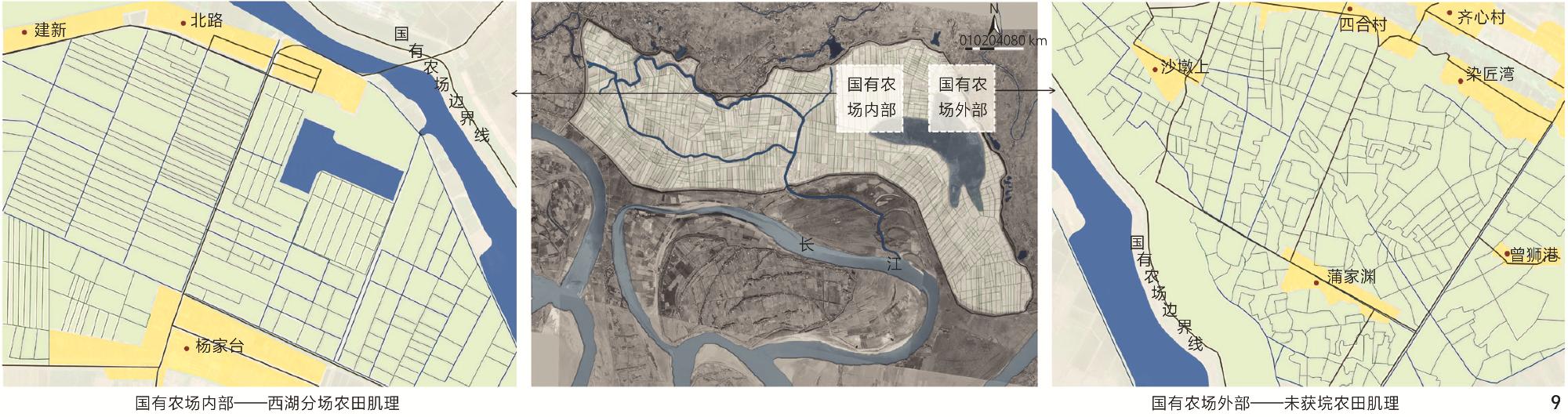
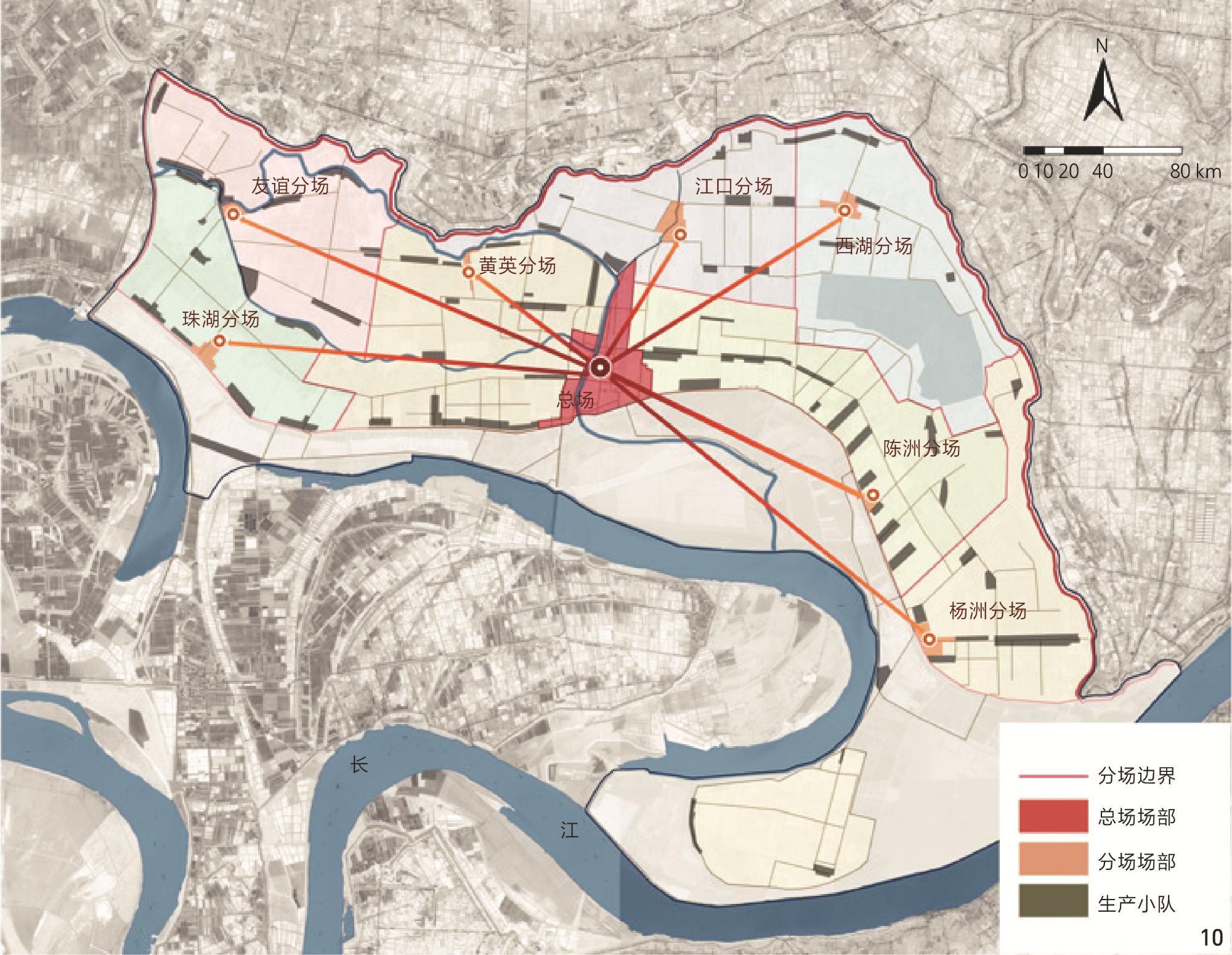
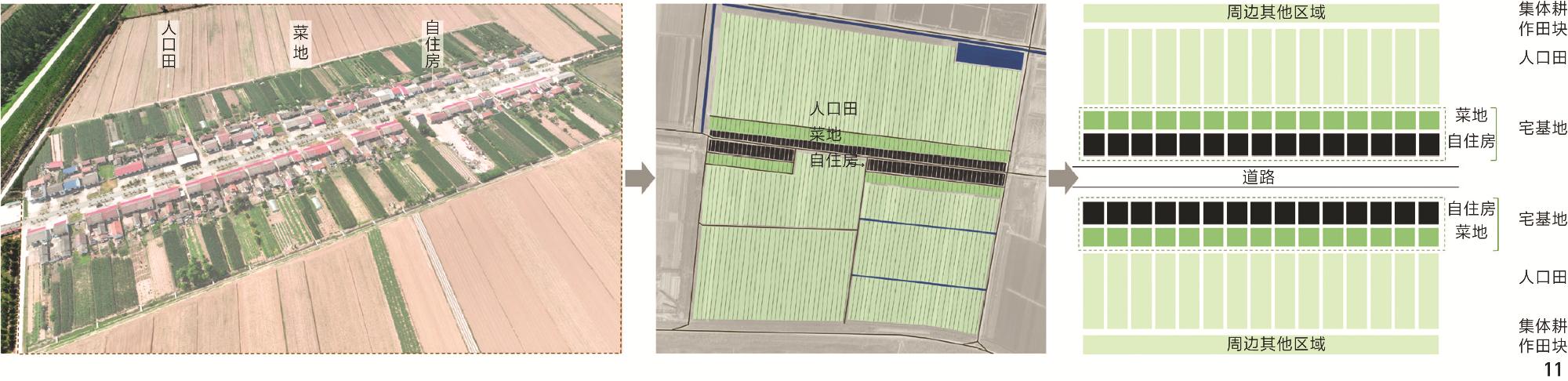
在集体组织统筹、集体力量协作、工程技术支撑的共同作用下,江汉平原国有农场农垦景观呈现出鲜明特征:在生产形态上,形成巨构的地理边界、系统的水利骨架、规整的农田肌理,体现了人类主动适应自然、拓展农业生产空间的实践智慧;在组织形态上,建立起整体的空间结构、有序的功能组织与有机的居住单元,反映出具有时代特色的生产管理经验。
国有农场是集体力量作用于自然环境上的人地关系投影,不仅是中国农业现代化进程中的活态标本,也是农垦技术与生产管理的重要实践场域。其景观形态中所蕴含的智慧与经验,对当前全面推进乡村振兴、实现农业农村现代化具有重要的启示意义。
洪百舸 , 邓巍 , 何依 . 江汉平原国有农场农垦景观形态研究[J]. 风景园林, 2026 , 33(2) : 125 -134 . DOI: 10.3724/j.fjyl.LA20250357
In the context of growing attention to the preservation and transmission of the historical and cultural heritage of both urban and rural, this study examines state farms established during the planned economy era of the People’s Republic of China. It focuses on analyzing the spatial configuration, structural features, and underlying formation mechanisms of their agricultural reclamation landscapes during this specific historical period. These farms not only served agricultural production functions at the time but also embodied multiple values, including collective labor, large-scale operations, and hydraulic engineering technologies. As significant spatial vehicles for exploring socialist agricultural modernization in the People’s Republic of China, they reflect the profound reshaping and sustained intervention of state will in agricultural spaces. Adopting an interdisciplinary perspective, this research aims to systematically identify and explore the multidimensional value of state farm landscapes across historical, technological, cultural, and social dimensions. It seeks to clarify their status and characteristics as a new form of agricultural cultural heritage, thereby providing a solid theoretical foundation for their systematic understanding, conservation, restoration, and sustainable use. Furthermore, by summarizing their experiences in spatial governance and production organization, this study offers historical references and developmental insights to support the comprehensive promotion of rural revitalization strategies and the transition toward agricultural modernization.
The research takes Renmin Dayuan State Farm—a typical state farm in the Jianghan Plain—as its empirical case. Employing an interdisciplinary approach that integrates theoretical perspectives from historical geography, landscape morphology, and rural sociology, the study constructs a three-dimensional analytical framework encompassing “history−space−society”. Through systematic review of historical documents and archival materials, field surveys, and in-depth interviews with former farm employees and managers, comprehensive data on the spatial evolution and social memory of the Renmin Dayuan State Farm since its establishment has been collected and organized. Building on this, the analysis examined the farm’s developmental trajectory under the dual constraints of the planned economy system and the natural geographical conditions of the lake district in the Jianghan Plain, using the lenses of “human−land interaction” and “socio-organizational operation”. The study highlights how initiatives such as nationwide collective mobilization, water conservancy projects, unified land planning, and collaborative agricultural production contributed to the reconstruction of agricultural space and the continuous shaping of the landscape system. Furthermore, it elucidates the driving mechanisms and spatial response characteristics underlying the coordinated evolution of the human−land system.
This study reveals that under the planned economy system with collectivized agricultural production, the formation of the agricultural reclamation landscape in state farms relied on three core mechanisms: a highly organized labor collaboration system, systematic water conservancy engineering, and large-scale land consolidation technologies. The resulting landscape exhibits distinct characteristics across two dimensions: At the production space level, it has given rise to large-scale geographical units, hierarchical irrigation and drainage systems, and highly mechanized grid-like field layouts. These features reflect both human initiative and technical adaptability in developing low-lying lake areas for agriculture, as well as the state’s determined efforts to systematically transform natural resources through engineering; At the social space level, a three-tier spatial governance structure has been established, comprising the general farm, branch farms, and production teams, along with corresponding functional zoning and centralized residential units. This structure embodies the organized, disciplined, and collective nature of agricultural production during the planned economy era. It not only shaped a distinctive form of settlement but also fostered social relations and cultural memories rooted in collective labor and shared living during that era.
The agricultural reclamation landscape of state farms represents the outcome of large-scale production space reconstruction undertaken by the People’s Republic of China during a specific historical period to ensure food security and advance agricultural modernization. It embodies three distinct attributes: agricultural engineering achievement, socialist institutional practice, and collective cultural memory, making it a unique form of agricultural landscape heritage with Chinese characteristics. The land governance models, water conservancy engineering technologies, and agricultural organization experiences developed through this process hold not only significant historical value but also offer practical insights for the ongoing implementation of the rural revitalization strategy and the promotion of agricultural modernization. Looking ahead, systematic investigation, value assessment, and multidimensional documentation of such agricultural landscape heritage should be strengthened. A comprehensive conservation framework—incorporating spatial gene identification and cultural narrative construction—should be established to facilitate its transformation from a singular “production space” into a multifunctional “cultural space” and “heritage space.” Furthermore, it is essential to explore the integration of this heritage into regional territorial spatial planning and historical-cultural protection systems, thereby achieving sustainable synergy between heritage conservation and contemporary agricultural, ecological, and social development. Through the combination of theoretical construction and empirical research, this study expands the scope and methodological perspectives of agricultural landscape heritage research. It enhances the holistic understanding of the agricultural reclamation landscape of the People’s Republic of China within the broader context of urban and rural historical−cultural heritage, while also providing historical insight and directional reference for the green transformation and sustainable development of traditional reclamation areas.
表1 国有农场聚落三级结构Tab. 1 Three-tier settlement structure of state farm |
| 层级 | 功能 | 产业及设施 | 核心特征 | ||
|---|---|---|---|---|---|
| 农业 | 工业 | 服务业 | |||
| 总场 | 宏观管理 统筹协调 | ·中心仓库 ·物资站 ·农机 ·农贸市场 | 大型上游工业群: ·粮棉加工厂 ·轧花厂 ·碾米厂 ·复合肥厂 ·砖瓦厂 ·发电厂 ·农机修造厂 | 县级综合服务体系: ·职工医院 ·大垸中学 ·工人俱乐部 ·露天电影院 ·人民公园 ·广播站 ·供销总社 ·农科所 | 高度集中化; 服务全场; 工业占比超60% |
| 分场 | 区域协调 有限自足 | ·专业化种植区 ·分场仓库 ·机务队 | 特色小型工业: ·珠湖油脂加工厂 ·友谊分场食品厂 ·黄英制砖厂 ·杨洲预制品厂 ·农副产品加工厂 | 集镇级基础服务: ·分场中小学 ·卫生所 ·供销分店 ·粮站 ·简易文化室 | 因地制宜生产; 内部供给导向; 工业占比约30%; 独立生活圈 |
| 小队 | 基层执行 落实生产 | ·种植田块 ·蔬菜自留地 ·仓库 ·工具房 ·晒场 | 无独立工业 (参与上级产业链原料供应) | 基础生活保障: ·职工宿舍区 ·简易托儿点 ·代销点(小卖部) ·打谷场(兼集会功能) | 纯农业导向; 居住-生产嵌套; 工业占比近0% |
1、聚焦新中国成立之后的国有农场,从人地关系互动与社会组织运作的双重视角,系统解析农垦景观在特殊历史地理条件下人地系统协同的形塑机制与形态特征,拓展农业景观研究的时代维度与类型谱系,为这一特殊的农业景观保护传承提供理论探索及案例参考。
2、国有农场是一种集主动适应、集体治理、文化认同、城乡融合于一体的现代农业形态,它在历史、技术、社会维度体现了独特的农业智慧,为当前全面推进乡村振兴、促进农业现代化、构建可持续的未来乡村图景提供了重要的理论参考与实践经验。
| [1] |
焦雯珺, 崔文超, 闵庆文, 等. 农业文化遗产及其保护研究综述[J]. 资源科学, 2021, 43 (4): 823-837.
JIAO W J, CUI W C, MIN Q W, et al. A Review of Research on Agricultural Heritage Systems and Their Conservation[J]. Resources Science, 2021, 43 (4): 823-837.
|
| [2] |
胡最, 闵庆文, 刘沛林. 农业文化遗产的文化景观特征识别探索: 以紫鹊界、上堡和联合梯田系统为例[J]. 经济地理, 2018, 38 (2): 180-187.
HU Z, MIN Q W, LIU P L. Identification on Cultural Landscape of Traditional Rice Terraces in the Southern Area of China[J]. Economic Geography, 2018, 38 (2): 180-187.
|
| [3] |
张雪葳, 王向荣. 陂塘水利对城市及地域景观格局的影响: 以杭州西湖为例[J]. 中国园林, 2018, 34 (6): 19-24.
ZHANG X W, WANG X R. The Influence of Pond Irrigation Works on Landscape Patterns of Cities and Regions: A Case Study of Hangzhou West Lake[J]. Chinese Landscape Architecture, 2018, 34 (6): 19-24.
|
| [4] |
郭巍, 侯晓蕾. 筑塘、围垦和定居: 萧绍圩区圩田景观分析[J]. 中国园林, 2016, 32 (7): 41-48.
GUO W, HOU X L. Dyke, Reclamation and Settlement: Landscape Architectural Analysis of Polder Landscape in Xiaoshao Region[J]. Chinese Landscape Architecture, 2016, 32 (7): 41-48.
|
| [5] |
夏甜, 郭巍, 文斌. 洞庭湖区堤垸景观研究[J]. 中国园林, 2020, 36 (10): 86-91.
XIA T, GUO W, WEN B. Study of the Polder Landscape in Dongting Lake District[J]. Chinese Landscape Architecture, 2020, 36 (10): 86-91.
|
| [6] |
鲁西奇. “水利社会”的形成: 以明清时期江汉平原的围垸为中心[J]. 中国经济史研究, 2013 (2): 122-139,172.
LU X Q. The Making of Water Community in the Traditional China: Discussion Around the ‘Enclosed Embankment’ in Jianghan Plain During Ming-Qing Period[J]. Researches in Chinese Economic History, 2013 (2): 122-139,172.
|
| [7] |
曹幸穗. 农业文化遗产相关概念的辨析[J]. 遗产与保护研究, 2016, 1 (1): 90-94.
CAO X S. A Discussion on the Definitions of Related Concepts of Agricultural Heritage System[J]. Research on Heritages and Preservation, 2016, 1 (1): 90-94.
|
| [8] |
闵庆文, 孙业红. 农业文化遗产的概念、特点与保护要求[J]. 资源科学, 2009, 31 (6): 914-918.
MIN Q W, SUN Y H. The Concept, Characteristics and Conservation Requirements of Agro-Cultural Heritage[J]. Resources Science, 2009, 31 (6): 914-918.
|
| [9] |
张星, 何依. 水利营建影响下海侵地区传统聚落的关联形态研究: 以宁绍平原为例[J]. 风景园林, 2024 (6): 106-114.
ZHANG X, HE Y. Research on Correlation Morphology of Traditional Settlements in Ingressive Region Under the Influence of Water Conservancy Construction: A Case Study of the Ningshao Plain[J]. Landscape Architecture, 2024 (6): 106-114.
|
| [10] |
王思明. 农业文化遗产的内涵及保护中应注意把握的八组关系[J]. 中国农业大学学报(社会科学版), 2016, 33 (2): 102-110.
WANG S M. The Connotation of Agricultural Heritage and the Eight Relations for Better Conservation[J]. Journal of China Agricultural University (Social Sciences), 2016, 33 (2): 102-110.
|
| [11] |
郭巍, 吴迪, 侯晓蕾. 人居视角下我国传统灌区研究[J]. 中国园林, 2021, 37 (10): 11-15.
GUO W, WU D, HOU X L. Research on Traditional Irrigation Districts in China from the Perspective of Human Habitat Environment[J]. Chinese Landscape Architecture, 2021, 37 (10): 11-15.
|
| [12] |
王竹, 王珂, 陈潇玮, 等. 乡村“人地共生”景观单元认知框架[J]. 风景园林, 2020, 27 (4): 69-73.
WANG Z, WANG K, CHEN X W, et al. “Human-Earth Symbiosis” Landscape Unit: Cognitive Framework of Rural Landscape[J]. Landscape Architecture, 2020, 27 (4): 69-73.
|
| [13] |
孔亚暐, 邢静茹, 宋凤, 等. 黄河下游典型乡村景观形态类型特征与模式研究[J]. 中国园林, 2024, 40 (11): 48-54.
KONG Y W, XING J R, SONG F, et al. Study on the Characteristics and Patterns of Typical Rural Landscape Forms in the Lower Yellow River[J]. Chinese Landscape Architecture, 2024, 40 (11): 48-54.
|
| [14] |
陈思淇, 张玉钧. 基于四维量化与多元统计的乡村景观空间形态分析[J]. 中国园林, 2025, 41 (3): 68-75.
CHEN S Q, ZHANG Y J. Rural Landscape Spatial Morphology Based on Four-Dimensional Quantization and Multivariate Statistics[J]. Chinese Landscape Architecture, 2025, 41 (3): 68-75.
|
| [15] |
申佳可, 陈照方, 彭震伟, 等. 中国乡村景观特征评价的发展和展望[J]. 风景园林, 2022 (3): 19-24.
SHEN J K, CHEN Z F, PENG Z W, et al. Development and Prospect of Rural Landscape Character Assessment in China[J]. Landscape Architecture, 2022 (3): 19-24.
|
| [16] |
王云才, 陈照方, 成玉宁. 新时期乡村景观特征与景观性格的表征体系构建[J]. 风景园林, 2021, 28 (7): 107-113.
WANG Y C, CHEN Z F, CHENG Y N. The Representation System of Rural Landscape Character and Personality in the New Era[J]. Landscape Architecture, 2021, 28 (7): 107-113.
|
| [17] |
张学玲, 杨艺璇, 张大玉, 等. 面向蓝绿融合的田野景观形态协调性测度研究: 以京郊典型乡村为例[J]. 中国园林, 2025, 41 (8): 58-65.
ZHANG X L, YANG Y X, ZHANG D Y, et al. On the Form Coordination Measurement of Field Landscape in the View of Blue-Green Integration: A Case Study of Typical Villages in Beijing Suburbs[J]. Chinese Landscape Architecture, 2025, 41 (8): 58-65.
|
| [18] |
孙应魁, 翟斌庆. 社会生态韧性视角下的乡村聚居景观演化及影响机制: 以新疆村落的适应性循环为例[J]. 中国园林, 2020, 36 (12): 83-88.
SUN Y K, ZHAI B Q. Evolution and Influence Mechanism of Rural Settlement Landscape from the Perspective of Social Ecological Resilience: Take the Adaptive Cycle of Xinjiang Villages as an Example[J]. Chinese Landscape Architecture, 2020, 36 (12): 83-88.
|
| [19] |
赵祎祺, 郑睿楠, 马嘉, 等. 日本农业文化遗产复合系统景观特征与保护利用机制[J]. 风景园林, 2024, 31 (12): 65-73.
ZHAO Y Q, ZHENG R N, MA J, et al. Landscape Characteristics and Conservation and Utilization Mechanisms of Composite Agricultural Heritage Systems in Japan[J]. Landscape Architecture, 2024, 31 (12): 65-73.
|
| [20] |
韩朝华. 新中国国营农场的缘起及其制度特点[J]. 中国经济史研究, 2016 (1): 23-38.
HAN C H. The Origin and Institutional Characters of State Farms in the People’s Republic of China[J]. Researches in Chinese Economic History, 2016 (1): 23-38.
|
| [21] |
高海. 论农垦国有农用地使用权的性质与构造[J]. 农业经济问题, 2019, 40 (2): 82-91.
GAO H. On the Nature and Construction of the Right to Use State-Owned Agricultural Land in Agricultural Reclamation[J]. Issues in Agricultural Economy, 2019, 40 (2): 82-91.
|
| [22] |
姬一帆, 徐涛, 张德生. 垦地融合发展: 逻辑机理、现实契机与优化路径[J]. 中国农村经济, 2025 (6): 144-164.
JI Y F, XU T, ZHANG D S. State Farm-Local Region Integration: Logical Mechanisms, Practical Opportunities, and Optimization Paths[J]. Chinese Rural Economy, 2025 (6): 144-164.
|
| [23] |
廖洪乐. 农垦国有农场农业生产经营管理体制: 集中还是分散[J]. 新疆农垦经济, 2024 (7): 1-15.
LIAO H L. Agricultural Production and Operation Management System of State-Owned Farms: Centralized or Decentralized[J]. Xinjiang State Farms Economy, 2024 (7): 1-15.
|
| [24] |
周兵. 乡村振兴视野下垦地关系的历史与启示[J]. 马克思主义与现实, 2018 (6): 23-30.
ZHOU B. History and Enlightenment of Reclamation Relationship from the Perspective of Rural Revitalization[J]. Marxism & Reality, 2018 (6): 23-30.
|
| [25] |
王巍, 郑维伟. 从“生产建设”到“乡村振兴”: 灵武农场集体化生产的遗产与当代转化(1950—1965)[J]. 学术探索, 2025 (7): 88-100.
WANG W, ZHENG W W. From “Production and Construction” to “Rural Revitalization”: The Legacy of Collective Production in Lingwu Farm and Its Contemporary Transformation (1950−1965)[J]. Academic Exploration, 2025 (7): 88-100.
|
| [26] |
刘成果. 中国农垦事业的历史贡献[J]. 中国农垦, 2021 (12): 21-25.
LIU C G. The Historical Contribution of China’s Agricultural Reclamation[J]. China State Farm, 2021 (12): 21-25.
|
| [27] |
胡从九. 农垦精神及其实践特征[J]. 中国农垦, 2022 (4): 23-28.
HU C J. The Spirit of Agricultural Reclamation and Its Practical Characteristics[J]. China State Farm, 2022 (4): 23-28.
|
| [28] |
张建民. 耕新垦遗与环境演变: 以明代江汉平原的农业开发为例[J]. 江汉论坛, 2017 (10): 98-104.
ZHANG J M. New Cultivation and Environmental Evolution: A Case Study of Agricultural Development in the Jianghan Plain in the Ming Dynasty[J]. Jianghan Tribune, 2017 (10): 98-104.
|
| [29] |
杨怀仁, 唐日长.长江中游荆江变迁研究[M].北京: 中国水利水电出版社, 1999.
YANG H R, TANG R C. Study on the Change of Jingjiang River in the Middle Reaches of the Yangtze River[M]. Beijing: China Water & Power Press, 1999.
|
| [30] |
张家炎. 江汉平原清代中后期洪涝灾害研究中若干问题刍议[J]. 中国农史, 1993, 12 (3): 75-83.
ZHANG J Y. Some Problems in the Study of Flood Disasters in the Middle and Late Qing Dynasty in Jianghan Plain[J]. Agricultural History of China, 1993, 12 (3): 75-83.
|
| [31] |
张建民.茭簰考释: 兼及江汉平原湖区人水关系[J].中国农史, 2021, 40(1): 79-87.
ZHANG J M. What Is Jiaopai(茭簰): The Relationship Between Human and Water in Jianghan Plain Lake Area[J]. Agricultural History of China, 2021, 40(1): 79-87.
|
| [32] |
张家炎. 清代江汉平原垸田农业经济特性分析[J]. 中国史研究, 2001 (1): 134-143.
ZHANG J Y. Analysis of Agricultural Economic Characteristics of Polders in Jianghan Plain in Qing Dynasty[J]. Journal of Chinese Historical Studies, 2001 (1): 134-143.
|
| [33] |
人民大垸农场志编纂委员会.人民大垸农场志[M].荆州: 内部发行, 1988: 16.
Renmin Dayuan State Farm Records Compilation Committee. People’s Dayuan State Farm Records[M]. Jingzhou: Internal Distribution, 1988: 16.
|
| [34] |
李见哲.江汉平原四湖地区垸田景观研究: 以下荆江流域为例[D].北京: 北京林业大学, 2022.
LI J Z. The Polder Landscape in Four-Lake Region of Jianghan Plain[D]. Beijing: Beijing Forestry University, 2022.
|
| [35] |
贺雪峰. 关于实施乡村振兴战略的几个问题[J]. 南京农业大学学报(社会科学版), 2018, 18 (3): 19-26.
HE X F. Some Issues in Rural Thriving Strategy Implementation[J]. Journal of Nanjing Agricultural University (Social Sciences Edition), 2018, 18 (3): 19-26.
|
| [36] |
陈锡文. 当前农业农村的若干重要问题[J]. 中国农村经济, 2023 (8): 2-17.
CHEN X W. Several Important Issues in Current Agriculture and Rural Areas[J]. Chinese Rural Economy, 2023 (8): 2-17.
|
| [37] |
张海鹏, 郜亮亮, 闫坤. 乡村振兴战略思想的理论渊源、主要创新和实现路径[J]. 中国农村经济, 2018 (11): 2-16.
ZHANG H P, GAO L L, YAN K. Strategic Thinking on Rural Revitalization Strategy: Theoretical Origin, Main Innovation and Realization Path[J]. Chinese Rural Economy, 2018 (11): 2-16.
|
/
| 〈 |
|
〉 |