

蝴蝶生态景观构建:城市生物多样性保护实践
|
魏兰君/女/硕士/江苏省农业科学院助理研究员/研究方向为昆虫生态景观、乡村可持续景观规划与设计 |
|
李凡凡/女/博士/江苏省农业科学院副研究员/研究方向为风景园林规划与设计 |
|
秦毅/男/硕士/江苏省农业科学院研究实习员/研究方向为昆虫多样性与资源化利用 |
|
廖怀建/男/博士/江苏省农业科学院副研究员/江苏科技大学生物技术学院硕士生导师/研究方向为昆虫生态学、昆虫资源化利用 |
收稿日期: 2023-06-27
网络出版日期: 2025-12-15
基金资助
江苏省农业科技自主创新资金“适于苏南休闲农业中应用的开放型蝴蝶生态景观营造模式研究”(CX(22)3181)
2023年度苏州市关键核心技术攻关(社会发展)项目“基于庭院景观营建的苏州乡村生物多样性保护关键技术攻关”(2023ssd60)
版权
Construction of Butterfly Ecological Landscape: Practice for Urban Biodiversity Conservation
|
WEI Lanjun, Master, is an assistant research fellow in Jiangsu Academy of Agricultural Sciences. Her research focuses on insect ecological landscape, and rural sustainable landscape planning and design |
|
LI Fanfan, Ph.D., is an associate research fellow in Jiangsu Academy of Agricultural Sciences. Her research focuses on landscape planning and design |
|
QIN Yi, Master, is a probationary research fellow in Jiangsu Academy of Agricultural Sciences. His research focuses on insect diversity and resource utilization |
|
LIAO Huaijian, Ph.D., is an associate research fellow in Jiangsu Academy of Agricultural Sciences, and a master supervisor in the School of Biotechnology, Jiangsu University of Science and Technology. His research focuses on insect ecology and insect resource utilization |
Received date: 2023-06-27
Online published: 2025-12-15
Copyright
【目的】全球的蝴蝶多样性正在因为城市化而大幅下降,蝴蝶群落的组成受到景观特征的极大影响,利用一系列景观布局、要素搭配、维护管理等手段能在城市等受人类干扰的环境中重建蝴蝶栖息地。【方法】通过文献梳理回顾了蝴蝶栖息地景观研究的理论基础,通过案例分析总结了英美两国蝴蝶和栖息地保护的实践经验,并对比分析了中国蝴蝶保护现状及生态景观营建条件与西方国家的差异。【结果】探索出“选蝶种—选场地—搭要素—控管护—重科普”的营建路径,并以中国苏南地区为例,通过对蝴蝶生态分布和生活习性的研究,对寄主植物、蜜源植物、水体、石块等景观要素进行组合和空间结构设计,构建出适于开阔向阳空间的凤蝶生态景观和适于阴凉郁闭空间的眼蝶生态景观应用模型。【结论】提供了一种新颖的景观设计思路,强调景观的生态内涵和互动性,对于城市生物多样性保护和公众参与意识提升具有积极意义,推动中国生物友好型城市建设与国际接轨。
魏兰君 , 李凡凡 , 秦毅 , 廖怀建 . 蝴蝶生态景观构建:城市生物多样性保护实践[J]. 风景园林, 2024 , 31(3) : 115 -122 . DOI: 10.3724/j.fjyl.202306270290
[Objective] Butterflies serve as a vital environmental indicator, which are highly sensitive to ecological shifts induced by human activities. As urbanization intensifies, the diversity of butterflies faces escalating threats. The abundance and composition of butterfly communities are profoundly influenced by landscape characteristics. Consequently, butterflies are frequently adopted as model organisms to elucidate strategies for landscape planning and habitat management in eco-friendly urban areas, mitigating adverse impacts on urban biodiversity caused by human activities. Numerous international researches have investigated the feasibility of enhancing butterfly diversity through urban landscape construction, while some developed nations have transformed theoretical insights into practical implementation. China has a relatively weak research foundation in relevant fields, necessitating urgent exploration of methods tailored to its national conditions for constructing urban butterfly habitats.
[Methods] This research establishes a comprehensive theoretical foundation for the research on butterfly habitat landscape based on literature review. By analyzing successful experience in butterfly and habitat conservation from the United Kingdom (UK) and the United States (US), the research conducts a comparative assessment of butterfly conversation status between China and other nations, culminating in a proposed strategy for constructing butterfly ecological landscape. Taking the southern Jiangsu region as an example, the research develops ecological landscape application models for two selected butterfly groups.
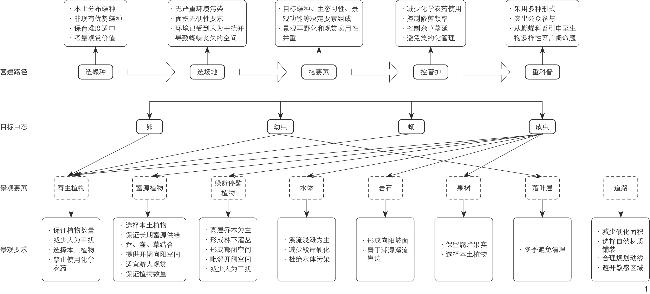
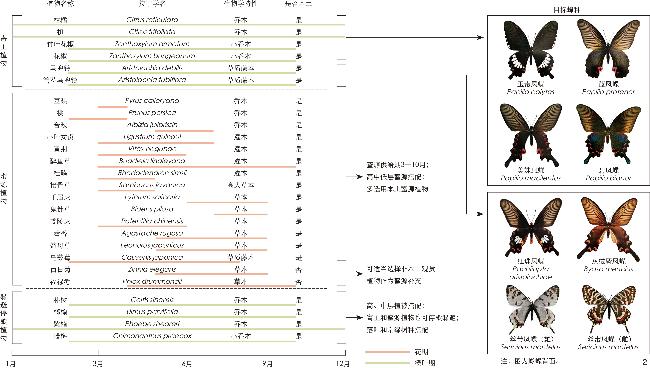
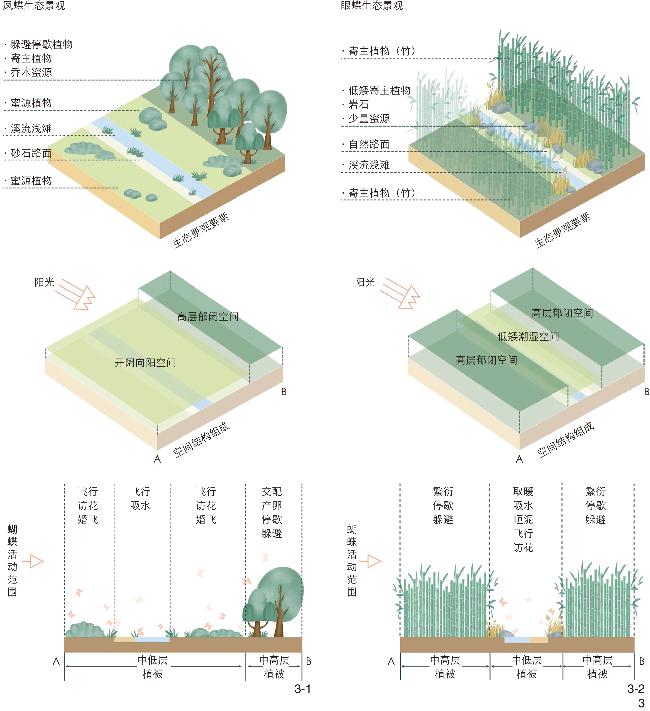
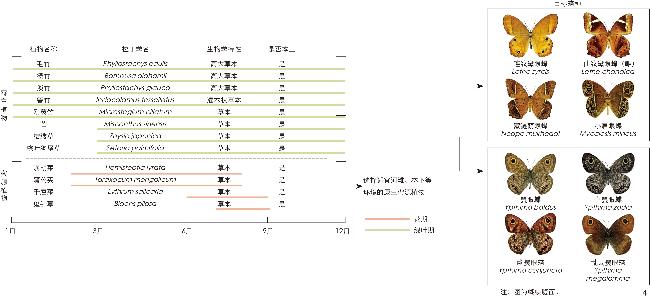
[Results] The literature review underscores three pivotal levels of butterfly habitat conservation: ensuring habitat area and connectivity, constructing high-quality habitats with landscape heterogeneity, and integrating varied landscape scales to maximize conservation efficacy for diverse butterfly species. Consequently, safeguarding urban butterfly habitats necessitates securing habitat areas both surrounding and within cities through macro-level planning while establishing high-quality habitat landscape at small and medium scales. International research on landscape element characteristics, layout design and maintenance provides a theoretical underpinning for the construction of butterfly ecological landscape. Through case studies of the UK and the US, the research scrutinizes the construction methods and conservation measures of the two nations for butterfly habitat. The UK, emphasizing landscape reforestation, employs habitat construction methods such as scrapes, seeding, plug-planting, and butterfly bank. The US, particularly in the conservation of the Monarch butterflies, implements universal butterfly conservation education. Comparative analysis reveals substantial differences in landscape types, user groups, and functional requirements among Chinese cities and cities in developed countries. Based on China’s national conditions, the research explores the path of “species selection – site selection – elements matching – landscape management – science popularization” for constructing butterfly ecological landscape. Taking the southern Jiangsu region as an example, the research develops the application models of ecological landscape for Papilioninae and Satyrinae butterflies. Landscape elements catering to Papilioninae spp. such as Papilio bianor with Rutaceae plants as host and Sericinus montelus with Aristolochiaceae plants as host, comprise open sunny spaces, honey source plants, host plants, shoals, and gravel roads, suitable for deployment in open activity areas of public green spaces. Landscape elements for Satyrinae spp. such as Lethe syrcis with Poaceae bamboos as host and Ypthima baldus with grasses as host, encompass bamboo forests, gravel roads, stones, deciduous layers, and honey plants, suitable for residential green spaces, country parks, and urban forests.
[Conclusion] China’s expansive territory and ecological diversity yield varying natural conditions and butterfly species nationwide, necessitating diverse butterfly ecological landscapes. Nevertheless, there are commonalities in function, structure, and elements in butterfly ecological landscapes. In view of this, establishing a landscape model may help mitigate technical and knowledge barriers and facilitate broader application. The research proposes that future efforts should focus on refining the theoretical foundation, practical implementation, public management policies, and public cooperation to formulate a comprehensive urban butterfly and habitat conservation strategy. Moreover, the research also identifies current challenges and future research directions, such as the limited role of small and medium-sized ecological landscapes in biodiversity conservation, the difficulty in establishing stable populations of target butterfly species in artificial habitats, and the interaction between human and wildlife in urban landscape.
图片均由作者绘制,其中
| [1] |
王海洋, 王浩琪, 陈禧悦, 等. 国内外城市生物多样性评价与提升研究综述[J]. 生态学报, 2023, 43 (8): 2995-3006.
WANG H Y, WANG H Q, CHEN X Y, et al. Review on Evaluation and Enhancement of Urban Biodiversity[J]. Acta Ecological Sinica, 2023, 43 (8): 2995-3006.
|
| [2] |
SANDERSON E W, WALSTON J, ROBINSON J G. From Bottleneck to Breakthrough: Urbanization and the Future of Biodiversity Conservation[J]. BioScience, 2018, 68 (6): 412-426.
|
| [3] |
黄越, 闻丞. 中国城市生物多样性保护和生态修复重点任务的转变[J]. 北京规划建设, 2021 (5): 10-13.
HUANG Y, WEN C. Transformation of Key Tasks for Urban Biodiversity Protection and Ecological Restoration in China[J]. Beijing Planning Review, 2021 (5): 10-13.
|
| [4] |
NEW T R. Butterfly Conservation[M]. London: Oxford, 1991.
|
| [5] |
NEW T R, PYLE R M, THOMAS J A, et al. Butterfly Conservation Management[J]. Annual Review of Entomology, 1995, 40 (1): 57-83.
|
| [6] |
林宏伟, 王昌杰, 杨莉, 等. 城市化对台州市蝴蝶多样性的影响[J]. 四川动物, 2018, 37 (5): 541-547.
LIN H W, WANG C J, YANG L, et al. Effects of Urbanization on Butterfly Diversity of Taizhou[J]. Sichuan Journal of Zoology, 2018, 37 (5): 541-547.
|
| [7] |
RAMÍREZ-RESTREPO L, MACGREGOR-FORS I. Butterflies in the City: A Review of Urban Diurnal Lepidoptera[J]. Urban Ecosystems, 2017, 20: 171-182.
|
| [8] |
PIANO E, SOUFFREAU C, MERCKX T, et al. Urbanization Drives Cross-Taxon Declines in Abundance and Diversity at Multiple Spatial Scales[J]. Global Change Biology, 2020, 26 (3): 1196-1211.
|
| [9] |
CURTIS R J, BRERETON T M, DENNIS R L H, et al. Butterfly Abundance is Determined by Food Availability and is Mediated by Species Traits[J]. Journal of Applied Ecology, 2015, 52 (6): 1676-1684.
|
| [10] |
SPARKS T H, PARISH T. Factors Affecting the Abundance of Butterflies in Field Boundaries in Swavesey Fens, Cambridgeshire, UK[J]. Biological Conservation, 1995, 73 (3): 221-227.
|
| [11] |
OLIVIER T, SCHMUCKI R, FONTAINE B, et al. Butterfly Assemblages in Residential Gardens are Driven by Species’ Habitat Preference and Mobility[J]. Landscape Ecology, 2015, 31 (4): 865-876.
|
| [12] |
LUPPI M, DONDINA O, ORIOLI V, et al. Local and Landscape Drivers of Butterfly Richness and Abundance in a Human-Dominated Area[J]. Agriculture, Ecosystems & Environment, 2018, 254: 138-148.
|
| [13] |
CHONG K Y, TEO S, KURUKULASURIYA B, et al. Not All Green Is as Good: Different Effects of the Natural and Cultivated Components of Urban Vegetation on Bird and Butterfly Diversity[J]. Biological Conservation, 2014, 171: 299-309.
|
| [14] |
LIZEE M-H, TATONI T, DESCHAMPS-COTTIN M. Nested Patterns in Urban Butterfly Species Assemblages: Respective Roles of Plot Management, Park Layout and Landscape Features[J]. Urban Ecosystems, 2015, 19 (1): 205-224.
|
| [15] |
Natural Resources Conservation Service (NRCS). Monarch Butterfly Conservation on Working Lands[R/OL]. Washington, D.C.: United States Department of Agriculture (USDA), 2020[2023-05-30]. https://www.nrcs.usda.gov/wps/portal/nrcs/detail/national/plantsanimals/pollinate/?cid=nrcseprd402207.
|
| [16] |
Butterfly Conservation Scotland. The Urban Butterfly Project Final Report[R/OL]. Edinburgh: Butterfly Conservation Scotland, 2018[2023-05-30]. https://butterfly-conservation.org/sites/default/files/202004/Final%20Urban%20Butterfly%20Project%20report.pdf.
|
| [17] |
FONTAINE B, BERGEROT B, LE VIOL I, et al. Impact of Urbanization and Gardening Practices on Common Butterfly Communities in France[J]. Ecology and Evolution, 2016, 6 (22): 8174-8180.
|
| [18] |
ARCHAUX F, LOREL C, VILLEMEY A. Landscape Drivers of Butterfly and Burnet Moth Diversity in Lowland Rural Areas[J]. Landscape Ecology, 2018, 33 (10): 1725-1739.
|
| [19] |
BÁLDI A. Habitat Heterogeneity Overrides the Species-Area Relationship[J]. Journal of Biogeography, 2008, 35 (4): 675-681.
|
| [20] |
PÉREZ J H, CARNEIRO E, GAVIRIA-ORTIZ F G, et al. Urban Landscape Influences the Composition of Butterflies in Public Parks and Fragments in Southern Brazil[J]. Community Ecology, 2019, 20 (3): 291-300.
|
| [21] |
LESTON L, KOPER N. Urban Rights-of-Way as Extensive Butterfly Habitats: A Case Study from Winnipeg, Canada[J]. Landscape and Urban Planning, 2017, 157: 56-62.
|
| [22] |
佘珺莹, 韩丹, 王成, 等. 北京中心城区小微绿地的蝴蝶多样性特征[J]. 中国城市林业, 2022, 20 (3): 1-6.
SHE J Y, HAN D, WANG C, et al. Butterfly Diversity in Pocket Parks at Urban Core of Beijing[J]. Journal of Chinese Urban Forestry, 2022, 20 (3): 1-6.
|
| [23] |
WANG W L, SUMAN D O, ZHANG H H, et al. Butterfly Conservation in China: From Science to Action[J]. Insects, 2020, 11 (10): 661.
|
| [24] |
PLA-NARBONA C, STEFANESCU C, PINO J, et al. Butterfly Biodiversity in the City Is Driven by the Interaction of the Urban Landscape and Species Traits: A Call for Contextualised Management[J]. Landscape Ecology, 2021, 37 (1): 81-92.
|
| [25] |
MILBERG P, BERGMAN K-O, CRONVALL E, et al. Flower Abundance and Vegetation Height as Predictors for Nectar-Feeding Insect Occurrence in Swedish Semi-Natural Grasslands[J]. Agriculture, Ecosystems & Environment, 2016, 230: 47-54.
|
| [26] |
SMALLIDGE P J, LEOPOLD D J. Vegetation Management for the Maintenance and Conservation of Butterfly Habitats in Temperate Human-Dominated Landscapes[J]. Landscape and Urban Planning, 1997, 38 3-4: 259-280.
|
| [27] |
TAM K C, BONEBRAKE T C. Butterfly Diversity, Habitat and Vegetation Usage in Hong Kong Urban Parks[J]. Urban Ecosystems, 2015, 19 (2): 721-733.
|
| [28] |
韩丹, 王成, 殷鲁秦. 北京城市蝴蝶蜜源植物网络特征及重要蜜源植物识别[J]. 生态学报, 2021, 41 (22): 8892-8905.
HAN D, WANG C, YIN L Q. Characteristic of Butterfly-Nactar Plant Network in Beijing’s Urban Parks and Identifying Important Nectariferous Plant Species[J]. Acta Ecological Sinca, 2021, 41 (22): 8892-8905.
|
| [29] |
VICKERY M L. Ecology and Conservation of Butterflies[M]. Dordrecht: Springer Netherlands, 1995: 123-134.
|
| [30] |
DYLEWSKI Ł, MAĆKOWIAK Ł, BANASZAK-CIBICKA W. Linking Pollinators and City Flora: How Vegetation Composition and Environmental Features Shapes Pollinators Composition in Urban Environment[J]. Urban Forestry & Urban Greening, 2020, 56: 126795.
|
| [31] |
DOVER J W, SPARKS T H, GREATOREX-DAVIES J N. The Importance of Shelter for Butterflies in Open Landscapes[J]. Journal of Insect Conservation, 1997, 1: 89-97.
|
| [32] |
VILLEMEY A, VAN HALDER I, OUIN A, et al. Mosaic of Grasslands and Woodlands Is More Effective than Habitat Connectivity to Conserve Butterflies in French Farmland[J]. Biological Conservation, 2015, 191: 206-215.
|
| [33] |
OLIVEIRA I F, LION M B, CARDOSO M Z. A Plaza Too Far: High Contrast in Butterfly Biodiversity Patterns Between Plazas and an Urban Reserve in Brazil[J]. Landscape and Urban Planning, 2018, 180: 207-216.
|
| [34] |
HORAK J, ŠAFÁŘOVÁ L, TROMBIK J, et al. Patterns and Determinants of Plant, Butterfly and Beetle Diversity Reveal Optimal City Grassland Management and Green Urban Planning[J]. Urban Forestry & Urban Greening, 2022, 73: 127609.
|
| [35] |
ORLANDIN E, CARNEIRO E. Classes of Protection in Urban Forest Fragments Are Effectiveless in Structuring Butterfly Assemblages: Landscape and Forest Structure Are Far Better Predictors[J]. Urban Ecosystems, 2021, 24 (5): 873-884.
|
| [36] |
Butterfly Conservation. Our Successes[EB/OL]. [2023-05-30]. https://butterfly-conservation.org/our-work/our-successes.
|
| [37] |
Butterfly Conservation. The State of the UK’s Butterflies 2022[R/OL]. Dorset: Butterfly Conservation, 2022[2023-05-30]. https://butterfly-conservation.org/sites/default/files/2023-01/State%20of%20UK%20Butterflies%202022%20Report.pdf.
|
| [38] |
Butterfly Conservation. Saving Butterflies and Moths: Our 2021−2026 Strategy[EB/OL]. [2023-05-30]. https://butterfly-conservation.org/sites/default/files/2021-10/Butterfly-Conservation-Strategy%20Brochure.pdf.
|
| [39] |
Butterfly Conservation. Urban and Post Industrial[EB/OL]. [2023-05-30]. https://butterfly-conservation.org/our-work/habitat-management/urban-and-post-industrial.
|
| [40] |
Butterfly Conservation. Habitat Creation[EB/OL]. [2023-05-30]. https://butterfly-conservation.org/our-work/reports-and-factsheets/habitat-creation.
|
| [41] |
MAECKLE M. First Lady Michelle Obama Gets Milkweed as White House Adds First Pollinator Garden[EB/OL]. (2014-04-06)[2023-05-30]. https://texasbutterflyranch.com/2014/04/06/first-lady-michelle-obama-gets-milkweed-as-white-house-adds-first-pollinator-garden/.
|
| [42] |
MCMENAMIN S. From Central Park to Central Mexico: The Great Monarch Butterfly Migration[EB/OL]. [2023-05-30]. https://www.centralparknyc.org/articles/the-great-monarch-butterfly-migration.
|
| [43] |
GEEST E, REBEK E, HILLOCK D, et al. Landscaping to Attract Butterflies and Moths[EB/OL]. (2021-06)[2023-05-30]. https://extension.okstate.edu/fact-sheets/print-publications/hla/landscaping-to-attract-butterflies-and-moths-hla-6430.pdf.
|
| [44] |
DE JOHN S. Pollinator Garden Plan: Butterflies[EB/OL]. (2022-11-30)[2023-06-01]. https://www.gardeners.com/how-to/pollinator-garden-design-for-butterflies/9145.html.
|
| [45] |
Brooklyn Botanic Garden. Make a Butterfly Habitat in a Window Box[EB/OL]. (2020-06-20)[2023-06-01]. https://www.bbg.org/news/make_a_butterfly_habitat_in_a_window_box.
|
| [46] |
The Butterfly Website. Backyard Butterfly Migration Station[EB/OL]. [2023-06-01]. https://butterflywebsite.com/backyard-butterfly-migration-station.cfm.
|
| [47] |
Office for National Statistics (ONS). One in Eight British Households Has No Garden[EB/OL]. (2020-05-14)[2023-06-01]. https://www.ons.gov.uk/economy/environmentalaccounts/articles/oneineightbritishhouseholdshasnogarden/2020-05-14.
|
| [48] |
National Association of Landscape Professionals (NALP). New Research Confirms Americans Still Value Lawns and Green Spaces[EB/OL]. (2019-04-01)[2023-06-01]. https://www.businesswire.com/news/home/20190401005679/en/New-Research-Confirms-Americans-Still-Value-Lawns-and-Green-Spaces.
|
| [49] |
武春生, 徐堉峰. 中国蝴蝶图鉴[M]. 福州: 海峡书局, 2017.
WU C S, XU Y F. Butterflies of China[M]. Fuzhou: The Straits Publishing House, 2017.
|
| [50] |
PORTER K, ELLIS S. Securing Viable Metapopulations of the Marsh Fritillary Butterfly, Euphydryas aurinia, (Lepidoptera: Nymphalidae) in Northern England[J]. Journal of Insect Conservation, 2010, 15 1-2: 111-119.
|
| [51] |
TZORTZAKAKI O, KATI V, PANITSA M, et al. Butterfly Diversity Along the Urbanization Gradient in a Densely-Built Mediterranean City: Land Cover is More Decisive than Resources in Structuring Communities[J]. Landscape and Urban Planning, 2019, 183: 79-87.
|
| [52] |
ISERHARD C A, DUARTE L, SERAPHIM N, et al. How Urbanization Affects Multiple Dimensions of Biodiversity in Tropical Butterfly Assemblages[J]. Biodiversity and Conservation, 2018, 28 (3): 621-638.
|
| [53] |
SCHULTZ C B, RUSSELL C, WYNN L. Restoration, Reintroduction, and Captive Propagation for At-Risk Butterflies: A Review of British and American Conservation Efforts[J]. Israel Journal of Ecology & Evolution, 2013, 54 (1): 41-61.
|
/
| 〈 |
|
〉 |