

风景园林理论知识体系发展溯源
|
陈崇贤/男/博士/华南农业大学林学与风景园林学院副教授、博士生导师/本刊青年编委/研究方向为风景园林规划设计与理论 |
|
刘康/女/华南农业大学林学与风景园林学院在读硕士研究生/研究方向为风景园林规划设计与理论 |
|
刘京一/男/博士/华南农业大学林学与风景园林学院副教授、硕士生导师/研究方向为风景园林规划设计与理论 |
收稿日期: 2023-07-15
网络出版日期: 2025-12-15
基金资助
2023年广东省高等教育教学改革项目“一流专业建设背景下风景园林规划设计课程教学改革研究”(JG2023003)
2022年广东省高等教育教学改革项目“新工科背景下风景园林历史与理论课程教学改革研究”(JG22004)
版权
Origin and Evolution of the Theoretical Knowledge System of Landscape Architecture
|
CHEN Chongxian, Ph.D., is an associate professor and doctoral supervisor in the School of Forestry and Landscape Architecture, South China Agricultural University, and a young editorial board member of this journal. His research focuses on landscape planning and design, and theory of landscape architecture |
|
LIU Kang is a master student in the School of Forestry and Landscape Architecture, South China Agricultural University. Her research focuses on landscape planning and design, and theory of landscape architecture |
|
LIU Jingyi, Ph.D., is an associate professor and master supervisor in the School of Forestry and Landscape Architecture, South China Agricultural University. His research focuses on landscape planning and design, and theory of landscape architecture |
Received date: 2023-07-15
Online published: 2025-12-15
Copyright
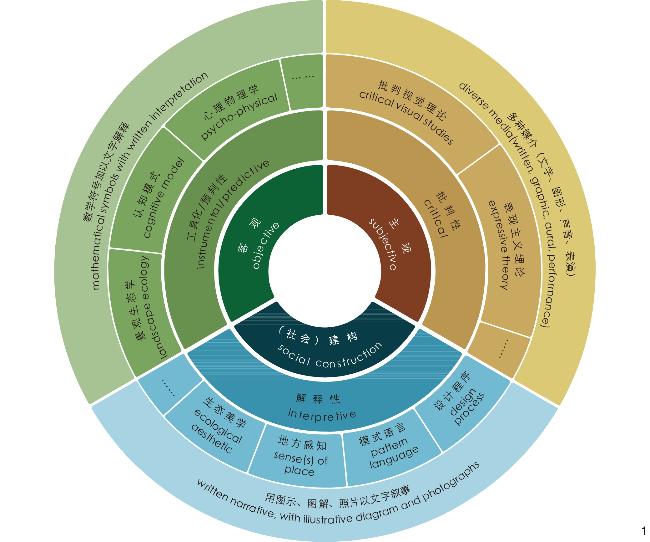
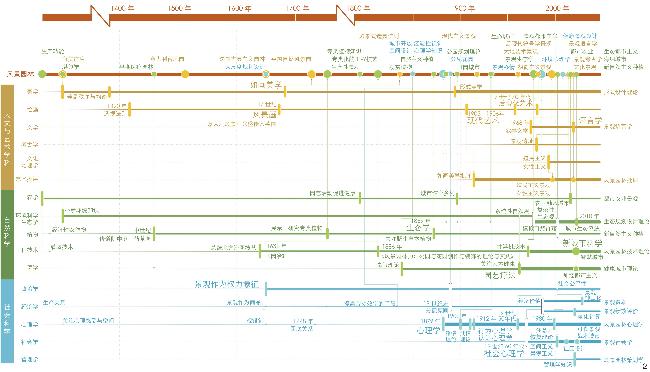
【目的】探究风景园林理论知识形成的复杂脉络,能够为学科理论知识体系的构建提供新的视野。【方法】借鉴知识考古学方法,从人文与艺术学科、自然科学、社会科学三大学科领域梳理风景园林理论知识体系的发展历程,归纳演变特点及驱动因素。【结果】1)风景园林理论知识体系发展经历了从早期以人文与艺术学科知识驱动为主,逐渐走向与自然科学、社会科学的多元交叉过程。2)不同学科视野下的风景园林理论知识发展各有特点,本质上是美学观、自然观、公平观发生了改变:人文与艺术学科视野下的学科理论知识生产由地域性审美观走向批判地域性审美观;自然科学视野下的学科理论知识生产由朴素自然观走向多元生态观;社会科学视野下的学科理论知识生产由精英式公平观走向公众公平观。3)风景园林理论知识体系发展的驱动因素是由满足使用者的审美需求转向满足人在空间中生理、心理及社会全方位的功能需求。【结论】风景园林理论知识体系未来发展还需要树立自主理论知识体系的意识、梳理其逻辑基点并建立弹性和动态调整的更新机制。
陈崇贤 , 刘康 , 刘京一 . 风景园林理论知识体系发展溯源[J]. 风景园林, 2024 , 31(3) : 27 -35 . DOI: 10.3724/j.fjyl.202307150323
[Objective] As the working scope of landscape architecture expands and urban problems become more complicated, the comprehensive discipline of landscape architecture is compelled to integrate diverse knowledge and theories from other disciplines, such as aesthetics, geography, and ecology. However, this integration also results in the generalization of the discipline’s knowledge, posing a challenge to its independence. Furthermore, the diversity and complexity of knowledge sources make it more difficult to construct a theoretical system. Indeed, it is crucial to elucidate the process by which the knowledge system is shaped and constructed in the development of the discipline to establish a robust theoretical framework. In view of this, this research mainly aims to address the following questions. 1) How has the current production of knowledge in landscape architecture evolved and developed since its inception? 2) How does the formation of knowledge in landscape architecture relate to other disciplines, and what are its characteristics? 3) What factors have influenced the development of the knowledge system of the landscape architecture discipline, and what challenges does the discipline face?[Methods] Utilizing an archaeological approach, this research reviews the development process of the theoretical knowledge system of landscape architecture across three dimensions: humanities and arts disciplines, natural sciences, and social sciences. Meanwhile, it succinctly outlines the evolution characteristics of the theoretical knowledge system and the underlying factors. The application of the archaeological approach serves dual purposes. Firstly, it offers ideas and clear methods for tracing the origins of knowledge elements, such as concepts, practical subjects, media, and objects within the knowledge system of landscape architecture. Secondly, it aids in exploring deep-seated factors concealed beneath the manifestations of knowledge, thereby revealing the mechanisms of formation and internal evolution of knowledge in landscape architecture.
[Results] The knowledge development within landscape architecture is reviewed through three fundamental knowledge systems. 1) Regarding the overall evolution of knowledge, the development of the knowledge system of landscape architecture proves to be flexible and dynamic. Its evolution gradually traverses the humanities and arts disciplines, intersecting diversely with natural and social sciences. The boundaries of knowledge continually expand, adjust, and update in alignment with the evolving times and societal needs. 2) The development of knowledge in landscape architecture, viewed from distinct perspectives, exhibits unique characteristics. Essentially, it reflects changes in aesthetic, natural, and equitable considerations. Under humanities and arts disciplines, knowledge production has progressed from “regional aesthetics” to “critical regional aesthetics”. In the realm of natural sciences, it has shifted from a “simple view of nature” to a “pluralistic ecological view”. In the domain of social sciences, the progression is evident from an “elitist equity view” to a “public equity view”. 3) The evolution of knowledge within the discipline has been steered by varying factors across different periods. In the early stage of garden development, aesthetics plays a predominant role, driving the development of material and formal theories. However, in modern times, aesthetics no longer satisfies the complex functional needs of cities. Consequently, visually-driven factors have shifted toward the physiological, psychological, and social needs of people in spaces. This shift prompts the discipline to incorporate knowledge from ecology, psychology, and sociology, giving birth to theories such as urban open space, healthy city, and community design. Additionally, computer technology, facilitating the scientific and quantitative exploration of the relationship between human and environmental elements, has swiftly found its place in the discipline, contributing to the understanding of human perception and experience in space.
[Conclusion] 1) Establishing awareness for the development of an independent knowledge system in landscape architecture is crucial for addressing various environmental, social, cultural, and aesthetic challenges. Although scholars in this field have consistently recognized the mission to pursue an independent knowledge system since the inception of the landscape architecture discipline, it has often been perceived stereotypically as lacking such a system. However, with the current development and prosperity of landscape architecture, scientific research in the discipline has significantly narrowed the gap with other disciplines. The research in landscape architecture has become increasingly intertwined with global and national challenges in the development and practice of human settlement environment. Consequently, the construction of an independent knowledge system has reached a critical stage of both necessity and possibility. 2) Identifying the logical fundamentals of the independent knowledge system in landscape architecture is essential. Relevant knowledge within the landscape architecture discipline is an accumulation of understanding, opinions, and experience derived from past practice in addressing the contradictions between human society and the environment. The theorization and systematization of landscape architecture knowledge must emanate from various forms of practice. Only a knowledge system grounded in the historical construction of landscape architecture practice can overcome the longstanding perception of being in an “apprentice” or “imitation” stage. 3) Establishing a flexible and dynamic mechanism for adjusting and updating the knowledge system is crucial. On one hand, landscape architecture should integrate interventions from multiple disciplines to incorporate corresponding disciplinary knowledge, and should refine new concepts, categories, and expressions that are easily understood and accepted by both society and the industry to guide academic research and discussion; on the other hand, educators, as the main contributors to the development of disciplinary knowledge, should emphasize the establishment and improvement of the theoretical knowledge system of landscape architecture.
文中图片均由作者绘制,其中
| [1] |
JAMES C. A Discourse on Theory II: Three Tyrannies of Contemporary Theory and the Alternative of Hermeneutics[J]. Landscape Journal, 1991, 10 (2): 115-133.
|
| [2] |
DEMING M. E, SWAFFIELD S. Landscape Architecture Research: Inquiry, Strategy, Design[M]. Hoboken: John Wiley & Sons, 2011.
|
| [3] |
杨锐. 论“境”与“境其地”[J]. 中国园林, 2014, 30 (6): 5-11.
YANG R. On “Jing” and Its Development in Landscape Architecture[J]. Chinese Landscape Architecture, 2014, 30 (6): 5-11.
|
| [4] |
杨锐. 风景园林学科建设中的9个关键问题[J]. 中国园林, 2017, 33 (1): 13-16.
YANG R. Discussions on 9 Key Issues of Chinese Landscape Architecture[J]. Chinese Landscape Architecture, 2017, 33 (1): 13-16.
|
| [5] |
王绍增. 论“境学”与“营境学”[J]. 中国园林, 2015, 31 (3): 42-45.
WANG S Z. On Theory of Jing and Discipline of Jing Structure[J]. Chinese Landscape Architecture, 2015, 31 (3): 42-45.
|
| [6] |
刘滨谊. 学科质性分析与发展体系建构: 新时期风景园林学科建设与教育发展思考[J]. 中国园林, 2017, 33 (1): 7-12.
LIU B Y. Qualitative Analysis of the Discipline and Its Development System Construction: On the Construction and Educational Development of Landscape Architecture Discipline in the New Era[J]. Chinese Landscape Architecture, 2017, 33 (1): 7-12.
|
| [7] |
SWAFFIELD S. Theory and Critique in Landscape Architecture: Making Connections[J]. Journal of Landscape Architecture, 2006, 1 (1): 22-29.
|
| [8] |
THOMPSON I H. The Role of Theory[M]// ADRI V D B, DIEDRICH B, HILDE T, et al. Research in Landscape Architecture Methods and Methodology. New York: Routledge, 2017.
|
| [9] |
李建东. 福柯知识考古学方法研究[D]. 兰州: 西北师范大学, 2011.
LI J D. The Study of Knowledge Archaeology Method by Michel Foucault[D]. Lanzhou: Northwest Normal University, 2011.
|
| [10] |
高虹. 基于知识考古学的新闻话语实践中“非虚构”概念的考察[D]. 厦门: 厦门大学, 2020.
GAO H. A Study of “Nonfiction” in the Practice of News Discourse Based on the Archaeology of Knowledge[D]. Xiamen: Xiamen University, 2020.
|
| [11] |
刘康. 什么是文科?: 现代知识的型塑与体系[J]. 上海大学学报(社会科学版), 2021, 38 (2): 1-19.
LIU K. What Is Wenke (Liberal Arts)? : Formation of Modern Knowledge System[J]. Journal of Shanghai University (Social Sciences Edition), 2021, 38 (2): 1-19.
|
| [12] |
王平, 袁珍珍, 柯平. 话语权力的交锋: 基于知识考古学的中国特色图书馆学理论体系构建分析[J]. 图书馆, 2019, (10): 1-7.
WANG P, YUAN Z Z, KE P. Analysis on the Construction of the Theoretical System of Library Science with Chinese Characteristics Based on Knowledge Archaeology[J]. Library, 2019, (10): 1-7.
|
| [13] |
李醒民. 知识的三大部类: 自然科学、社会科学和人文学科[J]. 学术界, 2012, (8): 5-33.
LI X M. Three Divisions of Knowledge: Natural Science, Social Science and the Humanities[J]. Academics, 2012, (8): 5-33.
|
| [14] |
泰勒. 英国园林[M].高亦珂, 译. 北京: 中国建筑工业出版社, 2003.
TAYLOR P. Gardens of Britain[M]. GAO Y K, translated. Beijing: China Architecture & Building Press, 2003.
|
| [15] |
特纳. 英国园林历史、哲学与设计[M].程玺, 译. 北京: 电子工业出版社, 2015.
TURNER T. British Gardens: History, Philosophy and Design[M]. CHENG X, translated. Beijing: Publishing House of Electronics Industry, 2015.
|
| [16] |
DOWNING A J, JACKSON A. A Treatise on the Theory and Practice of Landscape Gardening: Adapted to North America[M]. Charleston: BiblioBazaar, 2010.
|
| [17] |
慕晓东. 景观与批评: 可见与不可见的交错[J]. 景观设计学, 2017, 5 (6): 8-27.
MU X D. Landscape and Criticism: The Crossing of Visible and Invisible[J]. Landscape Architecture Frontiers, 2017, 5 (6): 8-27.
|
| [18] |
王向荣, 林箐. 西方现代景观设计的理论与实践[M]. 北京: 中国建筑工业出版社, 2002.
WANG X R, LIN Q. Theories and Practice of Modern Landscape Architecture in the Western World[M]. Beijing: China Architecture & Building Press, 2002.
|
| [19] |
BOOTH N. Foundations of Landscape Architecture: Integrating Form and Space Using the Language of Site Design[M]. Hoboken: John Wiley & Sons, 2011.
|
| [20] |
廖秋林. 后现代主义符号学景观设计理论研究[D]. 长沙: 中南林业科技大学, 2005.
LIAO Q L. Research on the Design Theory of Postmodern Landscape Architecture Based on Semiotics[D]. Changsha: Central South University of Forestry and Technology, 2005.
|
| [21] |
叶超, 蔡运龙. 地理学方法论演变与价值判断[J]. 地理研究, 2010, 29 (5): 947-958.
YE C, CAI Y L. The Geographical Methodology Between Subjectivity and Objectivity[J]. Geographical Research, 2010, 29 (5): 947-958.
|
| [22] |
张海. 景观考古学: 理论、方法与实践[J]. 南方文物, 2010 (4): 8-17.
ZHANG H. Landscape Archaeology: Theory, Method and Practice[J]. Cultural Relics in Southern China, 2010 (4): 8-17.
|
| [23] |
SPIRN A W. The Language of Landscape[M]. New Haven: Yale University Press, 1998.
|
| [24] |
WYLIE J. Landscape[M]. New York: Routledge, 2007.
|
| [25] |
BOWLBY S R, FOORD J, MACKENZIE S. Feminism and Geography[J]. Area, 1982, 14 (1): 19-25.
|
| [26] |
CERWONKA. Native to the Nation[M]. Minneapolis: University of Minnesota Press, 2004.
|
| [27] |
王续琨. 自然科学的学科层次及其相互关系[J]. 科学技术与辩证法, 2002 (1): 58-61.
WANG X K. The Disciplinary Hierarchy and Interrelationships of Natural Sciences[J]. Studies in Philosophy of Science and Technology, 2002 (1): 58-61.
|
| [28] |
孙峰华, 方创琳, 王振波, 等. 中国风水地理哲学基础与人地关系[J]. 热带地理, 2014, 34 (5): 581-590.
SUN F H, FANG C L, WANG Z B, et al. Philosophical Foundation of Chinese Feng Shui Geography and Man-Land Relationship[J]. Tropical Geography, 2014, 34 (5): 581-590.
|
| [29] |
顾颖振, 夏宜平. 园林花境的历史沿革分析与应用研究借鉴[J]. 中国园林, 2006 (9): 45-49.
GU Y Z, XIA Y P. Application and Development of Flower Border in Landscape Architecture[J]. Chinese Landscape Architecture, 2006 (9): 45-49.
|
| [30] |
HEYDE S. The French Picturesque and the Invention of Landscape Architecture as a Design Discipline[J]. Journal of Landscape Architecture, 2017, 12 (3): 76-8.
|
| [31] |
计成. 园冶[M]. 北京: 中华书局, 2011.
JI C. The Craft of Gardens[M]. Beijing: Zhonghua Book Company, 2011.
|
| [32] |
蒋莹. 医疗园林的起源与发展[D]. 北京: 北京林业大学, 2010.
JIANG Y. The Origins and Development of Healing Landscape[D]. Beijing: Beijing Forestry University, 2010.
|
| [33] |
于冰沁. 寻踪: 生态主义思想在西方近现代风景园林中的产生、发展与实践[D]. 北京: 北京林业大学, 2012.
YU B Q. Traces of Ecologism in Western Modern Landscape Planning and Design[D]. Beijing: Beijing Forestry University, 2012.
|
| [34] |
匡纬. 基于非线性思维观的景观设计策略研究[D]. 北京: 北京林业大学, 2011.
KUANG W. Research on Strategies of Landscape Architecture Based on Nonlinear Thinking[D]. Beijing: Beijing Forestry University, 2011.
|
| [35] |
龙瀛. 颠覆性技术驱动下的未来人居: 来自新城市科学和未来城市等视角[J]. 建筑学报, 2020, (Z1): 34-40.
LONG Y. Future of Human Habitats Driven by Disruptive Technologies: Perspectives from the New Science of Cities and Future Cities[J]. Architectural Journal, 2020, (Z1): 34-40.
|
| [36] |
彭慧蕴, 杨婷婷, 谭少华. 神经都市主义视角下城市健康支持性环境研究: 范式创新与研究框架[J]. 中国园林, 2022, 38 (4): 62-67.
PENG H Y, YANG T T, TANG S H. Research on Urban Health Supportive Environment from the Perspective of Neurourbanism: Paradigm Innovation and Research Framework[J]. Chinese Landscape Architecture, 2022, 38 (4): 62-67.
|
| [37] |
陈然, 赵晶. 基于样式生成对抗网络的风景园林方案生成及设计特征识别[J]. 风景园林, 2023, 30 (7): 12-21.
CHEN R, ZHAO J. Generation and Design Feature Recognition of Landscape Architecture Scheme Based on Style-Based Generative Adversarial Network[J]. Landscape Architecture, 2023, 30 (7): 12-21.
|
| [38] |
林玉莲, 胡正凡. 环境心理学[M]. 北京: 中国建筑工业出版社, 2006.
LIN Y L, HU Z F. Environmental Psychology[M]. Beijing: China Architecture & Building Press, 2006.
|
| [39] |
李梦然, 冯江. 诺利地图及其方法价值[J]. 新建筑, 2017 (4): 11-16.
LI M R, FENG J. An Analysis of the Value of the Nolli Map’s Analytical Method[J]. New Architecture, 2017 (4): 11-16.
|
| [40] |
DÜMPELMANN S. An Introduction to Landscape Design and Economics[J]. Landscape Research, 2015, 40 (5): 555-565.
|
| [41] |
常湘琦. 基于“景观共情”概念的城市更新与空间改造[D]. 北京: 清华大学, 2017.
CHANG X Q. Urban Renewal and Spatial Reconstruction Based on the Concept of “Landscape Empathy” [D]. Beijing: Tsinghua University, 2017.
|
| [42] |
盖尔. 交往与空间[M].何人可, 译. 北京: 中国建筑工业出版社, 2002.
GEHL J. Life Between Buildings: Using Public Space[M]. HE R K, translated. Beijing: China Architecture & Building Press, 2002.
|
| [43] |
MARKOVA M. Landscape Sociology as Developing Academic Discipline[J]. Landscape Architecture and Art, 2019, 14: 95-101.
|
| [44] |
山崎亮. 社区设计[M]. 胡珊, 译. 北京: 北京科学技术出版社, 2019.
YAMAZAKI R. Community Design[M]. HU S, translated. Beijing: Beijing Science & Technology Press, 2019.
|
| [45] |
黎颖惠, 卿如冰, 何丽霞, 等. 景观资本化与资本景观化探索[J]. 现代园艺, 2022, 45 (21): 154-156.
LI Y H, QING R B, HE L X, et al. Exploring Landscape Capitalization and Capital Landscape[J]. Contemporary Horticulture, 2022, 45 (21): 154-156.
|
| [46] |
刘喆, 欧小杨, 郑曦. 基于循证导向的景观绩效评价体系、在线平台的构建与实证研究[J]. 南方建筑, 2020 (3): 12-18.
LIU Z, OU X Y, ZHENG X. Evidence Based Guidance-Based on Landscape Performance Evaluation System, Online Platform’s Construction and Empirical Research[J]. South Architecture, 2020 (3): 12-18.
|
| [47] |
陈可. 风景园林心理学初探[D]. 北京: 北京林业大学, 2007.
CHEN K. The Primary Research on Landscape Architectural Psychology[D]. Beijing: Beijing Forestry University, 2007.
|
| [48] |
钟和丽, 罗越, 林广思. 基于城市公园的风景园林策划工作程序构建[J]. 风景园林, 2022, 29 (7): 97-102.
ZHONG H L, LUO Y, LIN G S. Formulation of Working Procedures for Landscape Architectural Programming Based on Urban Parks[J]. Landscape Architecture, 2022, 29 (7): 97-102.
|
/
| 〈 |
|
〉 |